- Physics Lab Equipment
- Chemistry Lab Equipment
- Biology Lab Equipment
- Anatomical Lab Equipment
- Learning
- Educational Lab Equipment
- Magnets
- Agriculture
- Astronomy
- Earth Science
- Geography Lab Equipment
- Safety Lab Coat
- Laboratory
- Meteorological
- Electricity & Magnetism
- Heat
- School Lab Equipment
- Lab Glassware
- Science Lab Equipment
- Tvet Lab Equipment
- Robotics Kits Supplier and Manufacturer for Schools India
- Math Lab Equipment Manufacturers and Exporters in Ambala
- STEM Kits Manufacturers and Supplier India
- Engineering Lab Equipment
- Hospital Lab Equipment
- Water, Sanitation & Hygiene Supplies
- Cold Chain, Solar & Communication Equipment
- Nutrition
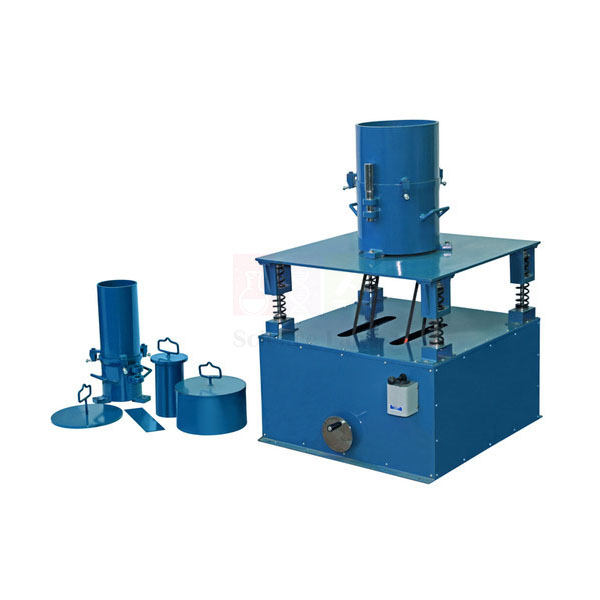
Relative density test apparatus
Relative density test apparatus (Product Code: SLE/CE/62) is a vibratory table and mould assembly used to compact free-draining sands and gravels to their densest state so their relative density can be calculated in soil mechanics laboratories. Geotechnical labs and civil engineering colleges use it with 3000 ml and 15000 ml unit weight moulds on a cushioned steel deck of about 75 cm x 75 cm. It is made by Jain Scientific Equipments Pvt Ltd (ScienceLab), an OEM and TVET lab equipment manufacturer in India, at its own factory in Ambala.
Specifications
| Parameter | Detail |
|---|---|
| Vibratory table deck | Cushioned steel vibrating deck, about 75 cm x 75 cm |
| Power supply | 415 V, three phase |
| Vibration frequency | Approximately 3600 vibrations per minute under an 11.5 kg load |
| Amplitude | Variable in three ranges: 0.05 to 0.25 mm, 0.25 to 0.45 mm and 0.45 to 0.65 mm |
| Unit weight moulds | Cylindrical metal moulds, 3000 ml and 15000 ml capacity |
| Mould accessories | Guide sleeve with clamp assembly, surcharge base plate, handle for the surcharge base plate, surcharge weight |
| Dial gauge | 0.01 mm x 50 mm travel, with 25 mm extension piece |
| Product code | SLE/CE/62 |
| Manufacturer | Jain Scientific Equipments Pvt Ltd (ScienceLab) — OEM |
| Country of origin | India (made in Ambala, Haryana) |
What Is the Relative Density Test Apparatus Used For?
Clean sands and gravels do not give a clear peak in a normal compaction test, so their state of packing is described by relative density instead. With this apparatus, dry soil is placed in the mould, the guide sleeve is clamped on, and the surcharge base plate and weight are seated on top. The table then vibrates the filled mould, and the dial gauge with its extension piece records how far the surcharge plate has settled, giving the compacted volume.
Comparing the field density of a sand fill with its maximum and minimum densities tells engineers how loose or dense the deposit is, which matters for foundations, backfill behind walls and embankments. For colleges buying from an engineering lab equipment manufacturer, it turns a textbook index into a practical exercise. Bolt the table to a firm floor so vibration goes into the specimen, not the bench.
What to Specify When Ordering
- Mould capacity: 3000 ml, 15000 ml or both, based on the particle size of your soils
- Confirmation that a 415 V three-phase supply is available where the table will stand
- Extra surcharge weights, guide sleeves or dial gauges you would like quoted
- Number of complete sets required
OEM Manufacturer
Jain Scientific Equipments Private Limited, which trades as ScienceLab, is the OEM for this relative density test apparatus. The company produces it at its own licensed factory at Saha, Ambala, Haryana, India, and sells it factory-direct, so there is no trading middleman between the maker and your laboratory.
Engineering colleges, research labs, dealers and importers receive quotations straight from the manufacturer, and follow-up orders for moulds or surcharge parts are handled by the same team — just ask us. Background on the company is on our company profile.
Related Civil Engineering Lab Equipment
Relative density results are most useful when combined with grading, moisture and field density data. These items complete the workflow:
- Core cutters — in-place density of the soil for comparison with the laboratory limits
- Test Sieves — grading to confirm the soil is a free-draining sand or gravel
- Moisture Tins — moisture content checks on field and laboratory samples
- Constant Head permeability apparatus — permeability of the same granular soils
- Direct Shear test Apparatus — shear strength of sand prepared at a known density
Browse all Civil Engineering Lab Equipment for soil, concrete and highway laboratories.
Frequently Asked Questions
What is included with the relative density test apparatus?
The relative density test apparatus includes a vibratory table, cylindrical unit weight moulds of 3000 ml and 15000 ml, a guide sleeve with clamp assembly, surcharge base plate with handle, surcharge weight, and a 0.01 mm x 50 mm dial gauge with a 25 mm extension piece.
What power supply does the relative density test apparatus need?
The relative density test apparatus runs on a 415 V three-phase supply. Check that your laboratory has a suitable three-phase outlet near a solid floor before installation, and contact us if you need guidance on connection details.
What vibration settings does the relative density test apparatus offer?
The relative density test apparatus vibrates at approximately 3600 vibrations per minute under an 11.5 kg load, with amplitude adjustable in three ranges from 0.05 to 0.25 mm, 0.25 to 0.45 mm and 0.45 to 0.65 mm.
Which soils is the relative density test apparatus meant for?
The relative density test apparatus is meant for cohesionless, free-draining soils such as clean sands and gravels, where density is better described by relative density than by a compaction curve. Clays and silts are normally tested with other methods.
Who manufactures the relative density test apparatus?
The relative density test apparatus is manufactured by Jain Scientific Equipments Pvt Ltd (ScienceLab) as the OEM at its own factory at Saha, Ambala, Haryana, India. Buyers deal with the manufacturer directly for quotations and later parts.
What should a quotation request for the relative density test apparatus include?
A quotation request for the relative density test apparatus should state the mould capacities needed, the number of sets, confirmation of a 415 V three-phase supply and the delivery address, whether in India or international markets.
Request a Quote
To price the relative density test apparatus, write to us through the contact page or place it in the enquiry cart. Your quotation comes direct from the manufacturer.
Last updated: 24 September 2026
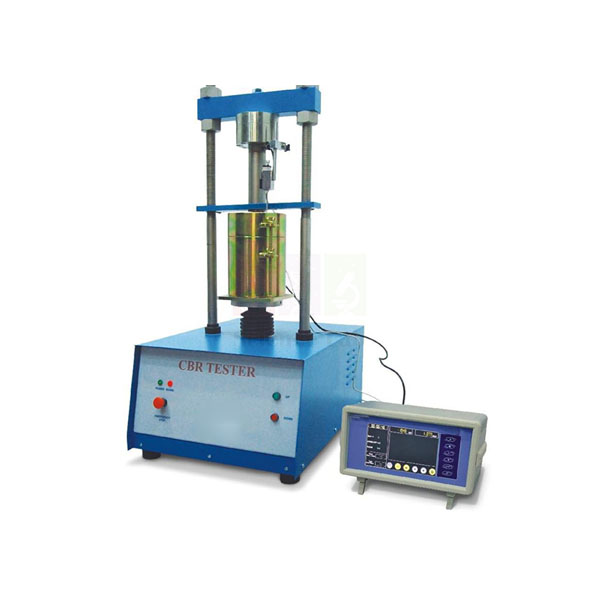
Automatic CBR Test Apparatus
Automatic CBR Test Apparatus (Product Code: SLE/CE/63) is a motorised load frame used to drive a penetration piston into a compacted soil sample at a constant rate and record load against penetration to find the California Bearing Ratio in highway and soil laboratories. Road research labs and civil engineering departments choose it for its 50 kN load cell, 0.5 to 5 mm/min ram speed and touchscreen unit that works out CBR at 2.5 mm and 5 mm automatically. It is supplied by Jain Scientific Equipments Pvt Ltd (ScienceLab), Ambala, India.
Specifications
| Parameter | Detail |
|---|---|
| Test principle | Loads the penetration piston into the soil sample at a constant rate and measures applied load and piston penetration at predetermined intervals |
| Ram speed | Adjustable from 0.5 to 5 mm/min through the digital readout unit |
| Test methods | Speed range allows the same machine to be set up for BS, EN, ASTM or AASHTO CBR procedures |
| Platen adjustment | Rapid up and down buttons on the front panel |
| Load cell | 50 kN |
| Displacement transducer | Linear potentiometric, 25 mm x 0.001 mm, with connection part |
| CBR calculation | Corrected CBR % at 2.5 mm and 5 mm calculated and saved automatically; load values corrected for the linear region of the curve are also saved |
| Stored load points | Load saved at user-defined displacements such as 0.625, 1.25, 1.875, 2.5, 3.75, 5, 7.5, 10 and 12.5 mm |
| Control modes | Displacement control and limited load control |
| Data acquisition | 4 analogue channels (2 active for CBR), 1/256000 points resolution and 10 data per second per channel |
| Display | 800 x 480 resolution, 65535-colour TFT-LCD industrial touchscreen with real-time test graph |
| Processor and memory | 32-bit ARM RISC CPU card; permanent storage of up to 10000 test results |
| Interface | 4 main function keys, multi-language support, real-time clock and date, result visualisation and memory management screens |
| Units | kN, ton or lb |
| Connectivity and software | Ethernet for computer interface and remote connection; computer software with advanced report generation; connection cable |
| Dimensions | 480 x 650 x 1150 mm |
| Weight | Approx. 110 kg |
| Power | 370 W |
| Product code | SLE/CE/63 |
| Supplied by | Jain Scientific Equipments Pvt Ltd (ScienceLab), Ambala, India |
Supplied complete with: 50 kN load cell, penetration piston, linear potentiometric displacement transducer with connection part, computer software and connection cable.
What Is the Automatic CBR Test Apparatus Used For?
The California Bearing Ratio compares the load needed to push a standard piston into a soil or granular base with the load for a reference material, and it is widely used to size flexible pavement layers. A compacted specimen in its mould is set on the platen, the piston is brought into contact with the up and down buttons, and the machine then penetrates at the chosen constant rate while logging load and displacement.
Because the readout stores load at your chosen penetration points, applies the curve correction and reports CBR at 2.5 mm and 5 mm, operators no longer read a proving ring dial by eye. Results can be exported over Ethernet for reports, which suits busy highway labs looking for test and measurement instruments in India. Zero the transducer after seating the piston so the first readings are clean.
What to Specify When Ordering
- Number of machines and the delivery destination
- Preferred unit system (kN, ton or lb) and whether the unit will be networked to a laboratory PC over Ethernet
- CBR moulds, rammers and surcharge weights are not in the listed scope of supply — ask us if you want them quoted
Supplier
ScienceLab is the trading name of Jain Scientific Equipments Private Limited, which supplies this automatic CBR test apparatus from Ambala, Haryana, India to universities, highway and materials laboratories, dealers and importers. We source the machine for your order and coordinate the quotation and delivery with you as a single point of contact.
For vendor registration and export documentation, the supplying company is Jain Scientific Equipments Private Limited (IEC AAECJ8618A, GSTIN 06AAECJ8618A1ZT). More about the company is on our company profile.
Related Civil Engineering Lab Equipment
A CBR programme needs sample preparation and field checks as well as the load frame. These products fit the same workflow:
- Field CBR test set — in-situ CBR on the subgrade to compare with laboratory values
- Soil extruder, motor operated — removing compacted specimens from moulds after testing
- Moisture Tins — moisture content of the compacted specimen
- Test Sieves — preparing and grading the soil before compaction
- Plate load bearing test apparatus — field bearing capacity of subgrade and pavement layers
Explore the full Civil Engineering Lab Equipment category.
Frequently Asked Questions
What is supplied with the Automatic CBR Test Apparatus?
The Automatic CBR Test Apparatus is supplied with a 50 kN load cell, a penetration piston, a 25 x 0.001 mm linear potentiometric displacement transducer with connection part, computer software and a connection cable. CBR moulds and surcharge weights are not in the listed scope.
What penetration speed does the Automatic CBR Test Apparatus offer?
The Automatic CBR Test Apparatus has a ram speed adjustable from 0.5 to 5 mm/min, set through the digital readout unit. You enter the constant rate required by the CBR method your laboratory follows within that range.
Does the Automatic CBR Test Apparatus calculate CBR by itself?
Yes, the Automatic CBR Test Apparatus automatically calculates and saves the corrected CBR % at 2.5 mm and 5 mm penetration, records load at user-defined displacement points and stores up to 10000 test results in permanent memory.
Can the Automatic CBR Test Apparatus connect to a computer?
Yes, the Automatic CBR Test Apparatus has an Ethernet connection for a computer interface and remote connection, and it comes with computer software offering advanced report generation, so results can be archived and printed from a laboratory PC.
Who supplies the Automatic CBR Test Apparatus?
The Automatic CBR Test Apparatus is supplied by Jain Scientific Equipments Pvt Ltd (ScienceLab), Ambala, India. For questions about the machine's origin, service arrangements or terms, please ask us through the contact page before ordering.
Is a calibration certificate available for the Automatic CBR Test Apparatus?
Calibration documents for the Automatic CBR Test Apparatus load cell and displacement transducer should be discussed with us before you order. Tell us your requirement on the contact page and we will confirm what can be provided with the machine.
How much space and power does the Automatic CBR Test Apparatus need?
The Automatic CBR Test Apparatus measures 480 x 650 x 1150 mm, weighs about 110 kg and is rated at 370 W. Plan a level, sturdy position near a mains outlet and allow room to load moulds onto the platen.
Request a Quote
Ask for a quotation on the Automatic CBR Test Apparatus through our contact page, or add it to the enquiry cart together with any moulds or accessories you need. Please include quantity and delivery location.
Last updated: 24 September 2026
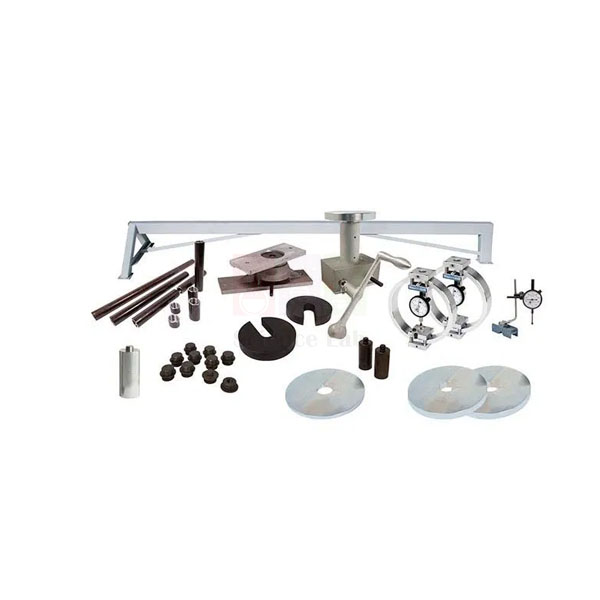
Field CBR test set
Field CBR test set (Product Code: SLE/CE/64) is a portable mechanical jacking and load-measuring kit used to determine the California Bearing Ratio of soils in place on road construction sites. Highway engineers and civil engineering colleges use its 50 kN mechanical jack and 40 kN load ring in the field, or assemble the frame in the laboratory as a hand-operated CBR machine. It is made by Jain Scientific Equipments Pvt Ltd (ScienceLab), an OEM laboratory equipment manufacturer in India, at its own factory in Ambala.
Specifications
| Parameter | Detail |
|---|---|
| Test locations | In-situ on site, or in the laboratory when the frame is assembled with the main components as a hand-operated CBR machine |
| Field application | Used with a vehicle bracket for in-situ bearing capacity of soils used in road construction |
| Mechanical jack | 50 kN capacity |
| Load ring | 40 kN capacity |
| Slotted surcharges | One 9 kg and one 4.5 kg |
| Penetration piston | Adjustable CBR penetration piston |
| Penetration dial gauge | 30 x 0.01 mm, with adjustable dial gauge holder |
| Extension rods | Set of 3 extension rods with adapters |
| Datum bar assembly | Two tripod stands and a 1220 mm long aluminium bar |
| Spare parts | Every component can be purchased individually as a spare |
| Product code | SLE/CE/64 |
| Manufacturer | Jain Scientific Equipments Pvt Ltd (ScienceLab) — OEM |
| Country of origin | India (made in Ambala, Haryana) |
What Is the Field CBR Test Set Used For?
On site, a loaded vehicle gives the reaction: the mechanical jack is fixed beneath it through the vehicle bracket, and the extension rods carry the force down to the penetration piston resting on the prepared subgrade. Slotted surcharge weights placed around the piston stand in for the pavement layers above, the jack is turned steadily, and the load ring shows the force while the dial gauge on the aluminium datum bar records penetration.
Testing in place avoids disturbing the soil and shows how the subgrade actually behaves at its natural moisture and density, which helps engineers confirm a pavement design. Colleges can move the same parts indoors and build a hand-operated laboratory CBR machine, so one purchase of engineering lab equipment in India covers both site and classroom work. Level the tripod stands well away from the piston before zeroing the gauge.
What to Specify When Ordering
- Whether you need the vehicle bracket for field reaction quoted with the set
- Whether you also want the laboratory frame to use the set as a hand-operated CBR machine
- Any individual spares required, such as an extra load ring, dial gauge or extension rods
- Number of complete sets for your field teams or laboratory
OEM Manufacturer
The Field CBR test set is an original ScienceLab product. Jain Scientific Equipments Private Limited, which trades under the ScienceLab name, manufactures it as the OEM at its licensed factory at Saha, Ambala, Haryana, India, and ships it factory-direct to highway departments' laboratories, engineering colleges, dealers and importers.
Since each part of the set is also sold on its own, a replacement jack, load ring or surcharge weight can be quoted by the manufacturer itself whenever you need one — simply ask us. Company information is available on our company profile.
Related Civil Engineering Lab Equipment
Field CBR results are usually read alongside laboratory CBR values and density checks. These items support the same road investigation:
- Automatic CBR Test Apparatus — laboratory CBR on compacted samples for comparison
- Plate load bearing test apparatus — plate bearing tests on subgrade and pavement layers
- Core cutters — in-place density at each CBR test point
- Moisture Tins — moisture content of soil taken from the test spot
- Load ring penetrometer — quick strength checks to choose CBR locations
View every item in Civil Engineering Lab Equipment.
Frequently Asked Questions
What components are in the Field CBR test set?
The Field CBR test set contains a 50 kN mechanical jack, a 40 kN load ring, 9 kg and 4.5 kg slotted surcharges, an adjustable penetration piston, an adjustable dial gauge holder, a 30 x 0.01 mm dial gauge, three extension rods with adapters and a tripod-supported 1220 mm aluminium bar.
Can the Field CBR test set be used in the laboratory?
Yes, the Field CBR test set can be used indoors: its main components can be assembled in a frame to create a hand-operated laboratory CBR machine. Mention this use in your enquiry so the frame is included in the quotation.
What provides the reaction load when using the Field CBR test set on site?
The Field CBR test set is used with a vehicle bracket, so a loaded vehicle provides the reaction for the 50 kN mechanical jack. Tell us whether you need the bracket quoted along with the set.
Can I buy spare parts for the Field CBR test set?
Yes, every component of the Field CBR test set can be purchased individually as a spare part, from the mechanical jack and load ring to the surcharge weights, dial gauge and extension rods. List the parts you need when you contact us.
Who manufactures the Field CBR test set?
The Field CBR test set is manufactured by Jain Scientific Equipments Pvt Ltd (ScienceLab) as the OEM at its own factory at Saha, Ambala, Haryana, India. Quotations, spares and repeat orders come directly from the manufacturer.
What should a quotation request for the Field CBR test set include?
A quotation request for the Field CBR test set should give the number of sets, whether the vehicle bracket and laboratory frame are needed, any extra spares and the delivery location in India or international markets.
Request a Quote
Send your Field CBR test set requirements through our contact page or add the set to the enquiry cart. The quotation is prepared directly by the manufacturer.
Last updated: 24 September 2026
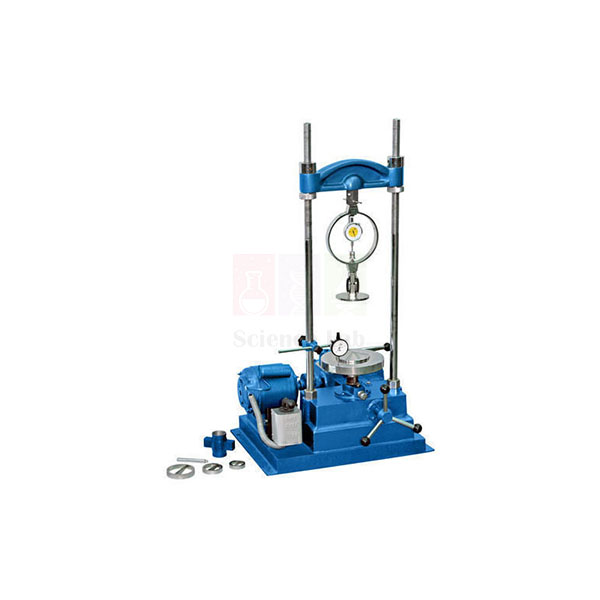
Unconfined Compression Tester (Motorised)
Unconfined Compression Tester (Motorised) (Product Code: SLE/CE/65) is a motor-driven screw load frame used to measure the unconfined compressive strength of cohesive soil specimens in geotechnical and civil engineering laboratories. Its 5000 kg capacity frame and gearbox give three rates of strain — 1.25, 1.5 and 2.5 mm/min — for testing cylindrical clay samples. It is made by Jain Scientific Equipments Pvt Ltd (ScienceLab), an OEM technical educational equipment manufacturer, at its own factory in Ambala, India.
Specifications
| Parameter | Detail |
|---|---|
| Load frame | Screw operated, capacity 5000 kg |
| Drive | Gear box with motor drive |
| Rates of strain | 1.25, 1.5 and 2.5 mm/min |
| Fittings | Pair of cone seatings, adaptor for proving ring, strain dial gauge bracket |
| Power supply | 230 V, single phase AC |
| Coning tools supplied | One pair (male and female) for 38 mm diameter samples |
| Not included | Proving ring and dial gauge |
| Optional accessories | Coning tools in male and female pairs for 38, 50, 75 and 100 mm diameter samples |
| Product code | SLE/CE/65 |
| Manufacturer | Jain Scientific Equipments Pvt Ltd (ScienceLab) — OEM |
| Country of origin | India (made in Ambala, Haryana) |
What Is the Unconfined Compression Tester Used For?
A trimmed cylinder of clay, with its ends shaped by the coning tools, is set between the cone seatings and squeezed axially with no side support. The motor drives the platen at the selected strain rate while a proving ring, fitted through the adaptor, shows the load and a dial gauge on the strain bracket shows how much the specimen shortens. The peak stress reached is the unconfined compressive strength.
Because roughly half of that value approximates the undrained shear strength of saturated clay, the test is a quick input for foundation and slope checks, and comparing undisturbed with remoulded samples shows how sensitive a clay is. For lab equipments for technical institutes, the motor drive keeps the strain rate steady from one student group to the next. Record readings at regular strain intervals until the load clearly falls.
What to Specify When Ordering
- Sample diameters you test: 38 mm coning tools are supplied; 50, 75 and 100 mm pairs are optional accessories
- Whether you want a proving ring and dial gauge quoted, as they are not included
- Confirmation of a 230 V single-phase supply at the test bench
- Number of testers required
OEM Manufacturer
This unconfined compression tester is built by Jain Scientific Equipments Private Limited, the company behind the ScienceLab brand, acting as the original equipment manufacturer. The motorised frame is made at the company's own licensed factory at Saha, Ambala, Haryana, India, and reaches universities, soil laboratories, dealers and importers without an intermediary.
Coning tools for other sample sizes and repeat orders are handled by the same manufacturer, so ask us whenever your testing range grows. Learn more on our company profile.
Related Civil Engineering Lab Equipment
Unconfined compression testing sits within a wider clay testing programme. These products are used alongside it:
- Soil extruder, motor operated — pushing specimens out of sampling tubes before trimming
- Vane Shear Apparatus (Motorised) — undrained strength of very soft clays that cannot stand unsupported
- Direct Shear test Apparatus — shear strength parameters under normal load
- Consolidation Test Apparatus — compressibility of the same clay
- Moisture Tins — water content of the specimen after failure
See the complete Civil Engineering Lab Equipment range.
Frequently Asked Questions
What is included with the Unconfined Compression Tester (Motorised)?
The Unconfined Compression Tester (Motorised) includes the 5000 kg screw load frame with gear box and motor, a pair of cone seatings, a proving ring adaptor, a strain dial gauge bracket and one pair of 38 mm coning tools. The proving ring and dial gauge are not included.
Which strain rates does the Unconfined Compression Tester (Motorised) provide?
The Unconfined Compression Tester (Motorised) provides three rates of strain through its gear box: 1.25, 1.5 and 2.5 mm/min. Select the rate that suits your specimen size and test procedure before starting the motor.
What sample sizes can the Unconfined Compression Tester (Motorised) test?
The Unconfined Compression Tester (Motorised) is supplied with male and female coning tools for 38 mm diameter samples. Coning tool pairs for 50, 75 and 100 mm diameter samples are available as optional accessories for larger specimens.
What power supply does the Unconfined Compression Tester (Motorised) use?
The Unconfined Compression Tester (Motorised) operates on a 230 V single-phase AC supply, so it can run from a normal laboratory power point without three-phase wiring.
Who manufactures the Unconfined Compression Tester (Motorised)?
The Unconfined Compression Tester (Motorised) is manufactured by Jain Scientific Equipments Pvt Ltd (ScienceLab) as the OEM at its own factory at Saha, Ambala, Haryana, India. You receive quotations and accessory support directly from the manufacturer.
Is a calibration certificate available for the Unconfined Compression Tester (Motorised)?
Load readings on the Unconfined Compression Tester (Motorised) depend on the proving ring used, which is not included. Discuss proving ring and calibration document needs with us through the contact page before ordering.
Request a Quote
Request pricing for the Unconfined Compression Tester (Motorised) via our contact page or add it to the enquiry cart. Quotes are issued directly by the manufacturer; list any extra coning tools you need.
Last updated: 24 September 2026
843.jpg)
Liquid limit devices (Casagrande)
Liquid limit devices (Casagrande) (Product Code: SLE/CE/66) are cam-operated brass cup instruments used to determine the liquid limit of fine-grained soils in soil mechanics and civil engineering laboratories. Students and testing staff use them to find the water content at which a grooved soil pat closes over 1.25 cm under 25 blows, with a built-in counter recording every drop. They are made by Jain Scientific Equipments Pvt Ltd (ScienceLab), an OEM among lab instruments manufacturers in India, at its own factory in Ambala.
Specifications
| Parameter | Detail |
|---|---|
| Cup | Brass cup held on an adjustable bracket |
| Height of fall | Cup adjustable for a fall of 1 cm |
| Mechanism | Cup raised and dropped by cam action onto a rubber base of standard hardness |
| Blow counter | Counter registers the number of blows |
| Grooving tools | One Casagrande grooving tool and one ASTM grooving tool |
| Height gauge | Height gauge block for setting the drop |
| Liquid limit definition | Water content at which soil cut by a groove of standard dimensions flows together for 1.25 cm under 25 blows |
| Soil strength at liquid limit | About 0.17 N/cm² (17 g/cm²) |
| Product code | SLE/CE/66 |
| Manufacturer | Jain Scientific Equipments Pvt Ltd (ScienceLab) — OEM |
| Country of origin | India (made in Ambala, Haryana) |
What Is the Casagrande Liquid Limit Device Used For?
Moist soil paste is spread in the brass cup, a groove is cut through it with one of the grooving tools, and the handle is turned at a steady pace so the cam lifts and drops the cup onto the rubber base. The counter tallies each blow until the two halves of the pat flow together over 1.25 cm. Repeating this at several water contents and plotting blows against moisture gives the water content at 25 blows — the liquid limit.
At that moisture the soil is just passing from a liquid to a plastic state, so the liquid limit, together with the plastic limit, is used to classify clays and silts and to anticipate their compressibility. For colleges sourcing from an engineering lab equipment manufacturer, it is one of the first soil tests students perform. Check the 1 cm drop with the gauge block before each session and keep the rubber base clean and dry.
OEM Manufacturer
Jain Scientific Equipments Private Limited, known to customers as ScienceLab, is the OEM for these Casagrande liquid limit devices, which are manufactured at its licensed factory at Saha, Ambala, Haryana, India. Soil laboratories, polytechnics, universities, dealers and importers order them straight from the factory rather than through a trader.
The manufacturer can also quote extra grooving tools or height gauge blocks when you need them — just ask us. More background is on our company profile.
Related Civil Engineering Lab Equipment
The liquid limit is one of the Atterberg limits, and these items complete the set of consistency tests:
- Plastic limit set — the lower consistency limit, needed for the plasticity index
- Shrinkage limit set — the water content below which soil stops shrinking
- Moisture Tins — oven-drying the samples taken from each trial
- Brass frame sieves — separating the fine soil fraction before mixing
Find more soil, concrete and pavement testing items in Civil Engineering Lab Equipment.
Frequently Asked Questions
What is included with the Liquid limit devices (Casagrande)?
Each Casagrande liquid limit device includes a brass cup on an adjustable bracket, a cam-operated drop mechanism with rubber base, a blow counter, one Casagrande grooving tool, one ASTM grooving tool and a height gauge block for setting the fall.
How is the drop height set on the Casagrande liquid limit device?
The Casagrande liquid limit device cup is adjustable for a fall of 1 cm. Place the supplied height gauge block under the raised cup, adjust the bracket until the cup just touches it, then lock the setting before testing.
What does the liquid limit measured with the Casagrande device mean?
The liquid limit found with the Casagrande device is the water content at which a standard groove closes over 1.25 cm under 25 blows. At this point the soil passes from liquid to plastic behaviour and has a strength of about 0.17 N/cm².
Why does the Casagrande liquid limit device come with two grooving tools?
The Casagrande liquid limit device includes both a Casagrande grooving tool and an ASTM grooving tool, so your laboratory can cut the groove shape called for by the test procedure it follows.
Who manufactures the Liquid limit devices (Casagrande)?
The Liquid limit devices (Casagrande) are manufactured by Jain Scientific Equipments Pvt Ltd (ScienceLab) as the OEM at its own factory at Saha, Ambala, Haryana, India, and are sold factory-direct with quotations issued by the manufacturer.
Can Casagrande liquid limit devices be ordered for a full teaching lab or for export?
Yes, Casagrande liquid limit devices can be quoted in the quantity your teaching laboratory needs and shipped within India and to international markets. State the number of devices, any companion Atterberg sets and the delivery destination.
Request a Quote
For a quote on the Liquid limit devices (Casagrande), contact us through the contact page or add them to the enquiry cart. Pricing comes direct from the manufacturer.
Last updated: 24 September 2026
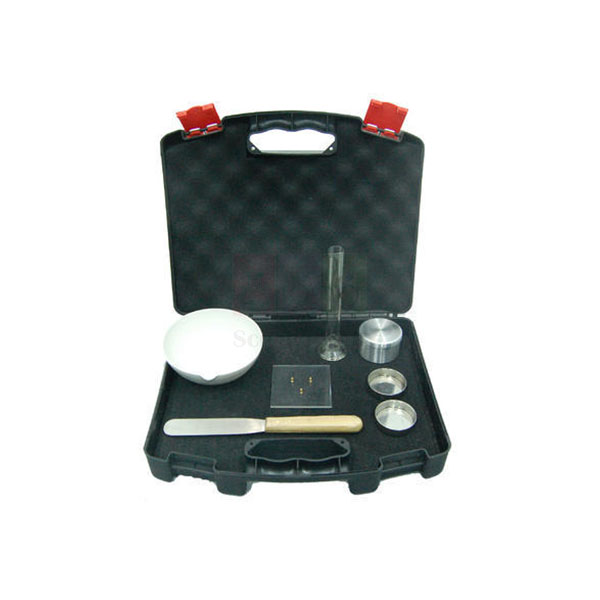
Shrinkage limit set
Shrinkage limit set (Product Code: SLE/CE/67) is a kit of dishes, a glass cup and a pronged Perspex plate used to measure the shrinkage limit of cohesive soils — the water content below which further drying no longer reduces soil volume. Civil engineering colleges and testing labs use it to calculate shrinkage ratio, shrinkage index and volumetric shrinkage; the set is supplied without mercury. It is made by Jain Scientific Equipments Pvt Ltd (ScienceLab), an OEM vocational training lab equipment manufacturer in India, at its own factory in Ambala.
Specifications
| Parameter | Detail |
|---|---|
| Test purpose | Determining shrinkage limit and calculating shrinkage ratio, shrinkage index and volumetric shrinkage |
| Porcelain evaporating dish | 1 |
| Shrinkage dish | 1 |
| Glass cup | 1 |
| Perspex plate | 1, with three metal prongs |
| Flexible spatula | 1, 100 mm |
| Glass cylinder | 1, 25 ml x 1 ml |
| Plastic wash bottle | 1, 500 ml |
| Mercury | Not included; optional accessory in a 500 g bottle, quoted separately |
| Product code | SLE/CE/67 |
| Manufacturer | Jain Scientific Equipments Pvt Ltd (ScienceLab) — OEM |
| Country of origin | India (made in Ambala, Haryana) |
What Is the Shrinkage Limit Set Used For?
As a wet clay dries it shrinks, but only down to a certain water content; after that, air enters the voids and the volume stays constant. To find that point, a wet soil pat is dried in the shrinkage dish and its dry volume is measured by mercury displacement: the glass cup is filled with mercury, levelled with the Perspex plate, and the dry pat is pressed under the surface with the three metal prongs so the displaced mercury can be measured.
Soils with a low shrinkage limit and high volumetric shrinkage tend to crack on drying and heave on wetting, which matters for foundations, canal linings and pavements. Mercury is toxic, so work over a tray, avoid skin contact and follow your institution's handling and disposal rules. The set suits teaching labs that want a complete Atterberg-limits bench.
What to Specify When Ordering
- Whether the optional 500 g bottle of mercury should be quoted, subject to your institution's rules on its use
- Number of sets, for example one per student group
- Any companion liquid limit or plastic limit apparatus for the same bench
OEM Manufacturer
Jain Scientific Equipments Private Limited trades as ScienceLab and is the OEM of this shrinkage limit set, which is made up as a complete kit at the company's own licensed factory at Saha, Ambala, Haryana, India. It goes factory-direct to engineering colleges, soil testing laboratories, dealers and importers, with quotations prepared by the manufacturer itself.
For tender and vendor registration, the company's details are GSTIN 06AAECJ8618A1ZT and LEI 3358004HRD1JIVXKYX49. If a dish or plate needs replacing later, ask us. See our company profile for more.
Related Civil Engineering Lab Equipment
The shrinkage limit is normally reported with the other consistency limits. These items are used on the same bench:
- Liquid limit devices (Casagrande) — the upper consistency limit of the same soil
- Plastic limit set — the plastic limit for the plasticity index
- Moisture Tins — water content of the wet soil pat
- Test Sieves — preparing the fine fraction before mixing
Browse the full Civil Engineering Lab Equipment category.
Frequently Asked Questions
What is included in the Shrinkage limit set?
The Shrinkage limit set includes one each of a porcelain evaporating dish, a shrinkage dish, a glass cup, a Perspex plate with three metal prongs, a 100 mm flexible spatula, a 25 ml x 1 ml glass cylinder and a 500 ml plastic wash bottle.
Does the Shrinkage limit set include mercury?
No, the Shrinkage limit set is supplied without mercury. Mercury is available as an optional accessory in a 500 g bottle, quoted separately, and should be used only where your institution's safety rules allow it.
What results can be calculated with the Shrinkage limit set?
The Shrinkage limit set is used to determine the shrinkage limit of a soil and to calculate its shrinkage ratio, shrinkage index and volumetric shrinkage from the wet and dry masses and volumes of the soil pat.
What is the Perspex plate with three prongs used for in the Shrinkage limit set?
In the Shrinkage limit set, the Perspex plate with three metal prongs levels the mercury in the glass cup and then pushes the dry soil pat below the surface, so its volume can be found from the mercury it displaces.
Who manufactures the Shrinkage limit set?
The Shrinkage limit set is manufactured by Jain Scientific Equipments Pvt Ltd (ScienceLab) as the OEM at its own factory at Saha, Ambala, Haryana, India, and is supplied factory-direct to institutions, dealers and importers.
What should I include in a quotation request for the Shrinkage limit set?
A quotation request for the Shrinkage limit set should state the number of sets, whether optional mercury is wanted, any companion Atterberg apparatus and the delivery destination in India or international markets.
Request a Quote
Ask for Shrinkage limit set pricing through our contact page or add it to the enquiry cart. The quotation comes direct from the manufacturer.
Last updated: 24 September 2026
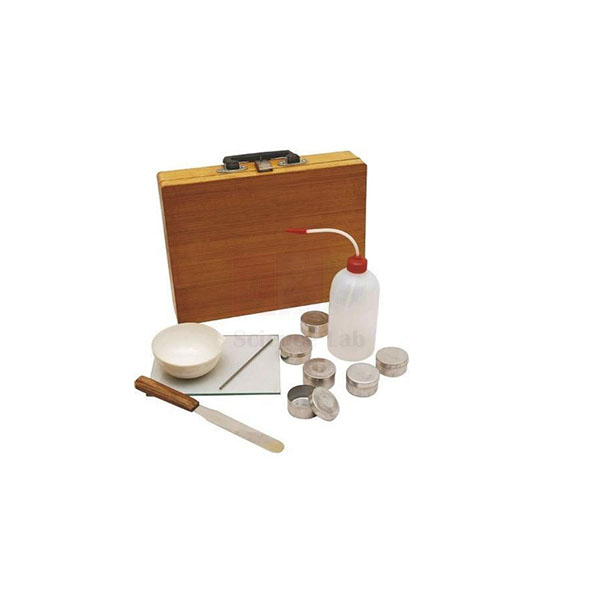
Plastic limit set
Plastic limit set (Product Code: SLE/CE/68) is a bench kit used to find the plastic limit of fine-grained soils — the water content at which a rolled soil thread just begins to crumble at 3 mm diameter — in soil mechanics laboratories. Students and technicians roll threads on its 20 cm x 15 cm glass plate, compare them with a 3 mm reference rod and dry the crumbs in six moisture containers. It is made by Jain Scientific Equipments Pvt Ltd (ScienceLab), an OEM scientific laboratory apparatus manufacturer in India, at its own factory in Ambala.
Specifications
| Parameter | Detail |
|---|---|
| Glass plate | 20 cm x 15 cm, with round ends |
| Reference rod | Brass or stainless steel, 3 mm diameter x 150 mm long |
| Flexible spatula | 15 cm |
| Moisture containers | Set of 6 |
| Porcelain basin | 150 mm diameter |
| Plastic wash bottle | 500 ml |
| Quantity | One of each item per set (moisture containers as one set of 6) |
| Product code | SLE/CE/68 |
| Manufacturer | Jain Scientific Equipments Pvt Ltd (ScienceLab) — OEM |
| Country of origin | India (made in Ambala, Haryana) |
What Is the Plastic Limit Set Used For?
Fine soil is mixed with water in the porcelain basin using the spatula, with the wash bottle adding water a little at a time. A small ball is then rolled under the palm on the glass plate into a thread; when it reaches the thickness of the 3 mm rod without breaking, it is kneaded and rolled again. As the soil dries it eventually crumbles at that diameter, and those crumbs go into the moisture containers for oven-drying. Their average water content is the plastic limit.
Subtracting the plastic limit from the liquid limit gives the plasticity index, the key figure for classifying clays and silts on a plasticity chart. The kit is a staple of educational laboratory equipment in India for diploma and degree soil mechanics courses. Keep the glass plate clean and dry and roll with even pressure so results repeat between students.
What to Specify When Ordering
- Reference rod material: brass or stainless steel
- Number of sets, usually one per student group
- Whether you want extra moisture containers quoted for repeat trials
OEM Manufacturer
ScienceLab is the brand of Jain Scientific Equipments Private Limited, which manufactures this plastic limit set as the OEM at its own licensed factory at Saha, Ambala, Haryana, India. Buying from the maker means the plate, rod, basin and containers arrive together as one set, sent factory-direct to colleges, polytechnics, soil laboratories, dealers and importers.
Additional sets for new student batches can be reordered from the same manufacturer — ask us whenever you expand the lab. Read about the company on our company profile.
Related Civil Engineering Lab Equipment
The plastic limit is only meaningful beside the other consistency limits. These items complete the soil classification bench:
- Liquid limit devices (Casagrande) — the liquid limit needed for the plasticity index
- Shrinkage limit set — the third Atterberg limit for the same sample
- Moisture Tins — extra containers for oven-drying repeat trials
- Brass frame sieves — preparing the fine fraction of the soil
See all items in Civil Engineering Lab Equipment.
Frequently Asked Questions
What does the Plastic limit set contain?
The Plastic limit set contains a 20 cm x 15 cm round-ended glass plate, a brass or stainless steel rod of 3 mm diameter and 150 mm length, a 15 cm flexible spatula, a set of six moisture containers, a 150 mm porcelain basin and a 500 ml plastic wash bottle.
What is the 3 mm rod in the Plastic limit set for?
The 3 mm rod in the Plastic limit set is a thickness reference. Students lay the rolled soil thread beside it to judge when the thread has reached 3 mm diameter, the point at which crumbling defines the plastic limit.
Is the reference rod in the Plastic limit set brass or stainless steel?
The reference rod in the Plastic limit set is offered in brass or stainless steel, both 3 mm in diameter and 150 mm long. State your preferred material in the enquiry so the quotation matches.
How is the plastic limit from this set used with the liquid limit?
The plastic limit measured with the Plastic limit set is subtracted from the liquid limit to give the plasticity index, which is used with the liquid limit to classify fine-grained soils and compare their plastic behaviour.
Who manufactures the Plastic limit set?
The Plastic limit set is manufactured by Jain Scientific Equipments Pvt Ltd (ScienceLab) as the OEM at its own factory at Saha, Ambala, Haryana, India. Quotations and repeat orders come directly from the manufacturer.
Can the Plastic limit set be ordered in class quantities or for export?
Yes, the Plastic limit set can be quoted in class quantities for colleges and shipped within India or to international markets. Give the number of sets, the rod material and the delivery destination in your request.
Request a Quote
Request a Plastic limit set quotation through our contact page or use the enquiry cart. You will receive pricing directly from the manufacturer.
Last updated: 24 September 2026
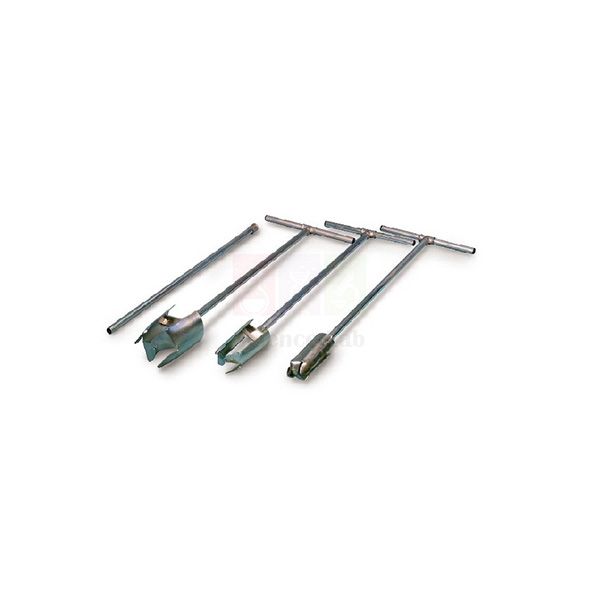
Soil Augers
Soil Augers (Product Code: SLE/CE/69) are hand-turned boring tools used to drill shallow holes and bring up disturbed soil samples for site investigation, soil surveys and environmental sampling. Field engineers and teaching labs choose between clay, standard, mud (Dutch) and sand patterns in 76 mm or 102 mm diameter, joined to a T-handle by quick-connect extensions. They are made by Jain Scientific Equipments Pvt Ltd (ScienceLab), an OEM manufacturer and laboratory equipment exporter from India, at its own factory in Ambala.
Specifications
| Parameter | Detail |
|---|---|
| Construction | Lightweight but sturdy augers, T-handle and extensions, easy to transport |
| Connections | Precision quick-connect fittings of high-strength steel on augers and extensions |
| Bits | Heat-treated super alloy bits that can be rebuilt when worn |
| Clay auger | Open bit for cohesive soils; 3 in (76 mm) or 4 in (102 mm) diameter |
| Standard soil auger | Open bit for most soil types; 76 mm or 102 mm diameter |
| Mud (Dutch) auger | Open design for muck-like, boggy and root-bound soils; 76 mm diameter only |
| Sand auger | Closed bit that retains cuttings in looser granular soils; 76 mm or 102 mm diameter |
| One-piece soil sampler | Steel construction with T-handle for tougher soils; 11 in (279 mm) or 14 in (360 mm) long |
| Handles and extensions | T-design handles; extensions from 2 to 5 ft (610 to 1,524 mm) long |
| Other versions | Threaded-connector systems and stainless steel systems for environmental sampling |
| Product code | SLE/CE/69 |
| Manufacturer | Jain Scientific Equipments Pvt Ltd (ScienceLab) — OEM |
| Country of origin | India (made in Ambala, Haryana) |
What Is the Soil Auger Used For?
The auger head is twisted into the ground with the T-handle, lifted out every few turns, and the soil caught in the bit is laid out in order of depth to build a simple log of the layers. Extensions are clicked on as the hole deepens. Open bits release sticky clay and moist soil easily, the closed sand bit stops dry granular soil from falling back down the hole, and the Dutch pattern cuts through wet, root-bound ground.
Typical jobs include preliminary checks before plate load or CBR tests, locating the water table, and collecting samples for moisture and Atterberg limit tests back in the lab. Stainless steel versions suit environmental sampling where contamination matters. Rugged, portable and easy to teach with, they are a practical part of engineering lab equipment in India for field-survey classes.
What to Specify When Ordering
- Auger type: clay, standard, mud (Dutch), sand, or one-piece soil sampler
- Diameter: 76 mm or 102 mm (the mud auger is 76 mm only)
- Handle and number of extensions, from 610 to 1,524 mm long, for your target depth
- Quick-connect steel, threaded-connector or stainless steel versions for environmental work
OEM Manufacturer
Jain Scientific Equipments Private Limited, trading as ScienceLab, is the original equipment manufacturer of these soil augers and makes them at its own licensed factory at Saha, Ambala, Haryana, India. Survey teams, universities, agricultural institutes, dealers and importers buy directly from the factory instead of through resellers.
Because the bits are designed to be rebuilt when worn, ask the manufacturer about replacement or reconditioned bits for your set rather than replacing the whole auger. Company details are on our company profile.
Related Civil Engineering Lab Equipment
Augering is usually the first step of a soil investigation. These items handle the samples it produces:
- Core cutters — undisturbed cores for in-place density once the target level is reached
- Moisture Tins — sealed containers for moisture content samples
- Sample Splitter — reducing bulky field samples to test size
- Scoops — transferring loose soil into containers and trays
- Garden Auger Soil — a simpler auger for school garden and biology field work
Explore the whole Civil Engineering Lab Equipment range.
Frequently Asked Questions
Which types of Soil Augers are available?
Soil Augers are available as clay augers and standard augers with open bits, mud (Dutch) augers for boggy or root-bound ground, and sand augers with closed bits. One-piece soil samplers with a T-handle are also offered for tougher soils.
What diameters do the Soil Augers come in?
Soil Augers in the clay, standard and sand patterns come in 76 mm (3 in) and 102 mm (4 in) diameters. The mud (Dutch) auger is made in 76 mm diameter only, so choose the size that suits your sample volume.
How can I increase the depth reached with Soil Augers?
Soil Augers reach greater depth when extensions are added between the auger and the T-handle. Extensions range from 610 to 1,524 mm (2 to 5 ft) in length; the achievable depth also depends on the soil, so tell us your target depth.
What connection system do the Soil Augers use?
Soil Augers and their extensions use precision quick-connect fittings made of high-strength steel, designed to join more quickly than conventional threaded joints. Threaded-connector and stainless steel systems are also available for environmental sampling.
Who manufactures the Soil Augers?
The Soil Augers are manufactured by Jain Scientific Equipments Pvt Ltd (ScienceLab) as the OEM at its own factory at Saha, Ambala, Haryana, India. Quotations, bit enquiries and repeat orders are handled by the manufacturer directly.
What should a quotation request for Soil Augers include?
A quotation request for Soil Augers should list each auger type and diameter, the number and length of extensions, the connection style, the quantity and the delivery location in India or international markets.
Request a Quote
Send your Soil Augers selection through the contact page or add it to the enquiry cart. Quotes are prepared by the manufacturer itself.
Last updated: 24 September 2026