- Physics Lab Equipment
- Chemistry Lab Equipment
- Biology Lab Equipment
- Anatomical Lab Equipment
- Learning
- Educational Lab Equipment
- Magnets
- Agriculture
- Astronomy
- Earth Science
- Geography Lab Equipment
- Safety Lab Coat
- Laboratory
- Meteorological
- Electricity & Magnetism
- Heat
- School Lab Equipment
- Lab Glassware
- Science Lab Equipment
- Tvet Lab Equipment
- Robotics Kits Supplier and Manufacturer for Schools India
- Math Lab Equipment Manufacturers and Exporters in Ambala
- STEM Kits Manufacturers and Supplier India
- Engineering Lab Equipment
- Hospital Lab Equipment
- Water, Sanitation & Hygiene Supplies
- Cold Chain, Solar & Communication Equipment
- Nutrition
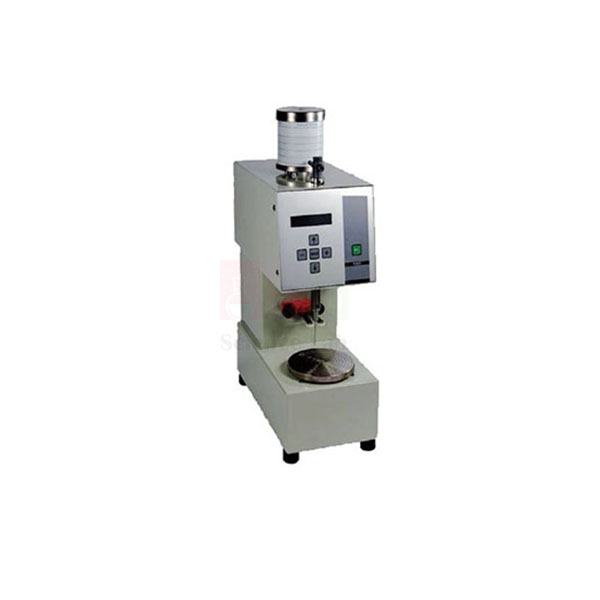
Automatic Vicat apparatus
Automatic Vicat apparatus (Product Code: SLE/CE/54) is a programmable touch-screen instrument used to run cement setting-time tests without an operator in cement plant, research and construction-materials laboratories. It can repeat penetrations as often as every 10 seconds and calculates initial and final setting times at user-programmed penetration depth limits. It is supplied by Jain Scientific Equipments Pvt Ltd (ScienceLab), Ambala, India, a laboratory equipment supplier in India for local and overseas buyers.
Specifications
| Parameter | Detail |
|---|---|
| Display | 4.3 in colour touch screen |
| Power | 50 W |
| Dimensions (L × W × H) | 200 × 400 × 410 mm |
| Weight | 10 kg (approx.) |
| Minimum penetration rate | 10 seconds |
| Setting time | Automatic calculation of initial and final setting time at programmable penetration depth limits |
| Test procedures | Can be customised and stored to match user-defined requirements |
| Data storage | USB port for data storage on pen drive (pen drive included) |
| Networking | LAN port for direct PC connection, or to a LAN hub for a network of up to 32 independent units controlled by one PC; 1 LAN cable included |
| Printer | Can incorporate an integrated graphic printer showing the test result and setting-time plot |
| Test space | Large test space with easy accessibility |
| Accessories available | EN and ASTM/AASHTO parts, in-water testing kit, needle cleaning device, integrated printer, probes for testing consistency and gypsum |
| Product code | SLE/CE/54 |
| Supplied by | Jain Scientific Equipments Pvt Ltd (ScienceLab), Ambala, India |
What Is the Automatic Vicat Apparatus Used For?
A manual Vicat test needs someone to lower the needle and note the result at regular intervals for hours; the automatic apparatus performs the penetrations itself and records the depth each time, so initial and final setting times are read consistently. It suits cement plants, ready-mix and research laboratories, and university departments that run many setting-time tests or need electronic records.
For buyers comparing test and measurement instruments in India, the practical points are data handling and expansion. Results can be saved to the supplied pen drive, printed on the optional integrated printer, or sent to a PC, and a LAN hub lets up to 32 units run from a single computer. Keep the needle clean between runs, using the needle cleaning device where fitted, and confirm the accessory pattern for your standard before testing.
What to Specify When Ordering
- Accessory pattern: EN or ASTM/AASHTO parts
- Whether the integrated graphic printer is required
- Optional kits: in-water testing kit, needle cleaning device, consistency or gypsum probes
- Number of units and whether they will be networked to one PC through a LAN hub
Supplier
Jain Scientific Equipments Private Limited, which trades as ScienceLab, supplies the Automatic Vicat apparatus to cement, construction and academic laboratories. Buyers get one point of contact for the instrument, its standard-specific accessories and the rest of a cement-testing bench, from moulds to curing equipment.
Questions about configuration, accessories and documentation are answered by our team before an order is placed. Company details are on the ScienceLab profile.
Related Civil Engineering Lab Equipment
These related items are often ordered with an automatic Vicat for a complete setting-time workflow:
- Vicat Needle Apparatus With Dashpot — a manual Vicat frame for consistency and setting-time tests
- Circulating water bath with cooler unit — holds water at a steady temperature for conditioning cement samples
- Cement curing bench-type cabinet — humid, temperature-controlled storage for cement specimens
- Le Chatelier moulds — for the soundness test on the same cement
More apparatus for cement, concrete and soil testing is in the Civil Engineering Lab Equipment category.
Frequently Asked Questions
What does the Automatic Vicat apparatus calculate?
The Automatic Vicat apparatus (SLE/CE/54) automatically calculates the initial and final setting times of cement at penetration depth limits that the user programs. With the optional integrated graphic printer, it can print the test result and the setting-time plot.
How often can the Automatic Vicat apparatus make a penetration?
The Automatic Vicat apparatus has a minimum penetration rate of 10 seconds, so penetrations can be repeated as often as every 10 seconds. Test procedures can be customised and stored to match user-defined requirements.
Can several Automatic Vicat units be connected to one computer?
Yes. The Automatic Vicat apparatus has a LAN port for direct connection to a PC, or to a LAN hub creating a network of up to 32 independent units controlled by a single PC. One LAN cable is included, and data can also be saved to the supplied pen drive.
What accessories are available for the Automatic Vicat apparatus?
Accessories listed for the Automatic Vicat apparatus include EN and ASTM/AASHTO parts, an in-water testing kit, a needle cleaning device, an integrated printer, and probes for testing consistency and gypsum. State the ones you need so they appear in the quotation.
Who supplies the Automatic Vicat apparatus?
The Automatic Vicat apparatus is supplied by Jain Scientific Equipments Pvt Ltd (ScienceLab), Ambala, Haryana, India, to laboratories in India and international markets. Quotations, accessory selection and delivery are arranged through the contact page.
Is a calibration certificate provided with the Automatic Vicat apparatus?
Calibration-certificate availability for the Automatic Vicat apparatus should be discussed with us before ordering. Tell us your laboratory’s documentation requirements when you send an enquiry, and we will confirm what can be provided with the instrument.
Request a Quote
For a quotation on the Automatic Vicat apparatus (SLE/CE/54), list the accessories you need and send them through the contact page, or add the item to the enquiry cart.
Last updated: 24 September 2026
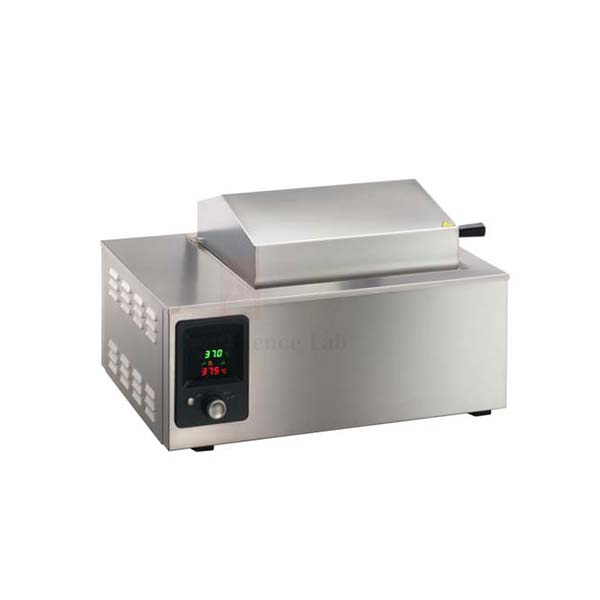
Circulating water bath with cooler unit
Circulating water bath with cooler unit (Product Code: SLE/CE/55) is a 40 litre heated and cooled water bath used to hold test specimens at a steady temperature for cement and asphalt testing. Its two-channel electronic thermoregulator controls both heating and cooling across +5 to +60 °C, while a re-circulating unit keeps the temperature uniform through the tank. This digital water bath is supplied by Jain Scientific Equipments Pvt Ltd (ScienceLab), Ambala, India.
Specifications
| Parameter | Detail |
|---|---|
| Capacity | 40 L |
| Power | 2000 W |
| Temperature range | +5 to +60 °C |
| Accuracy | ± 1% |
| Inside dimensions | 550 × 360 × 200 mm |
| Outside dimensions | 830 × 480 × 950 mm |
| Weight | 62 kg (approx.) |
| Temperature control | Two-channel electronic thermoregulator (heating/cooling) with digital display; automatically maintains the set temperature |
| Circulation | Re-circulating unit for temperature uniformity |
| Construction | Polished stainless steel internal surfaces; insulated sheet steel outer case |
| Cement use | Curing 40 × 40 × 160 mm cement specimens in water; storing hydrated samples at 20 °C |
| Asphalt use | Conditioning at temperatures from 25 to 60 °C |
| Product code | SLE/CE/55 |
| Supplied by | Jain Scientific Equipments Pvt Ltd (ScienceLab), Ambala, India |
What Is the Circulating Water Bath with Cooler Used For?
Cement mortar prisms of 40 × 40 × 160 mm are cured under water at a controlled temperature, and hydrated samples may need to be stored at 20 °C — often below the room temperature of a laboratory, which is why this bath has a cooler as well as a heater. For asphalt work, specimens are conditioned in water at temperatures from 25 to 60 °C before testing, so one multi-purpose bath can serve both the cement and bitumen sections of a lab.
Fill the tank with clean water and let the thermoregulator settle at the set point before loading specimens. Leave space between specimens so the re-circulating flow can reach all faces, and drain and wipe the stainless steel tank periodically to keep it clean. The unit’s 830 × 480 × 950 mm footprint and about 62 kg weight should be planned into the lab layout.
What to Specify When Ordering
- Intended use: cement specimen curing, storage of hydrated samples at 20 °C, or asphalt conditioning
- Space and handling for the 830 × 480 × 950 mm, approx. 62 kg unit
- The mains supply at your site for a 2000 W unit, so the quotation can address it
Supplier
Jain Scientific Equipments Private Limited, trading as ScienceLab, supplies this circulating water bath with cooler unit to cement, concrete and bitumen testing laboratories as a laboratory instruments supplier in India, alongside the moulds and compaction apparatus that prepare the specimens it holds.
For vendor registration, the supplying company is GST-registered in Haryana (GSTIN 06AAECJ8618A1ZT) and holds Legal Entity Identifier 3358004HRD1JIVXKYX49. Company details are on the ScienceLab company profile.
Related Civil Engineering Lab Equipment
These related items prepare or store the specimens that go into the water bath:
- Prism Mould Three Gang — casts the cement prisms that are cured in water
- Jolting Apparatus — compacts mortar in the 40 × 40 × 160 mm three-compartment mould
- Cement curing bench-type cabinet — humid storage before specimens go into water
- Accelerated Curing Tank — a curing tank for concrete and cement cube moulds
See the Civil Engineering Lab Equipment category for more cement, concrete and bitumen testing apparatus.
Frequently Asked Questions
What temperature range does the Circulating water bath with cooler unit cover?
The Circulating water bath with cooler unit (SLE/CE/55) covers +5 to +60 °C with a listed accuracy of ±1%. Its two-channel electronic thermoregulator handles both heating and cooling and automatically maintains the set temperature.
What is the capacity and size of the circulating water bath?
The Circulating water bath with cooler unit holds 40 litres. Inside dimensions are 550 × 360 × 200 mm, outside dimensions are 830 × 480 × 950 mm, and the unit weighs approximately 62 kg, so plan floor or bench space accordingly.
Can the Circulating water bath with cooler unit be used for curing cement prisms?
Yes. The Circulating water bath with cooler unit is listed for curing 40 × 40 × 160 mm cement specimens in water and for storing hydrated samples at 20 °C. It also serves asphalt testing, where conditioning temperatures of 25 to 60 °C are required.
What is the Circulating water bath with cooler unit made of?
The internal surfaces of the Circulating water bath with cooler unit are polished stainless steel, and the outer case is insulated sheet steel. The insulation helps the bath hold its set temperature, and the smooth stainless steel tank is easy to drain and clean.
Who supplies the Circulating water bath with cooler unit?
The Circulating water bath with cooler unit is supplied by Jain Scientific Equipments Pvt Ltd (ScienceLab), Ambala, Haryana, India, to laboratories in India and international markets. Enquiries and quotations are handled through the contact page.
What power does the Circulating water bath with cooler unit need?
The Circulating water bath with cooler unit is rated at 2000 W. Please state your mains voltage and frequency when you enquire, so the supply arrangement can be confirmed in the quotation before the unit is dispatched.
Request a Quote
Send your enquiry for the Circulating water bath with cooler unit through the contact page, or add it to the enquiry cart with any related curing equipment.
Last updated: 24 September 2026
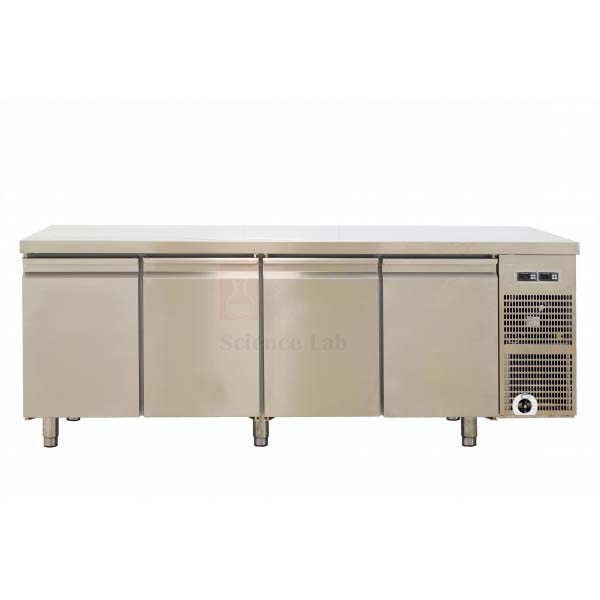
Cement curing bench-type cabinet
Cement curing bench-type cabinet (Product Code: SLE/CE/56) is a refrigerated curing cabinet used to store cement and mortar specimens at a controlled temperature and 95% ± 5% relative humidity in testing laboratories. The unit has four cells with a total capacity of about 400 litres, and its internal temperature can be set between 18 and 30 °C with ±1 °C accuracy. It is supplied by Jain Scientific Equipments Pvt Ltd (ScienceLab), Ambala, India, to cement and construction laboratories.
Specifications
| Parameter | Detail |
|---|---|
| Capacity | 400 litres (approx.) |
| Cells | 4, with 1 shelf included per cell (4 in total) |
| Power rating | 310 W total |
| Internal temperature range | 18 to 30 °C |
| Temperature accuracy | ±1 °C |
| Ambient temperature (min/max) | 18 / 28 °C |
| Internal humidity | 95% ± 5% RH |
| Shelf plan dimensions | 310 × 530 mm (W × D) |
| Internal height | Approx. 530 mm |
| Shelf guides | Stainless steel, allowing shelf positioning every 70 mm |
| Max load per shelf | 40 kg |
| Max shelves per cell | 5 (1 included), at 70 mm spacing |
| Overall dimensions (L × W × H) | 2400 × 700 × 860 mm |
| Weight | 210 kg (approx.) |
| Water supply | Connection to the water mains required; inlet water 5 to 36 °C |
| Temperature control | Electronic system with digital display and keyboard to set the curing temperature |
| Cooling system | Refrigeration unit with hermetic piston compressor, charged with HFC refrigerant |
| Humidity saturation | Water evaporation system (no water nebuliser): water collecting bath, immersed re-circulating pump and hydraulic circuit |
| Product code | SLE/CE/56 |
| Supplied by | Jain Scientific Equipments Pvt Ltd (ScienceLab), Ambala, India |
What Is the Cement Curing Cabinet Used For?
Freshly cast cement and mortar specimens need a saturated, temperature-controlled atmosphere between casting and demoulding, before any water curing begins. The cabinet provides this with a refrigeration unit and an evaporation-based humidity system, so specimens neither dry out nor get wetted by spray. Prisms, cubes and moulds for tests such as setting time and soundness can all be stored on its adjustable shelves.
Before installation, check that a water mains connection is available with inlet water between 5 and 36 °C, and that the room stays within 18 to 28 °C. Keep each shelf within its 40 kg limit and use the 70 mm shelf spacing to fit taller moulds. For engineering lab equipment in India serving both teaching and commercial testing, the four separate cells make it easy to keep batches apart.
What to Specify When Ordering
- Number of extra shelves (up to 5 per cell; 1 per cell included)
- Curing temperature your procedure requires within the 18 to 30 °C range
- Site conditions: water mains connection, inlet water 5 to 36 °C, ambient 18 to 28 °C
- Floor space and handling for the 2400 × 700 × 860 mm, approx. 210 kg cabinet
Supplier
ScienceLab, the trading name of Jain Scientific Equipments Private Limited, supplies the Cement curing bench-type cabinet to cement plants, construction laboratories and engineering institutions. Buyers can source the cabinet together with the moulds, compaction apparatus and test frames used around it, through one supplier.
Our team can review site conditions and shelf requirements with you before an order is confirmed. Company background is on the ScienceLab profile page.
Related Civil Engineering Lab Equipment
These items from the same range feed specimens into, or complement, the curing cabinet:
- Jolting Apparatus — compacts cement mortar prisms before they go into the cabinet
- Prism Mould Three Gang — three-gang moulds for cement prisms
- Circulating water bath with cooler unit — for water curing once specimens are demoulded
- Humidity Chamber — a separate humidity-controlled chamber for other conditioning work
The Civil Engineering Lab Equipment category lists further curing and testing equipment.
Frequently Asked Questions
What temperature and humidity does the Cement curing bench-type cabinet maintain?
The Cement curing bench-type cabinet (SLE/CE/56) holds an internal temperature settable from 18 to 30 °C with ±1 °C accuracy and an internal humidity of 95% ± 5% RH, set through an electronic controller with digital display and keyboard.
How many shelves does the Cement curing bench-type cabinet hold?
The Cement curing bench-type cabinet has four cells with one shelf included in each, four in total. Each cell accepts up to five shelves on stainless steel guides at 70 mm spacing, and each shelf carries a maximum of 40 kg.
Does the Cement curing bench-type cabinet need a water connection?
Yes. The Cement curing bench-type cabinet must be connected to the water mains, with inlet water between 5 and 36 °C. Humidity is produced by evaporation from a water collecting bath with an immersed re-circulating pump, not by a nebuliser.
What room conditions does the curing cabinet require?
The Cement curing bench-type cabinet is specified for ambient temperatures between 18 and 28 °C. It measures 2400 × 700 × 860 mm and weighs about 210 kg, so check floor space and access routes before delivery.
Who supplies the Cement curing bench-type cabinet?
The Cement curing bench-type cabinet is supplied by Jain Scientific Equipments Pvt Ltd (ScienceLab), Ambala, Haryana, India, to laboratories in India and international markets. Quotations and delivery details are arranged through the contact page.
What should a quotation request for the curing cabinet include?
A quotation request for the Cement curing bench-type cabinet should include the quantity, any extra shelves, the curing temperature you need, your site water and power arrangements, and the delivery location in India or abroad.
Request a Quote
Request a quotation for the Cement curing bench-type cabinet (SLE/CE/56) through the contact page, or add it to the enquiry cart with any extra shelves.
Last updated: 24 September 2026
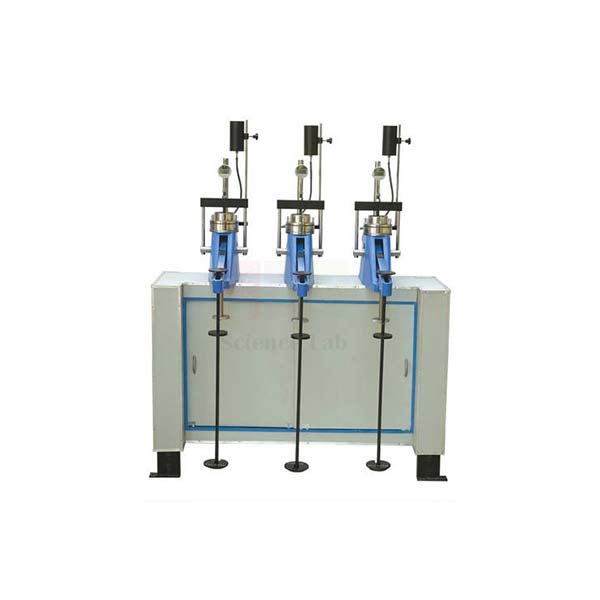
Consolidation Test Apparatus
Consolidation Test Apparatus (Product Code: SLE/CE/57) is a three-station steel loading bench used to consolidate soil specimens ahead of triaxial testing in geotechnical and soil mechanics laboratories. It consolidates three triaxial specimens at the same time for CU and CD tests under anisotropic conditions, which shortens testing time when only one compression machine is available. It is fabricated by Jain Scientific Equipments Pvt Ltd (ScienceLab), an OEM and engineering lab equipment manufacturer, at its own factory in Ambala, India, for university and consultancy laboratories.
Specifications
| Parameter | Detail |
|---|---|
| Purpose | Consolidation stage of three triaxial specimens at the same time, for CU and CD tests in anisotropic conditions |
| Construction | Steel bench with three load frames and centering platens |
| Triaxial cells | For specimens 35 to 100 mm diameter |
| Other makes of cell | Usable if the cell has a centering hole 13 mm dia. × 3 mm deep |
| Loading | Weights on the centre hanger and on the lever hanger; frames kept light so no counterbalance is required |
| Overall dimensions (L × D × H) | 1300 × 800 × 970 mm |
| Weight | 145 kg (approx.) |
| Dial gauge | 0.002 mm × 10 mm |
| Extension piece | 40 mm long |
| Test forms | Pads of 50 for Consolidation Test Plot and for one-dimensional consolidation |
| Weight set | Gives 10 kg/cm² on a 60 mm dia. specimen: 7 × 0.05, 5 × 0.1, 6 × 0.2, 6 × 0.5 and 5 × 1.0 kg/cm² |
| To complete the set-up | Axial displacement gauges or transducers, beam loading device(s) and slotted weights |
| Product code | SLE/CE/57 |
| Manufacturer | Jain Scientific Equipments Pvt Ltd (ScienceLab) — OEM |
| Country of origin | India (made in Ambala, Haryana) |
What Is the Consolidation Test Apparatus Used For?
In consolidated-undrained (CU) and consolidated-drained (CD) triaxial tests, each specimen must first be consolidated under a controlled stress, a stage that can take many hours and would otherwise tie up the compression machine. Moving that stage onto this three-frame bench frees the compression machine for the shearing stage, so a laboratory with a single machine keeps three specimens progressing in parallel.
Anisotropic consolidation is achieved by adding weights to the hangers to raise the axial stress above the confining pressure in the cell. The listed dial gauge, weight set and test form pads also support one-dimensional consolidation work on 60 mm diameter specimens. As lab equipment for research in India, it suits postgraduate projects as well as consultancy testing; level the bench, seat each cell on its centering platen and add weights gently.
What to Specify When Ordering
- Triaxial cell sizes in use (specimens 35 to 100 mm), and for other makes, confirmation of the 13 mm × 3 mm centering hole
- Axial measurement: dial gauges or displacement transducers, and how many
- Beam loading device(s) and slotted weights needed to complete the set-up
- Extra test form pads or weight sets
OEM Manufacturer
The Consolidation Test Apparatus is manufactured by Jain Scientific Equipments Private Limited, trading as ScienceLab, as the OEM at its own licensed factory at Saha, Ambala, Haryana. Each bench is delivered factory-direct to universities, geotechnical laboratories, dealers and importers.
Because the apparatus usually needs gauges, loading devices and weights to complete it, you can agree the full configuration directly with the maker before ordering — ask us. Company details: ScienceLab company profile.
Related Civil Engineering Lab Equipment
These soil testing items from the same range are used alongside the consolidation bench:
- Direct Shear test Apparatus — shear strength of soil on square specimens
- Unconfined Compression Tester (Motorised) — compressive strength of cohesive soil samples
- Soil extruder, motor operated — extrudes samples from sampling tubes before trimming
- Moisture Tins — for moisture content determination before and after testing
Browse the Civil Engineering Lab Equipment category for further soil, concrete and cement apparatus.
Frequently Asked Questions
How many specimens can the Consolidation Test Apparatus handle at once?
The Consolidation Test Apparatus (SLE/CE/57) consolidates three triaxial specimens at the same time, using three load frames with centering platens on one steel bench, for CU and CD tests under anisotropic conditions.
Which triaxial cells does the Consolidation Test Apparatus accept?
The Consolidation Test Apparatus suits triaxial cells for specimens from 35 to 100 mm diameter. It can also be used with other makes of triaxial cell, provided they have a centering hole 13 mm in diameter and 3 mm deep.
What accessories are listed with the Consolidation Test Apparatus?
Listed accessories for the Consolidation Test Apparatus are a 0.002 mm × 10 mm dial gauge, a 40 mm extension piece, test form pads of 50, and a weight set giving 10 kg/cm² on a 60 mm diameter specimen. Confirm the included items in your quotation.
Does the Consolidation Test Apparatus need a counterbalance?
No. The load frames of the Consolidation Test Apparatus are kept as light as possible, so a counterbalance is not required. Weights can be placed on both the centre hanger and the lever hanger to apply the consolidation load.
Who manufactures the Consolidation Test Apparatus?
Jain Scientific Equipments Pvt Ltd (ScienceLab) is the OEM manufacturer of the Consolidation Test Apparatus, building it at its own factory at Saha, Ambala, Haryana, India, and supplying laboratories in India and international markets directly.
What are the size and weight of the Consolidation Test Apparatus?
The Consolidation Test Apparatus measures 1300 × 800 × 970 mm overall and weighs approximately 145 kg, so it needs a level floor area with enough room around the bench to load weights on all three frames.
Request a Quote
For a quotation on the Consolidation Test Apparatus, list your cell sizes and the gauges, loading devices and weights required, and send them through the contact page or the enquiry cart. The manufacturer quotes directly.
Last updated: 24 September 2026
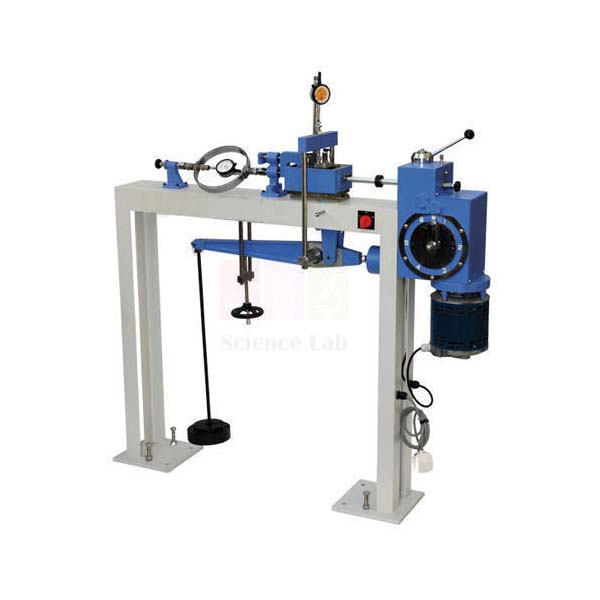
Direct Shear test Apparatus
Direct Shear test Apparatus (Product Code: SLE/CE/58) is a split shear box with a loading unit used to measure the shear strength of soil on 60 × 60 × 25 mm specimens in soil mechanics laboratories. Normal stress up to 8 kg/cm² is applied directly or through a counter-balanced lever, and a 200 kg proving ring with dial gauges records the response. The apparatus is made by Jain Scientific Equipments Pvt Ltd (ScienceLab), an OEM manufacturer, at its own factory in Ambala, India.
Specifications
| Parameter | Detail |
|---|---|
| Shear box | Two halves, for a square specimen 60 × 60 × 25 mm |
| Gripper plates | One pair plain, one pair perforated |
| Porous stones | One pair |
| Loading pad | One top loading pad |
| Shear box housing | Accommodates the shear box assembly; complete with two ball roller strips |
| Specimen cutter | For cutting 60 × 60 × 25 mm specimens from larger samples |
| Weights | Set giving a normal stress of 3 kg/cm² |
| Loading unit | Load yoke with direct and lever system; counter-balanced detachable lever |
| Normal stress capacity | 8 kg/cm² |
| Load application | Through a steel ball recessed in the loading pad, or directly through a boss on the loading yoke |
| Movement | V strips and roller strips for frictionless movement of the shear box housing |
| Proving ring | High-sensitivity compression proving ring, capacity 200 kg |
| Dial gauges | One consolidation dial gauge 0.01 mm × 25 mm; one strain dial gauge 0.01 mm × 25 mm |
| Optional accessories | Additional weights for a normal stress of 5 kg/cm²; soil sampler for 60 × 60 mm specimens; test form pad of 50; spare porous stones in pairs |
| Product code | SLE/CE/58 |
| Manufacturer | Jain Scientific Equipments Pvt Ltd (ScienceLab) — OEM |
| Country of origin | India (made in Ambala, Haryana) |
What Is the Direct Shear Test Apparatus Used For?
The direct shear test gives a soil’s cohesion and angle of shearing resistance, the two parameters used in foundation, slope and retaining-wall design. A specimen trimmed with the cutter is placed between gripper plates and porous stones in the two-part box, the normal load is applied through the yoke, and one half of the box is displaced relative to the other so the soil fails along the horizontal plane. The proving ring measures shear force while the dial gauges record horizontal and vertical movement.
Repeating the test at several normal stresses plots the failure envelope. Perforated gripper plates with porous stones allow drainage, while plain plates suit undrained work. It is standard engineering lab equipment in India for geotechnical practicals; keep the roller strips clean, check the porous stones are not clogged, and zero both dial gauges before each run.
What to Specify When Ordering
- Normal stress range: the standard 3 kg/cm² weight set, or also the additional set for 5 kg/cm²
- Soil sampler for 60 × 60 mm specimens and test form pads
- Spare porous stones (supplied in pairs)
- Number of complete apparatus sets for your laboratory
OEM Manufacturer
ScienceLab is the brand of Jain Scientific Equipments Private Limited, the OEM that manufactures this Direct Shear test Apparatus at its own licensed factory at Saha, Ambala, Haryana. The shear box, housing and loading unit are supplied factory-direct to engineering colleges, geotechnical consultants, dealers and importers.
Spares such as porous stones and gripper plates are handled by the manufacturer itself, so replacements can be matched to your existing box — ask us. Read the ScienceLab profile for company details.
Related Civil Engineering Lab Equipment
These soil mechanics items from the same range complement direct shear testing:
- Consolidation Test Apparatus — consolidates triaxial specimens before shearing
- Vane Shear Apparatus (Motorised) — shear strength of soft cohesive soils by the vane method
- Unconfined Compression Tester (Motorised) — compressive strength of cohesive soil samples
- Moisture Tins — moisture content of the specimen before and after shear
More soil and material testing apparatus is available in the Civil Engineering Lab Equipment category.
Frequently Asked Questions
What specimen size does the Direct Shear test Apparatus use?
The Direct Shear test Apparatus (SLE/CE/58) tests square specimens 60 × 60 × 25 mm in a two-part shear box. A specimen cutter for trimming 60 × 60 × 25 mm specimens from larger samples is included, and a soil sampler is available as an option.
What normal stress can the Direct Shear test Apparatus apply?
The loading unit of the Direct Shear test Apparatus has a normal stress capacity of 8 kg/cm². The standard weight set gives 3 kg/cm², an additional set for 5 kg/cm² is optional, and load is applied directly or through the counter-balanced detachable lever.
What is included with the Direct Shear test Apparatus?
The Direct Shear test Apparatus includes the two-part shear box, plain and perforated gripper plates, porous stones, a top loading pad, the housing with two ball roller strips, a specimen cutter and weights, plus a 200 kg proving ring and two 0.01 mm × 25 mm dial gauges.
Are spare porous stones available for the Direct Shear test Apparatus?
Yes. Spare porous stones for 60 × 60 mm samples are listed as available in pairs for the Direct Shear test Apparatus. Stones can clog with fine soil over time, so laboratories that test often usually keep a spare pair ready.
Who manufactures the Direct Shear test Apparatus?
Jain Scientific Equipments Pvt Ltd (ScienceLab) manufactures the Direct Shear test Apparatus as the OEM at its own factory at Saha, Ambala, Haryana, India, and supplies it factory-direct to buyers in India and international markets.
Is a calibration certificate available for the proving ring?
Calibration-certificate availability for the proving ring and dial gauges of the Direct Shear test Apparatus should be discussed with us before ordering. Tell us your documentation needs through the contact page and we will confirm what can be provided.
Request a Quote
To obtain a quotation for the Direct Shear test Apparatus, state the weight sets and optional accessories you need via the contact page, or add it to the enquiry cart. The quotation comes directly from the manufacturer.
Last updated: 24 September 2026
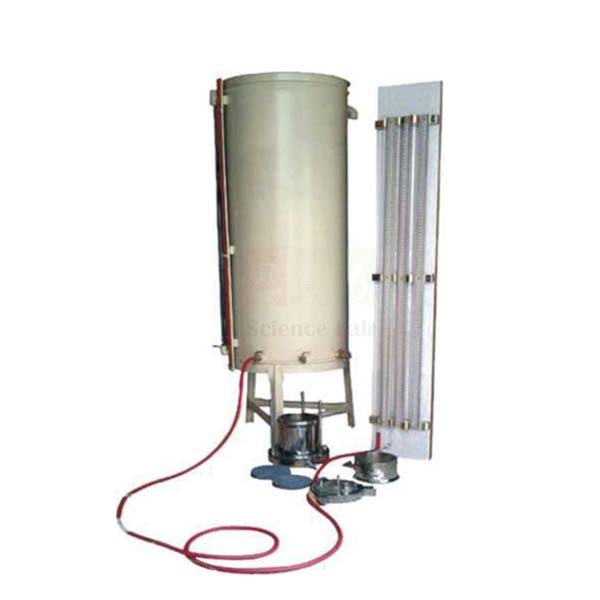
Constant Head permeability apparatus
Constant Head permeability apparatus (Product Code: SLE/CE/59) is a Perspex permeameter cell used to measure the permeability of relatively coarse-grained soils such as sands and gravel in soil mechanics laboratories. It is offered in 75 mm and 114 mm nominal cell diameters, with pressure points at different levels that connect to a manometer stand and a constant level tank. Jain Scientific Equipments Pvt Ltd (ScienceLab), the OEM manufacturer, makes it at its own factory in Ambala, India.
Specifications
| Parameter | Detail |
|---|---|
| Method | Constant head; the apparatus is used for laboratory determination of soil permeability using a constant or a variable head |
| Suitable soils | Relatively coarse-grained soils such as sands and gravel |
| Permeability cell | Perspex, mounted on a detachable aluminium base and head |
| Models | 75 mm and 114 mm nominal cell diameter |
| Maximum particle size | 10 mm |
| Recommended permeability range | 10-3 to 10-7 cm/s (as listed) |
| Connections | Pressure points at different levels, to be connected to the manometer stand and the constant level tank |
| Product code | SLE/CE/59 |
| Manufacturer | Jain Scientific Equipments Pvt Ltd (ScienceLab) — OEM |
| Country of origin | India (made in Ambala, Haryana) |
What Is the Constant Head Permeability Apparatus Used For?
Water flows through the soil specimen in the cell under a head kept steady by the constant level tank. Once flow is steady, the volume collected over a measured time and the head difference read on the manometer between two pressure points give the coefficient of permeability through Darcy’s law. The transparent Perspex cell lets students watch saturation and spot air pockets or piping.
Coarse soils are free-draining, so the constant head method gives a measurable flow in a short time; for fine-grained clay-like or silty soils, the falling head method is recommended instead. Keep particles to 10 mm or less, use de-aired water and saturate the specimen fully before readings. Students and consultants use this engineering lab equipment in India for drainage, filter and earth-dam design exercises.
What to Specify When Ordering
- Cell size: 75 mm or 114 mm nominal diameter
- Whether the manometer stand and constant level tank should be quoted with the cell
- Number of cells for parallel testing
- Whether a falling head permeability apparatus is also needed for fine-grained soils
OEM Manufacturer
Registered as Jain Scientific Equipments Private Limited (CIN U29309HR2020PTC087597) and trading as ScienceLab, the company is the original equipment manufacturer of this permeameter. Production takes place at its licensed factory premises at 449, HSIIDC Industrial Area, Saha, Ambala, under Factory Licence AMB-ONLINE-CHD-J-414.
Universities, polytechnics, geotechnical consultants, dealers and importers are supplied factory-direct, and repeat-order or spare-part enquiries go straight to the manufacturer. Visit the company profile for more about ScienceLab.
Related Civil Engineering Lab Equipment
These soil testing items from the same range are used with the constant head permeameter:
- Falling head permeability apparatus — the variable-head method for fine-grained soils
- Test Sieves — for grading the sample and removing particles over 10 mm
- Relative density test apparatus — determines the density state of the sand being tested
- Moisture Tins — for moisture content of the soil sample
See the full Civil Engineering Lab Equipment category for further soil, cement and concrete apparatus.
Frequently Asked Questions
What soils is the Constant Head permeability apparatus suitable for?
The Constant Head permeability apparatus (SLE/CE/59) is suited to relatively coarse-grained soils such as sands and gravel, with a maximum particle size of 10 mm. For fine-grained clay-like or silty soils, the Falling head permeability apparatus is recommended.
What cell sizes are available for the Constant Head permeability apparatus?
The Constant Head permeability apparatus is available with 75 mm and 114 mm nominal cell diameters. The Perspex cell is mounted on a detachable aluminium base and head, so it can be dismantled for filling and cleaning.
What permeability range does the Constant Head permeability apparatus cover?
The listed recommended range for the Constant Head permeability apparatus is a coefficient of permeability of 10-3 to 10-7 cm/s. Because the constant head method suits free-draining soils, describe your soil to us so the right cell and method can be confirmed.
Are the manometer stand and constant level tank included?
The Constant Head permeability apparatus has pressure points that must be connected to a manometer stand and a constant level tank. Whether these form part of your supply should be confirmed in the quotation, so mention them when you enquire through the contact page.
Who manufactures the Constant Head permeability apparatus?
Jain Scientific Equipments Pvt Ltd (ScienceLab) is the OEM manufacturer of the Constant Head permeability apparatus, producing it at its own licensed factory at Saha, Ambala, Haryana, India, and supplying buyers in India and international markets directly.
Request a Quote
For a Constant Head permeability apparatus quotation, state the cell size and any manometer stand or tank required via the contact page, or add it to the enquiry cart. Quotes come straight from the manufacturer.
Last updated: 24 September 2026
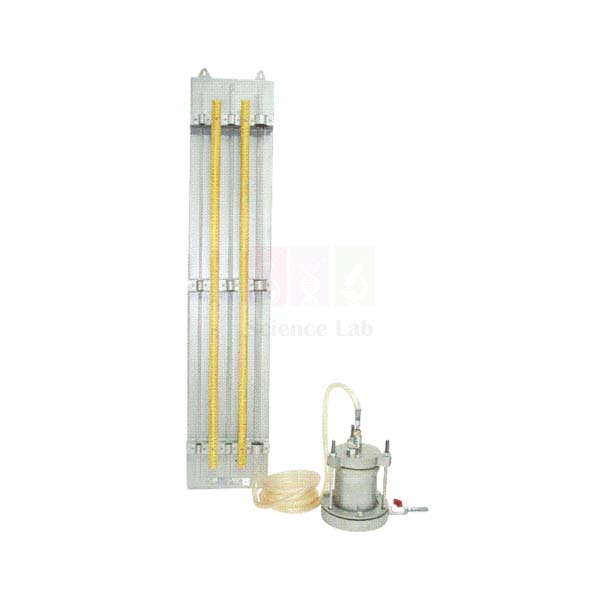
Falling head permeability apparatus
Falling head permeability apparatus (Product Code: SLE/CE/60) is a soil permeameter used to determine the coefficient of permeability of soil by timing how quickly water falls in a standpipe as it seeps through the specimen. It is recommended for soils with permeability from 10-3 to 10-7 cm/s and particles no larger than 10 mm, and it can also be used with a constant head. It comes from Jain Scientific Equipments Pvt Ltd (ScienceLab), an OEM manufacturer that makes it at its own factory in Ambala, India.
Specifications
| Parameter | Detail |
|---|---|
| Method | Falling (variable) head; also usable with a constant head |
| Recommended permeability range | 10-3 to 10-7 cm/s |
| Maximum particle size | 10 mm |
| Product code | SLE/CE/60 |
| Manufacturer | Jain Scientific Equipments Pvt Ltd (ScienceLab) — OEM |
| Country of origin | India (made in Ambala, Haryana) |
What Is the Falling Head Permeability Apparatus Used For?
In silts, clays and fine sands, water moves so slowly that collecting a measurable volume at constant head would take too long. Instead, water is allowed to fall in a narrow standpipe above the specimen, and the time taken for the level to drop between two marks, together with the standpipe area and the specimen length and area, gives the coefficient of permeability.
The results feed into the design of clay liners, earth dams, foundations and drainage, and students can compare compacted and undisturbed samples of the same soil. It is useful engineering educational equipment for soil mechanics practicals. Saturate the specimen fully, use de-aired water, check joints for leaks before timing, and keep particles to 10 mm or less.
OEM Manufacturer
Jain Scientific Equipments Private Limited, trading as ScienceLab, manufactures the Falling head permeability apparatus as the OEM at its own licensed factory at Saha, Ambala, Haryana. Engineering colleges, research laboratories, dealers and importers buy it direct from the maker instead of through a trading company.
Details not shown here, such as specimen size and standpipe arrangement, can be confirmed with the manufacturer before you order — ask us. More about the company is on the ScienceLab company profile.
Related Civil Engineering Lab Equipment
These soil testing items from the same range are used alongside the falling head permeameter:
- Constant Head permeability apparatus — the constant-head method for sands and gravel
- Liquid limit devices (Casagrande) — for classifying the fine-grained soils being tested
- Soil extruder, motor operated — extrudes undisturbed samples from sampling tubes
- Moisture Tins — moisture content of the specimen before and after the test
Browse the Civil Engineering Lab Equipment category for more soil mechanics and materials testing apparatus.
Frequently Asked Questions
What soils is the Falling head permeability apparatus suitable for?
The Falling head permeability apparatus (SLE/CE/60) is recommended for soils with a coefficient of permeability of 10-3 to 10-7 cm/s, typically fine sands, silts and clay-like soils, with a maximum particle size of 10 mm.
Can the Falling head permeability apparatus also run constant head tests?
Yes. The Falling head permeability apparatus is described for laboratory determination of soil permeability using either a constant or a variable head. For free-draining coarse soils, the Constant Head permeability apparatus is the dedicated option.
What is the maximum particle size for the Falling head permeability apparatus?
The maximum particle size of soil that can be tested in the Falling head permeability apparatus mould is 10 mm. Larger particles should be screened out before the specimen is prepared, since they can create flow paths along the mould wall.
What are the cell dimensions of the Falling head permeability apparatus?
The cell dimensions and materials of the Falling head permeability apparatus are not listed on this page. Please ask through the contact page and we will confirm the specimen size, standpipe arrangement and included accessories before you order.
Who manufactures the Falling head permeability apparatus?
Jain Scientific Equipments Pvt Ltd (ScienceLab) is the OEM manufacturer of the Falling head permeability apparatus, making it at its own factory at Saha, Ambala, Haryana, India, and supplying buyers in India and international markets directly.
What should I include in a quotation request for the falling head permeameter?
A quotation request for the Falling head permeability apparatus should include the quantity, the soil types you plan to test, whether a constant head set-up is also needed, and the delivery location in India or abroad.
Request a Quote
Request a quotation for the Falling head permeability apparatus (SLE/CE/60) through the contact page, or add it to the enquiry cart with other soil testing items. The manufacturer quotes you directly.
Last updated: 24 September 2026
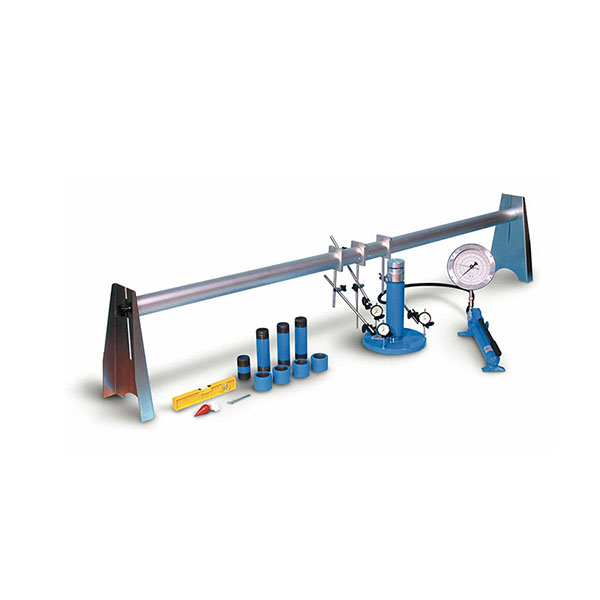
Plate load bearing test apparatus
Plate load bearing test apparatus (Product Code: SLE/CE/61) is a hydraulic field loading set used to estimate the bearing capacity of soil beneath a loading plate at a chosen depth of embedment on construction and pavement sites. Geotechnical engineers, highway and airport pavement designers and civil engineering colleges use it with 300 mm and 450 mm diameter plates and a 200 kN or 500 kN piston assembly. It is made by Jain Scientific Equipments Pvt Ltd (ScienceLab), an OEM manufacturer of engineering lab equipment in India, at its own factory in Ambala.
Specifications
| Parameter | Detail |
|---|---|
| Test purpose | Estimating soil bearing capacity under field loading conditions for a specific loading plate and depth of embedment |
| Pavement application | Load tests on soil and flexible pavement components for the evaluation and design of airport and highway pavements |
| Piston assembly capacity | 200 kN or 500 kN |
| Loading system | Hydraulic hand pump with pressure transducer |
| Load readout | Battery-operated digital readout unit |
| Datum bar | 2.4 m long |
| Settlement gauges | 3 digital dial gauges, 25 mm travel x 0.01 mm, with dial supports |
| Loading plates | 300 mm and 450 mm diameter |
| Product code | SLE/CE/61 |
| Manufacturer | Jain Scientific Equipments Pvt Ltd (ScienceLab) — OEM |
| Country of origin | India (made in Ambala, Haryana) |
What Is the Plate Load Bearing Test Apparatus Used For?
The set reproduces a foundation or wheel load directly on the ground. The loading plate is bedded on the prepared test level, the hydraulic piston is jacked against a reaction load provided on site, and pressure is raised in increments with the hand pump while the digital readout shows the applied load. After each increment the three dial gauges, held from the 2.4 m datum bar, record how far the plate settles.
Plotting load against settlement lets students and site engineers judge the safe bearing pressure of a foundation stratum or the support offered by a subgrade and flexible pavement layers. As lab equipment for technical institutes, it also gives civil engineering students first-hand experience of a full-scale field test. Keep the datum bar supports well clear of the loaded area so the gauges read true plate movement.
What to Specify When Ordering
- Piston assembly capacity: 200 kN or 500 kN
- Loading plates required: 300 mm diameter, 450 mm diameter or both
- Number of complete sets for your department or site teams
- Any additional digital dial gauges or dial supports you want quoted alongside the set
OEM Manufacturer
ScienceLab is the trading name of Jain Scientific Equipments Private Limited, the original equipment manufacturer (OEM) of this plate load bearing test apparatus. The set is made and assembled at the company's own licensed factory at Saha, Ambala, Haryana, India, rather than bought in from a trader, and it is supplied factory-direct to engineering colleges, polytechnics, testing laboratories, dealers and importers.
Because the manufacturer handles repeat business itself, you can ask us about replacement loading plates or dial supports whenever your field kit needs attention. Read more about the company on our company profile.
Related Civil Engineering Lab Equipment
A plate load test is usually one stage of a wider site investigation. These items support the work before and after the load test:
- Field CBR test set — in-situ bearing ratio of the same subgrade for road design
- Core cutters — in-place density and moisture content of the soil at test level
- Soil Augers — exploratory holes to check the soil layers below the plate
- Load ring penetrometer — quick bearing-strength checks to choose test locations
- Consolidation Test Apparatus — laboratory settlement behaviour of clay samples from the site
See the complete Civil Engineering Lab Equipment range for soil, concrete and pavement testing.
Frequently Asked Questions
What is included with the plate load bearing test apparatus?
The plate load bearing test apparatus includes a hydraulic piston assembly (200 kN or 500 kN), a hydraulic hand pump, a pressure transducer, a battery-operated digital readout unit, a 2.4 m datum bar, three digital dial gauges with supports, and 300 mm and 450 mm loading plates.
What load capacity does the plate load bearing test apparatus offer?
The plate load bearing test apparatus is listed with a piston assembly of 200 kN or 500 kN capacity. Choose the capacity to suit the bearing pressures you expect and the plate size you will use, and state it in your enquiry so the quotation matches your set.
How is settlement measured with the plate load bearing test apparatus?
Settlement in the plate load bearing test apparatus is read on three digital dial gauges with 25 mm travel and 0.01 mm resolution. They are mounted on dial supports from the 2.4 m datum bar so readings stay independent of the loaded plate.
Who manufactures the plate load bearing test apparatus?
The plate load bearing test apparatus is manufactured by Jain Scientific Equipments Pvt Ltd, trading as ScienceLab, as the OEM at its own factory at Saha, Ambala, Haryana, India. Quotations, spare parts enquiries and repeat orders are handled directly by the manufacturer.
Is a calibration certificate available for the plate load bearing test apparatus?
Calibration documents for the plate load bearing test apparatus, for example for the pressure transducer and readout, should be discussed with us before you order. Describe your requirement on our contact page and we will advise what can be provided.
Can the plate load bearing test apparatus be ordered in bulk or for export?
Yes, the plate load bearing test apparatus can be quoted as a single set, as multiple sets for institutions, or for export to India and international markets. Share the quantity, piston capacity and delivery destination so a complete quotation can be prepared.
Request a Quote
For a quotation on the plate load bearing test apparatus, send your requirements through our contact page or add the product to the enquiry cart. Quotes come direct from the manufacturer; please mention piston capacity, plate sizes, quantity and delivery location.
Last updated: 24 September 2026