- Physics Lab Equipment
- Chemistry Lab Equipment
- Biology Lab Equipment
- Anatomical Lab Equipment
- Learning
- Educational Lab Equipment
- Magnets
- Agriculture
- Astronomy
- Earth Science
- Geography Lab Equipment
- Safety Lab Coat
- Laboratory
- Meteorological
- Electricity & Magnetism
- Heat
- School Lab Equipment
- Lab Glassware
- Science Lab Equipment
- Tvet Lab Equipment
- Robotics Kits Supplier and Manufacturer for Schools India
- Math Lab Equipment Manufacturers and Exporters in Ambala
- STEM Kits Manufacturers and Supplier India
- Engineering Lab Equipment
- Hospital Lab Equipment
- Water, Sanitation & Hygiene Supplies
- Cold Chain, Solar & Communication Equipment
- Nutrition
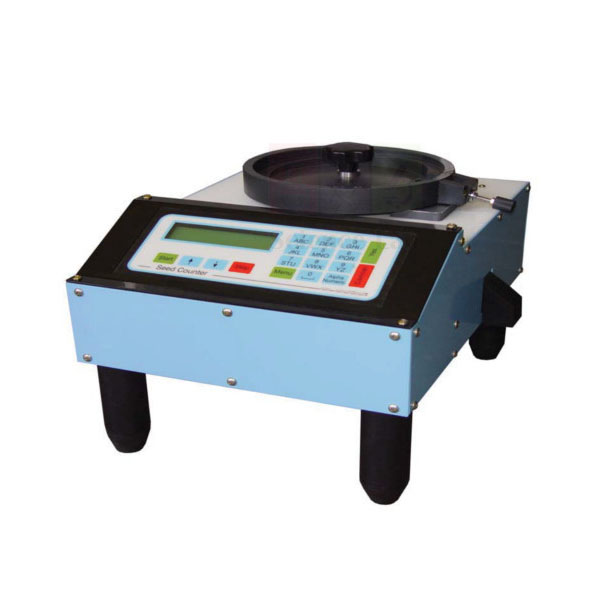
Seed Counter
Seed Counter (Product Code: SLE/AG/15) is a microcontroller-based electronic instrument used to count seeds into exact, programmed lots in seed testing and agricultural laboratories. Seed analysts, plant breeders and agriculture colleges use it for seeds from 1 to 15 mm, and it counts up to 999999 seeds in a lot at the press of a button. It is supplied by Jain Scientific Equipments Pvt Ltd (ScienceLab), Ambala, India, alongside its botany lab equipment.
Specifications
| Parameter | Detail |
|---|---|
| Type | Micro chip based electronic seed counter with programmed seed tallying at the press of a button |
| Control | Microcontroller based |
| Keyboard | Membrane keyboard |
| Maximum count | Up to 999999 seeds in a lot |
| Seed size range | 1 to 15 mm |
| Seed alignment | Adjustable knob keeps the seeds moving in a single row |
| Accuracy features | Slow start and slow stop |
| Product code | SLE/AG/15 |
| Supplied by | Jain Scientific Equipments Pvt Ltd (ScienceLab), Ambala, India |
What Is the Seed Counter Used For?
The Seed Counter replaces slow hand counting wherever a fixed number of seeds is needed: germination tests, seed weight determinations, sowing trials and packeting. Seeds are poured in and the adjustable knob is set so that they travel forward in a single row, which is what lets each seed be registered separately. The operator keys the required count into the membrane keyboard and starts the run with one button; slow start and slow stop keep the stream controlled at both ends of the lot so the counter does not overshoot the programmed number.
In teaching and research it is practical plant biology lab equipment: students can prepare replicate lots in minutes and spend their practical time on the experiment itself. When switching seed types, re-set the knob for the new size, empty any seeds left inside, and hand-check the first lot to confirm the setting. Laboratories buying from a laboratory instruments supplier in India often pair it with a moisture meter and an incubator for a complete seed quality bench.
Supplier
ScienceLab is the trading name of Jain Scientific Equipments Private Limited, based in Ambala, Haryana. The company supplies this seed counter to seed testing laboratories, agricultural universities, research stations and dealers in India and international markets, and handles quotations, dispatch and follow-up questions directly. More about the company is on the company profile.
Related Laboratory Equipment
Seed quality work usually combines counting with these items:
- Digital Moisture Meter — checks moisture in food grains, pulses, oil seeds and vegetable seeds before storage or testing.
- Laboratory Incubator With Visibility Door — holds counted seed lots at steady conditions during germination tests.
- Petri Dish (Complete) — for setting out counted seeds on moist paper to germinate.
- Kit for Demonstrating Seed Respiration in Germination — a follow-on class activity using germinating seed lots.
- Seed Identification Kit — a teaching kit for classifying and identifying real tree seeds.
Other agricultural laboratory products are listed in the Agriculture category.
Frequently Asked Questions
What seed sizes can the Seed Counter handle?
The Seed Counter handles seeds from 1 to 15 mm. Before each new seed type, the adjustable knob is set so that seeds travel in a single row, which lets the electronic counter register every seed separately and keep the lot count exact.
How many seeds can the Seed Counter count in one lot?
The Seed Counter can count up to 999999 seeds in a single lot. The required number is keyed in on the membrane keyboard and the microcontroller stops at the programmed figure, so large lots for sowing trials or packeting need no hand counting.
What do slow start and slow stop do on the Seed Counter?
Slow start and slow stop ease the seed flow at the beginning and end of each lot. On the Seed Counter this helps the count finish exactly at the programmed number instead of overshooting, which matters when lots feed germination tests.
Who supplies the Seed Counter?
The Seed Counter is supplied by Jain Scientific Equipments Pvt Ltd, which trades as ScienceLab from Ambala, Haryana, India. The company quotes for it directly to laboratories, universities and dealers in India and international markets through its contact page.
What power supply does the Seed Counter need?
The supply voltage and plug type of the Seed Counter are not listed in its product details. Please confirm them through the contact page before ordering, especially for export, so the unit is quoted for the mains supply in your country.
How can a laboratory check the Seed Counter's counts?
Hand-count a few lots whenever the Seed Counter's knob is reset for a new seed type, and repeat the check at intervals. If your laboratory needs a formal calibration document with the instrument, discuss its availability with us before ordering.
What should a quotation request for the Seed Counter include?
A quotation request for the Seed Counter should state the number of units, the seed types and sizes you plan to count, the delivery location and any vendor documents your institution needs, so the offer matches your purchase process.
Request a Quote
For a quotation on the Seed Counter, write to us through the contact page or add it to the enquiry cart together with your other seed testing equipment.
Last updated: 24 September 2026
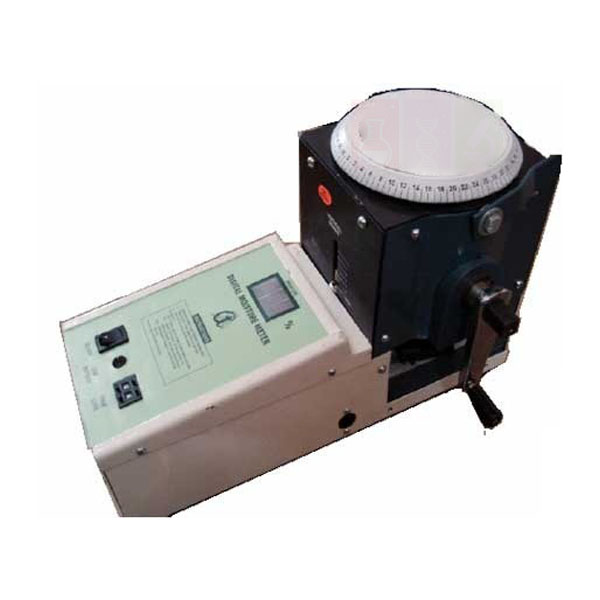
Digital Moisture Meter
Digital Moisture Meter (Product Code: SLE/AG/16) is a compact electronic instrument used to measure the moisture content of food grains, pulses, oil seeds and vegetable seeds in agricultural and seed-testing laboratories. Working on the principle of pressure, it gives moisture values for around 15 commodities and has a high data storage capacity, which suits agriculture colleges and grain-storage training units. It is supplied by Jain Scientific Equipments Pvt Ltd (ScienceLab), Ambala, India, to buyers looking for a moisture meter for lab use in India.
Specifications
| Parameter | Detail |
|---|---|
| Measures | Moisture content of agricultural produce |
| Operating principle | Works on the principle of pressure |
| Commodities covered | Around 15 commodities |
| Applications | Food grains, pulses, oil seeds and vegetable seeds |
| Readout | Digital, designed for accurate readings |
| Data storage | High data storage capacity |
| Design | Compact |
| Product code | SLE/AG/16 |
| Supplied by | Jain Scientific Equipments Pvt Ltd (ScienceLab), Ambala, India |
What Is the Digital Moisture Meter Used For?
Moisture decides whether a grain or seed lot can be stored safely, how it should be dried and how well it will germinate, so the Digital Moisture Meter fits practical classes on post-harvest handling, seed testing and storage management. Students draw a representative sample from a bag or bin, check that the reading is taken against the correct commodity, and record the value before and after drying to see how quickly produce loses water. Because the meter works on the pressure principle, filling and pressing every sample the same way keeps successive readings comparable, and the built-in storage lets a class log a series of samples before copying them into a practical record.
Alongside other analytical lab instruments, a quick reading on the meter can be compared with a slower oven-drying or moisture-analyser result on the same sample, which shows students the difference between rapid screening and a reference method. Keep the sample chamber clean and dry between commodities so that dust or oil from one crop does not affect the next reading.
Supplier
ScienceLab is the trading name of Jain Scientific Equipments Private Limited, Ambala, Haryana, which supplies this digital moisture meter to agriculture colleges, seed-science departments, storage training centres and dealers in India and international markets. For vendor registration and export paperwork, the supplying company's Importer-Exporter Code is AAECJ8618A (DGFT) and its GSTIN is 06AAECJ8618A1ZT. Read more on the company profile.
Related Laboratory Equipment
These items support the same grain and seed testing workflow:
- Moisture Analyser — a bench instrument for cross-checking the meter against a heat-drying moisture determination.
- Oven, 43 litre — for oven-drying samples when teaching the reference method for moisture.
- Riffle Sample Divider — splits a bulk lot into representative portions before testing.
- Seed Counter — counts seed lots for germination and seed-rate work once moisture is known.
See the full range in our Agriculture category.
Frequently Asked Questions
Which commodities can the Digital Moisture Meter test?
The Digital Moisture Meter is intended for food grains, pulses, oil seeds and vegetable seeds and gives moisture values for around 15 commodities. If you need a particular crop, ask through the contact page to confirm it is on the commodity list.
How does the Digital Moisture Meter take a reading?
The Digital Moisture Meter works on the principle of pressure. Filling and pressing each sample in the same way keeps readings comparable between students, batches and days, so agree a standard sampling routine before a class starts logging results.
Can the Digital Moisture Meter store readings?
Yes. The Digital Moisture Meter has a high data storage capacity, so a series of samples can be logged before the values are copied into a record. For the exact number of stored readings or any data-transfer option, please check with us before ordering.
Who supplies the Digital Moisture Meter?
The Digital Moisture Meter is supplied by Jain Scientific Equipments Pvt Ltd (ScienceLab), Ambala, Haryana, India. The company quotes for it directly to colleges, laboratories, dealers and importers in India and international markets and answers technical questions before purchase.
Is a calibration certificate available for the Digital Moisture Meter?
Availability of a calibration certificate for the Digital Moisture Meter should be discussed with us at the time of enquiry. Tell us what document your laboratory or auditor expects, and the quotation will confirm what can be supplied with the meter.
What should a quotation request for the Digital Moisture Meter include?
Mention how many Digital Moisture Meters you need, the crops you plan to test, the delivery location and any purchase or vendor documents your institution requires. With those details the quotation can be prepared in one step, for supply in India or export.
Request a Quote
To order the Digital Moisture Meter, write to us through the contact page or add it to your enquiry cart together with other agriculture lab items.
Last updated: 24 September 2026
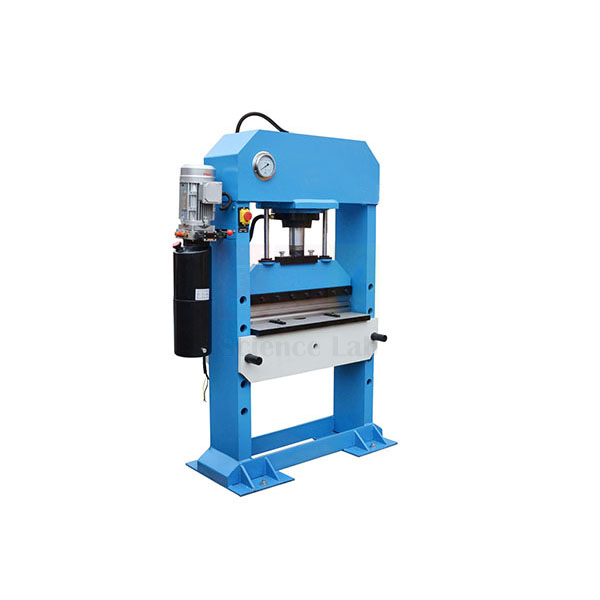
Hydraulic Press Machine
Hydraulic Press Machine (Product Code: SLE/MCE/09) is a motor-driven hydraulic press used to apply large, controllable force for pressing, straightening, bending, forming and assembly work, such as fitting bearings and bushes, in maintenance shops, fabrication workshops and engineering training institutes. It is listed from 5 to 200 tonnes at 25 MPa working pressure, with honed steel cylinders and chevron seals. It is supplied by Jain Scientific Equipments Pvt Ltd (ScienceLab), Ambala, India.
Specifications
| Parameter | Detail |
|---|---|
| Capacity | 5–200 tonnes |
| Working pressure | 25 MPa |
| Table travel | 200–270 mm |
| Bed size | 235 x 235 mm to 750 x 800 mm |
| Motor | 2–10 HP |
| Cylinders | Made from quality steel; bores honed to a mirror finish for long piston-seal life; surface ground and hardened for seal life and corrosion resistance |
| Sealing | Chevron seals and bronze strip for leak-proof performance |
| Product code | SLE/MCE/09 |
| Supplied by | Jain Scientific Equipments Pvt Ltd (ScienceLab), Ambala, India |
What Is the Hydraulic Press Used For?
A hydraulic press multiplies force with oil: the motor-driven pump pushes oil into the cylinder, and the working pressure acting on the piston area produces the rated tonnage at the ram. Because the ram can be stopped, held or reversed at any point, the press suits jobs that need control rather than speed — pressing bearings and bushes on or off shafts, straightening bent components, bending and forming, and general assembly work.
For engineering students it is also a clear demonstration of force equals pressure times area. Honed cylinder bores and chevron seals with bronze strip are there to keep the system leak-free, so keep the oil clean and check for seepage during routine care. Always centre the load on the bed, use suitable fixtures and never work above the rated capacity.
What to Specify When Ordering
- Required capacity, from 5 to 200 tonnes.
- Bed size needed for your largest job (235 x 235 mm up to 750 x 800 mm).
- Table travel required, within 200–270 mm.
- Your electrical supply for the 2–10 HP motor, which is not stated in the listing.
- Quantity and delivery location.
Supplier
ScienceLab is the trading name of Jain Scientific Equipments Private Limited, which supplies the Hydraulic Press Machine to engineering colleges, polytechnics, ITIs, automotive and maintenance workshops, dealers and importers in India and international markets. Presses can be quoted together with other workshop machines and laboratory apparatus.
Visit the ScienceLab company profile for more about the company.
Related Workshop Machine Tools
Workshops that press, form and assemble parts often use these machines too:
- Power Press Machine — faster mechanical pressing for repetitive punching and blanking.
- Arc Welding Machine — joins pressed and formed parts into fabrications.
- Pillar Drilling Machine — drills holes for pins, bolts and bushes before pressing.
- Radial Drill Machine — drilling on heavy parts too large for a pillar drill.
See all Workshop Machine Tools.
Frequently Asked Questions
What capacities is the Hydraulic Press Machine available in?
The Hydraulic Press Machine is listed in capacities from 5 to 200 tonnes, working at a pressure of 25 MPa, with motors from 2 to 10 HP depending on the capacity chosen.
What bed size and table travel does the Hydraulic Press Machine have?
The Hydraulic Press Machine has bed sizes from 235 x 235 mm on the smallest model to 750 x 800 mm on the largest, with table travel of 200–270 mm across the range.
How are the cylinders of the Hydraulic Press Machine built?
The Hydraulic Press Machine uses cylinders made from quality steel, with bores honed to a mirror finish, surfaces ground and hardened, and chevron seals with bronze strip for leak-proof performance and long seal life.
How is a Hydraulic Press Machine different from a power press?
A Hydraulic Press Machine lets the operator control force and ram position throughout the stroke, stopping or holding as needed, which suits straightening, assembly and forming; a mechanical power press is faster for repetitive punching and blanking.
What power supply does the Hydraulic Press Machine need?
The Hydraulic Press Machine uses a 2–10 HP motor depending on capacity, but the supply voltage and phase are not stated in the listing. Tell us your workshop supply and we will confirm the requirement before you order.
Who supplies the Hydraulic Press Machine?
The Hydraulic Press Machine is supplied by Jain Scientific Equipments Pvt Ltd (ScienceLab), Ambala, India, to colleges, training institutes, workshops, dealers and importers in India and international markets.
Request a Quote
Send your Hydraulic Press Machine requirement through the contact page or add it to the enquiry cart, including tonnage, bed size and quantity.
Last updated: 24 September 2026
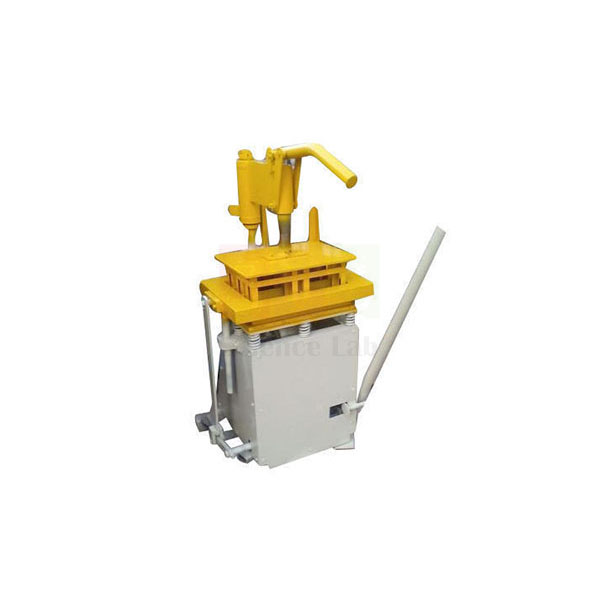
Block Making Machine Hand Operated
Block Making Machine Hand Operated (Product Code: SLE/MCE/10) is a manually worked, vibration-compaction machine used to mould paver blocks and hollow blocks in small block-production yards, construction training centres and vocational training workshops. Builders, small producers and technical institutes use it for its 375 x 600 mm moulding area and a 1.5 HP bottom vibrator motor offered for single-phase or three-phase supply. It is supplied by Jain Scientific Equipments Pvt Ltd (ScienceLab), Ambala, India.
Specifications
| Parameter | Detail |
|---|---|
| Operation | Hand operated |
| Bottom vibrator | 1.5 HP motor, single-phase or three-phase |
| Vibration | Amplitude adjustable |
| Moulding area | 375 x 600 mm |
| Machine weight | 450 kg |
| Paver blocks | 4 blocks per stroke; 800–1000 blocks per shift |
| Hollow block 100 x 200 x 400 mm | 4 blocks per stroke; 500–800 blocks per shift |
| Hollow block 150 x 200 x 400 mm | 2 blocks per stroke; 250–400 blocks per shift |
| Hollow block 200 x 200 x 400 mm | 2 blocks per stroke; 250–400 blocks per shift |
| Product code | SLE/MCE/10 |
| Supplied by | Jain Scientific Equipments Pvt Ltd (ScienceLab), Ambala, India |
What Is the Block Making Machine Used For?
The machine turns a stiff, low-slump concrete mix into uniform masonry units. The operator fills the mould box, the bottom vibrator shakes the mix until it settles into a dense block, and the hand-worked mechanism releases the fresh blocks so they can be moved away to cure. Paver moulds give four blocks per stroke, while hollow-block moulds give four or two per stroke depending on block width.
In civil and construction courses it gives trainees hands-on practice with batching, compaction and curing, and it suits small producers who want steady output without an automatic plant. The per-shift figures in the table are ranges: real output depends on crew size, mix consistency and how quickly blocks are cleared. Tune the adjustable vibration amplitude to the block type, clean the mould at the end of every shift and keep the machine on a firm, level base.
What to Specify When Ordering
- Block type: paver blocks, or hollow blocks of 100, 150 or 200 mm width (200 x 400 mm face).
- Your power supply for the 1.5 HP vibrator motor: single-phase or three-phase.
- Expected output per shift, so the right mould and crew plan can be discussed.
- Number of machines and the delivery location (the machine weighs 450 kg).
Supplier
Jain Scientific Equipments Private Limited, which trades as ScienceLab, supplies the Block Making Machine Hand Operated to construction training institutes, polytechnic civil departments, small block producers, contractors, dealers and importers across India and international markets. It can be quoted alongside concrete testing apparatus and other workshop equipment in a single enquiry.
Read more about the company on the ScienceLab profile page.
Related Workshop Machine Tools
Block production goes hand in hand with checking the mix and the finished product. These items fit that workflow:
- Slump Test Apparatus — checks the consistency of each concrete batch before it goes into the mould.
- Concrete Cube Mould — casts control specimens from the same mix for strength records.
- Automatic digital compression testing machine — tests the compressive strength of cured blocks and cubes.
- Hydraulic Press Machine — a heavy-duty press from the same workshop range for pressing and forming jobs.
Browse the full range of Workshop Machine Tools.
Frequently Asked Questions
Which blocks can the Block Making Machine Hand Operated produce?
The Block Making Machine Hand Operated is listed for paver blocks and for hollow blocks in three sizes: 100 x 200 x 400 mm, 150 x 200 x 400 mm and 200 x 200 x 400 mm. Tell us which block you need so the matching mould is quoted.
How many blocks per shift can the hand operated block machine make?
The hand operated block machine is rated at 800–1000 paver blocks per shift (4 per stroke), 500–800 hollow blocks of 100 mm width (4 per stroke) and 250–400 hollow blocks of 150 or 200 mm width (2 per stroke). Actual output depends on the crew and the mix.
What power supply does the Block Making Machine need?
The Block Making Machine Hand Operated uses a 1.5 HP bottom vibrator motor that is offered for either single-phase or three-phase power. State the supply available at your site when you ask for a quotation so the correct motor is fitted.
How heavy is the Block Making Machine Hand Operated?
The Block Making Machine Hand Operated weighs 450 kg. Plan for lifting equipment at unloading and install it on a firm, level floor or slab so the vibration compacts the blocks evenly and the machine stays stable in use.
Who supplies the Block Making Machine Hand Operated?
The Block Making Machine Hand Operated is supplied by Jain Scientific Equipments Pvt Ltd (ScienceLab), Ambala, Haryana, India, to institutes, contractors, dealers and importers in India and international markets. Send your enquiry through the contact page.
What details should a quotation request for the block machine include?
For a quotation on the Block Making Machine Hand Operated, give the block type and size, single-phase or three-phase supply, number of machines, expected daily output and delivery address. This lets us confirm the mould set and shipping details in one reply.
Request a Quote
To price the Block Making Machine Hand Operated, write to us through the contact page or add it to the enquiry cart with other items you need.
Last updated: 24 September 2026
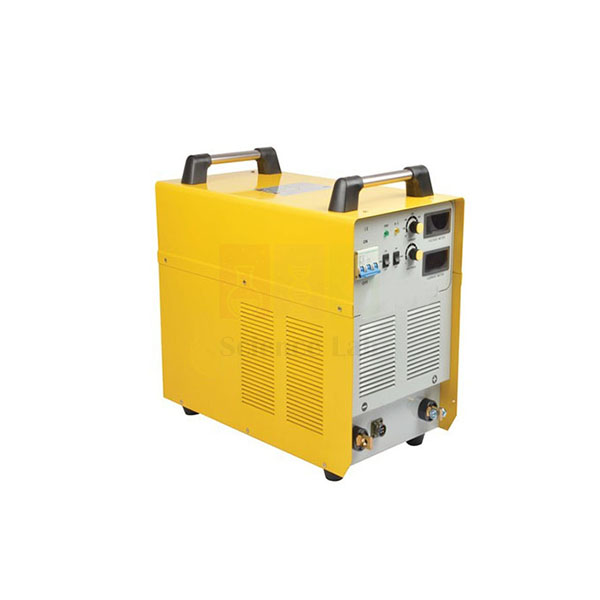
Arc Welding Machine
Arc Welding Machine (Product Code: SLE/MCE/11) is an inverter-type manual metal arc (stick) welding power source used to join steel with coated electrodes in fabrication shops, maintenance departments and welding training bays at technical institutes. Fabricators and welding instructors choose it for its 40–400 A output range at a 60% duty cycle from a 415 VAC three-phase supply, with an inverter frequency of up to 20 kHz. It is supplied by Jain Scientific Equipments Pvt Ltd (ScienceLab), Ambala, India.
Specifications
| Parameter | Detail |
|---|---|
| Technology | Inverter, frequency up to 20 kHz |
| Phase | 3 |
| Supply voltage | 415 VAC ±15% |
| Supply frequency | 50/60 Hz |
| Input power | 18.2 kVA |
| Rated input current | 27.6 A |
| Rated current | 400 A |
| Output current range | 40–400 A |
| Duty cycle | 60% |
| No-load voltage | 68 V |
| No-load loss | 100 W |
| Efficiency | 85% |
| Power factor | 0.93 |
| Weight | 33 kg |
| Dimensions | 21.5 x 11 x 21.5 inch |
| Electrodes | Suitable for down-direction welding with cellulose electrodes |
| Supply fluctuation | Auto-compensation function for mains fluctuation |
| Output cable | Keeps a stable welding condition even with a 100 metre output cable |
| Product code | SLE/MCE/11 |
| Supplied by | Jain Scientific Equipments Pvt Ltd (ScienceLab), Ambala, India |
What Is the Arc Welding Machine Used For?
Stick welding strikes an arc between a flux-coated electrode and the workpiece; the arc melts both, and the flux coating shields the molten pool. This machine suits structural fabrication, repair of frames and brackets, pipe work with cellulose electrodes and general maintenance, and it is a common first process in welding and fitter training courses. Because it is an inverter set, the arc responds quickly to the welder's hand, and the auto-compensation function helps keep the bead shape consistent when mains voltage varies.
The ability to hold a stable arc on a 100 metre output cable makes it practical for site and yard work where the machine cannot sit next to the job. Set the current to suit the electrode size and joint, stay within the 60% duty-cycle rating at high output, and always use a proper welding helmet, gloves and good ventilation.
What to Specify When Ordering
- Confirm a 415 VAC three-phase, 50/60 Hz supply rated for the 18.2 kVA input.
- Output cable length you need, up to 100 metres.
- Whether you need electrode holder, earth clamp and cables quoted with the machine (ask us what is included).
- Number of welding stations for your workshop or training bay.
Supplier
ScienceLab is the brand name of Jain Scientific Equipments Private Limited, which sources and supplies the Arc Welding Machine for ITIs, polytechnics, engineering college workshops, fabrication units, dealers and importers in India and international markets. Welding sets can be included in one quotation with other workshop machines.
Learn more on our company profile.
Related Workshop Machine Tools
A welding bay usually needs protective wear and complementary joining and machining equipment:
- Gloves, Welding — hand protection against heat and spatter during stick welding.
- MIG Welding Machine — wire-fed welding for longer continuous seams in the shop.
- Spot welding Machines — resistance welding for overlapping sheet-metal joints.
- Pillar Drilling Machine — drills bolt holes in welded frames and brackets.
See every item in Workshop Machine Tools.
Frequently Asked Questions
What is the output range of the Arc Welding Machine?
The Arc Welding Machine delivers 40–400 A of welding current, with a rated current of 400 A at a 60% duty cycle and a no-load voltage of 68 V, which covers light repair work through to heavier structural welding.
What input supply does the Arc Welding Machine need?
The Arc Welding Machine runs on a three-phase 415 VAC ±15% supply at 50/60 Hz. It draws 18.2 kVA with a rated input current of 27.6 A, so check that your distribution board and cabling are sized for that load.
Can the Arc Welding Machine be used with cellulose electrodes?
Yes. The Arc Welding Machine is listed as adaptable to down-direction welding with cellulose electrodes, and its auto-compensation function helps it keep a stable arc and good seam shape when the mains supply fluctuates.
How large and heavy is the inverter arc welder?
The inverter Arc Welding Machine weighs 33 kg and measures 21.5 x 11 x 21.5 inch, so it can be moved around a workshop or taken to site. Its 85% efficiency and 0.93 power factor also help keep running costs down.
Who supplies the Arc Welding Machine?
The Arc Welding Machine is supplied by Jain Scientific Equipments Pvt Ltd (ScienceLab), Ambala, Haryana, India, to technical institutes, fabrication units, dealers and importers in India and international markets. Send enquiries through the contact page.
Is a calibration certificate available for the Arc Welding Machine?
Calibration or test documentation for the Arc Welding Machine is not listed as standard. If your institute or client needs such paperwork, please discuss the requirement with us through the contact page before ordering.
Request a Quote
For a price on the Arc Welding Machine, send your requirement through our contact page or add it to the enquiry cart.
Last updated: 24 September 2026
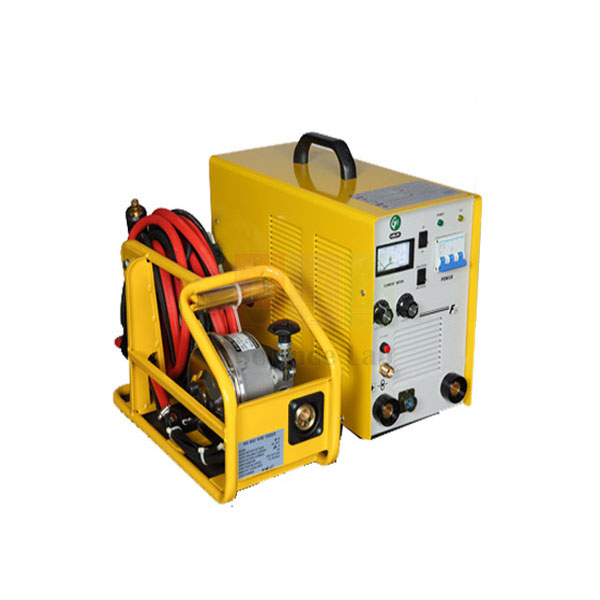
MIG Welding Machine
MIG Welding Machine (Product Code: SLE/MCE/12) is a three-phase, wire-fed gas metal arc welding set used to lay continuous welds on steel fabrications in production workshops, maintenance shops and welding training centres. It is listed with step-type voltage control, a 50–600 A welding current range and a burn back facility, and it takes filler wire of 0.8–1.6 mm diameter. It is supplied by Jain Scientific Equipments Pvt Ltd (ScienceLab), Ambala, India.
Specifications
| Parameter | Detail |
|---|---|
| Phase | 3 |
| Supply voltage | 380–440 V |
| Open circuit voltage | 18–58 V |
| Welding current range | 50–600 A |
| Welding current at 60% duty cycle | 250 A – 600 A |
| Voltage control | Step type |
| Permissible wire diameter | 0.8–1.6 mm |
| Insulation | Class H |
| Winding | 100% copper |
| Burn back facility | Yes |
| Construction | Rugged, robust design intended for minimum maintenance and low running cost |
| Product code | SLE/MCE/12 |
| Supplied by | Jain Scientific Equipments Pvt Ltd (ScienceLab), Ambala, India |
What Is the MIG Welder Used For?
In MIG (metal inert gas) welding, a solid wire is fed continuously through the torch and melts into the joint while a shielding gas protects the pool from the air. Because the welder does not stop to change electrodes, the process is quick and clean for long seams on sheet, plate, frames, tanks and machine bases, and it is widely taught in fabrication and welder courses.
On this set the operator chooses a voltage step on the switch and balances it against wire feed to get a steady arc. The burn back facility lets the wire burn back slightly after the trigger is released so it does not freeze into the finished weld. Class H insulation and all-copper windings suit a busy workshop; keep the torch liner clean, use the right contact tip for the wire size and wear full welding protection.
What to Specify When Ordering
- Required welding current rating within the 250 A – 600 A (60% duty cycle) range.
- Wire diameter you plan to run, from 0.8 to 1.6 mm.
- Your three-phase supply voltage, within 380–440 V.
- Whether a torch, gas regulator and cables should be quoted with the set (ask us what is included).
Supplier
The MIG Welding Machine is supplied by Jain Scientific Equipments Private Limited, the company behind the ScienceLab brand, to engineering colleges, ITIs, fabrication and maintenance workshops, dealers and importers in India and international markets. For vendor registration, the supplying company's details are GSTIN 06AAECJ8618A1ZT and LEI 3358004HRD1JIVXKYX49.
More about the company is on the ScienceLab profile.
Related Workshop Machine Tools
Buyers equipping a MIG welding bay often add these items:
- Arc Welding Machine — stick welding for site jobs and cellulose-electrode work away from the gas supply.
- Gloves, Welding — protective gloves for welders and trainees.
- Spot welding Machines — joins overlapping sheet panels where a full seam is not needed.
- Radial Drill Machine — drills heavy welded plates and bases after fabrication.
Explore the complete Workshop Machine Tools range.
Frequently Asked Questions
What welding current does the MIG Welding Machine provide?
The MIG Welding Machine covers a welding current range of 50–600 A, and its welding current at 60% duty cycle is listed from 250 A to 600 A, so state the rating you need when you request a quotation.
Which wire sizes can the MIG Welding Machine use?
The MIG Welding Machine accepts filler wire from 0.8 mm to 1.6 mm diameter. Thinner wire suits sheet and light sections, while thicker wire suits heavier plate and higher currents; use the matching contact tip for each size.
How is voltage adjusted on the MIG Welding Machine?
The MIG Welding Machine uses step-type voltage control with an open circuit voltage of 18–58 V. The welder selects a step and sets the wire feed to match, which gives repeatable settings that trainees can note and reuse.
What power supply does the MIG welder need?
The MIG Welding Machine needs a three-phase supply of 380–440 V. Make sure the workshop outlet and cabling suit the current you plan to weld at, and ask us to confirm the input rating for the model you choose.
Who supplies the MIG Welding Machine?
The MIG Welding Machine is supplied by Jain Scientific Equipments Pvt Ltd (ScienceLab), Ambala, Haryana, India, to institutes, workshops, dealers and importers in India and international markets. Use the contact page for enquiries.
Can the MIG Welding Machine be supplied in bulk for training centres?
Yes, the MIG Welding Machine can be quoted in multiple units for training centres, colleges and dealers. Share the number of welding stations, supply voltage and delivery location so we can prepare a combined quotation and shipping plan.
Request a Quote
Ask for a MIG Welding Machine quotation through the contact page, or place it in the enquiry cart together with other workshop items.
Last updated: 24 September 2026
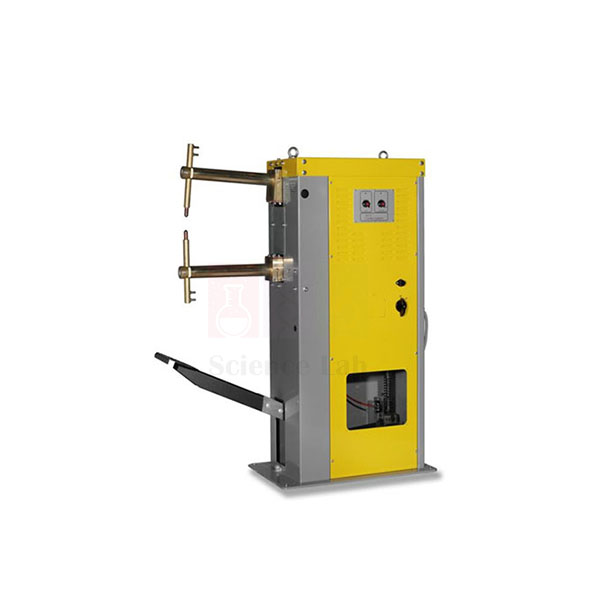
Spot welding Machines
Spot welding Machines (Product Code: SLE/MCE/13) are 63 kVA AC electric resistance welders used to join overlapping sheet-metal parts by spot and projection welding in fabrication shops, sheet-metal workshops and engineering training institutes. Fabricators and instructors select them for an asymmetrical body, an upper electrode worked by foot lever or air cylinder, and tap-type current control from 50% to 100% in 8 steps. They are supplied by Jain Scientific Equipments Pvt Ltd (ScienceLab), Ambala, India.
Specifications
| Parameter | Detail |
|---|---|
| Machine type | AC electric resistance spot / projection welder with asymmetrical body design |
| Rating | 63 kVA |
| Upper electrode actuation | Foot lever (manual system) or air cylinder (air system) |
| Electrode force | Easily calculated in both systems; air system has a gauge, manual system has a calibrated spring |
| Current control | Tap method, 8 tap adjustments on the primary of the main transformer; 50% to 100% in 8 steps |
| Air accessories (air system) | Filter, lubricator, regulator, gauge, solenoid valve and speed valve incorporated |
| Cooling | Electrodes, electrode holders, arms and transformer water cooled through one single water-cooling circuit |
| Materials listed | Iron, copper, aluminium, stainless steel and other materials |
| Product code | SLE/MCE/13 |
| Supplied by | Jain Scientific Equipments Pvt Ltd (ScienceLab), Ambala, India |
What Is the Spot Welding Machine Used For?
Resistance spot welding clamps two or more overlapping sheets between copper-alloy electrodes and passes a high current through them. The heat generated at the contact point melts a small nugget that fuses the sheets without filler wire or gas. It is the standard way to assemble panels, enclosures, brackets, cabinets and wire products, and projection welding extends the same idea to parts with raised projections.
In a training workshop the machine shows clearly how current, electrode force and time together decide weld quality. The 8 current steps let students compare nugget size on the same sheet, and the calibrated spring or pressure gauge makes electrode force a known value rather than a guess. Keep cooling water flowing whenever the machine is in use and dress the electrode tips regularly for consistent welds.
What to Specify When Ordering
- Actuation: foot-lever manual system or air-cylinder system (the air system needs a compressed-air supply).
- Spot or projection welding work, and the materials and sheet thicknesses you intend to join.
- Water supply for the single cooling circuit at the installation point.
- Your electrical supply, so the 63 kVA machine can be matched to it.
Supplier
Spot welders are sourced and supplied by Jain Scientific Equipments Private Limited, trading as ScienceLab, for engineering institutes, sheet-metal fabricators, maintenance workshops, dealers and importers in India and international markets. Resistance welders can be quoted together with arc and MIG welding sets for a complete welding section.
See the company profile for background on ScienceLab.
Related Workshop Machine Tools
Sheet-metal fabrication usually combines forming, spot joining and seam welding. Consider:
- Power Press Machine — blanks and punches sheet parts before they are spot welded.
- MIG Welding Machine — for continuous seams where spot joints are not enough.
- Arc Welding Machine — for heavier sections and repair work.
- Gloves, Welding — protects hands when handling hot welded parts.
View the full list of Workshop Machine Tools.
Frequently Asked Questions
What is the rating of the Spot welding Machines?
The Spot welding Machines are 63 kVA AC electric resistance welders with an asymmetrical body design. They are listed for spot and projection welding of iron, copper, aluminium, stainless steel and other materials.
Is the spot welder operated by foot lever or by air?
The spot welding machine is offered with either system: the upper electrode is worked by a foot lever with a calibrated spring, or by an air cylinder fitted with gauge, filter, lubricator, regulator, solenoid valve and speed valve. Electrode force can be calculated in both.
How is welding current adjusted on the Spot welding Machines?
The Spot welding Machines use a tap method with 8 tap adjustments on the primary of the main transformer, giving current control from 50% to 100% in 8 steps. Lower steps suit thinner sheet; higher steps suit thicker or more conductive material.
Does the spot welding machine need water cooling?
Yes. On the spot welding machine, the electrodes, electrode holders, arms and transformer are all water cooled through one single cooling circuit, so a steady water supply must be connected before welding and kept running during operation.
Who supplies the Spot welding Machines?
The Spot welding Machines are supplied by Jain Scientific Equipments Pvt Ltd (ScienceLab), Ambala, Haryana, India, to institutes, fabricators, dealers and importers in India and international markets. Please use the contact page to enquire.
What should I include in a quotation request for a spot welder?
For a spot welder quotation, state manual foot-lever or air-cylinder operation, the materials and sheet thicknesses to be welded, your electrical supply, water and compressed-air availability, the number of machines and the delivery location.
Request a Quote
Send your spot welding requirement through the contact page or add the machine to the enquiry cart.
Last updated: 24 September 2026
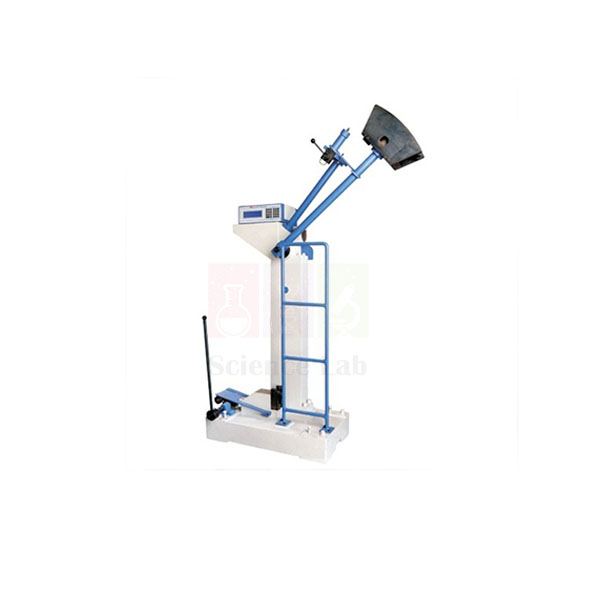
Impact Testing Machine-Digital
Impact Testing Machine-Digital (Product Code: SLE/MCE/14) is a pendulum impact tester used to measure the energy a notched specimen absorbs as it fractures, in the materials testing laboratories of engineering colleges and industry. It runs both Charpy and Izod tests, with 300 J initial potential energy for Charpy and an electronic digital display of the result. It is made by Jain Scientific Equipments Pvt Ltd (ScienceLab), an OEM engineering lab equipment manufacturer, at its own factory in Ambala, India.
Specifications
| Parameter | Detail |
|---|---|
| Test methods | Charpy and Izod impact tests on various materials |
| Initial potential energy | Charpy 300 J; Izod 170 J (the listing also gives Izod capacity as 168 J — confirm at quotation) |
| Display resolution | 0.5 J |
| Minimum scale graduation | 2 J |
| Pendulum drop angle | Charpy 140°; Izod 90° |
| Display | Electronic digital display |
| Position marking | Interchangeable stickers for Izod and Charpy positions |
| Pendulum lock | Positive lock in Izod and Charpy positions |
| Braking | Braking arrangement for stopping the pendulum |
| Strikers and support blocks | Special alloy steels, duly heat-treated |
| Operator safety | Safety guard provided |
| Frame | Rigid design so the machine itself absorbs minimum energy during fracture |
| Changeover | Simple pendulum construction for switching between Izod and Charpy set-ups |
| Overall height | 1.65 m (approx.) |
| Net weight | 375 kg (approx.) |
| Product code | SLE/MCE/14 |
| Manufacturer | Jain Scientific Equipments Pvt Ltd (ScienceLab) — OEM |
| Country of origin | India (made in Ambala, Haryana) |
What Is the Impact Testing Machine-Digital Used For?
Charpy and Izod tests compare toughness — how much energy a material absorbs before it breaks under a sudden blow. For Charpy the notched bar rests as a simple beam and the pendulum falls from 140°; for Izod the bar is gripped as a cantilever and the drop is from 90°. After release, the energy absorbed appears on the digital display, so students can compare steels, cast irons or the same steel before and after heat treatment and see brittle and ductile behaviour side by side.
Lock the pendulum before placing each specimen, keep everyone outside the swing path behind the safety guard, and use the brake to stop the pendulum once the reading is taken. When switching methods, change the position stickers so the markings match the set-up. For polytechnics and colleges, it is core lab equipment for technical institutes teaching strength of materials.
What to Specify When Ordering
- Whether you will run Charpy tests, Izod tests or both
- The specimen materials and notch types you plan to test, so suitability can be confirmed
- Installation space and floor: about 1.65 m tall and 375 kg net
- Number of machines and delivery destination
OEM Manufacturer
ScienceLab is the trading name of Jain Scientific Equipments Private Limited, and the company is the OEM (original equipment manufacturer) of this Impact Testing Machine-Digital. It is built at the company's own licensed factory at Saha, Ambala, Haryana, India, rather than bought in from a trader, and goes factory-direct to engineering colleges, testing laboratories, dealers and importers.
Dealing with the manufacturer means one point of contact for the quotation, for later questions about strikers or support blocks, and for repeat orders — just ask us. Read more on the ScienceLab company profile.
Related Materials Testing and Properties Equipment
Combine impact results with these tests for a fuller picture of mechanical properties:
- Tensile strength testing machine — adds strength and elongation data to toughness results.
- Brinell Hardness Tester — hardness readings on the same material batches.
- Energy Absorbed At Fracture — a small bench-mounting notched-bar impact tester for introductory classes.
- Computerised Izod Impact Tester — an alternative dedicated to Izod testing.
- Muffle Furnace — heat-treats specimens so toughness can be compared before and after.
Explore the Materials Testing and Properties category for more.
Frequently Asked Questions
Which tests can the Impact Testing Machine-Digital perform?
The Impact Testing Machine-Digital performs both Charpy and Izod impact tests on various materials. Interchangeable stickers mark the two positions and the pendulum locks positively in either, so one machine covers both methods in a teaching or testing laboratory.
What impact energy does the Impact Testing Machine-Digital provide?
The Impact Testing Machine-Digital provides 300 J initial potential energy for Charpy tests. For Izod the listing gives 170 J and also 168 J, so please confirm the Izod figure with us at quotation. Display resolution is 0.5 J and minimum scale graduation is 2 J.
How is the operator protected on the Impact Testing Machine-Digital?
The Impact Testing Machine-Digital has a safety guard for the operator, a positive pendulum lock and a braking arrangement to stop the pendulum after each blow. Staff should still keep students outside the swing zone during every test.
Who manufactures the Impact Testing Machine-Digital?
The Impact Testing Machine-Digital is manufactured by Jain Scientific Equipments Pvt Ltd (ScienceLab), the OEM, at its own licensed factory in Saha, Ambala, Haryana, India. Quotations, spares enquiries and repeat orders are handled directly by the manufacturer.
How much space does the Impact Testing Machine-Digital need?
The Impact Testing Machine-Digital stands about 1.65 m tall and has a net weight of about 375 kg, so it needs a firm, level floor and clear space around the pendulum. Ask us for layout guidance before delivery.
Is a calibration certificate available for the Impact Testing Machine-Digital?
Calibration-certificate availability for the Impact Testing Machine-Digital should be discussed with us before ordering. Mention the requirement on your enquiry through the contact page and the quotation will state what can be provided.
Can ScienceLab supply the Impact Testing Machine-Digital for export or multiple labs?
Yes, ScienceLab quotes the Impact Testing Machine-Digital for single laboratories, multi-lab projects and dealers in India and international markets. Share the quantity and delivery destination and the manufacturer will prepare the quotation.
Request a Quote
Quotations for the Impact Testing Machine-Digital come direct from the manufacturer. Send your requirement through the ScienceLab contact page or add the machine to the enquiry cart, stating test types, quantity and delivery location.
Last updated: 24 September 2026