- Physics Lab Equipment
- Chemistry Lab Equipment
- Biology Lab Equipment
- Anatomical Lab Equipment
- Learning
- Educational Lab Equipment
- Magnets
- Agriculture
- Astronomy
- Earth Science
- Geography Lab Equipment
- Safety Lab Coat
- Laboratory
- Meteorological
- Electricity & Magnetism
- Heat
- School Lab Equipment
- Lab Glassware
- Science Lab Equipment
- Tvet Lab Equipment
- Robotics Kits Supplier and Manufacturer for Schools India
- Math Lab Equipment Manufacturers and Exporters in Ambala
- STEM Kits Manufacturers and Supplier India
- Engineering Lab Equipment
- Hospital Lab Equipment
- Water, Sanitation & Hygiene Supplies
- Cold Chain, Solar & Communication Equipment
- Nutrition
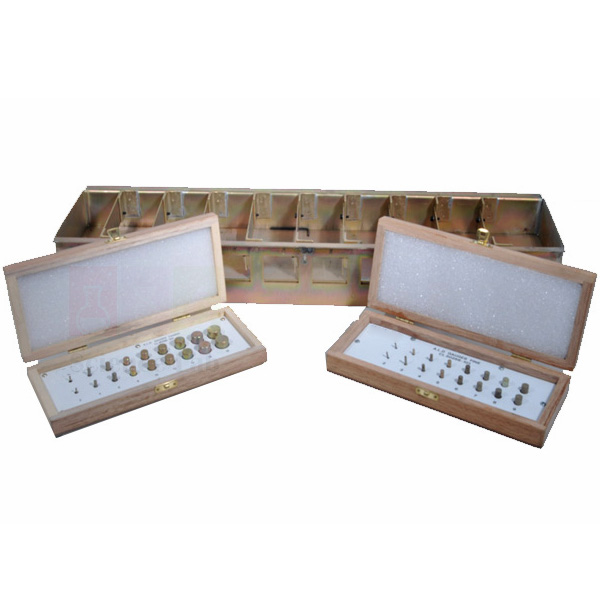
Average Least Dimension
Average Least Dimension (Product Code: SLE/AG/10) is an ALD device used to find the average least dimension of aggregate chippings for surface dressing design in highway laboratories. Road research units and civil engineering colleges receive the ALD box with an adjustable spacer for 2–9 mm fine aggregates, a spare spacer case and an extension set for 10–18 mm. It is made by Jain Scientific Equipments Pvt Ltd (ScienceLab), an OEM TVET lab equipment manufacturer in India, at its own factory in Ambala.
Specifications
| Parameter | Detail |
|---|---|
| Type | Average Least Dimension (ALD) device |
| Main unit | Average Least Dimension box |
| Adjustable spacer | For fine aggregates, 2–9 mm |
| Spare case | 1 x spacer set (fine aggregates) spare case |
| Spacer set extension | 10–18 mm |
| Product code | SLE/AG/10 |
| Manufacturer | Jain Scientific Equipments Pvt Ltd (ScienceLab) — OEM |
| Country of origin | India (made in Ambala, Haryana) |
What Is the Average Least Dimension Device Used For?
A representative sample of chippings is prepared and the spacer is adjusted to suit the chip size under test: the standard adjustable spacer covers fine aggregates from 2 to 9 mm, and the extension set takes the range from 10 to 18 mm. The chips are then assessed in the ALD box following the procedure of the method your laboratory uses, and the readings are averaged to give the ALD of the sample. That figure helps the designer choose binder and chip spread rates that hold the stone firmly without flooding the surface.
Road and highway departments keep the device with their other engineering lab equipment in India so that chippings from each new source can be checked before a surfacing contract begins. Keep the spacer sets in their case between tests, check that adjustments are locked before each reading, and brush dust out of the box so it does not build up in the corners.
OEM Manufacturer
The ALD device is made by Jain Scientific Equipments Private Limited, which operates as ScienceLab and is the OEM (original equipment manufacturer) of the box and its spacer sets. Production takes place at the company's own licensed factory at Saha, Ambala, Haryana, India, and highway departments, colleges, dealers and importers buy direct from there. If a spacer set is lost or damaged, ask us for a replacement; the request goes to the maker, not a trader. See the company profile for more information.
Related Civil Engineering Lab Equipment
Chip shape and size are usually studied with several tools together:
- Grid Sieves — the flakiness index from these slotted sieves is often reported alongside the ALD.
- Flakiness Sieve Set — a seven-sieve slotted set for the flakiness test on coarser fractions.
- Shape Index Caliper — measures length and thickness of individual particles for the shape factor.
- Thickness gauge — a slotted gauge for a quick check of whether chips are flaky.
- Sample Splitter — reduces a stockpile sample of chippings to a representative test portion.
Find other road and aggregate testing items in the Civil Engineering Lab Equipment category.
Frequently Asked Questions
What is supplied with the Average Least Dimension device?
The Average Least Dimension device comes with the ALD box, an adjustable spacer for fine aggregates of 2–9 mm, one spacer set (fine aggregates) spare case and a spacer set extension covering 10–18 mm.
Which chip sizes can the Average Least Dimension device assess?
The Average Least Dimension device covers fine aggregates from 2 to 9 mm with its standard adjustable spacer and chips from 10 to 18 mm with the spacer set extension, so one box serves both size ranges.
What is the average least dimension used for?
The value measured with the Average Least Dimension device is mainly used in designing surface dressings, where the typical thickness of the laid chips guides how much binder and stone to spread on the road.
Which test method does the Average Least Dimension device suit?
Please tell us the method or specification you work to, and we will confirm whether the Average Least Dimension device matches it before you order, rather than assume one standard for every laboratory.
What else do I need alongside the Average Least Dimension device?
Alongside the Average Least Dimension device you need a way to obtain a representative sample, such as a sample splitter, and suitable sieves to prepare the chip size under test. A balance may be needed depending on your procedure.
Who manufactures the Average Least Dimension device?
The Average Least Dimension device is manufactured by Jain Scientific Equipments Pvt Ltd (ScienceLab), the OEM, at its own licensed factory at Saha, Ambala, Haryana, India. Replacement spacer sets and repeat orders are handled directly by the manufacturer.
How should the spacer sets of the Average Least Dimension device be stored?
Return the spacers of the Average Least Dimension device to their case after every use and keep them dry, so that the settings stay accurate and no parts go missing between tests.
Request a Quote
To get a price, contact us through the contact page or add the ALD device to the enquiry cart with any other items you need. The quotation comes direct from the manufacturer.
Last updated: 24 September 2026
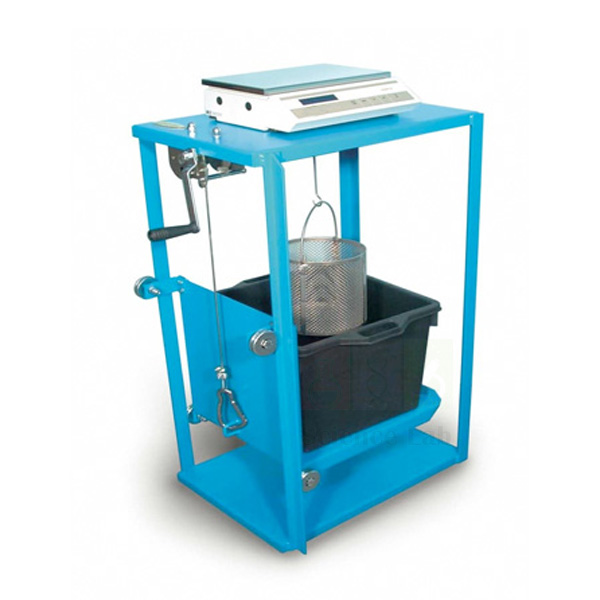
Specific Gravity And Water Absorption of Aggregates
Specific Gravity And Water Absorption of Aggregates (Product Code: SLE/AG/11) is a buoyancy balance system used to weigh aggregate in air and in water to calculate specific gravity and water absorption in concrete and highway laboratories. This engineering lab equipment pairs a rigid frame and water tank, raised by a mechanical lifting device, with a 6000 g x 0.1 g balance. The frame-and-tank system is made by Jain Scientific Equipments Pvt Ltd (ScienceLab), an OEM manufacturer, at its own factory in Ambala, India, and supplied with the balance.
Specifications
| Parameter | Detail |
|---|---|
| System | Buoyancy balance system |
| Frame | Rigid support frame incorporating a water tank mounted on a platform |
| Tank movement | Mechanical lifting device raises the water tank through the frame height, immersing the specimen suspended below the balance |
| Balance | 6000 g x 0.1 g; may also be used as a standard weighing device |
| Supplied with | Frame, water tank and suspension hook |
| Product code | SLE/AG/11 |
| Manufacturer | Jain Scientific Equipments Pvt Ltd (ScienceLab) — OEM |
| Country of origin | India (made in Ambala, Haryana) |
What Is the Specific Gravity and Water Absorption Set Used For?
After soaking as the test method requires, the aggregate is placed in a suitable container hung from the suspension hook beneath the balance. Operating the mechanical lifting device raises the water tank until the specimen is fully immersed, and the weight in water is read without lifting the sample by hand. The tank is lowered, the aggregate is surface-dried and weighed in air, then oven-dried and weighed again. From these three masses the laboratory calculates the specific gravity and the percentage of water absorbed.
Because the lifting device moves the water rather than the specimen, readings are steadier and spills fewer than with a bucket held by hand. As lab equipment for technical institutes the set is also versatile, since the balance can serve as an ordinary weighing device when the frame is not in use. Fill the tank with clean water before each session, and drain and dry it at the end of the day.
OEM Manufacturer
Jain Scientific Equipments Private Limited, trading as ScienceLab, is the OEM (original equipment manufacturer) of this buoyancy balance system, which is built at its own licensed factory at Saha, Ambala, Haryana, India, and supplied complete with the 6000 g x 0.1 g balance. For institutional and tender buyers who need vendor registration details, the company's GSTIN is 06AAECJ8618A1ZT and its Legal Entity Identifier (LEI) is 3358004HRD1JIVXKYX49. Sets go factory-direct to laboratories, colleges, dealers and importers, and follow-up requests such as a spare suspension hook are handled by the manufacturer, so just ask us. Read more on the company profile.
Related Civil Engineering Lab Equipment
Specific gravity and absorption testing also relies on:
- Density Basket — a wire mesh basket with handle for holding the aggregate while it is weighed in water.
- Oven, 43 litre — for the oven-dry mass that completes the absorption calculation.
- Riffle Sample Divider — obtains a representative test portion from the delivered aggregate.
- Sand Absorption Cone And Tamper — used to judge the saturated surface-dry condition of fine aggregate.
- Efflux Index Apparatus — assesses grain shape of the fine aggregate going into the same mix design.
Visit the Civil Engineering Lab Equipment category for other items in this range.
Frequently Asked Questions
What is included with the Specific Gravity And Water Absorption of Aggregates set?
The Specific Gravity And Water Absorption of Aggregates set includes a 6000 g x 0.1 g balance supplied with the rigid frame, the water tank and a suspension hook, with a mechanical lifting device to raise the tank.
What capacity and readability does the balance in this set have?
The balance in the Specific Gravity And Water Absorption of Aggregates set weighs up to 6000 g in steps of 0.1 g, which suits coarse aggregate samples as well as smaller portions of material.
How is the sample immersed in the Specific Gravity And Water Absorption of Aggregates set?
A mechanical lifting device raises the water tank through the height of the frame, so the specimen hanging below the balance of the Specific Gravity And Water Absorption of Aggregates set is immersed without being lifted by hand.
Is a sample basket included with the set?
The listed supply of the Specific Gravity And Water Absorption of Aggregates set is the balance, frame, water tank and suspension hook. A Density Basket is listed separately in our range; ask us to include one in your quotation.
Can the balance be used for other work?
Yes. The balance supplied with the Specific Gravity And Water Absorption of Aggregates set may also be used as a standard weighing device, giving the laboratory a versatile weighing system when density tests are not running.
Who manufactures the Specific Gravity And Water Absorption of Aggregates set?
The Specific Gravity And Water Absorption of Aggregates set is manufactured by Jain Scientific Equipments Pvt Ltd (ScienceLab), the OEM, at its own licensed factory at Saha, Ambala, Haryana, India, and supplied complete with its balance.
Can a calibration certificate be provided for the balance?
Please discuss calibration document requirements for the Specific Gravity And Water Absorption of Aggregates set with us through the contact page before ordering, and we will confirm what can be supplied with your order.
Request a Quote
Ask for a quotation through our contact page, or add this buoyancy balance set to the enquiry cart together with a density basket and an oven. Prices come directly from ScienceLab as the manufacturer.
Last updated: 24 September 2026
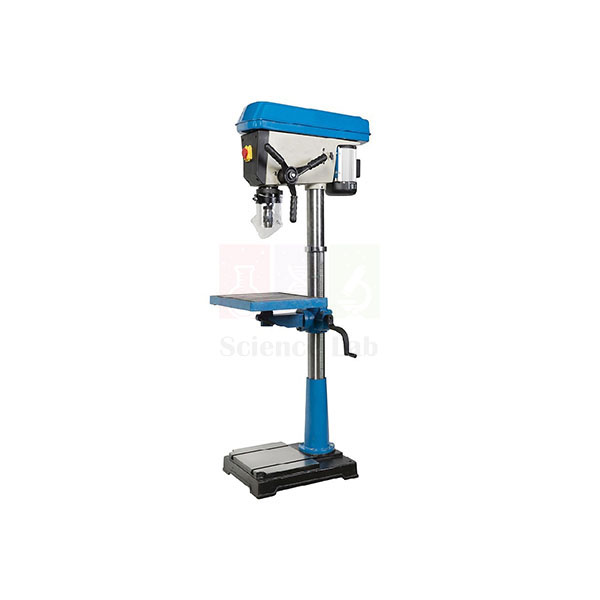
Pillar Drilling Machine
Pillar Drilling Machine (Product Code: SLE/MCE/06) is a floor-standing column drill used to drill holes up to 25 mm in diameter in engineering, vocational and school workshops. Training workshops use it for everyday drilling exercises, and it combines a 1 HP motor and 8 spindle speeds with a 330 x 330 mm table that travels 480 mm on a 92 mm column. It is supplied by Jain Scientific Equipments Pvt Ltd (ScienceLab), Ambala, India.
Specifications
| Parameter | Detail |
|---|---|
| Drilling capacity | 25 mm maximum |
| Main electrical motor | 1 HP |
| Number of spindle speeds | 8 |
| Spindle speed range | 70–2000 RPM or 130–2600 RPM |
| Spindle travel | 250 mm |
| Column diameter | 92 mm |
| Table size | 330 x 330 mm |
| Table travel | 480 mm |
| Centre of spindle to column | 250 mm (max.) |
| Distance spindle to table | 645 mm or 660 mm |
| Distance spindle to base | 1000 mm or 1045 mm |
| Base size (machined area) | 255 x 310 mm |
| Overall height with guard | 1780 mm |
| Listed features | Consistent drilling and hole accuracy, low noise and vibration, low maintenance |
| Product code | SLE/MCE/06 |
| Supplied by | Jain Scientific Equipments Pvt Ltd (ScienceLab), Ambala, India |
What Is the Pillar Drill Used For?
A pillar drill holds the drilling head on a vertical column above an adjustable table, so holes are drilled square to the work and in the right place far more reliably than with a hand drill. The table slides up and down the column to suit the job, while the operator feeds the drill down through up to 250 mm of spindle travel. It is the standard machine for marking-out and drilling exercises in fitting shops, and for general drilling in maintenance workshops.
Choose the spindle speed to suit the drill: lower speeds for larger drills and harder metals, higher speeds for small drills. Always clamp the workpiece, keep the guard in place and remove the chuck key before starting. For vocational training workshops, the 1780 mm overall height and compact base make it straightforward to position several machines along a wall.
What to Specify When Ordering
- Spindle speed range: 70–2000 RPM or 130–2600 RPM.
- Working height needed (spindle to table 645 or 660 mm; spindle to base 1000 or 1045 mm).
- Your electrical supply for the 1 HP motor, as the voltage is not listed.
- Number of machines and delivery location.
Supplier
Jain Scientific Equipments Private Limited, which trades under the ScienceLab name, supplies the Pillar Drilling Machine to schools, ITIs, polytechnics, engineering colleges, maintenance workshops, dealers and importers in India and international markets. Multiple machines for a new workshop can be covered in one quotation.
More details are available on the ScienceLab company profile.
Related Workshop Machine Tools
These machines extend what a workshop can do beyond everyday drilling:
- Radial Drill Machine — for larger holes and heavy workpieces that do not fit a pillar drill.
- Tool And Cutter Grinding Machine — can resharpen drill points with extra accessories.
- Boring machine — finishes drilled holes to an accurate diameter.
- Caliper Vernier (Metal) — for marking out and checking hole positions and sizes.
Explore all Workshop Machine Tools.
Frequently Asked Questions
What is the drilling capacity of the Pillar Drilling Machine?
The Pillar Drilling Machine drills holes up to 25 mm in diameter, driven by a 1 HP motor, with 250 mm of spindle travel for feeding the drill through thicker workpieces.
What spindle speeds does the Pillar Drilling Machine have?
The Pillar Drilling Machine has 8 spindle speeds, and the speed range is listed as either 70–2000 RPM or 130–2600 RPM. State which range you prefer when you ask for a quotation.
What are the table and working dimensions of the Pillar Drilling Machine?
The Pillar Drilling Machine has a 330 x 330 mm table with 480 mm travel on a 92 mm column, 250 mm from spindle centre to column, and 645 or 660 mm from spindle to table.
How much space does the Pillar Drilling Machine need?
The Pillar Drilling Machine stands 1780 mm high with its guard and has a machined base area of 255 x 310 mm, so it fits along a workshop wall; allow working space around it for the operator.
Is the Pillar Drilling Machine suitable for student workshops?
Yes. The Pillar Drilling Machine is listed for consistent drilling, hole accuracy, low noise and vibration and low maintenance, which suits supervised training in schools, ITIs and colleges when guards and clamping are used correctly.
Who supplies the Pillar Drilling Machine?
The Pillar Drilling Machine is supplied by Jain Scientific Equipments Pvt Ltd (ScienceLab), Ambala, India, to schools, training institutes, colleges, workshops, dealers and importers in India and international markets.
Request a Quote
Ask for a Pillar Drilling Machine quotation via the contact page or add it to the enquiry cart, with the speed range and number of machines required.
Last updated: 24 September 2026
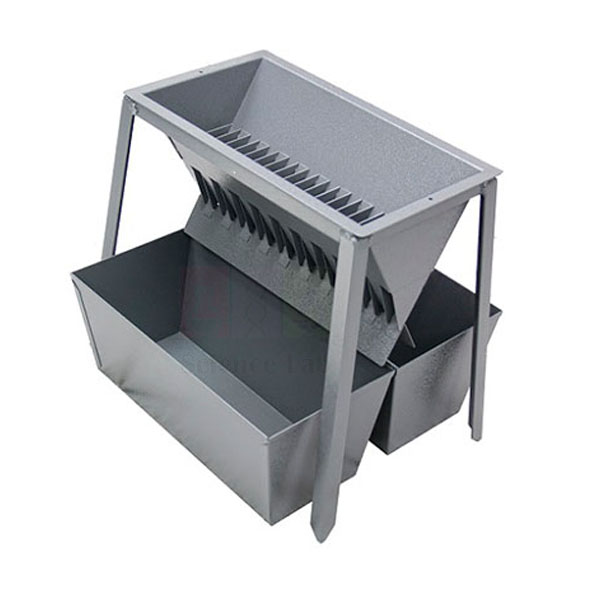
Riffle Sample Divider
Riffle Sample Divider (Product Code: SLE/AG/12) is a chute-type sample splitter used to divide granular material into two representative halves in aggregate, soil and mineral testing laboratories. Its sheet metal box on legs carries a series of equal-width chutes that discharge alternately into separate pans, and it is offered in sizes from 7 mm to 75 mm. It is made by Jain Scientific Equipments Pvt Ltd (ScienceLab), an OEM laboratory equipment manufacturer in India, at its own factory in Ambala.
Specifications
| Parameter | Detail |
|---|---|
| Construction | Sheet metal box mounted on legs |
| Chutes | Series of chutes of equal width, steep enough to allow rapid flowing of the material |
| Discharge | Alternately in opposite directions into separate pans |
| Sizes offered | Range of sizes from 7 mm to 75 mm |
| Product code | SLE/AG/12 |
| Manufacturer | Jain Scientific Equipments Pvt Ltd (ScienceLab) — OEM |
| Country of origin | India (made in Ambala, Haryana) |
What Is the Riffle Sample Divider Used For?
The sample is spread evenly in a scoop or pan the same width as the riffle and poured steadily along the full length of the chutes. Because neighbouring chutes point in opposite directions, every other slice of the stream goes to one pan and the rest to the other, so each pan receives a fair half. One half is kept and the process is repeated with it until the portion reaches the mass the test needs. The steep chutes keep material moving so that fines and damp particles do not hang up inside.
Choose the size according to the largest particle in your material, since stones must pass freely through the chutes; labs that test both sand and coarse aggregate often keep two sizes. From aggregate work to mineral studies and seed or grain analysis, the riffle is the everyday tool for fair sub-sampling and standard educational laboratory equipment in India's civil engineering colleges. Tap the box lightly after pouring so no grains stay behind, and brush the chutes clean between samples.
What to Specify When Ordering
- The riffle size, chosen from the range of 7 mm to 75 mm to suit the largest particle in your material.
- Whether you need two sizes, for example one for sand and one for coarse aggregate.
- The collecting pans you want with each size, so we can confirm what is included.
- The quantity per laboratory and the delivery address in India or abroad.
OEM Manufacturer
Jain Scientific Equipments Private Limited produces the Riffle Sample Divider under the ScienceLab name as its OEM (original equipment manufacturer). Every size is made at the company's own licensed factory at Saha, Ambala, Haryana, India, so laboratories, contractors, dealers and importers buy directly from the maker instead of a trading house. Need extra pans or a second size later? Ask us and the manufacturer will quote it; our profile page has more about the company.
Related Civil Engineering Lab Equipment
Sub-sampling sits between sample collection and testing. These items connect to it:
- Sample Splitter — a larger splitter with a 30 litre clam shell hopper for bulky samples up to 108 mm.
- Jaw Crusher — reduces rock and ore lumps before they are riffled into laboratory portions.
- Test Sieves — for grading each divided portion by particle size.
- Electromagnetic Digital Sieve Shaker — a timer-controlled shaker for sieving sand and aggregate portions.
- Specific Gravity And Water Absorption of Aggregates — a density test that starts from a representative sub-sample.
For the full product family, open the Civil Engineering Lab Equipment category.
Frequently Asked Questions
How does the Riffle Sample Divider split a sample?
The equal-width chutes of the Riffle Sample Divider send alternate slices of the poured material in opposite directions into separate pans, giving two matching halves; repeating the pass with one half reduces the sample further.
Which sizes of Riffle Sample Divider are available?
The Riffle Sample Divider is offered in a range of sizes from 7 mm to 75 mm. Tell us the largest particle size in your samples and we will suggest a suitable size for your laboratory.
Can one Riffle Sample Divider handle both sand and coarse aggregate?
Only if the chutes of the Riffle Sample Divider are wide enough for the coarsest stones without being too coarse to split fine material fairly, which is why many laboratories keep a smaller and a larger size.
What is the Riffle Sample Divider made of?
The Riffle Sample Divider is a sheet metal box mounted on legs, with a series of equal-width chutes built into the box that are steep enough to let material flow rapidly into the pans.
Are collecting pans supplied with the Riffle Sample Divider?
The Riffle Sample Divider discharges into separate pans; please confirm which pans are included for your chosen size when you request a quotation, so the set arrives ready for use.
Who manufactures the Riffle Sample Divider?
The Riffle Sample Divider is manufactured by Jain Scientific Equipments Pvt Ltd (ScienceLab), the OEM, at its own licensed factory at Saha, Ambala, Haryana, India, and supplied factory-direct in every listed size.
How do I avoid bias when splitting with the Riffle Sample Divider?
Pour slowly and evenly along the full length of the Riffle Sample Divider chutes, never from one end, and alternate which pan you keep between passes so that neither side is favoured.
Request a Quote
Tell us the size you need through our contact page, or add the Riffle Sample Divider to the enquiry cart for a combined quotation issued directly by the manufacturer.
Last updated: 24 September 2026
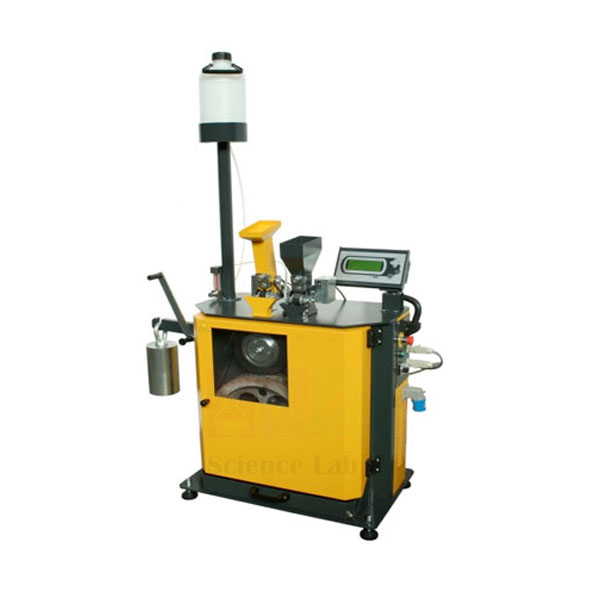
Accelerated Polishing Machine
Accelerated Polishing Machine (Product Code: SLE/AG/13) is a road-wheel machine used to simulate the polishing of road surfacing aggregate by tyre traffic in highway and quarry laboratories. Fourteen specimens sit around a road wheel running at 320 ± 5 rev/min while a rubber-tyred wheel bears on them with a 725 ± 10 N load. It is made by Jain Scientific Equipments Pvt Ltd (ScienceLab), an OEM manufacturer of scientific & laboratory instruments, at its own factory in Ambala, India.
Specifications
| Parameter | Detail |
|---|---|
| Specimens | 14 specimens located on the road wheel by rubber rings and held by simple side fixing |
| Road wheel speed | 320 ± 5 rev/min |
| Tyred wheel set diameter | 200 ± 3 mm |
| Tyred wheel set width | 38 ± 2 mm |
| Tyred wheel hardness | 69 ± 3 IRHD |
| Applied load on the wheel | 725 ± 10 N |
| Tyre positioning | Loaded tyre raised and lowered to the running surface by a mechanical lifting device |
| Drive | Inverter drive to motor for precise speed control; adjustable 3 phase motor speed control with adjustable timing belt drive, reducing power consumption and improving control |
| Controls | Digital display preset timer and revolution counter |
| Spindle | High ground steel main spindle in precision sealed ball bearings, additionally protected by a labyrinth seal; spindle axially loaded to eliminate end play |
| Frame | Robust welded steel mainframe standing on adjustable pads |
| Water feed | Gravity fed from a high level tank through a calibrated flow meter; water tank height 155 cm |
| Waste collection | Used abrasive and water collected in an easily removable tray |
| Specimen moulds | Precision machined moulds; specimens easily removed |
| Guards | Protective covers and guards easily removed for maintenance |
| Electrical supply | 230 V / 110 V, 50/60 Hz, single phase, 13 amp |
| Dimensions (W x D x H) | 810 x 790 x 1230 mm |
| Palletised dimensions (W x D x H) | 1200 x 800 x 1280 mm |
| Weight (max) | 210 kg |
| Product code | SLE/AG/13 |
| Manufacturer | Jain Scientific Equipments Pvt Ltd (ScienceLab) — OEM |
| Country of origin | India (made in Ambala, Haryana) |
What Is the Accelerated Polishing Machine Used For?
Selected chippings are packed into the precision machined moulds and bonded to form curved specimens, which release easily once set. Fourteen specimens are fitted around the road wheel, located by rubber rings and secured with the side fixing. The loaded tyre is then lowered onto the running surface with the mechanical lifting device, and the timer or revolution count is preset.
During the run the wheel turns at 320 ± 5 rev/min while abrasive and water are fed onto the contact; water flows by gravity from the high level tank through the calibrated flow meter, so the feed stays steady. Afterwards the specimens are removed and their skid resistance is measured with a separate friction tester to give the polished stone value.
For lab equipment installation in India, plan a level floor area for the 810 x 790 x 1230 mm machine, room for the elevated tank and a single phase socket; the adjustable pads take up small floor irregularities. Empty the waste tray after each run so abrasive does not dry into a crust, and lift off the guards periodically to clean around the wheel.
What to Specify When Ordering
- Your mains supply: 230 V or 110 V, 50 or 60 Hz, single phase (13 amp).
- Floor space for the 810 x 790 x 1230 mm machine plus the high level water tank (155 cm).
- The delivery address, as the machine ships palletised at 1200 x 800 x 1280 mm and up to 210 kg.
- Any friction tester or other test equipment you want quoted together with the machine.
OEM Manufacturer
ScienceLab is the brand of Jain Scientific Equipments Private Limited, and the company is the OEM (original equipment manufacturer) of this Accelerated Polishing Machine. The machine is fabricated and assembled at its own licensed factory at Saha, Ambala, Haryana, India, then supplied factory-direct to highway authorities, quarry laboratories, research institutions, dealers and importers. When replacement rubber rings, moulds or other parts are needed later, ask us: the enquiry is answered by the manufacturer rather than a reseller. The company profile gives further background.
Related Civil Engineering Lab Equipment
Surfacing aggregate evaluation commonly combines the polishing test with:
- Skid Resistance And Friction Tester — measures surface friction and suits polished stone value tests on curved specimens from accelerated polishing.
- Wide Wheel Abrasion Testing Machine — measures wear resistance of paving stone and concrete products.
- Los Angeles Abrasion Testing Machine — checks the toughness of the same aggregate under impact and abrasion.
- Grid Sieves — help screen out flaky chippings when preparing specimen material.
- Safety Goggles — for operators handling abrasive and removing guards.
More road material testing equipment is available in the Civil Engineering Lab Equipment category.
Frequently Asked Questions
How many specimens does the Accelerated Polishing Machine take per run?
The Accelerated Polishing Machine takes fourteen specimens around its road wheel, located by rubber rings and held by simple side fixing, so a full set can be polished together under identical conditions.
What power supply does the Accelerated Polishing Machine use?
The Accelerated Polishing Machine is specified for 230 V / 110 V, 50/60 Hz single phase at 13 amp, and an inverter drive handles motor speed control. State your supply when ordering so it can be confirmed in the quotation.
How is the load applied to the specimens on the Accelerated Polishing Machine?
A tyred wheel of 200 ± 3 mm diameter and 38 ± 2 mm width, with 69 ± 3 IRHD hardness, bears on the specimens of the Accelerated Polishing Machine with a load of 725 ± 10 N; a mechanical lifting device raises and lowers it.
How is the run length set on the Accelerated Polishing Machine?
The Accelerated Polishing Machine has a digital display with a preset timer and revolution counter, so each run can be ended after a fixed time or after a fixed number of road wheel revolutions.
How is water delivered and collected on the Accelerated Polishing Machine?
Water for the Accelerated Polishing Machine is gravity fed from a high level tank, 155 cm high, through a calibrated flow meter, and used abrasive and water drain into an easily removable tray.
Who manufactures the Accelerated Polishing Machine?
The Accelerated Polishing Machine is manufactured by Jain Scientific Equipments Pvt Ltd (ScienceLab), the OEM, at its own licensed factory at Saha, Ambala, Haryana, India. Quotations and spare-part enquiries are handled directly by the manufacturer.
What size and weight should I plan for when shipping the Accelerated Polishing Machine?
The Accelerated Polishing Machine ships palletised at 1200 x 800 x 1280 mm with a maximum weight of 210 kg. Share your delivery address in India or abroad for a freight quotation from the manufacturer.
Is a calibration certificate available for the Accelerated Polishing Machine?
Please raise documentation requirements for the Accelerated Polishing Machine with us via the contact page before ordering; we will confirm what can be supplied with your particular order.
Request a Quote
Send your enquiry through the contact page or add the machine to the enquiry cart with any related test equipment. Pricing comes straight from ScienceLab as the manufacturer.
Last updated: 24 September 2026
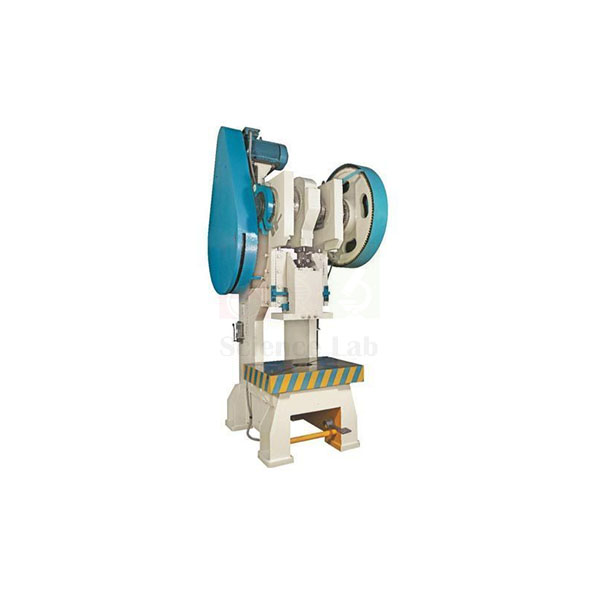
Power Press Machine
Power Press Machine (Product Code: SLE/MCE/07) is a flywheel-driven mechanical crank press used to punch, blank, bend and form sheet metal with matched punch-and-die tooling in fabrication shops, sheet-metal workshops and technical training institutes. It is listed in capacities from 5 to 50 tons, with an all-steel fabricated frame, an alloy steel crankshaft running in bronze bushes and a cast iron flywheel. It is supplied by Jain Scientific Equipments Pvt Ltd (ScienceLab), Ambala, India.
Specifications
| Parameter | Detail |
|---|---|
| Capacity | 5–50 tons |
| Frame | All steel construction, fabricated from rolled steel plates with cross ribbing; alignment ensured by machining |
| Legs | Presses up to 30 T supplied with C.I. legs |
| Crankshaft | Special alloy steel, precisely machined to a ground finish; diameter 70–140 mm |
| Bearings | Bronze bushes for smooth working |
| Flywheel | High grade cast iron; diameter 406–660 mm |
| Gears | Steel cast or fabricated; teeth generated on a precision hobbing machine |
| Adjustment of stroke | 38–89 mm |
| Adjustment of ram | 25 mm |
| Punch hole in ram | 25–45 mm |
| Hole in bed | 63–95 mm |
| Bed thickness | 50–83 mm |
| Bed size (L x W) | 355 x 178 mm (as listed) |
| Distance between bed and ram | 177–350 mm |
| Floor to bed surface | 700–1000 mm |
| Strokes per minute | 80 to 35 (across the capacity range) |
| Motor | 1–5 HP |
| Product code | SLE/MCE/07 |
| Supplied by | Jain Scientific Equipments Pvt Ltd (ScienceLab), Ambala, India |
What Is the Power Press Used For?
In a mechanical power press the motor keeps a heavy flywheel spinning, and when a stroke is engaged the crankshaft turns that stored energy into a short, powerful down-and-up movement of the ram. A punch fitted in the ram meets a die on the bed, so identical parts such as washers, brackets and blanks can be cut or formed from sheet metal quickly and repeatably.
In training, students learn how tooling is set, how the stroke adjustment of 38–89 mm and ram adjustment of 25 mm set the working gap, and why smaller presses run faster (around 80 strokes per minute) than the largest (around 35). Follow your workshop's guarding and safe-operation rules and never reach into the die area while the press is running.
What to Specify When Ordering
- Required capacity, anywhere from 5 to 50 tons.
- Tool space needed: stroke, bed-to-ram distance (177–350 mm) and hole sizes in ram and bed.
- Motor rating (1–5 HP) and your electrical supply, which is not stated in the listing.
- Whether C.I. legs are wanted (listed for presses up to 30 T).
- Quantity and delivery location.
Supplier
ScienceLab, the trading name of Jain Scientific Equipments Private Limited, supplies the Power Press Machine to polytechnics, ITIs, engineering colleges, sheet-metal and fabrication units, dealers and importers in India and international markets, and can quote it alongside other workshop machines.
Tender and institutional buyers registering a new vendor can use the company's CIN U29309HR2020PTC087597 and GSTIN 06AAECJ8618A1ZT. More is on the ScienceLab company profile.
Related Workshop Machine Tools
Sheet-metal and fabrication shops often combine a power press with these machines:
- Hydraulic Press Machine — slower, fully controllable pressing for forming, straightening and assembly.
- Spot welding Machines — join pressed sheet-metal parts.
- MIG Welding Machine — for seam welding of fabricated assemblies.
- Pillar Drilling Machine — drills holes that are not produced by the press tool.
See every machine in Workshop Machine Tools.
Frequently Asked Questions
What capacities is the Power Press Machine available in?
The Power Press Machine is listed in capacities from 5 to 50 tons, with motors from 1 to 5 HP and speeds from about 80 strokes per minute on the smaller presses down to 35 on the largest.
How is the Power Press Machine constructed?
The Power Press Machine has an all-steel frame fabricated from rolled steel plates with cross ribbing, an alloy steel crankshaft machined to a ground finish in bronze bushes, a high grade cast iron flywheel and steel gears with hobbed teeth.
How much tool space does the Power Press Machine offer?
The Power Press Machine offers 38–89 mm stroke adjustment, 25 mm ram adjustment and 177–350 mm between bed and ram, with a 25–45 mm punch hole in the ram and a 63–95 mm hole in the bed, depending on capacity.
Does the Power Press Machine come with legs?
Power Press Machine models up to 30 T are supplied with C.I. legs, and the floor-to-bed height is listed as 700–1000 mm across the range. Ask us how larger capacities are mounted when you request a quotation.
What is the Power Press Machine used for in training?
The Power Press Machine is used to teach punching, blanking, bending and forming of sheet metal, together with tool setting, stroke adjustment and safe press operation, in polytechnics, ITIs and engineering college workshops.
Who supplies the Power Press Machine?
The Power Press Machine is supplied by Jain Scientific Equipments Pvt Ltd (ScienceLab), Ambala, India, to training institutes, colleges, fabrication units, dealers and importers in India and international markets.
Request a Quote
For a Power Press Machine quotation, write to us through the contact page or use the enquiry cart, stating tonnage, tool space and quantity.
Last updated: 24 September 2026
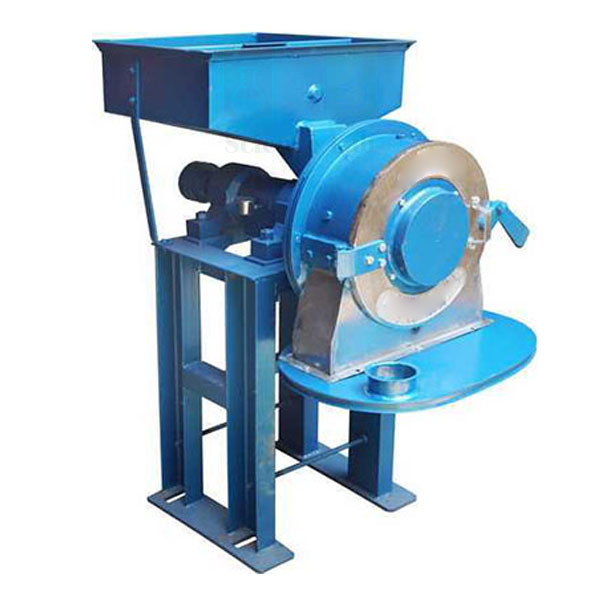
Pulveriser
Pulveriser (Product Code: SLE/AG/14) is a self-contained disc grinder used to turn small crushed pieces of rock, ore and similar hard material into fine powder for analysis in geology, mining and soil laboratories. Its rotating disc with planetary movement works against a 175 mm high carbon steel wheel, reducing about 450 g of quartz type material to 100 mesh in one minute. It is made by Jain Scientific Equipments Pvt Ltd (ScienceLab), an OEM manufacturer and lab equipment exporter, at its own factory in Ambala, India.
Specifications
| Parameter | Detail |
|---|---|
| Type | Self-contained grinder with a rotating disc having planetary movement in the vertical plane |
| Grinding wheel diameter | 175 mm |
| Grinding wheel material | High carbon steel, 53–60 HRC hardness |
| Input of material | 6 mm |
| Output | Reduces about 450 g of quartz type material to 100 mesh in one minute |
| Electrical supply | 440 V, three phase, A.C. |
| Product code | SLE/AG/14 |
| Manufacturer | Jain Scientific Equipments Pvt Ltd (ScienceLab) — OEM |
| Country of origin | India (made in Ambala, Haryana) |
What Is the Laboratory Pulveriser Used For?
Material is first crushed to meet the 6 mm input size, usually in a jaw crusher, and then divided to the quantity required. The portion is fed into the pulveriser, where the planetary action of the disc grinds it between hardened steel surfaces until it reaches the fineness needed for analysis. With quartz type material the machine reaches 100 mesh in about a minute for a 450 g charge; softer or harder materials behave differently, so check fineness with a sieve the first time a new material is prepared.
In busy sample preparation rooms, good upkeep of laboratory instruments in India starts with cleaning: brush out the grinding chamber and wipe the wheel between samples so no powder is carried into the next one. Operators should wear eye protection and keep the covers closed while the disc is turning.
OEM Manufacturer
Jain Scientific Equipments Private Limited, trading as ScienceLab, is the OEM (original equipment manufacturer) of this Pulveriser. It is assembled at the company's own licensed factory at Saha, Ambala, Haryana, India, and supplied factory-direct to laboratories, dealers and importers rather than via a trading house. Replacement grinding wheels and other parts are handled by the manufacturer too, so ask us with the product code whenever you need one. Details about the company are on the ScienceLab profile.
Related Civil Engineering Lab Equipment
A complete crushing and grinding line typically includes:
- Jaw Crusher — primary crushing of lumps down towards the 6 mm feed size.
- Riffle Sample Divider — splits crushed material to the charge you want to pulverise.
- Test Sieves — for checking the fineness of the ground powder.
- Pestle And Mortar — for very small quantities or for finishing a few grams by hand.
- Safety Goggles — eye protection while loading and emptying the grinder.
See more sample preparation equipment in the Civil Engineering Lab Equipment category.
Frequently Asked Questions
What size of material can be fed into the Pulveriser?
The Pulveriser accepts an input of 6 mm material. Larger pieces should first be reduced in a jaw crusher and then divided to the quantity you need before they are fed into the grinder.
How fine and how fast does the Pulveriser grind?
The Pulveriser reduces about 450 g of quartz type material to 100 mesh in one minute. Grinding time for other materials depends on their hardness and on the fineness your analysis needs.
What is the grinding wheel of the Pulveriser made of?
The grinding wheel of the Pulveriser is 175 mm in diameter and made of high carbon steel with 53–60 HRC hardness, chosen to withstand abrasive minerals such as quartz during repeated grinding.
What electrical supply does the Pulveriser require?
The Pulveriser operates on a 440 V, three phase A.C. supply. Please confirm your site supply when you send an enquiry, so the manufacturer can check it before preparing your quotation.
How do I prevent contamination between samples in the Pulveriser?
Clean the chamber and wheel of the Pulveriser thoroughly after every sample, and keep a record of the material ground last, so that trace analyses on the next sample can be interpreted correctly.
Who manufactures the Pulveriser?
The Pulveriser is manufactured by Jain Scientific Equipments Pvt Ltd (ScienceLab), the OEM, at its own licensed factory at Saha, Ambala, Haryana, India. Replacement grinding wheels and repeat orders are handled directly by the manufacturer; just ask us.
What should a quotation request for the Pulveriser include?
Give the product code SLE/AG/14, the quantity, the material you intend to grind, your three phase supply details and the delivery location in India or abroad, and the Pulveriser quotation will come directly from the manufacturer.
Request a Quote
Send your requirement through the contact page or place the Pulveriser in the enquiry cart, together with a jaw crusher if you are setting up a full sample preparation line. You will be quoted directly by the manufacturer.
Last updated: 24 September 2026
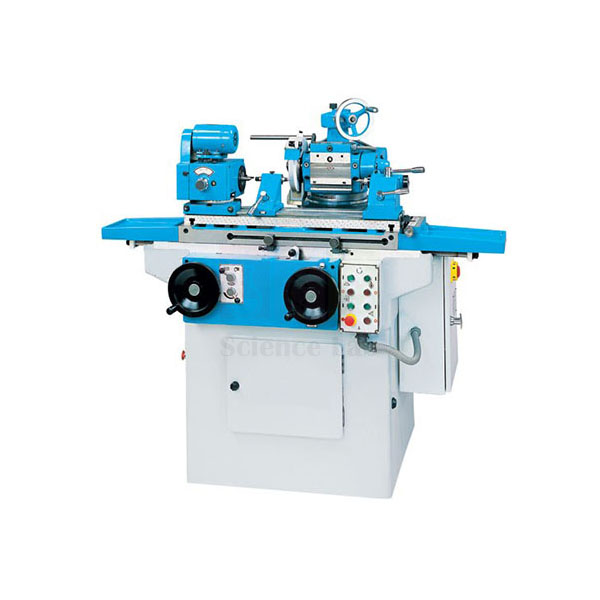
Tool And Cutter Grinding Machine
Tool And Cutter Grinding Machine (Product Code: SLE/MCE/08) is a precision grinder used to resharpen milling cutters, reamers, taps and other multi-tooth cutting tools in tool rooms, machine shops and engineering training workshops. It takes cutters up to 250 mm in diameter, holds work up to 300 mm between centres and has a fully adjustable work head on a swivel base. It is supplied by Jain Scientific Equipments Pvt Ltd (ScienceLab), Ambala, India.
Specifications
| Parameter | Detail |
|---|---|
| Cutters ground | Cylindrical, side and face, involute gear, concave and convex cutters |
| With standard accessories | Resharpening of bevel lead angle reamers and the cutting face of tap flutes |
| With extra accessories | Drill point, tap lead and radius grinding |
| Work head | Holding fixture fully adjustable, with swivel base |
| Table stroke control | Adjustable stopper limits longitudinal table reciprocation |
| Working surface of table | 450 x 125 mm |
| Longitudinal traverse | 200 mm |
| Cross traverse | 150 mm |
| Maximum distance between centres | 300 mm |
| Swing diameter on standard centres and work head | 275 mm |
| Maximum cutter diameter | 250 mm |
| Maximum length of cutting edges ground | 260 mm |
| Grinding spindle speed | Single (mono) speed: listed as 3600 RPM in the feature description and 4600 RPM in the technical table; to be confirmed at quotation |
| Drive | V-belt from motor to spindle |
| Motor | 0.5 HP, 2800 RPM |
| Base of machine | 599 x 430 mm |
| Floor area occupied | 765 x 1145 mm |
| Height of machine | 1375 mm |
| Weight with accessories | 325 kg |
| Product code | SLE/MCE/08 |
| Supplied by | Jain Scientific Equipments Pvt Ltd (ScienceLab), Ambala, India |
What Is the Tool and Cutter Grinder Used For?
Every milling cutter, reamer and tap gradually loses its edge, and a blunt tool gives poor finish, oversize work and extra load on the machine. A tool and cutter grinder restores the correct edge and clearance on each tooth: the cutter is mounted between centres or in the adjustable work head, and the table carries it back and forth past the grinding wheel, with the adjustable stopper limiting the stroke so only the intended edge is ground.
In a training workshop the machine teaches cutting-tool geometry in a very practical way, and in a working machine shop it lets worn cutters be resharpened instead of replaced. Standard accessories cover reamers and tap flutes, while drill points, tap leads and radius work need extra accessories. The machine weighs 325 kg with accessories, so plan a firm floor position, and always use eye protection when grinding.
What to Specify When Ordering
- The tools you will resharpen, so we can confirm whether extra accessories (drill point, tap lead or radius grinding) are needed.
- Your largest cutter (listed maximum 250 mm diameter, 300 mm between centres).
- The grinding spindle speed you require, since the listing gives both 3600 and 4600 RPM.
- Your electrical supply for the 0.5 HP motor, which is not stated in the listing.
- Quantity and delivery location.
Supplier
Jain Scientific Equipments Private Limited, known by its trading name ScienceLab, supplies the Tool And Cutter Grinding Machine to tool rooms, engineering colleges, polytechnics, ITIs, dealers and importers in India and international markets, and can include it in a combined workshop quotation.
Read about the company on the ScienceLab company profile.
Related Workshop Machine Tools
These machines use the cutters and drills that a tool and cutter grinder keeps sharp:
- Universal Milling Machine — runs cylindrical, disc, end and angular milling cutters.
- CNC milling Machine — depends on sharp cutters for accurate programmed machining.
- Radial Drill Machine — large drills and taps that can be reground.
- Pillar Drilling Machine — everyday drills whose points can be resharpened.
Browse the full Workshop Machine Tools range.
Frequently Asked Questions
What tools can the Tool And Cutter Grinding Machine sharpen?
The Tool And Cutter Grinding Machine grinds cylindrical, side and face, involute gear, concave and convex cutters; with standard accessories it resharpens bevel lead angle reamers and tap flute faces, and with extra accessories it handles drill points, tap leads and radius grinding.
What size of cutter fits the Tool And Cutter Grinding Machine?
The Tool And Cutter Grinding Machine accepts cutters up to 250 mm in diameter and cutting edges up to 260 mm long, with 300 mm maximum between centres and a 275 mm swing on the standard centres and work head.
What is the grinding spindle speed of the Tool And Cutter Grinding Machine?
The Tool And Cutter Grinding Machine runs at a single spindle speed, driven by V-belt from a 0.5 HP, 2800 RPM motor. The listing states 3600 RPM in one place and 4600 RPM in another, so please confirm the speed with us.
What table movements does the Tool And Cutter Grinding Machine have?
The Tool And Cutter Grinding Machine has a 450 x 125 mm table with 200 mm longitudinal and 150 mm cross traverse, and an adjustable stopper that limits the longitudinal reciprocation during grinding.
How much space does the Tool And Cutter Grinding Machine need?
The Tool And Cutter Grinding Machine has a 599 x 430 mm base, occupies a floor area of 765 x 1145 mm, stands 1375 mm high and weighs 325 kg with accessories.
Who supplies the Tool And Cutter Grinding Machine?
The Tool And Cutter Grinding Machine is supplied by Jain Scientific Equipments Pvt Ltd (ScienceLab), Ambala, India, to tool rooms, colleges, training institutes, dealers and importers in India and international markets.
Request a Quote
Request a quotation for the Tool And Cutter Grinding Machine through the contact page or add it to the enquiry cart, listing the tools you need to sharpen.
Last updated: 24 September 2026