- Physics Lab Equipment
- Chemistry Lab Equipment
- Biology Lab Equipment
- Anatomical Lab Equipment
- Learning
- Educational Lab Equipment
- Magnets
- Agriculture
- Astronomy
- Earth Science
- Geography Lab Equipment
- Safety Lab Coat
- Laboratory
- Meteorological
- Electricity & Magnetism
- Heat
- School Lab Equipment
- Lab Glassware
- Science Lab Equipment
- Tvet Lab Equipment
- Robotics Kits Supplier and Manufacturer for Schools India
- Math Lab Equipment Manufacturers and Exporters in Ambala
- STEM Kits Manufacturers and Supplier India
- Engineering Lab Equipment
- Hospital Lab Equipment
- Water, Sanitation & Hygiene Supplies
- Cold Chain, Solar & Communication Equipment
- Nutrition
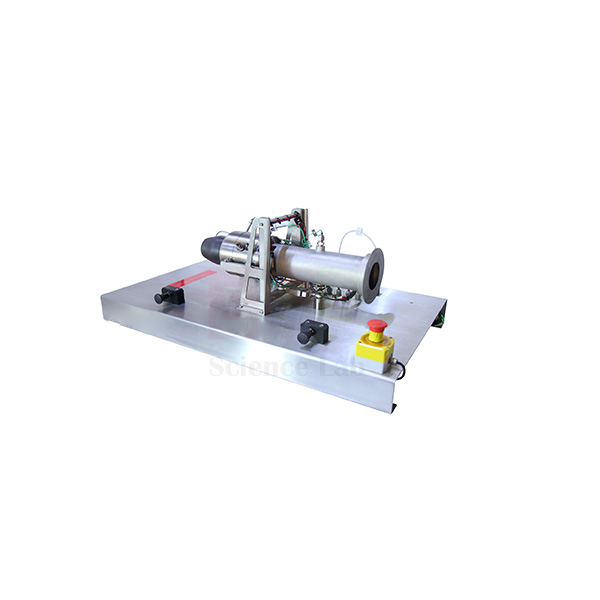
Axial Flow Turbine test bed
Axial Flow Turbine test bed (Product Code: SLE/MCE/52) is a small gas turbine engine test bed used to measure thrust and air mass flow and to study turbine engine operation in engineering and propulsion laboratories. Mechanical and aeronautical engineering departments use it to run an engine with a single-stage radial compressor and a single-stage, low-mass axial flow turbine, producing a typical thrust of 200 N. It is supplied by Jain Scientific Equipments Pvt Ltd (ScienceLab), Ambala, India.
Specifications
| Parameter | Detail |
|---|---|
| Thrust | 200 N typical |
| Air mass flow | 450 g/s |
| Engine speed | 105,000 rpm typical |
| Exhaust gas temperature | 800°C typical |
| Compressor type | Single-stage radial |
| Turbine type | Single-stage, low-mass axial flow |
| Ignition system | Glow plug |
| Engine mount | Single pivot point, enabling accurate thrust measurement |
| Air intake | Custom-fabricated frontal duct replaces the standard inlet so air mass flow rate can be measured accurately |
| Engine control | Electronic pre-programmed controller supervises the engine constantly for safe operating conditions |
| Support systems | No external lubrication system; no external battery or charger needed |
| Frame | Sturdy metal frame holding the engine firmly |
| Safety screen | Tough, transparent polycarbonate |
| Optional stand | Floor-standing frame housing the unit with its fuel tank and electronic console |
| Dimensions | 880 x 510 x 1185 mm |
| Weight | 150 kg (approx.) |
| Product code | SLE/MCE/52 |
| Supplied by | Jain Scientific Equipments Pvt Ltd (ScienceLab), Ambala, India |
What Is the Axial Flow Turbine Test Bed Used For?
The test bed lets students run a real gas turbine and connect what they measure with the Brayton cycle and turbomachinery theory. Air drawn through the frontal duct is compressed by the radial stage, burned, and expanded through the axial flow turbine, which drives the compressor while the exhaust produces thrust. Because the engine pivots on a single mounting point, the reaction can be measured as thrust, and comparing thrust with air mass flow gives a practical feel for jet propulsion performance.
The typical figures of 105,000 rpm and 800°C exhaust temperature give a vivid context for discussing rotor stresses and turbine blade materials. Always run the engine behind the polycarbonate screen, keep the exhaust path clear, and follow your institution's rules on fuel storage, ventilation and hearing protection. As engineering lab equipment in India for colleges with aeronautical or thermal engineering streams, it turns a lecture topic into a live experiment.
What to Specify When Ordering
- Whether the optional floor-standing frame for the unit, fuel tank and electronic console is required
- Installation space for the 880 x 510 x 1185 mm, 150 kg unit
- The fuel the engine uses and its handling on your site — confirm with us before ordering
- Quantity and delivery destination
Supplier
The Axial Flow Turbine test bed is supplied by Jain Scientific Equipments Private Limited, the Ambala company that trades as ScienceLab. The company sources the test bed for engineering colleges, aeronautical institutes, dealers and importers, and handles the quotation, packing and dispatch to India and international markets.
Questions about the controller, the optional stand or parts can be sent to the same team, and we will check what can be arranged. Company details are on the ScienceLab profile page.
Related Fluid Mechanics Equipment
These rigs support the same turbomachinery teaching sequence, from water turbines to other gas turbine and compressor benches:
- Axial Flow Pump Test Rig — the pumping counterpart of axial flow turbomachinery.
- Pelton Turbine Test Rig — an impulse water turbine for contrasting hydraulic and gas turbines.
- Turbojet Engine Test Bench — an alternative jet engine bench for propulsion experiments.
- Two Shaft Gas Turbine — extends the study to a gas generator driving a separate power turbine.
- Rotary Air Compressor Test Bench — looks at the compression stage on its own.
More rigs are listed under Fluid Mechanics.
Frequently Asked Questions
What does the Axial Flow Turbine test bed measure?
The Axial Flow Turbine test bed is designed for accurate thrust measurement through its single-pivot engine mount, and its custom frontal duct allows the air mass flow rate to be measured. Typical values are 200 N thrust and 450 g/s air mass flow.
Does the Axial Flow Turbine test bed need an external battery or lubrication system?
No. The Axial Flow Turbine test bed needs neither an external lubrication system nor an external battery and charger. An electronic pre-programmed controller supervises the engine constantly to keep operating conditions safe.
Is a stand available for the Axial Flow Turbine test bed?
Yes, an optional floor-standing frame is available for the Axial Flow Turbine test bed. It houses the unit together with its fuel tank and electronic console, keeping the set-up compact in a teaching laboratory. State on your enquiry if you need it.
What safety features does the Axial Flow Turbine test bed have?
The Axial Flow Turbine test bed has a tough, transparent polycarbonate safety screen, a sturdy metal frame that holds the engine firmly and an electronic controller supervising the engine. Laboratories should still apply their own rules for fuel, ventilation and noise.
Who supplies the Axial Flow Turbine test bed?
The Axial Flow Turbine test bed is supplied by Jain Scientific Equipments Pvt Ltd (ScienceLab) of Ambala, Haryana, India. The company quotes, packs and ships it to engineering institutions, dealers and importers in India and international markets.
Is a calibration certificate available for the Axial Flow Turbine test bed?
Calibration-certificate availability for the Axial Flow Turbine test bed, including its thrust measurement, should be discussed with us before ordering. Mention the requirement through the contact page so the quotation can address it.
What should a quotation request for the Axial Flow Turbine test bed include?
A quotation request for the Axial Flow Turbine test bed should give the quantity, whether the optional floor-standing frame is needed, the delivery location and any documents your institution requires, so ScienceLab can reply with a complete quote.
Request a Quote
To request a quote for the Axial Flow Turbine test bed, send your requirements through the ScienceLab contact page or add the product to the enquiry cart. Include quantity, the optional stand and delivery location.
Last updated: 24 September 2026
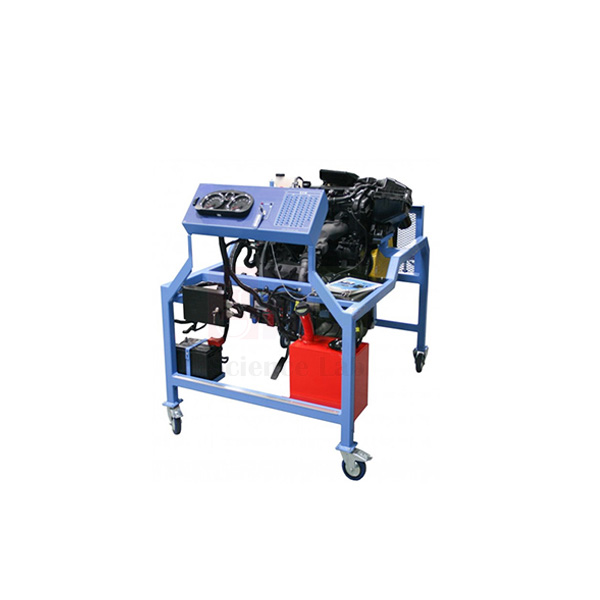
Four Stroke Four Cylinder Petrol Engine Test Bench
Four Stroke Four Cylinder Petrol Engine Test Bench (Product Code: SLE/MCE/53) is an engine test rig used to measure the torque, power, fuel consumption and efficiency of a running multi-cylinder petrol engine in automotive and mechanical engineering laboratories. Built on a welded mobile frame, it carries a 1086 cc, water-cooled MPFI engine rated at 63 BHP and coupled to a brake load unit. The bench is made by Jain Scientific Equipments Pvt Ltd (ScienceLab), an OEM manufacturer, at its own factory in Ambala, India.
Specifications
| Parameter | Detail |
|---|---|
| Engine | Branded petrol engine, MPFI version |
| Working cycle | Four-stroke, spark ignition |
| Number of cylinders | Four |
| Capacity | 1086 cc |
| Bore × stroke | 66 mm × 77 mm |
| Maximum power | 63 BHP at 5500 rpm |
| Maximum torque | 89 Nm at 3000 rpm |
| Cooling | Water-cooled, closed cooling water circuit |
| Starting | Self-start |
| Fuel / engine oil | Petrol / SAE 5W-30 |
| Battery and alternator | Battery 12 V, 45 A; alternator 12 V, 45 A |
| Power supply | 230 V, 50 Hz, single phase |
| Load connection | Engine fastened to the load unit; brake driven through a rotationally elastic coupling with jointed shaft |
| Frame | Solid welded frame on rollers; engine flexibly mounted |
| Guarding | Perforated plates over hot surfaces and rotating parts |
| Experiments | Torque and power curves, specific fuel consumption, overall engine efficiency |
| Product code | SLE/MCE/53 |
| Manufacturer | Jain Scientific Equipments Pvt Ltd (ScienceLab) — OEM |
| Country of origin | India (made in Ambala, Haryana) |
What Is the Petrol Engine Test Bench Used For?
In a performance practical, students run the engine at a series of speeds and loads, note the torque absorbed by the brake and the fuel used over a timed interval, and plot torque and power curves against engine speed. From the same readings they work out specific fuel consumption and overall engine efficiency, linking classroom thermodynamics to a real four-cylinder MPFI engine.
Because the whole rig rolls on its welded frame, it can be moved to a well-ventilated bay or exhaust extraction point before each session. The perforated guards let students watch the running engine while hot and rotating parts stay covered; even so, keep loose clothing away and let the cooling circuit cool before touching it. The bench fits vocational training lab equipment programmes, diploma automotive courses and degree-level IC engine laboratories.
What to Specify When Ordering
- Your laboratory mains supply (the bench is listed for 230 V, 50 Hz, single phase).
- Whether you also want exhaust heat measurement or separate fuel measuring equipment for heat-balance work.
- The number of benches and the delivery location, in India or abroad.
OEM Manufacturer
Jain Scientific Equipments Private Limited, which trades as ScienceLab, is the OEM (original equipment manufacturer) of this petrol engine test bench. The rig is built at the company’s licensed factory at Saha, Ambala, Haryana, India, around a branded MPFI petrol engine, so buyers deal with the maker of the bench rather than a trading intermediary. ScienceLab is a registered MSME manufacturer (Udyam UDYAM-HR-01-0003714) and ships export orders under Importer-Exporter Code AAECJ8618A issued by DGFT. Read more on the ScienceLab profile page.
Related Automotive Training Equipment
Pair the test bench with these items to extend engine testing and teaching.
- Exhaust Gas Calorimeter — measures the heat carried away in the exhaust for a full engine heat balance.
- Manual Volumetric Fuel Gauge — times a measured volume of fuel during consumption tests.
- Engine management system (MPI) — teaches the multi-point injection electronics used on this type of engine.
- Cut Section Model Of Four Stroke Petrol Engine — shows the internal parts students cannot see on the running engine.
See the full range of Automotive Training Equipment.
Frequently Asked Questions
What can be measured on the Four Stroke Four Cylinder Petrol Engine Test Bench?
The Four Stroke Four Cylinder Petrol Engine Test Bench is designed for plotting torque and power curves, determining specific fuel consumption and working out overall engine efficiency. These are the core performance tests in an IC engine laboratory course.
What engine is fitted to the petrol engine test bench?
The Four Stroke Four Cylinder Petrol Engine Test Bench uses a branded four-cylinder, four-stroke petrol engine in MPFI version, with 1086 cc capacity, 66 mm bore and 77 mm stroke. It is water-cooled with spark ignition and self-start, rated at 63 BHP at 5500 rpm.
What power supply does the Four Stroke Four Cylinder Petrol Engine Test Bench need?
The Four Stroke Four Cylinder Petrol Engine Test Bench is listed for a 230 V, 50 Hz, single-phase supply. If your laboratory uses a different mains supply, tell us when you request a quotation so the requirement can be confirmed before you order.
Can the Four Stroke Four Cylinder Petrol Engine Test Bench be moved?
Yes. The Four Stroke Four Cylinder Petrol Engine Test Bench is carried on a solid welded frame on rollers, with the engine flexibly mounted, so the whole setup can be moved within the lab, for example to a ventilated area for running.
Who manufactures the Four Stroke Four Cylinder Petrol Engine Test Bench?
Jain Scientific Equipments Pvt Ltd (ScienceLab) is the OEM of the Four Stroke Four Cylinder Petrol Engine Test Bench and builds it at its own licensed factory in Saha, Ambala, Haryana, India. The engine fitted to the bench is a branded MPFI unit.
Is a calibration certificate supplied with the test bench?
A calibration certificate is not listed as standard for the Four Stroke Four Cylinder Petrol Engine Test Bench. If your institution requires one for the measuring instruments, please discuss it with us through the contact page before placing the order.
What details does a quotation for the test bench need?
For a quotation on the Four Stroke Four Cylinder Petrol Engine Test Bench, send the quantity, the delivery location in India or abroad, your mains supply and any accessories you want, such as an exhaust gas calorimeter. Quotes come directly from the manufacturer.
Request a Quote
Ask for a quotation on the Four Stroke Four Cylinder Petrol Engine Test Bench (SLE/MCE/53) through our contact page, or add it to the enquiry cart with other lab items. Your quote comes straight from the manufacturer in Ambala, with no trading intermediary in between.
Last updated: 24 September 2026
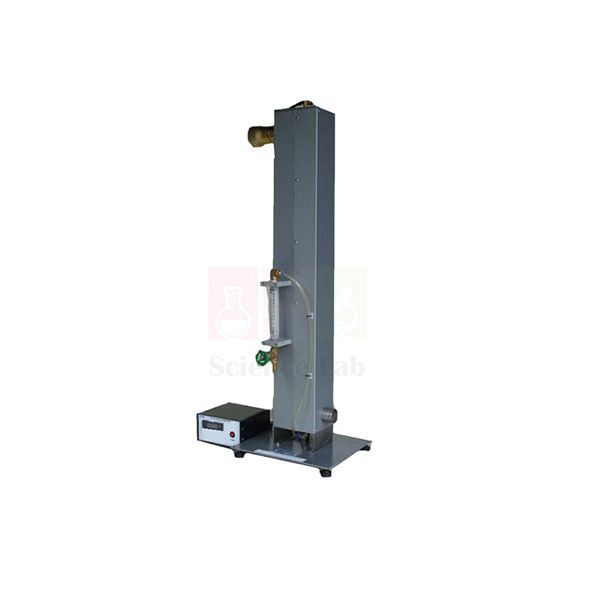
Exhaust Gas Calorimeter
Exhaust Gas Calorimeter (Product Code: SLE/MCE/54) is a counter-flow heat exchanger used to determine how much heat leaves an internal combustion engine in its exhaust gas, in thermal engineering and automotive laboratories. Connected to a test engine by an exhaust gas hose, it passes the hot gas through a finned pipe heat exchanger in an insulated stainless steel tank and shows four temperatures and the water flow on digital displays. It is made by Jain Scientific Equipments Pvt Ltd (ScienceLab), an OEM manufacturer, at its own factory in Ambala, India.
Specifications
| Parameter | Detail |
|---|---|
| Purpose | Calorimetric analysis of exhaust gases from internal combustion engines; heat content of exhaust from test engines |
| Heat exchanger | Counter-flow, finned pipe type |
| Calorimeter body | Insulated tank, stainless steel |
| Heat exchange area, exhaust gas side | 0.944 m² |
| Heat exchange area, water side | 0.141 m² |
| Exhaust gas temperature | 2 × 0–600 °C |
| Cooling water temperature | 2 × 0–200 °C |
| Water flow rate | 0–160 L/h (flow meter) |
| Instrumentation | 4 temperature sensors, flow meter, measuring amplifier with digital displays |
| Engine connection | Exhaust gas hose |
| Power supply | 230 V, 50 Hz, single phase |
| Dimensions | 600 × 600 × 1300 mm |
| Weight | 103 kg (approx.) |
| Product code | SLE/MCE/54 |
| Manufacturer | Jain Scientific Equipments Pvt Ltd (ScienceLab) — OEM |
| Country of origin | India (made in Ambala, Haryana) |
What Is the Exhaust Gas Calorimeter Used For?
In an engine heat-balance experiment, the calorimeter is connected to the exhaust of a running test engine while cooling water flows through the exchanger in the opposite direction. Students record the exhaust temperatures in and out, the water inlet and outlet temperatures and the water flow rate, then calculate the heat taken up by the water and estimate the heat carried off by the exhaust. That figure completes the energy balance alongside brake power, cooling-water heat and fuel energy.
It is typically chosen by mechanical and automotive engineering departments that already run an engine test bench and want lab equipment for technical institutes that covers thermal analysis as well as performance. Tip: start the water flow before the exhaust is routed through the exchanger and keep it steady while readings settle, so the outlet water stays within its 0–200 °C measuring range.
What to Specify When Ordering
- The test engine the calorimeter will be connected to, so the exhaust hose connection can be discussed.
- Your mains supply (the unit is listed for 230 V, 50 Hz, single phase).
- Floor space near the engine for a 600 × 600 × 1300 mm unit of about 103 kg.
- Quantity and delivery location.
OEM Manufacturer
The Exhaust Gas Calorimeter is an OEM product of Jain Scientific Equipments Private Limited, the company behind the ScienceLab name. It is made at the company’s own licensed factory at Saha, Ambala, Haryana, India, which means one supplier can quote both the calorimeter and the engine bench it serves. Technical questions, repeat orders and replacement parts are answered by the manufacturer itself, so ask us rather than a reseller. Company background is on the ScienceLab profile.
Related Automotive Training Equipment
These items supply the exhaust gas or complete the engine energy balance.
- Four Stroke Four Cylinder Petrol Engine Test Bench — a multi-cylinder engine to supply exhaust gas for the heat balance.
- 4 Stroke Diesel Engine — for comparing diesel exhaust heat with petrol results.
- 4 Stroke Petrol Engine — another test engine for heat-balance practicals.
- Manual Volumetric Fuel Gauge — measures the fuel input side of the energy balance.
Browse all Automotive Training Equipment or the Thermodynamics & Heat Transfer Lab Equipment range.
Frequently Asked Questions
What does the Exhaust Gas Calorimeter measure?
The Exhaust Gas Calorimeter determines the amount of heat contained in the exhaust gas from a test engine. It uses four temperature sensors, two on the exhaust gas and two on the cooling water, plus a flow meter, with readings shown on digital displays.
What are the measuring ranges of the Exhaust Gas Calorimeter?
The Exhaust Gas Calorimeter measures exhaust gas temperature at two points over 0–600 °C, cooling water temperature at two points over 0–200 °C, and water flow over 0–160 L/h, which covers typical engine-lab heat-balance experiments.
Which engines can be connected to the Exhaust Gas Calorimeter?
The Exhaust Gas Calorimeter is intended for calorimetric analysis of exhaust gases from internal combustion engines and connects through an exhaust gas hose. Tell us which test engine you have so the hose connection can be confirmed before we quote.
How large is the Exhaust Gas Calorimeter?
The Exhaust Gas Calorimeter measures 600 × 600 × 1300 mm and weighs about 103 kg. It runs on a 230 V, 50 Hz, single-phase supply, so plan a floor position close to both the engine exhaust and a mains socket.
Who manufactures the Exhaust Gas Calorimeter?
Jain Scientific Equipments Pvt Ltd (ScienceLab) manufactures the Exhaust Gas Calorimeter as the OEM at its own licensed factory in Saha, Ambala, Haryana, India. Repeat orders, spare parts and technical questions are handled directly by the manufacturer.
Is a calibration certificate available for the calorimeter sensors?
A calibration certificate for the Exhaust Gas Calorimeter’s temperature sensors or flow meter is not listed as standard. If your laboratory needs one, please discuss it with us through the contact page before ordering.
Can the Exhaust Gas Calorimeter be exported?
Yes, ScienceLab supplies the Exhaust Gas Calorimeter to engineering institutions in India and international markets. Share your quantity, destination and mains supply details with us to receive a quotation direct from the manufacturer.
Request a Quote
For a quotation on the Exhaust Gas Calorimeter (SLE/MCE/54), write to us via the contact page or place it in the enquiry cart together with your engine test equipment. The quote is issued directly by the manufacturer.
Last updated: 24 September 2026
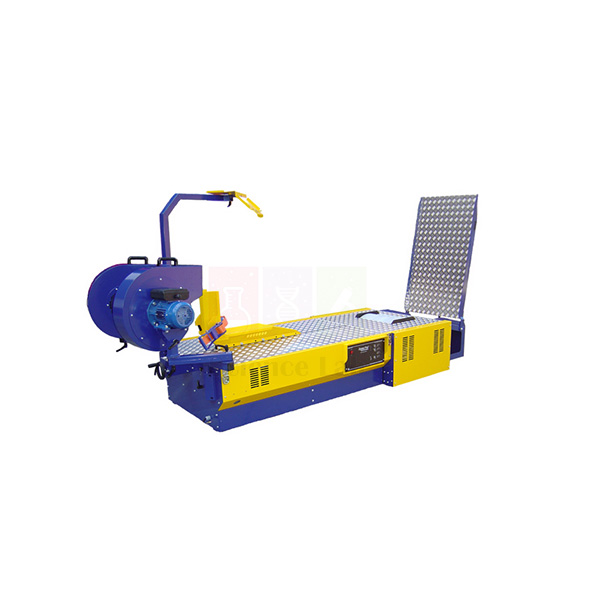
Motor Cycle Dynamometer Test Bench
Motor Cycle Dynamometer Test Bench (Product Code: SLE/MCE/55) is a roller-type chassis test bench used to run and test a complete motorcycle in place, under controlled conditions, in automotive workshops and two-wheeler training labs. Built on a monobloc 3 mm steel chassis with a chequer plate deck, it has a pneumatic automatic wheel clamp that lets one person load a bike without straps. It is made by Jain Scientific Equipments Pvt Ltd (ScienceLab), an OEM manufacturer, at its own factory in Ambala, India.
Specifications
| Parameter | Detail |
|---|---|
| Chassis | Monobloc chassis in 3 mm steel with chequer plate deck |
| Roller | Non-slip chrome roller with groove for alignment check, with safety brake |
| Wheel clamp | Pneumatic automatic wheel clamp; no straps required; one-person loading |
| Frame alignment check | Possible with the automatic wheel clamp and grooved roller together |
| Sensors | Wheel speed sensor and roller speed sensor |
| Access ramp | Integral folding ramp that doubles as a safety barrier |
| Cooling | Engine cooling fans and rear tyre cooling fan; fan outlets for engine and exhaust pipes, rear tyre, motorcycle brake and silencers |
| Exhaust extraction | Exhaust gas extraction fan; cover plates for exhaust extraction inlets |
| Fan housing | All cooling and extraction fans housed within the chassis |
| Electric starter control | Optional |
| Test scope | Application-specific tests, from individual engine unit tests to vehicle tests |
| Dimensions | 1600 × 900 × 1200 mm |
| Weight | 280 kg (approx.) |
| Product code | SLE/MCE/55 |
| Manufacturer | Jain Scientific Equipments Pvt Ltd (ScienceLab) — OEM |
| Country of origin | India (made in Ambala, Haryana) |
What Is the Motorcycle Dynamometer Test Bench Used For?
The motorcycle is wheeled up the folding ramp, the pneumatic clamp holds it in position and the driven wheel turns the chrome roller, so the engine can be run through its gears while the machine stays in place. Wheel and roller speed sensors let instructors compare the two speeds, while the built-in fans cool the engine, rear tyre and brake during longer runs and draw exhaust away from the silencers.
Tests range from checking a single engine unit to complete vehicle tests, and the grooved roller with the automatic clamp can also be used for a frame alignment check. The bench serves two-wheeler service training, diploma automotive courses and other technical educational equipment programmes. Tip: raise the folding ramp into its barrier position and connect the exhaust extraction before starting the engine.
What to Specify When Ordering
- Whether you want the optional electric starter control.
- How compressed air will be provided for the pneumatic wheel clamp — ask us to confirm the requirement.
- Floor space for a 1600 × 900 × 1200 mm bench of about 280 kg, plus room to lower the ramp.
- The types of motorcycles your trainees will test.
OEM Manufacturer
ScienceLab, the trading name of Jain Scientific Equipments Private Limited, is the OEM (original equipment manufacturer) of the Motor Cycle Dynamometer Test Bench. The bench is produced at the company’s own licensed factory at Saha, Ambala, Haryana, India, and supplied factory-direct to training institutes, colleges, dealers and importers. If a fan, sensor or other part ever needs replacing, the request goes to the same manufacturer that built the bench — just ask us. Learn more on the ScienceLab company profile.
Related Automotive Training Equipment
These items support engine teaching and testing alongside the roller bench.
- Four Stroke Four Cylinder Petrol Engine Test Bench — engine-only performance testing on a stationary rig.
- Cut Section Model Of Four Stroke Petrol Engine — shows the inside of a small petrol engine before trainees run one on the rollers.
- Automotive Engine Fault Diagnosis Simulator Auto Fault — builds diagnostic skills to pair with running tests.
- Manual Volumetric Fuel Gauge — measures fuel used during a test run.
Explore the complete Automotive Training Equipment category.
Frequently Asked Questions
How is a motorcycle secured on the Motor Cycle Dynamometer Test Bench?
The Motor Cycle Dynamometer Test Bench holds the motorcycle with a pneumatic automatic wheel clamp, so no straps are required and one person can load the bike. The clamp works with the grooved chrome roller, which also allows a frame alignment check.
What is included as standard with the Motor Cycle Dynamometer Test Bench?
The standard Motor Cycle Dynamometer Test Bench includes an exhaust gas extraction fan, a rear tyre cooling fan, engine cooling fans, the access ramp and the pneumatic automatic wheel clamp. All cooling and extraction fans are housed within the chassis for a clean installation.
Which sensors are fitted to the motorcycle dynamometer?
The Motor Cycle Dynamometer Test Bench is fitted with a wheel speed sensor and a roller speed sensor. Further measuring or display equipment is not listed, so please ask us to confirm the instrumentation you need when you request a quotation.
How much space does the Motor Cycle Dynamometer Test Bench need?
The Motor Cycle Dynamometer Test Bench measures 1600 × 900 × 1200 mm and weighs about 280 kg, and you also need room to lower the folding access ramp. Choose a ventilated area where the extracted exhaust can be led outside.
Is electric starter control available on the dynamometer bench?
Electric starter control is an option on the Motor Cycle Dynamometer Test Bench. State whether you need it when you request a quotation, so it can be included in the offer you receive from the manufacturer.
Who manufactures the Motor Cycle Dynamometer Test Bench?
Jain Scientific Equipments Pvt Ltd (ScienceLab) is the OEM of the Motor Cycle Dynamometer Test Bench, which is built at the company’s own licensed factory at Saha, Ambala, Haryana, India. Enquiries, repeat orders and spare parts are handled by the manufacturer directly.
Can the Motor Cycle Dynamometer Test Bench be supplied abroad?
Yes, ScienceLab supplies the Motor Cycle Dynamometer Test Bench to training institutions and dealers in India and international markets. Send us the quantity, the destination and whether you need the optional electric starter control to receive a quotation.
Request a Quote
To get a quotation for the Motor Cycle Dynamometer Test Bench (SLE/MCE/55), contact us through the contact page or add the bench to the enquiry cart. You will receive the quotation directly from the manufacturer in Ambala.
Last updated: 24 September 2026
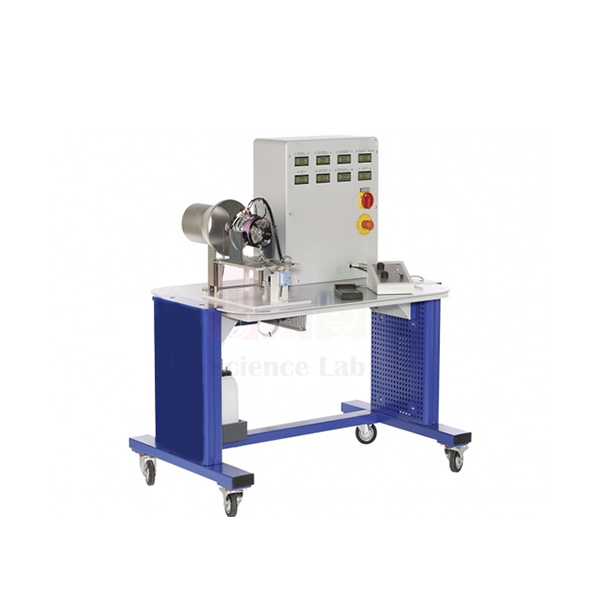
Turbojet Engine Test Bench
Turbojet Engine Test Bench (Product Code: SLE/MCE/56) is a gas turbine jet engine rig used to demonstrate thrust generation and measure the operating behaviour of a small turbojet in aeronautical, mechanical and thermal engineering laboratories. Its engine delivers a maximum thrust of 82 N at 117,000 rpm, while the bench measures pressures, temperatures, speed, fuel consumption and force. It is supplied by Jain Scientific Equipments Pvt Ltd (ScienceLab), Ambala, India.
Specifications
| Parameter | Detail |
|---|---|
| Maximum thrust | 82 N at 117,000 rpm |
| Speed range | 35,000–117,000 rpm |
| Exhaust gas temperature | 610 °C |
| Starting system | Electric starter |
| Fuel | Kerosene or petroleum, with turbine oil |
| Fuel tank | 1 tank, 5 L |
| Fuel consumption | Max. 22 L/h at full load |
| Sound level at 1 m | Max. 130 dB(A) |
| Differential pressure measurement | 0–150 mbar |
| Combustion chamber pressure | 0–2.5 bar |
| Temperature measurement | 2 × 0–1200 °C and 1 × 0–400 °C |
| Speed measurement | 0–120,000 rpm |
| Fuel consumption measurement | 0–25 L/h |
| Force measurement | 0 to ±200 N |
| Power supply versions | 230 V, 50 Hz, 1 phase; 230 V, 60 Hz, 1 phase; 120 V, 60 Hz, 1 phase |
| Dimensions | 1200 × 900 × 330 mm |
| Weight | 120 kg (approx.) |
| Product code | SLE/MCE/56 |
| Supplied by | Jain Scientific Equipments Pvt Ltd (ScienceLab), Ambala, India |
What Is the Turbojet Engine Test Bench Used For?
Students start the engine with the electric starter, run it across its 35,000–117,000 rpm speed range and record thrust, combustion chamber pressure, exhaust gas temperature and fuel flow at each setting. From these readings they can plot thrust against speed, work out thrust-specific fuel consumption and relate the results to the Brayton cycle taught in thermodynamics and propulsion courses.
Because the sound level at 1 m can reach 130 dB(A), the bench should run in a dedicated test room, with hearing protection for everyone present and fuel kept away from hot parts. It gives aerospace and mechanical departments sourcing engineering lab equipment in India a compact way to put a real jet engine in front of students.
What to Specify When Ordering
- The power supply version: 230 V 50 Hz, 230 V 60 Hz or 120 V 60 Hz, single phase.
- Which fuel you will use locally — kerosene or petroleum, with turbine oil.
- The test room or space where the 1200 × 900 × 330 mm bench will run.
- The number of benches and the delivery destination.
Supplier
ScienceLab is the trading name of Jain Scientific Equipments Private Limited, Ambala, Haryana, India, which supplies the Turbojet Engine Test Bench to universities, engineering colleges, dealers and importers in India and international markets. Questions about set-up, spares or repeat orders are answered by the same team that prepares your quotation — simply ask us. See the ScienceLab profile for company details.
Related Automotive Training Equipment
These items help students build up to, and compare against, the turbojet.
- Two Shaft Gas Turbine — another gas turbine trainer for comparing turbine configurations.
- Hero Engine — a simple classroom demonstration of reaction propulsion before students meet the real turbojet.
- Four Stroke Four Cylinder Petrol Engine Test Bench — contrasts continuous combustion with a reciprocating engine’s performance.
See more in Automotive Training Equipment and Aerodynamics Lab Equipment.
Frequently Asked Questions
What thrust does the Turbojet Engine Test Bench produce?
The Turbojet Engine Test Bench engine produces a maximum thrust of 82 N at 117,000 rpm, with an operating speed range of 35,000 to 117,000 rpm. The force measuring range of the bench is 0 to ±200 N.
What fuel does the Turbojet Engine Test Bench use?
The Turbojet Engine Test Bench runs on kerosene or petroleum with turbine oil, carried in a 5 L tank. Fuel consumption reaches a maximum of 22 L/h at full load, and the bench measures consumption over 0–25 L/h.
What does the Turbojet Engine Test Bench measure?
The Turbojet Engine Test Bench measures differential pressure (0–150 mbar), combustion chamber pressure (0–2.5 bar), temperature at three points (two over 0–1200 °C, one over 0–400 °C), speed up to 120,000 rpm, fuel consumption and thrust force.
How loud is the Turbojet Engine Test Bench?
The Turbojet Engine Test Bench reaches a sound level of up to 130 dB(A) at 1 m distance. Run it in a separate test room, keep observers at a distance and make sure everyone nearby wears suitable hearing protection.
Which power supplies are available for the turbojet bench?
The Turbojet Engine Test Bench is listed in three power supply versions: 230 V 50 Hz, 230 V 60 Hz and 120 V 60 Hz, all single phase. State the version that matches your laboratory mains when you request a quotation.
Who supplies the Turbojet Engine Test Bench?
Jain Scientific Equipments Pvt Ltd (ScienceLab), based in Ambala, Haryana, India, supplies the Turbojet Engine Test Bench to universities, engineering colleges, dealers and importers. Enquiries about spares, set-up or repeat orders for the bench can be sent through the contact page.
Is a calibration certificate available for the turbojet bench?
A calibration certificate is not listed as standard for the Turbojet Engine Test Bench’s pressure, temperature, speed or force measurement. If your institution needs one, please discuss the requirement with us through the contact page before ordering.
Request a Quote
Send your enquiry for the Turbojet Engine Test Bench (SLE/MCE/56) through the contact page, or add it to the enquiry cart stating the power supply version you need. Quotations are issued directly by Jain Scientific Equipments Pvt Ltd (ScienceLab).
Last updated: 24 September 2026
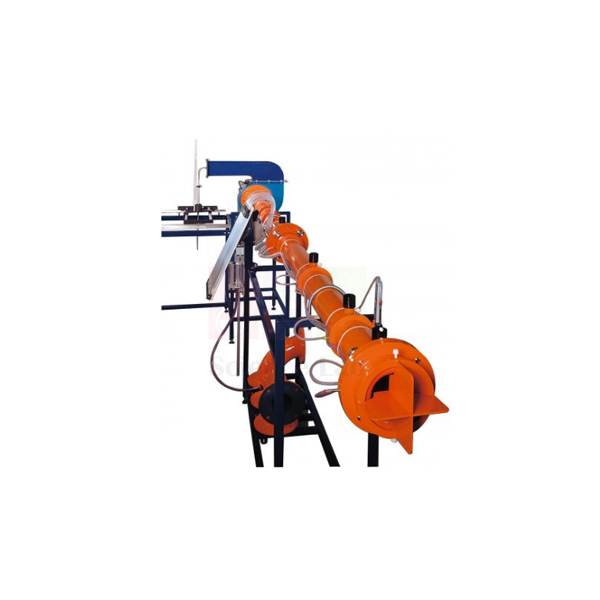
Air Blower Test Setup
Air Blower Test Setup (Product Code: SLE/MCE/57) is a radial-fan test rig used to measure the flow rate, pressure head and performance of an air blower in mechanical engineering and fluid machinery laboratories. As engineering lab equipment for colleges and polytechnics, it stands out for measuring airflow four ways — venturi nozzle, orifice plate, inlet cone and travelling pitot tube — against twin inclined water manometers. It is made by Jain Scientific Equipments Pvt Ltd (ScienceLab), an OEM manufacturer, at its own factory in Ambala, India.
Specifications
| Parameter | Detail |
|---|---|
| Fan type | Radial fan: air is drawn in axially to the drive shaft, deflected by 90° by the rotating rotor and discharged radially |
| Maximum flow rate (unchoked) | Over 12 m³/min |
| Maximum head (fully choked) | Over 80 mm water |
| Inlet duct | With flow straightener |
| Outlet duct | With flow straightener and damper |
| Airflow measurement | Venturi nozzle, orifice plate, inlet cone and travelling pitot tube using an inclined water manometer |
| Differential pressure measurement | Twin inclined water manometers, 0–450 mm with 1 mm graduation; multiple slope 1:10, 1:5, 1:2 and 1:1 |
| Accessories | Thermometer and barometer |
| Power supply | 220 V, single phase, 50 Hz |
| Product code | SLE/MCE/57 |
| Manufacturer | Jain Scientific Equipments Pvt Ltd (ScienceLab) — OEM |
| Country of origin | India (made in Ambala, Haryana) |
What Is the Air Blower Test Setup Used For?
Students run the blower at a series of damper settings, from fully open to fully choked, and record volume flow and pressure at each point to plot the fan characteristic (head against flow). The rig spans an unchoked flow of over 12 m³/min and a fully choked head of over 80 mm of water, so the whole curve can be drawn in one practical. Because the same airflow can be read on the venturi nozzle, orifice plate, inlet cone and travelling pitot tube, it also doubles as a lesson in comparing flow-measurement devices.
The thermometer and barometer let students correct air density for room conditions before calculating flow. Choose the manometer slope (1:10 down to 1:1) to suit the size of the reading, level the manometers before each run and let the fan settle after every damper change. Radial fans of this kind move gases where pressure differences are moderate, which makes the setup a good fit for ventilation and air-handling topics.
What to Specify When Ordering
- Number of test setups needed for the fluid machinery or thermal laboratory
- Confirmation that a 220 V, 50 Hz single-phase supply is available at the installation point
- The syllabus experiments you plan to run, so the quotation can confirm the measuring devices included
OEM Manufacturer
Jain Scientific Equipments Private Limited, which trades as ScienceLab, is the original equipment manufacturer (OEM) of the Air Blower Test Setup. The rig is made at the company’s own licensed factory at Saha, Ambala, Haryana, rather than sourced from a trader, and goes factory-direct to engineering colleges, polytechnics, dealers and importers in India and international markets.
For institutional vendor registration, the company’s GST registration is GSTIN 06AAECJ8618A1ZT and its global Legal Entity Identifier is LEI 3358004HRD1JIVXKYX49. Replacement parts or repeat orders? Ask us — the manufacturer handles them itself. Company details are on the ScienceLab profile page.
Related Thermodynamics & Heat Transfer Lab Equipment
Air-machine and airflow practicals often continue on these rigs from the same range:
- Rotary Air Compressor Test Bench — contrasts a positive-displacement rotary compressor with the blower’s low-pressure fan
- Two Stage Compressor Test Set — extends the study to staged compression and intercooling
- Free and Force Convection Apparatus — uses a fan-driven air duct to study heat transfer from heated surfaces
- Computerized Cooling Tower Test Bench — another rig where fan airflow is measured through an orifice
Browse the full Thermodynamics & Heat Transfer Lab Equipment category for compressors, heat exchangers and refrigeration trainers.
Frequently Asked Questions
What flow rate and head does the Air Blower Test Setup reach?
The Air Blower Test Setup delivers a maximum flow rate of over 12 m³/min with the outlet unchoked and a maximum head of over 80 mm of water when fully choked, giving students a wide range of operating points for the fan curve.
How is airflow measured on the Air Blower Test Setup?
Airflow on the Air Blower Test Setup can be measured with a venturi nozzle, an orifice plate, an inlet cone and a travelling pitot tube read on an inclined water manometer, so the methods can be compared against each other in one session.
What range do the manometers of the Air Blower Test Setup cover?
The Air Blower Test Setup uses twin inclined water manometers with a 0–450 mm scale and 1 mm graduation. Their multiple slope settings of 1:10, 1:5, 1:2 and 1:1 magnify small pressure differences for easier reading.
What power supply does the Air Blower Test Setup need?
The Air Blower Test Setup runs on a 220 V, 50 Hz single-phase supply. If your laboratory uses a different voltage or frequency, mention it in your enquiry so the requirement can be discussed before a quotation is issued.
Who manufactures the Air Blower Test Setup?
The Air Blower Test Setup is manufactured by Jain Scientific Equipments Pvt Ltd (ScienceLab), the OEM, at its own factory in Saha, Ambala, Haryana, India. Quotations, spares enquiries and repeat orders are handled directly by the manufacturer.
Is a calibration certificate available for the Air Blower Test Setup?
Calibration-certificate availability for the Air Blower Test Setup and its manometers should be discussed with us when you request a quotation. Please mention the documentation your institution needs through our contact page.
Do you supply the Air Blower Test Setup in bulk or for export?
Yes. The Air Blower Test Setup is supplied to engineering colleges, polytechnics, training institutes and dealers across India and international markets. For bulk or export orders, share the quantity and destination so we can prepare the quotation.
Request a Quote
To request a quotation for the Air Blower Test Setup, send your quantity and delivery location through the contact page or add the item to the enquiry cart. Quotations come directly from the manufacturer in Ambala.
Last updated: 24 September 2026
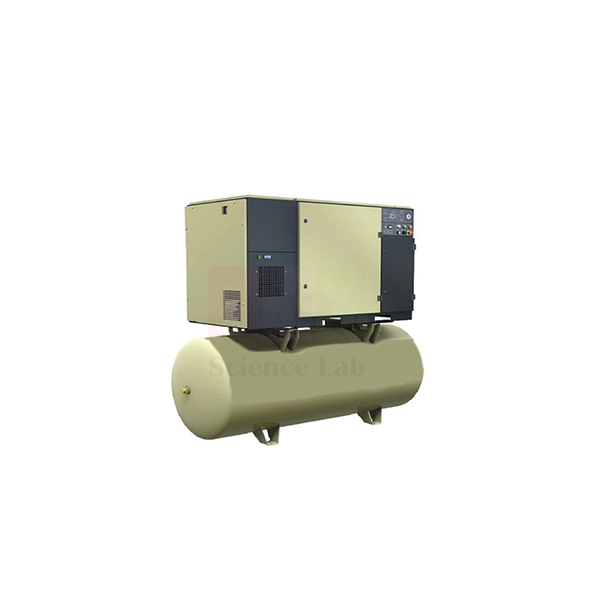
Rotary Air Compressor Test Bench
Rotary Air Compressor Test Bench (Product Code: SLE/MCE/58) is a laboratory test rig built around a rotary vane compressor, used to determine volumetric efficiency, power consumption and free air discharge in thermal engineering practicals. Mechanical engineering departments pick this technical educational equipment because intake airflow, discharge pressure and electrical input are all measured on one bench, with data acquisition software and USB transfer to a PC included. It is made by Jain Scientific Equipments Pvt Ltd (ScienceLab), an OEM manufacturer, at its own factory in Ambala, India.
Specifications
| Parameter | Detail |
|---|---|
| Compressor | Rotary vane compressor driven by a 3 HP motor |
| Air intake measurement | Calibrated orifice meter with water manometer |
| Discharge pressure | Measured by a pressure gauge |
| Power input | Measured by an energy meter |
| Delivery control | Control valve on the delivery side |
| Timing | Stop clock |
| Other measured values | Air throughput and electrical power consumption; pressures and temperatures recorded by sensors |
| Display | Measured values shown on digital displays |
| Data acquisition | Software included; measured values can be transmitted directly to a PC via USB |
| Safety devices | Pressure relief valves and pressure switches |
| Dimensions | 1500 × 1500 × 1250 mm |
| Weight | 320 kg (approx.) |
| Product code | SLE/MCE/58 |
| Manufacturer | Jain Scientific Equipments Pvt Ltd (ScienceLab) — OEM |
| Country of origin | India (made in Ambala, Haryana) |
What Is the Rotary Air Compressor Test Bench Used For?
The bench lets students run a rotary vane compressor at several delivery pressures, set with the control valve, and calculate volumetric efficiency, input power and free air delivered at each one. Intake air is measured with the calibrated orifice meter and water manometer, discharge pressure is read on the gauge, and the energy meter together with the stop clock gives the electrical input over a timed run.
Logging readings to a PC over USB with the included data acquisition software makes it quicker to plot efficiency and power against delivery pressure. Before each session, confirm that the pressure relief valves and pressure switches are working, allow the compressor to settle after every valve change, and clear any air bubbles from the manometer lines so intake readings stay accurate.
What to Specify When Ordering
- Number of benches, and floor space for a 1500 × 1500 × 1250 mm unit weighing about 320 kg
- The electrical supply available at the bench location for the 3 HP motor, so it can be confirmed in the quotation
- Whether you will connect your own PC by USB for the included data acquisition software
OEM Manufacturer
ScienceLab is the trading name of Jain Scientific Equipments Private Limited, the OEM for the Rotary Air Compressor Test Bench. The bench is manufactured at the company’s licensed factory at Saha, Ambala, Haryana, and supplied from there to universities, engineering colleges, dealers and importers without a trading intermediary.
When you need replacement parts or additional benches later, ask us and the manufacturer will respond itself. Learn more about the company on the ScienceLab profile.
Related Thermodynamics & Heat Transfer Lab Equipment
Compressor and air-machine laboratories usually pair this bench with the following:
- Two Stage Compressor Test Set — reciprocating two-stage machine with intercooling for comparison with the single rotary vane unit
- Air Blower Test Setup — a low-pressure radial fan for contrasting fans with compressors
- Cut Section Model Of Rotary Hermetic Compressor — shows the inside of another rotary compressor design
- Modular Air Flow Bench — for extending airflow measurement into aerodynamics experiments
See the complete Thermodynamics & Heat Transfer Lab Equipment category for more thermal and air-machine trainers.
Frequently Asked Questions
What can students measure on the Rotary Air Compressor Test Bench?
On the Rotary Air Compressor Test Bench students measure intake airflow, discharge pressure, electrical power input, air throughput, pressures and temperatures, then calculate volumetric efficiency, power consumption and free air discharge of the rotary vane compressor.
What drives the compressor on the Rotary Air Compressor Test Bench?
The Rotary Air Compressor Test Bench uses a rotary vane compressor driven by a 3 HP motor. Delivery pressure is varied with a control valve on the delivery side, and the input power is measured with an energy meter.
Is software included with the Rotary Air Compressor Test Bench?
Yes. Data acquisition software is included with the Rotary Air Compressor Test Bench, and measured values can be transmitted directly to a PC via USB while also appearing on the bench’s digital displays.
What safety devices are fitted to the Rotary Air Compressor Test Bench?
The Rotary Air Compressor Test Bench is equipped with pressure relief valves and pressure switches. Staff should confirm both are working before each practical session, as they protect students and the compressor if delivery pressure rises too far.
How large and heavy is the Rotary Air Compressor Test Bench?
The Rotary Air Compressor Test Bench measures 1500 × 1500 × 1250 mm and weighs about 320 kg, so plan floor space, door access and handling equipment before delivery to the laboratory.
Who manufactures the Rotary Air Compressor Test Bench?
Jain Scientific Equipments Pvt Ltd (ScienceLab) manufactures the Rotary Air Compressor Test Bench as the OEM at its own factory in Saha, Ambala, Haryana, India, and quotes directly to institutions, dealers and importers.
Can a calibration certificate be supplied with the Rotary Air Compressor Test Bench?
Whether a calibration certificate can accompany the Rotary Air Compressor Test Bench or its orifice meter should be discussed with us at the enquiry stage. Tell us your documentation needs through the contact page.
Request a Quote
For a quotation on the Rotary Air Compressor Test Bench, share the number of benches and your delivery location via the contact page, or place it in the enquiry cart. You will receive the quote straight from the manufacturer.
Last updated: 24 September 2026
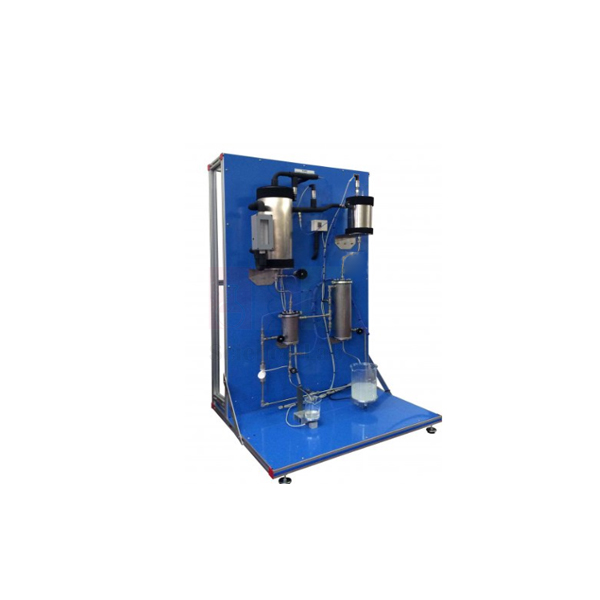
Separating & Throttling Calorimeter with mini boiler Test Bench
Separating & Throttling Calorimeter with mini boiler Test Bench (Product Code: SLE/MCE/59) is a steam-quality test bench, part of ScienceLab’s engineering lab equipment range, used to determine the vapour content (dryness fraction) of wet steam in thermodynamics laboratories. Students use it to find how much liquid a steam sample carries, with a downstream throttling calorimeter covering vapour contents from x = 0.95 to x = 1. It is made by Jain Scientific Equipments Pvt Ltd (ScienceLab), an OEM manufacturer, at its own factory in Ambala, India.
Specifications
| Parameter | Detail |
|---|---|
| Measuring principle | Separating calorimeter and downstream throttling calorimeter, used together to determine vapour content |
| Throttling calorimeter range | Vapour content x = 0.95 to 1 |
| Condensate collection | Water-cooled condenser; liquefied vapour collected in a measuring cup |
| Sensors | Pressure and temperature measured before and after depressurisation |
| Temperature | 240 °C |
| Pressure | 10 bar |
| Safety valve | 10 bar |
| Measuring range – temperature | 0–400 °C |
| Measuring range – inlet pressure | 0–16 bar |
| Measuring range – outlet pressure | −150 to 100 mbar |
| Dimensions | 800 × 800 × 1700 mm |
| Weight | 110 kg (approx.) |
| Power supply options | 230 V, 50 Hz, 1 phase; 230 V, 60 Hz, 1 phase; or 120 V, 60 Hz, 1 phase |
| Product code | SLE/MCE/59 |
| Manufacturer | Jain Scientific Equipments Pvt Ltd (ScienceLab) — OEM |
| Country of origin | India (made in Ambala, Haryana) |
What Is the Throttling Calorimeter Test Bench Used For?
Vapour content x is the ratio of vapour mass to total mass: x = 0 means the medium is completely liquid, x = 1 means dry saturated vapour, and any value in between describes wet vapour with a variable liquid content. On this bench the mini boiler supplies steam, the separating calorimeter removes part of the liquid, and the remaining vapour is depressurised, liquefied in the water-cooled condenser and collected in a measuring cup. The two collected quantities give the vapour mass and total mass from which x is calculated.
Pressure and temperature readings before and after throttling let students find the vapour content on the h-s (Mollier) diagram and cross-check the mass-based result. The same devices are used in steam power plants, downstream of steam turbines or at steam boilers upstream of the superheater, so the practical links classroom theory with plant measurement. Let the boiler reach steady conditions before sampling and measure the condensate carefully, because small errors strongly affect the calculated dryness fraction.
What to Specify When Ordering
- Power supply version: 230 V/50 Hz, 230 V/60 Hz or 120 V/60 Hz, single phase
- Floor space and headroom for an 800 × 800 × 1700 mm bench of about 110 kg
- Cooling-water availability for the water-cooled condenser
- Number of benches required for the laboratory
OEM Manufacturer
This calorimeter bench is an OEM product of Jain Scientific Equipments Private Limited, the company behind the ScienceLab name. It is manufactured at the company’s own licensed factory in Saha, Ambala, Haryana, India, so engineering colleges, dealers and importers deal directly with the maker rather than a reseller.
Questions about spares or a second bench are answered by the manufacturer itself — just ask us. More about the company is on the ScienceLab profile.
Related Thermodynamics & Heat Transfer Lab Equipment
Steam and phase-change practicals often combine this bench with these units:
- Saturated Steam The Marcet Boiler — shows the pressure–temperature relationship of saturated steam
- Thermal Power Plant with Steam Engine Trainer — places steam quality in the context of a complete steam cycle
- Film wise And Dropwise Condensation And Boiling — studies the condensation process used in the calorimeter’s condenser
- Temperature Measurement and Calibration Apparatus — for checking temperature sensors before steam tests
The Thermodynamics & Heat Transfer Lab Equipment category lists the full range of steam, heat transfer and refrigeration apparatus.
Frequently Asked Questions
What does the Separating & Throttling Calorimeter with mini boiler Test Bench measure?
The Separating & Throttling Calorimeter with mini boiler Test Bench measures the vapour content, or dryness fraction, of wet steam. Separated liquid, condensed vapour and pressure–temperature readings before and after throttling are used to calculate x.
What vapour-content range does the throttling calorimeter cover?
The downstream throttling calorimeter on the Separating & Throttling Calorimeter with mini boiler Test Bench determines vapour contents between x = 0.95 and x = 1; the separating calorimeter handles the liquid removal that comes before the throttling stage.
What are the measuring ranges of this calorimeter test bench?
The Separating & Throttling Calorimeter with mini boiler Test Bench measures temperature from 0 to 400 °C, inlet pressure from 0 to 16 bar and outlet pressure from −150 to 100 mbar. The listed temperature is 240 °C, and the safety valve is listed at 10 bar.
Which power supplies are available for the calorimeter test bench?
The Separating & Throttling Calorimeter with mini boiler Test Bench is listed for 230 V 50 Hz, 230 V 60 Hz or 120 V 60 Hz single-phase supply. State your laboratory supply when you enquire so the correct version is quoted.
Who manufactures the Separating & Throttling Calorimeter with mini boiler Test Bench?
Jain Scientific Equipments Pvt Ltd (ScienceLab) is the OEM of the Separating & Throttling Calorimeter with mini boiler Test Bench and builds it at its own factory at Saha, Ambala, India. Quotations and after-sales questions come straight from the manufacturer.
Is a calibration certificate available for the bench’s sensors?
Calibration-certificate availability for the temperature and pressure sensors on the Separating & Throttling Calorimeter with mini boiler Test Bench should be discussed with us before ordering. Send your documentation requirements through the contact page.
What information does a quotation for this test bench need?
To quote the Separating & Throttling Calorimeter with mini boiler Test Bench, we need the quantity, the power supply version, the delivery location and whether the order is for India or international markets.
Request a Quote
Ask for a quotation on the Separating & Throttling Calorimeter with mini boiler Test Bench through the contact page, or add it to the enquiry cart together with other laboratory items. Your quotation is prepared directly by the manufacturer.
Last updated: 24 September 2026