- Physics Lab Equipment
- Chemistry Lab Equipment
- Biology Lab Equipment
- Anatomical Lab Equipment
- Learning
- Educational Lab Equipment
- Magnets
- Agriculture
- Astronomy
- Earth Science
- Geography Lab Equipment
- Safety Lab Coat
- Laboratory
- Meteorological
- Electricity & Magnetism
- Heat
- School Lab Equipment
- Lab Glassware
- Science Lab Equipment
- Tvet Lab Equipment
- Robotics Kits Supplier and Manufacturer for Schools India
- Math Lab Equipment Manufacturers and Exporters in Ambala
- STEM Kits Manufacturers and Supplier India
- Engineering Lab Equipment
- Hospital Lab Equipment
- Water, Sanitation & Hygiene Supplies
- Cold Chain, Solar & Communication Equipment
- Nutrition
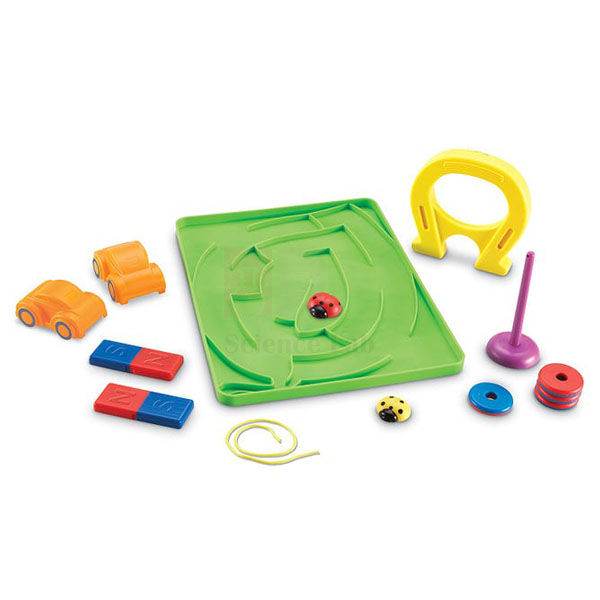
Magnets Activity Set
Magnets Activity Set (Product Code: SLE/SM/01) is a hands-on magnetism experiment kit used to teach early learners about polarity and magnetic attraction and repulsion in pre-primary and primary classrooms. It combines durable magnets in several shapes — bar, ring and horseshoe magnets, magnetic bugs and snap-on cars — with a maze tray, 10 double-sided activity cards and an activity guide with reproducible materials. It is supplied by Jain Scientific Equipments Pvt Ltd (ScienceLab), Ambala, India.
Key Details
| Parameter | Detail |
|---|---|
| Topics covered | Magnetism, polarity, magnetic attraction and repulsion |
| Intended users | Early learners |
| Magnet shapes | Bar, ring and horseshoe magnets, magnetic bugs, magnetic post |
| Activity cards | 10, double-sided |
| Teacher support | Comprehensive activity guide with reproducible materials |
| Product code | SLE/SM/01 |
| Supplied by | Jain Scientific Equipments Pvt Ltd (ScienceLab), Ambala, India |
Contents of the set:
- 2 magnetic bugs
- 2 bar magnets
- 4 ring magnets
- Horseshoe magnet
- Magnetic post
- 2 snap-on cars
- Tray with maze
- String
- 10 double-sided activity cards
- Comprehensive activity guide with reproducible materials
What Is the Magnets Activity Set Used For?
Young children use the set to discover what magnets do by playing with them: stacking the ring magnets on the magnetic post to see like poles push apart, pulling the snap-on cars along with a bar magnet without touching them, and steering pieces through the maze tray. The activity cards turn each discovery into a short, guided task.
Work in small groups so every child handles the magnets, and let pupils predict what will happen before each test. As a hands-on science kit for primary school classes, it pairs well with a simple “sticks or does not stick” sorting activity using classroom objects. Keep magnets away from phones and computers, and supervise young children because the set contains small pieces.
Supplier
ScienceLab, the trading name of Jain Scientific Equipments Private Limited in Ambala, Haryana, supplies the Magnets Activity Set to pre-schools, primary schools, activity centres and dealers across India and international markets. The set is a sourced item in our Science Material range. Company details are on the ScienceLab profile page.
Related Science Material
Extend magnet lessons with these items:
- Bar Magnet (Plastic) — plastic-cased bar magnets with iron filings for field-pattern follow-up work
- Primary Science Deluxe Lab Set — broader early-science kit with activity cards
- Steel Horseshoe Magnet — a larger single magnet for class demonstrations
- Compass Plotting (Clear) — shows the direction of a magnet’s field for older pupils
See more in the Science Material category and the Magnets category.
Frequently Asked Questions
What is included in the Magnets Activity Set?
The Magnets Activity Set (SLE/SM/01) includes 2 magnetic bugs, 2 bar magnets, 4 ring magnets, a horseshoe magnet, a magnetic post, 2 snap-on cars, a tray with maze, string, 10 double-sided activity cards and a comprehensive activity guide with reproducible materials.
What age group is the Magnets Activity Set for?
The Magnets Activity Set is designed for early learners, so it suits pre-primary and early primary classes. No exact age range is stated in our listing; teachers should supervise use because the set contains small magnets and parts.
Which concepts does the Magnets Activity Set teach?
The Magnets Activity Set introduces magnetism, polarity, and magnetic attraction and repulsion. Children see like poles push apart and unlike poles pull together, test which objects a magnet picks up, and follow the activity cards to talk about what they observe.
Does the Magnets Activity Set include teacher material?
Yes. The Magnets Activity Set comes with a comprehensive activity guide containing reproducible materials, plus 10 double-sided activity cards. Teachers can copy the reproducible sheets for each group, which makes the set practical for whole-class lessons.
Who supplies the Magnets Activity Set?
The Magnets Activity Set is supplied by Jain Scientific Equipments Pvt Ltd (ScienceLab), Ambala, Haryana, India, to schools, pre-schools, activity centres and dealers across India and international markets. It is a sourced item within the company’s Science Material range.
How should the Magnets Activity Set be stored?
Store the Magnets Activity Set in a closed box away from computers, phones and cards with magnetic strips. Keep the bar magnets in pairs with opposite poles together, and count the small pieces after each lesson so none go missing.
Request a Quote
To order the Magnets Activity Set for one class or several schools, send the number of sets and your delivery location through the contact page, or add it to the enquiry cart with other science material.
Last updated: 24 September 2026
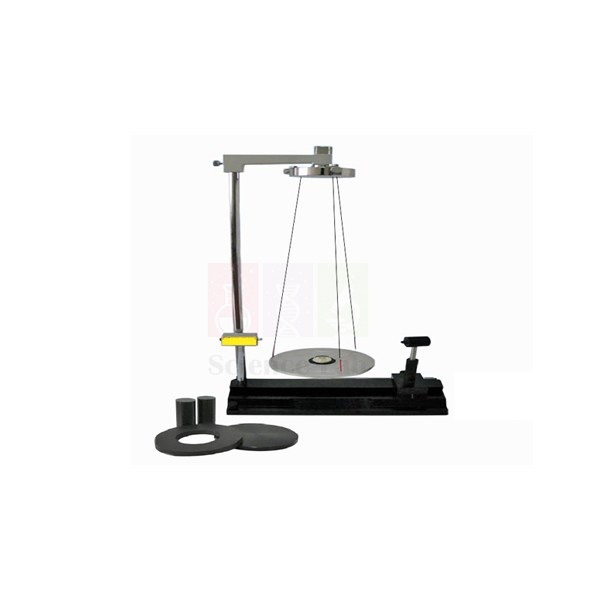
Rotational Moment of Inertia Apparatus
Rotational Moment of Inertia Apparatus (Product Code: SLE/MCE/30) is a three-string pendulum set-up used to determine the moment of inertia of a rigid body in engineering and physics laboratories. A hanging plate is twisted into torsional oscillation, and a photoelectric sensor with a time counting device measures the oscillation period, so students obtain the period electronically rather than by eye. It is made by Jain Scientific Equipments Pvt Ltd (ScienceLab), an OEM manufacturer, at its own factory in Ambala, India.
Key Details
| Parameter | Detail |
|---|---|
| Measurement method | Three-string pendulum (trifilar suspension) |
| Oscillating element | Hanging plate in torsional oscillation |
| Timing system | Photoelectric sensor combined with a time counting device |
| Quantity measured | Torsional oscillation period of the plate |
| Result | Moment of inertia of a rigid body |
| Variables studied | Mass distribution and axis (shaft) position of the rigid body |
| Product code | SLE/MCE/30 |
| Manufacturer | Jain Scientific Equipments Pvt Ltd (ScienceLab) — OEM |
| Country of origin | India (made in Ambala, Haryana) |
What Is the Rotational Moment of Inertia Apparatus Used For?
Moment of inertia is the rotational counterpart of mass: it describes how strongly a body resists a change in its rotation, and it depends on how that mass is distributed about the axis. Here the plate hangs from three strings, a small twist sets it oscillating about its vertical axis, and the period of that torsional oscillation is linked to the moment of inertia of whatever the plate carries. Timing the empty plate first and then the plate with a test body lets students separate the body's own moment of inertia.
Moving the same body away from the centre of the plate shows how the axis position changes the result, a direct check of the parallel axis theorem in engineering mechanics classes. For consistent readings, keep the twist small, start the plate without sideways swing, and repeat each timing a few times before averaging. As a moment of inertia kit for Indian colleges and polytechnics, it pairs well with a balance and a vernier caliper, because the calculation needs the masses and dimensions involved.
OEM Manufacturer
The Rotational Moment of Inertia Apparatus comes from ScienceLab as the original equipment manufacturer. Jain Scientific Equipments Private Limited, trading as ScienceLab, builds it at its own licensed factory in Saha, Ambala, Haryana, so engineering colleges, universities, distributors and importers buy direct from the maker rather than from a stockist.
The company is a registered MSME with manufacturing as its major activity (Udyam UDYAM-HR-01-0003714), and export consignments are shipped under Importer-Exporter Code AAECJ8618A issued by DGFT. See the ScienceLab company profile for more background.
Related Theory of Machines Equipment
Working out a moment of inertia also needs masses and dimensions, and the topic links to other rotational and torsional experiments:
- Physical Balance (Digital) — weighs the plate and test bodies used in the calculation.
- Caliper Vernier (Metal) — measures plate radius and body dimensions for the theoretical value.
- Stopwatch, Digital — a manual cross-check of the electronic period reading.
- Vibration Of Spiral Spring Apparatus — another torsional oscillation experiment, using a spiral spring instead of strings.
More rotating-mass and mechanism apparatus is listed in the Theory of Machines category.
Frequently Asked Questions
What method does the Rotational Moment of Inertia Apparatus use?
The Rotational Moment of Inertia Apparatus uses the three-string pendulum method. A plate hung on three strings oscillates about its vertical axis, and the moment of inertia of a rigid body placed on it is calculated from the measured torsional oscillation period.
How does the Rotational Moment of Inertia Apparatus measure the period?
The Rotational Moment of Inertia Apparatus measures the torsional oscillation period with a photoelectric sensor combined with a time counting device. Electronic timing avoids relying on a student's reaction speed with a hand stopwatch, which makes repeated readings more consistent.
Which test bodies come with the Rotational Moment of Inertia Apparatus?
The product listing for the Rotational Moment of Inertia Apparatus does not specify the test bodies or accessories supplied. Please ask through our contact page so that the quotation states exactly which bodies and parts are included.
What can students learn from the Rotational Moment of Inertia Apparatus?
With the Rotational Moment of Inertia Apparatus, students learn the physical meaning of moment of inertia, the three-string pendulum measurement method, and how the mass distribution and axis position of a rigid body change its moment of inertia.
Who manufactures the Rotational Moment of Inertia Apparatus?
Jain Scientific Equipments Pvt Ltd (ScienceLab) manufactures the Rotational Moment of Inertia Apparatus as the OEM at its own licensed factory in Saha, Ambala, Haryana, India. Quotations and spares queries are answered directly by the company that makes it.
Is a calibration certificate available for the Rotational Moment of Inertia Apparatus?
Calibration documents for the Rotational Moment of Inertia Apparatus timing system are not stated in the product listing. If your institution needs a calibration certificate, mention it when you request a quote so that availability can be discussed with us before ordering.
Can the Rotational Moment of Inertia Apparatus be ordered in bulk or for export?
Yes, the Rotational Moment of Inertia Apparatus can be quoted for a single laboratory or for multiple units, for buyers in India and international markets. State the quantity and destination in your enquiry so the quotation matches your order.
Request a Quote
Send your requirement for the Rotational Moment of Inertia Apparatus (SLE/MCE/30) through the contact page, or place it in the enquiry cart together with any other laboratory items. Quotes are issued directly by the manufacturer in Ambala.
Last updated: 24 September 2026
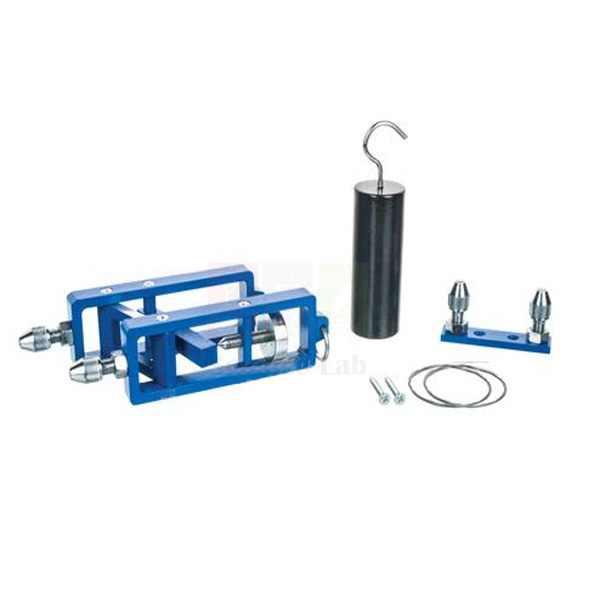
Youngs Modulus Apparatus
Youngs Modulus Apparatus (Product Code: SLE/MCE/31) is a wire-extension apparatus used to find the relationship between the load on a wire and its resulting extension, and from it Young's modulus, in physics and engineering laboratories. Students read the extension on an engraved brass 0 to 30 mm scale with a movable vernier readable to 0.1 mm, while a ceiling clamp holds the wires from an overhead beam. It is made by Jain Scientific Equipments Pvt Ltd (ScienceLab), an OEM manufacturer, at its own factory in Ambala, India.
Specifications
| Parameter | Detail |
|---|---|
| Purpose | Relationship between load applied to a wire and the resulting extension |
| Scale | Engraved brass scale plate, 0 to 30 mm |
| Vernier | Movable vernier, readable to 0.1 mm |
| Wire clamping | Scale plate and vernier each have bars with clamping screws for the wires |
| Hooks | For the tension weight and the loading masses |
| Tension weight | Mass about 1.3 kg, supplied with the apparatus |
| Ceiling clamp | Holds the upper ends of the wires; a pair of large wood screws fixes it to an overhead beam, door frame or similar |
| Product code | SLE/MCE/31 |
| Manufacturer | Jain Scientific Equipments Pvt Ltd (ScienceLab) — OEM |
| Country of origin | India (made in Ambala, Haryana) |
What Is the Youngs Modulus Apparatus Used For?
Two wires hang side by side from the ceiling clamp, one carrying the scale plate and the other the vernier. The tension weight keeps the wires taut, and as loading masses are added to the test wire its end moves down against the scale, so the vernier gives the extension directly to 0.1 mm. Because both wires share the same support and surroundings, sagging of the support or temperature drift affects both equally and largely cancels out.
Add masses in equal steps, wait a moment for each reading to settle, and take readings again while unloading to check the wire stayed elastic. Measure the wire diameter at several points and its length from the clamp, then plot load against extension; the slope gives Young's modulus. It is a staple of physics lab equipment in India for both school and first-year engineering practicals.
What to Specify When Ordering
- Number of sets for your practical groups
- Test wires (material and diameter) you would like quoted, as wires are not listed with the apparatus
- Slotted loading masses for the hooks — ask us to include them if needed
- A suitable overhead beam or door frame for fixing the ceiling clamp
OEM Manufacturer
This Youngs Modulus Apparatus is an OEM product of Jain Scientific Equipments Private Limited, better known by its trading name ScienceLab. The scale plate, vernier carrier and clamp are made at the company's own licensed factory at Saha, Ambala, Haryana, India, so schools, colleges, dealers and importers buy from the manufacturer rather than through a trader.
Need extra tension weights, replacement clamps or a repeat batch next term? Ask us and the manufacturer will quote directly. The ScienceLab profile gives more background on the company.
Related Materials Testing and Properties Equipment
These items complete a Young's modulus practical or extend it:
- Steel Wire — test wire for extension experiments.
- Hangers with Slotted Weights — for adding load in equal steps.
- Micrometer Screw Gauge, Lock Type — measures the wire diameter for the stress calculation.
- Apparatus Young Modulus Searle’s — a Searle’s pattern alternative from the physics range.
- Tensile strength testing machine — takes wire beyond its elastic limit to breaking.
Browse Materials Testing and Properties for more.
Frequently Asked Questions
What does the Youngs Modulus Apparatus measure?
The Youngs Modulus Apparatus measures the extension of a wire as load is applied, giving the load–extension relationship. With the wire's length and diameter, students use these readings to calculate the Young's modulus of the wire material.
How precise is the scale on the Youngs Modulus Apparatus?
The Youngs Modulus Apparatus has an engraved brass scale plate reading 0 to 30 mm and a movable vernier readable to 0.1 mm. That resolution suits the small extensions produced by thin wires under laboratory loads.
What comes with the Youngs Modulus Apparatus?
The Youngs Modulus Apparatus comes with the scale plate and vernier, each with wire-clamping bars and hooks, a ceiling clamp with a pair of large wood screws, and a tension weight of about 1.3 kg. Wires and loading masses are not listed.
How is the Youngs Modulus Apparatus mounted?
The Youngs Modulus Apparatus hangs from a ceiling clamp that holds the upper ends of the wires. The clamp is fixed with two large wood screws to a convenient overhead beam, door frame or similar rigid support.
Who manufactures the Youngs Modulus Apparatus?
The Youngs Modulus Apparatus is manufactured by Jain Scientific Equipments Pvt Ltd (ScienceLab), the OEM, at its own licensed factory in Saha, Ambala, Haryana, India. Schools and colleges receive quotations directly from the manufacturer.
What should a quotation request for the Youngs Modulus Apparatus include?
A quotation request for the Youngs Modulus Apparatus should give the number of sets, any test wires and loading masses you want added, and the delivery location. Send it through the contact page for a prompt reply.
Request a Quote
Quotes for the Youngs Modulus Apparatus come direct from the manufacturer. Request one through the ScienceLab contact page or add the apparatus to the enquiry cart, listing sets, wires and masses required.
Last updated: 24 September 2026
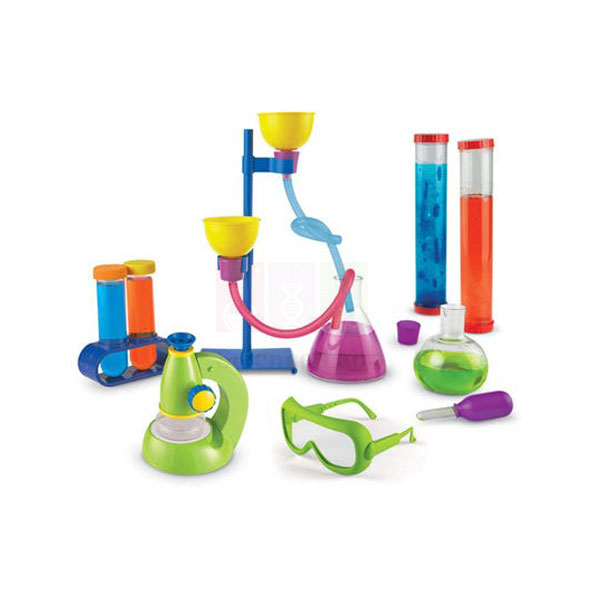
Primary Science Deluxe Lab Set
Primary Science Deluxe Lab Set (Product Code: SLE/SM/02) is a junior lab kit for primary school children, used to let young learners carry out their own simple experiments in classrooms and science corners. It pairs flasks, funnels, test tubes, safety glasses, a ViewScope and a 13 1/4 inch stand with adjustable clips with 20 double-sided activity cards and a write & wipe journal, building observation, prediction and fine motor skills. It is supplied by Jain Scientific Equipments Pvt Ltd (ScienceLab), Ambala, India.
Specifications
| Parameter | Detail |
|---|---|
| Stand | Tall stand with adjustable holder clips, 13 1/4 inches high |
| Activity cards | 20, double-sided, with step-by-step instructions |
| Recording | Write & wipe journal |
| Skills developed | Problem solving, fine motor skills, following multi-step directions, sequential thought, math concepts, making predictions, observation |
| Learning style | Visual, tactile |
| Product code | SLE/SM/02 |
| Supplied by | Jain Scientific Equipments Pvt Ltd (ScienceLab), Ambala, India |
The set includes:
- 2 flasks (round-bottomed and flat-bottomed)
- 2 funnels
- Safety glasses
- Tall stand with adjustable holder clips
- 2 large test tubes with stand
- Eyedropper
- 2 twisty connector tubes
- 3 stoppers
- Sensory tube with solid and vented lids
- Primary Science ViewScope with viewing case
- 20 double-sided activity cards
- Write & wipe journal
What Is the Primary Science Lab Set Used For?
Children follow the step-by-step activity cards to pour and measure liquids with the funnels and eyedropper, link the flasks and test tubes with the twisty connector tubes, and look closely at small objects in the ViewScope and sensory tube. The stand holds glassware-style pieces at a steady height so small hands can work safely.
Before each activity, pupils write a prediction in the write & wipe journal, then record what actually happened — an early version of the observe, predict and record cycle used in later science. It also works as a science activity kit for kindergarten groups when an adult leads each step. Put the safety glasses on at the start of every session.
Supplier
Jain Scientific Equipments Private Limited trades as ScienceLab and supplies the Primary Science Deluxe Lab Set from Ambala, Haryana, to primary schools, pre-schools, activity centres and dealers in India and international markets. It is a sourced kit in our Science Material range. Learn about the company on our profile page.
Related Science Material
These items extend the experiments young scientists can do with the set:
- Magnets Activity Set — magnet shapes, cars and a maze tray for magnetism lessons
- Bug Box — magnifying pot for observing insects collected outdoors
- Pocket Magnifier — extra magnifiers so every child can look closely
- Plastic Funnel — additional funnels for group pouring activities
Browse the Science Material category, or the Primary category for more early-years resources.
Frequently Asked Questions
What comes in the Primary Science Deluxe Lab Set?
The Primary Science Deluxe Lab Set (SLE/SM/02) contains 2 flasks, 2 funnels, safety glasses, a tall stand with adjustable clips, 2 large test tubes with stand, an eyedropper, 2 twisty connector tubes, 3 stoppers, a sensory tube, a ViewScope with case, 20 activity cards and a write & wipe journal.
How tall is the stand in the Primary Science Deluxe Lab Set?
The stand in the Primary Science Deluxe Lab Set measures 13 1/4 inches high and has adjustable holder clips. Children can clamp flasks or test tubes at different heights, which helps them set up pouring and observation activities on a desk.
What skills does the Primary Science Deluxe Lab Set develop?
The Primary Science Deluxe Lab Set builds problem solving, fine motor skills, following multi-step directions, sequential thought, math concepts, making predictions and observation. It suits visual and tactile learners because every activity involves handling equipment and watching results.
How do children record results with the Primary Science Deluxe Lab Set?
Children record predictions and findings in the write & wipe journal included with the Primary Science Deluxe Lab Set. Because the journal wipes clean, the same kit can be used by several groups or across many lessons without extra worksheets.
Is adult supervision needed for the Primary Science Deluxe Lab Set?
Yes, an adult should supervise every session with the Primary Science Deluxe Lab Set. The kit includes safety glasses, which children should wear during experiments; no age range is stated in our listing, so teachers should judge suitability for their class.
Who supplies the Primary Science Deluxe Lab Set?
Jain Scientific Equipments Pvt Ltd (ScienceLab), Ambala, Haryana, India supplies the Primary Science Deluxe Lab Set to primary schools, pre-schools, activity centres and dealers in India and international markets. It is a sourced item in the company’s Science Material range.
Request a Quote
Request the Primary Science Deluxe Lab Set through the contact page with the number of sets and your delivery location, or add it to the enquiry cart with magnifiers and magnet kits.
Last updated: 24 September 2026
Vibration Of Spiral Spring Apparatus
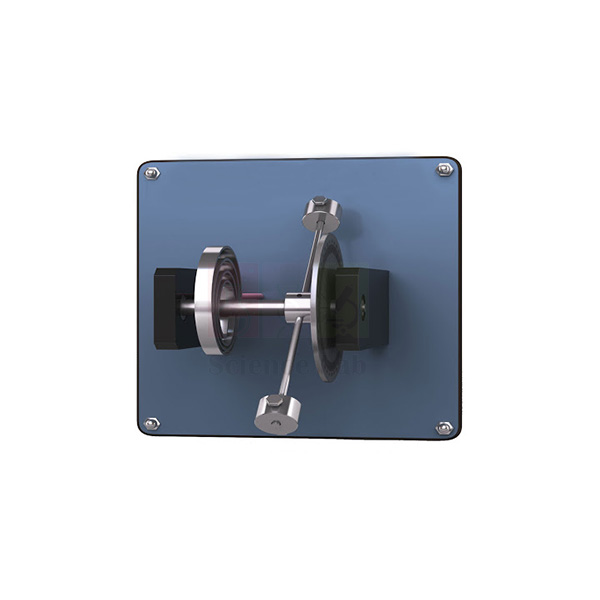
Vibration Of Spiral Spring Apparatus (Product Code: SLE/MCE/32) is a wall-mounted torsional oscillator used to study the stiffness and free vibration of a flat spiral spring in theory of machines and mechanical engineering laboratories. Its spring has a listed stiffness of 238 Nmm and a 10 x 1 mm cross-section, and two levers with sliding weights let students change the rotating mass while an integrated 360° scale reads the deflection. It is made by Jain Scientific Equipments Pvt Ltd (ScienceLab), an OEM manufacturer, at its own factory in Ambala, India.
Specifications
| Parameter | Detail |
|---|---|
| Spring stiffness | c = 238 Nmm |
| Spring cross-section | 10 x 1 mm |
| Effective spring length | Approx. 800 mm |
| Inside radius | 10 mm |
| Outside radius | 50 mm |
| Mass | 0.5 kg |
| Diameter | 50 mm |
| Axis | Mounted on ball bearings |
| Levers | 2 levers with sliding weights |
| Deflecting element | Metallic rod carrying masses at its ends |
| Angle measuring scale | Integrated on the axis, 360°, resolution 1° |
| Mounting | Wall mounting plate of anodised aluminium |
| Base plate (w x h) | 200 x 250 mm |
| Product code | SLE/MCE/32 |
| Manufacturer | Jain Scientific Equipments Pvt Ltd (ScienceLab) — OEM |
| Country of origin | India (made in Ambala, Haryana) |
What Is the Spiral Spring Vibration Apparatus Used For?
The practical runs in two stages. In the static stage, the metallic rod with its end masses applies a moment that turns the shaft against the spiral spring, and the angle scale shows the resulting deflection, so students can calculate the spring stiffness and read how far the spring was deflected initially. In the dynamic stage the rod is released, the spring-mass system oscillates freely, and the timed period is compared with the value predicted from stiffness and moment of inertia.
Sliding the weights along the two levers changes the moment of inertia without changing the spring, so one unit produces a full series of frequency readings for a graph. The ball-bearing axis keeps friction low, helping the oscillations last long enough to time several cycles. Fix the anodised aluminium plate firmly to a solid wall at a comfortable reading height; it is compact engineering lab equipment for vibration and SHM practicals in India and abroad.
What to Specify When Ordering
- Number of units, for example one per bench or student group
- Wall space for each 200 x 250 mm base plate
- A stopwatch or timer for the oscillation readings, if your laboratory does not already have one
OEM Manufacturer
ScienceLab is the OEM for this apparatus. Jain Scientific Equipments Private Limited, the company behind the ScienceLab name, manufactures it at its own licensed factory at Saha, Ambala, Haryana, India, so it reaches buyers factory-direct rather than through a trading chain.
Technical colleges, TVET institutes, dealers and importers get quotations and technical answers from the source, and requests for replacement levers or weights on existing units go straight to the maker — just ask us. Read about the company on the ScienceLab profile page.
Related Theory of Machines Equipment
Other apparatus and accessories used in the same vibration and rotational dynamics course:
- Rotational Moment of Inertia Apparatus — torsional oscillation of a plate on three strings.
- Free and Forced Vibration Apparatus — extends the topic to damped and forced vibration.
- Free Vibration Of Beam Spring — free vibration of a beam and spring system for comparison.
- Stopwatch, Digital — times the oscillation period.
See the complete Theory of Machines category for further vibration and mechanism trainers.
Frequently Asked Questions
What is the spring stiffness of the Vibration Of Spiral Spring Apparatus?
The spiral spring of the Vibration Of Spiral Spring Apparatus has a listed stiffness of c = 238 Nmm, a 10 x 1 mm cross-section and an effective length of approximately 800 mm, with an inside radius of 10 mm and an outside radius of 50 mm.
How is deflection read on the Vibration Of Spiral Spring Apparatus?
Deflection on the Vibration Of Spiral Spring Apparatus is read on an integrated angle measuring scale mounted on the axis. The scale covers 360° with a resolution of 1°, and it also shows how far the spring was deflected initially.
How is the Vibration Of Spiral Spring Apparatus installed?
The Vibration Of Spiral Spring Apparatus is built on a wall mounting plate made of anodised aluminium, with a base plate of 200 x 250 mm (width x height). Fix it to a solid wall at eye level so students can read the angle scale comfortably.
Can students change the oscillating mass on the Vibration Of Spiral Spring Apparatus?
Yes. The Vibration Of Spiral Spring Apparatus has two levers with sliding weights, so students can move the weights to change the moment of inertia and record how the natural frequency of the spring system changes with each setting.
Who manufactures the Vibration Of Spiral Spring Apparatus?
The Vibration Of Spiral Spring Apparatus is manufactured by Jain Scientific Equipments Pvt Ltd (ScienceLab), the OEM, at its own licensed factory at Saha, Ambala, Haryana, India. It is supplied factory-direct to institutions, dealers and importers.
What should a quotation request for the Vibration Of Spiral Spring Apparatus include?
For a Vibration Of Spiral Spring Apparatus quotation, give the number of units, the delivery location in India or abroad, and any extra items, such as stopwatches, that you want on the same quotation. Use the contact page to send it.
Request a Quote
Ask for a price on the Vibration Of Spiral Spring Apparatus (SLE/MCE/32) through our contact page, or add it to the enquiry cart with the rest of your laboratory list. Your quotation is prepared by the manufacturer itself.
Last updated: 24 September 2026

Bernoulli's Theorem Demonstration module
Bernoulli's Theorem Demonstration module (Product Code: SLE/MCE/33) is a hydraulics-bench module used to verify Bernoulli's equation by measuring pressure along a convergent–divergent duct in fluid mechanics laboratories. Its 8-tube manometer reads 0 to 300 mm of water from pressure taps along the conduit, and a Pitot tube probe travels along the duct to measure the head in each section. It is made by Jain Scientific Equipments Pvt Ltd (ScienceLab), an OEM manufacturer, at its own factory in Ambala, India.
Specifications
| Parameter | Detail |
|---|---|
| Narrowing angle, downstream | 21° |
| Narrowing angle, upstream | 10° |
| Manometer range | 0 to 300 mm of water |
| Number of manometer tubes | 8 |
| Upstream diameter of the throat | 25 mm |
| Pressure taps | All connected to the manometer, which has a water collector (water may be pressurised) |
| Conduit | Removable ends, so the duct can be placed in convergent or divergent form relative to the flow direction |
| Probe | Pitot tube moving along the conduit, measuring the head in every section (dynamic pressure) |
| Flow control | Control valve at the end of the module adjusts flow rate and pressure in the module |
| Connections | Inlet pipe ending in a female coupling for direct connection to the bench supply; flexible hose on the outlet directed to the volumetric measuring tank |
| Mounting | Placed on the hydraulics bench top; adjustable legs for levelling |
| Construction | Anodized aluminium / MS powder-coated structure; panel of painted steel |
| Dimensions (approx.) | 800 x 450 x 700 mm |
| Weight (approx.) | 15 kg (33 pounds) |
| Product code | SLE/MCE/33 |
| Manufacturer | Jain Scientific Equipments Pvt Ltd (ScienceLab) — OEM |
| Country of origin | India (made in Ambala, Haryana) |
What Is the Bernoulli's Theorem Demonstration Module Used For?
Students set the module on the hydraulics bench, level it with the adjustable legs and connect the inlet coupling to the bench supply. With water flowing, the manometer tubes show static pressure falling where the duct narrows and recovering as it widens, while traversing the Pitot tube shows how the head changes from section to section. The control valve at the outlet end lets them repeat the readings at several flow rates.
Timing the collection of water in the bench's volumetric measuring tank gives the flow rate, from which students calculate velocities at each section and compare measured pressure heads with those predicted by Bernoulli's equation. Swapping the removable conduit ends switches between convergent and divergent arrangements, so the same practical also explores pressure recovery and energy losses. It is a classic experiment in mechanics lab equipment sets for civil, mechanical and chemical engineering courses.
OEM Manufacturer
Jain Scientific Equipments Private Limited, which trades as ScienceLab, is the original equipment manufacturer of the Bernoulli's Theorem Demonstration module. The module is fabricated and assembled at the company's own licensed factory in Saha, Ambala, Haryana, India, so universities, polytechnics, dealers and importers buy straight from the maker.
For supplier onboarding, institutions can quote the company's GSTIN 06AAECJ8618A1ZT together with its LEI 3358004HRD1JIVXKYX49. The ScienceLab profile has more about the company.
Related Fluid Mechanics Equipment
Other fluid mechanics apparatus that works alongside the Bernoulli's Theorem Demonstration module in a hydraulics laboratory:
- Orifice and Venturi meter demonstrator — applies Bernoulli's equation to flow measurement
- Flow Meter Demonstration Unit — compares different ways of measuring flow rate
- Friction Loss In Pipe — quantifies the head losses that also appear along the duct
- Bernoulli's Theorem — an alternative Bernoulli apparatus in the same range
- Bernoulli Tube Apparatus — a physics-lab demonstration of the same principle
Explore the full Fluid Mechanics category for turbines, pumps, flumes and pressure apparatus.
Frequently Asked Questions
Does the Bernoulli's Theorem Demonstration module need a hydraulics bench?
Yes. The Bernoulli's Theorem Demonstration module is placed on a hydraulics bench top, its inlet female coupling connects directly to the bench supply, and its outlet hose runs to the volumetric measuring tank. Ask us if you need to confirm fit with an existing bench.
How many manometer tubes does the Bernoulli's Theorem Demonstration module have?
The Bernoulli's Theorem Demonstration module has 8 manometer tubes with a range of 0 to 300 mm of water. All the pressure taps connect to this manometer, which includes a water collector.
Can the duct of the Bernoulli's Theorem Demonstration module be convergent or divergent?
Yes. The conduit ends of the Bernoulli's Theorem Demonstration module are removable, so the duct can be placed in either convergent or divergent form relative to the flow. The narrowing angles are 21° downstream and 10° upstream.
What is the Pitot tube on the Bernoulli's Theorem Demonstration module for?
The Pitot tube on the Bernoulli's Theorem Demonstration module is a probe that moves along the conduit and measures the head in each section, so students can compare it with the static readings from the manometer tubes.
What are the size and weight of the Bernoulli's Theorem Demonstration module?
The Bernoulli's Theorem Demonstration module measures approximately 800 x 450 x 700 mm and weighs about 15 kg (33 pounds). Its structure is anodized aluminium or MS powder coated, with a painted steel panel.
Who manufactures the Bernoulli's Theorem Demonstration module?
The Bernoulli's Theorem Demonstration module is manufactured by Jain Scientific Equipments Pvt Ltd (ScienceLab), the OEM, at its own licensed factory in Saha, Ambala, Haryana, India. Hydraulics laboratories can buy it factory-direct alongside other fluid mechanics apparatus.
Request a Quote
Request a quotation for the Bernoulli's Theorem Demonstration module through the contact page, or add it to the enquiry cart with any other hydraulics apparatus you need. Quotes are issued directly by the manufacturer, ScienceLab, for India and international markets.
Last updated: 24 September 2026
Dead Weight Pressure Gauge Calibrator
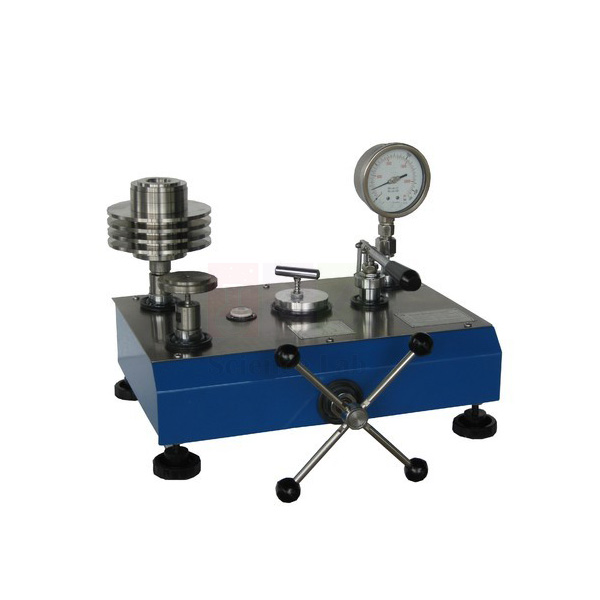
Dead Weight Pressure Gauge Calibrator (Product Code: SLE/MCE/34) is a portable deadweight tester used to calibrate pressure gauges, sensors and manometers by the direct p = F/A method in fluid mechanics and instrumentation laboratories. A capstan-operated hydraulic ram, balanced by weights acting on a piston of known area, generates pressures from 20 to 200 kN/m² with calibration accuracy better than 0.025% of reading. It is made by Jain Scientific Equipments Pvt Ltd (ScienceLab), an OEM manufacturer, at its own factory in Ambala, India.
Specifications
| Parameter | Detail |
|---|---|
| Pressure range | 20 kN/m² to 200 kN/m² |
| Calibration accuracy | Better than 0.025% of reading (deadweight method) |
| Minimum standard weight increment | 0.05 bar |
| Pistons | Dual pistons for calibration over a wide range of pressures; precision-machined piston and cylinder |
| Pressure generation | Capstan-operated hydraulic ram, balanced by deadweight acting on a piston of known area |
| Hydraulic fluid | Oil |
| Gauge fitted | Bourdon gauge with inlet and outlet valves |
| Gauges that can be calibrated | Pressure sensors, manometers or Bourdon gauges other than those supplied |
| Levelling | Spirit level, adjustable feet and levelling screws |
| Float indication | Flotation indicator mounted on the top plate |
| Dimensions | 450 x 400 x 300 mm |
| Weight | 30 kg |
| Included | Carrying case and weights |
| Format | Portable, self-contained bench-top unit |
| Product code | SLE/MCE/34 |
| Manufacturer | Jain Scientific Equipments Pvt Ltd (ScienceLab) — OEM |
| Country of origin | India (made in Ambala, Haryana) |
What Is the Dead Weight Pressure Gauge Calibrator Used For?
The calibrator shows students the most direct definition of pressure: force divided by area. Masses placed on the piston set the target pressure, the capstan-operated ram raises the system pressure until the piston floats, and the flotation indicator on the top plate removes the guesswork about when that balance is reached. The gauge under test sees the same pressure, so its error can be recorded at each step.
Besides the Bourdon gauge fitted, other pressure sensors, manometers or Bourdon gauges can be connected and calibrated, which makes the unit useful both for teaching and for checking gauges used elsewhere in a laboratory. Level the instrument with the spirit level and adjustable feet before each session, and keep the oil system clean to protect the precision-machined piston and cylinder. For institutions building up test and measurement instruments, it supports fluid mechanics, instrumentation and metrology practicals.
OEM Manufacturer
Jain Scientific Equipments Private Limited — the registered company behind the ScienceLab name — is the OEM of the Dead Weight Pressure Gauge Calibrator and produces it at its own licensed factory in Saha, Ambala, Haryana, India. Engineering colleges, instrumentation labs, dealers and importers therefore order direct from the manufacturer. Replacement weights or other spares can be requested from the same source; ask us about availability. Company details are on the ScienceLab profile.
Related Fluid Mechanics Equipment
Pressure-measurement apparatus that complements the Dead Weight Pressure Gauge Calibrator:
- Calibration of a Pressure Gauge — a further gauge-calibration setup in the fluid mechanics range
- Pressure Measurement Bench — compares different ways of measuring pressure
- Bourdon Gauge — a Bourdon-type pressure gauge for student measurements
- Hydrostatic Pressure Apparatus — studies the pressure of a liquid at rest
Find more hydraulics and pressure apparatus in the Fluid Mechanics category.
Frequently Asked Questions
What pressure range does the Dead Weight Pressure Gauge Calibrator cover?
The Dead Weight Pressure Gauge Calibrator covers 20 kN/m² to 200 kN/m², with dual pistons for calibration across the range and a minimum standard weight increment of 0.05 bar.
How accurate is the Dead Weight Pressure Gauge Calibrator?
The Dead Weight Pressure Gauge Calibrator calibrates pressure gauges by the deadweight method to an accuracy better than 0.025% of reading, using a precision-machined piston and cylinder of known area.
Can the Dead Weight Pressure Gauge Calibrator calibrate other gauges?
Yes. Besides the Bourdon gauge supplied, the Dead Weight Pressure Gauge Calibrator can calibrate other pressure sensors, manometers or Bourdon gauges; the pressure it develops is applied to the gauge being calibrated.
What is included with the Dead Weight Pressure Gauge Calibrator?
The Dead Weight Pressure Gauge Calibrator includes a carrying case and weights, along with its Bourdon gauge with inlet and outlet valves, spirit level, adjustable feet and flotation indicator. It uses oil as the hydraulic fluid.
Is a calibration certificate available for the Dead Weight Pressure Gauge Calibrator?
Calibration-certificate availability for the Dead Weight Pressure Gauge Calibrator should be discussed with us before you order. State the requirement in your enquiry through our contact page so it can be reviewed and answered in the quotation.
Who manufactures the Dead Weight Pressure Gauge Calibrator?
The Dead Weight Pressure Gauge Calibrator is manufactured by Jain Scientific Equipments Pvt Ltd (ScienceLab), the OEM, at its own licensed factory in Saha, Ambala, Haryana, India, and supplied factory-direct in India and international markets.
Request a Quote
For a Dead Weight Pressure Gauge Calibrator quotation, send your quantity and delivery details through the contact page or add the item to the enquiry cart. The quote comes straight from the manufacturer, Jain Scientific Equipments Pvt Ltd (ScienceLab).
Last updated: 24 September 2026
Demonstration Pelton Turbine
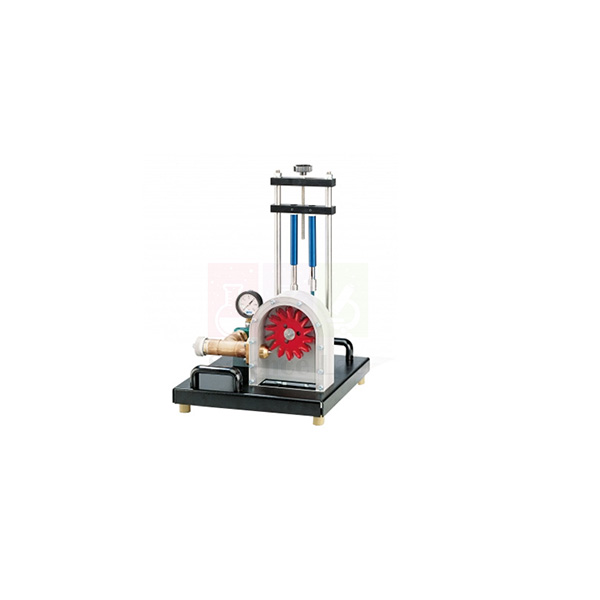
Demonstration Pelton Turbine (Product Code: SLE/MCE/35) is an impulse-turbine test unit used to show how a water jet drives a Pelton wheel and to measure turbine torque, inlet pressure and speed in fluid mechanics laboratories. It delivers about 5 W at 500 min-1 (rpm) with approximately 30 L/min at a 2 m head, using a 14-blade wheel of 132 mm external diameter and a 10 mm jet. It is made by Jain Scientific Equipments Pvt Ltd (ScienceLab), an OEM manufacturer, at its own factory in Ambala, India.
Specifications
| Parameter | Detail |
|---|---|
| Turbine type | Pelton turbine (impulse turbine) |
| Output | 5 W at 500 min-1, approx. 30 L/min, H = 2 m |
| Pelton wheel | 14 blades |
| Blade width | 33.5 mm |
| External diameter | 132 mm |
| Jet diameter | 10 mm |
| Jet deflection in the blades | Approximately 180° |
| Torque measurement | Force measurement on a band brake, read on spring balances |
| Force measuring range | 2 x 0–10 N |
| Inlet pressure measurement | Manometer at the turbine inlet, 0–1 bar |
| Speed measurement | Requires a non-contact speed sensor |
| Dimensions | 1000 x 800 x 1200 mm |
| Weight | 90 kg |
| Product code | SLE/MCE/35 |
| Manufacturer | Jain Scientific Equipments Pvt Ltd (ScienceLab) — OEM |
| Country of origin | India (made in Ambala, Haryana) |
What Is the Demonstration Pelton Turbine Used For?
In a Pelton turbine the pressure energy of the water is converted into kinetic energy entirely in the distributor: the jet is accelerated in a nozzle and directed tangentially onto the blades of the wheel. Each blade turns the jet back through roughly 180°, transferring the jet's impulse to the wheel — a clear, visible example of the impulse principle that students can contrast with reaction turbines.
During a test, students tighten the band brake in steps, read the spring balances to find the braking force and hence torque, note the inlet pressure on the manometer and measure rotational speed with a non-contact speed sensor. From these readings they plot torque and output power against speed to locate the turbine's most effective operating point. It is a valuable addition to mechanics lab equipment for mechanical and civil engineering hydraulics courses.
What to Specify When Ordering
- Number of units required for your laboratory
- Whether a non-contact speed sensor, needed for rotational-speed measurement, should be included in the quotation
- How water will be supplied to meet the stated operating point of approx. 30 L/min at H = 2 m
- Available space and handling for a 1000 x 800 x 1200 mm unit weighing 90 kg
OEM Manufacturer
The Demonstration Pelton Turbine is an OEM product of Jain Scientific Equipments Private Limited, the company that trades as ScienceLab. It is fabricated and assembled at the company's own licensed factory at Saha, Ambala, Haryana, India, and supplied directly to engineering colleges, polytechnics, dealers and importers without a trading middleman. Spare parts and repeat orders are handled by the manufacturer — just ask us. More on the company is on the ScienceLab profile.
Related Fluid Mechanics Equipment
Turbine and jet apparatus that extend the Demonstration Pelton Turbine practical:
- Pelton Wheel (Turbine) — another Pelton turbine unit in the range
- Pelton Turbine Test Rig — a test-rig version for Pelton performance studies
- Demonstration Francis Turbine — reaction-turbine counterpart for comparison with the impulse principle
- Impact of a Jet Apparatus — studies the force a water jet exerts on vanes
See all turbines, pumps and flow apparatus in the Fluid Mechanics category.
Frequently Asked Questions
What is the power output of the Demonstration Pelton Turbine?
The Demonstration Pelton Turbine delivers an output of 5 W at 500 min-1 with approximately 30 L/min of water at a head (H) of 2 m, which suits classroom performance measurements.
How is torque measured on the Demonstration Pelton Turbine?
Torque on the Demonstration Pelton Turbine is determined by force measurement on a band brake. The force is read on spring balances with a measuring range of 2 x 0–10 N and converted to torque by the students.
Is a speed sensor included with the Demonstration Pelton Turbine?
A non-contact speed sensor is required to measure the rotational speed of the Demonstration Pelton Turbine. Whether one is included depends on the quotation, so ask for it specifically when you enquire.
What are the Pelton wheel dimensions on the Demonstration Pelton Turbine?
The Demonstration Pelton Turbine's wheel has 14 blades of 33.5 mm width and an external diameter of 132 mm, and is driven by a 10 mm diameter water jet that the blades deflect by approximately 180°.
How large is the Demonstration Pelton Turbine?
The Demonstration Pelton Turbine measures 1000 x 800 x 1200 mm and weighs 90 kg, so plan floor space and handling accordingly. A manometer on the unit shows the inlet water pressure over 0–1 bar.
Who manufactures the Demonstration Pelton Turbine?
The Demonstration Pelton Turbine is manufactured by Jain Scientific Equipments Pvt Ltd (ScienceLab), the OEM, at its own licensed factory in Saha, Ambala, Haryana, India. Institutions can order it together with other fluid mechanics apparatus from the same manufacturer.
Request a Quote
To request a Demonstration Pelton Turbine quotation, use the contact page or add it to the enquiry cart, mentioning whether you need the speed sensor. Quotations come directly from the manufacturer, ScienceLab, for India and international markets.
Last updated: 24 September 2026