- Physics Lab Equipment
- Chemistry Lab Equipment
- Biology Lab Equipment
- Anatomical Lab Equipment
- Learning
- Educational Lab Equipment
- Magnets
- Agriculture
- Astronomy
- Earth Science
- Geography Lab Equipment
- Safety Lab Coat
- Laboratory
- Meteorological
- Electricity & Magnetism
- Heat
- School Lab Equipment
- Lab Glassware
- Science Lab Equipment
- Tvet Lab Equipment
- Robotics Kits Supplier and Manufacturer for Schools India
- Math Lab Equipment Manufacturers and Exporters in Ambala
- STEM Kits Manufacturers and Supplier India
- Engineering Lab Equipment
- Hospital Lab Equipment
- Water, Sanitation & Hygiene Supplies
- Cold Chain, Solar & Communication Equipment
- Nutrition
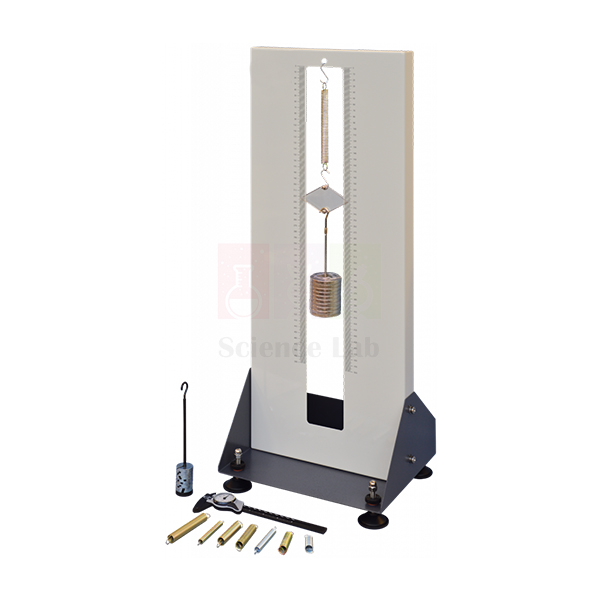
Hook's Law And Spring Rate
Hook's Law And Spring Rate (Product Code: SLE/ETP/04) is a spring testing apparatus used to verify Hooke's law and find the spring rate of extension springs in physics and engineering laboratories. A compact metal frame with adjustable feet carries a metric scale on each side of the slot where the test spring hangs, and a set of extension springs is supplied, making it a practical Hooke's law spring kit. It is made by Jain Scientific Equipments Pvt Ltd (ScienceLab), an OEM manufacturer, at its own factory in Ambala, India.
Key Details
| Parameter | Detail |
|---|---|
| Frame | Compact metal frame with adjustable feet for levelling |
| Scales | Metric scale on each side of a large slot where the test spring hangs |
| Test method | Variable mass and scale measurement |
| Springs supplied | A set of extension (tension) springs |
| Storage | Storage area at the back of the frame for springs and masses |
| Typical uses | Teaching spring properties and basic physics laws; workshop checks of springs before or after use |
| Product code | SLE/ETP/04 |
| Manufacturer | Jain Scientific Equipments Pvt Ltd (ScienceLab) — OEM |
| Country of origin | India (made in Ambala, Haryana) |
What Is the Spring Testing Apparatus Used For?
The method is deliberately simple. Level the frame with its feet, hang a spring in the slot and note its starting position on the scale, then add masses one at a time and read the new position after each. Plotting the load against the extension gives a straight line for as long as the spring behaves elastically — Hooke's law — and the slope of that line is the spring rate, the force needed for each unit of stretch.
Because several extension springs are supplied, students can compare spring rates across different spring sizes and work out the basic rules of spring design for themselves. The same frame earns its place in a workshop too, where a spring can be checked before it is fitted or after it has been in service to see whether it has lost stiffness. Return springs and masses to the storage area at the back after each class.
What to Specify When Ordering
- The number of apparatus sets, based on how many student groups work at once
- Whether you need a set of masses quoted with it — ask us to confirm what is packed
- Any additional springs you would like to discuss for comparison tests
OEM Manufacturer
Jain Scientific Equipments Private Limited, trading as ScienceLab, manufactures the Hook's Law And Spring Rate apparatus as the OEM at its own licensed factory at Saha, Ambala, Haryana, India. Schools, engineering colleges, ITIs, dealers and importers buy it straight from the manufacturer.
Replacement springs and repeat orders are handled by the maker itself — ask us with your requirement. More about ScienceLab is on our company profile.
Related Materials Testing and Properties Equipment
Springs and loading equipment for further spring and elasticity work:
- Coil Spring — a further spring experiment in the same range.
- Disc Spring — introduces a different spring form for comparison.
- Electronic Spring Tension Machine — an electronic machine for spring load testing.
- Hangers with Slotted Weights — slotted masses for loading a spring step by step.
Visit the Materials Testing and Properties category for more apparatus.
Frequently Asked Questions
What does the Hook's Law And Spring Rate apparatus measure?
The Hook's Law And Spring Rate apparatus (SLE/ETP/04) measures how far a spring extends as masses are added, so students can confirm Hooke's law and calculate the spring rate from the slope of a load–extension graph.
Which springs are supplied with the apparatus?
The Hook's Law And Spring Rate apparatus is supplied with a set of extension, or tension, springs so that different spring sizes and rates can be compared. Ask us through the contact page for details of the springs in the set.
Are masses included?
The Hook's Law And Spring Rate frame has a storage area for springs and masses, but the mass set is not detailed on this page. Please confirm with us whether masses are packed, or add slotted weights to your quotation.
Can the apparatus be used outside the classroom?
Yes. Besides teaching, the Hook's Law And Spring Rate apparatus is a useful workshop tool for checking the properties of a spring before it is used, or after it has been in service, to see whether it has changed.
Who manufactures the Hook's Law And Spring Rate apparatus?
The Hook's Law And Spring Rate apparatus is manufactured by Jain Scientific Equipments Pvt Ltd (ScienceLab) as the OEM, at its own licensed factory in Saha, Ambala, Haryana, India, and supplied factory-direct to schools, colleges and dealers.
What should I send for a quotation?
For the Hook's Law And Spring Rate apparatus, send the number of sets, whether masses or extra springs are needed, and the delivery city or port. ScienceLab supplies institutions and dealers in India and international markets.
Request a Quote
Quotations for the Hook's Law And Spring Rate apparatus come directly from the manufacturer. Use our contact page to send your requirement, or add it to the enquiry cart together with any masses or springs.
Last updated: 24 September 2026
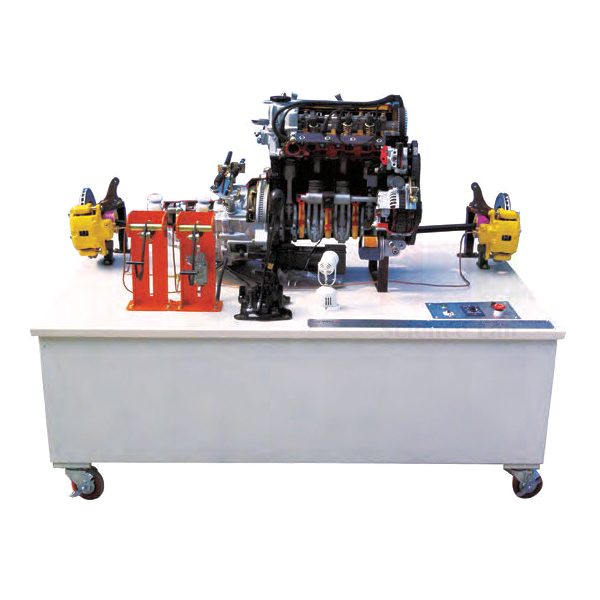
Automotive Power Train Training Equipment SOHC Gasoline
Automotive Power Train Training Equipment SOHC Gasoline (Product Code: SLE/ATE/02) is a cut-open engine and transmission rig used to demonstrate an SOHC four-cylinder gasoline power train, from camshaft to drive shaft, in automobile workshops. As TVET lab equipment for engine and brake servicing courses, it offers a simpler single-camshaft valve train and a compact 1,200 × 1,000 × 1,200 mm frame on wheels with brake lock. Its training stand and controls are built by Jain Scientific Equipments Pvt Ltd (ScienceLab), an OEM manufacturer, at its own factory in Ambala, India, around SOHC engine and transmission assemblies that are sourced production units, not made in Ambala.
Specifications
| Parameter | Detail |
|---|---|
| Engine | SOHC engine assembly, 4 cylinders |
| Engine class represented | 1,800~2,000cc gasoline |
| Transmission | FF-type manual, 5-speed forward and 1-speed reverse |
| Further composition | Clutch, brake system, AC 220 V / 180 W motor, engine speed controller, emergency switch, safety fuse, light |
| Frame | Steel frame with heat-treatment painting |
| Mobility | 4 wheels with brake lock |
| Finish | Incised sections painted in different colours; brake structure and engine parts painted specifically |
| Weight | Approx. 250 kg |
| Size | Approx. 1,200 × 1,000 × 1,200 mm |
| Engine / assembly | Sourced production unit (as listed) |
| Product code | SLE/ATE/02 |
| Manufacturer | Jain Scientific Equipments Pvt Ltd (ScienceLab) — OEM |
| Country of origin | India (trainer built in Ambala, Haryana) |
Practical exercises the unit supports:
- Brake oil change and bleeding of air from the lines
- Detaching and re-attaching the cylinder head
- Timing belt and auxiliary belt replacement, and belt tension control
- Brake disc and pad renewal
- Detaching and re-attaching the generator and starter motor
What Is the SOHC Power Train Trainer Used For?
In a single overhead camshaft engine, one camshaft in the cylinder head operates both the intake and exhaust valves, which gives students a simpler valve train to trace before they meet twin-cam designs. With the motor running slowly under the speed controller, the class can follow the camshaft, pistons and crankshaft through the cut sections, then shift through the gears as on a real car and watch the drive shaft turn the wheels.
Because the rig stands on lockable wheels, it can be rolled into a teaching bay for theory and then locked in position for service practice. Automobile engineering diploma programmes can schedule the brake bleeding and disc-and-pad exercises back to back, since both work on the same brake system fitted to the rig.
OEM Manufacturer
ScienceLab is the OEM (original equipment manufacturer) of the training stand and control system of the SOHC power train trainer, which are made at the company's own licensed factory at Saha, Ambala, Haryana, India, rather than bought in from a trader. The SOHC engine and manual transmission assemblies it carries are sourced production units and are not made in Ambala. Engineering colleges, polytechnics, TVET centres, dealers and importers receive quotations for the complete trainer straight from ScienceLab, and spares or repeat orders are handled by the same team — just ask us.
ScienceLab is the trading name of Jain Scientific Equipments Private Limited (CIN U29309HR2020PTC087597), which builds the trainer's stand at its licensed factory at 449, HSIIDC Industrial Area, Saha, Ambala (Factory Licence AMB-ONLINE-CHD-J-414). More background is on the company profile.
Related Automotive Training Equipment
Units that pair well with this trainer in an automobile lab:
- Automotive Power Train Training Equipment DOHC Gasoline — the twin-camshaft version for side-by-side valve-train comparison
- Clutch Structure Trainer Mechanical Manual — a bench-size unit for studying clutch engagement by hand
- Differential Gear — continues the power path from gearbox to wheels
- Engine management system (MPI) — covers petrol fuel injection, which the mechanical trainer does not
Explore the Automotive Training Equipment category for the full range.
Frequently Asked Questions
How is the SOHC gasoline power train trainer different from the DOHC trainer?
The Automotive Power Train Training Equipment SOHC Gasoline uses a single overhead camshaft four-cylinder engine and a more compact frame of about 1,200 × 1,000 × 1,200 mm. Institutes that teach both valve-train designs can compare it with the DOHC version.
Can the SOHC power train trainer be fixed in place during practicals?
Yes. The SOHC gasoline power train trainer stands on 4 wheels with brake lock, so the roughly 250 kg rig can be rolled into a teaching bay and then held securely while students work on the brakes, belts and cylinder head.
What gearbox does the SOHC gasoline power train trainer have?
The SOHC gasoline power train trainer has an FF-type manual transmission with 5 forward speeds and 1 reverse. Gears are changed just as on a real vehicle, and the drive shaft shows the resulting wheel movement.
What electrical supply does the SOHC power train trainer require?
The SOHC gasoline power train trainer needs a 220 V AC supply for its 180 W drive motor and engine speed controller. A safety fuse and an emergency switch are built in, together with a light.
Who manufactures the Automotive Power Train Training Equipment SOHC Gasoline?
ScienceLab, the trading name of Jain Scientific Equipments Private Limited, is the OEM that builds the training stand and controls of the Automotive Power Train Training Equipment SOHC Gasoline at its own licensed factory at Saha, Ambala, Haryana, India. The SOHC engine and transmission assemblies mounted on it are sourced production units, not made in Ambala.
Is a calibration certificate relevant for the SOHC power train trainer?
No measuring instruments are listed on the SOHC gasoline power train trainer, so calibration does not normally apply. If your tender asks for any certificate, discuss the requirement with us through the contact page before ordering so we can confirm what is possible.
How is the SOHC gasoline power train trainer delivered?
At approximately 250 kg, the SOHC gasoline power train trainer is shipped as freight. Share your site address, access route and unloading arrangements so packing and delivery can be planned for destinations within India or for export.
Request a Quote
Request a quotation for the SOHC gasoline power train trainer through our contact page, or add it to the enquiry cart with other automobile lab items. The quotation comes direct from the manufacturer.
Last updated: 24 September 2026
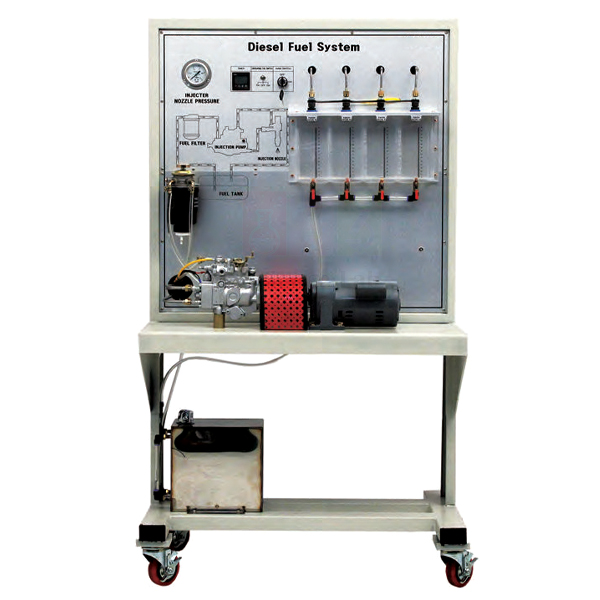
Diesel Fuel Injection System VE pump
Diesel Fuel Injection System VE pump (Product Code: SLE/ATE/03) is a motor-driven training bench used to measure fuel injection against pump RPM and explain the diesel fuel system in automobile engineering laboratories. A single-phase ½ HP motor turns the VE injection pump, with a timer for timed test runs, making it practical engineering educational equipment in India for diesel mechanic and polytechnic courses. It is made by Jain Scientific Equipments Pvt Ltd (ScienceLab), an OEM manufacturer, at its own factory in Ambala, India.
Specifications
| Parameter | Detail |
|---|---|
| Injection pump | VE pump |
| Drive | Single-phase ½ HP motor |
| Timing | Timer |
| Function | Pump operated by the motor; fuel injection measured in accordance with RPM |
| Weight | Approx. 100 kg |
| Size | Approx. 600 × 400 × 1,200 mm |
| Product code | SLE/ATE/03 |
| Manufacturer | Jain Scientific Equipments Pvt Ltd (ScienceLab) — OEM |
| Country of origin | India (made in Ambala, Haryana) |
Training contents:
- Checking the condition of the injection pump
- Operating the single-phase ½ HP drive motor
- Oil flow measurement
- Measuring injection according to RPM
- Checking injector condition
- Study of VE pump injection
What Is the VE Pump Diesel Injection Trainer Used For?
A VE pump is a distributor-type rotary injection pump, in which a single pumping element meters and delivers fuel to every cylinder in turn. On this bench the motor spins the pump at a chosen speed while the timer marks the length of each test run, so a group can record how much fuel is delivered at different RPM and plot the relationship. The same session can include oil flow measurement and a check of injector condition, giving learners a complete picture of how the pump and injectors work together.
The bench bridges theory lectures on diesel combustion and hands-on fuel system servicing. Keep the work area well ventilated, wipe up any spilt test fluid immediately, and switch off the motor before touching pump connections.
OEM Manufacturer
Jain Scientific Equipments Private Limited, which trades as ScienceLab, is the OEM (original equipment manufacturer) of the Diesel Fuel Injection System VE pump bench. The bench is made and assembled at the company’s own licensed factory at Saha, Ambala, Haryana, India, and supplied factory-direct to training institutes, colleges, dealers and importers. Quotations come straight from the manufacturer, and you can ask us about spare parts or repeat orders at any time. Learn more on our company profile.
Related Automotive Training Equipment
Other diesel fuel system trainers used in the same module:
- Diesel Fuel Injection System Inline Pump — the inline pump design, for comparing the two pump layouts
- CRDI (Common Rail Direct Injector) System — a sectioned CRDI fuel pump and injector nozzle for modern common-rail lessons
- Diesel Engine Fault Diagnosis Training Equipment Auto Fault — a running diesel engine for diagnosing faults in a complete system
- CRDI Diesel Engine Stand, Motor Type — a cutaway CRDI diesel engine showing where the fuel system fits
See every trainer in the Automotive Training Equipment category.
Frequently Asked Questions
What can students measure on the Diesel Fuel Injection System VE pump?
On the Diesel Fuel Injection System VE pump bench, students measure fuel injection in relation to pump RPM, carry out oil flow measurement, and check the condition of both the injection pump and the injectors as part of a VE pump injection study.
How is the pump on the Diesel Fuel Injection System VE pump driven?
The VE injection pump on the Diesel Fuel Injection System VE pump trainer is driven by a single-phase ½ HP electric motor, so the bench runs from a single-phase supply rather than needing a running diesel engine.
What is the timer on the VE pump diesel injection trainer used for?
The timer on the Diesel Fuel Injection System VE pump bench lets each test run last a set time, so fuel delivered at different RPM can be collected and compared on an equal basis.
Which test fluid should be used in the Diesel Fuel Injection System VE pump?
The recommended test fluid and filling details for the Diesel Fuel Injection System VE pump are confirmed with the supply rather than listed here. Ask us through the contact page if you need them before installation or for your lab safety file.
How much space does the Diesel Fuel Injection System VE pump take up?
The Diesel Fuel Injection System VE pump bench occupies approximately 600 × 400 × 1,200 mm and weighs about 100 kg. Allow working clearance around it for a small group, plus a single-phase power point for the motor.
Who manufactures the Diesel Fuel Injection System VE pump trainer?
The Diesel Fuel Injection System VE pump trainer is manufactured by Jain Scientific Equipments Private Limited (ScienceLab) as the OEM, at its own licensed factory at Saha, Ambala, Haryana, India. Warranty terms, spare parts and repeat orders are arranged directly with the manufacturer through the quotation.
Do you supply the Diesel Fuel Injection System VE pump to training institutes abroad?
Yes. The Diesel Fuel Injection System VE pump is supplied to training institutes, colleges and distributors in India and international markets. Include your destination, quantity and product code SLE/ATE/03 in the enquiry to receive a quotation.
Request a Quote
Get a quotation for the Diesel Fuel Injection System VE pump from our contact page, or add it to the enquiry cart with the rest of your diesel lab equipment. Quotes are issued direct by the manufacturer.
Last updated: 24 September 2026
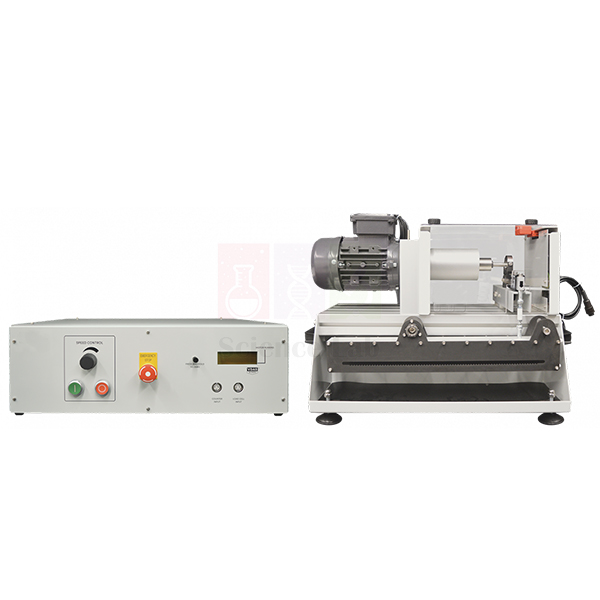
Rotating Fatigue Machine
Rotating Fatigue Machine (Product Code: SLE/ETP/05) is a bench-mounted rotating-bending fatigue tester used to show how materials fail under alternating stress, covering both low- and high-cycle fatigue, in engineering and materials science laboratories. A variable speed motor spins the specimen in a collet chuck while a dead weight on a load arm bends it, and a separate unit displays the load, cycle rate and number of cycles. It is made by Jain Scientific Equipments Pvt Ltd (ScienceLab), an OEM manufacturer, at its own factory in Ambala, India.
Key Details
| Parameter | Detail |
|---|---|
| Mounting | Bench-mounted machine |
| Test | Failure under alternating stress; low-cycle and high-cycle fatigue |
| Drive | Motor with variable speed drive for a safe, gradual increase in cycle rate; compliant coupling; precision shaft in sturdy bearings |
| Specimen holding | Collet-type chuck for accurate concentricity; gimbal-mounted self-aligning bearing at the free end |
| Loading | Short load arm linked by a load cell to a longer load arm with an integral moveable dead weight; applies a purely vertical load even as the specimen deflects |
| Sensors | Load cell for load; electronic sensor for shaft rotation |
| Control and display | Separate control and instrumentation unit showing load, speed (cycle rate) and number of cycles |
| Specimens | Special design that puts the point of maximum stress at the midpoint rather than the end |
| Product code | SLE/ETP/05 |
| Manufacturer | Jain Scientific Equipments Pvt Ltd (ScienceLab) — OEM |
| Country of origin | India (made in Ambala, Haryana) |
What Is the Rotating Fatigue Machine Used For?
Parts such as axles and shafts rarely fail from one heavy load; they crack after thousands or millions of smaller ones. This machine recreates that in a lesson. The specimen is gripped in the chuck and loaded at its free end, so as it spins every point on its surface moves from tension to compression and back once per revolution — one complete stress cycle. Students set the load by sliding the dead weight along the arm, raise the speed gradually and let the counter log cycles until the specimen breaks.
Running specimens at several loads and plotting stress against cycles to failure builds the classic fatigue (S–N) curve: heavy loads give low-cycle failures, lighter loads high-cycle ones. Because the specimens concentrate stress at their midpoint, the crack starts away from the chuck, and the broken faces are well worth examining for the smooth fatigue zone and the rough final fracture.
What to Specify When Ordering
- The number of test specimens and the materials you plan to test — ask us about suitable specimens
- The mains supply at your laboratory for the motor and control unit
- Whether a calibration certificate for the load cell is required — discuss this with us
OEM Manufacturer
ScienceLab, the trading name of Jain Scientific Equipments Private Limited, is the OEM manufacturer of the Rotating Fatigue Machine and builds it at the company's own licensed factory at Saha, Ambala, Haryana, India. Engineering colleges, universities, polytechnics, dealers and importers buy the machine factory-direct.
Specimen supply, spare parts and follow-up orders are handled by the manufacturer itself, so ask us whenever you need them. Our company profile has more about the business.
Related Materials Testing and Properties Equipment
Other machines for studying how materials fail:
- Creep Testing Machine — failure under steady load over time.
- Energy Absorbed At Fracture — failure under a sudden impact.
- Bench Top Tensile Testing Machine — failure under a single, steadily rising pull.
- Tensile strength testing machine — for measuring the static strength that fatigue results are compared with.
Browse the Materials Testing and Properties category for more mechanics lab equipment.
Frequently Asked Questions
What does the Rotating Fatigue Machine demonstrate?
The Rotating Fatigue Machine (SLE/ETP/05) demonstrates how materials fail when subjected to an alternating stress, showing both low-cycle and high-cycle fatigue as a loaded specimen rotates until it breaks.
How is the load applied and measured?
On the Rotating Fatigue Machine, an integral moveable dead weight on the longer load arm sets the load. A load cell linking the short and long load arms measures it, and the linkage applies a purely vertical load even when the specimen deflects.
What does the control unit display?
The separate control and instrumentation unit of the Rotating Fatigue Machine shows the applied load, the speed or cycle rate, and the number of cycles, with an electronic sensor measuring shaft rotation.
Why do the specimens have a special design?
Specimens for the Rotating Fatigue Machine are designed so the point of maximum stress falls at their midpoint rather than at their end. The failure therefore happens away from the chuck, giving cleaner and more meaningful results.
Are test specimens supplied with the machine?
The specimen supply for the Rotating Fatigue Machine is not detailed on this page. Tell us the materials and quantity you plan to test through the contact page and we will advise on specimens.
Who manufactures the Rotating Fatigue Machine?
The Rotating Fatigue Machine is manufactured by Jain Scientific Equipments Pvt Ltd (ScienceLab) as the OEM, at its own licensed factory in Saha, Ambala, Haryana, India, and supplied factory-direct to colleges, dealers and importers.
Can ScienceLab quote the machine for export?
Yes. ScienceLab quotes the Rotating Fatigue Machine direct from the manufacturer for institutions and dealers in India and international markets. Share your quantity, mains supply and delivery city or port through the contact page.
Request a Quote
Quotations for the Rotating Fatigue Machine come straight from the manufacturer. Send your requirements through our contact page, or add the machine to the enquiry cart with other testing apparatus.
Last updated: 24 September 2026
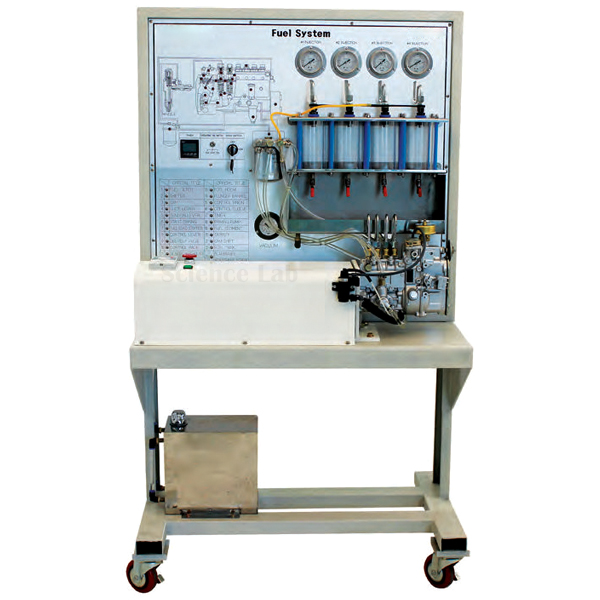
Diesel Fuel Injection System Inline Pump
Diesel Fuel Injection System Inline Pump (Product Code: SLE/ATE/04) is an inverter-controlled training bench used to run an inline diesel injection pump and measure injection according to RPM in automobile and diesel mechanic workshops. Four fuel pressure gauges and a timer let learners compare pressure, delivery and injection patterns at different speeds — practical technical educational equipment for polytechnic and vocational courses. It is made by Jain Scientific Equipments Pvt Ltd (ScienceLab), an OEM manufacturer, at its own factory in Ambala, India.
Specifications
| Parameter | Detail |
|---|---|
| Pump type | Inline injection pump |
| Drive motor | Single-phase ½ HP |
| Speed control | Inverter |
| Instrumentation | 4 fuel pressure gauges, timer |
| Operation | Pump operated by the motor; fuel injection measured in accordance with RPM |
| Weight | Approx. 100 kg |
| Size | Approx. 600 × 400 × 1,200 mm |
| Product code | SLE/ATE/04 |
| Manufacturer | Jain Scientific Equipments Pvt Ltd (ScienceLab) — OEM |
| Country of origin | India (made in Ambala, Haryana) |
Training contents:
- Checking injection pump status
- Operating the single-phase ½ HP motor
- Measuring injection according to RPM
- Checking injector status
- Measuring fuel flux and injection patterns
- General fuel injection training
What Is the Inline Pump Diesel Injection Trainer Used For?
In an inline pump, a separate pumping element for each cylinder sits in a row inside one housing and is driven by the pump’s own camshaft. On this bench the instructor sets a speed with the inverter, runs the pump for a timed interval and has students read the four pressure gauges while they collect and compare the delivered fuel. Repeating the run at several speeds shows clearly how delivery and pressure change with RPM, and watching the injection pattern helps learners recognise a healthy spray from a faulty one.
The bench works well straight after a VE pump exercise, so that learners can compare an inline design with a distributor pump. Before each session check the fuel lines and gauge connections for leaks, and isolate the motor supply before any adjustment.
OEM Manufacturer
As the OEM (original equipment manufacturer), ScienceLab — the trading name of Jain Scientific Equipments Private Limited — builds the Diesel Fuel Injection System Inline Pump bench at its own licensed factory at Saha, Ambala, Haryana, India. Because the bench is made and assembled by the manufacturer rather than sourced through a trader, training institutes, dealers and importers get quotations, spare-part answers and repeat supply from one source; just ask us. Background is on the company profile.
Related Automotive Training Equipment
Trainers that complete a diesel fuel system course:
- Diesel Fuel Injection System VE pump — a distributor-type pump bench for comparison with the inline design
- CRDI (Common Rail Direct Injector) System — introduces common-rail injection with a sectioned pump and nozzle
- CRDI Diesel Engine SANTAFE D Engine, Stand — a sectioned diesel engine on a stand to show the complete engine
- Diesel Engine Fault Diagnosis Training Equipment Auto Fault — moves students on to diagnosing a running diesel engine
Browse the Automotive Training Equipment category for more.
Frequently Asked Questions
How does the Inline Pump trainer differ from the VE pump bench?
The Diesel Fuel Injection System Inline Pump uses an inline pump with one pumping element per cylinder arranged in a row, whereas a VE pump meters all cylinders from a single distributor element. Having both benches lets students compare the two designs.
How is pump speed controlled on the Diesel Fuel Injection System Inline Pump?
Pump speed on the Diesel Fuel Injection System Inline Pump is set by an inverter that varies the speed of the single-phase ½ HP drive motor, so the instructor can repeat measurements at several RPM settings in one session.
What are the four pressure gauges on the Inline Pump trainer for?
The four fuel pressure gauges on the Diesel Fuel Injection System Inline Pump display fuel pressure during each run, so students can relate the readings to pump speed, delivered quantity and injection behaviour.
Can injection patterns be observed on the Diesel Fuel Injection System Inline Pump?
Yes. Measuring fuel flux and injection patterns is part of the listed training contents of the Diesel Fuel Injection System Inline Pump, alongside checking pump and injector status and measuring injection according to RPM.
Who manufactures the Diesel Fuel Injection System Inline Pump trainer?
Jain Scientific Equipments Private Limited, trading as ScienceLab, manufactures the Diesel Fuel Injection System Inline Pump trainer as its OEM at the company’s own licensed factory at Saha, Ambala, Haryana, India, and supplies it factory-direct to institutes, dealers and importers.
Is a calibration certificate available for the gauges on the Inline Pump trainer?
Calibration certificate availability for the pressure gauges on the Diesel Fuel Injection System Inline Pump should be discussed with us before you place the order. Use the contact page and we will confirm what documentation can be provided.
What should we prepare to install the Diesel Fuel Injection System Inline Pump?
To install the Diesel Fuel Injection System Inline Pump, prepare a floor area of about 600 × 400 mm plus working clearance, a single-phase power point, and handling for a bench of roughly 100 kg and approximately 1,200 mm height.
Request a Quote
Ask for pricing on the Diesel Fuel Injection System Inline Pump via our contact page, or add it to the enquiry cart. Quotations come direct from the manufacturer, for delivery across India and to international markets.
Last updated: 24 September 2026
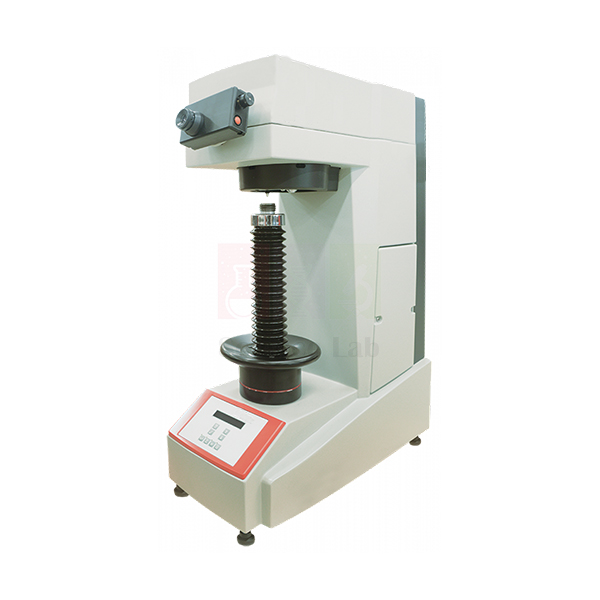
Vickers Hardness Tester
Vickers Hardness Tester (Product Code: SLE/ETP/06) is an industrial instrument that performs the Vickers hardness test, used to measure the hardness of metals and other materials in materials testing laboratories, workshops and engineering colleges. An LCD display shows measured hardness results, the progress of each test and set-up information, and a serial interface sends results to a standard printer or a PC. It is supplied by Jain Scientific Equipments Pvt Ltd (ScienceLab), Ambala, India, among its test and measurement instruments for Indian laboratories.
Key Details
| Parameter | Detail |
|---|---|
| Test method | Vickers hardness test |
| Display | LCD — measured hardness results, test progress and set-up information for a variety of parameters |
| Data output | Serial interface for printing results on a standard printer or sending data to a PC |
| Instrument class | Industrial instrument |
| Care | Used according to its instructions and given reasonable care, it maintains accurate and reliable hardness scales |
| Product code | SLE/ETP/06 |
| Supplied by | Jain Scientific Equipments Pvt Ltd (ScienceLab), Ambala, India |
What Is the Vickers Hardness Tester Used For?
In the Vickers method a square-based diamond pyramid is pressed into a prepared surface under a set load. When the load is removed, the two diagonals of the square impression are measured, and the Vickers hardness number is calculated from the load and the mean diagonal. Because the indenter shape stays the same whatever the load, the method covers soft and hard materials on one scale, which makes it popular for comparing heat-treated and untreated steels, checking welds and testing thin sections.
Good results start with the sample: cut it square, grind and polish the test face flat, and support it firmly on the anvil. Use the LCD to set the test parameters and follow each test's progress, then print the results or transfer them to a PC through the serial interface so every reading goes straight into the lab record. Keep the tester clean and follow its operating instructions for routine care.
Supplier
Jain Scientific Equipments Private Limited, trading as ScienceLab, supplies the Vickers Hardness Tester from Ambala, Haryana, to engineering colleges, polytechnics, industrial training institutes, workshops and dealers in India and international markets. It can be quoted together with the sample-preparation equipment a hardness lab needs.
For vendor registration, the supplying company is Jain Scientific Equipments Private Limited (IEC AAECJ8618A, GSTIN 06AAECJ8618A1ZT). More about us is on our company profile.
Related Materials Testing and Properties Equipment
Hardness testers and preparation equipment for the same laboratory:
- Brinell Hardness Tester — a ball-indenter method for comparing results on softer metals.
- Universal Hardness Tester — an alternative for labs running several hardness methods.
- Cut Off Wheel Machine — sections samples to size before testing.
- Single Disc Polishing Machine — polishes the test face flat for a clear indentation.
The Materials Testing and Properties category lists more testing apparatus.
Frequently Asked Questions
What does the LCD on the Vickers Hardness Tester show?
The LCD on the Vickers Hardness Tester (SLE/ETP/06) displays the measured hardness results, monitors the progress of each test, and shows the information needed when setting the machine up for a variety of parameters.
Can results be printed or sent to a computer?
Yes. The Vickers Hardness Tester has a serial interface that can print results on a standard printer or communicate the data to a PC, so readings can be stored with the rest of your laboratory records.
What test loads and ranges does it offer?
Test loads and measuring ranges for the Vickers Hardness Tester are not listed on this page. Send your sample materials and testing needs through the contact page and we will provide the details with the quotation.
How do I keep the readings reliable?
The Vickers Hardness Tester is an industrial instrument that maintains accurate and reliable hardness scales when used according to its instructions and given reasonable care. Whether a calibration certificate is available should be discussed with us.
How should samples be prepared for Vickers testing?
Samples for the Vickers Hardness Tester should have a flat, finely polished test face and sit firmly on the anvil, because the small indentation is measured across its diagonals and a rough surface makes those edges hard to read.
Who supplies the Vickers Hardness Tester?
The Vickers Hardness Tester is supplied by Jain Scientific Equipments Pvt Ltd, trading as ScienceLab, from Ambala, Haryana, India, to colleges, training institutes, workshops and dealers in India and international markets.
What information does a quotation need?
To quote the Vickers Hardness Tester, tell us the materials you will test, the number of units, any sample-preparation equipment required and the delivery city or port. Send the request through the contact page or the enquiry cart.
Request a Quote
To receive a quotation for the Vickers Hardness Tester, share your requirements through our contact page, or add it to the enquiry cart together with any preparation equipment.
Last updated: 24 September 2026
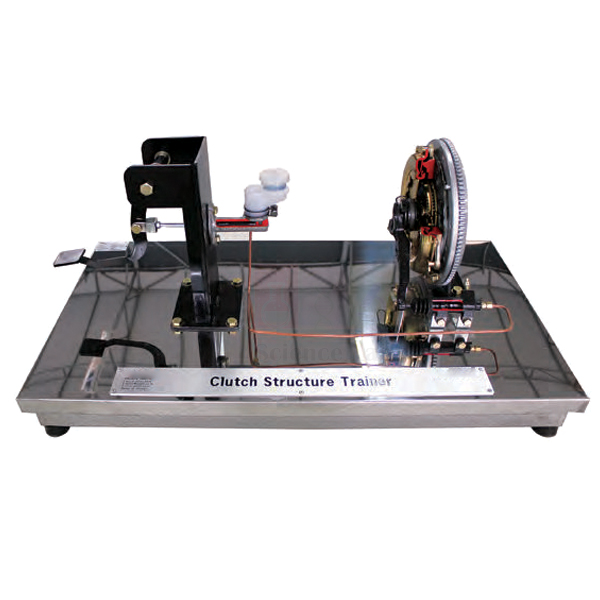
Clutch Structure Trainer Hydraulics
Clutch Structure Trainer Hydraulics (Product Code: SLE/ATE/05) is a compact sectioned teaching unit used to explain how the hydraulic clutch inside a manual-transmission vehicle works, in automobile engineering classrooms and workshops. Built from a clutch pressing board, clutch pedal and clutch cylinder with colour-coded cut sections, the unit of approximately 20 kg is bench-top engineering lab equipment for ITIs and colleges. It is made by Jain Scientific Equipments Pvt Ltd (ScienceLab), an OEM manufacturer, at its own factory in Ambala, India.
Specifications
| Parameter | Detail |
|---|---|
| Type | Education unit of hydraulic clutch structure inside manual transmission |
| Composition | Clutch pressing board, clutch pedal, clutch cylinder |
| Sectioning | Each incised section painted in a different colour |
| Finish | Vehicle paint used for painting and coating |
| Weight | Approx. 20 kg |
| Size | Approx. 400 × 300 × 300 mm |
| Product code | SLE/ATE/05 |
| Manufacturer | Jain Scientific Equipments Pvt Ltd (ScienceLab) — OEM |
| Country of origin | India (made in Ambala, Haryana) |
What Is the Hydraulic Clutch Cutaway Trainer Used For?
A hydraulic clutch replaces the cable of a mechanical system with fluid pressure: pressing the pedal pushes fluid through the clutch cylinder system, and that pressure acts to lift the clamping force of the pressing board so the engine and gearbox separate. With the cut sections colour-coded, students can point to each component as the instructor presses the pedal, making the operating principle much easier to grasp than from diagrams alone.
At roughly 20 kg and 400 × 300 × 300 mm, the unit can be placed on a normal classroom table and passed between groups, so it is a practical choice for TVET and automobile diploma labs that need several teaching stations. Wipe the painted surfaces with a dry cloth after handling to keep the colour coding clear.
OEM Manufacturer
The Clutch Structure Trainer Hydraulics is built by its OEM (original equipment manufacturer), Jain Scientific Equipments Private Limited, which trades as ScienceLab. Each unit is made and assembled at the company’s own licensed factory at Saha, Ambala, Haryana, India, and supplied factory-direct to ITIs, colleges, dealers and importers who need several teaching stations. For repeat orders or replacement parts, ask us — the manufacturer handles them itself. Visit the company profile for details.
Related Automotive Training Equipment
Other units for a clutch and transmission module:
- Clutch Structure Trainer Hydraulic Manual — a larger hydraulic clutch unit including a flywheel for fuller assembly study
- Clutch Structure Trainer Mechanical Manual — the mechanical counterpart for comparing actuation methods
- Automotive Power Train Training Equipment DOHC Gasoline — shows the clutch working within a complete engine and gearbox
- FF Auto Transmission Stand Type — a torque-converter automatic for contrasting with a friction clutch
Find more in the Automotive Training Equipment category.
Frequently Asked Questions
Which parts are included in the Clutch Structure Trainer Hydraulics?
The Clutch Structure Trainer Hydraulics consists of a clutch pressing board, a clutch pedal and a clutch cylinder, mounted as one sectioned teaching unit with each incised section painted in a different colour for easy identification.
Is the Clutch Structure Trainer Hydraulics filled with hydraulic fluid?
Whether the Clutch Structure Trainer Hydraulics is supplied filled or as a dry sectioned model is not stated in the current listing. Confirm this through the contact page if your lesson plan needs working fluid in the clutch cylinder.
How does the Clutch Structure Trainer Hydraulics compare with the Hydraulic Manual trainer?
The Clutch Structure Trainer Hydraulics is the more compact bench model, about 400 × 300 × 300 mm and 20 kg, focused on the pedal, cylinder and pressing board. For a larger assembly with a flywheel, see the Clutch Structure Trainer Hydraulic Manual.
How durable is the finish of the Clutch Structure Trainer Hydraulics?
The Clutch Structure Trainer Hydraulics is painted and coated with vehicle paint, which suits regular classroom handling. Wipe the surfaces with a dry cloth after lessons to keep the colour-coded sections clear and easy to identify.
Who manufactures the Clutch Structure Trainer Hydraulics?
The Clutch Structure Trainer Hydraulics is manufactured by Jain Scientific Equipments Private Limited (ScienceLab) as the OEM, at its own licensed factory at Saha, Ambala, Haryana, India. Institutes buying several units for group work order directly from the manufacturer.
What warranty is given with the Clutch Structure Trainer Hydraulics?
Warranty terms for the Clutch Structure Trainer Hydraulics are set out in the quotation rather than on this page. Request them when you enquire through the contact page, quoting product code SLE/ATE/05.
Can several Clutch Structure Trainer Hydraulics units be supplied for group work?
Yes. Several Clutch Structure Trainer Hydraulics units can be quoted together for parallel teaching stations, and bulk and export orders are supplied to institutions and distributors in India and international markets.
Request a Quote
For a price on the Clutch Structure Trainer Hydraulics, message us through the contact page or add it to the enquiry cart. You will receive the quotation direct from the manufacturer.
Last updated: 24 September 2026
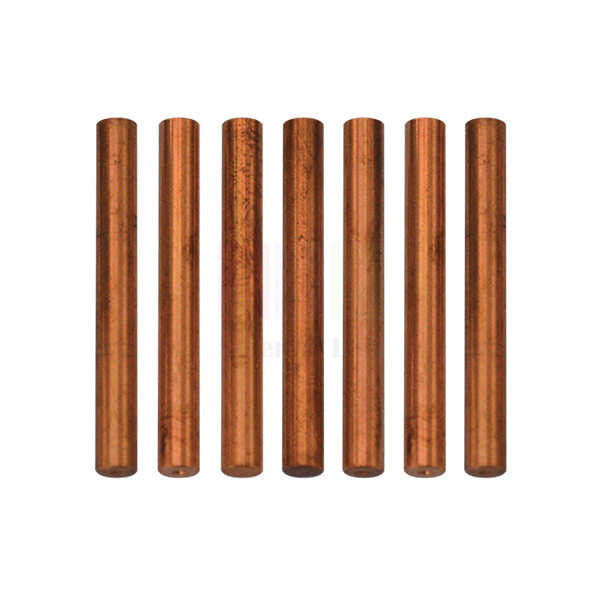
Double Shear Test Specimens
Double Shear Test Specimens (Product Code: SLE/ETP/07) are copper test pieces used to measure a material's shear strength in double-shear tests in engineering and materials testing laboratories. Each specimen is 50 mm long with a diameter of 5.65 to 6 mm, and in the test it is cut across two planes at once, which gives a balanced loading arrangement for student practicals. They are supplied by Jain Scientific Equipments Pvt Ltd (ScienceLab), Ambala, India, as consumables for engineering lab equipment in India.
Specifications
| Parameter | Detail |
|---|---|
| Material | Copper |
| Length | 50 mm |
| Diameter | 5.65 to 6 mm |
| Test type | Double shear |
| Product code | SLE/ETP/07 |
| Supplied by | Jain Scientific Equipments Pvt Ltd (ScienceLab), Ambala, India |
What Are Double Shear Test Specimens Used For?
In a double-shear test the specimen passes through a fixture so that its middle section is pushed one way while both ends are held, and it fails by shearing across two planes at the same time. The shear strength is the maximum load divided by twice the specimen's cross-sectional area, since two faces carry the load. Pins, rivets, bolts and clevis joints are loaded in just this way in real machines, so the test links classroom results to everyday design.
Copper is ductile, so students usually see the specimen bend and deform before it separates, and the sheared faces make a good discussion point. Because the diameter can fall anywhere between 5.65 and 6 mm, measure each specimen with a micrometer or vernier caliper before testing and use that value when working out the area. Each specimen is destroyed in the test, so plan one for every result you need.
What to Specify When Ordering
- The number of specimens — one per test, plus spares for practice runs
- The testing machine and shear fixture you will use, so we can confirm the specimens suit it
- Any other test specimens needed on the same quotation
Supplier
Jain Scientific Equipments Private Limited, trading as ScienceLab, supplies the Double Shear Test Specimens from Ambala, Haryana, to engineering colleges, polytechnics, training institutes and dealers in India and international markets. They can be ordered in quantities to cover a term's practical classes.
Learn more about the company on our company profile.
Related Materials Testing and Properties Equipment
Machines and specimens used in the same strength-testing work:
- Tensile strength testing machine — a machine for strength tests on metal specimens.
- Bench Top Tensile Testing Machine — a small bench machine for student strength tests.
- Specimen — carbon steel tensile specimens to compare with shear results.
- Tensile Tester Kit — an introductory kit for stretching specimens to failure.
See all apparatus in the Materials Testing and Properties category.
Frequently Asked Questions
What are the Double Shear Test Specimens made of?
The Double Shear Test Specimens (SLE/ETP/07) are made of copper, a ductile metal that deforms noticeably before it shears, which makes the failure easy for students to observe and discuss.
What size are the Double Shear Test Specimens?
Each Double Shear Test Specimen is 50 mm long, with a diameter between 5.65 and 6 mm. Measure every specimen's actual diameter before testing, because the cross-sectional area is needed to calculate shear strength.
How is shear strength calculated from a double-shear test?
For Double Shear Test Specimens, divide the maximum load by twice the cross-sectional area worked out from the measured diameter. The factor of two appears because the specimen shears across two planes at the same time.
Which machine are the specimens used on?
The machine and fixture for the Double Shear Test Specimens are not specified on this page. Send your testing machine and shear fixture details through the contact page so we can confirm that the specimens are suitable.
Can a specimen be reused?
No. Each Double Shear Test Specimen is sheared through during the test and cannot be used again. Order one specimen for every test planned, with a few extra for demonstrations or repeat readings.
Who supplies the Double Shear Test Specimens?
The Double Shear Test Specimens are supplied by Jain Scientific Equipments Pvt Ltd, trading as ScienceLab, from Ambala, Haryana, India, to engineering colleges, polytechnics, training institutes and dealers in India and international markets.
Request a Quote
For a quotation on the Double Shear Test Specimens, send the quantity and your testing set-up through our contact page, or add them to the enquiry cart with other materials testing items.
Last updated: 24 September 2026