- Physics Lab Equipment
- Chemistry Lab Equipment
- Biology Lab Equipment
- Anatomical Lab Equipment
- Learning
- Educational Lab Equipment
- Magnets
- Agriculture
- Astronomy
- Earth Science
- Geography Lab Equipment
- Safety Lab Coat
- Laboratory
- Meteorological
- Electricity & Magnetism
- Heat
- School Lab Equipment
- Lab Glassware
- Science Lab Equipment
- Tvet Lab Equipment
- Robotics Kits Supplier and Manufacturer for Schools India
- Math Lab Equipment Manufacturers and Exporters in Ambala
- STEM Kits Manufacturers and Supplier India
- Engineering Lab Equipment
- Hospital Lab Equipment
- Water, Sanitation & Hygiene Supplies
- Cold Chain, Solar & Communication Equipment
- Nutrition
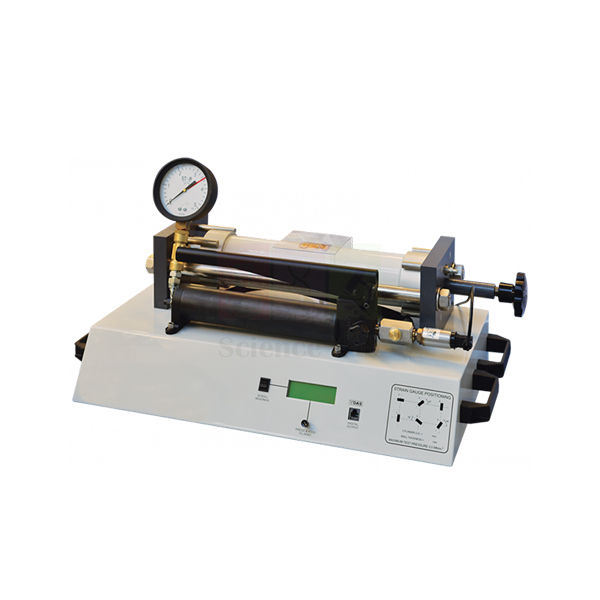
Thin Cylinder
Thin Cylinder (Product Code: SLE/ETP/14) is a bench-mounting pressure vessel apparatus used to investigate and analyse the stresses and strains in a pressurised thin-walled cylinder, in mechanical and civil engineering laboratories. Its thin-walled aluminium cylinder sits in a robust frame that leaves it free to move along its axis, while surface strain gauges and an electronic pressure sensor record its response. It is made by Jain Scientific Equipments Pvt Ltd (ScienceLab), an OEM and TVET lab equipment manufacturer in India, at its own factory in Ambala.
Specifications
| Parameter | Detail |
|---|---|
| Type | Bench-mounting apparatus for stress and strain analysis of a pressurised thin-walled cylinder |
| Cylinder | Thin-walled aluminium cylinder |
| Frame | Robust frame that holds the cylinder so it is free to move along its axis |
| Pressure medium | Oil inside the cylinder |
| Pressurisation | Hydraulic hand pump operated by the students |
| Strain measurement | Strain gauges on the cylinder surface |
| Pressure measurement | A gauge and an electronic sensor measure the hydraulic pressure |
| Product code | SLE/ETP/14 |
| Manufacturer | Jain Scientific Equipments Pvt Ltd (ScienceLab) — OEM |
| Country of origin | India (made in Ambala, Haryana) |
What Is the Thin Cylinder Apparatus Used For?
Boilers, gas bottles, water mains and aircraft fuselages are all treated as thin cylinders, where the wall is thin enough for stress to be taken as uniform through it. Simple theory then gives a hoop stress twice the longitudinal stress, and this apparatus lets students check that relationship with real measurements rather than accept it on trust.
Students pump the oil up in steps, record pressure from the gauge and electronic sensor, and read the surface strain gauges at each step. From the strain-pressure graphs they can work out hoop and longitudinal stresses and estimate the elastic constants of the aluminium, a core exercise for engineering lab equipment in India used on diploma and degree courses. Because the frame leaves the cylinder free to move along its axis, the frame itself does not add axial load. Pump slowly, let each reading settle, and release pressure fully after the test.
OEM Manufacturer
The Thin Cylinder is an original product of Jain Scientific Equipments Private Limited, which trades as ScienceLab and is its OEM (original equipment manufacturer). It is made at the company's own licensed factory at Saha, Ambala, Haryana, India, and sold factory-direct to engineering colleges, polytechnics, dealers and importers. Quotations, repeat orders and spares questions all come straight from the manufacturer. Learn more on the ScienceLab profile.
Related Materials Testing and Properties Equipment
Apparatus that complements thin-cylinder work in a stress-analysis lab:
- Thick Cylinder — shows how stress varies through a wall too thick for thin-cylinder theory.
- Digital Strain Display — multi-channel direct strain readings from metal-foil gauges.
- Diaphragm — strain and deflection of a clamped diaphragm under oil pressure.
- Youngs Modulus Apparatus — finds elastic modulus by wire extension, for comparison with cylinder results.
See all apparatus in Materials Testing and Properties.
Frequently Asked Questions
What can students work out with the Thin Cylinder?
With the Thin Cylinder, students measure surface strains at known oil pressures and use them to find hoop and longitudinal stresses, compare the results with thin-cylinder theory and estimate the elastic properties of the aluminium cylinder.
How is pressure applied and measured on the Thin Cylinder?
The Thin Cylinder contains oil that students pressurise with a hydraulic hand pump. The hydraulic pressure is measured by a gauge and by an electronic sensor, while strain gauges on the cylinder surface measure strain.
Why is the Thin Cylinder free to move along its axis?
The frame holds the Thin Cylinder so that it is free to move along its axis. This keeps the frame from adding its own axial force to the cylinder, so measured strains come from the internal oil pressure alone.
How does the Thin Cylinder differ from the Thick Cylinder?
The Thin Cylinder has a thin wall with strain gauges on its surface, suited to thin-wall theory. The Thick Cylinder has gauges embedded through a thick wall to show how radial and hoop stresses vary from bore to outside.
Who manufactures the Thin Cylinder?
The Thin Cylinder is manufactured by Jain Scientific Equipments Pvt Ltd (ScienceLab), the OEM, at its own licensed factory in Saha, Ambala, Haryana, India. Buyers deal directly with the manufacturer for quotations and follow-up orders.
What do you need to quote for the Thin Cylinder?
To quote for the Thin Cylinder, please send the product code SLE/ETP/14, the number of sets, whether you need a strain readout as well, and the delivery destination. Use the contact page or add the item to the enquiry cart.
Request a Quote
Ask the manufacturer for a Thin Cylinder quotation through the contact page, or add it to the enquiry cart. Supply is available to institutions and dealers in India and international markets.
Last updated: 24 September 2026
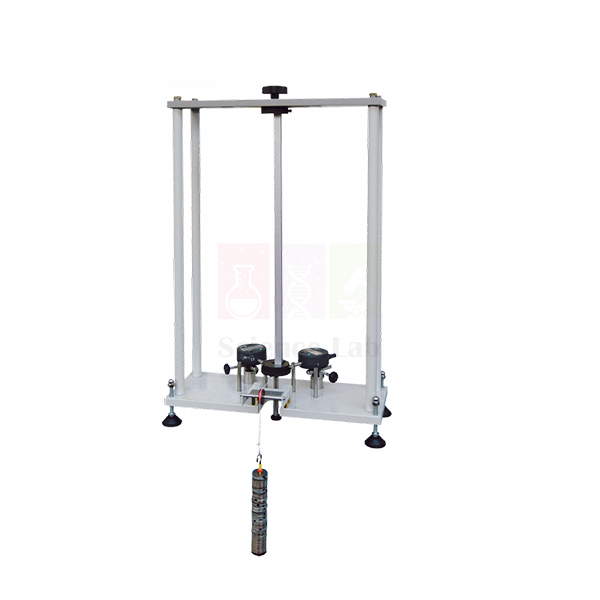
Unsymmetrical Cantilever
Unsymmetrical Cantilever (Product Code: SLE/ETP/15) is a frame-mounted structures apparatus used to load a cantilever and measure its deflection in any coplanar direction, so students can study bending of unsymmetrical sections in strength-of-materials labs. The test beam hangs vertically from a holding ring that rotates through 360 degrees, and a cross-piece at the free end locates the shear centre. It is made by Jain Scientific Equipments Pvt Ltd (ScienceLab), an OEM manufacturer of lab equipment for technical institutes, at its own factory in Ambala, India.
Key Details
| Parameter | Detail |
|---|---|
| Beam mounting | Test beam mounted vertically in a frame |
| Holding ring | Upper end of the test beam fixes to a holding ring that can rotate through 360 degrees |
| Measurement | Deflection of the loaded cantilever in any coplanar direction |
| Loading method | Loads applied to the beam in set increments while displacement is recorded |
| Analysis | Mohr's circle method to find the principal second moments of area of each section |
| Shear centre | Cross-piece attached to the free end lets loads be applied at different positions across and outside the section |
| Product code | SLE/ETP/15 |
| Manufacturer | Jain Scientific Equipments Pvt Ltd (ScienceLab) — OEM |
| Country of origin | India (made in Ambala, Haryana) |
What Is the Unsymmetrical Cantilever Used For?
Angles, channels and other sections without two axes of symmetry do not simply bend in the direction they are pushed. A load that is not aligned with a principal axis also makes the beam deflect sideways, and a load that misses the shear centre makes it twist as well. The Unsymmetrical Cantilever turns these abstract ideas from the textbook into measurements students can see.
Students apply loads in set increments, record the displacement, then rotate the beam on its holding ring and repeat. Plotting the results and using Mohr's circle gives the principal second moments of area of each section. For the shear centre, a cross-piece on the free end lets loads be moved across and outside the section until the twisting disappears. Take readings on loading and unloading, and keep loads within the elastic range of the beam.
OEM Manufacturer
Jain Scientific Equipments Private Limited, which trades as ScienceLab, is the OEM (original equipment manufacturer) of the Unsymmetrical Cantilever and makes it at its own licensed factory at Saha, Ambala, Haryana. The company is a registered MSME with manufacturing as its major activity (Udyam UDYAM-HR-01-0003714), and export orders are shipped under Importer-Exporter Code AAECJ8618A (DGFT). Engineering colleges, dealers and importers buy directly from the maker; see the company profile.
Related Materials Testing and Properties Equipment
Beam and section experiments that build on unsymmetrical bending:
- Stiffness - Bending and Torsion — bending stiffness of beams of different materials and cross-sections.
- Torsion of Circular Sections — measures torque and twist, useful before studying twisting about the shear centre.
- Hangers with Slotted Weights — convenient masses for applying loads in equal increments.
- Strain Gauge Trainer — adds strain measurement in bending, torsion and tension.
More structures apparatus is available in Materials Testing and Properties.
Frequently Asked Questions
What does the Unsymmetrical Cantilever demonstrate?
The Unsymmetrical Cantilever demonstrates how beams of unsymmetrical section deflect under load in directions other than the load line. Students measure deflection in any coplanar direction and find principal second moments of area and the shear centre.
How is the beam orientation changed on the Unsymmetrical Cantilever?
On the Unsymmetrical Cantilever, the upper end of the vertical test beam fixes to a holding ring that can rotate through 360 degrees. Students rotate the beam to a new position and repeat the loading to build a full picture.
How do students find the shear centre with the Unsymmetrical Cantilever?
To find the shear centre with the Unsymmetrical Cantilever, students attach a cross-piece to the free end of the test beam. It allows loads to be applied at different positions across and outside the section while twisting is observed.
How are the principal second moments of area found?
With the Unsymmetrical Cantilever, students apply loads in set increments, record the displacements and then use the Mohr's circle method on the results to find the principal second moments of area of each beam section.
Who manufactures the Unsymmetrical Cantilever?
The Unsymmetrical Cantilever is manufactured by Jain Scientific Equipments Pvt Ltd (ScienceLab) as the OEM, at its own licensed factory in Ambala, Haryana, India. Enquiries about test beams and spare parts go directly to the manufacturer.
What should a quotation request for the Unsymmetrical Cantilever state?
A quotation request for the Unsymmetrical Cantilever should state the product code SLE/ETP/15, the number of units, which beam sections you want to test and the delivery destination, so we can confirm what the quotation covers.
Request a Quote
Receive an Unsymmetrical Cantilever quotation direct from the manufacturer by writing through the contact page or adding it to the enquiry cart. We supply institutions, dealers and importers in India and international markets.
Last updated: 24 September 2026
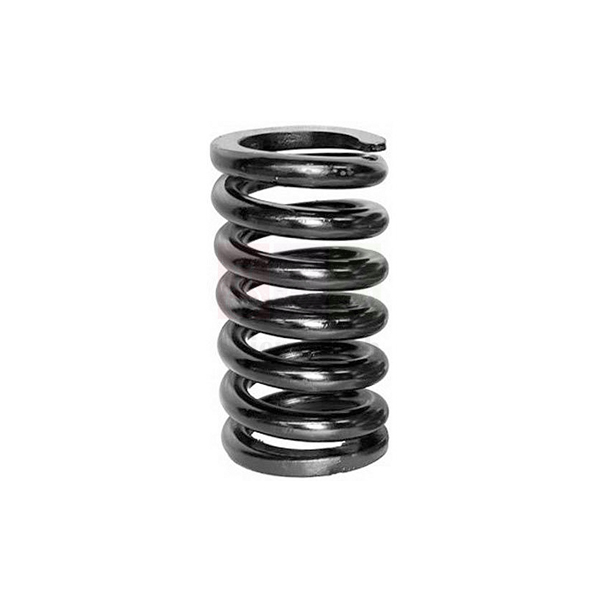
Coil Spring
Coil Spring (Product Code: SLE/ETP/16) is a heavy-duty compression spring test accessory used to find the spring rate of a real suspension-type coil spring on a testing machine, in mechanics and automotive engineering labs. The spring shares its design with those used in vehicle suspensions and is held securely between two metal bosses while the machine compresses it. It is made by Jain Scientific Equipments Pvt Ltd (ScienceLab), an OEM manufacturer, at its own factory in Ambala, India, as part of its mechanics lab equipment in India.
Key Details
| Parameter | Detail |
|---|---|
| Spring | Heavy-duty coil spring of the same design as those used in vehicle suspensions |
| Mounting | Two metal bosses hold the spring securely in the testing machine |
| Loading | Spring compressed by the testing machine |
| Measurement | The testing machine's digital indicator measures the change in spring length (displacement) for a given change in applied force |
| Outcome | Actual spring rate compared with the theoretical value based on the spring dimensions; demonstrates Hooke's Law |
| Product code | SLE/ETP/16 |
| Manufacturer | Jain Scientific Equipments Pvt Ltd (ScienceLab) — OEM |
| Country of origin | India (made in Ambala, Haryana) |
What Is the Coil Spring Test Used For?
Classroom springs are light and forgiving; a suspension spring is not. Testing a heavy-duty spring of vehicle-suspension design shows students how the same Hooke's Law relationship holds for a real engineering component, and how closely the design formula predicts its stiffness. It links strength-of-materials theory to automotive and machine design.
Students measure the wire diameter, mean coil diameter and number of active coils, calculate the theoretical spring rate, then fit the spring between the metal bosses and compress it on the testing machine. Plotting force against displacement from the digital indicator gives the actual rate as the slope of the line. Apply a small seating load first, take readings on both loading and unloading, and stay well within the elastic range.
What to Specify When Ordering
- The testing machine in your laboratory that will compress the spring, so fitting of the metal bosses can be discussed.
- The number of Coil Spring sets needed for your student groups.
- Whether you also want other spring experiments, such as the Disc Spring, in the same order.
OEM Manufacturer
ScienceLab, the trading name of Jain Scientific Equipments Private Limited, is the OEM (original equipment manufacturer) of this Coil Spring experiment. It is produced and put together at the company's own licensed factory at Saha, Ambala, Haryana, then supplied factory-direct to engineering colleges, automotive training centres, dealers and importers. Replacement bosses or extra springs can be requested from the manufacturer itself; just ask us. Visit the ScienceLab profile to learn about the company.
Related Materials Testing and Properties Equipment
Other spring and elasticity experiments for the same course:
- Hook's Law And Spring Rate — a compact frame with masses for introductory spring tests.
- Disc Spring — compares stacked disc springs in series and parallel.
- Electronic Spring Tension Machine — a dedicated machine for routine spring load testing.
- Compression Cage — adapts the Bench Top Tensile Testing Machine for compressive loads.
Find more in the Materials Testing and Properties category.
Frequently Asked Questions
What does the Coil Spring experiment show?
The Coil Spring experiment shows Hooke's Law on a heavy-duty spring. Students compare the actual spring rate, found from force and displacement readings, with the theoretical value calculated from the spring's dimensions.
What kind of spring is used in the Coil Spring experiment?
The Coil Spring experiment uses a heavy-duty spring of the same design as those used in vehicle suspensions, so students test a realistic engineering component rather than a light laboratory spring.
How is the Coil Spring held during testing?
Two metal bosses hold the Coil Spring securely in the testing machine, which compresses it. The machine's digital indicator then measures the change in spring length for each change in applied force.
How is the theoretical spring rate of the Coil Spring calculated?
The theoretical rate of the Coil Spring comes from its dimensions: wire diameter, mean coil diameter and number of active coils, together with the shear modulus of the spring material, using the standard helical spring formula from textbooks.
Who manufactures the Coil Spring experiment?
The Coil Spring experiment is manufactured by Jain Scientific Equipments Pvt Ltd (ScienceLab), the OEM, at its own licensed factory in Ambala, Haryana, India. Orders and spare-part requests are handled by the manufacturer directly.
What details should a Coil Spring enquiry include?
A Coil Spring enquiry should include the product code SLE/ETP/16, the quantity, the testing machine you will use it with and the delivery destination in India or abroad, sent through our contact page or enquiry cart.
Request a Quote
For a Coil Spring quotation from the manufacturer, use the contact page or add it to the enquiry cart. We supply colleges, training institutes, dealers and importers in India and international markets.
Last updated: 24 September 2026
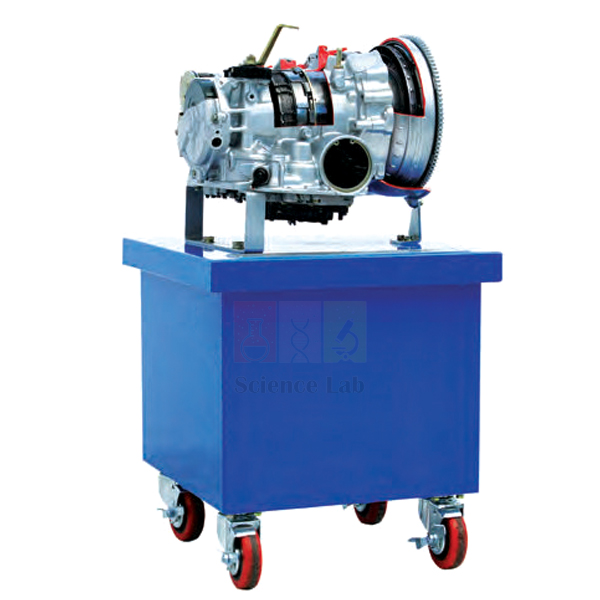
FF Auto Transmission Stand Type
FF Auto Transmission Stand Type (Product Code: SLE/ATE/08) is a sectioned FF automatic transmission and torque converter on a mobile steel stand, used to teach automatic gearbox structure in automobile engineering courses. With 4 forward speeds and 1 reverse, a cut-open torque converter and 4-inch urethane castor wheels, the unit of approximately 60 kg is engineering lab equipment in India that one institute can share between classrooms. It is made by Jain Scientific Equipments Pvt Ltd (ScienceLab), an OEM manufacturer, at its own factory in Ambala, India.
Specifications
| Parameter | Detail |
|---|---|
| Composition | FF automatic transmission, torque converter |
| Gears | 4-speed forward, 1-speed reverse |
| Torque converter | Incised (cut open) for structure education |
| Stand | Steel stand, 4 wheel caster with 4-inch urethane wheels for easy moving |
| Finish | Vehicle paint for painting and coating; each incised section painted a different colour |
| Weight | Approx. 60 kg |
| Size | Approx. 800 × 600 × 1,000 mm |
| Product code | SLE/ATE/08 |
| Manufacturer | Jain Scientific Equipments Pvt Ltd (ScienceLab) — OEM |
| Country of origin | India (made in Ambala, Haryana) |
What Is the FF Automatic Transmission Stand Used For?
The cut-open torque converter is usually the first stop: students identify the impeller driven by the engine, the turbine that drives the gearbox and the stator between them, and learn how this fluid coupling lets the car stand still in gear and multiplies torque when pulling away. The lesson then moves into the gear train, where the colour coding helps separate the parts that give the four forward ratios and reverse.
Because the unit sits on its own steel stand with urethane castors, it can be wheeled from store to classroom without lifting. That mobility suits institutes that share one automatic transmission trainer between several classes or buildings.
OEM Manufacturer
ScienceLab is the brand of Jain Scientific Equipments Private Limited, the OEM (original equipment manufacturer) of the FF Auto Transmission Stand Type. The stand is made and assembled at the company’s own licensed factory at Saha, Ambala, Haryana, India, and reaches engineering colleges, polytechnics, dealers and importers factory-direct rather than through a trader. Replacement castors, other parts and repeat orders can be requested from the manufacturer itself — ask us. See the company profile for more.
Related Automotive Training Equipment
Trainers that build on an automatic transmission lesson:
- FF Auto Transmission 6 Steps — a front-wheel 6-step automatic to set beside this 4-speed unit
- CRDI Diesel Engine Power Train System Automatic Transmission — shows an automatic gearbox working within a complete diesel power train
- Differential Gear — explains how torque leaving the transmission is divided between the wheels
- Clutch Structure Trainer Hydraulics — a friction clutch unit to contrast with the torque converter
Explore the Automotive Training Equipment category for other drive-line trainers.
Frequently Asked Questions
How many gears does the FF Auto Transmission Stand Type have?
The FF Auto Transmission Stand Type has an FF automatic transmission with four forward speeds and one reverse, sectioned so students can trace the parts that produce each ratio alongside the incised torque converter.
What does FF mean on the FF Auto Transmission Stand Type?
FF on the FF Auto Transmission Stand Type refers to the front-engine, front-wheel-drive vehicle layout for which this automatic transmission and torque converter are designed, the arrangement found on many passenger cars.
Can the inside of the torque converter be seen on the FF Auto Transmission Stand Type?
Yes. The torque converter on the FF Auto Transmission Stand Type is incised, so students can see the impeller, turbine and stator and learn how fluid coupling transfers drive before moving on to the gear train.
How easy is the FF Auto Transmission Stand Type to move?
The FF Auto Transmission Stand Type sits on a steel stand with four castors fitted with 4-inch urethane wheels, so the unit of approximately 60 kg can be rolled across a smooth floor between store and classroom rather than carried.
Is the FF Auto Transmission Stand Type motor-driven?
No drive motor is listed for the FF Auto Transmission Stand Type; it is a sectioned structure trainer. If you need a powered demonstration of an automatic gearbox, tell us on the contact page and we will advise on options.
Who manufactures the FF Auto Transmission Stand Type?
The FF Auto Transmission Stand Type is manufactured by Jain Scientific Equipments Private Limited, trading as ScienceLab, as the OEM at its own licensed factory at Saha, Ambala, Haryana, India. Colleges and dealers receive quotations directly from the manufacturer.
What should we include when requesting a quotation for the FF Auto Transmission Stand Type?
A quotation request for the FF Auto Transmission Stand Type should give product code SLE/ATE/08, the number of units, the delivery location, and whether it should be quoted with the 6-step version or other drive-line trainers. Export supply is available.
Request a Quote
Request a price for the FF Auto Transmission Stand Type through our contact page, or add it to the enquiry cart. Quotations come direct from the manufacturer.
Last updated: 24 September 2026
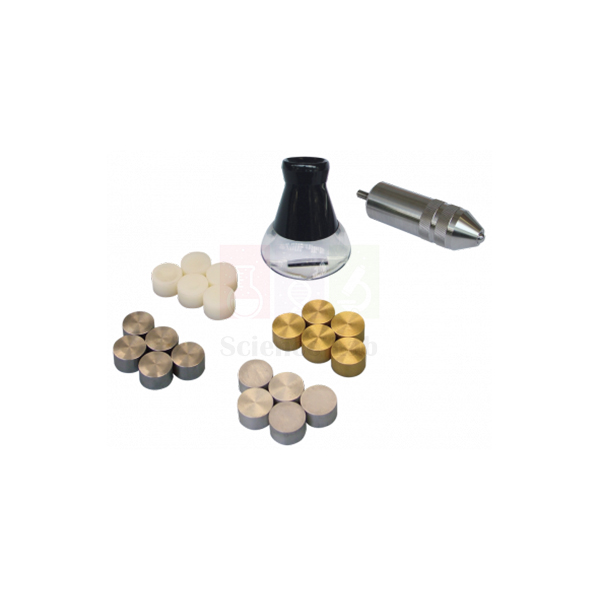
Brinell Indenter
Brinell Indenter (Product Code: SLE/ETP/17) is a ball-type hardness indenter used to find the Brinell hardness number of metal specimens in materials testing and workshop technology laboratories. A hardened steel ball in a holder is pushed onto the specimen to leave a small dent, which students then measure with a hand-held magnifier carrying a graticule scale. It is made by Jain Scientific Equipments Pvt Ltd (ScienceLab), an OEM manufacturer of engineering educational equipment in India, at its own factory in Ambala.
Key Details
| Parameter | Detail |
|---|---|
| Indenter | Hardened steel ball in a holder |
| Action | Pushes down onto a suitable test specimen and creates a small dent |
| Measuring aid | Hand-held magnifier with a measurement scale (graticule) for measuring the dent |
| Result | Brinell hardness number, from the dent dimensions, the indenter ball and the applied force |
| Product code | SLE/ETP/17 |
| Manufacturer | Jain Scientific Equipments Pvt Ltd (ScienceLab) — OEM |
| Country of origin | India (made in Ambala, Haryana) |
What Is the Brinell Indenter Used For?
The Brinell test is one of the oldest and most intuitive ways to compare metals: a hard ball pressed in with a known force leaves a bigger dent in a softer material. Because the ball spreads the load over a relatively large area, the method suits castings, forgings and other metals with a coarse structure, and it gives students a clear, hands-on picture of what a hardness number means.
After the indenter has made its dent, students read the dent diameter through the graticule magnifier, then combine it with the ball size and applied force in the Brinell formula. Measure each dent across two directions at right angles and average them, test on a flat and clean surface, and space the dents well apart and away from the specimen edge.
OEM Manufacturer
The Brinell Indenter is manufactured by Jain Scientific Equipments Private Limited, known by its trading name ScienceLab, which is the OEM (original equipment manufacturer) for this item. Production is at its own licensed factory in Saha, Ambala, Haryana, and polytechnics, engineering colleges, dealers and importers order it directly from there instead of through a trader. If you need a replacement magnifier or indenter later, the manufacturer handles it; ask us. Details are on the company profile page.
Related Materials Testing and Properties Equipment
Items used with or instead of a manual Brinell indenter:
- Compression Cage — an ancillary for the Brinell Hardness Test Set that adapts a tensile machine for compressive loading.
- Brinell Hardness Tester — a dedicated machine for labs with frequent Brinell testing.
- Vickers Hardness Tester — the pyramid-indentation method, for comparison with Brinell results.
- Single Disc Polishing Machine — prepares a smooth surface so dent edges are easy to read.
For other hardness apparatus, visit the Materials Testing and Properties category.
Frequently Asked Questions
How does the Brinell Indenter give a hardness number?
The Brinell Indenter presses a hardened steel ball onto the specimen to make a small dent. Using the dent dimensions, the indenter ball and the force applied, students calculate the Brinell hardness number of the specimen material.
What comes with the Brinell Indenter?
The Brinell Indenter consists of a hardened steel ball in a holder and a hand-held magnifier with a measurement scale, or graticule, for measuring the dent. Please confirm any further items with us when you request a quotation.
How is the dent measured with the Brinell Indenter?
Students measure the dent left by the Brinell Indenter with the hand-held magnifier and its graticule scale. Reading the dent diameter in two directions at right angles and averaging them gives a more reliable hardness value.
What applies the force to the Brinell Indenter?
The Brinell Indenter needs a known force to push the ball into the specimen, normally from a testing machine. Tell us which machine your laboratory uses so the loading arrangement can be discussed before we quote.
Who manufactures the Brinell Indenter?
The Brinell Indenter is manufactured by Jain Scientific Equipments Pvt Ltd (ScienceLab), the OEM, at its own licensed factory in Ambala, Haryana, India. Institutions and dealers buy directly from the manufacturer.
What should I send to get a Brinell Indenter quotation?
For a Brinell Indenter quotation, send the product code SLE/ETP/17, the quantity, the testing machine it will be used with and your delivery destination, through the contact page or the enquiry cart.
Request a Quote
Quotations for the Brinell Indenter come direct from the manufacturer. Send your requirement through the contact page or add it to the enquiry cart; we supply buyers in India and international markets.
Last updated: 24 September 2026
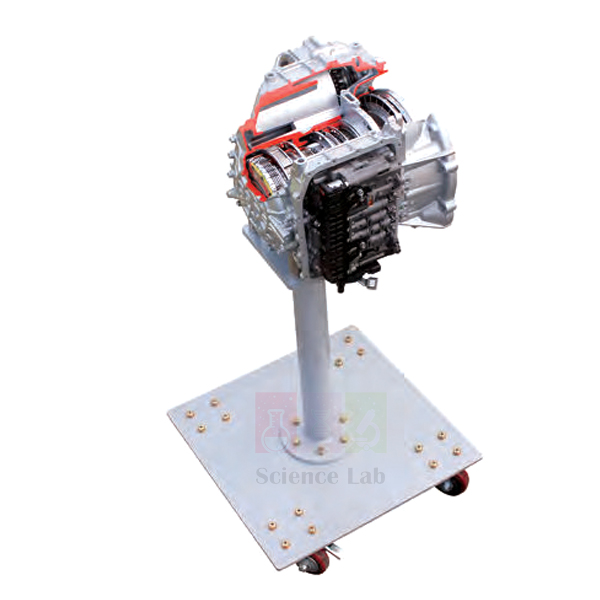
FF Auto Transmission 6 Steps
FF Auto Transmission 6 Steps (Product Code: SLE/ATE/09) is a sectioned training stand used to teach how a front-wheel 6-step automatic transmission and its torque converter transmit engine power, in automobile engineering classrooms and workshops. Its incised torque converter sections are painted in contrasting colours, and the steel stand rolls on 4-inch urethane wheels so it can be turned towards each group. It is made by Jain Scientific Equipments Pvt Ltd (ScienceLab), an OEM manufacturer of engineering lab equipment in India, at its own factory in Ambala.
Specifications
| Parameter | Detail |
|---|---|
| Composition | Front-wheel 6-step automatic transmission, torque converter |
| Torque converter | Incised sections, each painted a different colour for teaching clarity |
| Stand | Steel stand with 4 wheel castors; 4-inch urethane wheels for comfortable moving |
| Finish | Vehicle paint used for painting and coating |
| Weight | Approx. 60 kg |
| Size | Approx. 600 × 600 × 1,100 mm |
| Product code | SLE/ATE/09 |
| Manufacturer | Jain Scientific Equipments Pvt Ltd (ScienceLab) — OEM |
| Country of origin | India (made in Ambala, Haryana) |
What Is the FF 6-Step Automatic Transmission Trainer Used For?
The stand is used to explain what an automatic transmission does and how power travels from the engine, through the torque converter, into a front-wheel-drive gearbox. Instructors usually begin with the colour-coded torque converter, showing how engine torque passes through fluid to the transmission input before any ratio is engaged. They then relate the multi-step gear train to the way a modern automatic keeps the engine in its useful speed range as the vehicle accelerates.
With a footprint of about 600 × 600 mm and urethane castors, the unit moves easily between the lecture room and a crowded workshop aisle. Automobile departments equipping lab equipment for technical institutes can set it beside the stand-type FF automatic so students can compare two transmission designs during power transmission practicals.
OEM Manufacturer
Jain Scientific Equipments Private Limited trades as ScienceLab and is the OEM (original equipment manufacturer) of the FF Auto Transmission 6 Steps. The stand is made and assembled at the company's own licensed factory at Saha, Ambala, Haryana, India, rather than being sourced from a trader.
Engineering colleges, ITIs, dealers and importers buy it factory-direct, and questions about replacement parts or repeat orders go to the manufacturer itself — just ask us. For tender and vendor paperwork, the company's GSTIN is 06AAECJ8618A1ZT and its Legal Entity Identifier is 3358004HRD1JIVXKYX49. Read more on our company profile.
Related Automotive Training Equipment
Useful companions for an automatic transmission module:
- FF Auto Transmission Stand Type — a second FF automatic with incised torque converter for comparison
- Cut Model Of Automatic Transmission System — a cutaway for close study of the internal gear sets
- CRDI Diesel Engine Power Train System Automatic Transmission — shows an automatic gearbox working inside a complete diesel power train
- Differential Gear — completes the power path from transmission output to the wheels
- Clutch Structure Trainer Hydraulic Manual — the manual-transmission clutch that a torque converter replaces
View the rest of the Automotive Training Equipment range.
Frequently Asked Questions
What transmission is fitted to the FF Auto Transmission 6 Steps?
The FF Auto Transmission 6 Steps carries a front-wheel 6-step automatic transmission together with its torque converter. The torque converter is incised, and each cut section is painted a different colour so students can see how fluid coupling links the engine to the gearbox.
Can the gear ratios and drive layout be confirmed before ordering?
Yes. If your syllabus depends on a set number of forward and reverse ratios or a specific drive layout, confirm the configuration of the FF Auto Transmission 6 Steps through our contact page before ordering, and we will check it against the unit being quoted.
How much space does the FF Auto Transmission 6 Steps need?
The FF Auto Transmission 6 Steps measures approximately 600 × 600 × 1,100 mm and weighs about 60 kg. It sits on a steel stand with four castors and 4-inch urethane wheels, so it can be wheeled between the classroom and the workshop on a level floor.
Who manufactures the FF Auto Transmission 6 Steps?
Jain Scientific Equipments Private Limited, trading as ScienceLab, manufactures the FF Auto Transmission 6 Steps as the OEM at its own licensed factory at Saha, Ambala, Haryana, India. Quotations, repeat orders and spare-part questions are handled directly by the manufacturer.
Which registration details can our purchase department use?
For the FF Auto Transmission 6 Steps, the company's GSTIN and Legal Entity Identifier are given in the OEM Manufacturer section above for vendor forms. Any other company documents your purchase department needs can be requested along with the quotation.
Do you supply the FF Auto Transmission 6 Steps outside India?
Yes. The FF Auto Transmission 6 Steps is supplied to engineering colleges, training institutes, dealers and importers across India and in international markets. Share the quantity and delivery destination with your enquiry so the quotation can include packing and freight details.
Request a Quote
Ask for a quotation for the FF Auto Transmission 6 Steps on our contact page, or add it to the enquiry cart with any other transmission trainers you need. Quotations come straight from the manufacturer.
Last updated: 24 September 2026
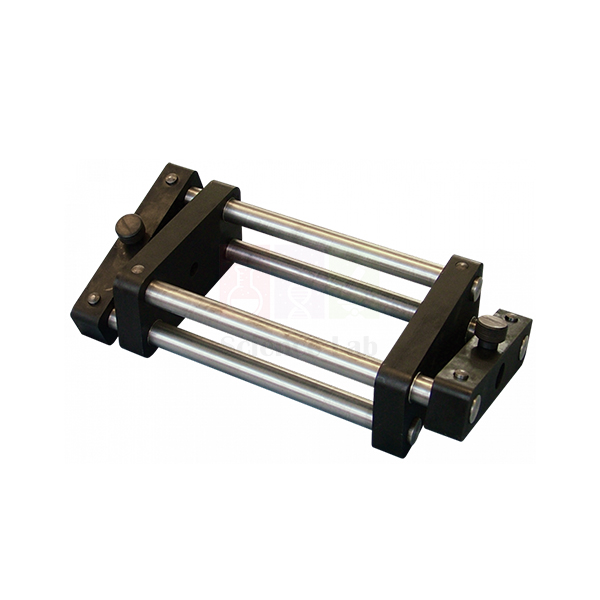
Compression Cage
Compression Cage (Product Code: SLE/ETP/18) is a testing-machine ancillary used to adapt the Bench Top Tensile Testing Machine for experiments that need a compressive load, in materials testing laboratories. It measures 100 mm square by 130 mm high, fits into the machine's tensile test area, and is an essential ancillary to the Brinell Hardness Test Set. It is made by Jain Scientific Equipments Pvt Ltd (ScienceLab), an OEM and technical educational equipment manufacturer, at its own factory in Ambala, India.
Specifications
| Parameter | Detail |
|---|---|
| Size | 100 mm square and 130 mm high |
| Function | Adapts the testing machine for experiments that need a compressive load |
| Fits | Tensile test area of the Bench Top Tensile Testing Machine |
| Used with | Essential ancillary to the Brinell Hardness Test Set |
| Product code | SLE/ETP/18 |
| Manufacturer | Jain Scientific Equipments Pvt Ltd (ScienceLab) — OEM |
| Country of origin | India (made in Ambala, Haryana) |
What Is the Compression Cage Used For?
A tensile machine is built to pull, but many useful experiments need a push. A compression cage solves this by turning the pulling action of the machine into a squeezing action on whatever is placed inside the cage. That lets one bench-top machine cover both tension and compression work, which makes good use of bench space in a teaching lab.
Its main role is Brinell hardness testing, where the indenter must be pressed into a specimen with a known load, but the same principle applies to other compressive-load experiments set up on the machine. Seat the cage squarely in the tensile test area, centre the specimen inside it, and apply load slowly so students can watch the machine's load reading rise.
What to Specify When Ordering
- Whether your laboratory already has the Bench Top Tensile Testing Machine, whose tensile test area the cage fits.
- Whether you also need the Brinell indenter and magnifier for hardness testing.
- The number of cages, usually one per testing machine.
OEM Manufacturer
Jain Scientific Equipments Private Limited, trading as ScienceLab, manufactures the Compression Cage as its OEM (original equipment manufacturer) alongside the Bench Top Tensile Testing Machine it fits. It is made at the company's own licensed factory at Saha, Ambala, Haryana, and supplied factory-direct to colleges, institutes, dealers and importers. Because machine and ancillary come from the same maker, fitting questions go straight to the people who build both. More on the ScienceLab profile.
Related Materials Testing and Properties Equipment
The machine and accessories used with the Compression Cage:
- Bench Top Tensile Testing Machine — the machine whose tensile test area the cage fits.
- Brinell Indenter — hardened steel ball indenter with graticule magnifier for Brinell hardness tests.
- Speciman — long-style tensile specimen for the tension side of the same machine.
- Coil Spring — another compression experiment, measuring the rate of a heavy-duty spring.
All related apparatus is listed under Materials Testing and Properties.
Frequently Asked Questions
What size is the Compression Cage?
The Compression Cage is 100 mm square and 130 mm high. This compact size lets it fit into the tensile test area of the Bench Top Tensile Testing Machine without changing the machine itself.
Which machine does the Compression Cage fit?
The Compression Cage fits into the tensile test area of the Bench Top Tensile Testing Machine. If you have a different testing machine, send us its details and we will discuss whether the cage can be used with it.
Why is the Compression Cage needed for Brinell tests?
The Compression Cage is an essential ancillary to the Brinell Hardness Test Set because a Brinell test needs a compressive load to press the ball into the specimen, while the machine's tensile area on its own only pulls.
How does a Compression Cage work?
A Compression Cage converts the pulling movement of a tensile machine into compression on the item placed inside it. The Compression Cage therefore adds compressive-load experiments to a machine designed for tensile tests.
Who manufactures the Compression Cage?
The Compression Cage is manufactured by Jain Scientific Equipments Pvt Ltd (ScienceLab), the OEM, at its own licensed factory in Ambala, Haryana, India, the same maker as the Bench Top Tensile Testing Machine it fits.
What should a Compression Cage quotation request include?
A Compression Cage quotation request should give the product code SLE/ETP/18, the quantity, whether you have the Bench Top Tensile Testing Machine, and the delivery destination. Send it through our contact page or the enquiry cart.
Request a Quote
Request your Compression Cage quotation directly from the manufacturer through the contact page, or add it to the enquiry cart together with the testing machine. We supply India and international markets.
Last updated: 24 September 2026
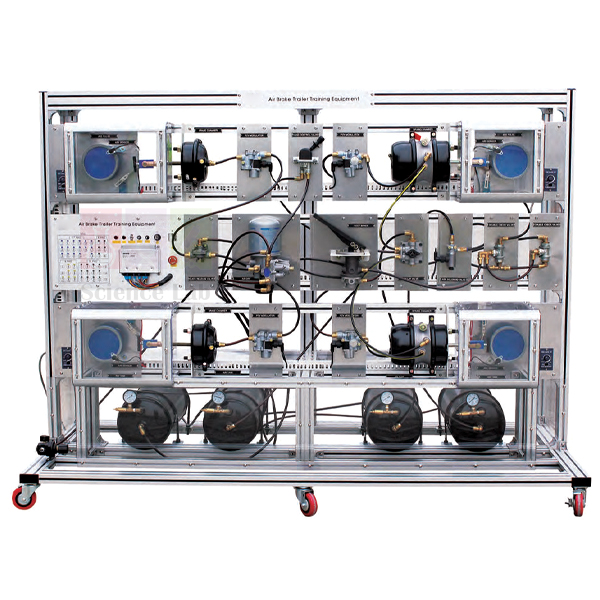
Trailer Air Brake Training Equipment
Trailer Air Brake Training Equipment (Product Code: SLE/ATE/10) is a working heavy-truck air brake and ABS trainer used to teach the operating principle, maintenance and inspection of air brake systems in automotive and heavy-vehicle workshops. Its air tank and brake circuit operate the same as on an actual vehicle, and four speed-controlled 120W motors turn the wheels so ABS behaviour can be watched under rotation. The rig is made by Jain Scientific Equipments Pvt Ltd (ScienceLab), an OEM manufacturer, at its own factory in Ambala, India.
Specifications
| Parameter | Detail |
|---|---|
| Type | Heavy-truck air brake system trainer with ABS, testable with the installed air tank and all air brake parts |
| Driving motors | Single phase 220V, speed control type, 120W — 4 nos |
| Wheel control | Wheel rotation and speed controlled by motor |
| Composition | Air tank, pressure regulator, brake pedal, air pressure gauge, single chamber (2 nos), double chamber (2 nos), ECU, parking brake valve, check valve, ABS pulse ring, PCV modulator, quick release valve, air dryer, double check valve, etc. |
| Frame | Profile stand |
| Control panel | Check terminal, power lamp, fuse holder, key switch, power switch, emergency switch |
| Safety | Rotating parts covered with acrylic covers; 4 transparent safety covers included |
| Weight | Approx. 250 kg |
| Size | Approx. 2,400 × 1,000 × 1,800 mm |
| Product code | SLE/ATE/10 |
| Manufacturer | Jain Scientific Equipments Pvt Ltd (ScienceLab) — OEM |
| Country of origin | India (made in Ambala, Haryana) |
Training contents covered on the rig:
- How to use the foot brake and hand control valve
- ABS waveform test
- Output voltage test
- Completing the brake air line test
- ABS modulator resistance test
What Is the Truck Air Brake and ABS Trainer Used For?
It is used to show trainees how compressed air stops a heavy truck. Instructors usually trace the air path first: from the air dryer and air tank, through the pressure regulator, check valves and quick release valve, to the single and double brake chambers at the wheels. Students then press the brake pedal and operate the parking brake valve while watching the air pressure gauge, so the link between pedal effort, line pressure and chamber movement becomes visible.
The check terminal on the control panel is where the electrical exercises happen: output voltage and ABS modulator resistance are measured there with a multimeter, and the ABS waveform is captured with an oscilloscope. As TVET lab equipment for heavy-vehicle programmes, the rig suits practical assessment, since a trainee can be asked to complete a disconnected brake air line and prove the circuit works. Keep the acrylic covers in place whenever the wheels turn, and use the emergency switch before anyone reaches into the wheel area.
OEM Manufacturer
Jain Scientific Equipments Private Limited, which trades as ScienceLab, is the OEM (original equipment manufacturer) of the Trailer Air Brake Training Equipment. The rig is built and assembled at the company's own licensed factory at Saha, Ambala, Haryana, India, and goes factory-direct to ITIs, polytechnics, engineering colleges, dealers and importers.
Because the manufacturer handles each order itself, questions about replacement valves, covers or a repeat unit can be raised directly with the people who build it — ask us. More about the company is on our company profile.
Related Automotive Training Equipment
Items that support the same air brake and ABS lessons:
- Trailer Type Air Brake System Training Equipment — adds a separate trailer unit for practising the trailer air line connection
- ABS Braking System Training Board Simulator — a board-level introduction to anti-lock braking before work on the full rig
- Digital Multimeter — for the output voltage and modulator resistance tests at the check terminal
- Oscilloscope Dual Trace — to display the ABS sensor waveform during the waveform test
See the complete Automotive Training Equipment range for other vehicle system trainers.
Frequently Asked Questions
Can students see the ABS working on the Trailer Air Brake Training Equipment?
Yes. On the Trailer Air Brake Training Equipment, four single-phase 220V, 120W speed-control motors turn the wheel assemblies, so the ABS pulse ring, ECU and PCV modulator can be observed and tested while the wheels rotate at a controlled speed.
Which tests are included in the training contents?
The Trailer Air Brake Training Equipment covers use of the foot brake and hand control valve, an ABS waveform test, an output voltage test, completing the brake air line test and an ABS modulator resistance test, with electrical checks made at the control panel's check terminal.
How is the air tank charged?
The Trailer Air Brake Training Equipment lists an air tank, air dryer and pressure regulator, but the air supply arrangement is not stated in our product documentation. Please contact us before ordering so we can confirm what your workshop needs to provide.
How much floor space does the trainer need?
Plan for approximately 2,400 × 1,000 × 1,800 mm and about 250 kg for the Trailer Air Brake Training Equipment, plus clear access on every side so students can reach the valves, brake chambers and control panel during practical sessions.
Who manufactures the Trailer Air Brake Training Equipment?
Jain Scientific Equipments Private Limited, trading as ScienceLab, manufactures the Trailer Air Brake Training Equipment as the OEM at its own licensed factory at Saha, Ambala, Haryana, India. Quotations, repeat orders and replacement-part enquiries go straight to the manufacturer.
Is a calibration certificate available for the air pressure gauge?
Calibration-certificate availability for the air pressure gauge on the Trailer Air Brake Training Equipment depends on the order. Please raise it through our contact page when you request a quotation, so the requirement can be discussed before the order is placed.
Can you supply several units for a heavy-vehicle workshop abroad?
Yes. The Trailer Air Brake Training Equipment is supplied to institutions in India and international markets. Share the quantity, delivery location and your local mains supply with the enquiry so the quotation reflects the 220V wheel motors and your site.
Request a Quote
For pricing and delivery details, contact us or add this trainer to your enquiry cart. Your quotation comes directly from the manufacturer.
Last updated: 24 September 2026