- Physics Lab Equipment
- Chemistry Lab Equipment
- Biology Lab Equipment
- Anatomical Lab Equipment
- Learning
- Educational Lab Equipment
- Magnets
- Agriculture
- Astronomy
- Earth Science
- Geography Lab Equipment
- Safety Lab Coat
- Laboratory
- Meteorological
- Electricity & Magnetism
- Heat
- School Lab Equipment
- Lab Glassware
- Science Lab Equipment
- Tvet Lab Equipment
- Robotics Kits Supplier and Manufacturer for Schools India
- Math Lab Equipment Manufacturers and Exporters in Ambala
- STEM Kits Manufacturers and Supplier India
- Engineering Lab Equipment
- Hospital Lab Equipment
- Water, Sanitation & Hygiene Supplies
- Cold Chain, Solar & Communication Equipment
- Nutrition
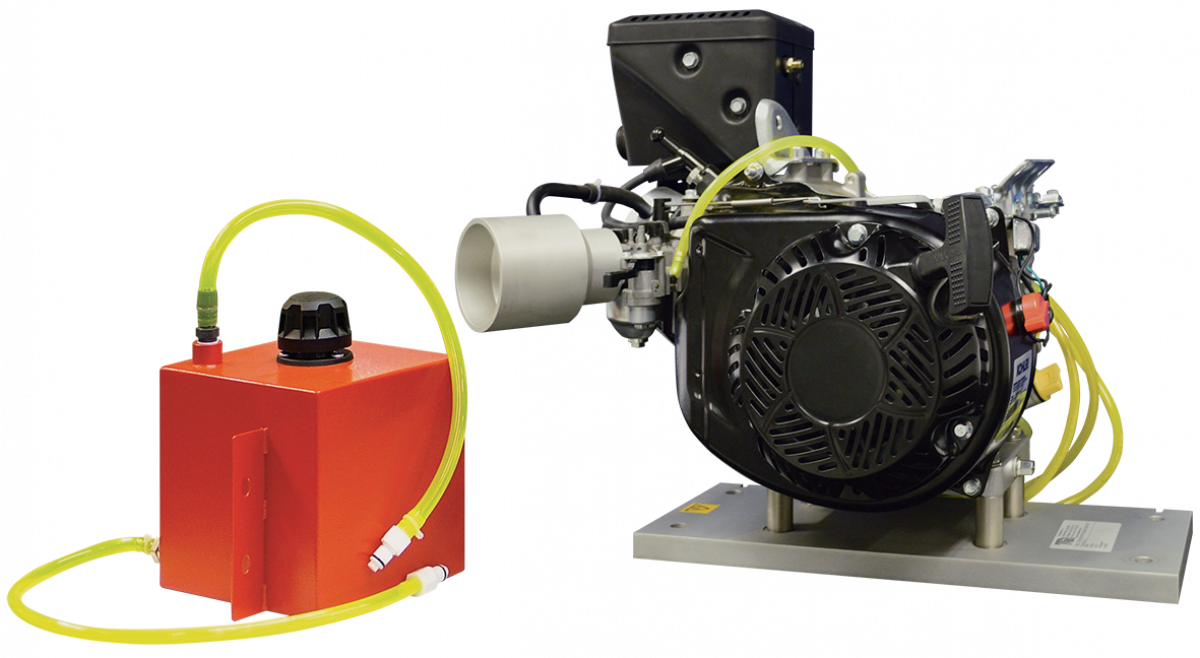
4 Stroke Petrol Engine
4 Stroke Petrol Engine (Product Code: SLE/EE/02) is a spark-ignition engine adapted for education, used for performance testing and demonstrations on a dynamometer test set in engineering laboratories. Colleges building IC engine practicals value that it arrives with an exhaust thermocouple, a half-coupling for the dynamometer and all essential hoses and fittings, on a precision bed plate. It is supplied by Jain Scientific Equipments Pvt Ltd (ScienceLab), Ambala, India, which provides engineering lab equipment in India and international markets.
Key Details
| Parameter | Detail |
|---|---|
| Engine type | Four-stroke petrol engine adapted specially for laboratory testing and demonstrations |
| Included fittings | Exhaust thermocouple; half-coupling to link to the test set dynamometer; all essential hoses and fittings |
| Mounting | Sturdy precision bed plate with dowels and slots that align and locate it accurately with the dynamometer test set |
| Engine changeover | Bed plate location minimises the time spent replacing one engine with another |
| Fuel connections | Couplings for quick connection and disconnection with minimum loss or spillage of fuel |
| Fuel tank | Removable for filling or for storage in a fuel locker; removal also prevents unauthorised use |
| Product code | SLE/EE/02 |
| Supplied by | Jain Scientific Equipments Pvt Ltd (ScienceLab), Ambala, India |
What Is the 4 Stroke Petrol Engine Used For?
On a dynamometer test set the engine is run across a range of speeds and loads so that students can plot torque, brake power, fuel consumption and efficiency for a spark-ignition engine. The exhaust thermocouple adds exhaust temperature to each set of readings, which supports heat-balance work when combined with fuel-flow and exhaust-heat measurements.
Because the bed plate is located by dowels and slots, a laboratory can exchange this engine for another one built for the same test set with little set-up time and compare petrol and diesel behaviour in one course. For engineering educational equipments in India that will be used by many batches of students, the removable tank is a practical safety feature: take it off after class and keep it in a fuel locker so the engine cannot be run unsupervised.
What to Specify When Ordering
- The dynamometer test set the engine will mount on
- Whether you need the Manual Volumetric Fuel Gauge and Exhaust Gas Calori meter for full heat-balance tests
- The engine make, model and rating offered – these are confirmed in the quotation
- Number of engines required
Supplier
ScienceLab is the trading name of Jain Scientific Equipments Private Limited, based in Ambala, Haryana. The company supplies this education-adapted petrol engine to engineering colleges, polytechnics, skill-training centres, dealers and importers, and can include the test-set accessories that go with it on the same quotation.
Ask us for the make and rating of the engine offered, and for any spares you may need later. The company's background and registrations are summarised on our company profile.
Related Automotive Training Equipment
These items complete a petrol engine practical, from understanding the engine to measuring its performance:
- Manual Volumetric Fuel Gauge — times fuel use for consumption and efficiency results
- Exhaust Gas Calori meter — measures heat carried away in the exhaust gases
- 4 Stroke Diesel Engine — companion engine for a diesel comparison on the same test set
- Cut Section Model Of Four Stroke Petrol Engine — shows the internal parts and the four-stroke cycle before live testing
- Automotive Engine Fault Diagnosis Simulator Auto Fault — for moving from performance testing to fault-finding practice
More engine and vehicle-systems trainers are listed under Automotive Training Equipment.
Frequently Asked Questions
What is included with the 4 Stroke Petrol Engine?
The 4 Stroke Petrol Engine includes an exhaust thermocouple, a half-coupling to link it to the test set dynamometer, and all essential hoses and fittings, mounted on a precision bed plate. The dynamometer test set is a separate item, so confirm your requirement for it when you enquire.
Why is the fuel tank of the 4 Stroke Petrol Engine removable?
The fuel tank of the 4 Stroke Petrol Engine can be removed for filling or for storage in a fuel locker when the engine is not in use. Taking the tank away also prevents unauthorised use, which helps laboratories manage safety between supervised sessions.
How is the 4 Stroke Petrol Engine changed over on the test set?
The 4 Stroke Petrol Engine sits on a sturdy precision bed plate whose dowels and slots align and locate it accurately with the dynamometer test set. This minimises the time spent replacing one engine with another, and its couplings disconnect quickly with minimum fuel spillage.
Can the 4 Stroke Petrol Engine be used for exhaust temperature measurements?
Yes. The 4 Stroke Petrol Engine includes an exhaust thermocouple, so exhaust temperature can be recorded during each test. Paired with an exhaust gas calorimeter and a fuel gauge, it supports heat-balance experiments that show where the energy in the fuel goes.
Who supplies the 4 Stroke Petrol Engine?
The 4 Stroke Petrol Engine is supplied by Jain Scientific Equipments Pvt Ltd (ScienceLab), Ambala, Haryana, India. The engine make, model and rating offered are confirmed at the time of quotation, so ask us for these details before placing an order.
What should I send to get a quotation for the 4 Stroke Petrol Engine?
For a quotation on the 4 Stroke Petrol Engine, send the quantity, the test set it will run on, accessories needed such as a fuel gauge or exhaust calorimeter, and the delivery location. We supply institutions in India and international markets.
Request a Quote
Send your requirement for the 4 Stroke Petrol Engine through our contact page, or add it to the enquiry cart with any test-set accessories, and we will reply with availability and a detailed quotation.
Last updated: 24 September 2026
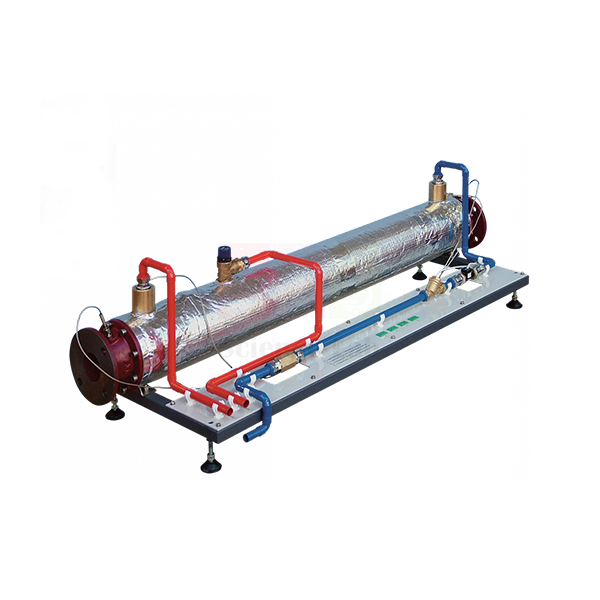
Exhaust Gas Calori meter
Exhaust Gas Calori meter (Product Code: SLE/EE/03) is a gas-to-water heat exchanger used to measure the heat carried away in engine exhaust gases during IC engine tests in engineering laboratories. Exhaust flows through its multi-tube bundle inside a cooling-water jacket, and thermocouples with a four-channel digital display give the temperatures and flow needed for an engine heat balance. It is made by Jain Scientific Equipments Pvt Ltd (ScienceLab), an OEM and technical educational equipment manufacturer, at its own factory in Ambala, India.
Specifications
| Parameter | Detail |
|---|---|
| Heat exchanger | Gas-to-water shell and multi-tube heat exchanger on a sturdy base plate |
| Gas path | Exhaust gases from the test engine on the test set flow through the tubes |
| Cooling water | A jacket of constantly flowing cooling water surrounds the tubes |
| Flow measurement | Turbine flow meter measuring the cooling-water flow rate |
| Water flow control | Control valve; hand-operated valve mounted on the control console of the test set |
| Temperature sensing | Thermocouples measuring gas and water temperatures at inlet and outlet |
| Display | Digital four-channel temperature and flow display unit, mounted on the instrumentation rail of the test set console frame |
| Safety | Pressure-relief valve in case insufficient cooling water is flowing |
| Product code | SLE/EE/03 |
| Manufacturer | Jain Scientific Equipments Pvt Ltd (ScienceLab) — OEM |
| Country of origin | India (made in Ambala, Haryana) |
What Is the Exhaust Gas Calorimeter Used For?
In an engine heat-balance experiment, the energy in the fuel is divided between brake power, heat to the engine cooling water, heat carried out in the exhaust and other losses. This calorimeter quantifies the exhaust share: the heat picked up by the cooling water equals its mass flow rate multiplied by its specific heat and temperature rise, while the fall in gas temperature across the exchanger shows how much exhaust energy was recovered.
Establish a steady cooling-water flow with the console valve before the engine is started, and never pass exhaust through the exchanger without water – the pressure-relief valve is a safeguard, not a control. Take readings once all four channels have settled. For colleges setting up a calorimeter lab in India around a single engine test set, this unit adds the thermal measurement that completes the practical.
What to Specify When Ordering
- The engine test set and console it will be fitted to (display on the instrumentation rail, valve on the control console)
- The engines to be tested, such as the 4 Stroke Petrol Engine or 4 Stroke Diesel Engine
- Whether a Manual Volumetric Fuel Gauge is also needed for complete heat-balance data
- The cooling-water supply available in your laboratory, so we can advise on connections
OEM Manufacturer
This calorimeter is an original product of ScienceLab, the trading name of Jain Scientific Equipments Private Limited (CIN U29309HR2020PTC087597). As the OEM, the company manufactures it at its licensed factory at 449, HSIIDC Industrial Area, Saha, Ambala (Factory Licence AMB-ONLINE-CHD-J-414).
Engineering colleges, polytechnics, dealers and importers buy it factory-direct, and requests for replacement thermocouples, valves or display units go to the same manufacturer – ask us about availability. The company profile gives more background.
Related Automotive Training Equipment
A complete engine heat-balance practical usually combines the calorimeter with these items:
- Manual Volumetric Fuel Gauge — measures fuel input, the other side of the heat balance
- 4 Stroke Petrol Engine — petrol test engine whose exhaust the calorimeter can analyse
- 4 Stroke Diesel Engine — diesel test engine for comparing exhaust heat losses
- Exhaust Gas Calorimeter — a separately listed exhaust calorimeter in the same range – compare both before ordering
- Shell and Tube Heat Exchanger — a heat-transfer trainer for studying the exchanger principle itself
See all engine-testing and vehicle trainers in Automotive Training Equipment.
Frequently Asked Questions
How does the Exhaust Gas Calori meter measure exhaust heat?
The Exhaust Gas Calori meter passes engine exhaust through tubes surrounded by a jacket of flowing cooling water. Heat content is assessed from the cooling-water flow rate, measured by a turbine flow meter, and the water and gas temperatures recorded by thermocouples at inlet and outlet.
What instrumentation comes with the Exhaust Gas Calori meter?
The Exhaust Gas Calori meter includes thermocouples at the gas and water inlets and outlets, a turbine flow meter and a digital four-channel temperature and flow display unit. The display mounts on the instrumentation rail of the test set console frame for easy monitoring.
Is the Exhaust Gas Calori meter protected if cooling water fails?
Yes, the Exhaust Gas Calori meter has a pressure-relief valve in case insufficient cooling water is flowing. Students should still set and check the water flow with the hand-operated console valve before running the engine, because the relief valve is a safeguard rather than a substitute.
Which engines can be tested with the Exhaust Gas Calori meter?
The Exhaust Gas Calori meter analyses exhaust gases from the test engine mounted on the test set, so it is used with engines that set accepts, such as a four-stroke petrol or diesel engine. Share your engine details with us to confirm the connection arrangement.
Who manufactures the Exhaust Gas Calori meter?
The Exhaust Gas Calori meter is manufactured by Jain Scientific Equipments Pvt Ltd (ScienceLab), the OEM, at its licensed factory in Saha, Ambala, Haryana, India. Institutions and dealers buy it factory-direct, and repeat orders or spare-part requests go straight to the manufacturer.
Can a calibration certificate be supplied with the Exhaust Gas Calori meter?
Calibration certificate availability for the thermocouples and flow meter of the Exhaust Gas Calori meter should be discussed with us before ordering. Mention the requirement in your enquiry so the quotation states exactly what documentation will accompany the unit.
What information do you need to quote the Exhaust Gas Calori meter?
To quote the Exhaust Gas Calori meter we need the quantity, the engine test set and engines it will serve, companion items such as a fuel gauge, and the delivery destination. Quotations are prepared for institutions in India and international markets.
Request a Quote
For a quotation on the Exhaust Gas Calori meter, write to us via the contact page or place it in the enquiry cart. You deal directly with the manufacturer, whether the unit is for one laboratory or a multi-campus order.
Last updated: 24 September 2026
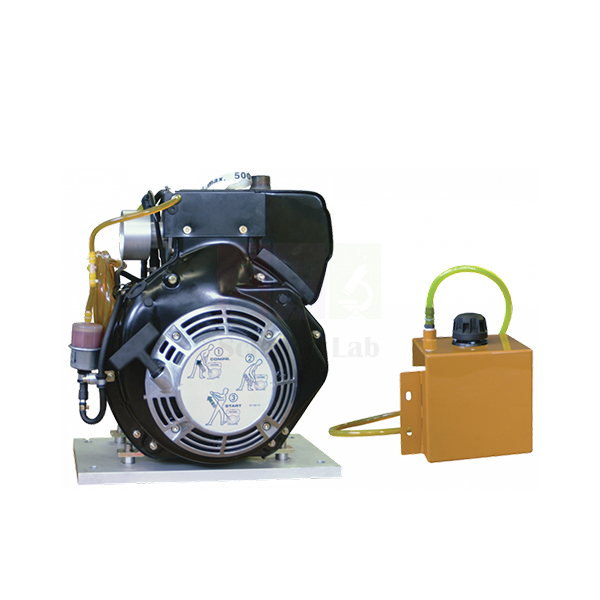
4 Stroke Diesel Engine
4 Stroke Diesel Engine (Product Code: SLE/EE/04) is a compression-ignition test engine used to study diesel performance and combustion on a dynamometer test set in engineering laboratories. Its modified cylinder head and crank accept a cylinder head pressure transducer and crank angle encoder, so an engine cycle analyser can extend the experiments. It is supplied by Jain Scientific Equipments Pvt Ltd (ScienceLab), Ambala, India, to colleges sourcing lab equipments for technical institutes.
Key Details
| Parameter | Detail |
|---|---|
| Engine type | Four-stroke diesel engine for laboratory testing |
| Modifications | Modified cylinder head and crank |
| Instrumentation provision | Allows use with the Cylinder Head Pressure Transducer and the Crank Angle Encoder |
| Extended experiments | Transducer and encoder can connect to the Engine Cycle Analyser |
| Mounting | Sturdy precision bed plate with dowels and slots that align and locate it accurately with the dynamometer test set |
| Engine changeover | Bed plate location minimises the time spent replacing one engine with another |
| Product code | SLE/EE/04 |
| Supplied by | Jain Scientific Equipments Pvt Ltd (ScienceLab), Ambala, India |
What Is the 4 Stroke Diesel Engine Used For?
Mounted on the dynamometer test set, the engine lets students measure torque, speed and fuel consumption for a compression-ignition engine and set the results beside those of a petrol engine. The modified head and crank take the work further: with a pressure transducer in the cylinder head and an encoder on the crank, a cycle analyser can build pressure–crank-angle and pressure–volume diagrams, from which indicated power, ignition delay and peak cylinder pressure are studied.
Plan the course in two stages – performance tests first, then combustion analysis once the transducer and encoder are fitted. Mechanical and automobile departments building engineering lab equipment India-wide often run this engine and a petrol engine on one test set, using the located bed plate to change between them.
What to Specify When Ordering
- The dynamometer test set the engine will mount on
- Whether the Cylinder Head Pressure Transducer, Crank Angle Encoder and Engine Cycle Analyser should be quoted with it
- The engine make, model and rating offered – confirmed in the quotation
- Companion measuring items such as a fuel gauge and exhaust gas calorimeter
Supplier
Jain Scientific Equipments Private Limited trades as ScienceLab and supplies this diesel test engine from Ambala, Haryana, to universities, polytechnics, vocational centres, dealers and importers.
When you enquire, we confirm the engine specification offered and which combustion-analysis accessories can be quoted alongside it, so the purchase matches your experiment plan. You can read about the company on our company profile.
Related Automotive Training Equipment
Pair the diesel engine with these items to cover diesel theory, fuel systems and performance measurement:
- 4 Stroke Petrol Engine — petrol counterpart for side-by-side comparison on the same test set
- Section Model Of Four-Stroke Diesel Engine — sectioned model to explain the internals before running tests
- Diesel Fuel Injection System Inline Pump — trainer covering the diesel fuel-injection side
- Manual Volumetric Fuel Gauge — measures diesel consumption during load tests
- Exhaust Gas Calori meter — quantifies exhaust heat loss for a heat balance
Explore further engine, transmission and diagnosis trainers in Automotive Training Equipment.
Frequently Asked Questions
What makes the 4 Stroke Diesel Engine suitable for combustion analysis?
The 4 Stroke Diesel Engine has a modified cylinder head and crank that allow use with a Cylinder Head Pressure Transducer and a Crank Angle Encoder. Connected to an Engine Cycle Analyser, these extend the experiments beyond basic performance testing into in-cylinder pressure studies.
Are the pressure transducer and crank angle encoder included with the 4 Stroke Diesel Engine?
The listing for the 4 Stroke Diesel Engine describes modifications that allow a pressure transducer and crank angle encoder to be used, but does not state that they are included. Ask us to confirm whether they, and the Engine Cycle Analyser, can be quoted with the engine.
How does the 4 Stroke Diesel Engine mount on the test set?
The 4 Stroke Diesel Engine is mounted on a sturdy precision bed plate with dowels and slots that align and locate it accurately with the dynamometer test set. This keeps the time needed to replace one engine with another to a minimum during practical sessions.
Can the 4 Stroke Diesel Engine be compared with a petrol engine on the same rig?
Yes, the 4 Stroke Diesel Engine locates on the dynamometer test set through its bed plate, so it can be exchanged with another engine built for that set, such as a four-stroke petrol engine. Confirm compatibility with your existing test set when you enquire.
Who supplies the 4 Stroke Diesel Engine?
Jain Scientific Equipments Pvt Ltd (ScienceLab) of Ambala, Haryana, India supplies the 4 Stroke Diesel Engine to engineering institutions. Because this page does not name the base engine, request its make, model and power rating in writing with your quotation.
What information helps us quote the 4 Stroke Diesel Engine?
To quote the 4 Stroke Diesel Engine accurately, we need the number of engines, details of the dynamometer test set you have or plan to buy, whether combustion-analysis accessories are required, and the city or port of delivery.
Request a Quote
Request a quotation for the 4 Stroke Diesel Engine through our contact page, or collect it with related items in the enquiry cart and submit them together for one consolidated reply.
Last updated: 24 September 2026
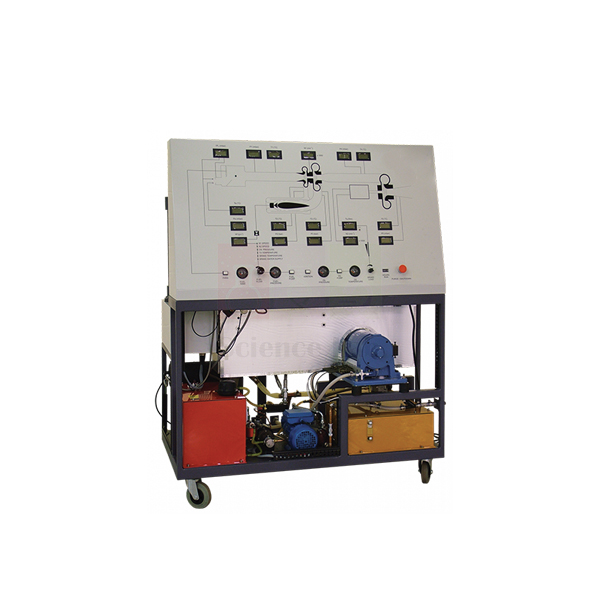
Two Shaft Gas Turbine
Two Shaft Gas Turbine (Product Code: SLE/EE/05) is a self-contained, fully instrumented educational gas turbine used to demonstrate and test the gas turbine cycle in engineering laboratories. Its steel frame carries a gas generator, a separate power turbine, combustion chamber, oil and fuel tanks, pumps and guards, run from a labelled control panel with a mimic diagram. It is supplied by Jain Scientific Equipments Pvt Ltd (ScienceLab), Ambala, India, as part of its range of TVET lab equipment.
Key Details
| Parameter | Detail |
|---|---|
| Type | Self-contained, fully instrumented educational two-shaft gas turbine |
| Frame | Steel frame holding the gas generator, power turbine, combustion chamber, oil and fuel tanks, pumps, ancillaries and guards |
| Air path | Calibrated nozzle and air box, then compressor, then combustion chamber |
| Fuel system | Pump transfers fuel from the fuel tank to spray through a special nozzle into the combustion chamber |
| Ignition | High-energy spark ignites the air and fuel mixture, which flows to the gas generator turbine |
| Combustion chamber | Designed for good combustion, low pressure loss and good flame stability over a wide range of conditions |
| Speed control | Fuel flow control valve on the instrumentation and control panel regulates turbine speed; the design reduces the possibility of overspeed |
| Control panel | Clearly labelled, with schematic mimic diagram, instrument displays, controls and warning lights |
| Product code | SLE/EE/05 |
| Supplied by | Jain Scientific Equipments Pvt Ltd (ScienceLab), Ambala, India |
What Is the Two Shaft Gas Turbine Used For?
The trainer brings the Brayton (Joule) cycle into the laboratory. Students follow the air from the calibrated nozzle, which allows the air flow to be determined, through compression, combustion and expansion, and see how a two-shaft layout divides the work: the gas generator turbine drives the compressor, while the free power turbine on its own shaft delivers the useful output.
Typical sessions cover the start-up and shutdown sequence, the effect of fuel flow on speed, and recording the panel readings at several fuel settings to study how output and efficiency change. Always follow the start-up order shown on the mimic panel and keep the guards in place. Among engineering educational equipments in India, it lets one laboratory introduce the turbine principles behind aircraft, marine and power-generation engines.
Supplier
ScienceLab, the trading name of Jain Scientific Equipments Private Limited of Ambala, Haryana, India, supplies this gas turbine trainer to engineering colleges, research institutions, dealers and importers.
Questions about operation, spares or repeat orders can be sent directly to the company – ask us for details. Find out more on our company profile.
Related Automotive Training Equipment
These trainers extend a gas turbine course into compression, jet propulsion and engine comparison:
- Turbojet Engine Test Bench — a jet-propulsion engine bench for comparing gas turbine layouts
- Rotary Air Compressor Test Bench — studies the compression stage on its own
- Four Stroke Four Cylinder Petrol Engine Test Bench — reciprocating engine for comparing turbine and piston-engine performance
- Temperature Measurement and Calibration Apparatus — teaches the temperature-measurement methods used in engine testing
The trainer is listed in Automotive Training Equipment; related heat-engine and heat-transfer trainers are in Thermodynamics & Heat Transfer Lab Equipment.
Frequently Asked Questions
What are the main parts of the Two Shaft Gas Turbine?
The Two Shaft Gas Turbine has a steel frame carrying a gas generator, a power turbine, a combustion chamber, oil and fuel tanks, pumps, ancillaries and guards. A clearly labelled instrumentation and control panel with a mimic diagram holds the displays, controls and warning lights.
How is the speed of the Two Shaft Gas Turbine controlled?
The speed of the Two Shaft Gas Turbine is regulated by a fuel flow control valve on the instrumentation and control panel. The design reduces the possibility of overspeed, and warning lights on the panel help students and staff monitor operation.
How is the fuel ignited in the Two Shaft Gas Turbine?
In the Two Shaft Gas Turbine, a pump transfers fuel from the tank to spray through a special nozzle into the combustion chamber, where a high-energy spark ignites the air and fuel mixture. The hot gases then flow on to the gas generator turbine.
Which fuel does the Two Shaft Gas Turbine use?
The fuel type for the Two Shaft Gas Turbine is not stated on this page. Ask us through the contact page, together with details of the services available in your laboratory, so that the quotation confirms the fuel and the installation arrangements.
Who supplies the Two Shaft Gas Turbine?
Jain Scientific Equipments Pvt Ltd (ScienceLab), Ambala, Haryana, India, supplies the Two Shaft Gas Turbine to engineering colleges, research institutions, dealers and importers. Quotations, repeat orders and spares enquiries for the trainer are handled directly by the company.
How do I request a quotation for the Two Shaft Gas Turbine?
To request a quotation for the Two Shaft Gas Turbine, state the quantity, the institution and delivery destination, the experiments you plan to run, and any documentation you need, such as a calibration certificate, whose availability should be discussed with us.
Request a Quote
To receive a quotation for the Two Shaft Gas Turbine, contact us through the contact page or add it to your enquiry cart. We quote directly to institutions in India and international markets.
Last updated: 24 September 2026
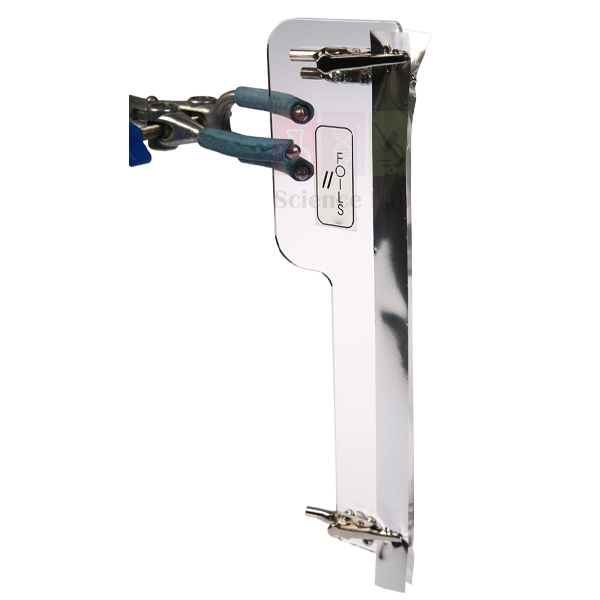
Aluminium Foil Support Bar
The Aluminium Foil Support Bar (Product Code: SLE/EAM/26) is a clear acrylic bar fitted with crocodile clips that holds strips of aluminium foil side by side, giving a neat and effective way to show that current-carrying conductors attract or repel one another. Teachers use it to turn a fiddly bench improvisation into a tidy, repeatable demonstration. It is made by Jain Scientific Equipments Pvt Ltd (ScienceLab), Ambala, alongside the rest of its electricity and magnetism range of physics lab equipment in India.
Key Details
| Parameter | Detail |
|---|---|
| Type | Support bar for foil strips |
| Material | Clear acrylic |
| Fittings | Crocodile clips for gripping and connecting the foil strips |
| Purpose | Demonstrating the attraction and repulsion of current-carrying conductors |
| Suitable for | Teacher demonstrations in secondary and senior secondary physics |
Typical Use
Two strips of aluminium foil are hung from the crocodile clips so they dangle parallel and close together. When they are wired so that current flows the same way in both strips, the magnetic field of each pulls the other towards it and the strips swing together; rewire them so the currents flow in opposite directions and they spring apart. The effect is the basis of the old definition of the ampere and makes a visual follow-up to the force on a single conductor in a magnet’s field.
The clear acrylic lets the class see the strips from any side, and the crocodile clips make it quick to swap in fresh foil when a strip tears. Use short pulses of current from a low-voltage supply rather than continuous current, as thin foil warms quickly, and keep the strips light and narrow so the movement is easy to spot. It is a simple item that earns its place in any set of educational physics lab equipments.
Manufacturer
The support bar is a ScienceLab product, the trading name of Jain Scientific Equipments Private Limited, which makes teaching apparatus at Ambala in Haryana for institutions in India and international markets. Read about the company on our company profile page.
Related Electricity and Magnetism Equipment
Items used with the bar to set up the parallel-conductor demonstration:
- Power Supply, Stepped — a low-voltage AC/DC bench supply for passing current through the strips
- Crocodile Clips & Leads — connect the supply to the foil strips
- Digital Ammeter — shows how much current is flowing during each pulse
- Force on a Conductor Apparatus. — the companion demonstration of force on a single conductor in a magnetic field
- Retort Stand — a convenient support if you prefer to raise the bar above the bench
More demonstrations are listed in our Electricity and Magnetism category.
Frequently Asked Questions
Is aluminium foil included?
The listing describes the acrylic bar and its crocodile clips. Ordinary kitchen-grade aluminium foil cut into strips works well; please contact us if you want foil supplied with your order.
Why is the bar made of clear acrylic?
Acrylic is an electrical insulator, so it holds the strips apart without shorting them, and its transparency keeps the view of the strips clear for the class.
What power source should I use?
A low-voltage laboratory supply is the usual choice. Apply current in brief pulses so the foil does not overheat.
How do I switch between attraction and repulsion?
Change the wiring so that current flows in the same direction through both strips for attraction, or in opposite directions for repulsion.
How should it be cleaned?
Wipe the acrylic with a soft damp cloth and mild soap; avoid solvents, which can craze acrylic surfaces.
Do you take orders from distributors?
Yes. We supply schools, colleges and distributors, and bulk quantities are quoted on request.
Request a Quote
Ask for pricing on the Aluminium Foil Support Bar through our contact page, or add it to the enquiry cart together with a power supply and leads.
Last updated: 24 September 2026
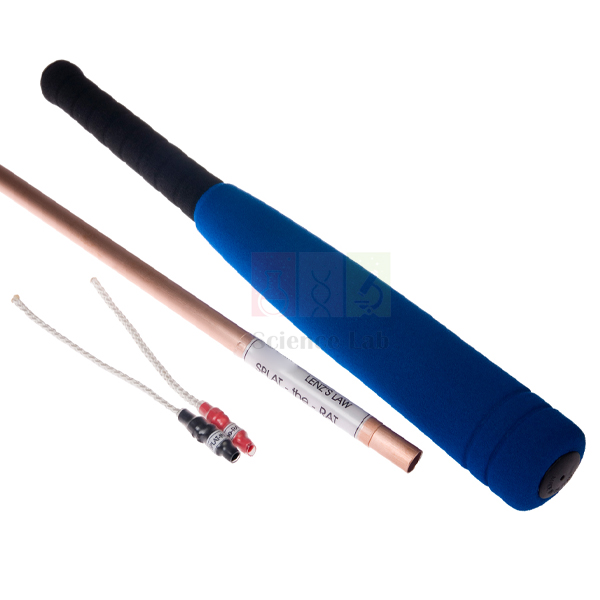
Splat The Rat
Splat The Rat (Product Code: SLE/EAM/27) turns Lenz’s Law into a classroom game based on the traditional village fete challenge. Two ‘rats’ are supplied: one contains strong neodymium magnets and the other is just a metal weight; dropped into a 1m copper tube, the magnetised rat takes about 5 seconds to emerge, so pupils waiting with the foam-covered rounders bat keep swinging too early. Produced by Jain Scientific Equipments Pvt Ltd (ScienceLab), Ambala, it is one of the more memorable STEM science kits in India for teaching induced currents.
Specifications
| Parameter | Detail |
|---|---|
| Tube | 1m copper tube |
| ‘Rats’ supplied | Two: one containing strong neodymium magnets, one containing just a metal weight |
| Bat | Foam-covered rounders bat |
| Magnetised rat exit time | About 5 seconds to exit the tube |
| Weight | 0.3kg |
| Dimensions | 1000 x 30 x 30mm |
| Demonstrates | Lenz’s Law, induced currents and magnetic fields |
Typical Use
Hold the copper tube upright and drop the plain metal-weight rat first: it falls straight through and the pupil with the bat has to be quick. Then drop the magnetised rat. As it falls, its moving field induces eddy currents in the copper, and by Lenz’s Law those currents create a field that opposes the motion, so the rat drifts down slowly and the challenge becomes a test of patience rather than reflexes. The contrast between the two rats does the explaining for you.
Standard eddy current tubes show the same principle with a magnet and an unmagnetised weight, but the game format gets the whole class involved and makes the result hard to forget. Follow up by asking students why a copper tube, which is not magnetic, can slow a magnet at all, and what would change with a plastic or slotted tube. Keep the neodymium rat away from electronics and bank cards, and never let pupils swing the bat near faces.
Manufacturer
Splat The Rat is manufactured by Jain Scientific Equipments Private Limited, known to customers as ScienceLab, at Ambala in Haryana. It holds Udyam registration UDYAM-HR-01-0003714 as an MSME with manufacturing as its major activity, and ships overseas orders under DGFT Importer-Exporter Code AAECJ8618A. Visit our company profile for more.
Related Electricity and Magnetism Equipment
Apparatus that extends the Lenz’s Law lesson:
- Eddy Current Unit — the conventional laboratory version of the falling-magnet experiment
- Stopwatch, Digital — times the fall of each rat for a quantitative comparison
- Faraday’s Law Apparatus — links the braking effect to induced EMF in a coil
- Neodymium Magnets — strong magnets for further eddy current investigations
- Neodymium Wand — handled neodymium magnets for safe pupil exploration of strong fields
See our full Electricity and Magnetism range for more induction demonstrations.
Frequently Asked Questions
What comes in the kit?
A 1m copper tube, two ‘rats’ (one containing strong neodymium magnets and one containing just a metal weight) and a foam-covered rounders bat.
How long does the magnetised rat take to come out?
About 5 seconds, compared with an almost immediate drop for the plain metal-weight rat.
Why include a non-magnetic rat?
It acts as the control. Seeing the weighted rat fall straight through proves that the slow fall is caused by magnetism and induced currents, not friction in the tube.
Is it safe for younger pupils?
The bat is foam-covered for the game, but the neodymium rat is strongly magnetic, so an adult should supervise and keep it away from electronic devices, cards and pacemaker users.
How big and heavy is it?
It measures 1000 x 30 x 30mm and weighs 0.3kg, so it stores easily in a cupboard.
Can you supply several kits for a school group or export order?
Yes. We supply schools, science centres and distributors in India and international markets; share quantities through our contact page.
Request a Quote
Add Splat The Rat to the enquiry cart or send your requirement via the contact page, and we will return a quotation with dispatch details.
Last updated: 24 September 2026
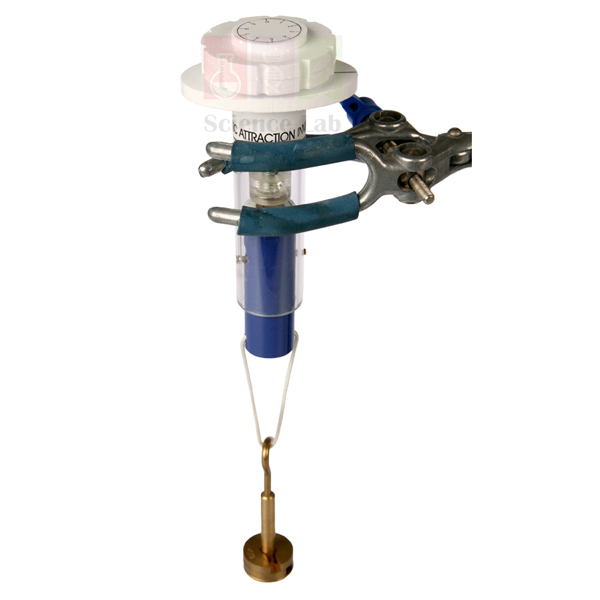
Magnetic Attraction
Magnetic Attraction (Product Code: SLE/EAM/28) is a self-contained apparatus for investigating how the attractive force between a pair of high strength neodymium magnets changes with the distance between them. A calibrated dial sets the separation, and the pull is measured by attaching standard slotted masses until the forces balance. Made by Jain Scientific Equipments Pvt Ltd (ScienceLab), Ambala, it is a practical addition to physics lab instruments in India for magnetism and forces topics.
Specifications
| Parameter | Detail |
|---|---|
| Magnets | Pair of high strength neodymium magnets |
| Separation control | Calibrated dial |
| Force measurement | By attaching standard slotted masses |
| Investigation | Variation of attractive force with separation distance |
| Teaching links | Magnetic investigations and balanced forces |
| Format | Self-contained system |
Typical Use
Students set a separation on the calibrated dial, then add slotted masses until their weight just balances the magnetic pull holding the magnets together. Repeating this at a series of dial settings produces a table of force against distance, and plotting the results shows how steeply magnetic attraction falls away as the gap widens. Plotting force against the inverse of distance, or on log–log axes, lets advanced students look for a power-law relationship rather than simply describing the curve.
Because the measurement relies on balancing two forces, the apparatus doubles as a concrete example of equilibrium for younger classes. Add masses in small steps near the balance point, approach each reading from the same direction to reduce errors, and keep steel tools and other magnets away from the bench. It is a tidy piece of physics practical equipment for CBSE and state-board laboratories that want a quantitative magnetism experiment.
Manufacturer
The apparatus is designed and manufactured in Ambala, Haryana by Jain Scientific Equipments Private Limited, operating as ScienceLab and supplying magnetism, electricity and mechanics apparatus to education. Details of the company are on our company profile.
Related Electricity and Magnetism Equipment
Items to use with, or alongside, the attraction apparatus:
- Magnetic Repulsion — the companion unit for measuring the push between like poles
- Slotted Mass Hanger, 500g — slotted masses for balancing the magnetic force
- Hangers with Slotted Weights — an alternative set of slotted weights for class groups
- Neodymium Wand — lets pupils feel the strength of neodymium magnets safely before measuring it
Browse all magnetism apparatus in our Electricity and Magnetism category.
Frequently Asked Questions
How is the separation between the magnets set?
With a calibrated dial, so each reading is taken at a known, repeatable separation.
Are the slotted masses included?
The force is measured with standard slotted masses. Please contact us to confirm whether masses are part of your order or should be added separately.
What type of magnets does it use?
A pair of high strength neodymium magnets, which give large, easily measured forces over a useful range of separations.
Is it suitable for younger students?
Yes, with supervision. The balanced-forces idea suits middle school, while the force–distance graph suits senior students. Neodymium magnets can pinch fingers, so handle them carefully.
How should it be stored?
Store it away from computers, magnetic media and other magnets, and keep the dial mechanism clean and dry.
Is a calibration certificate provided for the dial?
Discuss calibration certificate availability with our team when requesting a quotation.
Do you supply outside India?
Yes, ScienceLab supplies institutions and distributors in India and international markets.
Request a Quote
For a quotation on Magnetic Attraction, alone or paired with the repulsion unit, use the contact page or add the items to the enquiry cart.
Last updated: 24 September 2026
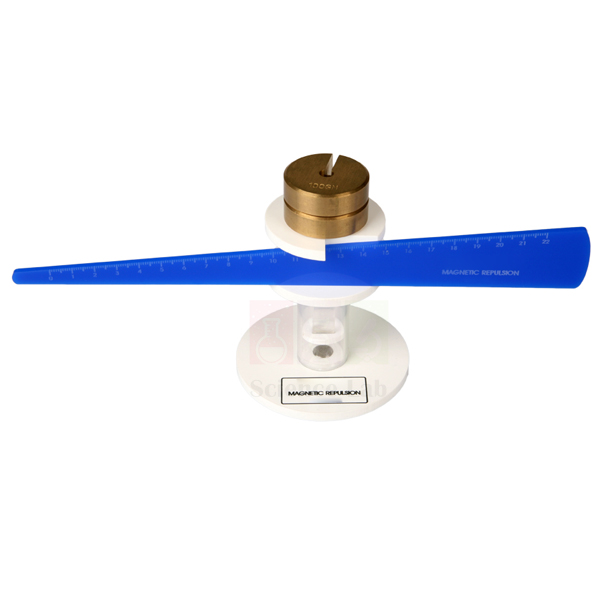
Magnetic Repulsion
Magnetic Repulsion (Product Code: SLE/EAM/29) is a simple system for investigating the force of repulsion between two high strength neodymium magnets. Standard slotted masses placed on the top plate push the magnets closer together against their mutual repulsion, and a direct reading ‘wedge’ gauge measures the separation that results. Designed for physics teachers who want a clean, quantitative magnetism practical, it is manufactured by Jain Scientific Equipments Pvt Ltd (ScienceLab), Ambala, a science apparatus manufacturer in India.
Specifications
| Parameter | Detail |
|---|---|
| Magnets | Two high strength neodymium magnets |
| Separation measurement | Direct reading ‘wedge’ gauge |
| Applying force | Standard slotted masses placed on the top plate |
| Investigation | Force of repulsion between the magnets at different separations |
| Teaching links | Magnetic repulsion and balanced forces |
Typical Use
With the top plate unloaded, the upper magnet floats at its largest separation. Students add slotted masses one at a time; each addition compresses the magnetic “cushion” a little more, and the wedge gauge is slid into the gap to read the new separation directly. When the plate settles, the total weight on it equals the repulsive force at that separation, so the data give a force–distance curve for like poles without any spring balance or sensor.
Running this unit alongside an attraction experiment lets a class compare how quickly attraction and repulsion change with distance. It also makes an effective demonstration of balanced forces, since the floating plate is visibly held up by an invisible push. Add masses gently and centrally so the plate does not tilt, and take each gauge reading only once the plate has stopped moving. Schools looking for a laboratory instruments supplier in India can order it individually or as part of a magnetism set.
Manufacturer
ScienceLab, the brand under which Jain Scientific Equipments Private Limited trades, makes this apparatus in Ambala, Haryana for schools, colleges and education distributors. Find out more on the company profile.
Related Electricity and Magnetism Equipment
Items that complement a repulsion investigation:
- Magnetic Attraction — measures the pull between unlike poles for a side-by-side comparison
- Hangers with Slotted Weights 500 gm — slotted weights for loading the top plate
- Slotted Mass Hanger, 1kg — a larger set of slotted masses when higher loads are needed
- Neodymium Magnets — loose neodymium magnets for open-ended pupil investigations
Our Electricity and Magnetism category lists further magnetism apparatus.
Frequently Asked Questions
How is the gap between the magnets measured?
With a direct reading ‘wedge’ gauge that is slid into the gap, so no ruler or calculation is needed for each reading.
How is the force applied?
By placing standard slotted masses on the top plate. Their weight at balance equals the repulsive force at that separation.
Are slotted masses supplied with the unit?
Our product description does not list them as included. Please contact us so we can confirm and, if needed, quote suitable masses.
What is the difference between this and the Magnetic Attraction apparatus?
This unit measures the push between two neodymium magnets using a wedge gauge and masses on a top plate; the attraction apparatus measures pull using a calibrated separation dial.
Any handling precautions?
Neodymium magnets are strong: keep fingers clear of the gap, keep the unit away from electronics, and never let the magnets snap together.
What should a tender or institutional enquiry mention?
The product code SLE/EAM/29, quantity, any slotted masses required, and the delivery location in India or abroad.
Request a Quote
Place Magnetic Repulsion in the enquiry cart, or send the details of your requirement through our contact page for a prompt quotation.
Last updated: 24 September 2026