- Physics Lab Equipment
- Chemistry Lab Equipment
- Biology Lab Equipment
- Anatomical Lab Equipment
- Learning
- Educational Lab Equipment
- Magnets
- Agriculture
- Astronomy
- Earth Science
- Geography Lab Equipment
- Safety Lab Coat
- Laboratory
- Meteorological
- Electricity & Magnetism
- Heat
- School Lab Equipment
- Lab Glassware
- Science Lab Equipment
- Tvet Lab Equipment
- Robotics Kits Supplier and Manufacturer for Schools India
- Math Lab Equipment Manufacturers and Exporters in Ambala
- STEM Kits Manufacturers and Supplier India
- Engineering Lab Equipment
- Hospital Lab Equipment
- Water, Sanitation & Hygiene Supplies
- Cold Chain, Solar & Communication Equipment
- Nutrition
Last updated: 22 October 2026
Quick Answer
Jain Scientific Equipments Pvt Ltd (ScienceLab), Ambala, Haryana, a laboratory instruments supplier in India, lists 124 microscopes, microscope cameras, accessories and related optical items for schools, colleges, universities, medical and paramedical courses and research labs, arranged in 9 groups from monocular, binocular, stereo and digital microscopes to specialised microscopes, slides and care items, magnifiers and optical measuring instruments. 7 of the items are manufactured by ScienceLab at its factory at Saha, Ambala, and 117 are supplied by ScienceLab. Each item has its own product page, linked from the product listing under this description. The company supplies buyers in India and in 110 countries.
Quick links: Request a quotation · Jump to specifications by group · Open your enquiry cart
Explore the Microscope Range
| Range | Items | What it covers |
|---|---|---|
| Monocular and student microscopes | 22 | Monocular compound microscopes at 400x and 1000x with LED, tungsten or mirror illumination, cordless models, student microscopes with fixed or movable condenser, a student medical microscope, a pathological monocular microscope and a simple 30x scope. |
| Binocular, trinocular and research microscopes | 17 | Binocular microscopes at 400x and 1000x, trinocular microscopes with a camera port, research binocular, trinocular and universal research microscopes, a pathological binocular microscope, a multi viewing microscope and a micro/macro/field microscope. |
| Stereo, dissecting and operating microscopes | 12 | Stereo binocular microscopes at 20x to 40x, compact stereomicroscopes, stereoscopic dissection and bull type dissecting microscopes, and floor-standing dissection, dissecting operating and ENT operating microscopes. |
| Digital microscopes and cameras | 17 | LCD, handheld, zoom, advanced and camera-equipped monocular digital microscopes, a wired USB microscope with polarizer, eyepiece, C-mount, Wi-Fi, tablet, flexible and video cameras, and C-mount adapters. |
| Specialised microscopes | 9 | An LED fluorescence microscope, an inverted tissue culture microscope, an inverted metallurgical microscope, polarising and ore microscopes, a forensic comparison microscope, a screen projection microscope and a phase contrast and dark field attachment. |
| Stages, eyepieces, lamps and stands | 14 | Attachable and graduated mechanical stages, a micrometric eyepiece and disc reticle, an auxiliary lens, compression rings, replacement lamps and an LED bulb assembly, an LED gooseneck illuminator, microscope and gooseneck stands, and carry cases. |
| Slides, slide preparation and care | 19 | Plain, depression and concavity slides, cover glasses, slide cases, dispensers and a warming table, cover forceps, two microtomes, a haemocytometer, immersion oil, lens tissue and cloth, a disposable lab pack and cleaning and servicing kits. |
| Magnifiers, viewers, binoculars and telescope | 10 | Hand, pocket, foldable and lighted magnifiers, a 50x micro slide viewer, hand-held binoculars and a 70 mm refracting telescope. |
| Optical measuring instruments | 4 | A vernier travelling microscope, a toolmaker microscope, a Michelson interferometer and a constant deviation spectrograph. |
| Total | 124 | All items listed in the Microscope range |
Microscope Specifications
Key specifications below are taken from each product's own page; open a product for its full specifications and product code.
Monocular and student microscopes (22)
| Product | Key specification |
|---|---|
| Compound Microscope | Head: 360° rotating, inclined at 45° for easier viewing; Eyepiece: Locked-on 10x widefield, with calibrated pointer |
| Cordless Microscope | Eyepiece: 10x/14 mm widefield, locked-in, with rotatable pointer; Head: 360° rotatable, inclined at 45° for viewing while seated |
| Microscope, Monocular, 400x, LED Illumination | Eyepiece: Wide field WF 10x/18 mm, secured, with pointer; Stage: 115 x 100 mm with integrated 55 x 20 mm X-Y mechanical stage |
| Monocular Biological Microscope 400x, LED | Viewing head: Monocular, inclined at 45°, 360° rotatable; Eyepiece: Wide field 10x/18 mm; Objectives: Achromatic 4x, 10x, 40x |
| Monocular Microscope, 400x, LED | Viewing head: Monocular, 45° inclined, 360° rotation; Eyepiece: WF10X/18 mm with pointer; Nosepiece: Triple |
| Pathological Monocular Microscope | Observation head: Monocular tube inclined at 45°, rotatable through 360°; Eyepieces: Wide field 10x or 15x |
| Scope | Magnification: 30x; Eyepiece: 5x; Objective lens: 6x |
| Student Medical Microscope | Magnification: 20x to 1500x (listed range); Objectives: 10x and 45x (S.L.), with 100x oil immersion |
A further 14 items in this group appear in the full product listing below this description.
Binocular, trinocular and research microscopes (17)
| Product | Key specification |
|---|---|
| Binocular Microscope 400x, LED Illumination | Head: Binocular, secured, rotatable 360°; Eyepiece: Wide field WF10x/18 mm, secured, with pointer; Tubes: 45° inclined |
| Binocular Microscope, 1000x, LED Illumination | Objectives: Plan IOS 4x, 10x, S40x and S100x oil; S40x and S100x spring loaded; Eyepieces: WF10x/20 mm |
| Multi Viewing Microscope | Viewing head: Compensation-free trinocular head, inclined at 30°, rotatable through 360°, interpupillary distance 48–75 mm |
| Pathological Binocular Microscope with Co-Axial Focusing Control | Observation head: Binocular, inclined at 45°, rotatable through 360°; Eyepieces: Wide field 10x or 15x, paired |
| Research Binocular Microscope | Observation head: Binocular, inclined at 45°, rotatable through 360°; Interpupillary distance: Adjustment ring, 54–74 mm |
| Research Trinocular Microscope | Observation head: Trinocular, inclined at 45°, rotatable through 360°; Interpupillary distance: Adjustment ring, 54–74 mm |
| Trinocular Microscope, 1000x, LED | Viewing head: 30° inclined, binocular eyepiece tubes, rotates 360° for comfortable seated viewing; Maximum magnification: 1000x |
| Universal Research Microscope | Illumination: Built-in system with 6 V – 20 W halogen bulb and plano-concave mirror attachment |
A further 9 items in this group appear in the full product listing below this description.
Stereo, dissecting and operating microscopes (12)
| Product | Key specification |
|---|---|
| Binocular Stereo Microscope | Objective: 2x – 4x; Eyepieces: Two wide-field 10x; Total magnification: 20x – 40x |
| Bull Type Dissecting Microscope | Overall height: 180 mm; Magnification: 10x and 20x high-eyepoint lenses, usable with spectacles |
| Dissecting Operating Microscope | Eyepieces: Straight binocular type, wide field, 10x; Magnification: Five steps, 2.0x to 40x (with 10x eyepiece); Objective: 1x |
| Dissection Microscope | Magnification range: 2.4x to 40x or more; Maximum field of view: More than 180 mm; Working distance: f = 250 mm and 400 mm |
| ENT Operating Microscope | Magnification range: 2.4x–40x or more; Maximum field of view: More than 180 mm |
| Microscope, Stereo Binocular | Magnification: 20x–40x; Eyepieces: WF10X; Objectives: 2X and 4X |
| Stereo Binocular Microscope | Magnification: 20x to 40x; Eyepieces: WF10x; Objectives: 2x, 4x |
| Stereomicroscopes | Magnification options: 10x and 30x, or 20x and 40x; Microscope type: Stereo microscope, compact size |
A further 4 items in this group appear in the full product listing below this description.
Digital microscopes and cameras (17)
| Product | Key specification |
|---|---|
| Advanced Digital Microscope | Eyepieces: 2 x 10x widefield, 18 mm, with dioptric compensation; Objectives: Semi-plan 4x, 10x, 40xR and 100xR (oil immersion) |
| C-Mount Adapter | Magnification: 0.5x; Suggested camera chip size: 1/2 in (the 0.5x magnification is matched to this size); Mount type: C-mount |
| Digital Monocular Microscope, 400x | Head: Monocular, 30° inclined, 360° rotating, with built-in digital X-type Wi-Fi camera; Wi-Fi transmission: Up to 1.3 MP |
| Flexible Camera | Sensor: High-definition 5 MP; Still resolution: 2,595 x 1,944 pixels; Video frame rate: 30 fps at 1,920 x 1,080 pixels |
| Handheld Digital Microscope | Magnification: 20x to 200x; Focus: Manual, focus range from 10 mm to infinity; Illumination: Adjustable 8-LED ring illuminator |
| LCD Digital Microscope | Magnification: 40x, 100x, 200x, 400x and 600x; Objective lenses: 4x, 10x, 20x, 40x and 60x; Focus: Coarse- and fine-focus knobs |
| Microscope Digital Camera, 3MP | Mounting: Directly into the eyepiece tube instead of one eyepiece; 23 mm, 30 mm and 30.5 mm diameters; Image format: 4:3 |
| Video Camera | Image sensor: CCD, 1/4 inch; Resolution: 330 lines; Total pixels: 270,000 |
A further 9 items in this group appear in the full product listing below this description.
Specialised microscopes (9)
| Product | Key specification |
|---|---|
| Advance Research Polarising Microscope with Incident Light | Objectives (plan achromatic, polarising): 4X POL N.A. 0.13, W.D. 17.0 mm; 10X POL N.A. 0.3, W.D. 10.0 mm; 20X POL N.A. 0.5, W.D. 2.1 mm; 40X POL N.A. 0.75, W.D. 1.1 mm |
| Forensic Comparison Microscope | Head: One Siedentopf-design trinocular head mounted on a comparison bridge on top of 2 microscope bodies; Eyepieces: 2 x 10x |
| Inverted Tissue Culture Microscope | Viewing body: Siedentopf trinocular head inclined at 30°; interpupillary distance 55–75 mm; diopter adjustment ring on ocular |
| LED Fluorescence Microscope | Eyepieces: Wide field WF10X; 4 antifungal eyepieces; field of view 20 and 22 mm or higher |
| Ore Polarising Microscope | Objectives (plan achromatic, polarising): 4X POL N.A. 0.13, W.D. 17.0 mm; 10X POL N.A. 0.3, W.D. 10.0 mm; 20X POL N.A. 0.5, W.D. 2.1 mm; 40X POL N.A. 0.75, W.D. 1.1 mm |
| Phase Contrast & Dark Field For Microscopes | Objectives: Four plan phase objectives: PLPH-10x, PLPH-20x/25x, PLPH-40x, PLPH-100x; Type: Turret phase contrast equipment |
| Research Inverted Metallurgical Microscope | Observation head: Binocular, with eyepiece tube, inclined at 30°; Interpupillary distance: 55 to 75 mm; Eyepiece: 10x (16 mm) |
| Research Trinocular Ore Microscope | Observation head: Flat trinocular head inclined at 45°; Eyepiece: 10x / 20 mm; Cross (partition) eyepiece: 10x / 20 mm |
| Screen Projection Microscope | Screen diameter: 195 mm; Screen: Rotatable, graduated 360°; Objectives: 5x, 10x, 20x, 40x or 60x |
Stages, eyepieces, lamps and stands (14)
| Product | Key specification |
|---|---|
| Carry Case for Microscopes | Dimensions: 25 x 39 x 19 cm; Material: Nylon; Securing: A few straps hold the microscope safely inside the bag |
| Eyepiece Micrometric | Magnification: 10x; Lens diameter: 18 mm; Graduations: 0.01 mm |
| Fluorescent Lamp 5W | Size: 4 1/4 in L x 1 1/4 in W; Power: 5 W, as named; Lamp type: Fluorescent |
| Micrometer Disc Reticle | Diameter: 25 mm; Scale length: 5 mm; Divisions: 100 |
| Microscope Stand | Size: W 15 × L 22 × H 23 cm; Horizontal arm: Adjustable, 15 cm range, 360-degree rotation |
| Standard Compression Ring Set | Contents: 5 compression rings; Eyepiece diameter range: 39 to 60.75 mm; Material: Injection-moulded polymer |
| Student Graduated Mechanical Stage | Mounting: Two locating pins, 1-1/4 in (33 mm) apart; Extended length: 6-1/4 in (160 mm); Extended width: 5-1/4 in (135 mm) |
| Walter LED Gooseneck Illuminator | Light guide: 19 inch flexible gooseneck (each guide); Colour temperature: 5,500 K; Intensity control: 0 to 100% |
A further 6 items in this group appear in the full product listing below this description.
Slides, slide preparation and care (19)
| Product | Key specification |
|---|---|
| Concavity Slides | Concavity diameter: About 13 mm; Concavity depth: About 0.5 mm; Material: Clear, noncorrosive glass |
| Cover Glasses | Size: 22 mm x 22 mm; Thickness: 0.13 to 0.17 mm; Material: Chemically resistant borosilicate glass |
| Haemocytometer | Chamber ruling: Improved Neubauer; Chamber type: Double ruling counting chamber; Cover glasses: A pair, included |
| Immersion Oil, 25ml | Volume: 25 ml; Appearance: Transparent oil; Optical property: High refractive index |
| Microscope Slides Glass | Pack size: 72 slides; Size: 25 mm × 75 mm; Thickness: 1.2 mm |
| Microtome | Cutting table: 50 mm diameter; wide flat top that guides the sectioning razor and protects the hand |
| Slide Dispenser, Automatic | Dimensions: 4 1/2 × 5 × 5 1/2 inches; Container: Transparent, dust-free; Type: Automatic slide dispenser, knob-operated |
| Wooden Slide Case | Capacity: 100 slides; Slide size: 75 x 26 mm glass microscope slides; Material: Wooden, fully lined |
A further 11 items in this group appear in the full product listing below this description.
Magnifiers, viewers, binoculars and telescope (10)
| Product | Key specification |
|---|---|
| Binoculars | Magnification: 6x; Objective lens: 35 mm; Body material: Durable plastic |
| Magnifier | Lens: 5 inch glass lens; Magnification: 1.8x; Illumination: 48 ultra-bright LED lights |
| MagniFlex Magnifier | Magnification: 2x, with 4x spot lens; Lens diameter: 101 mm (4 in); Lighting: 16 bright LED lights |
| Magnifying Glass | Lenses: 4x wide-angle view and 9x narrow-focus lens; Size: 7 1/2 in L x 3 1/2 in W; Design: Ergonomic handle |
| Micro Slide Viewer | Magnification: 50x; Power requirement: None; Weight: Very light |
| Pocket Magnifier | Magnification: 10X; Dimensions: 15 × 25 mm; Optics: Two plano-convex lenses |
| Series Binoculars | Magnification: Choice of 8x or 10x; Body: Covered with rubber for rough handling and tough conditions |
| Telescope Refractor | Aperture: 70 mm (2.76 in); Focal length: 400 mm (16 in); Eyepieces (2): 20 mm (20x) and 10 mm (40x) |
A further 2 items in this group appear in the full product listing below this description.
Optical measuring instruments (4)
| Product | Key specification |
|---|---|
| Constant Deviation Spectrograph | Prism table: Broca-type prism, refractive index 1.65/1.74, housed under a cover and rotated by an outside wavelength drum |
| Michelson Interferometer | Mirror no. 1 drive: Main knob, least count 0.01 mm; Mirror no. 2 drive: Slow-motion drum, least count 0.0001 mm |
| Toolmaker Microscope | Magnification: 30x (2x objective with 15x eyepiece); Field of view: 12 mm; Working distance: About 100 mm |
| Vernier Travelling Microscope | Vernier reading: 0.02 mm or 0.01 mm; Slide travel: 180 mm horizontal; 140 mm vertical |
Related Equipment in Other ScienceLab Ranges
Microscope work also needs prepared slides, slide-preparation items and dissecting tools, which are listed in other ScienceLab ranges:
Who Buys This Range
Schools choose 400x monocular microscopes, cordless and mirror models, stereo microscopes, magnifiers and the micro slide viewer for biology and nature study. Colleges and universities use 1000x binocular and trinocular microscopes, research microscopes and microscope cameras, and physics departments add the vernier travelling microscope, Michelson interferometer and constant deviation spectrograph. Medical, nursing, paramedical and pathology teaching labs use the student medical and pathological microscopes, immersion oil and the haemocytometer, while microbiology, biotechnology, geology, metallurgy and forensic departments use the fluorescence, inverted, ore and polarising, metallurgical and forensic comparison microscopes. Laboratory dealers, distributors and tender buyers order microscopes in classroom quantities with slides, cover glasses and spares.
Other ScienceLab Equipment Ranges
| Range | What it covers |
|---|---|
| Prepared Slides | Prepared microscope slides, including histology, botany, cell division and microorganism sets |
| Biology Lab Equipment | Eight biology sub-ranges, from DNA models and dissecting sets to prepared slides, kits and botany apparatus |
| Dissection Equipment | Dissecting sets, scalpels, forceps, trays and pins |
| Biology Lab | Biology lab items for school and college labs, including microscopes, glassware, reagents and charts |
| Clinical Laboratory | Items for blood collection, haematology, ELISA and biosafety, including slide staining and drying racks |
| Measuring | Classroom measuring tools for mass, length, volume, temperature, time and pH |
| Physics Lab Equipment | Physics apparatus for mechanics, heat, electricity and magnetism, optics, waves and measurement |
| Educational Lab Equipment | Educational laboratory sub-ranges, from glassware and microscopes to STEM kits and toys |
| Science Material | Simple classroom science items for magnetism, reflection, magnification and sun viewing |
Frequently Asked Questions
What does the Microscope range include?
124 items in 9 groups: monocular and student microscopes, binocular, trinocular and research microscopes, stereo and dissecting microscopes, digital microscopes and cameras, specialised microscopes, stages, lamps and stands, slides and care items, magnifiers and binoculars, and optical measuring instruments.
Which items are manufactured by ScienceLab and which are supplied?
Only 7 of the 124 items are manufactured by ScienceLab: the Vernier Travelling Microscope, the Michelson Interferometer, the Constant Deviation Spectrograph, the two microtomes, the Wooden Slide Case and the Microscope Slide Cover Forceps. The other 117 items, including every compound, stereo, digital and specialised microscope, the cameras, magnifiers, slides and accessories, are supplied by ScienceLab.
Which microscope suits school biology?
For school classes, 400x monocular models such as the cordless Monocular Microscope, 400x, LED and the mirror-lit Monocular Mirror Microscope, 400x, which needs no electricity, are listed. For bacteria and blood smears, 1000x models such as the Monocular Microscope, 1000x, LED Illumination add an oil-immersion objective.
Which microscopes suit colleges, medical courses and research?
The Student Medical Microscope is used by medical, nursing and paramedical students, and the pathological monocular and binocular microscopes are used to examine stained sections and smears. The Research Binocular Microscope and Research Trinocular Microscope serve postgraduate teaching and research, and the LED Fluorescence Microscope and Inverted Tissue Culture Microscope serve microbiology and cell culture labs.
Can microscope images be shown on a screen or computer?
Yes. The LCD Digital Microscope shows slides at 40x to 600x on its own screen, and the Monocular Digital Microscope, 400x has a built-in 5 MP camera with a USB connection. Eyepiece, C-mount, Wi-Fi and tablet cameras fit existing microscopes, and the trinocular models have a third port for a camera.
Which slides and consumables are available?
Plain glass slides in packs of 72, depression slides in packs of 12, concavity slides, 22 mm x 22 mm cover glasses, 25 ml immersion oil and lens tissue in packs of 100 are listed, with slide storage from the 50-slide plastic case to the 100-slide Wooden Slide Case. Prepared slide sets are in the Prepared Slides range.
Do you accept bulk, tender and export orders?
Yes. Bulk quantities, tender enquiries and export orders are accepted; product specifications are provided on request, so magnification, illumination and objective details can be checked against your tender documents.
What should I include in a quotation request?
Product names or codes (for example SLE/M/97 for the Monocular Microscope, 400x, LED), the quantity, the magnification and illumination you need (LED, tungsten or mirror; mains or cordless), the delivery location and any tender specification.
Request a Quote
Send product names or codes and quantities through the contact page, or add items to your enquiry cart and submit it.
ScienceLab (Jain Scientific Equipments Pvt Ltd)
1226/1-5, Bengali Mohalla, Science Market, Ambala Cantt, Haryana 133001, India
Phone: +91-7082934803
Email: sales@scilabexport.com
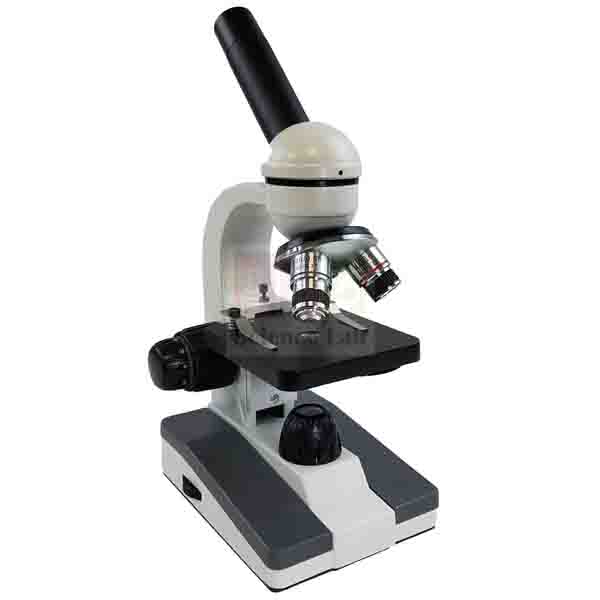
Monocular Biological Microscope 400x, LED
Monocular Biological Microscope 400x, LED (Product Code: SLE/M/01) is a starter compound microscope used to examine stained slides, cells and small organisms at 40x, 100x and 400x in school and college biology labs. Its LED light runs from the mains or from 3 AA batteries, so lessons can continue in rooms without a socket or during power cuts. This monocular microscope for Indian and overseas classrooms is supplied by Jain Scientific Equipments Pvt Ltd (ScienceLab), Ambala, as part of its range of biology lab equipment in India.
Specifications
| Parameter | Detail |
|---|---|
| Viewing head | Monocular, inclined at 45°, 360° rotatable |
| Eyepiece | Wide field 10x/18 mm |
| Objectives | Achromatic 4x, 10x, 40x |
| Magnification | 40x, 100x, 400x |
| Stage | Plain stage with slide clips, 90 x 90 mm |
| Condenser | Single lens with disc diaphragm |
| Focusing | Coaxial coarse and fine adjustment; fine focusing scale value 0.002 mm |
| Light source | 220 V / 1 W LED illumination |
| Power | Mains, or 3 AA batteries (batteries not included) |
| Included | Mains lead |
| Base | Four rubber feet for stability and to reduce vibration |
| Product code | SLE/M/01 |
| Supplied by | Jain Scientific Equipments Pvt Ltd (ScienceLab), Ambala, India |
What Is the Monocular LED Microscope Used For?
This is the microscope students usually meet first: onion peel and cheek-cell mounts, stomata on a leaf, pollen grains, pond-water protozoa and commercially prepared tissue slides. Start every observation with the 4x objective to find the specimen, centre it by hand under the slide clips, then rotate up to 10x and 40x, using the fine focus for the last touch. The disc diaphragm under the stage changes the light cone, which helps bring out detail in thin, unstained specimens.
Because the head turns through 360°, a teacher can swing the eyepiece towards a pupil across the bench without moving the slide, which is useful during school biology lab equipment demonstrations. Batteries are not supplied, so keep a set of AA cells in the prep room if the microscopes are used outdoors or where mains sockets are few.
What to Specify When Ordering
- The number of microscopes needed per class or lab bench
- Mains voltage at your site (the LED is listed as 220 V, and a mains lead is included)
- Whether you also need slides, cover glasses or storage covers in the same order
- Any preference for a mirror-lit model for rooms with no power at all
Supplier
Jain Scientific Equipments Private Limited, trading as ScienceLab, supplies this 400x LED microscope from Ambala, Haryana, as part of its educational microscope range. Schools, colleges, state education departments, dealers and importers in India and international markets buy it together with slides, stains and lab accessories so that a whole biology room is equipped in one order. See the ScienceLab company profile for more about the business.
Related Laboratory Equipment
Accessories and alternatives that students use with a 400x monocular microscope:
- Student-Grade Microscope Slides — plain glass slides for pupils' own mounts
- Cover Glasses — cover wet mounts before viewing at 40x
- Cell Division Slide Set of 9 — prepared mitosis slides suited to 400x study
- Carry Case for Microscopes — keeps the instrument dust-free between lessons
- Monocular Biological Microscope 400x — mirror-lit alternative for rooms without electricity
Compare other models in the Microscope category.
Frequently Asked Questions
What magnifications does the Monocular Biological Microscope 400x, LED give?
The Monocular Biological Microscope 400x, LED gives 40x, 100x and 400x. These come from a wide field 10x/18 mm eyepiece combined with achromatic 4x, 10x and 40x objectives, covering the usual school and junior college syllabus.
Can the Monocular Biological Microscope 400x, LED work on batteries?
Yes. The Monocular Biological Microscope 400x, LED runs from the mains or from 3 AA batteries. A mains lead is included, but the batteries are not, so buy them locally if you plan to use the microscope away from a socket.
Does the Monocular Biological Microscope 400x, LED have a mechanical stage?
No. The Monocular Biological Microscope 400x, LED has a plain 90 x 90 mm stage with slide clips, so the slide is moved by hand. Focusing is by coaxial coarse and fine knobs, with a fine focusing scale value of 0.002 mm.
Can the Monocular Biological Microscope 400x, LED be used to see bacteria?
The Monocular Biological Microscope 400x, LED stops at 400x and has no oil-immersion objective, so it is not intended for detailed bacterial study. For that work, choose a model with a 100x oil-immersion objective from the same microscope range.
Who supplies the Monocular Biological Microscope 400x, LED?
The Monocular Biological Microscope 400x, LED is supplied by Jain Scientific Equipments Pvt Ltd (ScienceLab), Ambala, Haryana, India, to schools, colleges, dealers and importers in India and international markets, singly or as classroom sets.
What should a school include when requesting a quote for the Monocular Biological Microscope 400x, LED?
When requesting a quote for the Monocular Biological Microscope 400x, LED, give the number of units, your mains voltage, the delivery address and any slides or accessories needed. This lets us prepare one complete quotation for the lab.
Request a Quote
For classroom sets or single units of the Monocular Biological Microscope 400x, LED, send your requirement through the contact page or add the item to the enquiry cart.
Last updated: 24 September 2026

Monocular Biological Microscope 400x
Monocular Biological Microscope 400x (Product Code: SLE/M/03) is a mirror-illuminated compound microscope used by younger students to view slides and live specimens at 40x, 100x and 400x without any electrical supply. A 38 mm mirror reflects daylight or lamp light through the specimen, and the light, handy build makes it easy to carry for field work. This compound microscope for schools in India and abroad is supplied by Jain Scientific Equipments Pvt Ltd (ScienceLab), Ambala, India.
Specifications
| Parameter | Detail |
|---|---|
| Head | Monocular tube, inclinable up to 90 degrees |
| Eyepiece | Wide field 10x |
| Objectives | Achromatic 4x, 10x, 40x SL |
| Magnification | 40x, 100x, 400x |
| Nosepiece | Triple revolving, with positive centering |
| Stage | 100 x 90 mm plain mechanical stage with paired clips |
| Condenser | Single lens with disc diaphragm |
| Focusing | Coarse and fine |
| Illumination | Natural light via 38 mm diameter mirror |
| Construction | Optical glass lenses and metal components |
| Product code | SLE/M/03 |
| Supplied by | Jain Scientific Equipments Pvt Ltd (ScienceLab), Ambala, India |
What Is the Mirror Microscope Used For?
This model is built for first lessons in microscopy where power is unreliable or absent: rural schools, open-air nature clubs, pond and garden surveys, and junior science lab equipment sets used by middle-school pupils. Students look at leaf sections, insect wings, algae from a water sample or prepared slides, moving from 4x to 40x on the triple nosepiece as they learn to focus with the coarse and fine knobs.
To light the specimen, tilt the mirror towards a bright window or a desk lamp until the field looks evenly white, then adjust the disc diaphragm for contrast. Never point the mirror at direct sunlight, which can harm the eye. Because the tube tilts up to 90 degrees, pupils can use it seated or standing at a bench.
Supplier
ScienceLab, the trading name of Jain Scientific Equipments Private Limited in Ambala, Haryana, supplies this mirror-lit microscope to schools and outreach programmes that need instruments independent of electricity. Education departments, NGOs running science camps, dealers and importers in India and international markets can combine it with slides and magnifiers in one order. Learn about the company on the ScienceLab profile page.
Related Laboratory Equipment
Useful companions for mirror-lit and field microscopy:
- Monocular Biological Microscope 400x, LED — LED-lit version for rooms with mains or battery power
- Concavity Slides — hold a drop of pond water for live organisms
- Pocket Magnifier — quick first look at specimens collected outdoors
- Microscope Case — padded hard case for carrying the microscope to field sites
- Basic Botany Slide Set — prepared plant slides for classroom study
More models are listed in the Microscope category.
Frequently Asked Questions
Does the Monocular Biological Microscope 400x need electricity?
No. The Monocular Biological Microscope 400x uses natural or room light reflected by a 38 mm diameter mirror, so it needs no mains supply or batteries. That makes it practical for classrooms without sockets and for outdoor field work.
What magnifications does the Monocular Biological Microscope 400x offer?
The Monocular Biological Microscope 400x offers 40x, 100x and 400x. A wide field 10x eyepiece works with achromatic 4x, 10x and 40x SL objectives mounted on a triple revolving nosepiece with positive centering.
How do I get even light with the Monocular Biological Microscope 400x?
Angle the mirror of the Monocular Biological Microscope 400x towards a window or lamp until the field is evenly bright, then set the disc diaphragm for contrast. Never aim the mirror at direct sunlight, as this can injure the eye.
Who is the Monocular Biological Microscope 400x designed for?
The Monocular Biological Microscope 400x is designed for younger students. It is simple to use yet keeps the main features of a compound microscope, including a 100 x 90 mm stage with paired clips and coarse and fine focusing.
Who supplies the Monocular Biological Microscope 400x?
Jain Scientific Equipments Pvt Ltd (ScienceLab), Ambala, Haryana, India supplies the Monocular Biological Microscope 400x to schools, colleges, education projects, dealers and importers in India and international markets, in single units or class quantities.
Are spare parts available for the Monocular Biological Microscope 400x?
For replacement parts for the Monocular Biological Microscope 400x, such as an eyepiece or mirror, contact us with the product code SLE/M/03 and the part needed, and we will confirm what can be supplied.
Request a Quote
Send your required quantity of the Monocular Biological Microscope 400x through our contact page, or add it to the enquiry cart together with slides and other biology items.
Last updated: 24 September 2026
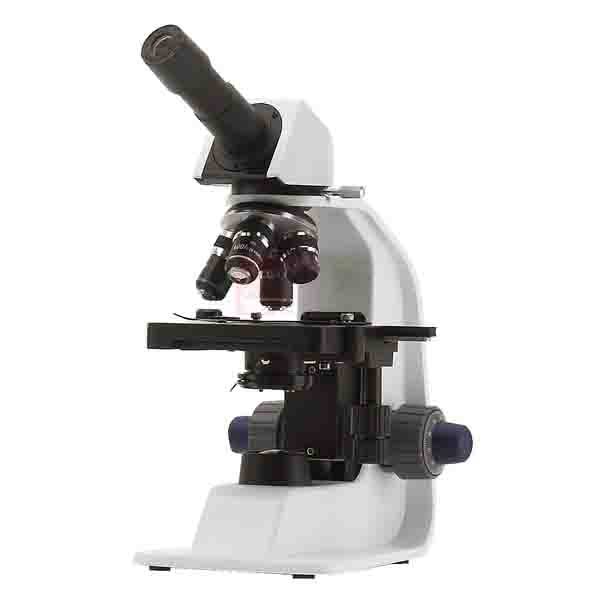
Monocular Microscope 1000x, LED light
Monocular Microscope 1000x, LED light (Product Code: SLE/M/04) is a single-eyepiece brightfield microscope used to study blood smears, bacteria and fine tissue detail at up to 1000x with a 100x oil-immersion objective in educational and routine laboratories. It combines a die-cast metal stand, anti-fungus glass optics and a double-layer mechanical stage with vernier scales for relocating a field. It is supplied by Jain Scientific Equipments Pvt Ltd (ScienceLab), Ambala, India, a biology lab instruments supplier to schools and colleges.
Specifications
| Parameter | Detail |
|---|---|
| Observation | Brightfield |
| Head | Monocular, inclined 30°, 360° rotatable |
| Eyepiece | Wide field WF10x/18 mm |
| Objectives | DIN achromatic 4x, 10x, 40x, 100x (oil) |
| Condenser | Abbe, N.A. 1.2, precentered, with diaphragm |
| Focusing | Coaxial coarse and fine (graduation 0.002 mm) with limit stop; adjustable tension of coarse focusing knob |
| Stage | Double-layer mechanical stage, 125 x 116 mm; X-Y movement range 76 x 30 mm |
| Stage scales | Vernier on both axes, accuracy 0.1 mm; specimen holder for one slide |
| Illuminator | 1 W LED with external power supply; intensity knob on left side of base |
| LED average lifetime | 50 000 hours |
| Construction | Die-cast metal; anti-fungus glass optics |
| Product code | SLE/M/04 |
| Supplied by | Jain Scientific Equipments Pvt Ltd (ScienceLab), Ambala, India |
What Is the 1000x Monocular Microscope Used For?
At 1000x a student can see the shape of bacterial cells in a Gram-stained smear, count white blood cell types in a blood film and study chromosome detail in root-tip squashes. The microscope suits senior-school, college and nursing labs as well as routine laboratory checks, and it is a sensible step up for microbiology lab equipment in India where a lower-power instrument no longer shows enough. The 4x, 10x and 40x objectives are used dry for locating and surveying the specimen before the oil objective is swung in.
For oil work, place one drop of immersion oil on the cover glass over the chosen area, rotate the 100x objective into the drop and focus only with the fine knob; the limit stop helps prevent the objective from being driven into the slide. Wipe the oil off the objective with lens tissue at the end of every session. The vernier readings let a teacher note the X-Y position of a good field so students can return to it.
Supplier
Jain Scientific Equipments Private Limited uses the trading name ScienceLab and supplies this oil-immersion monocular microscope from Ambala, Haryana. Schools, colleges, paramedical institutes, dealers and importers in India and international markets order it with immersion oil, slides and cleaning materials so that a microbiology bench is ready in a single consignment. The ScienceLab company profile has more background.
Related Laboratory Equipment
Consumables and alternatives for 1000x oil-immersion work:
- Immersion Oil, 25ml — required between the 100x objective and the cover glass
- Lens Tissue — removes oil from the objective after each session
- Bacteria slide Set of 12 — prepared bacterial slides for viewing at the highest power
- Microscope Slides Glass — plain slides for making smears and blood films
- Binocular Microscope, 1000x Mag LED — two-eyepiece alternative for longer viewing sessions
See all models in the Microscope category.
Frequently Asked Questions
What is the maximum magnification of the Monocular Microscope 1000x, LED light?
The Monocular Microscope 1000x, LED light reaches 1000x by combining its WF10x/18 mm eyepiece with a 100x oil-immersion objective. The DIN achromatic 4x, 10x and 40x objectives cover the lower powers used for locating the specimen.
Do I need immersion oil for the Monocular Microscope 1000x, LED light?
Yes, the 100x objective of the Monocular Microscope 1000x, LED light is an oil objective and needs a drop of immersion oil on the slide. Oil is not listed as included, so order it separately and clean the lens with lens tissue after use.
What kind of stage does the Monocular Microscope 1000x, LED light have?
The Monocular Microscope 1000x, LED light has a 125 x 116 mm double-layer mechanical stage with 76 x 30 mm X-Y travel, vernier scales on both axes reading to 0.1 mm, and a specimen holder for one slide.
How is the Monocular Microscope 1000x, LED light illuminated?
The Monocular Microscope 1000x, LED light uses a 1 W LED powered by an external power supply, with brightness set by a knob on the left of the base. The LED has an average lifetime of about 50 000 hours.
Who supplies the Monocular Microscope 1000x, LED light?
The Monocular Microscope 1000x, LED light is supplied by Jain Scientific Equipments Pvt Ltd (ScienceLab), Ambala, Haryana, India. The company ships it to schools, colleges, laboratories, dealers and importers in India and international markets.
Is a calibration certificate available for the Monocular Microscope 1000x, LED light?
Calibration documentation is not listed for the Monocular Microscope 1000x, LED light. If your institution needs any inspection or test document with the order, contact us before ordering so we can confirm what can be provided.
Request a Quote
Ask for a quotation on the Monocular Microscope 1000x, LED light through the contact page, or add it to the enquiry cart with immersion oil and slides for a complete microbiology bench.
Last updated: 24 September 2026
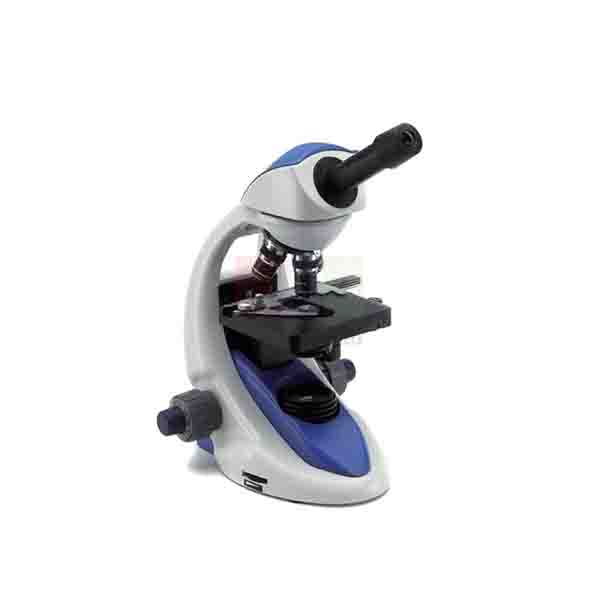
Binocular Microscope, 1000x Mag LED
Binocular Microscope, 1000x Mag LED (Product Code: SLE/M/05) is a two-eyepiece brightfield microscope used for A Level, undergraduate and other higher-education biology and microbiology practicals at 40x to 1000x. It carries four DIN achromatic objectives with published numerical apertures and working distances, a 3 W white LED and a universal 100/240 V external power supply. This binocular microscope is supplied by Jain Scientific Equipments Pvt Ltd (ScienceLab), Ambala, India, with an instruction manual and dust cover included.
Specifications
| Parameter | Detail |
|---|---|
| Observation | Brightfield |
| Head | Binocular, inclined 30°, rotatable 360°; diopter adjustment on left eyepiece; interpupillary adjustment 48–75 mm |
| Eyepieces | Wide field WF10x/18, field number 18 |
| Nosepiece | Quadruple revolving, rotation on ball bearings |
| Objective 4x | Achromatic DIN, N.A. 0.10, W.D. 18 mm |
| Objective 10x | Achromatic DIN, N.A. 0.25, W.D. 7 mm |
| Objective 40x | Achromatic DIN, N.A. 0.65, W.D. 0.53 mm |
| Objective 100x | Achromatic DIN, N.A. 1.25, W.D. 0.13 mm (oil immersion) |
| Objective notes | Mechanical tube length 160 mm; all objectives anti-fungus treated |
| Magnification | 40x, 100x, 400x, 1000x |
| Condenser | Abbe, N.A. 1.25, precentered |
| Focusing | Coaxial coarse and fine (graduated 0.002 mm) with upper stop to prevent objective-specimen contact; adjustable coarse tension |
| Stage | Double-layer mechanical sliding stage, 125 x 115 mm; vernier on both axes, accuracy 0.1 mm; specimen holder for one slide |
| Stage X-Y travel | 76 x 30 mm (a shorter summary lists 70 x 30 mm; please confirm when ordering) |
| Illumination | White LED, 3 W (comparable to a 30–35 W halogen bulb); intensity knob on left of frame |
| Colour temperature / LED life | 6300 K / approx. 50 000 hours average |
| Power supply | External, 100/240 V AC, 50/60 Hz; output 7.5 V; max. power required 7 W |
| Dimensions / weight | Height 370 mm, width 235 mm, depth 290 mm / 6.5 kg |
| Included | Instruction manual, dust cover |
| Product code | SLE/M/05 |
| Supplied by | Jain Scientific Equipments Pvt Ltd (ScienceLab), Ambala, India |
What Is the 1000x Binocular Microscope Used For?
Advanced students use it for cell biology, histology and microbiology work: identifying tissue types in prepared sections, studying mitotic stages, examining stained blood films and viewing bacteria under oil. Viewing with both eyes reduces fatigue during long practical sessions and exam preparation, and the published N.A. and working-distance values help lecturers explain resolution and why the 100x objective needs oil.
Before each class, set the interpupillary distance to the student's eyes and use the left-eyepiece diopter ring to balance focus between both eyes. Survey the slide at 4x and 10x, where the working distance is generous, then move to 40x and to the 100x oil objective; the upper stop protects slides from being crushed. Cover the instrument with the supplied dust cover after use.
What to Specify When Ordering
- Number of microscopes per lab, and whether any are for teacher demonstration
- Confirmation of the stage X-Y travel you require (listed as 76 x 30 mm)
- Immersion oil, slides or a camera to be quoted alongside
- Delivery country, so the power-supply plug type can be confirmed
Supplier
ScienceLab is the trading name under which Jain Scientific Equipments Private Limited, Ambala, Haryana, supplies this higher-education binocular microscope. Universities, colleges, senior schools, research-training centres, dealers and importers in India and international markets use one enquiry to source microscopes, slides and accessories together. Company information is on the ScienceLab profile.
Related Laboratory Equipment
Items that complete a higher-education microscopy bench:
- Immersion Oil, 25ml — needed for the 100x oil-immersion objective
- Human Histology Slide Set of 25 — tissue sections suited to 400x and 1000x study
- Microscope Cleaning Kit — brush, blower, lens fluid and tissue for routine care
- Eyepiece Micrometric — scale eyepiece for measuring cell sizes (confirm fit with us)
- Microscope Digital Camera, 5MP — captures images to a PC for reports (confirm fit with us)
Browse further options in the Microscope category.
Frequently Asked Questions
Which objectives come with the Binocular Microscope, 1000x Mag LED?
The Binocular Microscope, 1000x Mag LED has four DIN achromatic objectives for a 160 mm tube: 4x (N.A. 0.10), 10x (N.A. 0.25), 40x (N.A. 0.65) and 100x oil (N.A. 1.25). All objectives are anti-fungus treated.
What power supply does the Binocular Microscope, 1000x Mag LED use?
The Binocular Microscope, 1000x Mag LED uses an external power supply rated 100/240 V AC, 50/60 Hz, with a 7.5 V output and a maximum requirement of 7 W. This range covers mains supplies in most countries.
How is the binocular head of the Binocular Microscope, 1000x Mag LED adjusted?
The Binocular Microscope, 1000x Mag LED head is inclined 30° and rotates 360°. Interpupillary distance adjusts from 48 to 75 mm, and a diopter ring on the left eyepiece corrects focus differences between the user's eyes.
What is included with the Binocular Microscope, 1000x Mag LED?
The Binocular Microscope, 1000x Mag LED is listed with an instruction manual and a dust cover. Immersion oil, slides and cameras are not listed as included; add them to your enquiry if you need them with the microscope.
How large and heavy is the Binocular Microscope, 1000x Mag LED?
The Binocular Microscope, 1000x Mag LED measures 370 mm high, 235 mm wide and 290 mm deep and weighs 6.5 kg. Plan bench space accordingly, particularly when several units are installed in one teaching laboratory.
Who supplies the Binocular Microscope, 1000x Mag LED?
Jain Scientific Equipments Pvt Ltd (ScienceLab) of Ambala, Haryana, India supplies the Binocular Microscope, 1000x Mag LED. It is shipped to universities, colleges, schools, dealers and importers in India and international markets, singly or in lab sets.
Request a Quote
Request pricing for the Binocular Microscope, 1000x Mag LED via the contact page, or place it in the enquiry cart along with oil, slides and cleaning supplies.
Last updated: 24 September 2026
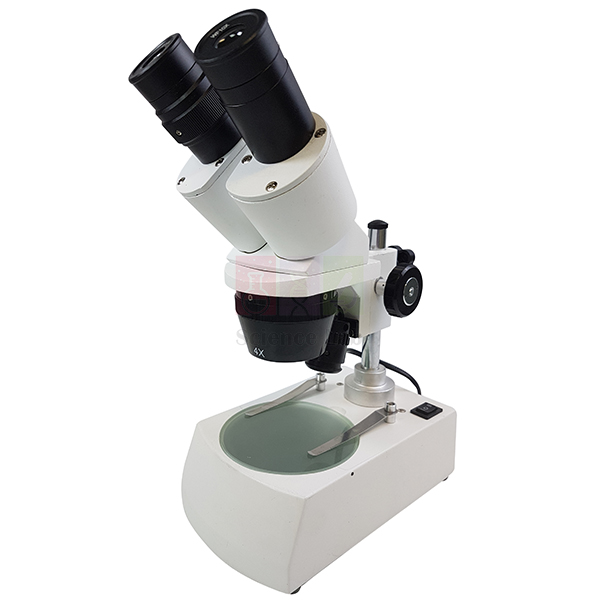
Stereo Binocular Microscope
Stereo Binocular Microscope (Product Code: SLE/M/06) is a low-power stereo microscope used to view whole, three-dimensional specimens such as insects, flowers, seeds, rocks and dissections at 20x and 40x in school, college and field-study labs. It pairs WF10x eyepieces with 2x and 4x objectives and lights the specimen from above and below with 1 W LED lamps. This stereo microscope for schools in India and overseas is supplied by Jain Scientific Equipments Pvt Ltd (ScienceLab), Ambala, India.
Specifications
| Parameter | Detail |
|---|---|
| Type | Stereo binocular microscope |
| Magnification | 20x to 40x |
| Eyepieces | WF10x |
| Objectives | 2x, 4x |
| Illumination | Top and bottom light, 1 W LED lamp |
| Working distance | 57 mm |
| Coarse adjustment range | 40 mm |
| Working stage | 90 mm frosted glass |
| Product code | SLE/M/06 |
| Supplied by | Jain Scientific Equipments Pvt Ltd (ScienceLab), Ambala, India |
What Is the Stereo Microscope Used For?
A stereo microscope shows an upright, three-dimensional view of objects too thick for a slide, so no specimen preparation is needed. Typical classroom tasks include sorting soil invertebrates, studying the mouthparts and legs of insects, examining flower parts and seed coats, checking mineral grains, and guiding fine work during a dissection. At 20x a whole specimen fits in view; switching to 40x reveals surface texture and small structures.
Use the top light for opaque objects such as beetles or rock chips, and the bottom light shining through the frosted glass stage for thin, translucent material like leaf fragments or small aquatic animals in a dish. The 57 mm working distance leaves room for forceps and mounted needles under the objectives, and the 40 mm coarse adjustment range accommodates specimens of different heights.
Supplier
Jain Scientific Equipments Private Limited, known by its trading name ScienceLab, supplies this stereo binocular microscope from Ambala, Haryana, alongside dissection tools and slide-based microscopes. Schools, colleges, agricultural and forestry training centres, dealers and importers in India and international markets can combine it with the rest of a biology lab list. Details about the company are on the ScienceLab company profile.
Related Laboratory Equipment
Tools that pair well with a stereo microscope:
- Dissection Pan, Pad & Cover — a working surface for dissections viewed under the microscope
- Forceps (Tweezers) — position small specimens on the stage
- Micrometer Disc Reticle — eyepiece scale for sizing specimens (confirm fit with us)
- Binocular Stereo Microscope, 40x — an alternative stereo model with cordless LED lighting
More stereo and compound models are in the Microscope category.
Frequently Asked Questions
What magnification does the Stereo Binocular Microscope provide?
The Stereo Binocular Microscope provides 20x and 40x. Its WF10x eyepieces combine with 2x and 4x objectives, giving low-power, three-dimensional views of whole specimens rather than the high magnification of a compound slide microscope.
How is the Stereo Binocular Microscope different from a compound microscope?
The Stereo Binocular Microscope gives an upright 3D image of solid objects at low power, with space to work under the lens. A compound microscope reaches higher magnifications but needs thin specimens mounted on glass slides.
What lighting does the Stereo Binocular Microscope have?
The Stereo Binocular Microscope has top and bottom illumination using 1 W LED lamps. Top light suits opaque specimens, while bottom light passes through the 90 mm frosted glass stage for translucent material.
How much working space is there under the Stereo Binocular Microscope?
The Stereo Binocular Microscope has a 57 mm working distance and a 40 mm coarse adjustment range. That leaves room for forceps or dissecting needles and allows specimens of varying thickness to be brought into focus.
Who supplies the Stereo Binocular Microscope?
The Stereo Binocular Microscope is supplied by Jain Scientific Equipments Pvt Ltd (ScienceLab), Ambala, Haryana, India. It is dispatched to schools, colleges, training institutes, dealers and importers in India and international markets.
What should I mention when requesting a quote for the Stereo Binocular Microscope?
For the Stereo Binocular Microscope, mention the number of units, your delivery location and mains supply, and any dissection tools or reticles you need. We will then prepare a single, complete quotation for your lab.
Request a Quote
Enquire about the Stereo Binocular Microscope through the contact page, or add it to the enquiry cart with dissection equipment for your biology or field-study lab.
Last updated: 24 September 2026
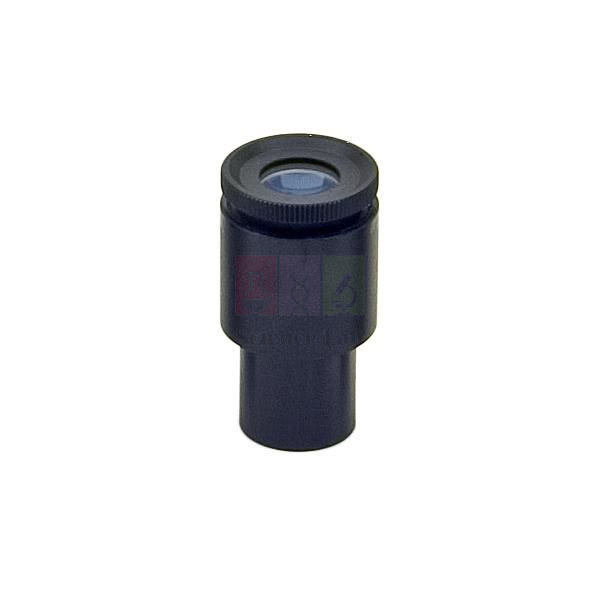
Eyepiece Micrometric
Eyepiece Micrometric (Product Code: SLE/M/07) is a 10x widefield microscope eyepiece with a built-in measuring scale, used together with a stage micrometer to measure the size of cells and other specimens and to calibrate a microscope. Biology students and lab staff fit it in place of a standard eyepiece; the scale is graduated in 0.01 mm divisions. The eyepiece is supplied by Jain Scientific Equipments Pvt Ltd (ScienceLab), Ambala, India, alongside other laboratory instruments in India for microscopy.
Specifications
| Parameter | Detail |
|---|---|
| Type | Widefield eyepiece with integral measuring scale |
| Magnification | 10x |
| Lens diameter | 18 mm |
| Graduations | 0.01 mm |
| Length | 50 mm |
| Use | With a stage micrometer, for specimen measurement and microscope calibration |
| Product code | SLE/M/07 |
| Supplied by | Jain Scientific Equipments Pvt Ltd (ScienceLab), Ambala, India |
What Is the Eyepiece Micrometer Used For?
An eyepiece scale lets students answer the question every practical report asks: how big is it? Typical tasks are measuring the diameter of onion or cheek cells, the length of stomata or pollen grains, and the size of protozoa in pond water, then comparing results between species or treatments. Because the scale sits in the eyepiece, it stays sharp and in view while the specimen is focused beneath it.
The scale must first be calibrated for each objective. Place a stage micrometer on the stage, line up its ruled divisions with the eyepiece scale, count how many eyepiece divisions match a known distance on the stage micrometer, and calculate the true length represented by one eyepiece division. Record this value separately for every objective you use, then replace the stage micrometer with the specimen slide and measure.
Supplier
Jain Scientific Equipments Private Limited trades as ScienceLab and supplies this measuring eyepiece from Ambala, Haryana, as part of its microscope accessory range. Schools, colleges, pathology-training institutes, dealers and importers in India and international markets often order it together with stage micrometer slides and microscopes. Read about the company on the ScienceLab profile page.
Related Laboratory Equipment
Items used with an eyepiece micrometer for measurement work:
- Micrometric Slide — the stage graticule slide used to calibrate the eyepiece scale
- Micrometer Disc Reticle — a scale disc that fits inside compatible eyepieces instead
- Haemocytometer — a counting chamber for cell counts alongside size measurements
- Binocular Biological Microscope — a binocular instrument with WF10X/18 mm eyepieces (confirm fit with us)
Find more accessories in the Microscope category.
Frequently Asked Questions
What is the Eyepiece Micrometric used for?
The Eyepiece Micrometric is used to measure the size of specimens under a microscope. After calibration against a stage micrometer, each division of its built-in scale represents a known distance at each objective, so cells and structures can be measured directly.
What are the specifications of the Eyepiece Micrometric?
The Eyepiece Micrometric is a 10x widefield eyepiece with an integral scale graduated in 0.01 mm divisions. Its lens diameter is 18 mm and its length is 50 mm, as listed in the product details.
Is a stage micrometer included with the Eyepiece Micrometric?
A stage micrometer is not listed as included with the Eyepiece Micrometric. You will need one for calibration; the Micrometric Slide in our range is a stage graticule slide intended for use with a micrometer eyepiece.
Will the Eyepiece Micrometric fit my microscope?
The eyepiece tube diameter of the Eyepiece Micrometric is not stated in the product details. Send us your microscope model or the outer diameter of your current eyepiece through the contact page, and we will confirm compatibility before you order.
Who supplies the Eyepiece Micrometric?
Jain Scientific Equipments Pvt Ltd (ScienceLab), Ambala, Haryana, India supplies the Eyepiece Micrometric. It is sent to schools, colleges, laboratories, dealers and importers in India and international markets, on its own or with microscopes and slides.
Is a calibration certificate available for the Eyepiece Micrometric?
No calibration certificate is listed for the Eyepiece Micrometric; users normally calibrate it themselves against a stage micrometer. If you need documentation for an audit or tender, contact us before ordering to discuss what can be provided.
Request a Quote
To price the Eyepiece Micrometric, send the quantity and your microscope details through the contact page, or add it to the enquiry cart together with stage micrometer slides.
Last updated: 24 September 2026
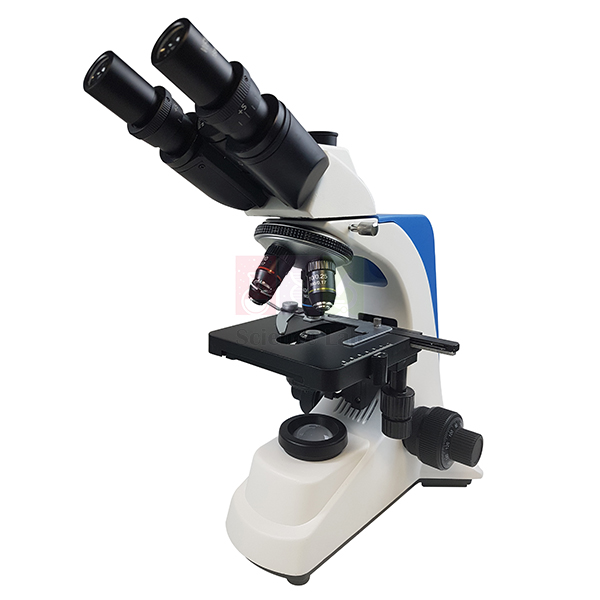
Binocular Biological Microscope
Binocular Biological Microscope (Product Code: SLE/M/08) is a 1000x LED-illuminated compound microscope used for A Level and higher-education biology, from tissue sections to oil-immersion work on stained smears. Its standout feature is a large 142 x 132 mm double-layer mechanical stage with a 75 x 50 mm moving range, which makes systematic scanning of a whole slide easy. This binocular microscope is supplied by Jain Scientific Equipments Pvt Ltd (ScienceLab), Ambala, India, to colleges and senior schools.
Specifications
| Parameter | Detail |
|---|---|
| Head | Binocular |
| Eyepiece | WF10X/18 mm |
| Nosepiece | Quadruple |
| Objectives | Achromatic 4x, 10x, 40x S, 100x S (oil) |
| Maximum magnification | 1000x |
| Condenser | Abbe condenser, N.A. 1.25, with diaphragm |
| Focusing | Coaxial coarse and fine adjustment; coarse stroke 36 mm |
| Stage | Double-layer mechanical stage, 142 x 132 mm |
| Stage moving range | 75 x 50 mm |
| Illumination | LED |
| Product code | SLE/M/08 |
| Supplied by | Jain Scientific Equipments Pvt Ltd (ScienceLab), Ambala, India |
What Is the Binocular Biological Microscope Used For?
This instrument is intended for advanced school and undergraduate practicals: identifying tissues in histology sections, following mitosis in root-tip preparations, performing differential counts on blood films and viewing bacteria under the 100x oil objective. As core cell biology equipment in India's colleges and training labs, it lets students keep both eyes open, which is more comfortable during long observation periods.
The 75 x 50 mm stage travel covers most of a standard slide, so a student can scan a smear in straight, overlapping rows without re-clipping it. Start at 4x to locate the area of interest, centre it, then move up through 10x and 40x before adding a drop of oil for the 100x objective. Close the condenser diaphragm slightly at lower powers for contrast and open it for oil work.
Supplier
ScienceLab is how Jain Scientific Equipments Private Limited of Ambala, Haryana, trades, and the company supplies this binocular biological microscope as part of its educational microscope range. Colleges, senior schools, nursing and paramedical institutes, dealers and importers in India and international markets order it with slides, immersion oil and maintenance kits. The ScienceLab company profile gives more background.
Related Laboratory Equipment
Items that support 1000x work on this microscope:
- Immersion Oil, 25ml — required for the 100x S oil objective
- Prepared Microscope Slide Set – Connective Tissues — histology slides for scanning on the large stage
- Microscope Maintenance & Servicing Kit — tools, lens fluid and grease for routine upkeep
- Microscope Digital Camera, 3MP — USB eyepiece camera for showing images on a PC (confirm fit with us)
More models are listed under Microscope.
Frequently Asked Questions
What magnification range does the Binocular Biological Microscope cover?
The Binocular Biological Microscope covers 40x up to 1000x. Its WF10X/18 mm eyepieces work with four achromatic objectives, 4x, 10x, 40x S and 100x S oil, mounted on a quadruple nosepiece.
How large is the stage on the Binocular Biological Microscope?
The Binocular Biological Microscope has a 142 x 132 mm double-layer mechanical stage with a 75 x 50 mm moving range. The long travel lets students scan most of a slide and place it precisely without moving it by hand.
What focusing system does the Binocular Biological Microscope use?
The Binocular Biological Microscope uses coaxial coarse and fine focusing knobs, with a coarse stroke of 36 mm. The coarse knob brings the specimen near focus quickly and the fine knob sharpens detail at high power.
Which condenser is fitted to the Binocular Biological Microscope?
The Binocular Biological Microscope has an Abbe condenser with a numerical aperture of 1.25 and a diaphragm. This aperture matches the needs of oil-immersion viewing with the 100x objective.
Who supplies the Binocular Biological Microscope?
The Binocular Biological Microscope is supplied by Jain Scientific Equipments Pvt Ltd (ScienceLab), Ambala, Haryana, India. It is shipped to colleges, schools, training institutes, dealers and importers in India and international markets.
What details should I give when requesting a quote for the Binocular Biological Microscope?
For the Binocular Biological Microscope, give the quantity, delivery location and mains voltage, and list any oil, slides or cameras required. Questions on after-sales parts can go in the same enquiry.
Request a Quote
Get a quotation for the Binocular Biological Microscope through our contact page, or add it to the enquiry cart with slides and immersion oil.
Last updated: 24 September 2026
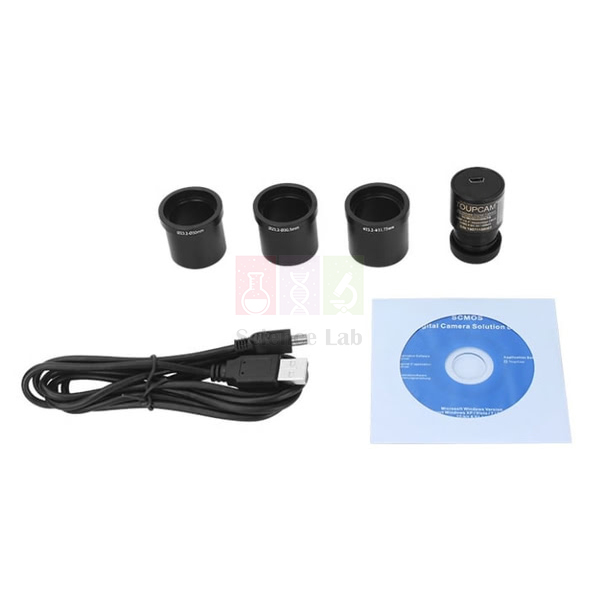
Microscope Digital Camera, 5MP
Microscope Digital Camera, 5MP (Product Code: SLE/M/09) is a USB eyepiece video camera used to capture still images and video from biological or stereo microscopes directly onto a PC in teaching and research labs. It draws its 5 V power from the computer's USB 2.0 port, so no separate adapter is needed, and it works with Windows, Mac OS X and Linux systems. The camera is supplied by Jain Scientific Equipments Pvt Ltd (ScienceLab), Ambala, India, a laboratory instruments supplier in India.
Specifications
| Parameter | Detail |
|---|---|
| Type | USB eyepiece video camera for biological or stereo microscopes |
| Resolution class | 5 MP (as named) |
| Recording | Still pictures and video |
| Spectral range | 380–650 nm (with IR filter) |
| White balance | Auto |
| Capture / control API | Native C/C++, DirectShow, Twain |
| Interface | USB 2.0 high-speed port |
| Power supply | DC 5 V over PC USB port |
| Cooling | Natural |
| Operating systems | Microsoft Windows XP / Vista / 7 / 8 (32 and 64 bit), Mac OS X, Linux |
| PC requirements | CPU equal to Intel Core2 2.8 GHz or higher; 2 GB memory or more; display 17 inch or larger |
| Operating conditions | -10 to 50 °C; 30–80% RH |
| Storage conditions | -20 to 60 °C; 10–60% RH |
| Supplied with | CD-ROM |
| Product code | SLE/M/09 |
| Supplied by | Jain Scientific Equipments Pvt Ltd (ScienceLab), Ambala, India |
What Is the 5MP Microscope Camera Used For?
A microscope camera turns a single-viewer instrument into a shared screen. Teachers project live images of cells, tissue sections or insects so a whole class sees the same field, students save images for practical records and project reports, and technicians record short videos of moving organisms such as protozoa. As part of smart lab equipment in Indian schools and colleges, it also lets lessons be archived and reused.
The camera goes into the eyepiece tube in place of one eyepiece and connects to a PC by USB. For clean images, focus the specimen through the eyepieces first, then insert the camera and fine-focus while watching the screen; auto white balance adjusts the colour for LED or halogen light. Developers can build their own capture tools using the native C/C++, DirectShow or Twain interfaces.
What to Specify When Ordering
- The make and model of your microscope, and the diameter of its eyepiece tube
- Your computer's operating system and version
- Whether you need this 5 MP camera or the lower-resolution 3 MP model
- The number of cameras required and the delivery location
Supplier
Jain Scientific Equipments Private Limited, trading as ScienceLab from Ambala, Haryana, supplies this 5 MP USB eyepiece camera as part of its microscope accessory range. Schools, colleges, research labs, dealers and importers in India and international markets can source cameras together with the microscopes they will be used on. See the ScienceLab company profile for more about the company.
Related Laboratory Equipment
Alternatives and microscopes to consider with this camera:
- Microscope Digital Camera, 3MP — a mid-resolution USB eyepiece camera for basic imaging
- 5mp Microscope Camera — another 5 MP option with its own feature set
- Wi-Fi Camera — wireless image sharing to several devices
- Binocular Microscope, 1000x Mag LED — a biological microscope for high-power imaging (confirm fit with us)
- Stereo Binocular Microscope — a stereo model for imaging whole specimens (confirm fit with us)
More cameras and accessories are in the Microscope category.
Frequently Asked Questions
How does the Microscope Digital Camera, 5MP connect to a computer?
The Microscope Digital Camera, 5MP connects through a USB 2.0 high-speed port and takes its DC 5 V power from the same USB connection. No external power adapter is needed, which keeps the setup simple on a lab bench.
Which microscopes can the Microscope Digital Camera, 5MP be used with?
The Microscope Digital Camera, 5MP is designed for biological or stereo microscopes and fits into an eyepiece tube. The tube diameter is not stated in its listing, so send us your microscope model to confirm the fit before ordering.
Which operating systems does the Microscope Digital Camera, 5MP support?
The Microscope Digital Camera, 5MP is listed for Microsoft Windows XP, Vista, 7 and 8 (32 and 64 bit), Mac OS X and Linux. For newer operating system versions, contact us to confirm software compatibility first.
What computer is needed for the Microscope Digital Camera, 5MP?
The Microscope Digital Camera, 5MP needs a PC with a processor equal to an Intel Core2 2.8 GHz or higher, at least 2 GB of memory, a USB 2.0 port and a display of 17 inches or larger.
Can the Microscope Digital Camera, 5MP record video?
Yes. The Microscope Digital Camera, 5MP records both still pictures and video. It also offers native C/C++, DirectShow and Twain interfaces, so it can be controlled from compatible imaging software or custom programs.
Who supplies the Microscope Digital Camera, 5MP?
Jain Scientific Equipments Pvt Ltd (ScienceLab), Ambala, Haryana, India supplies the Microscope Digital Camera, 5MP to schools, colleges, laboratories, dealers and importers in India and international markets, with or without matching microscopes.
Request a Quote
Send your requirement for the Microscope Digital Camera, 5MP, including your microscope model, through the contact page, or add it to the enquiry cart.
Last updated: 24 September 2026
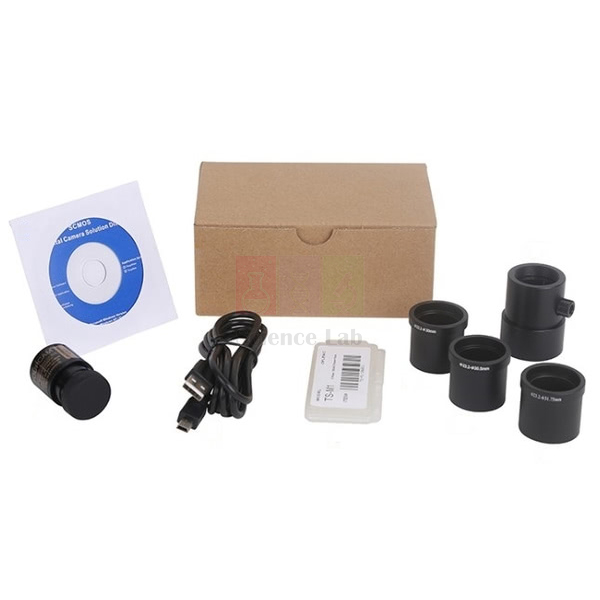
Microscope Digital Camera, 3MP
Microscope Digital Camera, 3MP (Product Code: SLE/M/10) is a mid-resolution USB eyepiece camera used to show and record live microscope images on a PC in school and college biology labs. It slides straight into the eyepiece tube in place of one eyepiece, with fittings for 23 mm, 30 mm and 30.5 mm tubes, and handles gain, exposure and white balance automatically. The camera is supplied by Jain Scientific Equipments Pvt Ltd (ScienceLab), Ambala, India, a biology lab equipment supplier in India.
Specifications
| Parameter | Detail |
|---|---|
| Type | USB eyepiece video camera for biological or stereo microscopes |
| Mounting | Directly into the eyepiece tube instead of one eyepiece; 23 mm, 30 mm and 30.5 mm diameters |
| C-mount / CS-mount | No / No |
| Sensor technology | CMOS |
| Full image size | 1600 x 1200 pixels (listed as 2 MP; please confirm resolution when ordering) |
| Image format | 4:3 |
| Frame rate | 5 fps (1600 x 1200) / 7.5 fps (1280 x 1024) / 22 fps (640 x 480) |
| Gain, back light, exposure, white balance | Auto |
| Signal output | USB 2.0 |
| Analog output / audio | No / No |
| External memory card | No |
| Camera power | From PC USB port |
| Product code | SLE/M/10 |
| Supplied by | Jain Scientific Equipments Pvt Ltd (ScienceLab), Ambala, India |
What Is the 3MP Microscope Camera Used For?
This camera suits everyday classroom imaging rather than publication work: a teacher displays a live onion-cell or blood-smear image on a monitor or projector, students capture pictures for their practical files, and a lab keeps a simple visual record of prepared slides. It is a simple way to add screen sharing to existing school biology lab equipment in India without replacing the microscopes.
Remove one eyepiece, insert the camera (using the fitting that matches your tube) and connect it to the PC. Choose 640 x 480 for smooth live viewing of moving organisms at 22 fps, and switch to the full 1600 x 1200 frame for still captures where detail matters more than speed. Because there is no memory card or audio channel, all images and video are saved on the computer.
What to Specify When Ordering
- Your microscope's eyepiece tube diameter (23 mm, 30 mm or 30.5 mm)
- The image resolution you need, so we can confirm this model suits it
- Your computer's operating system
- Number of cameras and the delivery location
Supplier
This USB eyepiece camera is supplied by ScienceLab, the trading name of Jain Scientific Equipments Private Limited, Ambala, Haryana. Schools, coaching institutes, colleges, dealers and importers in India and international markets add it to microscope orders when they want to share images with a whole class. More about the company is on the ScienceLab profile page.
Related Laboratory Equipment
Other imaging options and a microscope to pair it with:
- Microscope Digital Camera, 5MP — higher-resolution USB eyepiece camera with capture API support
- 2MP Digital USB-2 Colour Camera — an alternative USB colour camera
- Tablet Camera — a camera with its own screen for use without a PC
- Monocular Biological Microscope 400x, LED — a classroom microscope to display on screen (confirm fit with us)
See all cameras and microscopes in the Microscope category.
Frequently Asked Questions
What resolution does the Microscope Digital Camera, 3MP capture?
The Microscope Digital Camera, 3MP lists a full image size of 1600 x 1200 pixels, and its specification sheet states 2 MP. Please confirm the resolution you need when requesting a quotation, and we will verify it for the unit supplied.
Which eyepiece tubes does the Microscope Digital Camera, 3MP fit?
The Microscope Digital Camera, 3MP fits directly into eyepiece tubes of 23 mm, 30 mm and 30.5 mm diameter, replacing one eyepiece. It has no C-mount or CS-mount connection, so it is not intended for trinocular camera ports.
What frame rates does the Microscope Digital Camera, 3MP achieve?
The Microscope Digital Camera, 3MP runs at 5 fps at 1600 x 1200, 7.5 fps at 1280 x 1024 and 22 fps at 640 x 480. Use the lowest setting for smooth live viewing and the highest for still images.
Does the Microscope Digital Camera, 3MP need a separate power supply?
No. The Microscope Digital Camera, 3MP is powered from the PC's USB port and sends its signal over USB 2.0. Gain, back light, exposure and white balance are all automatic, so little manual adjustment is needed.
Can the Microscope Digital Camera, 3MP store images on a memory card?
No. The Microscope Digital Camera, 3MP has no external memory card slot, analog output or audio. Images and video are saved on the connected computer, which also makes them easy to share or print.
Who supplies the Microscope Digital Camera, 3MP?
Jain Scientific Equipments Pvt Ltd (ScienceLab), Ambala, Haryana, India supplies the Microscope Digital Camera, 3MP. It is shipped to schools, colleges, laboratories, dealers and importers in India and international markets, alone or with microscopes.
Request a Quote
For a quotation on the Microscope Digital Camera, 3MP, send the quantity, your eyepiece tube size and the resolution you need through the contact page, or add it to the enquiry cart.
Last updated: 24 September 2026
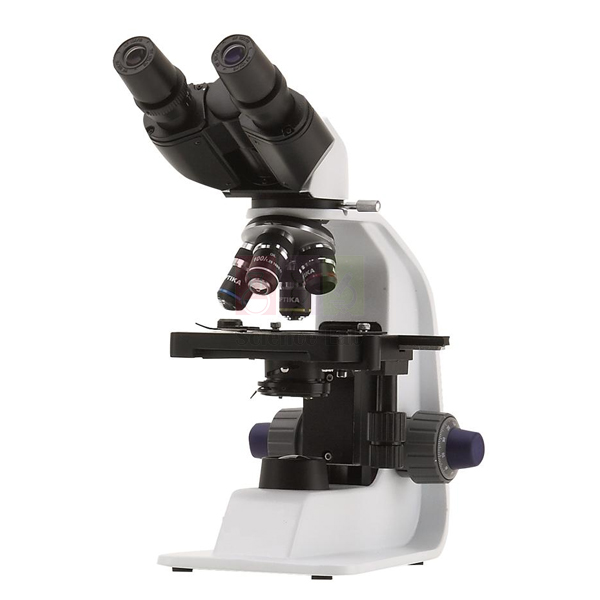
Binocular Biological Microscope, LED
Binocular Biological Microscope, LED (Product Code: SLE/M/11) is a compact two-eyepiece brightfield microscope used for cell, tissue and microorganism studies in school, college and routine teaching labs. At 4 kg and only 170 mm wide, it fits crowded student benches while still offering four achromatic objectives, a vernier mechanical stage and a 1 W white LED with brightness control. This compact binocular microscope for schools and colleges is supplied by Jain Scientific Equipments Pvt Ltd (ScienceLab), Ambala, alongside its other biology lab equipment in India.
Specifications
| Parameter | Detail |
|---|---|
| Observation | Brightfield |
| Head | Binocular, inclined 30°, rotatable 360°; diopter adjustment on left eyepiece; interpupillary adjustment 48–75 mm |
| Eyepieces | Wide field WF10X/18, field number 18 mm |
| Nosepiece | Quadruple revolving, rotation on ball bearings |
| Objectives | Achromatic 4X, 10X, 40X, 100X; mechanical tube length 160 mm; anti-fungus treated |
| Condenser | Abbe, N.A. 1.2, precentered |
| Focusing | Coaxial coarse and fine (graduated 0.002 mm) with upper stop; adjustable tension of coarse knob |
| Stage | Double-layer mechanical sliding stage, 125 x 116 mm; X-Y movement range 76 x 30 mm |
| Stage scales | Vernier on both axes, accuracy 0.1 mm; specimen holder for one slide |
| Illumination | White LED, 1 W; intensity knob on left side of frame |
| Colour temperature / LED life | 6300 K / approx. 50 000 hours average |
| Power supply | External, 100/240 V AC, 50/60 Hz; output 5 V DC, 500 mA |
| Dimensions | Height 350 mm, width 170 mm, depth 210 mm |
| Weight | 4 kg |
| Product code | SLE/M/11 |
| Supplied by | Jain Scientific Equipments Pvt Ltd (ScienceLab), Ambala, India |
What Is the Compact Binocular LED Microscope Used For?
This model brings two-eyed viewing to classes that previously shared monocular instruments. Students use it to compare plant and animal cells, identify tissues in prepared sections, follow stages of cell division and observe stained microorganisms, while the vernier scales let them record exactly where an interesting field was found. It is a practical choice for a biology lab setup in schools where bench space and carrying weight matter.
Adjust the eyepiece spacing between 48 and 75 mm and set the left diopter ring before focusing, so each student sees one sharp, merged image. The upper focus stop keeps the high-power objectives from pressing into the slide, and the coarse-knob tension can be tightened if the stage drifts downward. Turn the LED down when viewing pale, unstained specimens to improve contrast.
Supplier
Jain Scientific Equipments Private Limited, which operates as ScienceLab from Ambala, Haryana, supplies this compact binocular LED microscope within its educational microscope range. Schools, colleges, teacher-training centres, dealers and importers in India and international markets can order it by the classroom set, together with slides and care items. Find company details on the ScienceLab profile.
Related Laboratory Equipment
Useful additions for a class set of these microscopes:
- Microfiber Lens Cloth — wipes dust and smudges from eyepieces between classes
- Microscope Slide Case — stores the class slide collection safely
- Prepared Microscope Slide Set – Circulatory System — ready slides of blood, vessels and muscle
- Binocular Microscope 1000x mag — an infinity-corrected model for more advanced labs
Compare other models in the Microscope category.
Frequently Asked Questions
How big and heavy is the Binocular Biological Microscope, LED?
The Binocular Biological Microscope, LED measures 350 mm high, 170 mm wide and 210 mm deep, and weighs 4 kg. Its compact footprint suits student benches where several microscopes must stand side by side.
Which objectives are fitted to the Binocular Biological Microscope, LED?
The Binocular Biological Microscope, LED has achromatic 4X, 10X, 40X and 100X objectives for a 160 mm mechanical tube, all anti-fungus treated, on a quadruple revolving nosepiece that rotates on ball bearings.
Is the 100X objective of the Binocular Biological Microscope, LED an oil-immersion lens?
The listing for the Binocular Biological Microscope, LED does not state whether its 100X objective is an oil-immersion type. Most 100X achromats are used with immersion oil, so please confirm with us when ordering.
What power supply does the Binocular Biological Microscope, LED need?
The Binocular Biological Microscope, LED runs from an external power supply rated 100/240 V AC, 50/60 Hz, with a 5 V DC, 500 mA output. It drives a 1 W white LED of 6300 K with an average life of about 50 000 hours.
Can the Binocular Biological Microscope, LED be adjusted for different students?
Yes. The Binocular Biological Microscope, LED has a head inclined 30° that rotates 360°, interpupillary adjustment from 48 to 75 mm and a diopter ring on the left eyepiece, so each user can set it to their own eyes.
Who supplies the Binocular Biological Microscope, LED?
The Binocular Biological Microscope, LED is supplied by Jain Scientific Equipments Pvt Ltd (ScienceLab), Ambala, Haryana, India, to schools, colleges, dealers and importers in India and international markets, individually or as classroom sets.
Request a Quote
Request a quotation for the Binocular Biological Microscope, LED through our contact page, or place it in the enquiry cart with the slides and accessories your lab needs.
Last updated: 24 September 2026
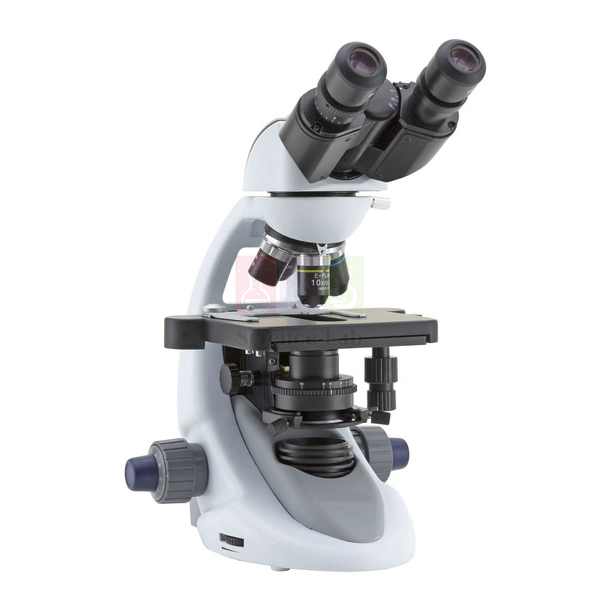
Binocular Microscope 1000x mag
Binocular Microscope 1000x mag (Product Code: SLE/M/12) is an infinity-corrected transmitted-light microscope used for routine educational and laboratory work from 40x to 1000x, including oil-immersion study of blood films and bacteria. It stands out for its E-Plan (IOS) objectives, wide WF10X/20 eyepieces, a centrable sliding Abbe condenser and a belt-drive mechanical stage on a stable die-cast frame. This binocular laboratory microscope is supplied by Jain Scientific Equipments Pvt Ltd (ScienceLab), Ambala, India.
Specifications
| Parameter | Detail |
|---|---|
| Observation | Brightfield, transmitted light |
| Frame | Die-cast, designed for stability and ergonomics |
| Head | Binocular, inclined 30°, rotatable 360°; diopter adjustment on left eyepiece; interpupillary adjustment 48–75 mm |
| Eyepieces | Wide field WF10X/20, field number 20 |
| Nosepiece | Quadruple revolving, rotation on ball bearings |
| Objective 4X | E-Plan IOS, N.A. 0.10, W.D. 16.8 mm |
| Objective 10X | E-Plan IOS, N.A. 0.25, W.D. 5.8 mm |
| Objective 40X | E-Plan IOS, N.A. 0.65, W.D. 0.43 mm |
| Objective 100X | E-Plan IOS, N.A. 1.25, W.D. 0.13 mm (oil immersion) |
| Objective notes | Infinity-corrected; all objectives anti-fungus treated |
| Magnification | 40x, 100x, 400x, 1000x |
| Condenser | Abbe, N.A. 1.25; sliding-in, centrable; up-down adjustment by rack and pinion |
| Focusing | Coaxial coarse and fine (graduated 0.002 mm) with upper stop; adjustable tension of coarse knob |
| Stage | Double-layer mechanical sliding stage, 150 x 139 mm; X-Y movement range 75 x 33 mm; belt drive in X direction |
| Stage scales | Vernier on X-Y axes, accuracy 0.1 mm; specimen holder for one slide |
| Illumination | White LED, 3.6 W (comparable to a 50 W halogen bulb); intensity knob on left side of frame |
| Colour temperature / LED life | 6300 K / approx. 50 000 hours average |
| Power supply | External, 100/240 V AC, 50/60 Hz; output 6 V DC, 1 A; max. required power 7 W |
| Product code | SLE/M/12 |
| Supplied by | Jain Scientific Equipments Pvt Ltd (ScienceLab), Ambala, India |
What Is the Infinity-Corrected Binocular Microscope Used For?
Plan objectives keep the image sharp from the centre to the edge of the field, which matters when students count cells across a whole field, measure structures or photograph specimens for reports. That makes this instrument well suited to undergraduate histology, haematology and microbiology practicals, to clinical-training labs and to lab equipment for research in India's colleges where routine examination is carried out daily.
For even illumination, focus a specimen at 10X, then centre the sliding condenser and set its height with the rack and pinion until the light across the field is uniform. The belt-drive X movement helps when scanning a smear row by row, and the vernier readings let you log field positions. Wipe oil from the 100X objective after each session.
What to Specify When Ordering
- The number of microscopes and whether a camera will be added for imaging
- Immersion oil and cleaning supplies to be included
- The destination country, so the power-supply plug type can be confirmed
- Any prepared slide sets for the course being taught
Supplier
Under the ScienceLab name, Jain Scientific Equipments Private Limited of Ambala, Haryana, supplies this infinity-corrected binocular microscope to institutions that need plan optics for daily routine work. Universities, medical and paramedical colleges, laboratories, dealers and importers in India and international markets can source it with slides, oil and cameras in one consignment. Company information is on the ScienceLab company profile.
Related Laboratory Equipment
Consumables and accessories for routine 1000x work:
- Immersion Oil, 25ml — for the 100X E-Plan oil-immersion objective
- Lens Tissue — for removing oil and dust from the optics
- Microscope Slide Warming Table — dries and warms slides during histology preparation
- Prepared Microscope Slide Set – Digestion (Liver, Pancreas And Tongue) — tissue sections for plan-optics study
- Microscope Digital Camera, 5MP — USB eyepiece camera for recording fields (confirm fit with us)
Other models are listed in the Microscope category.
Frequently Asked Questions
What objectives does the Binocular Microscope 1000x mag use?
The Binocular Microscope 1000x mag uses infinity-corrected E-Plan IOS objectives: 4X (N.A. 0.10), 10X (N.A. 0.25), 40X (N.A. 0.65) and 100X oil (N.A. 1.25). All are anti-fungus treated and give a flat, evenly sharp field.
What kind of condenser does the Binocular Microscope 1000x mag have?
The Binocular Microscope 1000x mag has an N.A. 1.25 Abbe condenser that slides in, can be centred, and is raised or lowered by rack and pinion. Centring it correctly gives even illumination at every magnification.
How does the stage of the Binocular Microscope 1000x mag work?
The Binocular Microscope 1000x mag has a 150 x 139 mm double-layer mechanical stage with 75 x 33 mm X-Y travel, a belt drive in the X direction, vernier scales reading to 0.1 mm and a holder for one slide.
What illumination and power does the Binocular Microscope 1000x mag use?
The Binocular Microscope 1000x mag uses a 3.6 W white LED, comparable to a 50 W halogen bulb, at 6300 K. Its external supply accepts 100/240 V AC, 50/60 Hz, outputs 6 V DC at 1 A and needs at most 7 W.
What field of view do the eyepieces of the Binocular Microscope 1000x mag give?
The Binocular Microscope 1000x mag has WF10X/20 wide field eyepieces with a field number of 20. A larger field number shows more of the specimen at once, which helps when scanning slides or counting cells.
Who supplies the Binocular Microscope 1000x mag?
Jain Scientific Equipments Pvt Ltd (ScienceLab), Ambala, Haryana, India supplies the Binocular Microscope 1000x mag to colleges, laboratories, training institutes, dealers and importers in India and international markets, singly or in lab quantities.
Request a Quote
For pricing on the Binocular Microscope 1000x mag, contact us through the contact page or add it to the enquiry cart with oil, slides and any camera you need.
Last updated: 24 September 2026
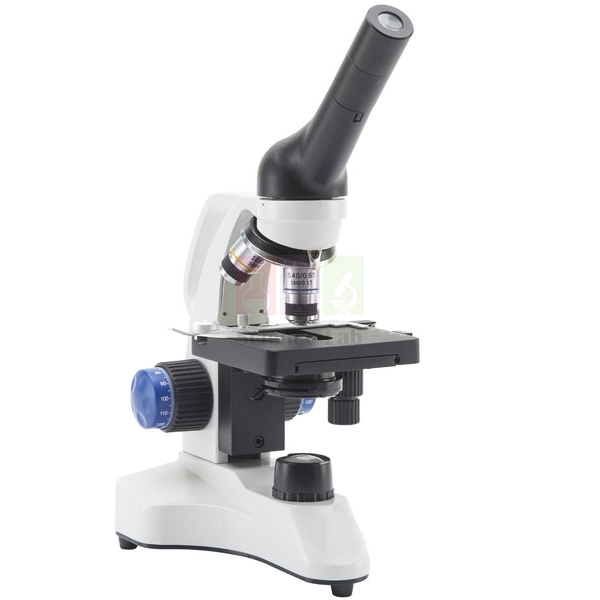
Monocular Microscope, 400x, With Coaxial Knobs
Monocular Microscope, 400x, With Coaxial Knobs (Product Code: SLE/M/13) is a cordless student microscope used for slide work up to 400x in school biology classes, field centres and labs with limited power points. It runs a 0.5 W LED from rechargeable batteries, and it also has a double-layer mechanical stage plus coaxial focusing knobs on both sides of the stand for left- and right-handed users. It is supplied by Jain Scientific Equipments Pvt Ltd (ScienceLab), Ambala, India, a school lab equipment supplier in India.
Specifications
| Parameter | Detail |
|---|---|
| Head | Monocular, inclined 45°, 360° rotation |
| Eyepiece | Wide field WF10x/18 mm |
| Nosepiece | Triple, reversed |
| Objectives | DIN achromatic 4x, 10x, 40x |
| Condenser | N.A. 0.65, fixed, with iris diaphragm |
| Illuminator | 0.5 W LED, manual adjustment, rechargeable batteries |
| Stage | Mechanical double-layer stage with specimen holder for one slide |
| Stage size | 105 x 95 mm |
| Stage moving range | 50 x 15 mm |
| Focusing | Coaxial coarse and fine control knobs on both sides of the stand |
| Product code | SLE/M/13 |
| Supplied by | Jain Scientific Equipments Pvt Ltd (ScienceLab), Ambala, India |
What Is the Cordless 400x Monocular Microscope Used For?
This microscope covers the standard secondary-school syllabus: plant and animal cells, leaf epidermis and stomata, root and stem sections, pollen, yeast and pond protozoa. Because the specimen holder and mechanical stage move the slide in small, controlled steps, pupils can follow a moving organism or scan a section methodically instead of pushing the slide by hand, which makes it a practical piece of laboratory equipment for schools in India that want students to learn proper stage technique early.
Charge the batteries before the lesson so the LED is ready wherever the microscope is set up, and use the manual brightness control together with the iris diaphragm to balance light and contrast. The reversed nosepiece places the objectives away from the user, leaving the stage area more open for changing slides. Knobs on both sides of the stand mean the microscope never has to be turned round for a left-handed student.
Supplier
Jain Scientific Equipments Private Limited, trading as ScienceLab in Ambala, Haryana, supplies this rechargeable 400x microscope as part of a student microscope range that also includes mirror-lit and mains-powered models. Schools, education departments, science centres, dealers and importers in India and international markets can mix these models in one order to suit different classrooms. More about the company is on the ScienceLab profile page.
Related Laboratory Equipment
Consumables and alternatives for a class using this microscope:
- Glass Cover Slips, No. 1 — thin covers for students' own wet mounts
- Microscope Slides Depression — hold drops of culture or pond water for live viewing
- Prepared Microscope Slide Set – Skin and Excretion — ready-made sections for 400x study
- Monocular Biological Microscope 400x, LED — a mains or AA-battery model with a plain stage
See every model in the Microscope category.
Frequently Asked Questions
How is the Monocular Microscope, 400x, With Coaxial Knobs powered?
The Monocular Microscope, 400x, With Coaxial Knobs lights its 0.5 W LED from rechargeable batteries, with manual brightness adjustment. Charger and charging-time details are not stated in the listing, so ask us to confirm them before ordering.
What magnification does the Monocular Microscope, 400x, With Coaxial Knobs reach?
The Monocular Microscope, 400x, With Coaxial Knobs reaches 400x. It combines a WF10x/18 mm eyepiece with DIN achromatic 4x, 10x and 40x objectives on a reversed triple nosepiece, covering typical school practicals.
Does the Monocular Microscope, 400x, With Coaxial Knobs have a mechanical stage?
Yes. The Monocular Microscope, 400x, With Coaxial Knobs has a 105 x 95 mm double-layer mechanical stage with a specimen holder for one slide and a moving range of 50 x 15 mm.
Is the Monocular Microscope, 400x, With Coaxial Knobs suitable for left-handed students?
Yes. The Monocular Microscope, 400x, With Coaxial Knobs has coaxial coarse and fine focusing knobs on both sides of the stand, so left- and right-handed students can focus comfortably without repositioning the microscope.
What condenser does the Monocular Microscope, 400x, With Coaxial Knobs use?
The Monocular Microscope, 400x, With Coaxial Knobs uses a fixed condenser with a numerical aperture of 0.65 and an iris diaphragm. Closing the iris increases contrast in pale, unstained specimens; opening it brightens the view at 40x.
Who supplies the Monocular Microscope, 400x, With Coaxial Knobs?
Jain Scientific Equipments Pvt Ltd (ScienceLab), Ambala, Haryana, India supplies the Monocular Microscope, 400x, With Coaxial Knobs to schools, colleges, dealers and importers in India and international markets, as single units or classroom sets.
Request a Quote
For classroom quantities of the Monocular Microscope, 400x, With Coaxial Knobs, write to us through the contact page or add the item to the enquiry cart with slides and cover slips.
Last updated: 24 September 2026
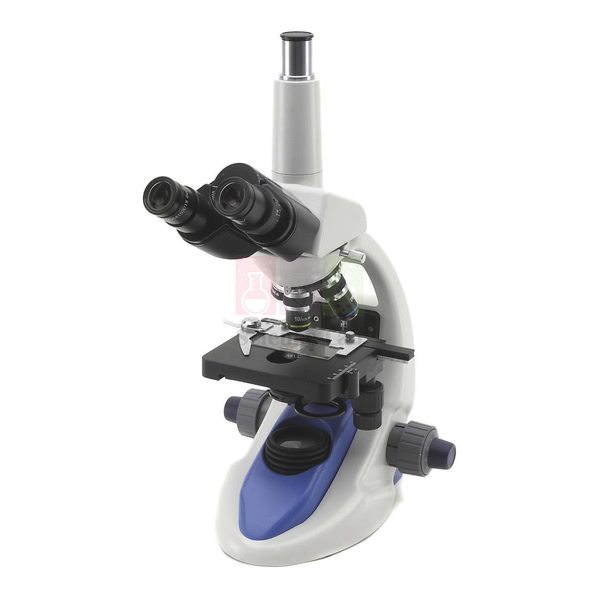
Trinocular Microscope, LED
Trinocular Microscope, LED (Product Code: SLE/M/14) is a compound light microscope with a camera port, used to examine stained slides at 40x to 1000x in college and school biology laboratories. Its 30° trinocular head rotates through 360°, so an instructor can view a slide while a camera on the third tube shares the same field with the class. It is supplied by Jain Scientific Equipments Pvt Ltd (ScienceLab), Ambala, India, as part of its compound microscope range.
Specifications
| Parameter | Detail |
|---|---|
| Observation head | Trinocular, inclined at 30°, rotating through 360° |
| Eyepieces | Wide field WF10x/18 mm |
| Objectives | Achromatic DIN 4x, 10x, 40x and 100x (oil immersion) |
| Total magnifications | 40x, 100x, 400x, 1000x |
| Condenser | Abbe, N.A. 1.25 |
| Illumination | LED with adjustable intensity |
| Focusing system | Coaxial coarse and fine |
| Stage | Double layer, 125 x 115 mm, X-Y moving range 70 x 30 mm |
| Product code | SLE/M/14 |
| Supplied by | Jain Scientific Equipments Pvt Ltd (ScienceLab), Ambala, India |
What Is the Trinocular LED Microscope Used For?
In teaching labs the Trinocular Microscope, LED is typically used for histology, botany and microbiology practicals where the whole group needs to see the same cell or tissue feature. The instructor focuses a prepared slide through the eyepieces, and a camera fitted to the third tube relays that image to a screen for discussion or for practical records. The 100x oil-immersion objective brings bacteria, blood cells and fine cell detail into view at 1000x total magnification.
Good practice: start every slide at 4x with the coaxial coarse knob, centre the specimen with the X-Y stage controls, then step up through 10x and 40x using the fine knob only. Keep the Abbe condenser raised for high power, turn the LED down at low power to avoid glare, and wipe immersion oil off the 100x lens after each session. In school biology lab equipment in India, one trinocular model like this often sits at the demonstration bench beside several monocular student microscopes.
What to Specify When Ordering
- Number of trinocular microscopes required for each laboratory.
- Whether you need a camera for the trinocular port, and which model, so the fit can be discussed before quotation.
- Immersion oil, slides and cover glasses you want added to the same order.
- Delivery city or country, for packing and freight.
Supplier
ScienceLab is the trading name of Jain Scientific Equipments Private Limited, Ambala, Haryana, which supplies this trinocular LED microscope to colleges, schools, training institutes, dealers and importers. Buyers can combine the microscope with slides, immersion oil and imaging accessories in one enquiry, which keeps institutional paperwork simple. More about the company is on the ScienceLab company profile.
Related Laboratory Equipment
Items commonly ordered with a trinocular microscope for imaging and slide work:
- Microscope Digital Camera, 5MP — a camera option for capturing slide images; ask us about fit with the trinocular tube.
- Immersion Oil, 25ml — needed every time the 100x oil objective is used.
- Microscope Glass Slides — blank slides for preparing your own mounts.
- Human Histology Slide Set of 25 — prepared tissue sections for class demonstration.
- Research Trinocular Microscope — a trinocular alternative with halogen illumination and a die-cast body.
See the full range on the Microscope category page.
Frequently Asked Questions
What magnifications does the Trinocular Microscope, LED give?
The Trinocular Microscope, LED gives 40x, 100x, 400x and 1000x total magnification. These come from WF10x/18 mm eyepieces combined with achromatic DIN objectives of 4x, 10x, 40x and 100x, the last one used with immersion oil.
Is a camera included with the Trinocular Microscope, LED?
No camera is listed in the specification of the Trinocular Microscope, LED, so plan on ordering one separately for the third tube. Tell us which camera you intend to use, or ask for a camera option from our range, and we can discuss the fit before quoting.
What stage does the Trinocular Microscope, LED have?
The Trinocular Microscope, LED has a double-layer stage measuring 125 x 115 mm with an X-Y moving range of 70 x 30 mm. The two-axis controls let users scan a slide smoothly at high power without pushing the glass by hand.
How should the 100x objective of the Trinocular Microscope, LED be used?
Use the 100x objective of the Trinocular Microscope, LED only with a drop of immersion oil between slide and lens. Focus first at 40x, add the oil, swing in the 100x objective, adjust with the fine knob, and clean the lens with lens tissue afterwards.
Who supplies the Trinocular Microscope, LED?
The Trinocular Microscope, LED is supplied by Jain Scientific Equipments Private Limited, which trades as ScienceLab and is based in Ambala, Haryana, India. The company quotes schools, colleges, laboratories, dealers and importers in India and international markets directly.
Can a calibration certificate be provided with the Trinocular Microscope, LED?
Documents such as a calibration certificate for the Trinocular Microscope, LED should be discussed before ordering. Describe what your institution or tender requires through the contact page, and we will tell you what can accompany the order.
What should a quotation request for the Trinocular Microscope, LED include?
A quotation request for the Trinocular Microscope, LED should state the quantity, the product code SLE/M/14, any camera or accessories needed, and the delivery city or country. With those details, packing and freight can be worked out in a single reply.
Request a Quote
To order the Trinocular Microscope, LED (SLE/M/14), send your requirement through the contact page or add it to the enquiry cart together with any slides and accessories from this page.
Last updated: 24 September 2026
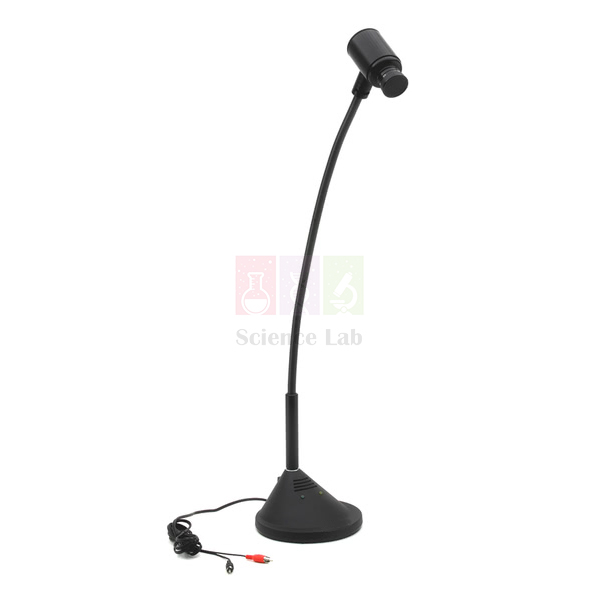
Video Camera
Video Camera (Product Code: SLE/M/15) is a CCD classroom camera on a flexible arm, used to show documents, small specimens and microscope images on a TV or monitor during school and college lessons. It works as an episcope, an enlarger for insects and minerals, and a video-microscopy camera, with a 1/4 inch CCD giving 330-line resolution. It is supplied by Jain Scientific Equipments Pvt Ltd (ScienceLab), Ambala, India, as educational laboratory equipment for India and international markets.
Specifications
| Parameter | Detail |
|---|---|
| Image sensor | CCD, 1/4 inch |
| Resolution | 330 lines |
| Total pixels | 270,000 |
| Sensitivity | 1.5 lux |
| Signal/noise ratio | Greater than 48 dB |
| Objective lens | 8 mm; focuses from 0.76 mm up to infinity |
| Working distance | Greater than 0.76 mm |
| Magnification | Greater than 90x |
| Video signal | PAL (NTSC optional) |
| Audio | Analogue signal; microphone can be switched off; high-sensitivity microphone on Multimedia models only |
| Power | 12 V DC; 220/12 V DC power adapter included |
| Flexible arm | 50 cm long, 12 mm diameter; head joint rotates without damaging the internal wires |
| Base | 17 cm diameter, approx. 2.7 kg |
| Weight | 3.3 kg |
| Display | Connects to a monitor or TV |
| Product code | SLE/M/15 |
| Supplied by | Jain Scientific Equipments Pvt Ltd (ScienceLab), Ambala, India |
What Is the Classroom Video Camera Used For?
The Video Camera replaces several separate projection tools in one classroom. Placed over a page it acts as an episcope for texts, documents and photographs; lowered over a specimen it enlarges insects, minerals and other small objects; aimed at a sketch it does the job of an overhead projector for drawings. It also serves as a camera for conferences, assemblies and meetings, and it can film a lesson when connected to a video recorder.
For video-microscopy, bring the camera head close to the microscope eyepiece and adjust until the field fills the screen, testing the set-up with your own microscope before the lesson. The CCD's high sensitivity keeps the picture clear in dim rooms, and the arm can be twisted to any position, even projecting beyond the base, without tipping the unit. Teachers building a digital corner in their biology lab equipment often pair it with a school microscope and a set of prepared slides.
What to Specify When Ordering
- Video signal: PAL, or NTSC if your TV or monitor needs it.
- Standard or Multimedia version, if you want the high-sensitivity microphone that picks up the teacher's voice.
- Whether you also need a monitor, TV or recorder, since only the camera and power adapter are listed.
- Number of cameras, for example one per classroom or lab.
Supplier
This classroom video camera is supplied by Jain Scientific Equipments Private Limited, the company behind the ScienceLab trading name in Ambala, Haryana. Schools, teacher-training colleges, dealers and importers can source it together with microscopes and slides under one enquiry. For vendor registration and export documents, the supplying company holds Importer-Exporter Code AAECJ8618A (DGFT) and GSTIN 06AAECJ8618A1ZT. Company details are on the ScienceLab profile page.
Related Laboratory Equipment
Other imaging items and teaching material that suit a classroom camera set-up:
- Flexible Camera — another arm-mounted camera option; compare the two before ordering.
- 2MP Digital USB-2 Colour Camera — a USB alternative when images should go to a computer rather than a TV.
- Monocular Biological Microscope 400x, LED — a school microscope for video-microscopy demonstrations; check the set-up with us.
- Basic Botany Slide (Set of 25) — prepared plant slides to show on the screen.
Browse all items on the Microscope category page.
Frequently Asked Questions
What can the Video Camera be connected to?
The Video Camera connects to a monitor or a TV and outputs a PAL video signal, with NTSC as an option, plus analogue audio. It can also feed a video recorder, so a lesson or demonstration can be filmed as well as shown live.
Does the Video Camera have a microphone?
Yes. The Video Camera's microphone can be switched off when not needed. The extra-sensitive microphone that captures the teacher's voice and surrounding sound, for playback through a TV or separate amplifier, is fitted only on Multimedia models, so state which version you need.
How close can the Video Camera focus?
The Video Camera's special 8 mm lens focuses from 0.76 mm up to infinity and gives more than 90x magnification. That range lets one camera show a whole printed page and then, moved in close, an insect wing or mineral grain.
Is the Video Camera stable when the arm is extended?
Yes. The Video Camera sits on a 17 cm base weighing approx. 2.7 kg, and its 12 mm flexible arm can be twisted to any position, even projecting beyond the base, without affecting stability. The complete unit weighs 3.3 kg.
What power supply does the Video Camera need?
The Video Camera runs on 12 V DC, and a 220/12 V DC power adapter is included. Buyers with a different mains supply should mention it in the enquiry so a suitable arrangement can be discussed.
Who supplies the Video Camera?
The Video Camera is supplied by Jain Scientific Equipments Private Limited, trading as ScienceLab, from Ambala, Haryana, India. The company quotes schools, colleges, dealers and importers in India and international markets, and can add microscopes or slides to the same quotation.
What should a quotation request for the Video Camera include?
A quotation request for the Video Camera should give the quantity, product code SLE/M/15, PAL or NTSC, standard or Multimedia version, and the delivery city or country. Send it via the contact page for a single consolidated reply.
Request a Quote
For the Video Camera (SLE/M/15), write to us through the contact page or place it in the enquiry cart along with any microscopes or slides you need.
Last updated: 24 September 2026
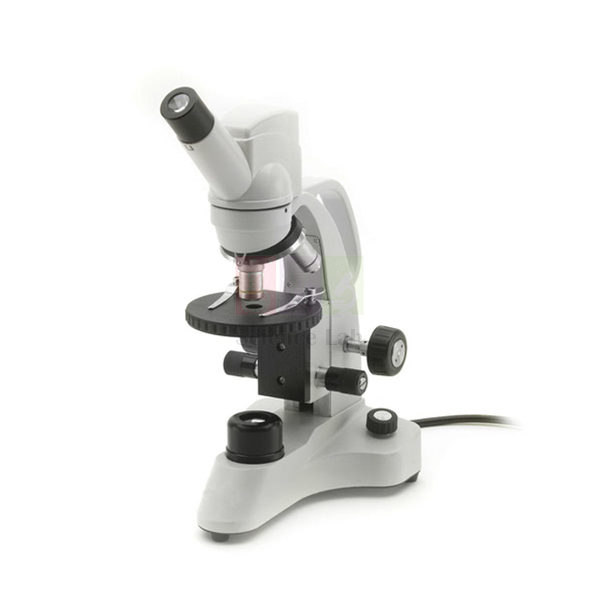
Digital Monocular Microscope, LED
Digital Monocular Microscope, LED (Product Code: SLE/M/16) is a single-eyepiece compound microscope with white LED illumination, used to examine prepared and freshly mounted slides at 40x, 100x and 400x in school science laboratories. Its 45° head and its round 90 mm stage both rotate through 360°, which makes it easy to share across a bench. It is supplied by Jain Scientific Equipments Pvt Ltd (ScienceLab), Ambala, India, to schools looking for a monocular microscope in India and abroad.
Specifications
| Parameter | Detail |
|---|---|
| Observation head | Monocular, inclined at 45°, rotating through 360° |
| Eyepiece | WF10x/16 mm |
| Objectives | Achromatic DIN 4x, 10x, 40x |
| Nosepiece | Triple |
| Magnifications | 40x, 100x, 400x |
| Focusing | Coarse and fine, on separate axes |
| Illumination | White LED, non-rechargeable, with intensity control |
| Stage | Round, 90 mm diameter, rotating through 360°, 5 mm range, with slide clips |
| Camera / screen | Not listed in the current specification – please confirm the digital output you need |
| Product code | SLE/M/16 |
| Supplied by | Jain Scientific Equipments Pvt Ltd (ScienceLab), Ambala, India |
What Is the Monocular LED Microscope Used For?
As a compound microscope, the Digital Monocular Microscope, LED is built for slide-mounted specimens: examining pre-mounted slides, making temporary mounts of onion peel, cheek cells or pond water, and looking at them under high power. Compound optics give a narrow field and a short working distance, so the specimen must be thin enough for light from below to pass through it.
Thick, unmounted material such as insects, plants, rocks and fossils, or micro-dissection work, calls for a stereo microscope instead, which offers low power, a wide field and a long working distance. Many schools keep a few of each. With this model, begin at 4x with the LED turned low, rotate the round stage to line up the specimen, and raise the intensity as you move to 40x.
What to Specify When Ordering
- The digital output you expect (camera, screen or software), since none is listed in the current specification.
- Number of microscopes needed for each class or lab.
- Slides, cover slips and slide boxes to add to the same consignment.
- Delivery city or country.
Supplier
Jain Scientific Equipments Private Limited supplies this monocular LED microscope under its ScienceLab trading name from Ambala, Haryana. Schools, tuition centres, science-kit distributors and importers in India and international markets buy it alongside slides and dissection items, so a whole biology bench can be quoted at once. See the company profile for background on ScienceLab.
Related Laboratory Equipment
Consumables and a stereo alternative for a school microscope bench:
- Microscope Slides Glass — plain slides for temporary mounts.
- Microscope Cover Slips — to cover wet mounts before viewing.
- Basic Botany Slide (Set of 25) — prepared plant sections that suit 40x to 400x viewing.
- Stereo Binocular Microscope — for insects, rocks and other thick specimens.
- Slide Box — keeps prepared slides sorted and dust-free.
More models are listed on the Microscope category page.
Frequently Asked Questions
What magnifications does the Digital Monocular Microscope, LED offer?
The Digital Monocular Microscope, LED offers 40x, 100x and 400x. A WF10x/16 mm eyepiece works with achromatic DIN 4x, 10x and 40x objectives on a triple nosepiece. There is no oil-immersion objective, so choose a model with a 100x oil objective for bacteria work.
Does the Digital Monocular Microscope, LED include a camera or screen?
The specification we hold for the Digital Monocular Microscope, LED lists its optics, LED lighting and stage, but no built-in camera, screen or software. Please tell us through the contact page which digital features you need, and we will confirm before you order.
Is the LED in the Digital Monocular Microscope, LED rechargeable?
No. The Digital Monocular Microscope, LED uses a white LED that is non-rechargeable, with an intensity control for adjusting brightness. If you need to know the power arrangement for your classroom, ask us when requesting the quotation.
How does the stage of the Digital Monocular Microscope, LED work?
The Digital Monocular Microscope, LED has a round 90 mm stage that rotates through 360°, with a 5 mm range and slide clips. Turning the stage re-orients the specimen under the objective without the student having to lift or slide the glass.
Can the Digital Monocular Microscope, LED be used for insects or rocks?
The Digital Monocular Microscope, LED is a compound microscope for thin, slide-mounted specimens. Insects, plants, rocks, fossils and dissection work are better viewed under a stereo microscope, which gives low power, a wide field and a long working distance.
Who supplies the Digital Monocular Microscope, LED?
The Digital Monocular Microscope, LED is supplied by Jain Scientific Equipments Private Limited, trading as ScienceLab, Ambala, Haryana, India. It quotes schools, colleges, distributors and importers in India and international markets, and can bundle slides and accessories into the same order.
What should a quotation request for the Digital Monocular Microscope, LED include?
Include the product code SLE/M/16, the number of Digital Monocular Microscope, LED units, any digital features you expect, the slides or accessories to add, and the delivery location. Those details allow one complete quotation instead of several follow-up emails.
Request a Quote
Ask for a quotation on the Digital Monocular Microscope, LED (SLE/M/16) through our contact page, or add it to the enquiry cart with the slides and cover slips you need.
Last updated: 24 September 2026
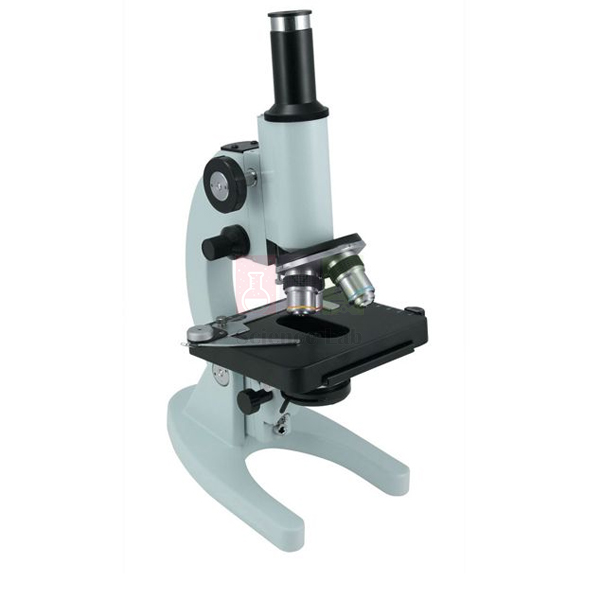
Student Microscope with Fixed Condenser
Student Microscope with Fixed Condenser (Product Code: SLE/M/17) is a mirror-illuminated compound microscope used to teach slide observation from 50x to 675x in school and junior-college biology practicals. Its fixed Abbe-type condenser with iris diaphragm, 10x and 15x eyepieces and all-metal stand that inclines up to 90° suit everyday class use, and mirror lighting needs no mains point at the bench. It is supplied by Jain Scientific Equipments Pvt Ltd (ScienceLab), Ambala, India, as school biology lab equipment.
Specifications
| Parameter | Detail |
|---|---|
| Magnification | 50x to 675x |
| Eyepieces | 10x and 15x |
| Objectives | 10x and 40/45x (S.L.), all achromatic |
| Nosepiece | Triple, revolving |
| Condenser | Fixed, Abbe type, with iris diaphragm |
| Illumination | Plano-concave mirror on gimbal mount |
| Stage | Full square stage, 112 x 112 mm, with stage clips |
| Stand | All-metal body, properly balanced; arm inclinable up to 90° for easy viewing |
| Focusing | Separate coarse and fine focusing knobs |
| Optical features | Parfocal, precentred, high numerical aperture, high resolution |
| Lens coating | Special coating described as unaffected by moisture, fungus, fogginess or other weather effects over time |
| Product code | SLE/M/17 |
| Supplied by | Jain Scientific Equipments Pvt Ltd (ScienceLab), Ambala, India |
What Is the Student Microscope with Fixed Condenser Used For?
This is the everyday instrument for class practicals on onion epidermis, cheek cells, leaf and stem sections and bought-in prepared slides. Students find the specimen with the 10x objective and 10x eyepiece, then swing in the 40/45x objective and change to the 15x eyepiece for detail up to 675x. Because the optics are parfocal, the image stays nearly in focus when the nosepiece turns, so only the fine knob is needed.
Lighting comes from the gimbal-mounted plano-concave mirror, which can be angled towards a window or a separate lamp; the flat face usually works best with the condenser, while the concave face helps when light is weak. Close the iris diaphragm a little to add contrast to unstained mounts, and open it for stained specimens at high power. Tilting the arm back makes long sessions more comfortable for seated students.
What to Specify When Ordering
- Number of microscopes for each practical batch.
- Fixed condenser (this model, SLE/M/17) or the movable-condenser version (SLE/M/18).
- Whether you need a separate light source, since the listed illumination is a mirror.
- Slides, cover glasses and slide storage to include in the same consignment.
Supplier
ScienceLab, the trading name of Jain Scientific Equipments Private Limited in Ambala, Haryana, supplies this fixed-condenser student microscope to schools, state and private education buyers, dealers and importers. It is often quoted as part of a complete biology practical set with slides and dissection tools. Company background is available on the ScienceLab profile.
Related Laboratory Equipment
Useful additions for a student microscope practical:
- Student Microscope with Movable Condenser — the companion model with an adjustable condenser.
- Microscope Glass Slides — for students' own temporary mounts.
- Glass Cover Slips, No. 1 — thin covers for wet mounts.
- Mitosis & Meiosis Set, Microscope Slides — prepared slides for the cell-division practical.
- Microscope Slide Case — safe storage for the class slide collection.
Compare other models on the Microscope category page.
Frequently Asked Questions
What magnification does the Student Microscope with Fixed Condenser give?
The Student Microscope with Fixed Condenser is listed at 50x to 675x. It carries 10x and 15x eyepieces and achromatic 10x and 40/45x (S.L.) objectives on a triple revolving nosepiece, which covers typical school cell and tissue practicals.
Does the Student Microscope with Fixed Condenser need electricity?
No mains connection is listed for the Student Microscope with Fixed Condenser. It is lit by a plano-concave mirror on a gimbal mount, which reflects daylight or light from a separate lamp up through the fixed Abbe condenser.
How is a fixed condenser different from a movable one?
On the Student Microscope with Fixed Condenser, the Abbe-type condenser stays at a set height and light is controlled with its iris diaphragm. A movable condenser can also be raised or lowered; that version is listed separately as SLE/M/18.
What size is the stage on the Student Microscope with Fixed Condenser?
The Student Microscope with Fixed Condenser has a full square stage measuring 112 x 112 mm, fitted with stage clips that hold a standard slide in place while students move it by hand.
Are the optics of the Student Microscope with Fixed Condenser protected against fungus?
The optics of the Student Microscope with Fixed Condenser carry a special coating described as unaffected by moisture, fungus, fogginess and other weather effects over time. Storing the instrument covered in a dry cupboard still helps keep the lenses clean.
Who supplies the Student Microscope with Fixed Condenser?
The Student Microscope with Fixed Condenser is supplied by Jain Scientific Equipments Private Limited, which trades as ScienceLab from Ambala, Haryana, India, to schools, colleges, dealers and importers in India and international markets.
What should a quotation request for the Student Microscope with Fixed Condenser include?
For the Student Microscope with Fixed Condenser, give the quantity, product code SLE/M/17, any slides or accessories to add, and the delivery city or country. Mention tender or institutional paperwork needs too, so they can be covered in the same reply.
Request a Quote
Request a quotation for the Student Microscope with Fixed Condenser (SLE/M/17) on our contact page, or list it in the enquiry cart with the slides and cover slips your class needs.
Last updated: 24 September 2026
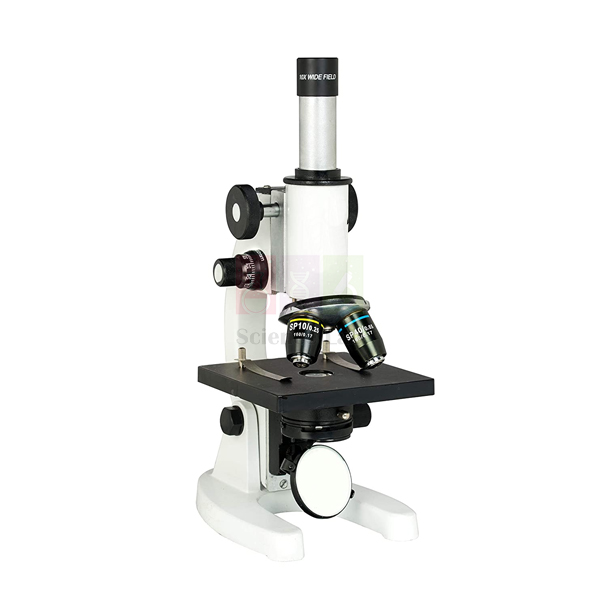
Student Microscope with Movable Condenser
Student Microscope with Movable Condenser (Product Code: SLE/M/18) is a student compound microscope whose condenser can be moved, used to teach slide observation and light control in school and college biology laboratories. Adjusting the condenser lets students see for themselves how the light reaching a specimen changes brightness and contrast, a step beyond fixed-condenser class models. It is supplied by Jain Scientific Equipments Pvt Ltd (ScienceLab), Ambala, as biology lab equipment in India; please ask us for its current specification before ordering.
Key Details
| Parameter | Detail |
|---|---|
| Microscope type | Student compound microscope |
| Condenser | Movable, as the product name states |
| Magnification, optics, stage and lighting | Confirmed with your quotation – ask us for the current specification |
| Companion model | Student Microscope with Fixed Condenser (SLE/M/17) |
| Product code | SLE/M/18 |
| Supplied by | Jain Scientific Equipments Pvt Ltd (ScienceLab), Ambala, India |
What Is the Movable-Condenser Student Microscope Used For?
A student microscope of this kind is used for routine slide practicals, such as plant cells, cheek cells, leaf sections and prepared slides, in classes that also want students to learn correct illumination. The condenser gathers light from the source below the stage and focuses it on the specimen; being able to move it lets the user match that light to the objective in use.
A simple routine works well: focus the specimen at low power, then move the condenser until the field is evenly and comfortably lit. Bring it close to the slide when switching to high power, where more light is needed, and move it away for low-power or unstained mounts, where softer light often shows more detail. Teachers can pair it with the fixed-condenser model so students compare the two set-ups side by side.
Supplier
Jain Scientific Equipments Private Limited, which trades as ScienceLab from Ambala, Haryana, supplies this movable-condenser student microscope to schools, colleges, dealers and importers in India and international markets. Because the detailed specification is confirmed at quotation stage, our team will set out the optics, stage and lighting in writing so you can check them against your syllabus or tender. Read more on the ScienceLab company profile.
Related Laboratory Equipment
Items that support a student microscope practical:
- Student Microscope with Fixed Condenser — the fixed-condenser companion model, with a published specification.
- Microscope Slides Glass — plain slides for students' own mounts.
- Microscope Cover Slips — to protect wet mounts and the objective.
- Basic Botany Slide (Set of 25) — ready-made plant sections for class use.
- Magnifying Glass — for a first look at specimens before they go under the microscope.
All models are listed on the Microscope category page.
Frequently Asked Questions
What does the movable condenser on the Student Microscope with Movable Condenser do?
On the Student Microscope with Movable Condenser, the condenser can be moved to change how light is concentrated on the specimen. Moving it towards the slide suits high power, while moving it away gives softer light that can improve contrast on unstained mounts.
What magnification does the Student Microscope with Movable Condenser have?
The magnification, objectives and eyepieces of the Student Microscope with Movable Condenser are confirmed with each quotation. Please ask through the contact page and we will send the current specification so you can check it against your practical syllabus.
How does the Student Microscope with Movable Condenser differ from the fixed-condenser model?
The Student Microscope with Movable Condenser allows the condenser to be moved, while the Student Microscope with Fixed Condenser (SLE/M/17) keeps it at a set height. Ask us for both specifications if you want to compare the two before choosing.
Who supplies the Student Microscope with Movable Condenser?
The Student Microscope with Movable Condenser is supplied by Jain Scientific Equipments Private Limited, trading as ScienceLab, Ambala, Haryana, India. The company quotes schools, colleges, dealers and importers in India and international markets directly.
Can the Student Microscope with Movable Condenser be ordered for several school labs?
Yes, the Student Microscope with Movable Condenser can be quoted in quantities for several laboratories. State the number of units, the delivery addresses and any slides or cover slips needed, and the enquiry can be answered in one quotation.
What should a quotation request for the Student Microscope with Movable Condenser include?
Include product code SLE/M/18, the quantity of Student Microscope with Movable Condenser units, a request for the current specification, any accessories, and the delivery city or country, so the reply covers both the technical details and the supply terms.
Request a Quote
For the Student Microscope with Movable Condenser (SLE/M/18), contact us through the contact page or add it to the enquiry cart, and ask for the specification sheet with your quotation.
Last updated: 24 September 2026
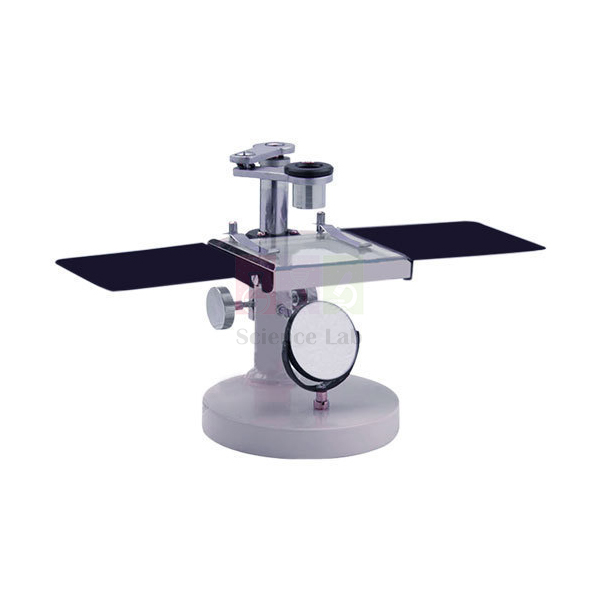
Dissecting Microscope
Dissecting Microscope (Product Code: SLE/M/19) is a low-power microscope with 10x and 20x lenses on a jointed arm, used for demonstrations, close study of small organisms and fine dissection work in school and college biology labs. Detachable rests on both sides of its 70 x 90 mm glass stage steady the hands during delicate cutting, and the high-eyepoint lenses suit spectacle wearers. It is supplied by Jain Scientific Equipments Pvt Ltd (ScienceLab), Ambala, a laboratory instruments supplier in India, alongside its dissection kit range.
Specifications
| Parameter | Detail |
|---|---|
| Intended work | Demonstrations, close study of small organisms, fine dissection |
| Lenses | High-eyepoint, 10x and 20x magnification, comfortable for spectacle wearers |
| Lens mounting | Jointed arm allowing the whole stage area to be scanned |
| Stage | Wide glass stage, 70 x 90 mm, with two spring clips |
| Illumination | Reversible substage mirror / opal-face illuminator, for daylight or artificial light |
| Focusing | Rack and pinion enclosed in the stage support pillar, knob on either side of the pinion spindle |
| Hand rests | Detachable, one on either side of the stage |
| Overall height | 180 mm |
| Case | Wooden storage and carrying case with fittings for lenses, hand rests and microscope |
| Product code | SLE/M/19 |
| Supplied by | Jain Scientific Equipments Pvt Ltd (ScienceLab), Ambala, India |
What Is the Dissecting Microscope Used For?
The Dissecting Microscope gives a magnified, upright view of specimens that are too thick or too delicate for a slide: flowers and their parts, seeds, small invertebrates and preserved material. The 10x lens shows the overall layout of a specimen, and the 20x lens brings out finer structures such as veins, hairs or mouthparts. With both hands resting on the detachable supports, a student can hold a needle and forceps steadily while watching the cut through the lens.
Swing the jointed arm across the stage to scan the specimen instead of repeatedly moving the specimen itself. Turn the reversible illuminator to its mirror side near a window, or to its opal face under a room lamp for softer, even light, and focus with whichever knob is nearer your free hand. After the class, the lenses, hand rests and microscope pack into the fitted wooden case, which keeps parts together for the next biology lab session.
Supplier
This dissecting microscope is supplied by Jain Scientific Equipments Private Limited, known by its trading name ScienceLab, from Ambala, Haryana. Schools, colleges, teacher-training institutes, dealers and importers in India and international markets often order it with dissecting kits, pans and needles as one practical package. Company details are on the ScienceLab profile page.
Related Laboratory Equipment
Tools and accessories for a dissection practical:
- Dissecting Kit (Economy) — the basic instruments a student needs at the microscope.
- Dissection Pan — holds larger specimens before and after viewing.
- Dissecting Needle — for teasing apart fine tissue under the lens.
- Dissecting Dishes — stainless-steel dishes with flanged edges for holding specimens during dissection.
- Bull Type Dissecting Microscope — a related model in the same range.
Browse further models on the Microscope category page.
Frequently Asked Questions
What magnification does the Dissecting Microscope give?
The Dissecting Microscope has two high-eyepoint lenses giving 10x and 20x magnification. They are mounted on a jointed arm, so the lens can be moved over any part of the 70 x 90 mm glass stage without disturbing the specimen.
Can spectacle wearers use the Dissecting Microscope?
Yes. The Dissecting Microscope uses high-eyepoint lenses, which can be used comfortably by students and teachers who wear spectacles, so they do not need to remove their glasses during a dissection.
What comes with the Dissecting Microscope?
The Dissecting Microscope comes with its 10x and 20x lenses, detachable hand rests for both sides of the stage, and a wooden storage and carrying case with fittings that hold the lenses, hand rests and microscope in place.
How is the specimen lit on the Dissecting Microscope?
The Dissecting Microscope has a reversible substage mirror with an opal face on the other side. It gives good lighting of objects in daylight or under artificial light, and no electrical connection is listed for the instrument.
How is the Dissecting Microscope focused?
The Dissecting Microscope focuses by a rack and pinion enclosed within the stage support pillar. A knob sits on either side of the pinion spindle, so both left- and right-handed users can focus while holding a tool in the other hand.
Who supplies the Dissecting Microscope?
The Dissecting Microscope is supplied by Jain Scientific Equipments Private Limited, which trades as ScienceLab from Ambala, Haryana, India, to schools, colleges, dealers and importers in India and international markets.
What should a quotation request for the Dissecting Microscope include?
A quotation request for the Dissecting Microscope should give product code SLE/M/19, the quantity, any dissecting kits, needles or pans to add, and the delivery city or country. One enquiry can then cover the whole dissection bench.
Request a Quote
Enquire about the Dissecting Microscope (SLE/M/19) through our contact page, or add it to the enquiry cart with the dissection tools you need.
Last updated: 24 September 2026
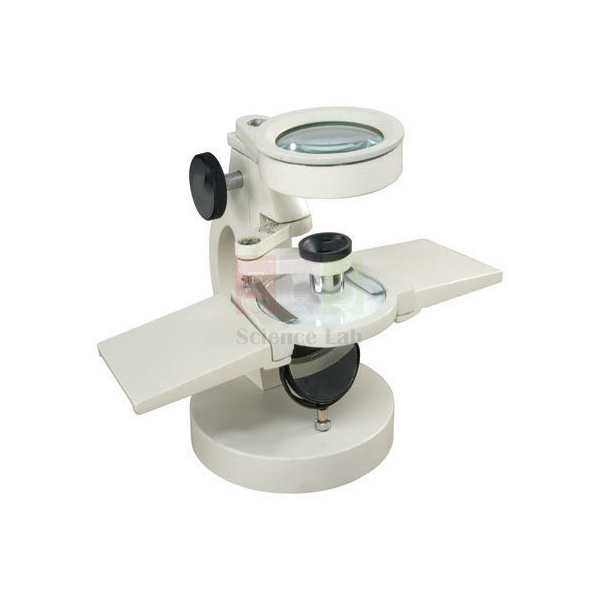
Bull Type Dissecting Microscope
Bull Type Dissecting Microscope (Product Code: SLE/M/20) is a compact, 180 mm tall dissecting microscope used for close examination and fine dissection of small organisms during biology demonstrations and practicals. Its 10x and 20x high-eyepoint lenses ride on a jointed arm over a wide glass stage, and the whole instrument packs into a fitted wooden carrying case. It is supplied by Jain Scientific Equipments Pvt Ltd (ScienceLab), Ambala, India, for school dissection benches in India and abroad.
Specifications
| Parameter | Detail |
|---|---|
| Overall height | 180 mm |
| Magnification | 10x and 20x high-eyepoint lenses, usable with spectacles |
| Lens arm | Jointed, so the lenses can scan the whole stage area |
| Stage | Wide glass stage, 70 x 90 mm, two spring clips |
| Light source | Reversible substage mirror with opal face, for daylight or artificial light |
| Focus mechanism | Rack and pinion enclosed in the stage support pillar; knobs on both sides of the spindle |
| Hand supports | Detachable rests on either side of the stage |
| Storage | Wooden storage and carrying case fitted for microscope, lenses and hand rests |
| Applications | Demonstrations, close study of small organisms, fine dissection work |
| Product code | SLE/M/20 |
| Supplied by | Jain Scientific Equipments Pvt Ltd (ScienceLab), Ambala, India |
What Is the Bull Type Dissecting Microscope Used For?
Teachers use the Bull Type Dissecting Microscope as a demonstration piece that can be passed around a small group, and as a workstation for a student carrying out a careful dissection. Typical subjects are insects, flower parts, seeds and small pond organisms placed in a dish on the glass stage. The 10x lens frames the whole specimen, and switching to 20x shows fine surface detail without any slide preparation.
Because the rack and pinion is enclosed inside the stage pillar, the gearing is kept away from specimen fluids and debris; just wipe the glass stage after wet work. Rest the forearms on the detachable supports, move the jointed arm to follow the cut, and flip the illuminator between mirror and opal face to suit window light or a desk lamp. When the lesson ends, everything returns to its fitted place in the wooden case for carrying to the next room.
What to Specify When Ordering
- Number of units, for example one per dissection group.
- Student dissecting sets, pins and pans to be supplied with the microscopes.
- Delivery city or country, so packing of the wooden cases can be planned.
Supplier
ScienceLab is the name under which Jain Scientific Equipments Private Limited, Ambala, Haryana, trades and supplies the Bull Type Dissecting Microscope. The company serves schools, colleges, science-kit distributors and importers, and can quote microscopes, dissecting sets and consumables together so a biology department deals with a single supplier. See the ScienceLab profile for company information.
Related Laboratory Equipment
Items that complete a dissection workstation:
- Dissecting Set, Student — a stainless-steel set with scissors, forceps, scalpels and a needle in a PVC case.
- Dissection Pan, Pad & Cover — a covered pan for pinning and storing specimens.
- Dissecting T-Pins — for holding specimens open during work.
- Magnifying Glass — for quick checks away from the microscope.
- Dissecting Microscope — a related dissecting model in the same range.
See every model on the Microscope category page.
Frequently Asked Questions
How large is the Bull Type Dissecting Microscope?
The Bull Type Dissecting Microscope stands 180 mm high overall and has a 70 x 90 mm glass stage. Its compact size lets it sit on a crowded bench and fit, with its lenses and hand rests, into the wooden carrying case.
Which lenses does the Bull Type Dissecting Microscope use?
The Bull Type Dissecting Microscope uses high-eyepoint lenses of 10x and 20x magnification on a jointed arm. The high eyepoint means spectacle wearers can view comfortably, and the arm lets the lens be positioned over any part of the stage.
Is the Bull Type Dissecting Microscope easy to carry between rooms?
Yes. The Bull Type Dissecting Microscope is kept in a wooden storage and carrying case with fittings for the lenses, hand rests and microscope, so a teacher can take a complete unit from the store room to any classroom.
Why does the Bull Type Dissecting Microscope have hand rests?
The Bull Type Dissecting Microscope has detachable rests on either side of the stage to steady the hands during fine dissection. Resting the forearms reduces tremor when using needles or fine forceps, and the rests can be removed when not needed.
Does the Bull Type Dissecting Microscope need electricity?
No electrical connection is listed for the Bull Type Dissecting Microscope. It is lit by a reversible substage mirror and opal-face illuminator, which gives good lighting of objects in daylight or under an existing room lamp.
Who supplies the Bull Type Dissecting Microscope?
The Bull Type Dissecting Microscope is supplied by Jain Scientific Equipments Private Limited, trading as ScienceLab, from Ambala, Haryana, India. It quotes schools, colleges, distributors and importers in India and international markets.
What should a quotation request for the Bull Type Dissecting Microscope include?
For the Bull Type Dissecting Microscope, state product code SLE/M/20, the number of units, any dissecting sets or pins to add, and the delivery location. Tender reference numbers or documentation needs can go in the same message.
Request a Quote
To buy the Bull Type Dissecting Microscope (SLE/M/20), use our contact page or add it to the enquiry cart together with dissecting sets and pins.
Last updated: 24 September 2026
Dissecting Operating Microscope
Dissecting Operating Microscope (Product Code: SLE/M/21) is a floor-standing binocular microscope with co-axial illumination, used to give a magnified, hands-free view of fine dissection and delicate work in teaching and research laboratories. It offers five magnification steps from 2.0x to 40x with a 10x eyepiece, and its solid metal stand rides on heavy castor wheels with locking brakes. It is supplied by Jain Scientific Equipments Pvt Ltd (ScienceLab), Ambala, as part of its range of laboratory instruments and biology lab equipment in India.
Specifications
| Parameter | Detail |
|---|---|
| Stand | Floor stand; solid metallic body on heavy castor wheels with locking brakes |
| Optical system | Straight optical system |
| Eyepieces | Straight binocular type, wide field, 10x |
| Magnification | Five steps, 2.0x to 40x (with 10x eyepiece) |
| Objective | 1x |
| Fine focusing | Manual |
| Illumination | Cold-light co-axial illumination; halogen, 100 W |
| Power input | 220–240 V AC, 50 Hz |
| Product code | SLE/M/21 |
| Supplied by | Jain Scientific Equipments Pvt Ltd (ScienceLab), Ambala, India |
What Is the Dissecting Operating Microscope Used For?
The Dissecting Operating Microscope suits anatomy, zoology and life-science laboratories where fine dissection or delicate manipulation has to be carried out with both hands while looking through binocular eyepieces. Because the optics are carried on a floor stand rather than a bench base, the work area underneath stays clear for boards, trays and instruments. Co-axial illumination sends light along the viewing axis, which helps light the floor of narrow cavities and folds with fewer shadows.
In use, wheel the stand into place and lock the castor brakes before starting, so the image does not drift. Locate the area of interest at the 2.0x step, then move up through the five steps towards 40x, finishing with the manual fine focus. Connect only to a 220–240 V, 50 Hz supply, and let the 100 W halogen lamp cool before covering or moving the microscope.
What to Specify When Ordering
- Your site mains supply, since the listed input is 220–240 V AC, 50 Hz.
- Number of units and the rooms they will serve.
- Whether spare halogen lamps should be quoted with the microscope.
- Delivery city or country, as a floor-standing unit needs suitable freight packing.
Supplier
Jain Scientific Equipments Private Limited, trading as ScienceLab from Ambala, Haryana, supplies the Dissecting Operating Microscope to universities, colleges, research laboratories, dealers and importers in India and international markets. Buyers can ask for the microscope, dissecting sets and boards in one quotation, and technical questions about the listed specification are answered before an order is placed. Company information is on the ScienceLab profile.
Related Laboratory Equipment
Alternatives and tools for magnified dissection work:
- Dissection Microscope — another model with a five-step magnification changer.
- Stereoscopic Dissection Microscopes — a compact bench option supplied in a wooden box.
- Dissecting Set, Large — a stainless-steel set of instruments in a lined case.
- Dissecting Board — a soft-wood board with raised edges for pinning specimens.
- Dissection Pan, Pad & Cover — an aluminium pan with a pin-holding pad and clear cover.
Other models are on the Microscope category page.
Frequently Asked Questions
What magnification range does the Dissecting Operating Microscope cover?
The Dissecting Operating Microscope covers 2.0x to 40x in five steps when used with its 10x wide-field binocular eyepieces and 1x objective. Stepping lets the user move quickly from an overview to fine detail without changing lenses.
What kind of illumination does the Dissecting Operating Microscope have?
The Dissecting Operating Microscope has cold-light co-axial illumination with a 100 W halogen source. Light travels along the viewing path, so the field under the optics is lit evenly, including recesses that side lighting would leave in shadow.
What power supply does the Dissecting Operating Microscope need?
The Dissecting Operating Microscope needs a power input of 220–240 V AC at 50 Hz. If your laboratory uses a different supply, mention it in your enquiry so that the requirement can be discussed before ordering.
Can the Dissecting Operating Microscope be moved between rooms?
Yes. The Dissecting Operating Microscope has a solid metallic body on a sturdy floor stand riding on heavy castor wheels, which have locking brakes to hold it steady once it is positioned for work.
How is the Dissecting Operating Microscope focused?
Fine focusing on the Dissecting Operating Microscope is manual. The user sets the magnification step first, then turns the fine-focus control to sharpen the image, keeping both eyes at the straight binocular eyepieces throughout.
Who supplies the Dissecting Operating Microscope?
The Dissecting Operating Microscope is supplied by Jain Scientific Equipments Private Limited, trading as ScienceLab, Ambala, Haryana, India, to universities, colleges, research laboratories, dealers and importers in India and international markets.
What should a quotation request for the Dissecting Operating Microscope include?
Include product code SLE/M/21, the number of Dissecting Operating Microscope units, your mains supply, any spare lamps or dissecting instruments required, and the delivery location. Send it through the contact page for one complete reply.
Request a Quote
For the Dissecting Operating Microscope (SLE/M/21), send your requirement via the contact page or add it to the enquiry cart along with any dissecting instruments.
Last updated: 24 September 2026
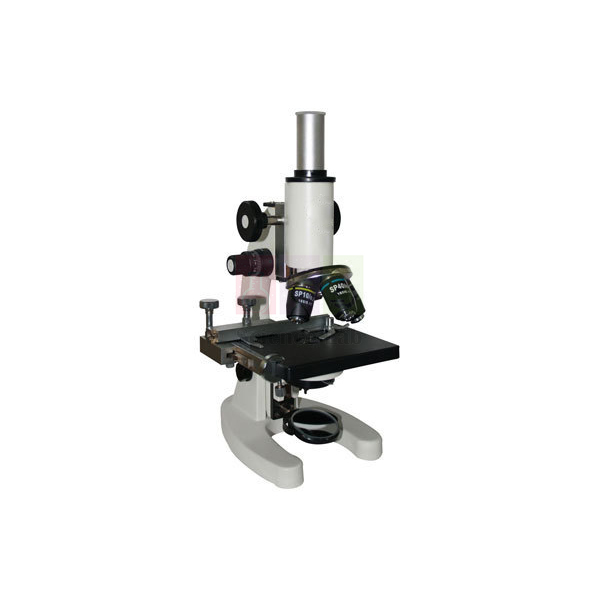
Student Medical Microscope
Student Medical Microscope (Product Code: SLE/M/22) is a compound microscope with a 100x oil-immersion objective, used by medical, nursing and paramedical students to study stained smears and tissue slides in teaching laboratories. It lists 20x to 1500x magnification, a rack-and-pinion Abbe condenser (N.A. 1.25) and a mechanical stage with vernier scales for relocating a field. It is supplied by Jain Scientific Equipments Pvt Ltd (ScienceLab), Ambala, India, as a compound microscope for India and international markets.
Specifications
| Parameter | Detail |
|---|---|
| Magnification | 20x to 1500x (listed range) |
| Objectives | 10x and 45x (S.L.), with 100x oil immersion |
| Eyepieces | Huygenian 5x or 15x; wide field 10x |
| Nosepiece | Quadruple, revolving |
| Condenser | Abbe, N.A. 1.25, with iris diaphragm; focuses up and down by rack and pinion |
| Stage | Fixed square stage, 120 x 120 mm, with mechanical stage; travel 30 x 76 mm with graduated scales and vernier |
| Stand | Robust and stable, inclinable through 90° |
| Mechanical tube length | 160 mm |
| Focusing | Separate knobs for coarse and fine motion |
| Illumination | Plano-concave mirror on gimbal mount; optional attachable 20 W lamp for 220 V, or 6 V 20 W lamp with transformer |
| Product code | SLE/M/22 |
| Supplied by | Jain Scientific Equipments Pvt Ltd (ScienceLab), Ambala, India |
What Is the Student Medical Microscope Used For?
In medical, nursing and paramedical teaching labs, the Student Medical Microscope is the working instrument for practical classes in haematology, histology, microbiology and parasitology. Students scan a stained smear or section with the 10x objective, examine cell shapes with the 45x, and resolve small cells and bacteria with the 100x oil-immersion objective. The graduated mechanical stage with vernier lets a demonstrator note the position of an interesting field so every student can return to it.
For oil-immersion work, rack the Abbe condenser up close to the slide and open the iris diaphragm, then place a drop of immersion oil on the slide before swinging in the 100x objective. The choice of Huygenian 5x or 15x and wide-field 10x eyepieces lets the class balance field size against magnification. Where daylight is unreliable, the optional lamp replaces reliance on the mirror.
What to Specify When Ordering
- Eyepieces required: Huygenian 5x or 15x, and/or wide-field 10x.
- Illumination: mirror only, the optional 20 W lamp for 220 V, or the 6 V 20 W lamp with transformer.
- Immersion oil, slides and cover glasses to be added.
- Number of microscopes for the practical hall.
Supplier
The Student Medical Microscope is supplied by Jain Scientific Equipments Private Limited, which trades as ScienceLab and is based in Ambala, Haryana. Medical and nursing colleges, paramedical institutes, laboratory dealers and importers in India and international markets can obtain the microscope, immersion oil and slides through one enquiry. Read about the company on the ScienceLab profile.
Related Laboratory Equipment
Consumables and prepared material for oil-immersion practicals:
- Immersion Oil, 25ml — required with the 100x oil-immersion objective.
- Cover Glass Slide — colourless glass covers for smears and mounts.
- Microscope Slides Glass — clear slides with ground edges for preparing smears.
- Bacteria slide Set of 12 — prepared bacteria slides that call for oil-immersion viewing.
- Student Monocular Microscope — a related model with a 4x objective and a head that can be changed later.
See more models on the Microscope category page.
Frequently Asked Questions
What magnification does the Student Medical Microscope provide?
The Student Medical Microscope is listed at 20x to 1500x. It carries 10x and 45x (S.L.) objectives plus a 100x oil-immersion objective on a quadruple revolving nosepiece, used with Huygenian 5x or 15x and wide-field 10x eyepieces.
Does the Student Medical Microscope have an oil-immersion objective?
Yes. The Student Medical Microscope includes a 100x oil-immersion objective. Use it with a drop of immersion oil between slide and lens, raise the rack-and-pinion Abbe condenser, and clean the lens after each session.
How is the Student Medical Microscope illuminated?
The Student Medical Microscope has a plano-concave mirror on a gimbal mount. An attachable 20 W lamp for 220 V, or a 6 V 20 W lamp with transformer, is optionally available for rooms where daylight is not sufficient.
What stage does the Student Medical Microscope have?
The Student Medical Microscope has a fixed square stage of 120 x 120 mm with a mechanical stage. The mechanical stage travels 30 x 76 mm and carries graduated scales with vernier, so positions on a slide can be recorded and found again.
Can the Student Medical Microscope be tilted for comfortable viewing?
Yes. The stand of the Student Medical Microscope is robust and stable and can be inclined through 90°, so students can angle the instrument to suit their seated posture during long practical sessions.
Who supplies the Student Medical Microscope?
The Student Medical Microscope is supplied by Jain Scientific Equipments Private Limited, trading as ScienceLab, Ambala, Haryana, India. It serves medical and nursing colleges, laboratories, dealers and importers in India and international markets.
What should a quotation request for the Student Medical Microscope include?
For the Student Medical Microscope, give product code SLE/M/22, the quantity, the eyepieces and illumination option required, and any immersion oil or slides to add, together with the delivery city or country.
Request a Quote
Request a quotation for the Student Medical Microscope (SLE/M/22) through the contact page, or add it to the enquiry cart with immersion oil and slides.
Last updated: 24 September 2026
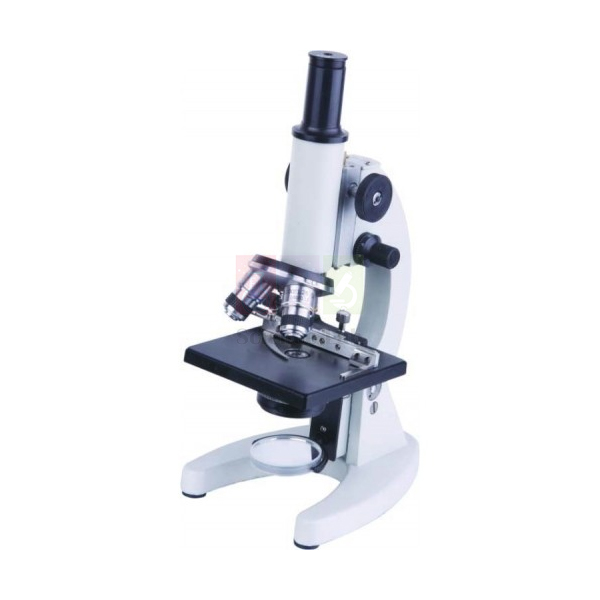
Student Monocular Microscope
Student Monocular Microscope (Product Code: SLE/M/23) is a compound microscope with achromat 4x, 10x, 40x and 100x oil objectives, used for senior-school and undergraduate slide work from 20x to 1500x. Its monocular head is interchangeable with a binocular or vertical photo tube, so a lab can start simple and change the viewing arrangement later. It is supplied by Jain Scientific Equipments Pvt Ltd (ScienceLab), Ambala, India, among its biology lab equipment for India and international markets.
Specifications
| Parameter | Detail |
|---|---|
| Observation head | Monocular; interchangeable with binocular or vertical photo tube |
| Magnification | 20x to 1500x |
| Objectives | Achromat 4x, 10x, 40x (S.L.) and 100x oil immersion |
| Eyepieces | Huygenian 5x or 15x; wide field 10x |
| Nosepiece | Quadruple, revolving on smooth bearings |
| Arm | One-piece die-cast, with ball-bearing guide ways for smooth, backlash-free fine focusing |
| Focusing | Coarse and fine by separate, conveniently placed knobs; fine focus 1 division = 0.002 mm |
| Condenser | Bright field, Abbe N.A. 1.25, focusing up and down by rack and pinion |
| Stage | Mechanical stage, standard size 120 x 140 mm |
| Illumination | Plano-concave mirror; optional 6 V/20 W lamp or direct 220 V lamp, attachable in place of the mirror mount |
| Product code | SLE/M/23 |
| Supplied by | Jain Scientific Equipments Pvt Ltd (ScienceLab), Ambala, India |
What Is the Student Monocular Microscope Used For?
The Student Monocular Microscope covers the full range of a biology practical course on one stand: whole mounts and tissue sections at low power with the 4x and 10x objectives, cell detail at 40x, and stained bacteria with the 100x oil-immersion objective. Because each division of the fine-focus knob equals 0.002 mm, students can also count divisions between two focal planes to estimate the thickness of a specimen, a useful extension exercise for senior classes.
The interchangeable head is the model's planning advantage. A school can equip a lab with monocular heads today and later fit a binocular head for comfort or a vertical photo tube for imaging, keeping the same stand, stage and objectives. For lighting, use the plano-concave mirror in bright rooms, or order the 6 V/20 W or direct 220 V lamp that mounts in place of the mirror.
What to Specify When Ordering
- Head: monocular, or binocular or vertical photo tube if needed now.
- Eyepieces: Huygenian 5x or 15x, and/or wide-field 10x.
- Illumination: mirror, 6 V/20 W lamp, or direct 220 V lamp.
- Immersion oil, slides and cover slips for the 100x objective.
Supplier
ScienceLab, the trading name of Jain Scientific Equipments Private Limited in Ambala, Haryana, supplies the Student Monocular Microscope to schools, colleges, universities, dealers and importers. Departments planning to upgrade heads or lighting later can discuss those options with the same supplier that quoted the original microscopes. Company details are on the ScienceLab profile.
Related Laboratory Equipment
Accessories and alternatives for a full-range student microscope:
- Immersion Oil, 25ml — for the 100x oil-immersion objective.
- Bacteria slide Set of 12 — prepared bacteria that need high magnification.
- Microscope Slides Depression — cavity slides for pond water and live organisms.
- Glass Cover Slips, No. 1 — thin soda-glass covers for wet mounts.
- Binocular Biological Microscope — a binocular alternative with four achromatic objectives.
Compare other models on the Microscope category page.
Frequently Asked Questions
Can the head of the Student Monocular Microscope be changed?
Yes. The monocular head of the Student Monocular Microscope is interchangeable with a binocular or a vertical photo tube. State the head you need in your enquiry, or ask about changing it later, and we will advise on the options.
How fine is the focusing on the Student Monocular Microscope?
On the Student Monocular Microscope, one division of the fine-focus knob equals 0.002 mm. The one-piece die-cast arm uses ball-bearing guide ways, giving smooth, frictionless fine focusing without backlash.
Which objectives come with the Student Monocular Microscope?
The Student Monocular Microscope has achromat 4x, 10x and 40x (S.L.) objectives and a 100x oil-immersion objective, carried on a quadruple nosepiece that revolves on smooth bearings. With the listed eyepieces this gives 20x to 1500x.
What size is the stage of the Student Monocular Microscope?
The Student Monocular Microscope has a mechanical stage of standard size, 120 x 140 mm. The mechanical controls move the slide steadily, which matters most at 40x and 100x, where hand movement is too coarse.
What lighting options does the Student Monocular Microscope have?
The Student Monocular Microscope comes with a plano-concave mirror. An optional 6 V/20 W lamp, or a lamp for direct 220 V connection, can be attached in place of the mirror mount; the bright-field Abbe condenser then focuses that light onto the slide.
Who supplies the Student Monocular Microscope?
The Student Monocular Microscope is supplied by Jain Scientific Equipments Private Limited, trading as ScienceLab from Ambala, Haryana, India, to schools, colleges, universities, dealers and importers in India and international markets.
What should a quotation request for the Student Monocular Microscope include?
Include product code SLE/M/23, the quantity of Student Monocular Microscope units, the head, eyepieces and illumination you want, any consumables, and the delivery city or country, so a single quotation covers the full configuration.
Request a Quote
To order the Student Monocular Microscope (SLE/M/23), write to us via the contact page or add it to the enquiry cart with the accessories listed above.
Last updated: 24 September 2026
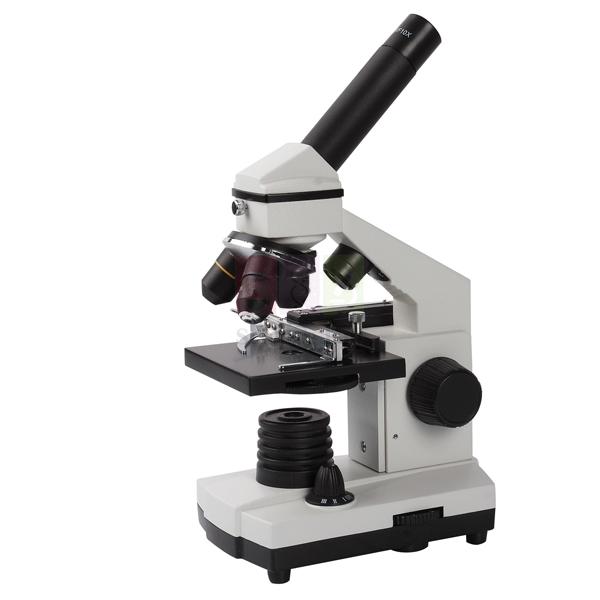
Pathological Monocular Microscope
Pathological Monocular Microscope (Product Code: SLE/M/24) is a single-eyepiece compound microscope with built-in halogen base illumination, used to examine stained tissue sections and smears in pathology teaching and routine laboratory slide work. It combines 4x to 100x oil-immersion objectives, an Abbe N.A. 1.25 condenser and a 120 x 125 mm co-axial mechanical stage on a pressure die-cast body. It is supplied by Jain Scientific Equipments Pvt Ltd (ScienceLab), Ambala, a laboratory instruments supplier in India, for Indian and international markets.
Specifications
| Parameter | Detail |
|---|---|
| Observation head | Monocular tube inclined at 45°, rotatable through 360° |
| Eyepieces | Wide field 10x or 15x |
| Objectives | 4x, 10x, 40/45x (S.L.), 100x oil immersion (S.L.) |
| Nosepiece | Quadruple, revolving on ball bearing |
| Main body | All parts pressure die-cast for long life and good mechanical strength |
| Condenser | Abbe, N.A. 1.25, with spherical lens and adjustable iris diaphragm |
| Illumination | Built-in base illumination with 6 V–20 W halogen bulb, plus plano-concave mirror attachment; suitable for 220 V, 50 Hz AC supply |
| Mechanical stage | Co-axial, low-positioned X-Y stage, 120 x 125 mm, with fine vernier graduation |
| Product code | SLE/M/24 |
| Supplied by | Jain Scientific Equipments Pvt Ltd (ScienceLab), Ambala, India |
What Is the Pathological Monocular Microscope Used For?
The Pathological Monocular Microscope is aimed at medical laboratory technology, pathology and microbiology practicals, where students examine histology sections, blood films and stained bacterial smears slide after slide. The built-in 6 V–20 W halogen base light gives the same illumination at every bench regardless of daylight, and the plano-concave mirror attachment remains available as an alternative light path.
The co-axial X-Y controls sit low beside the stage, so the hand can rest on the bench while scanning a smear methodically, and the vernier graduation records where a notable field was found. Rotating the 45° head lets a demonstrator turn the eyepiece towards a student without moving the slide. For 100x work, close down the iris only slightly, add immersion oil, and use the fine focus gently.
What to Specify When Ordering
- Eyepieces: wide field 10x or 15x.
- Mains supply at site; the listed lighting suits 220 V, 50 Hz AC.
- Whether spare 6 V–20 W halogen bulbs should be quoted.
- Immersion oil, slides and cover glasses for the practical course.
Supplier
The Pathological Monocular Microscope is supplied by Jain Scientific Equipments Private Limited, the company behind the ScienceLab name in Ambala, Haryana. Colleges running laboratory technology courses, training institutes, laboratory dealers and importers in India and international markets can quote the microscope together with oil, slides and slide storage. Company background is on the ScienceLab profile.
Related Laboratory Equipment
Items that support pathology slide practicals:
- Pathological Binocular Microscope with Co-Axial Focusing Control — the binocular version for longer viewing sessions.
- Immersion Oil, 25ml — for the 100x oil-immersion objective.
- Human Histology Slide Set of 25 — prepared tissue sections for teaching.
- Cover Glass Slide — colourless glass covers for smears and sections.
- Slide Tray Cabinet, Polypropylene — organised storage for a growing slide collection.
More models are on the Microscope category page.
Frequently Asked Questions
What light source does the Pathological Monocular Microscope use?
The Pathological Monocular Microscope uses a built-in base illumination system with a 6 V–20 W halogen bulb, suitable for a 220 V, 50 Hz AC supply. A plano-concave mirror attachment is also provided as an alternative light path.
Which objectives and eyepieces does the Pathological Monocular Microscope have?
The Pathological Monocular Microscope has 4x, 10x, 40/45x (S.L.) and 100x oil-immersion (S.L.) objectives on a quadruple nosepiece that revolves on a ball bearing, with wide-field eyepieces of 10x or 15x.
What does S.L. mean on the Pathological Monocular Microscope objectives?
On the Pathological Monocular Microscope, S.L. marks the 40/45x and 100x objectives as spring-loaded. If the lens is lowered onto a slide by mistake, the front section retracts slightly, helping protect both the slide and the objective.
What stage does the Pathological Monocular Microscope have?
The Pathological Monocular Microscope has a co-axial, low-positioned mechanical X-Y stage measuring 120 x 125 mm with fine vernier graduation, so a slide can be scanned smoothly and positions can be noted for later review.
How does the Pathological Monocular Microscope differ from the binocular version?
The Pathological Monocular Microscope has a single 45° tube, whereas the binocular version (SLE/M/25) adds a two-eyepiece head with interpupillary and dioptric adjustment. The binocular suits long viewing sessions; the monocular keeps the cost per bench lower.
Who supplies the Pathological Monocular Microscope?
The Pathological Monocular Microscope is supplied by Jain Scientific Equipments Private Limited, trading as ScienceLab, Ambala, Haryana, India. It quotes colleges, training institutes, dealers and importers in India and international markets through the contact page.
Request a Quote
For a quotation on the Pathological Monocular Microscope (SLE/M/24), use our contact page or add it to the enquiry cart, stating the eyepieces and consumables you need.
Last updated: 24 September 2026
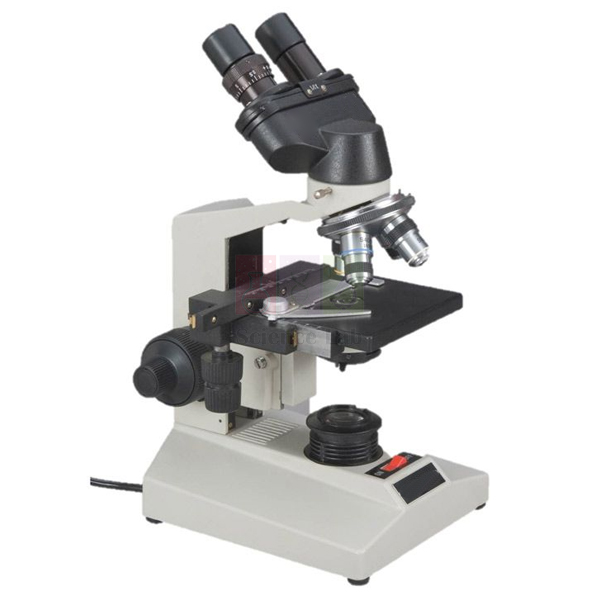
Pathological Binocular Microscope with Co-Axial Focusing Control
Pathological Binocular Microscope with Co-Axial Focusing Control (Product Code: SLE/M/25) is a two-eyepiece compound microscope used for extended examination of stained sections and smears in pathology, histology and microbiology teaching laboratories. Its 45° binocular head rotates through 360° and adjusts from 54 to 74 mm between the eyes, with dioptric correction, so each user can view comfortably through long sessions. It is supplied by Jain Scientific Equipments Pvt Ltd (ScienceLab), Ambala, India.
Specifications
| Parameter | Detail |
|---|---|
| Observation head | Binocular, inclined at 45°, rotatable through 360° |
| Interpupillary distance | Adjustment ring, 54–74 mm, with dioptric adjustment |
| Focusing control | Co-axial, as named |
| Eyepieces | Wide field 10x or 15x, paired |
| Objectives | 4x, 10x, 40/45x (S.L.), 100x oil immersion (S.L.) |
| Nosepiece | Quadruple, revolving on ball bearing |
| Main body | All parts pressure die-cast for long life and good mechanical strength |
| Condenser | Abbe, N.A. 1.25, with spherical lens and adjustable iris diaphragm |
| Illumination | Built-in base system with 6 V–20 W halogen bulb and plano-concave mirror attachment; suitable for 220 V, 50 Hz AC |
| Mechanical stage | Co-axial, low-positioned X-Y stage, 120 x 125 mm, fine vernier graduation |
| Product code | SLE/M/25 |
| Supplied by | Jain Scientific Equipments Pvt Ltd (ScienceLab), Ambala, India |
What Is the Pathological Binocular Microscope Used For?
Viewing with both eyes reduces fatigue when a student or demonstrator spends a whole practical scanning blood films, tissue sections or stained bacterial smears. That makes this binocular model a common choice for the demonstrator's bench and for senior batches in laboratory technology, pathology and microbiology courses. Paired 10x or 15x wide-field eyepieces work with 4x to 100x oil-immersion objectives, and the built-in halogen light keeps illumination consistent from bench to bench.
Each new user should first slide the interpupillary ring until the two fields merge into one circle, focus with the fixed eyepiece, then correct the other eye with the dioptric adjustment. Co-axial focusing places coarse and fine control on the same axis, so the hand stays in one position while the low-set stage knobs move the slide. Note the vernier readings of useful fields for later revision.
What to Specify When Ordering
- Paired eyepieces: wide field 10x or 15x.
- Mains supply at site; the listed lighting suits 220 V, 50 Hz AC.
- Number of units, and whether spare 6 V–20 W halogen bulbs are wanted.
- Immersion oil, cover glasses and slide storage for the course.
Supplier
This pathological binocular microscope is supplied by Jain Scientific Equipments Private Limited, which trades as ScienceLab from Ambala, Haryana, to colleges, training institutes, laboratory dealers and importers in India and international markets. For vendor registration, the supplying company is Jain Scientific Equipments Private Limited (CIN U29309HR2020PTC087597, GSTIN 06AAECJ8618A1ZT). Further details are on the ScienceLab company profile.
Related Laboratory Equipment
Items used alongside a binocular pathology microscope:
- Pathological Monocular Microscope — the single-eyepiece version for student benches.
- Immersion Oil, 25ml — for the 100x oil-immersion objective.
- Glass Cover Slips, No. 1 — thin covers for smears and sections.
- Unit System Slide Cabinet — tray storage for a large reference slide collection.
- Micrometric Slide — a stage graticule for calibrating measurements with a micrometer eyepiece.
See all models on the Microscope category page.
Frequently Asked Questions
How is the head of the Pathological Binocular Microscope with Co-Axial Focusing Control adjusted?
The Pathological Binocular Microscope with Co-Axial Focusing Control has a 45° binocular head that rotates through 360°, an interpupillary adjustment ring covering 54–74 mm, and dioptric adjustment, so each user can set it to their own eyes.
What does co-axial focusing control mean on this pathological binocular microscope?
On the Pathological Binocular Microscope with Co-Axial Focusing Control, the coarse and fine focus controls share one axis. The user can move from rough to precise focus without shifting the hand, which helps during long slide-scanning sessions.
Which objectives and eyepieces are fitted to the Pathological Binocular Microscope with Co-Axial Focusing Control?
The Pathological Binocular Microscope with Co-Axial Focusing Control carries 4x, 10x, 40/45x (S.L.) and 100x oil-immersion (S.L.) objectives on a ball-bearing quadruple nosepiece, with paired wide-field eyepieces of 10x or 15x.
How is the Pathological Binocular Microscope with Co-Axial Focusing Control illuminated?
The Pathological Binocular Microscope with Co-Axial Focusing Control has built-in base illumination with a 6 V–20 W halogen bulb for a 220 V, 50 Hz AC supply, plus a plano-concave mirror attachment, feeding an Abbe N.A. 1.25 condenser with iris diaphragm.
What stage does the Pathological Binocular Microscope with Co-Axial Focusing Control have?
The Pathological Binocular Microscope with Co-Axial Focusing Control has a co-axial, low-positioned mechanical X-Y stage of 120 x 125 mm with fine vernier graduation, for smooth scanning and for recording slide positions.
Who supplies the Pathological Binocular Microscope with Co-Axial Focusing Control?
The Pathological Binocular Microscope with Co-Axial Focusing Control is supplied by Jain Scientific Equipments Private Limited, trading as ScienceLab, Ambala, Haryana, India, to colleges, institutes, dealers and importers in India and international markets.
What should a quotation request for the Pathological Binocular Microscope with Co-Axial Focusing Control include?
Include product code SLE/M/25, the quantity, the eyepiece choice, your mains supply, any bulbs or consumables, and the delivery city or country. Vendor-registration documents for tenders can be requested in the same message.
Request a Quote
To request a quotation for the Pathological Binocular Microscope with Co-Axial Focusing Control (SLE/M/25), use the contact page or add it to the enquiry cart.
Last updated: 24 September 2026
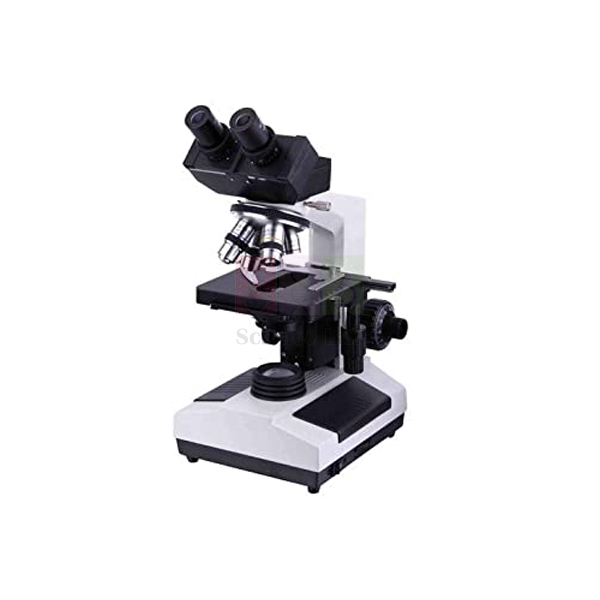
Research Binocular Microscope
Research Binocular Microscope (Product Code: SLE/M/26) is a binocular compound microscope with DIN objectives from 4x to 100x oil immersion, used for postgraduate teaching, project work and research slide examination. It pairs a pre-focusing lock with tension adjustment, coaxial focusing on ball-bearing guide ways and high-eyepoint WF 10x (F.N. 20) eyepieces with a die-cast stand and a large double-plate mechanical stage. It is supplied by Jain Scientific Equipments Pvt Ltd (ScienceLab), Ambala, India.
Specifications
| Parameter | Detail |
|---|---|
| Observation head | Binocular, inclined at 45°, rotatable through 360° |
| Interpupillary distance | Adjustment ring, 54–74 mm |
| Dioptric adjustment | Ring on the left tube with adjustable dioptric scale |
| Eyepieces | High eye point, wide field 10x (F.N. 20) or 15x, paired |
| Objectives | DIN 4x, 10x, 40/45x (S.L.), 100x oil immersion (S.L.) |
| Nosepiece | Quadruple, revolving on ball bearing |
| Main body | All parts die-cast for long life and good mechanical strength |
| Focusing | Coaxial control with ball-bearing guide way and large knobs; pre-focusing (auto-focusing) lock and tension adjustment ring |
| Condenser | Abbe, N.A. 1.25, with aspherical lens and adjustable iris diaphragm |
| Illumination | Built-in 6 V–20 W halogen system and plano-concave mirror attachment; suitable for 220 V, 50 Hz AC |
| Mechanical stage | Large double-plate X-Y type, co-axial and low-positioned, with fine vernier graduation (dimensions confirmed at quotation) |
| Product code | SLE/M/26 |
| Supplied by | Jain Scientific Equipments Pvt Ltd (ScienceLab), Ambala, India |
What Is the Research Binocular Microscope Used For?
The Research Binocular Microscope serves university botany, zoology and microbiology departments and research laboratories where the same set of slides is examined again and again. Once the pre-focusing lock is set, a user can lower the stage to change slides and bring it straight back close to the working focus. The tension ring lets each user set how firmly the large focusing knobs turn and helps stop the stage drifting under its own weight.
DIN objectives follow a common standard, which generally makes additional or replacement objectives easier to source later. The high-eyepoint WF 10x eyepieces with a field number of 20 give a wide view that spectacle wearers can use comfortably, and the dioptric ring on the left tube corrects for differences between the two eyes. Start at 4x, centre the specimen with the double-plate stage, and set the focus lock at the working magnification.
What to Specify When Ordering
- Paired eyepieces: wide field 10x (F.N. 20) or 15x.
- Stage dimensions you require, so they can be confirmed in the quotation.
- Mains supply at site; the listed lighting suits 220 V, 50 Hz AC.
- Accessories such as immersion oil, a stage micrometer or contrast equipment, so compatibility can be checked.
Supplier
Jain Scientific Equipments Private Limited supplies the Research Binocular Microscope under its ScienceLab trading name from Ambala, Haryana. Universities, research institutes, colleges, dealers and importers in India and international markets use one point of contact for the microscope, its consumables and add-on accessories. More about the company is on the ScienceLab profile.
Related Laboratory Equipment
Accessories and a documentation-ready alternative for research microscopy:
- Research Trinocular Microscope — the trinocular version, adding a third tube for imaging.
- Phase Contrast & Dark Field For Microscopes — a contrast attachment set; ask us whether it suits this stand.
- Immersion Oil, 25ml — for the 100x oil-immersion objective.
- Micrometric Slide — a stage graticule for calibrating measurements.
- Human Histology Slide Set of 25 — prepared tissue sections for reference and teaching.
Further models are on the Microscope category page.
Frequently Asked Questions
What is the focus lock on the Research Binocular Microscope for?
The Research Binocular Microscope has a pre-focusing (auto-focusing) lock and a tension adjustment ring. The lock remembers a working focus position, so after changing slides the stage returns close to focus, while the tension ring sets how firmly the knobs turn.
Can spectacle wearers use the Research Binocular Microscope comfortably?
Yes. The Research Binocular Microscope uses high-eye-point wide-field 10x (F.N. 20) or 15x paired eyepieces, which suit users who keep their spectacles on, and a dioptric ring on the left tube corrects differences between the eyes.
Which objectives does the Research Binocular Microscope use?
The Research Binocular Microscope uses DIN objectives of 4x, 10x, 40/45x (S.L.) and 100x oil immersion (S.L.), mounted on a quadruple nosepiece that revolves on a ball bearing, with an Abbe N.A. 1.25 aspherical condenser below the stage.
How is the Research Binocular Microscope illuminated?
The Research Binocular Microscope has a built-in illumination system with a 6 V–20 W halogen bulb for a 220 V, 50 Hz AC supply, and a plano-concave mirror attachment. Light passes through the condenser's adjustable iris diaphragm to the specimen.
What size is the stage of the Research Binocular Microscope?
The Research Binocular Microscope has a large double-plate X-Y mechanical stage, co-axial and low-positioned, with fine vernier graduation. Please confirm the exact stage dimensions with us through the contact page before ordering.
Can phase contrast be added to the Research Binocular Microscope?
Phase contrast parts are not part of the listed specification for the Research Binocular Microscope. A separate phase contrast and dark field set appears in our range; ask us whether it suits this stand before including it in an order.
Who supplies the Research Binocular Microscope?
The Research Binocular Microscope is supplied by Jain Scientific Equipments Private Limited, trading as ScienceLab, Ambala, Haryana, India, to universities, research institutes, colleges, dealers and importers in India and international markets.
Request a Quote
For the Research Binocular Microscope (SLE/M/26), send your requirement through the contact page or add it to the enquiry cart with any accessories you want checked for compatibility.
Last updated: 24 September 2026
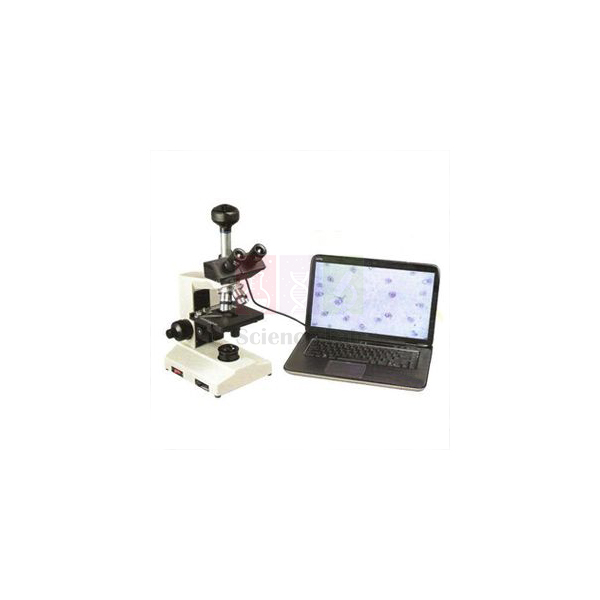
Research Trinocular Microscope
Research Trinocular Microscope (Product Code: SLE/M/27) is a compound microscope with a third photo tube, used to examine and document slides for dissertations, research records and projected teaching. It combines a 45° trinocular head with 54–74 mm interpupillary adjustment, DIN objectives from 4x to 100x oil immersion, and a pre-focusing lock on a die-cast, coaxially focused stand. It is supplied by Jain Scientific Equipments Pvt Ltd (ScienceLab), Ambala, among its laboratory instruments and biology lab equipment in India for research users.
Specifications
| Parameter | Detail |
|---|---|
| Observation head | Trinocular, inclined at 45°, rotatable through 360° |
| Interpupillary distance | Adjustment ring, 54–74 mm |
| Dioptric adjustment | Ring on the left with adjustable dioptric scale |
| Eyepieces | High eye point, wide field 10x (F.N. 20) or 15x, paired |
| Objectives | DIN 4x, 10x, 40/45x (S.L.), 100x oil immersion (S.L.) |
| Nosepiece | Quadruple, revolving on ball bearing |
| Main body | All parts die-cast for long life and good mechanical strength |
| Focusing | Coaxial control with ball-bearing guide way and large knobs; pre-focusing (auto-focusing) lock and tension adjustment ring |
| Condenser | Abbe, N.A. 1.25, aspherical lens, adjustable iris diaphragm |
| Illumination | Built-in 6 V–20 W halogen system and plano-concave mirror attachment; suitable for 220 V, 50 Hz AC |
| Mechanical stage | Large double-plate X-Y type, co-axial and low-positioned, with fine vernier graduation |
| Camera | Not included in the listed specification |
| Product code | SLE/M/27 |
| Supplied by | Jain Scientific Equipments Pvt Ltd (ScienceLab), Ambala, India |
What Is the Research Trinocular Microscope Used For?
The third tube is what sets this model apart: with a microscope camera fitted, researchers capture images for theses, lab notebooks and reports, or show the live field on a seminar-room screen while still viewing through the binocular eyepieces. Postgraduate departments in botany, zoology, microbiology and pathology use it where observations must be recorded, not just seen.
For consistent image series, set the pre-focusing lock at the working magnification so every new slide returns to the same focal plane, and note vernier positions so a field can be re-imaged later. The built-in halogen light keeps exposure steady between sessions; closing the iris diaphragm slightly adds contrast on pale specimens. Because the camera and its adapter are not in the listed specification, plan them into the order from the start.
What to Specify When Ordering
- Camera and adapter for the trinocular tube, or the camera you already own, so fit can be checked.
- Paired eyepieces: wide field 10x (F.N. 20) or 15x.
- Mains supply at site; the listed lighting suits 220 V, 50 Hz AC.
- Required stage dimensions, to be confirmed in the quotation.
Supplier
ScienceLab is the trading name used by Jain Scientific Equipments Private Limited, Ambala, Haryana, which supplies the Research Trinocular Microscope to universities, research institutes, colleges, dealers and importers. Because imaging set-ups vary, buyers can discuss the camera side of the system with the same team that quotes the microscope. Company background is on the ScienceLab profile.
Related Laboratory Equipment
Imaging options and accessories for a trinocular research microscope:
- 5mp Microscope Camera — a C-mount Wi-Fi camera that streams to phones, tablets or computers; confirm fit with the photo tube.
- Microscope Digital Camera, 5MP — a USB eyepiece camera for capture on a computer.
- Research Binocular Microscope — the binocular version for users who do not need imaging.
- Immersion Oil, 25ml — for the 100x oil-immersion objective.
- Slide Tray Cabinet, Polypropylene — keeps imaged slides organised for re-examination.
Explore more on the Microscope category page.
Frequently Asked Questions
Is a camera included with the Research Trinocular Microscope?
No camera is included in the listed specification of the Research Trinocular Microscope. Its third tube is intended for a microscope camera, so tell us which camera you plan to use, or ask for a camera from our range, and fit can be discussed before ordering.
What adjustments does the head of the Research Trinocular Microscope offer?
The Research Trinocular Microscope has a trinocular head inclined at 45° and rotatable through 360°, an interpupillary adjustment ring covering 54–74 mm, and a dioptric adjustment ring on the left with an adjustable dioptric scale.
How does the focus lock on the Research Trinocular Microscope help with imaging?
The pre-focusing lock on the Research Trinocular Microscope stores a working focus position, so each new slide comes back to the same focal plane. That saves time during image series, and the tension ring keeps the setting from drifting.
Which objectives does the Research Trinocular Microscope use?
The Research Trinocular Microscope uses DIN objectives of 4x, 10x, 40/45x (S.L.) and 100x oil immersion (S.L.) on a ball-bearing quadruple nosepiece, with paired high-eye-point WF 10x (F.N. 20) or 15x eyepieces and an Abbe N.A. 1.25 condenser.
How is the Research Trinocular Microscope illuminated?
The Research Trinocular Microscope has a built-in illumination system with a 6 V–20 W halogen bulb, suitable for a 220 V, 50 Hz AC supply, together with a plano-concave mirror attachment as an alternative light source.
What stage does the Research Trinocular Microscope have?
The Research Trinocular Microscope has a large double-plate X-Y mechanical stage, co-axial and low-positioned, with fine vernier graduation. Please confirm the stage dimensions with us through the contact page if they matter for your specimens.
Who supplies the Research Trinocular Microscope?
The Research Trinocular Microscope is supplied by Jain Scientific Equipments Private Limited, trading as ScienceLab, Ambala, Haryana, India, to universities, research institutes, colleges, dealers and importers in India and international markets.
Request a Quote
To price the Research Trinocular Microscope (SLE/M/27) with or without a camera, contact us through the contact page or add it to the enquiry cart.
Last updated: 24 September 2026
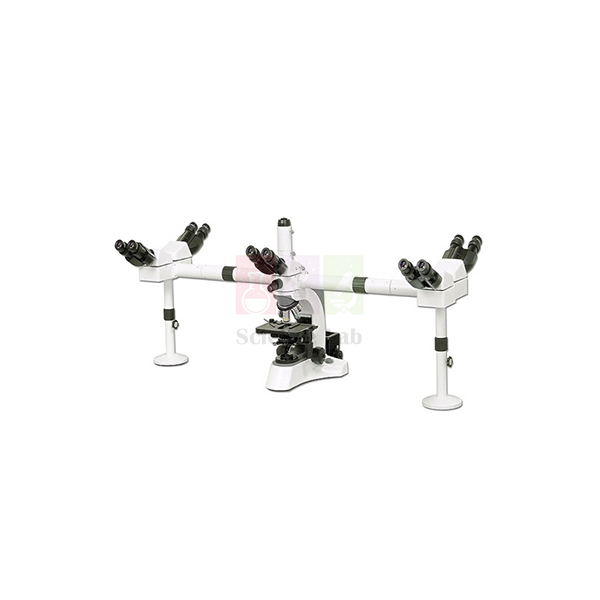
Multi Viewing Microscope
Multi Viewing Microscope (Product Code: SLE/M/28) is a teaching microscope with a trinocular head and additional binocular viewing, used when a demonstrator and a group must see the same slide field at the same time in colleges, training centres and research laboratories. It pairs infinity plan achromatic 4x to 100x objectives with a green LED pointer, Köhler halogen illumination and C-mount video adapters. It is supplied by Jain Scientific Equipments Pvt Ltd (ScienceLab), Ambala, India.
Specifications
| Parameter | Detail |
|---|---|
| Optical system | Infinity optical system |
| Viewing head | Compensation-free trinocular head, inclined at 30°, rotatable through 360°, interpupillary distance 48–75 mm |
| Binocular viewing | Compensation-free binocular head, inclined at 30°, rotatable through 360°, interpupillary distance 48–75 mm |
| Eyepieces | Extra wide field WF 10x/20, 10 pcs |
| Nosepiece | Inverse quintuple |
| Objectives | Infinity plan achromatic 4x, 10x, 40x, 100x |
| Condenser | Swing condenser, N.A. 0.9/0.25 |
| Illumination | Köhler illumination, external, halogen lamp 12 V 50 W |
| Pointer | Green LED pointer, brightness adjustable |
| Focusing | Coaxial coarse and fine, fine division 0.002 mm |
| Stage | Double-layer mechanical stage, 185 x 142 mm, moving range 75 x 55 mm |
| Video adapters | C-mount 1x and C-mount 0.5x |
| Product code | SLE/M/28 |
| Supplied by | Jain Scientific Equipments Pvt Ltd (ScienceLab), Ambala, India |
What Is the Multi Viewing Microscope Used For?
A multi viewing microscope turns slide teaching into a shared session. The demonstrator sits at the trinocular head, finds a structure, and moves the green LED pointer onto it; everyone at the other eyepieces sees the same field with the pointer marking the feature under discussion. Histology and pathology teaching, training of laboratory staff and group review of research slides are typical uses.
Set up Köhler illumination once at the start of the session so light is even across the field, then adjust the pointer brightness to stand out without masking detail. Use the swing condenser to match low and high power, with the lower N.A. setting for the 4x objective. The large double-layer stage and coaxial focusing with 0.002 mm fine division keep the image steady while several people watch, and a camera on the C-mount adapter can record or project the session.
What to Specify When Ordering
- Number of viewing positions you need, so the head arrangement can be confirmed against the 10 listed eyepieces.
- Camera for the C-mount adapters (1x or 0.5x), since no camera is listed.
- Mains supply at site, for the external 12 V 50 W halogen illumination.
- Immersion oil and teaching slide sets for the first sessions.
Supplier
Jain Scientific Equipments Private Limited, trading as ScienceLab from Ambala, Haryana, supplies the Multi Viewing Microscope to medical and life-science colleges, training centres, research laboratories, dealers and importers in India and international markets. Because configurations differ, the viewing arrangement and imaging accessories are agreed in writing at quotation stage. Learn more on the ScienceLab profile.
Related Laboratory Equipment
Imaging, single-user alternatives and teaching material:
- 5mp Microscope Camera — a C-mount Wi-Fi camera for streaming the shared view; confirm fit.
- Research Trinocular Microscope — a single-user research model with a photo tube.
- Research Microscope — a binocular research model with LED Köhler illumination.
- Human Histology Slide Set of 25 — prepared tissue sections for group teaching.
- Immersion Oil, 25ml — for the 100x objective.
Compare the range on the Microscope category page.
Frequently Asked Questions
How many people can use the Multi Viewing Microscope at once?
The listed specification of the Multi Viewing Microscope includes a compensation-free trinocular head, compensation-free binocular viewing and 10 WF 10x/20 eyepieces. Please confirm the number of viewing positions you need through the contact page before ordering.
What is the LED pointer on the Multi Viewing Microscope for?
The Multi Viewing Microscope has a green LED pointer with adjustable brightness. The demonstrator moves it onto a cell or structure, and every viewer sees the pointer in the same field, which makes group explanations quick and unambiguous.
Can a camera be connected to the Multi Viewing Microscope?
Yes. The Multi Viewing Microscope lists C-mount video adapters of 1x and 0.5x for its trinocular head. A camera itself is not included in the listed specification, so specify one in your enquiry or tell us which camera you already use.
What optics does the Multi Viewing Microscope use?
The Multi Viewing Microscope uses an infinity optical system with plan achromatic 4x, 10x, 40x and 100x objectives on an inverse quintuple nosepiece, and extra wide field WF 10x/20 eyepieces.
How is the Multi Viewing Microscope illuminated?
The Multi Viewing Microscope uses Köhler illumination from an external 12 V 50 W halogen lamp, with a swing condenser of N.A. 0.9/0.25 so that lighting can be matched to low- and high-power objectives.
What stage and focusing does the Multi Viewing Microscope have?
The Multi Viewing Microscope has a double-layer mechanical stage of 185 x 142 mm with a 75 x 55 mm moving range, and coaxial coarse and fine focusing with a fine division of 0.002 mm.
Who supplies the Multi Viewing Microscope?
The Multi Viewing Microscope is supplied by Jain Scientific Equipments Private Limited, trading as ScienceLab, Ambala, Haryana, India, to colleges, training centres, research laboratories, dealers and importers in India and international markets.
Request a Quote
For a quotation on the Multi Viewing Microscope (SLE/M/28), including the viewing arrangement and any camera, use our contact page or add it to the enquiry cart.
Last updated: 24 September 2026
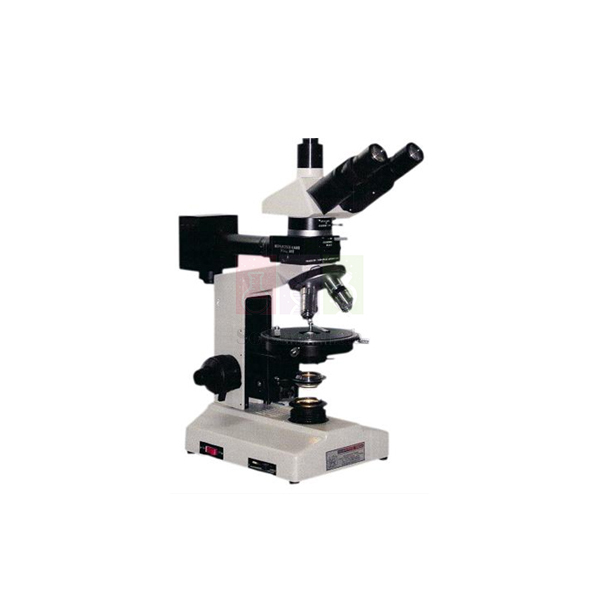
Research Trinocular Ore Microscope
Research Trinocular Ore Microscope (Product Code: SLE/M/29) is a trinocular research microscope used to examine ore and mineral specimens in geology, mining and materials laboratories. University departments choose it for its 360° round stage read to 0.1° with a vernier and its set of gypsum, mica and quartz wedge compensators. It is supplied by Jain Scientific Equipments Pvt Ltd (ScienceLab), Ambala, India, a laboratory instruments supplier in India serving colleges and research institutes.
Specifications
| Parameter | Detail |
|---|---|
| Observation head | Flat trinocular head inclined at 45° |
| Eyepiece | 10x / 20 mm |
| Cross (partition) eyepiece | 10x / 20 mm |
| Grid eyepiece | 10x / 20 mm |
| Objectives | 4x, 10x, 25/40x, 60/63x |
| Nosepiece | Quadruple |
| Compensators | Gypsum 1λ, mica ¼λ, quartz wedge |
| Stage | Revolving round stage, approx. 160 mm diameter, 360° rotatable, graduated in 1° increments |
| Stage least count | 0.1° with vernier |
| Illumination | 12 V / 20 W lamp, brightness adjustable |
| Power supply | 110–220 V |
| Optional accessories | Digital high-resolution photographic camera with microscope adapter; digital CMOS camera with high colour depth and live images on a computer |
| Product code | SLE/M/29 |
| Supplied by | Jain Scientific Equipments Pvt Ltd (ScienceLab), Ambala, India |
What Is the Ore Microscope Used For?
An ore microscope lets geology and mining students study ore minerals, their textures and the way grains intergrow in prepared specimens. The 45° trinocular head gives relaxed two-eye viewing while the third port stays free for one of the optional cameras, so a whole class can follow the same field on a computer screen.
The graduated round stage does most of the measuring work: turn the specimen through 360°, read the angle on the 1° scale and refine it to 0.1° with the vernier. Slide in the gypsum, mica or quartz wedge compensator to judge interference colours and retardation, use the cross eyepiece to centre a grain and the grid eyepiece to estimate grain sizes and proportions.
What to Specify When Ordering
- Objective choice for the two paired positions: 25x or 40x, and 60x or 63x
- Camera option, if any: the high-resolution photographic camera with adapter or the CMOS camera for live computer images
- Your mains voltage (the instrument is listed for 110–220 V)
- Number of microscopes needed for the laboratory
Supplier
Jain Scientific Equipments Private Limited trades as ScienceLab and supplies this ore microscope from Ambala, Haryana, to universities, geology institutes, dealers and importers in India and international markets. Tell us the objective and camera configuration you need and we will quote exactly that set-up. Buyers completing vendor registration can use the supplying company's Importer-Exporter Code AAECJ8618A (DGFT) and GSTIN 06AAECJ8618A1ZT. Read more on the ScienceLab company profile.
Related Laboratory Equipment
Instruments, accessories and specimens used alongside an ore microscope:
- Ore Polarising Microscope — an alternative with transmission and reflection modes and a CCD camera
- Microscope Digital Camera, 5MP — for recording specimen images; ask us to confirm the fit
- C-Mount Adapter — a common way of mounting a camera on a trinocular port
- Mineral Study Kit — mineral samples for identification practice
- Lens Tissue — for wiping eyepieces and objectives clean
See the complete Microscope range for student, research and polarising microscopes and their accessories.
Frequently Asked Questions
What objectives does the Research Trinocular Ore Microscope have?
The Research Trinocular Ore Microscope carries 4x, 10x, 25/40x and 60/63x objectives on a quadruple nosepiece. The 25/40x and 60/63x positions are listed as alternatives, so state the magnification you want in each position when you request a quotation.
Which eyepieces come with the Research Trinocular Ore Microscope?
The Research Trinocular Ore Microscope is listed with three 10x / 20 mm eyepieces: a plain eyepiece for general viewing, a cross (partition) eyepiece for centring and alignment, and a grid eyepiece for estimating grain sizes and proportions within the field.
What compensators are included with this ore microscope?
The Research Trinocular Ore Microscope includes a gypsum compensator of 1λ, a mica compensator of ¼λ and a quartz wedge. Placed in the light path, these plates help the user judge interference colours and retardation during polarised-light examination of minerals.
How precisely can the stage angle be read?
The Research Trinocular Ore Microscope has a revolving round stage of approximately 160 mm diameter that turns through 360°. It is graduated in 1° steps, and a vernier gives a least count of 0.1°, which suits extinction-angle and orientation measurements.
Can a camera be fitted to the Research Trinocular Ore Microscope?
Yes. The Research Trinocular Ore Microscope has a trinocular head, and two cameras are offered as optional accessories: a digital high-resolution photographic camera with microscope adapter, and a digital CMOS camera with high colour depth that shows live images on a computer.
Is a calibration certificate available for this microscope?
Calibration-certificate availability for the Research Trinocular Ore Microscope should be discussed with us before ordering. Mention the requirement in your enquiry through the contact page and we will tell you what documentation can accompany the instrument.
Who supplies the Research Trinocular Ore Microscope?
The Research Trinocular Ore Microscope is supplied by Jain Scientific Equipments Pvt Ltd, trading as ScienceLab, from Ambala, Haryana, India. The company handles orders from institutions, dealers and importers in India and international markets, from single units to departmental quantities.
Request a Quote
To get a quotation for the Research Trinocular Ore Microscope, send your objective choice, camera option and quantity through our contact page, or add the item to the enquiry cart together with other microscopes and accessories you need.
Last updated: 24 September 2026
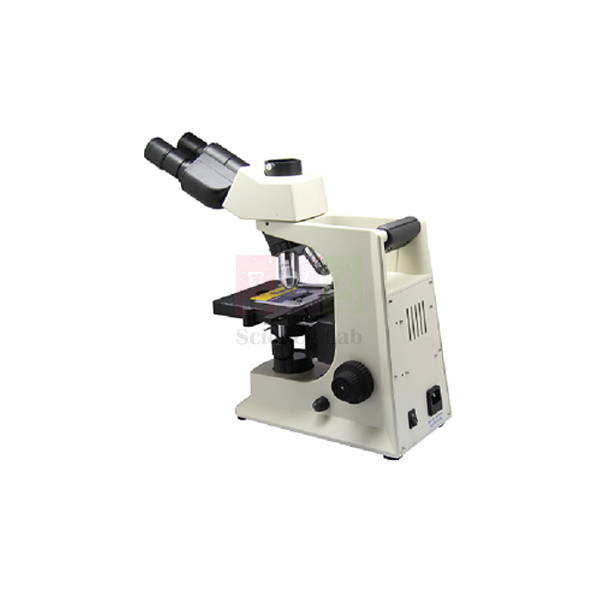
Universal Research Microscope
Universal Research Microscope (Product Code: SLE/M/30) is a binocular compound microscope used for detailed slide work in biology, pathology and microbiology laboratories. Colleges and teaching hospitals value its dual lighting — a built-in 6 V 20 W halogen lamp plus a plano-concave mirror attachment — and its Abbe condenser of N.A. 1.25. It is supplied by Jain Scientific Equipments Pvt Ltd (ScienceLab), Ambala, India, for buyers sourcing a compound microscope in India.
Specifications
| Parameter | Detail |
|---|---|
| Illumination | Built-in system with 6 V – 20 W halogen bulb and plano-concave mirror attachment |
| Mains supply | Suitable for 220 V, 50 Hz AC |
| Observation head | Binocular, inclined at 45°, rotatable through 360° |
| Interpupillary distance | Adjustment ring, 54–74 mm |
| Dioptric adjustment | Ring on the left eyetube with adjustable dioptric scale |
| Eyepieces | High eye-point wide-field 10x (F.N. 20) or 15x, paired |
| Objectives | DIN 4x, 10x, 40/45x (spring loaded), 100x oil immersion (spring loaded) |
| Nosepiece | Quadruple, revolving on ball bearing |
| Condenser | Abbe, N.A. 1.25, aspherical lens, adjustable iris diaphragm |
| Mechanical stage | Co-axial, low-positioned, large double-plate X-Y stage with fine vernier graduation |
| Focusing | Coaxial control with ball-bearing guideway and large knobs; pre-focusing / auto-focusing lock and tension adjustment ring |
| Main body | All parts die-cast for long life and mechanical strength |
| Product code | SLE/M/30 |
| Supplied by | Jain Scientific Equipments Pvt Ltd (ScienceLab), Ambala, India |
What Is the Universal Research Microscope Used For?
This microscope handles the everyday slide work of an undergraduate or diagnostic teaching lab: stained tissue sections, blood smears, bacteria and plant material. The 4x and 10x objectives locate the area of interest, the spring-loaded 40/45x resolves cells, and the 100x oil-immersion objective is used for bacteria and fine cell detail with a drop of immersion oil between slide and lens.
The "universal" lighting is useful where power is unreliable: switch on the halogen lamp for controlled, adjustable light, or attach the plano-concave mirror to use daylight or a bench lamp. For a microbiology lab equipment India set-up, the Abbe condenser and iris diaphragm let students balance contrast and resolution for each objective, and the pre-focus lock stops the stage rising into a slide during a practical.
What to Specify When Ordering
- Eyepiece pair: 10x wide-field (F.N. 20) or 15x
- High-dry objective: 40x or 45x
- Your mains supply, since the unit is listed for 220 V, 50 Hz AC
- Quantity, plus consumables such as immersion oil and slides
Supplier
ScienceLab is the trading name of Jain Scientific Equipments Private Limited, which supplies the Universal Research Microscope from Ambala, Haryana, to medical and science colleges, research institutes, laboratory dealers and importers in India and international markets. One enquiry can cover the microscopes and the slides, oil and cleaning materials used with them. Company background is on the ScienceLab profile page.
Related Laboratory Equipment
Consumables and alternatives that go with a research binocular microscope:
- Immersion Oil, 25ml — needed for the 100x oil-immersion objective
- Microscope Slides Glass — plain slides for smears and mounts
- Cover Glasses — to cover specimens before high-power viewing
- Microscope Cleaning Kit — for removing oil and dust from the optics
- Research Binocular Microscope — another research-grade binocular option to compare
More instruments are listed in our Microscope category.
Frequently Asked Questions
What objectives and eyepieces does the Universal Research Microscope use?
The Universal Research Microscope uses DIN objectives of 4x, 10x, 40/45x and 100x oil immersion, the last two spring loaded. They sit on a ball-bearing quadruple nosepiece and are paired with high eye-point wide-field 10x (F.N. 20) or 15x eyepieces.
Why does the Universal Research Microscope have both a lamp and a mirror?
The Universal Research Microscope combines a built-in 6 V – 20 W halogen bulb with a plano-concave mirror attachment. The lamp gives steady, adjustable light from the mains, while the mirror lets the microscope work with daylight or an external lamp when electricity is not available.
Can the binocular head be adjusted for different students?
Yes. The Universal Research Microscope's binocular head is inclined at 45° and rotates through 360°, the interpupillary distance adjusts from 54 to 74 mm, and a dioptric ring with scale on the left eyetube corrects for differences between a user's two eyes.
What condenser is fitted to the Universal Research Microscope?
The Universal Research Microscope has an Abbe condenser with a numerical aperture of 1.25, an aspherical lens and an adjustable iris diaphragm. Closing or opening the iris lets the user trade contrast against resolution to suit each objective and specimen.
What mains supply does this microscope need?
The Universal Research Microscope is listed as suitable for a 220 V, 50 Hz AC supply for its halogen illumination. If your laboratory uses a different mains voltage, state it in your enquiry so the power arrangement can be confirmed before a quotation is issued.
Who supplies the Universal Research Microscope?
The Universal Research Microscope is supplied by Jain Scientific Equipments Pvt Ltd, known as ScienceLab, based in Ambala, Haryana, India. It supplies colleges, research institutes, dealers and importers in India and international markets, and can include slides and immersion oil in the same order.
Request a Quote
Send your eyepiece and objective choice, mains voltage and quantity for the Universal Research Microscope through our contact page, or place it in the enquiry cart with the consumables you need, and we will reply with a quotation.
Last updated: 24 September 2026
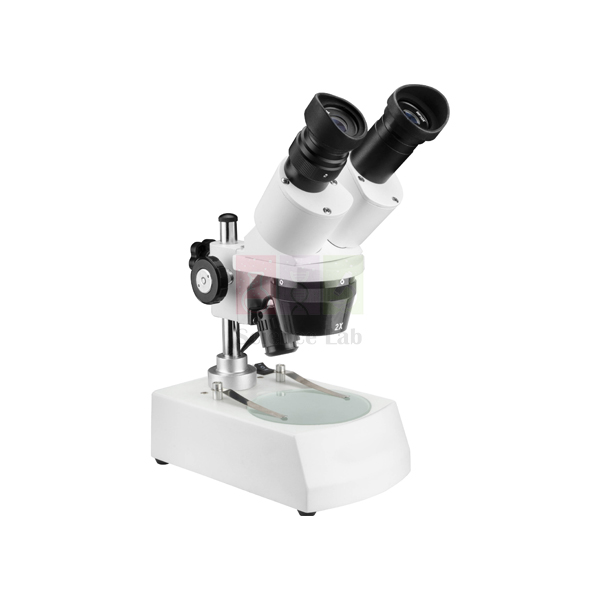
Binocular Stereo Microscope
Binocular Stereo Microscope (Product Code: SLE/M/31) is a low-power, two-eyepiece microscope used to view solid specimens in three dimensions in school, college and field-study laboratories. Its 2x/4x objective and paired 10x wide-field eyepieces give 20x and 40x, with halogen lighting from above and below. It is supplied by Jain Scientific Equipments Pvt Ltd (ScienceLab), Ambala, India, a biology lab equipment supplier in India.
Specifications
| Parameter | Detail |
|---|---|
| Objective | 2x – 4x |
| Eyepieces | Two wide-field 10x |
| Total magnification | 20x – 40x |
| Illumination | Top and bottom halogen |
| Head | Rotates 360° |
| Interpupillary distance | Adjustable, 55–75 mm |
| Diopter correction | Yes |
| Focusing | Coaxial coarse focusing |
| Working distance | Adjustable, with lock |
| Stage | Three round plates (white, black, transparent glass) and two metal slide clips |
| Power | 120–240 V |
| Product code | SLE/M/31 |
| Supplied by | Jain Scientific Equipments Pvt Ltd (ScienceLab), Ambala, India |
What Is the Binocular Stereo Microscope Used For?
A stereo microscope shows whole objects rather than thin sections, so students can study insects, flowers, seeds, leaf surfaces, small fossils, rock grains and the progress of a dissection with natural depth. Because the specimen does not need to be sliced or mounted, the instrument is often the first microscope used in a practical and one of the most handled pieces of zoology lab equipment in India.
Use the top halogen lamp for opaque material such as a beetle or a mineral grain, and the bottom lamp for thin or translucent items such as a leaf skeleton or a drop of pond water in a dish. Swap the stage plate to suit the specimen: white behind dark subjects, black behind pale ones, and the clear glass plate whenever light must pass through from below.
What to Specify When Ordering
- Number of microscopes per practical group or laboratory
- Your mains voltage (listed for 120–240 V)
- Any storage cases or specimen dishes to add to the same order
Supplier
Jain Scientific Equipments Private Limited, which operates under the ScienceLab name, supplies this stereo microscope from Ambala, Haryana. Schools, colleges, training institutes, dealers and importers in India and international markets order it singly or as sets for a biology room, often with petri dishes, specimen packs and cases. Visit the ScienceLab profile to learn about the company.
Related Laboratory Equipment
Useful additions and alternatives for low-power stereo work:
- Binocular Stereo Microscope, 40x — a related stereo model to compare
- Stereo Binocular Microscope — another binocular stereo option in the range
- Petri Dish Glass With Lid — holds live or wet specimens on the stage
- Class Rock Pack — rock samples to examine under low magnification
- Carry Case for Microscopes — storage and transport between rooms
Browse all instruments in the Microscope category.
Frequently Asked Questions
What magnification does the Binocular Stereo Microscope give?
The Binocular Stereo Microscope gives 20x and 40x total magnification. It combines a 2x – 4x objective with two wide-field 10x eyepieces, a range suited to whole insects, plant parts, rock grains and dissections rather than cells on a slide.
When should the top or bottom light be used?
On the Binocular Stereo Microscope, the top halogen light is for opaque objects such as insects, seeds or minerals, while the bottom halogen light shines through thin or translucent specimens placed on the clear glass stage plate. Both can be used together for mixed specimens.
What stage accessories come with the Binocular Stereo Microscope?
The Binocular Stereo Microscope comes with three round stage plates — white, black and transparent glass — and two metal slide clips. The coloured plates give contrast behind dark or pale objects, and the clips hold a slide or flat specimen in place.
Can the Binocular Stereo Microscope be adjusted for each student?
Yes. The Binocular Stereo Microscope's interpupillary distance adjusts from 55 to 75 mm, one eyepiece offers diopter correction, and the head rotates 360° so it can face the user from any side of a shared bench.
What power supply does the Binocular Stereo Microscope need?
The Binocular Stereo Microscope is listed for 120–240 V mains power, which runs its top and bottom halogen lamps. Tell us your local voltage and socket type in your enquiry so we can confirm the power arrangement before quoting.
Who supplies the Binocular Stereo Microscope?
The Binocular Stereo Microscope is supplied by Jain Scientific Equipments Pvt Ltd, trading as ScienceLab, Ambala, Haryana, India. Orders from schools, colleges, dealers and importers in India and international markets are handled directly, including class sets with related specimen dishes and cases.
Request a Quote
For a quotation on the Binocular Stereo Microscope, tell us the quantity and mains voltage through the contact page, or add it to the enquiry cart along with dishes, specimens and cases.
Last updated: 24 September 2026
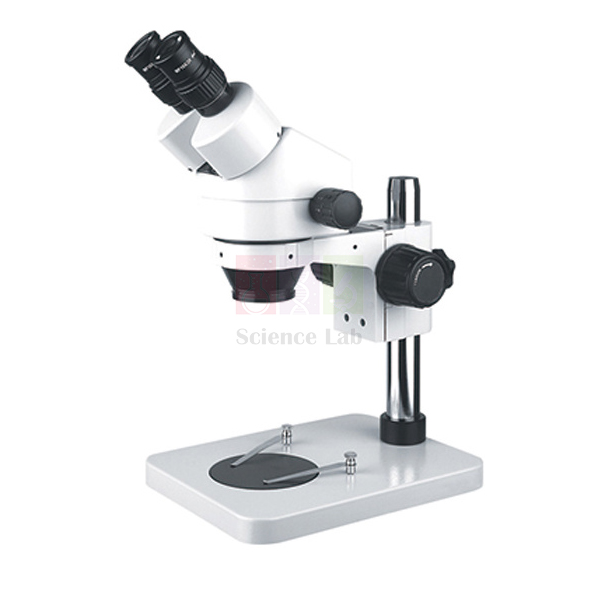
Stereoscopic Dissection Microscopes
Stereoscopic Dissection Microscopes (Product Code: SLE/M/32) are compact binocular microscopes used to magnify specimens at 20x during dissection practicals in school and college biology labs. A fixed 2x objective works with locked-in paired 10x wide-field eyepieces, and the unit packs into a wooden box. They are supplied by Jain Scientific Equipments Pvt Ltd (ScienceLab), Ambala, India, as practical school biology lab equipment in India and abroad.
Specifications
| Parameter | Detail |
|---|---|
| Objective | Fixed 2x |
| Eyepieces | Locked-in paired 10x wide field; diopter adjustment in one eyepiece |
| Magnification | 20x |
| Height | Adjustable, approx. 8½ in – 12½ in |
| Working distance | 1½ in – 5 in |
| Stage | Stage plug 2⅜ in diameter, with clips |
| Focusing | Rack and pinion |
| Size and packing | Compact; 6¾ in L x 4½ in W, in wooden box |
| Stand option | Available with pillar stand |
| Product code | SLE/M/32 |
| Supplied by | Jain Scientific Equipments Pvt Ltd (ScienceLab), Ambala, India |
What Is the Stereoscopic Dissection Microscope Used For?
During a dissection, students need a steady, upright, three-dimensional view of small structures such as the mouthparts of a cockroach, the nerve cord of an earthworm or the ovary of a flower. This microscope gives that view at a fixed 20x, with up to 5 in of working distance so needles and forceps can move freely under the objective.
Set the height within its 8½ in to 12½ in range to suit the specimen, place small material on the stage plug and hold it with the clips, then bring it into focus with the rack and pinion. Students with unequal eyesight can use the diopter adjustment on one eyepiece. After class, the microscope returns to its wooden box, which keeps dust off the optics between sessions.
What to Specify When Ordering
- Standard version or the version with pillar stand
- Number of microscopes, usually one per dissection group
- Any dissection trays or depression slides to add to the order
Supplier
Jain Scientific Equipments Private Limited, trading as ScienceLab, supplies these dissection microscopes from Ambala, Haryana, to schools, colleges, dealers and importers in India and international markets. Institutional buyers who need vendor details can register the supplying company using GSTIN 06AAECJ8618A1ZT and LEI 3358004HRD1JIVXKYX49. The ScienceLab company profile has more background.
Related Laboratory Equipment
Items used in the same dissection practical, and alternative models:
- Dissection Pan — for the main dissection before parts are viewed at 20x
- Microscope Slides Depression — holds tiny specimens in a drop of liquid
- Dissection Microscope — another dissection model to compare
- Dissecting Microscope — an alternative for dissection classes
The full Microscope category lists stereo, compound and digital microscopes.
Frequently Asked Questions
What magnification do the Stereoscopic Dissection Microscopes give?
The Stereoscopic Dissection Microscopes give a fixed 20x magnification from a 2x objective and locked-in paired 10x wide-field eyepieces. This low, constant power keeps a wide field of view and plenty of depth, which is what students need while dissecting.
How much working space is there under the objective?
The Stereoscopic Dissection Microscopes offer a working distance of 1½ in to 5 in, and the overall height adjusts from about 8½ in to 12½ in. That space lets students use needles, forceps and scalpels on the specimen while viewing it.
How are the Stereoscopic Dissection Microscopes focused?
The Stereoscopic Dissection Microscopes are focused with a rack-and-pinion mechanism. Because the eyepieces are locked in place, students only turn the focus knob and, if needed, the diopter adjustment on one eyepiece to get a sharp image for both eyes.
Is a pillar stand version available?
Yes, the Stereoscopic Dissection Microscopes are listed as available with a pillar stand. State in your enquiry whether you need the standard compact version or the pillar-stand version, and how many of each, so the quotation matches your laboratory layout.
How are the Stereoscopic Dissection Microscopes packed and stored?
The Stereoscopic Dissection Microscopes are compact, listed at 6¾ in long by 4½ in wide, and come in a wooden box. The box protects the optics from dust and knocks when the microscopes are stored between practical sessions or carried between rooms.
Who supplies the Stereoscopic Dissection Microscopes?
The Stereoscopic Dissection Microscopes are supplied by Jain Scientific Equipments Pvt Ltd, trading as ScienceLab, from Ambala, Haryana, India. The company handles school, college, dealer and importer orders in India and international markets, including multiple units for group dissection work.
Request a Quote
Ask for a quotation on the Stereoscopic Dissection Microscopes by sending the version and quantity through our contact page, or add them to the enquiry cart with dissection pans and slides.
Last updated: 24 September 2026
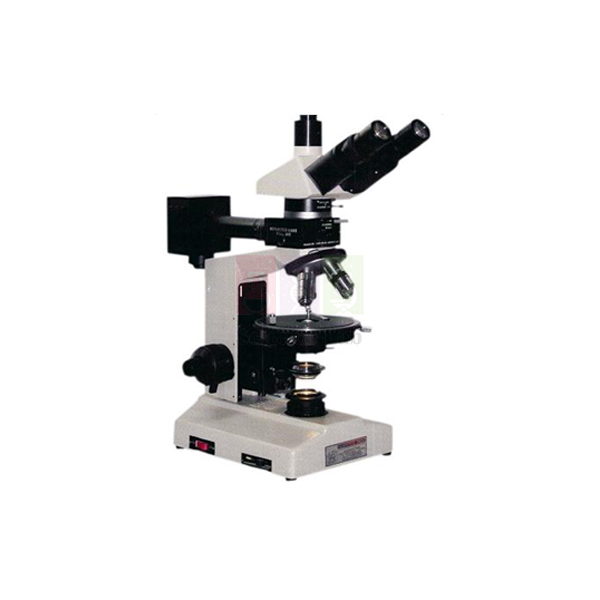
Advance Research Polarising Microscope with Incident Light
Advance Research Polarising Microscope with Incident Light (Product Code: SLE/M/33) is an infinity-corrected trinocular microscope used for polarised-light study of rocks, minerals, ores and crystalline materials in transmission and reflection modes. Geology and materials departments use it with its plan achromatic POL objectives and colour CCD camera with imaging software. It is supplied by Jain Scientific Equipments Pvt Ltd (ScienceLab), Ambala, India, among its laboratory instruments in India and overseas.
Specifications
| Parameter | Detail |
|---|---|
| Frame | For transmission and reflection mode polarisation microscopy, with built-in filter holders |
| Optical system | Infinity corrected |
| Objectives (plan achromatic, polarising) | 4X POL N.A. 0.13, W.D. 17.0 mm; 10X POL N.A. 0.3, W.D. 10.0 mm; 20X POL N.A. 0.5, W.D. 2.1 mm; 40X POL N.A. 0.75, W.D. 1.1 mm |
| Viewing tube | Fixed trinocular tube |
| Illumination | High-power LED light with power supply; built-in transmitted light filters |
| Nosepiece | Minimum 4-position, centrable and detachable |
| Focus stroke | Minimum 22 mm; fine stroke minimum 100 µm |
| Condenser | Strain-free polarising condenser, swing-out type |
| Stage | Circular, rotatable and centerable, 360° graduated mechanical stage |
| Reflected light | Polariser slider for the reflected illumination tube |
| Rotation scale | 360° rotatable, scale interval of 5 |
| Wedge compensator | Wedge shaped, measurement range 0–4λ |
| Camera | Colour CCD camera, specified as minimum 5 megapixel, mounted on the trinocular tube with a suitable adapter |
| Camera sensor and output | 2/3 inch CCD; 1920 x 1080 pixels; pixel size 3.45 x 3.45 µm; 12-bit A/D converter |
| Camera speed and interface | Minimum exposure 1 ms or smaller; 15 frames per second; USB connection to PC |
| Software | Standard imaging software: image acquisition, measurements, point or object detection, aligning multiple images together |
| Product code | SLE/M/33 |
| Supplied by | Jain Scientific Equipments Pvt Ltd (ScienceLab), Ambala, India |
What Is the Polarising Microscope with Incident Light Used For?
Transmitted polarised light reveals the optical properties of transparent minerals in thin sections — birefringence, extinction and interference colours — while incident (reflected) light is needed for opaque material such as ore minerals, metals and polished sections that light cannot pass through. Having both paths on one frame lets a petrology or mineralogy class move from a thin section to a polished ore block without changing instruments.
In practice, the specimen is centred on the rotating graduated stage, observed between crossed polars, and turned to watch extinction positions. The wedge compensator, with its 0–4λ range, helps estimate retardation. The CCD camera and software then capture, measure and stitch images for reports, and the 15 frames per second output is useful for showing a live view to a group.
What to Specify When Ordering
- Whether the colour CCD camera and imaging software are required with the microscope
- Objective set needed (4X, 10X, 20X and 40X POL are listed)
- Your mains voltage for the LED power supply and a computer for the USB camera
- Quantity and any tender specification you must match
Supplier
Jain Scientific Equipments Private Limited, whose trading name is ScienceLab, supplies this polarising microscope from Ambala, Haryana. Universities, geological survey laboratories, institutes, dealers and importers in India and international markets can send their technical specification and receive a quotation for the matching configuration. See the company profile for more about ScienceLab.
Related Laboratory Equipment
Alternatives and items used in the same mineral and ore microscopy work:
- Ore Polarising Microscope — a close alternative with the same POL objective series
- Research Trinocular Ore Microscope — with gypsum, mica and quartz wedge compensators and a vernier stage
- Single Disc Polishing Machine — for preparing polished specimen surfaces
- Mineral ID Starter Set — reference minerals for identification exercises
Other research and student instruments are in the Microscope category.
Frequently Asked Questions
Why does the Advance Research Polarising Microscope have incident light?
The Advance Research Polarising Microscope with Incident Light works in both transmission and reflection modes. Transmitted light is for thin sections of transparent minerals, while incident light, with its own polariser slider, lets you examine opaque ores, metals and polished sections.
Which objectives are fitted to this polarising microscope?
The Advance Research Polarising Microscope with Incident Light uses infinity-corrected plan achromatic POL objectives: 4X (N.A. 0.13, W.D. 17.0 mm), 10X (N.A. 0.3, W.D. 10.0 mm), 20X (N.A. 0.5, W.D. 2.1 mm) and 40X (N.A. 0.75, W.D. 1.1 mm).
What camera and software come with the microscope?
The Advance Research Polarising Microscope with Incident Light is specified with a colour CCD camera on the trinocular tube: 2/3 inch sensor, 1920 x 1080 pixels, 3.45 µm pixels, 12-bit conversion and 15 frames per second over USB, plus software for acquisition, measurement, object detection and image alignment.
What stage and condenser does it use?
The Advance Research Polarising Microscope with Incident Light has a circular, centerable mechanical stage that rotates through a graduated 360°, and a strain-free swing-out polarising condenser, so the polarised light is not disturbed by stress in the condenser glass.
What is the range of the wedge compensator?
The wedge-shaped compensator listed for the Advance Research Polarising Microscope with Incident Light has a measurement range of 0–4λ. Moving the wedge through the light path shifts interference colours, helping the user estimate retardation and birefringence of a mineral grain.
Is a calibration certificate available for this polarising microscope?
Whether a calibration certificate can be supplied with the Advance Research Polarising Microscope with Incident Light should be discussed before ordering. Please raise it in your enquiry through the contact page so we can confirm the available documentation.
Who supplies the Advance Research Polarising Microscope with Incident Light?
The Advance Research Polarising Microscope with Incident Light is supplied by Jain Scientific Equipments Pvt Ltd, trading as ScienceLab, Ambala, Haryana, India, to universities, institutes, dealers and importers in India and international markets.
Request a Quote
Send your specification, camera requirement and quantity for the Advance Research Polarising Microscope with Incident Light through the contact page, or add it to the enquiry cart, and we will prepare a quotation.
Last updated: 24 September 2026
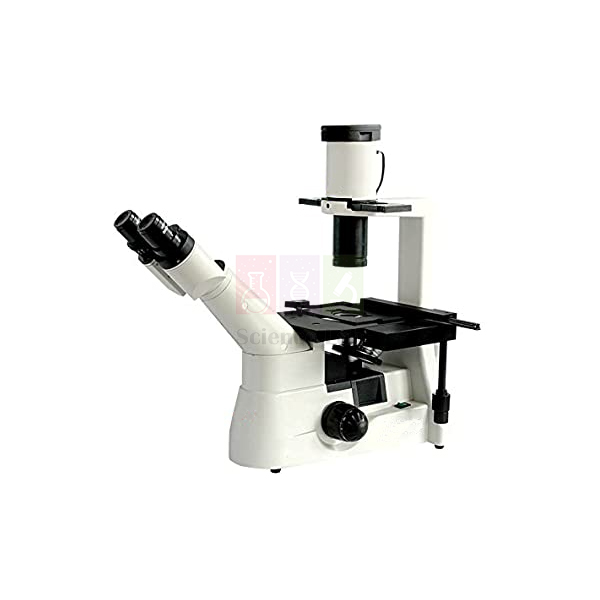
Inverted Tissue Culture Microscope
Inverted Tissue Culture Microscope (Product Code: SLE/M/34) is an inverted trinocular microscope used to observe living cells growing in flasks, bottles and dishes in cell culture, biotechnology and microbiology laboratories. Its objectives sit below a 180 x 150 mm stage, with extension plates for large bottles and micro-filter work. It is supplied by Jain Scientific Equipments Pvt Ltd (ScienceLab), Ambala, India, for institutions buying cell biology equipment in India and abroad.
Specifications
| Parameter | Detail |
|---|---|
| Viewing body | Siedentopf trinocular head inclined at 30°; interpupillary distance 55–75 mm; diopter adjustment ring on ocular |
| Eyepieces | PWF 10x, paired, field of view 20 mm |
| Centering telescope | 5x |
| Objective listed | LWD plan achromatic 4x/0.1, W.D. 18 mm |
| Nosepiece | Quadruple |
| Focusing | Two large low-positioned knobs; backlash-free rack and pinion, approx. 18 mm range; sensitive fine focusing knob; co-axial coarse and fine controls with rubber grips |
| Focus controls | Pre-focusing lever and tension adjustment ring |
| Illumination | 6 V, 20 W halogen lamp with spherical collector lens; continuous intensity regulation; field diaphragm; pull-out filter socket |
| Stage | Hard-coated fixed square plain stage, approx. 180 x 150 mm, with two extension plates and two stage clips in drilled holes |
| Base | Large, sturdy base with built-in solid-state transformer for the illuminator |
| Optional accessories | Micro-photographic camera; digital or CCD camera to photograph specimens and show them on a TV or laptop screen |
| Product code | SLE/M/34 |
| Supplied by | Jain Scientific Equipments Pvt Ltd (ScienceLab), Ambala, India |
What Is the Inverted Tissue Culture Microscope Used For?
Cells in culture settle and grow on the bottom of their vessel, under a layer of medium. An upright microscope cannot get close to them, so the inverted design turns the optics around: light comes from above and the objective looks up through the base of the flask or dish. Technicians use it to check confluence, cell shape and contamination before passaging, without opening the culture.
The long working distance of the listed 4x/0.1 objective (18 mm) suits thick-bottomed vessels. The two extension plates widen the stage for large bottles or micro-filter work, and the low-set focus knobs let the user rest their hands on the bench during long observation sessions. Attach one of the optional cameras to the trinocular port to record growth over several days.
What to Specify When Ordering
- The objectives you need for the quadruple nosepiece (only the 4x LWD objective is listed; ask us for the others)
- Camera option: micro-photographic, digital or CCD camera, if required
- Typical vessel sizes you will place on the stage
- Mains voltage and quantity
Supplier
This microscope is supplied by Jain Scientific Equipments Private Limited, which trades as ScienceLab, from Ambala, Haryana. Biotechnology departments, research laboratories, dealers and importers in India and international markets can order it with culture vessels and counting chambers in a single enquiry. Company details are on the ScienceLab profile page.
Related Laboratory Equipment
Equipment used in the same cell culture workflow:
- Carbon Dioxide (C02) Incubator — where cultures grow between inspections
- Petri Dish, Triple Vent — culture dishes viewed on the inverted stage
- Haemocytometer — for counting cells before seeding
- Microscope Digital Camera, 5MP — for recording cultures; confirm the fit with us
More microscopes and accessories are in the Microscope category.
Frequently Asked Questions
Why is a tissue culture microscope inverted?
The Inverted Tissue Culture Microscope places its objectives below the stage and its light source above, so it looks up through the base of a flask, bottle or dish. Cells growing on the vessel floor can be examined under their medium without opening or disturbing the culture.
Which objectives and eyepieces does the Inverted Tissue Culture Microscope have?
The Inverted Tissue Culture Microscope has paired PWF 10x eyepieces with a 20 mm field of view and a quadruple nosepiece. The listed objective is an LWD plan achromatic 4x/0.1 with 18 mm working distance; ask us which further objectives are offered for the remaining positions.
How large is the stage of the Inverted Tissue Culture Microscope?
The Inverted Tissue Culture Microscope has a hard-coated square plain stage of approximately 180 x 150 mm. Two extension plates enlarge it for large bottles and micro-filter work, and two stage clips fit into drilled holes to hold the specimen.
What illumination does the Inverted Tissue Culture Microscope use?
The Inverted Tissue Culture Microscope uses a 6 V, 20 W halogen lamp with a spherical collector lens, continuously adjustable brightness, a field diaphragm and a pull-out filter socket. A solid-state transformer built into the sturdy base powers the illuminator.
Can cultures be photographed through this microscope?
Yes. The Inverted Tissue Culture Microscope has a trinocular head, and optional accessories include a micro-photographic camera and a digital or CCD camera that let you photograph specimens and display them on a TV or laptop screen for teaching or records.
Who supplies the Inverted Tissue Culture Microscope?
The Inverted Tissue Culture Microscope is supplied by Jain Scientific Equipments Pvt Ltd, trading as ScienceLab, from Ambala, Haryana, India, to research institutes, biotechnology colleges, dealers and importers in India and international markets.
Request a Quote
Tell us the objectives, camera option and quantity you need for the Inverted Tissue Culture Microscope through our contact page, or add it to the enquiry cart with culture dishes and counting chambers.
Last updated: 24 September 2026
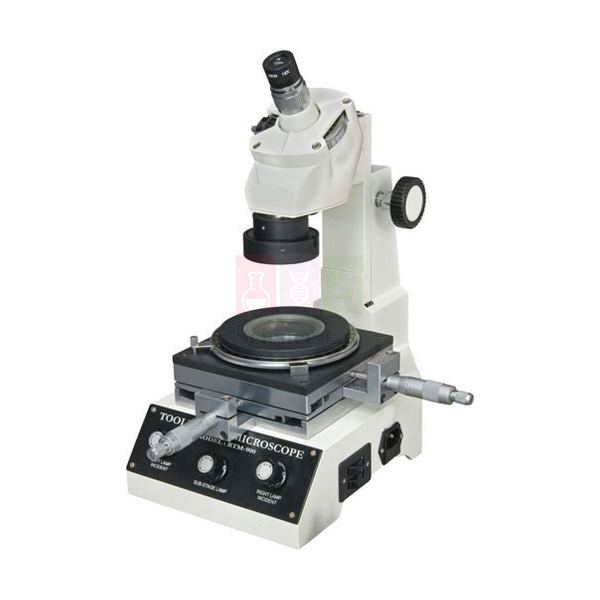
Toolmaker Microscope
Toolmaker Microscope (Product Code: SLE/M/35) is an optical measuring microscope used to measure angles, thickness, radius, diameter and similar dimensions of small components in engineering metrology and workshop laboratories. It combines 30x viewing with a 150 x 150 mm X-Y measuring stage read by micrometers to 0.01 mm or 0.005 mm. It is supplied by Jain Scientific Equipments Pvt Ltd (ScienceLab), Ambala, India, among its test and measurement instruments in India.
Specifications
| Parameter | Detail |
|---|---|
| Measurements | Angles, thickness, radius, diameter and similar dimensions |
| Magnification | 30x (2x objective with 15x eyepiece) |
| Field of view | 12 mm |
| Working distance | About 100 mm |
| Microscope tube | Inclined at 45° |
| Measuring stage | 150 x 150 mm, with travel in X and Y directions |
| Travel range | 50 x 50 mm |
| Micrometers | 25 mm each, least count 0.01 mm or 0.005 mm |
| Rotary stage | Graduated 0–360°, vernier reading 6 minutes |
| Illumination | Inclined transmitted light with separate intensity control |
| Product code | SLE/M/35 |
| Supplied by | Jain Scientific Equipments Pvt Ltd (ScienceLab), Ambala, India |
What Is the Toolmaker Microscope Used For?
In a metrology lab, the toolmaker microscope measures features that are too small or too delicate for callipers: the pitch and flank angle of a screw thread, the radius on a form tool, the diameter of a small drilled hole, the thickness of a shim or the profile of a gear tooth. Students align one edge of the feature with the eyepiece reference, note the micrometer reading, move the stage to the opposite edge and take the difference.
Transmitted light from below turns the part into a sharp silhouette, which makes edges easy to pick up at 30x, and the inclined illumination helps with helical features such as threads. For angles, the rotary stage is turned until a line in the field matches the second edge and read to 6 minutes on the vernier. It is a standard item of engineering lab equipment in India for polytechnic, ITI and mechanical engineering courses.
What to Specify When Ordering
- Micrometer least count: 0.01 mm or 0.005 mm
- Number of instruments for the metrology laboratory
- Mains voltage for the illumination
- Any documentation you need, such as a calibration record, so we can check availability
Supplier
Jain Scientific Equipments Private Limited, known by its trading name ScienceLab, supplies the Toolmaker Microscope from Ambala, Haryana, to engineering colleges, polytechnics, training institutes, dealers and importers in India and international markets. It can be quoted together with other measuring instruments for a complete metrology bench. Learn more on the ScienceLab profile.
Related Laboratory Equipment
Other measuring instruments used in the same metrology practicals:
- Vernier Travelling Microscope — for linear measurements with a vernier scale
- Crack Measuring Microscope — a portable measuring microscope for surface features
- Micrometer Screw Gauge, Lock Type — to cross-check outside dimensions
- Vernier Calliper — for larger dimensions before optical measurement
See our Microscope category for further optical instruments.
Frequently Asked Questions
What can be measured with the Toolmaker Microscope?
The Toolmaker Microscope is designed for measuring angles, thickness, radius, diameter and similar dimensions of small parts. Typical laboratory tasks include checking thread angles, tool radii, hole diameters and component profiles that are difficult to measure with contact instruments.
What magnification and working distance does the Toolmaker Microscope offer?
The Toolmaker Microscope gives 30x magnification from a 2x objective and a 15x eyepiece, with a 12 mm field of view and a working distance of about 100 mm. The microscope tube is inclined at 45° for comfortable viewing.
How fine are the linear readings on the Toolmaker Microscope?
The Toolmaker Microscope's 150 x 150 mm stage travels 50 x 50 mm in X and Y, driven by two 25 mm micrometers. The micrometers are listed with a least count of 0.01 mm or 0.005 mm, so state the version you need when ordering.
How are angles measured on the Toolmaker Microscope?
Angles are measured on the Toolmaker Microscope with its rotary stage, which is graduated from 0 to 360° and fitted with a vernier reading to 6 minutes. The part is rotated until each edge lines up with the reference in the field, and the difference is read off.
Is a calibration certificate available for the Toolmaker Microscope?
Calibration-certificate availability for the Toolmaker Microscope should be discussed with us before you order. Include the requirement in your enquiry through the contact page, and we will confirm what documentation can be supplied with the instrument.
Who supplies the Toolmaker Microscope?
The Toolmaker Microscope is supplied by Jain Scientific Equipments Pvt Ltd, trading as ScienceLab, Ambala, Haryana, India. The company serves engineering colleges, polytechnics, training institutes, dealers and importers in India and international markets.
Request a Quote
Send the micrometer least count you prefer and the quantity for the Toolmaker Microscope through our contact page, or add it to the enquiry cart with other metrology instruments for one combined quotation.
Last updated: 24 September 2026
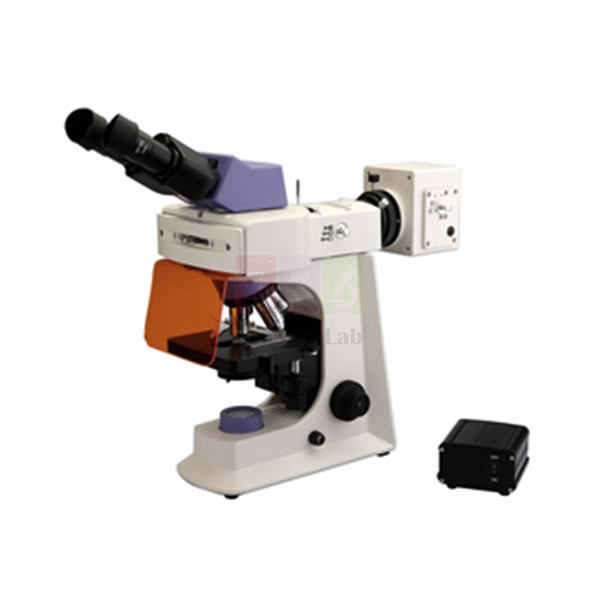
LED Fluorescence Microscope
LED Fluorescence Microscope (Product Code: SLE/M/36) is a trinocular microscope used for both bright-field and fluorescence examination of stained cells, tissues and microorganisms in microbiology, cell biology and research laboratories. It pairs a 4 W LED for transmitted light with 100 W mercury fluorescence illumination and UV, blue and green excitation filters. It is supplied by Jain Scientific Equipments Pvt Ltd (ScienceLab), Ambala, India, for buyers of a fluorescence microscope in India and overseas.
Specifications
| Parameter | Detail |
|---|---|
| Eyepieces | Wide field WF10X; 4 antifungal eyepieces; field of view 20 and 22 mm or higher |
| Eyepiece tube | Trinocular with interpupillary adjustment; 2-way light distribution (100/0 and 0/100) |
| Objectives | Infinity plan achromatic PL 4X/0.10, PL 10X/0.25, PL 40X/0.65 (spring), PL 100X/1.25 (spring, oil) |
| Objective correction | Harmonic-corrected antifungal plan objectives for fluorescence and bright field (10X, 40X, 100X) |
| Nosepiece | Four or more positions, facing inward |
| Stage | Ceramic-coated mechanical X/Y stage, rust free and scratch proof, with vernier calibration; holds two slides |
| Condenser | Upright, universal turret type for bright field and fluorescence imaging; for 10X–100X objectives |
| Transmitted light source | LED 4 W, uniform light distribution, intensity controller, life span of more than 40,000 hours |
| Fluorescence illumination | 100 W mercury, with intensity controller |
| Excitation filters | Three or more (UV, blue and green) in a four-position rotating filter turret |
| Power supply | 12 V DC, 1.5 A, for mains 100–240 V AC, 47–63 Hz, with voltage stabiliser |
| Product code | SLE/M/36 |
| Supplied by | Jain Scientific Equipments Pvt Ltd (ScienceLab), Ambala, India |
What Is the Fluorescence Microscope Used For?
Fluorescence microscopy makes specific structures glow against a dark background: a dye or fluorescent label absorbs light of one colour and emits another, so nuclei, bacteria or labelled proteins stand out clearly. Laboratories use it for fluorescent staining practicals, immunofluorescence teaching and research on cells and microorganisms, then switch the same instrument back to ordinary bright field for routine stained slides.
Choose the UV, blue or green excitation filter on the four-position turret to match the dye, and set the mercury lamp intensity with its controller. The universal turret condenser moves between bright-field and fluorescence settings, and the 2-way light path sends all light to the eyepieces or all to the camera port. Keep the room dim during fluorescence work so faint signals remain visible.
What to Specify When Ordering
- The dyes you use, so the listed UV, blue and green filters can be checked against them
- Whether you need a camera for the trinocular port (not included in the listed specification)
- Your mains voltage and frequency (listed for 100–240 V AC, 47–63 Hz)
- Quantity and any tender specification to be matched
Supplier
ScienceLab, the trading name of Jain Scientific Equipments Private Limited, supplies the LED Fluorescence Microscope from Ambala, Haryana, to universities, research institutes, dealers and importers in India and international markets. For vendor registration, the supplying company's details are CIN U29309HR2020PTC087597 and GSTIN 06AAECJ8618A1ZT. The ScienceLab company profile describes the business.
Related Laboratory Equipment
Consumables and accessories used with a fluorescence microscope:
- Immersion Oil, 25ml — for the 100X/1.25 oil objective; ask us about suitability for fluorescence
- Microscope Slides Glass — for preparing stained specimens
- Cover Glasses — to cover mounted preparations
- Microscope Digital Camera, 5MP — for recording images from the trinocular port; confirm the fit
Browse more instruments in our Microscope category.
Frequently Asked Questions
What light sources does the LED Fluorescence Microscope use?
The LED Fluorescence Microscope uses a 4 W LED with intensity control for transmitted bright-field light, listed with a life span of more than 40,000 hours, and a separate 100 W mercury illuminator with its own intensity controller for fluorescence excitation.
Which excitation filters come with the LED Fluorescence Microscope?
The LED Fluorescence Microscope is listed with three or more excitation filters — UV, blue and green — mounted in a four-position rotating filter turret. Tell us the dyes or labels you plan to use so the filter set can be checked before quotation.
What objectives does the LED Fluorescence Microscope have?
The LED Fluorescence Microscope has infinity plan achromatic objectives PL 4X/0.10, PL 10X/0.25, PL 40X/0.65 (spring) and PL 100X/1.25 (spring, oil), described as harmonic-corrected and antifungal, on an inward-facing nosepiece of four or more positions.
Can images be captured with this microscope?
The LED Fluorescence Microscope has a trinocular tube with 2-way light distribution, sending 100% of light to the eyepieces or 100% to the camera port. A camera is not part of the listed specification, so request one separately if you need image capture.
What power supply does the LED Fluorescence Microscope need?
The LED Fluorescence Microscope runs from a 12 V DC, 1.5 A supply for mains of 100–240 V AC at 47–63 Hz, with a voltage stabiliser. This range covers most laboratory mains supplies, but state your local voltage in the enquiry.
Who supplies the LED Fluorescence Microscope?
The LED Fluorescence Microscope is supplied by Jain Scientific Equipments Pvt Ltd, trading as ScienceLab, Ambala, Haryana, India. The company handles orders from universities, research institutes, dealers and importers in India and international markets.
Request a Quote
To receive a quotation for the LED Fluorescence Microscope, send your dyes, camera requirement and quantity through the contact page, or add it to the enquiry cart with slides and immersion oil.
Last updated: 24 September 2026
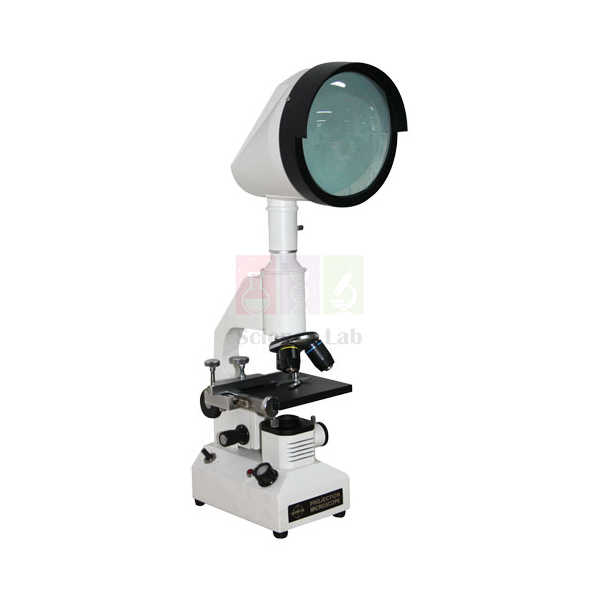
Screen Projection Microscope
Screen Projection Microscope (Product Code: SLE/M/37) is a microscope that projects the magnified image onto a built-in viewing screen, used for group viewing, inspection and angle checks in teaching and laboratory settings. Its 195 mm screen is graduated through 360° and rotates, and objectives from 5x to 60x give 125x to 1000x. It is supplied by Jain Scientific Equipments Pvt Ltd (ScienceLab), Ambala, India, a laboratory equipment supplier in India.
Specifications
| Parameter | Detail |
|---|---|
| Screen diameter | 195 mm |
| Screen | Rotatable, graduated 360° |
| Light control | Solid-state intensity control system |
| Stage | Mechanical stage |
| Objectives | 5x, 10x, 20x, 40x or 60x |
| Magnification | 125x to 1000x |
| Packing | Complete in cardboard box |
| Product code | SLE/M/37 |
| Supplied by | Jain Scientific Equipments Pvt Ltd (ScienceLab), Ambala, India |
What Is the Screen Projection Microscope Used For?
Instead of one person looking into an eyepiece, a projection microscope throws the image onto a screen that several people can see at once. A teacher can point to a cell, fibre or surface defect while a small group watches, and an inspector can compare a part against its expected outline without eye strain during long checking sessions.
Because the screen rotates and carries a 360° scale, angles in the projected image can be read directly: line up a reference with one edge, turn the screen to the next edge and note the change. Adjust brightness with the solid-state intensity control to keep the projected image clear in a normally lit room, and move the specimen with the mechanical stage rather than by hand.
What to Specify When Ordering
- Which objectives you need from the 5x, 10x, 20x, 40x and 60x options
- The magnification range most important for your specimens (125x to 1000x listed)
- Mains voltage and quantity
Supplier
Trading as ScienceLab, Jain Scientific Equipments Private Limited supplies the Screen Projection Microscope from Ambala, Haryana, to schools, colleges, inspection laboratories, dealers and importers in India and international markets. Share your objective choice and we will quote the instrument together with any slides or accessories you need. More about the company is on the profile page.
Related Laboratory Equipment
Accessories and alternatives for projection and measuring work:
- Toolmaker Microscope — for micrometer-based measurement of angles and dimensions
- Microscope Slides Glass — for mounting specimens on the stage
- Lens Tissue — for cleaning the objectives and screen optics
- Carry Case for Microscopes — a sturdier storage option to discuss
Find other models in the Microscope category.
Frequently Asked Questions
How does the Screen Projection Microscope display the image?
The Screen Projection Microscope projects the magnified image onto a built-in screen of 195 mm diameter instead of an eyepiece. Several students or inspectors can view the same specimen together, which makes demonstrations and discussion of what is seen much easier.
What magnification range does the Screen Projection Microscope cover?
The Screen Projection Microscope covers 125x to 1000x on the screen. Objectives are listed as 5x, 10x, 20x, 40x or 60x, so tell us which of these you require and we will quote the matching configuration for your application.
Why is the projection screen rotatable and graduated?
The screen of the Screen Projection Microscope rotates and is graduated through 360°, so it can be used to read angles in the projected image. Align a reference with one edge of the feature, rotate to the second edge and take the difference.
How is the brightness of the image adjusted?
The Screen Projection Microscope has a solid-state intensity control system for its illumination. Raising or lowering the light level keeps the projected image readable at different magnifications and in rooms with different amounts of ambient light.
How is the Screen Projection Microscope packed?
The Screen Projection Microscope is supplied complete in a cardboard box. If you need a sturdier case for frequent moves between rooms or for long-term storage, ask about a carry case when you request your quotation.
Who supplies the Screen Projection Microscope?
The Screen Projection Microscope is supplied by Jain Scientific Equipments Pvt Ltd, trading as ScienceLab, Ambala, Haryana, India, to schools, colleges, inspection laboratories, dealers and importers in India and international markets.
Request a Quote
Tell us the objectives and quantity you need for the Screen Projection Microscope through the contact page, or add it to the enquiry cart, and we will send a quotation.
Last updated: 24 September 2026
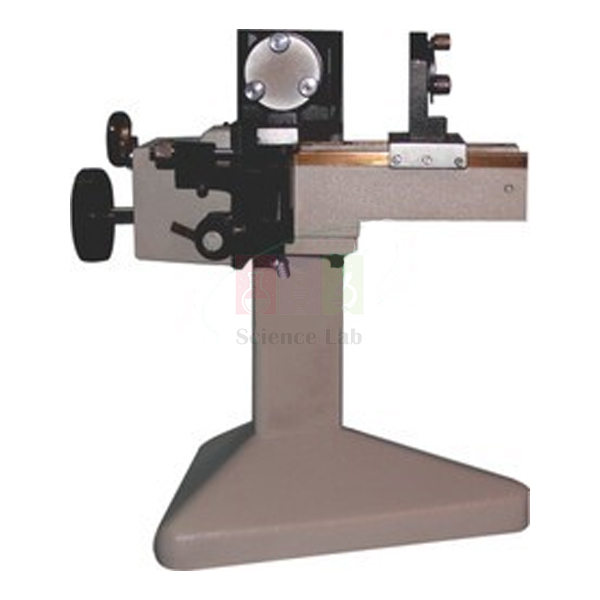
Michelson Interferometer
Michelson Interferometer (Product Code: SLE/M/38) is an optical instrument used to produce and measure interference fringes, for experiments such as finding the wavelength of monochromatic light in college physics laboratories. Its movable mirror is driven by a 1 mm pitch lead screw, with a slow-motion drum reading to 0.0001 mm. It is made by Jain Scientific Equipments Pvt Ltd (ScienceLab), an OEM manufacturer, at its own factory in Ambala, India, for buyers of optics lab equipment in India and abroad.
Specifications
| Parameter | Detail |
|---|---|
| Mirrors | Movable surface-coated mirror; fixed surface-coated mirror loaded with springs |
| Optics | Beam splitter and compensator |
| Mirror no. 1 drive | Main knob, least count 0.01 mm |
| Mirror no. 2 drive | Slow-motion drum, least count 0.0001 mm |
| Lead screw | Well-ground, pitch 1 mm, with spring knob for adjustment |
| Mirror alignment | 3 knurled heads to set mirror no. 2 parallel to mirror no. 1 |
| Pin-hole adjustment | Screws with nut and spring for horizontal and vertical adjustment of the pin-hole view |
| Viewing | Universal adjustable telescope with cross-line graticule; telescope holding clamp (universal type); adjustable eyepiece |
| Illumination optics | Diffused glass screen with pin-hole holder; pin-hole disc; adjustable condenser unit |
| Scale reading | Viewing window to read the main scale |
| Mounting | Base on stand for the interferometer |
| Product code | SLE/M/38 |
| Manufacturer | Jain Scientific Equipments Pvt Ltd (ScienceLab) — OEM |
| Country of origin | India (made in Ambala, Haryana) |
What Is the Michelson Interferometer Used For?
The beam splitter divides light from the source into two paths, one to each mirror; when the beams recombine they form circular fringes seen through the telescope. Moving mirror no. 1 changes one path length, and every fringe that appears or vanishes at the centre corresponds to half a wavelength of travel. Counting fringes against the drum reading gives the wavelength of a monochromatic source, a standard experiment for B.Sc. and M.Sc. physics.
The same set-up is used to find the separation of the sodium D lines from the spacing of fringe visibility, and to estimate the thickness or refractive index of a thin transparent sheet placed in one arm. Start by aligning with the pin-hole disc and the three knurled heads until the two pin-hole images coincide, then switch to the diffused screen and bring the fringes into view before taking readings. It is one of the classic Michelson interferometer India syllabus experiments.
What to Specify When Ordering
- Number of interferometers for the optics laboratory
- Whether you also need a light source, such as a sodium lamp and its power supply (not part of the listed parts)
- Any spare parts you want with the order, such as an extra pin-hole disc
OEM Manufacturer
Jain Scientific Equipments Private Limited, trading as ScienceLab, is the OEM (original equipment manufacturer) of this Michelson Interferometer. The instrument is made and assembled at the company's own licensed factory at 449, HSIIDC Industrial Area, Saha, Ambala, Haryana, India, rather than bought in from a trader.
Because the manufacturer quotes directly, universities, colleges, dealers and importers in India and international markets deal with the people who build the interferometer. Replacement parts such as the pin-hole disc, eyepiece or telescope clamp, and repeat orders for additional lab benches, are handled by the manufacturer itself — just ask us. Read more on the ScienceLab company profile.
Related Laboratory Equipment
Light sources and optics apparatus used with an interferometer:
- Sodium Spectral Lamp — the usual monochromatic source for wavelength and D-line experiments
- Spectral Lamp Power Supply with Lamp Holder — to run the spectral lamp
- Semiconductor Laser — a bright source that can help with first alignment
- Spectrometer — for related wavelength and prism experiments
This instrument is listed in our Microscope category; more optics apparatus is in Physics Lab Equipment.
Frequently Asked Questions
What experiments can be done with the Michelson Interferometer?
The Michelson Interferometer is used to determine the wavelength of monochromatic light, the separation of the sodium D lines, and the thickness or refractive index of a thin transparent sheet. These are standard experiments in undergraduate and postgraduate physics practicals.
How finely can the mirror be moved on the Michelson Interferometer?
On the Michelson Interferometer, the main knob moves mirror no. 1 with a least count of 0.01 mm, and a slow-motion drum gives a least count of 0.0001 mm. Both act through a well-ground lead screw of 1 mm pitch, with the main scale read through a viewing window.
How are the mirrors of the Michelson Interferometer aligned?
Alignment on the Michelson Interferometer uses three knurled heads that set mirror no. 2 parallel to mirror no. 1, together with the pin-hole disc and diffused glass screen. Spring-loaded screws adjust the pin-hole view horizontally and vertically until circular fringes appear.
Is a light source included with the Michelson Interferometer?
A light source is not among the listed parts of the Michelson Interferometer, which includes a condenser unit, pin-hole disc and diffused screen for the illumination path. Most laboratories use a sodium spectral lamp with its power supply; add one to your enquiry if needed.
Who manufactures the Michelson Interferometer?
The Michelson Interferometer is manufactured by Jain Scientific Equipments Pvt Ltd (ScienceLab) as the OEM, at its own licensed factory at Saha, Ambala, Haryana, India. Quotations, repeat orders and replacement-part requests go directly to the manufacturer rather than through a trader.
Is a calibration certificate available for the Michelson Interferometer?
Calibration-certificate availability for the Michelson Interferometer should be discussed with us before ordering. Mention it in your enquiry through the contact page and we will confirm what documentation can be provided with the instrument.
Request a Quote
Quotations for the Michelson Interferometer come straight from the manufacturer. Send the quantity and any light source or spares you need through our contact page, or add the item to the enquiry cart.
Last updated: 24 September 2026
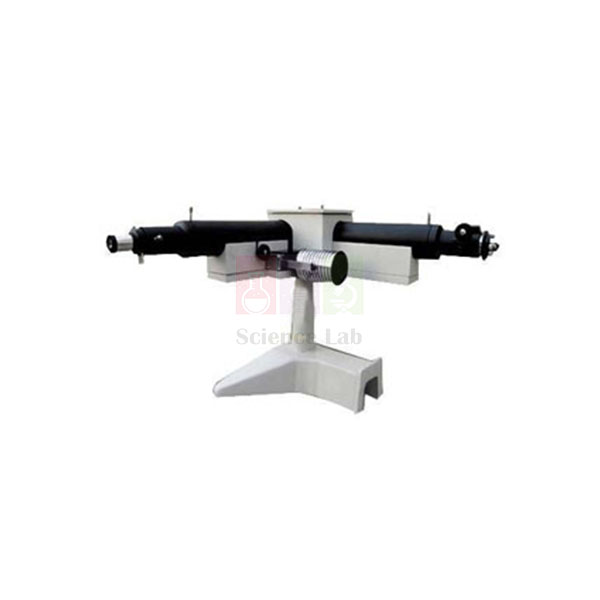
Constant Deviation Spectrograph
Constant Deviation Spectrograph (Product Code: SLE/M/39) is a prism spectroscopic instrument used to observe, measure and record spectral lines in advanced physics laboratories. Its Broca-type prism is turned by an external wavelength drum, so the collimator and telescope stay fixed while each wavelength is brought into view. It is built by Jain Scientific Equipments Pvt Ltd (ScienceLab), an OEM manufacturer, at its own factory in Ambala, India, as part of its physics lab equipment in India.
Specifications
| Parameter | Detail |
|---|---|
| Base | Heavy, stable base with pillar carrying a platform for the collimator, telescope and prism housing |
| Prism table | Broca-type prism, refractive index 1.65/1.74, housed under a cover and rotated by an outside wavelength drum |
| Telescope | Mounted on the platform, rack-and-pinion focusing, achromatic objective, eyepiece with scale (least count 0.01 cm) |
| Collimator | Achromatic objective, rack-and-pinion focusing, slit opening varied by micrometer screw |
| Prisms | Glass prism E.D.F.; glass prism D.E.D.F. |
| Extension mount | For L.G. plate, Edser-Butler plate or Fabry-Perot etalon |
| Telescope attachments (extra) | Monochromator conversion attachment; filar micrometer eyepiece reading 0.001 cm; camera with plate holder; plate holder for camera |
| General accessories | Standard accessory bar, nearly 3 feet long; Fabry-Perot etalon, 30 mm aperture, separation 3, 5 or 10 mm as desired; Edser-Butler plate for determining wavelength; L.G. plate with stand; condenser on stand |
| Product code | SLE/M/39 |
| Manufacturer | Jain Scientific Equipments Pvt Ltd (ScienceLab) — OEM |
| Country of origin | India (made in Ambala, Haryana) |
What Is the Constant Deviation Spectrograph Used For?
In an ordinary spectrometer the telescope swings round to follow each colour. In a constant deviation instrument the collimator and telescope are fixed at one angle and the prism rotates instead; turning the wavelength drum brings successive lines onto the cross-wire so that wavelengths can be read directly. Physics departments looking for a prism spectrometer in India choose this design for M.Sc. work on line spectra of sodium, mercury and other discharge lamps.
The optional parts extend the experiments. A Fabry-Perot etalon or Lummer-Gehrcke (L.G.) plate on the extension mount reveals the fine structure of a line, the Edser-Butler plate measures wavelength from channelled spectra, the filar micrometer eyepiece measures small line separations to 0.001 cm, and the camera with plate holder records a spectrum. With the monochromator attachment the instrument can also deliver light of a selected wavelength.
What to Specify When Ordering
- Prism: glass E.D.F. or D.E.D.F.
- Telescope attachments: monochromator attachment, filar micrometer eyepiece, camera and plate holder
- Fabry-Perot etalon separation: 3 mm, 5 mm or 10 mm
- Other accessories: accessory bar, Edser-Butler plate, L.G. plate with stand, condenser on stand
- Number of instruments
OEM Manufacturer
ScienceLab is the trading name of Jain Scientific Equipments Private Limited, the OEM (original equipment manufacturer) of this Constant Deviation Spectrograph. It is produced at the company's own licensed factory in the HSIIDC Industrial Area at Saha, Ambala, Haryana, India, where the complete instrument is made and assembled rather than bought in from another supplier.
Buying from the maker means the configuration you order — prism, etalon separation and attachments — is quoted and supplied factory-direct to universities, research institutes, dealers and importers in India and international markets. Additional accessories or replacement parts for instruments already in your laboratory can be requested from the manufacturer; ask us. See the ScienceLab profile.
Related Laboratory Equipment
Sources and optics apparatus used in spectroscopy practicals:
- Sodium Spectral Lamp — a common line source for calibration and fine-structure work
- Spectral Lamp Power Supply with Lamp Holder — powers the spectral lamp
- Spectrometer — for introductory prism and grating experiments
- Michelson Interferometer — for interference-based wavelength measurement
The instrument is listed in our Microscope category; further optics apparatus is in Physics Lab Equipment.
Frequently Asked Questions
How does the Constant Deviation Spectrograph work?
The Constant Deviation Spectrograph keeps its collimator and telescope fixed and rotates a Broca-type prism with an outside wavelength drum. Each wavelength in turn is deviated through the same angle into the telescope, so spectral lines are brought to the cross-wire and read from the drum.
Which prisms are used in the Constant Deviation Spectrograph?
The Constant Deviation Spectrograph has a Broca-type prism of refractive index 1.65/1.74 housed under a cover on the prism table. Glass prisms in E.D.F. and D.E.D.F. grades are also listed, so state which you require when you ask for a quotation.
What telescope attachments are available?
The Constant Deviation Spectrograph offers extra telescope attachments: a conversion attachment that turns it into a monochromator, a filar micrometer eyepiece reading 0.001 cm, a camera with plate holder, and a separate plate holder for the camera.
What Fabry-Perot etalon can be supplied with the spectrograph?
The Fabry-Perot etalon offered with the Constant Deviation Spectrograph has a 30 mm aperture and an etalon separation of 3 mm, 5 mm or 10 mm, as desired by the customer. It fits the extension mount, which also takes an L.G. plate or Edser-Butler plate.
Who manufactures the Constant Deviation Spectrograph?
The Constant Deviation Spectrograph is manufactured by Jain Scientific Equipments Pvt Ltd (ScienceLab), the OEM, at its own licensed factory at Saha, Ambala, Haryana, India. Quotations, accessory orders and replacement-part requests are handled directly by the manufacturer.
Is a light source included with the Constant Deviation Spectrograph?
A lamp is not among the listed parts of the Constant Deviation Spectrograph, although a condenser on stand is included in the general accessories. Laboratories usually add a spectral lamp and power supply; include them in your enquiry if you need a complete set-up.
Request a Quote
Your quotation for the Constant Deviation Spectrograph comes direct from the manufacturer. List the prism, etalon separation and attachments you need on our contact page, or add the instrument to the enquiry cart.
Last updated: 24 September 2026
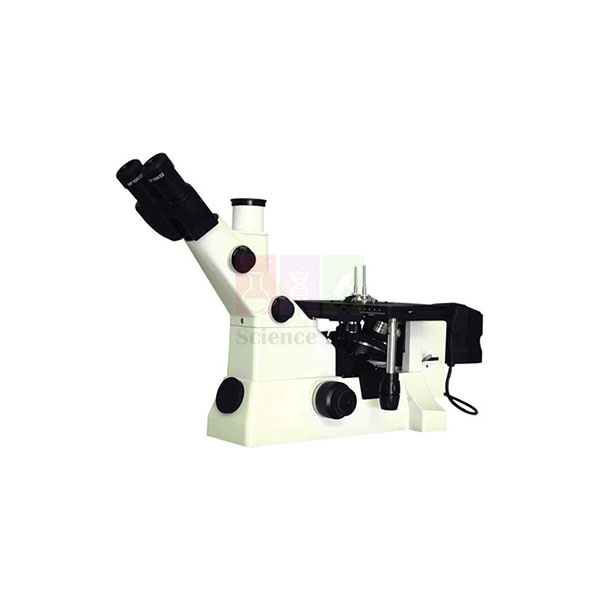
Research Inverted Metallurgical Microscope
Research Inverted Metallurgical Microscope (Product Code: SLE/M/40) is an inverted reflected-light microscope used to examine polished and etched metal specimens in metallurgy, materials science and engineering laboratories. Its objectives look up at the specimen from below a 150 x 200 mm stage, and Koehler illumination from a 6 V 20 W halogen lamp gives even lighting. It is supplied by Jain Scientific Equipments Pvt Ltd (ScienceLab), Ambala, India, a laboratory equipment exporter from India.
Specifications
| Parameter | Detail |
|---|---|
| Observation head | Binocular, with eyepiece tube, inclined at 30° |
| Interpupillary distance | 55 to 75 mm |
| Eyepiece | 10x (16 mm) |
| Objectives | PL10x, PL25x, PL40x; PL60x optional |
| Nosepiece | Quadruple, revolving on ball bearing |
| Mechanical stage | Co-axial, 150 x 200 mm, cross travel 15 x 15 mm |
| Illumination | Koehler illumination system, 6 V 20 W halogen lamp, adjustable brightness |
| Focusing | Co-axial focusing control knobs, tension adjustment ring and pre-focusing lock |
| Main body | All parts die-cast for long life and mechanical strength |
| Product code | SLE/M/40 |
| Supplied by | Jain Scientific Equipments Pvt Ltd (ScienceLab), Ambala, India |
What Is the Inverted Metallurgical Microscope Used For?
Metals are opaque, so their structure is studied with light reflected from a polished and etched surface. Students use this microscope to see grain boundaries, phases such as ferrite and pearlite, inclusions, porosity and weld zones, and to compare heat-treated samples in a materials science practical.
Because the objectives sit under the stage, the prepared face of the specimen simply rests downward on the stage plate. Samples of different heights, including mounted pucks and small cut sections, stay in the same focal plane without levelling in plasticine. Start with the PL10x objective to find the area, then move to PL25x or PL40x for detail, and use the 15 x 15 mm cross travel to scan the surface systematically.
What to Specify When Ordering
- Whether the optional PL60x objective is required
- Any imaging requirement (the listed head is binocular), so we can advise before quoting
- Mains voltage and number of microscopes
Supplier
Jain Scientific Equipments Private Limited supplies this microscope under its ScienceLab trading name from Ambala, Haryana, to engineering colleges, metallurgy departments, industrial training centres, dealers and importers in India and international markets. For supplier onboarding and import paperwork, its registrations are GSTIN 06AAECJ8618A1ZT and Importer-Exporter Code AAECJ8618A issued by DGFT. The ScienceLab profile gives more background.
Related Laboratory Equipment
Specimen preparation and testing equipment used alongside metallography:
- Single Disc Polishing Machine — to prepare the flat, polished specimen face
- Vickers Hardness Tester — hardness readings to relate to the observed microstructure
- Brinell Hardness Tester — bulk hardness testing of the same materials
- Research Trinocular Ore Microscope — for ore and mineral specimens
See the Microscope category for more instruments, and Materials Testing and Properties for testing equipment.
Frequently Asked Questions
Why is the Research Inverted Metallurgical Microscope built upside down?
The Research Inverted Metallurgical Microscope places its objectives beneath the stage, so a polished metal specimen rests face down on the stage plate. Specimens of different heights stay in focus without levelling, and heavy or irregular samples can be examined without special mounting.
What objectives and eyepiece does the Research Inverted Metallurgical Microscope have?
The Research Inverted Metallurgical Microscope has PL10x, PL25x and PL40x objectives, with PL60x available as an option, on a quadruple nosepiece that revolves on a ball bearing. The eyepiece is 10x (16 mm) in a binocular head inclined at 30°.
What illumination does this metallurgical microscope use?
The Research Inverted Metallurgical Microscope uses a Koehler illumination system with a 6 V 20 W halogen lamp and adjustable brightness. Koehler lighting spreads light evenly over the field, which helps when judging grain structure and etching contrast across a polished surface.
How big is the stage and how far does it travel?
The Research Inverted Metallurgical Microscope has a co-axial mechanical stage measuring 150 x 200 mm with a cross travel of 15 x 15 mm. The large stage supports bulky specimens, and the controlled travel lets the user scan the prepared surface field by field.
Can a camera be used with the Research Inverted Metallurgical Microscope?
The Research Inverted Metallurgical Microscope is listed with a binocular observation head, and no camera port is included in its specification. If you need to capture micrographs, mention this in your enquiry so we can advise on suitable options before quoting.
Who supplies the Research Inverted Metallurgical Microscope?
The Research Inverted Metallurgical Microscope is supplied by Jain Scientific Equipments Pvt Ltd, trading as ScienceLab, Ambala, Haryana, India. It serves engineering colleges, metallurgy departments, training centres, dealers and importers in India and international markets.
Request a Quote
Request a quotation for the Research Inverted Metallurgical Microscope by sending your objective choice and quantity through our contact page, or add it to the enquiry cart with polishing and hardness-testing equipment.
Last updated: 24 September 2026
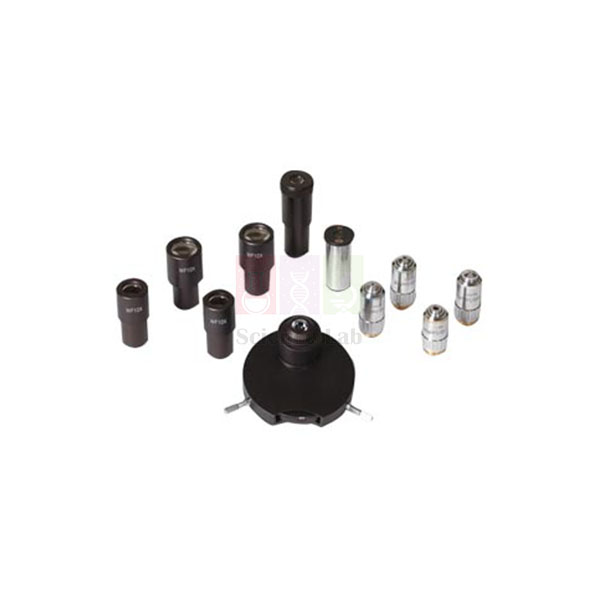
Phase Contrast & Dark Field For Microscopes
Phase Contrast & Dark Field For Microscopes (Product Code: SLE/M/41) is a turret phase-contrast attachment set used to make transparent, unstained specimens visible in biology, microbiology and research laboratories. It comprises four plan phase objectives and a precision turret condenser with matching annuli, plus a zero position for ordinary bright field. It is supplied by Jain Scientific Equipments Pvt Ltd (ScienceLab), Ambala, as biology lab equipment in India and abroad, for labs adding microscope phase contrast.
Key Details
| Parameter | Detail |
|---|---|
| Type | Turret phase contrast equipment |
| Objectives | Four plan phase objectives: PLPH-10x, PLPH-20x/25x, PLPH-40x, PLPH-100x |
| Condenser | Precision turret condenser unit with optical annuli matched to all four plan phase objectives |
| Bright-field use | Neutral "zero position" on the turret for normal bright-field microscopy |
| Supplied with | Centering telescope and green filter |
| Dark field | Named in the product title; please confirm the dark-field arrangement with us |
| Product code | SLE/M/41 |
| Supplied by | Jain Scientific Equipments Pvt Ltd (ScienceLab), Ambala, India |
What Is a Phase Contrast Attachment Used For?
Living cells, protozoa, cheek epithelium and many bacteria are almost transparent, so under ordinary bright field they look faint unless they are stained — and staining usually kills them. Phase contrast turns the tiny delays that light suffers passing through different parts of a cell into differences of brightness, so nuclei, membranes and organelles appear with clear contrast in living, unstained material.
To set up, turn the condenser turret to the annulus that matches the phase objective in use, then look through the centering telescope in place of an eyepiece and centre the bright ring on the dark phase ring. Place the green filter in the light path for a crisper image. Turning the turret to the zero position returns the microscope to normal bright-field work for stained slides.
What to Specify When Ordering
- The make and model of the microscope the set will be fitted to, so compatibility can be checked
- Your choice of 20x or 25x for the second phase objective
- Whether you need a dark-field facility, so the arrangement can be confirmed
- Number of sets
Supplier
This phase contrast set is supplied by Jain Scientific Equipments Private Limited, which does business as ScienceLab, from Ambala, Haryana. Colleges, hospitals' teaching laboratories, research institutes, dealers and importers in India and international markets can order it on its own or together with a microscope and consumables. See the ScienceLab company profile for more.
Related Laboratory Equipment
Microscopes and consumables used with a phase contrast set:
- Research Binocular Microscope — a research microscope to discuss pairing with the set
- Universal Research Microscope — another binocular instrument; ask us about fit
- Microscope Slides Glass — for wet mounts of living cells
- Cover Glasses — a thin, even cover helps phase images
More options are in our Microscope category.
Frequently Asked Questions
What is included in the Phase Contrast & Dark Field For Microscopes set?
The Phase Contrast & Dark Field For Microscopes set includes four plan phase objectives (PLPH-10x, PLPH-20x/25x, PLPH-40x and PLPH-100x), a precision turret condenser with matching annuli, a centering telescope and a green filter.
Can the microscope still be used for ordinary bright field?
Yes. The turret condenser in the Phase Contrast & Dark Field For Microscopes set has a neutral zero position. Turning to it removes the phase annulus from the light path, so the same microscope can be used for normal bright-field viewing of stained slides.
What is the centering telescope used for?
The centering telescope supplied with the Phase Contrast & Dark Field For Microscopes set replaces an eyepiece during set-up. It lets you see the condenser annulus and the phase ring of each objective so they can be aligned; good alignment is what produces a clear phase-contrast image.
Which microscopes does this phase contrast set fit?
Compatibility of the Phase Contrast & Dark Field For Microscopes set is not stated in its listing. Send the make and model of your microscope through the contact page so we can confirm the fit before you place an order.
Does the set include dark-field equipment?
The Phase Contrast & Dark Field For Microscopes set names dark field in its title, but its listed specification describes only the phase-contrast turret, objectives, centering telescope and green filter. Please confirm the dark-field arrangement with us when you request a quotation.
Who supplies the Phase Contrast & Dark Field For Microscopes set?
The Phase Contrast & Dark Field For Microscopes set is supplied by Jain Scientific Equipments Pvt Ltd, trading as ScienceLab, Ambala, Haryana, India, to colleges, research institutes, dealers and importers in India and international markets.
Request a Quote
Send your microscope model, objective choice and quantity for the Phase Contrast & Dark Field For Microscopes set through our contact page, or add it to the enquiry cart to receive a quotation.
Last updated: 24 September 2026
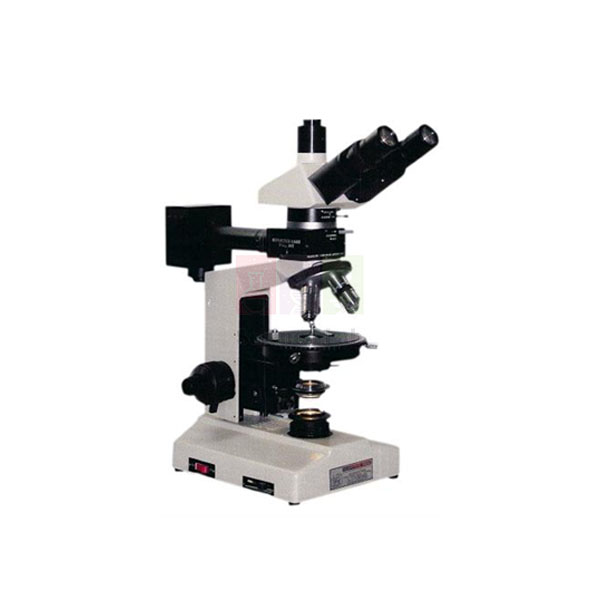
Ore Polarising Microscope
Ore Polarising Microscope (Product Code: SLE/M/42) is a trinocular polarising microscope used to identify ore minerals and study rock specimens in reflected and transmitted polarised light in geology and mining laboratories. It is fitted with two focusable 10X wide-field eyepieces carrying a double cross line, plan POL objectives from 4X to 40X and a colour CCD camera on the trinocular tube. It is supplied by Jain Scientific Equipments Pvt Ltd (ScienceLab), Ambala, India, a laboratory equipment supplier in India.
Specifications
| Parameter | Detail |
|---|---|
| Frame | Transmission and reflection mode polarisation microscopy, built-in filter holders |
| Objectives (plan achromatic, polarising) | 4X POL N.A. 0.13, W.D. 17.0 mm; 10X POL N.A. 0.3, W.D. 10.0 mm; 20X POL N.A. 0.5, W.D. 2.1 mm; 40X POL N.A. 0.75, W.D. 1.1 mm |
| Eyepieces | Wide-field 10X, 2 numbers, with double cross line, focusable |
| Tube | Fixed trinocular tube |
| Light source | High-power LED light with power supply; built-in transmitted light filters |
| Nosepiece | Minimum 4-position, centrable and detachable |
| Focus | Stroke minimum 22 mm; fine stroke minimum 100 µm |
| Condenser | Strain-free polarising condenser, swing-out type |
| Stage | Circular, rotatable and centerable mechanical stage, graduated through 360° |
| Reflected illumination | Polariser slider for the reflected illumination tube |
| Rotating scale | 360° rotatable, scale interval 5° |
| Compensator | Wedge shaped, measurement range 0–4λ |
| Camera | Colour CCD camera, minimum 5 megapixel, on the trinocular tube with a suitable mounting adapter |
| Camera sensor | 2/3 inch CCD; resolution 1920 x 1080 pixels; pixel size 3.45 x 3.45 µm |
| Product code | SLE/M/42 |
| Supplied by | Jain Scientific Equipments Pvt Ltd (ScienceLab), Ambala, India |
What Is the Ore Polarising Microscope Used For?
Ore minerals such as sulphides and oxides are opaque, so a geologist identifies them from how they reflect light: their colour, relative brightness, and whether they change as the stage turns under crossed polars. This instrument provides that reflected polarised view through the polariser slider on the reflected illumination tube, and also a transmitted polarised path for the transparent gangue minerals in a thin section.
The double cross line in each focusable eyepiece is the working reference: centre a grain on the cross, rotate the graduated stage and note where it goes dark to measure extinction positions. The 0–4λ wedge compensator assists with interference-colour work in transmitted light, and the CCD camera records the field for mineral reports or class discussion.
What to Specify When Ordering
- Whether the colour CCD camera is needed or the microscope alone
- Objective set required from the 4X, 10X, 20X and 40X POL objectives
- Mains voltage for the LED power supply
- Quantity, and any tender specification to be met
Supplier
The Ore Polarising Microscope is supplied from Ambala, Haryana, by Jain Scientific Equipments Private Limited under its ScienceLab name. Geology departments, mining institutes, dealers and importers in India and international markets can send their specification and receive a quotation for the configuration they need. The company profile has further details.
Related Laboratory Equipment
Instruments and preparation equipment for ore and mineral microscopy:
- Advance Research Polarising Microscope with Incident Light — infinity-corrected alternative with imaging software
- Research Trinocular Ore Microscope — with a vernier-read round stage and compensator set
- Mineral Test Kit — hand-specimen tests to complement microscope identification
- Single Disc Polishing Machine — for preparing polished sections
Browse the Microscope category for other polarising and research models.
Frequently Asked Questions
What specimens can the Ore Polarising Microscope examine?
The Ore Polarising Microscope works in both transmission and reflection modes. Reflected polarised light is used for opaque ore minerals in polished sections, while transmitted polarised light is used for transparent minerals in thin sections of the same rock.
What eyepieces are supplied with the Ore Polarising Microscope?
The Ore Polarising Microscope comes with two wide-field 10X eyepieces, each with a double cross line and focusing. Focusing the eyepiece makes the cross line sharp for each user, so grains can be centred and angles judged accurately.
What camera is specified for the Ore Polarising Microscope?
The Ore Polarising Microscope is specified with a colour CCD camera of minimum 5 megapixels on the trinocular tube, using a suitable mounting adapter. Its sensor is 2/3 inch, with 1920 x 1080 pixel resolution and 3.45 x 3.45 µm pixels.
Which objectives does the Ore Polarising Microscope use?
The Ore Polarising Microscope uses plan achromatic polarising objectives: 4X POL (N.A. 0.13, W.D. 17.0 mm), 10X POL (N.A. 0.3, W.D. 10.0 mm), 20X POL (N.A. 0.5, W.D. 2.1 mm) and 40X POL (N.A. 0.75, W.D. 1.1 mm).
What focusing and nosepiece features does it have?
The Ore Polarising Microscope has a focus stroke of at least 22 mm with a fine stroke of at least 100 µm, and a centrable, detachable nosepiece of at least four positions, so each objective can be centred to the rotating stage axis.
Who supplies the Ore Polarising Microscope?
The Ore Polarising Microscope is supplied by Jain Scientific Equipments Pvt Ltd, trading as ScienceLab, Ambala, Haryana, India. It is offered to geology departments, mining institutes, dealers and importers in India and international markets.
Request a Quote
For a quotation on the Ore Polarising Microscope, share your camera requirement, objectives and quantity through our contact page, or place it in the enquiry cart.
Last updated: 24 September 2026
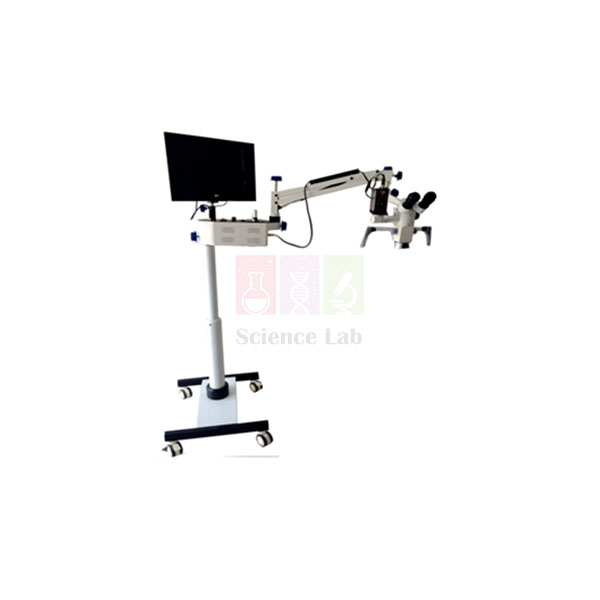
ENT Operating Microscope
ENT Operating Microscope (Product Code: SLE/M/43) is a floor-standing binocular operating microscope used to give a magnified, illuminated view of the ear, nose and throat field in hospital ENT departments and medical teaching settings. Its apochromatic optics have a five-step magnification changer covering 2.4x–40x or more, and an integrated full HD (1080p) camera records video and photos. It is supplied by Jain Scientific Equipments Pvt Ltd (ScienceLab), Ambala, India, a laboratory equipment supplier in India that also serves hospital buyers.
Specifications
| Parameter | Detail |
|---|---|
| Optics | Apochromatic, five-step magnification changer |
| Magnification range | 2.4x–40x or more |
| Maximum field of view | More than 180 mm |
| Objective working distance | f = 250 mm and 400 mm; fine focusing listed for 300 mm |
| Binocular tube | Inclinable, f = 170 mm or higher; interpupillary distance 55–75 mm |
| Eyepieces | Pair of wide-field push-in eyepieces, 10x or 12.5x, with rubber sleeves; diopter setting −5D to +5D |
| Illumination | Coaxial fibre-optic / direct Xenon or LED system; single lamp in LED versions; dual lamp with quick change-over in Xenon versions |
| Light control | Continuous lamp intensity adjustment by a control knob near the surgeon |
| Stand | Stable floor stand on four lockable castors; column height minimum 1.6 m; spring-balance articulated arm, carrier arm, power supply unit |
| Handling | Lateral handgrips for all knobs; dust cover |
| Imaging | Integrated full HD (1080p) camera and full HD recording system with playback for videos and photos |
| Product code | SLE/M/43 |
| Supplied by | Jain Scientific Equipments Pvt Ltd (ScienceLab), Ambala, India |
What Is the ENT Operating Microscope Used For?
ENT work takes place in narrow, deep and poorly lit spaces such as the ear canal and nasal passages. An operating microscope places a bright, coaxial light and a stereoscopic magnified view along the same line of sight, leaving the operator's hands free for instruments. The five-step changer lets the user move from an overview at 2.4x to fine detail at the upper end of the range without refocusing the whole set-up.
The spring-balanced articulated arm holds the head steady in any position, and the lockable castors let staff move the stand between rooms and fix it in place. The integrated full HD camera allows residents and students to follow a procedure on a monitor and lets departments keep recordings for teaching, with playback of stored videos and photos.
What to Specify When Ordering
- Illumination: LED (single lamp) or Xenon (dual lamp with quick change-over)
- Eyepiece magnification: 10x or 12.5x
- Objective working distance required: 250 mm or 400 mm
- Mains voltage and number of units
Supplier
Jain Scientific Equipments Private Limited, trading as ScienceLab, supplies the ENT Operating Microscope from Ambala, Haryana, to hospitals, medical colleges, dealers and importers in India and international markets. Share your specification or tender document and we will quote the matching configuration. Read about the company on the ScienceLab profile page.
Related Laboratory Equipment
Other equipment used in ENT examination rooms and operating theatres:
- Otoscope Set — for routine ear examination before microscope work
- LED Light Otoscope — a handheld examination light for the ear
- Light Operating Room Mobile w/access — general theatre lighting alongside the microscope
- Operating Theatre Table With Accessories — the patient table the microscope stand is positioned beside
This item is listed in our Microscope category; theatre equipment is in Resuscitation & Operating Theatre Equipment.
Frequently Asked Questions
What magnification does the ENT Operating Microscope provide?
The ENT Operating Microscope has apochromatic optics with a five-step magnification changer covering 2.4x–40x or more, and a maximum field of view of more than 180 mm. Eyepieces of 10x or 12.5x are offered, so state your preference when ordering.
What working distances are available on the ENT Operating Microscope?
The ENT Operating Microscope is listed with objective working distances of f = 250 mm and 400 mm, and fine focusing listed for 300 mm. Tell us the working distance your department prefers so the quotation covers the correct objective.
Which illumination options does the ENT Operating Microscope have?
The ENT Operating Microscope uses coaxial fibre-optic or direct illumination with either an LED system, which has a single lamp, or a Xenon system with dual lamps and quick change-over. Intensity is adjusted continuously with a knob placed near the surgeon.
Can the ENT Operating Microscope record video?
Yes. The ENT Operating Microscope includes an integrated full HD (1080p) camera and a full HD recording system. The camera has a playback function for videos and photos, which is useful for teaching, case discussion and departmental records.
What kind of stand does the ENT Operating Microscope use?
The ENT Operating Microscope stands on a stable floor stand with four lockable castors and a column of at least 1.6 m. A spring-balance articulated arm and carrier arm hold the optics, with lateral handgrips on all knobs and a dust cover included.
Who supplies the ENT Operating Microscope?
The ENT Operating Microscope is supplied by Jain Scientific Equipments Pvt Ltd, trading as ScienceLab, Ambala, Haryana, India. It is offered to hospitals, medical colleges, dealers and importers in India and international markets against their specification or tender requirements.
Request a Quote
Send your illumination choice, eyepiece and working distance for the ENT Operating Microscope through our contact page, or add it to the enquiry cart, and we will reply with a quotation.
Last updated: 24 September 2026
Dissection Microscope
Dissection Microscope (Product Code: SLE/M/44) is a floor-standing binocular microscope used to magnify fine dissection work from a long working distance in anatomy, zoology and advanced biology laboratories. Apochromatic optics with a five-step magnification changer cover 2.4x to 40x or more, and an integrated full HD (1080p) camera records what the operator sees. This item of biology lab equipment in India is supplied by Jain Scientific Equipments Pvt Ltd (ScienceLab), Ambala, India.
Specifications
| Parameter | Detail |
|---|---|
| Optics | Apochromatic optics with five-step magnification changer |
| Magnification range | 2.4x to 40x or more |
| Maximum field of view | More than 180 mm |
| Working distance | f = 250 mm and 400 mm |
| Fine focusing | Listed as “fine focusing for 300 mm” (confirm the focus travel when you enquire) |
| Binocular tube | Inclinable, f = 170 mm or higher |
| Interpupillary distance | Adjustable from 55 mm to 75 mm |
| Eyepieces | Pair of wide-field push-in eyepieces, 10x or 12.5x, with rubber sleeves |
| Dioptre setting | -5D to +5D |
| Illumination | Coaxial fibre-optic / direct Xenon or LED illumination system |
| Lamp arrangement | LED systems: single lamp; Xenon systems: dual lamp with quick changeover |
| Intensity control | Continuous lamp-intensity adjustment by a control knob placed near the operator |
| Stand | Stable floor stand on four lockable castors; column height minimum 1.6 m |
| Arm system | Spring-balanced articulated arm, carrier arm and power supply unit |
| Handling | Lateral handgrips for all knobs; dust cover |
| Imaging | Integrated full HD (1080p) camera and full HD recording system with playback for videos and photos |
| Product code | SLE/M/44 |
| Supplied by | Jain Scientific Equipments Pvt Ltd (ScienceLab), Ambala, India |
What Is the Dissection Microscope Used For?
A floor-stand dissection microscope holds its optics over the work on an articulated arm, so the bench stays clear for trays, instruments and specimens. The long working distances of 250 mm and 400 mm leave room for hands, scalpels and forceps below the objective. That suits detailed anatomical dissection, close study of large preserved specimens and microsurgical skills practice on training models.
Start on the lowest step of the magnification changer to find the region of interest, then step up for detail. The inclinable binocular tube, 55–75 mm interpupillary adjustment and ±5D dioptre setting let each user set a comfortable, sharp view. As zoology lab equipment for colleges, the built-in HD camera lets a whole group follow a demonstration dissection and keeps video and photo records for later teaching.
What to Specify When Ordering
- Illumination: LED (single lamp), Xenon (dual lamp with quick changeover) or coaxial fibre-optic
- Eyepiece pair: 10x or 12.5x wide-field
- Working distance you need (the specification lists f = 250 mm and 400 mm)
- Number of units, and room height for a column of at least 1.6 m
Supplier
Jain Scientific Equipments Private Limited, which trades under the name ScienceLab, supplies this floor-stand dissection microscope from Ambala, Haryana. Colleges, universities, research institutes, dealers and importers in India and international markets can source it together with dissecting sets, trays and bench microscopes on one enquiry. Read more about the company on the ScienceLab profile page.
Related Laboratory Equipment
Items used alongside a dissection microscope in the same workflow:
- Dissection Pan, Pad & Cover — a working surface that holds the specimen under the objective
- Dissecting Set, Large — instruments for the dissection itself
- Dissecting Operating Microscope — an alternative dissecting model to compare
- Stereoscopic Dissection Microscopes — bench-top options for student stations
- Microfiber Lens Cloth — for cleaning eyepieces and objective surfaces
See the full Microscope category for other models.
Frequently Asked Questions
What magnification range does the Dissection Microscope cover?
The Dissection Microscope covers 2.4x to 40x or more through apochromatic optics and a five-step magnification changer. The eyepiece pair can be 10x or 12.5x wide-field, so state which you prefer when you ask for a quotation.
How much working space does the Dissection Microscope give?
The Dissection Microscope is specified with working distances of f = 250 mm and 400 mm, leaving room for hands and dissecting instruments under the objective. Its maximum field of view of more than 180 mm shows a wide area at the lowest magnification step.
Which illumination options does the Dissection Microscope offer?
The Dissection Microscope is listed with coaxial fibre-optic, direct Xenon or LED illumination. LED systems use a single lamp, Xenon systems have two lamps with quick changeover, and a control knob near the operator adjusts lamp intensity continuously.
Can the Dissection Microscope record images and video?
Yes. The Dissection Microscope has an integrated full HD (1080p) camera and full HD recording system, and the camera can play back recorded videos and photos. Teachers can use it to show a dissection to a group or keep a visual record.
Who supplies the Dissection Microscope?
The Dissection Microscope is supplied by Jain Scientific Equipments Pvt Ltd (ScienceLab), Ambala, Haryana, India. The company answers enquiries from colleges, universities, research institutes, dealers and importers in India and international markets, for single units or several stations.
Is a calibration certificate available with the Dissection Microscope?
Calibration certificate availability for the Dissection Microscope should be discussed with us before ordering. Mention it on the contact page with your enquiry and we will explain what documentation applies to the configuration you choose.
What details are needed for a Dissection Microscope quotation?
For a Dissection Microscope quotation, give the illumination type, eyepiece power (10x or 12.5x), the working distance you need, the quantity and your delivery location. With these details we can quote the correct configuration in one reply.
Request a Quote
Send your Dissection Microscope requirement through the contact page, or add it to the enquiry cart along with dissecting instruments and trays for a combined quotation.
Last updated: 24 September 2026
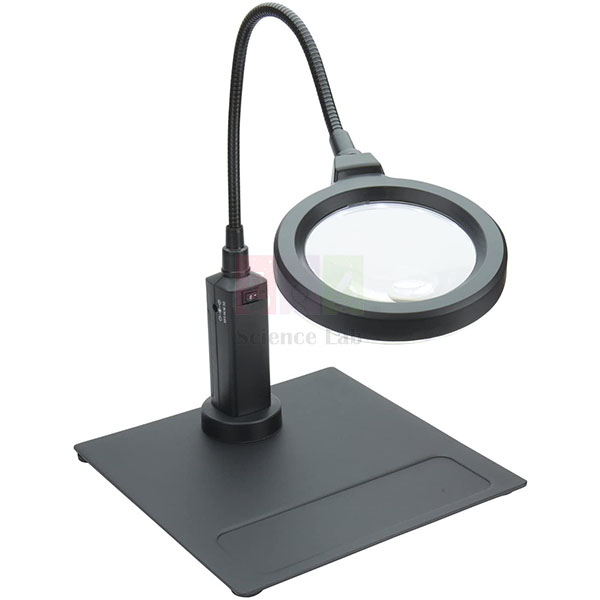
MagniFlex Magnifier
MagniFlex Magnifier (Product Code: SLE/M/45) is an adjustable, LED-lit desk magnifier used to enlarge small objects hands-free in school labs, hobby rooms and science project work. Its 101 mm (4 in) lens gives 2x magnification, a 4x spot lens adds close detail, and 16 LEDs light the area under the lens. This bench alternative to a hand lens magnifier for school labs in India is supplied by Jain Scientific Equipments Pvt Ltd (ScienceLab), Ambala, India.
Specifications
| Parameter | Detail |
|---|---|
| Magnification | 2x, with 4x spot lens |
| Lens diameter | 101 mm (4 in) |
| Lighting | 16 bright LED lights |
| Mounting | Magnetic base and table clamp, both included |
| Adjustment | Fully adjustable |
| Power | Standard outlet via the included AC/DC adapter, or 4 AA batteries (not included) |
| Dimensions | 14.2 x 5.3 x 18.9 in (approx. 36.1 x 13.5 x 48.0 cm) |
| Weight | 5.32 lb (approx. 2.41 kg) |
| Product code | SLE/M/45 |
| Supplied by | Jain Scientific Equipments Pvt Ltd (ScienceLab), Ambala, India |
What Is the MagniFlex Used For?
A lighted desk magnifier is the right tool when both hands are busy: sorting seeds, teasing apart a flower, pinning an insect, checking a circuit board joint or finishing a craft model. Because the lens stays in place, learners can work on the object instead of holding a lens at the correct distance. It also helps anyone who finds fine print on scales, labels and components hard to read.
Clamp it to the edge of a desk or hobby station, or set the magnetic base on a steel surface, then position the lens over the work. Scan the whole object through the 2x lens and move to the 4x spot lens for small features. The 16 LEDs cut shadows on the specimen, and with AA batteries fitted the unit can be used on a table away from a socket.
Supplier
ScienceLab is the trading name of Jain Scientific Equipments Private Limited, which supplies the MagniFlex Magnifier from Ambala, Haryana, alongside pocket magnifiers, hand lenses and microscopes. Schools, colleges, craft and hobby training centres, dealers and importers in India and international markets can include it in a wider biology or project-room order. Company background is on the ScienceLab profile.
Related Laboratory Equipment
Other items for close-up observation work:
- Pocket Magnifier — a portable lens for field trips and outdoor study
- Magnifier, Foldable — a compact option for individual students
- Centered Magnifier for Insects — for viewing small live or mounted insects
- Insect Mount Set — ready specimens to examine under the lens
- Stereo Binocular Microscope — the next step when more magnification is needed
Browse more magnifiers and microscopes in the Microscope category.
Frequently Asked Questions
What magnification does the MagniFlex Magnifier give?
The MagniFlex Magnifier gives 2x magnification through its 101 mm (4 in) lens, plus a 4x spot lens for small details. It suits close inspection of objects that are too large or too thick to place on a microscope slide.
How is the MagniFlex Magnifier powered?
The MagniFlex Magnifier runs from a standard outlet through the included AC/DC adapter, or from 4 AA batteries. The batteries are not included, so source them separately if the magnifier will be used away from a power socket.
How is the MagniFlex Magnifier mounted?
The MagniFlex Magnifier comes with both a magnetic base and a table clamp. Use the magnetic base on a steel surface or clamp it to a desk, table or hobby station; the device is fully adjustable, so the lens can be placed over the work.
How big and heavy is the MagniFlex Magnifier?
The MagniFlex Magnifier measures 14.2 x 5.3 x 18.9 in (about 36.1 x 13.5 x 48.0 cm) and weighs 5.32 lb (about 2.41 kg). Plan bench space for the base or clamp and room to position the lens over the work.
Who supplies the MagniFlex Magnifier?
The MagniFlex Magnifier is supplied by Jain Scientific Equipments Pvt Ltd (ScienceLab), Ambala, Haryana, India. Schools, colleges, training centres, dealers and importers in India and international markets can order it on its own or with other magnifiers and microscopes.
What should a MagniFlex Magnifier enquiry include?
A MagniFlex Magnifier enquiry should state the quantity, the delivery location and whether you plan to run the units on the adapter or on AA batteries. Add any other magnifiers or microscopes you need so one quotation covers the order.
Request a Quote
Request a quotation for the MagniFlex Magnifier on the contact page, or place it in the enquiry cart with the rest of your lab list.
Last updated: 24 September 2026
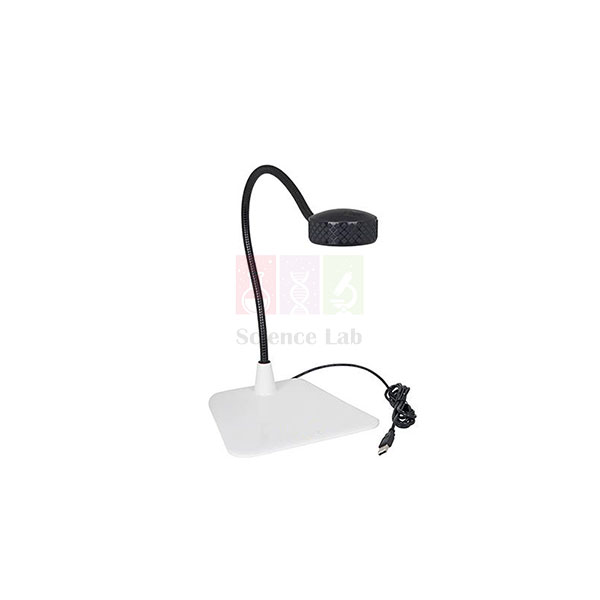
Flexible Camera
Flexible Camera (Product Code: SLE/M/46) is a gooseneck-mounted digital camera used to capture and show live images of macro and micro specimens in classrooms and science labs. It pairs a 5 MP sensor and autofocus with 30 fps video at 1,920 x 1,080 pixels, and connects to a computer through one USB 2.0 cable. This piece of smart school biology lab equipment in India is supplied by Jain Scientific Equipments Pvt Ltd (ScienceLab), Ambala, India.
Specifications
| Parameter | Detail |
|---|---|
| Mount | Flexible gooseneck with flat, sturdy base |
| Sensor | High-definition 5 MP |
| Still resolution | 2,595 x 1,944 pixels |
| Video frame rate | 30 fps at 1,920 x 1,080 pixels |
| Focus | Autofocus |
| Output | USB 2.0, single cable, plug-and-play |
| Operation | Used alone or attached to a computer |
| Software | Applied Vision 4.0 (included) to capture and manipulate images; EduCam to broadcast images in real time to tablets, smartphones and computers running the mobile app |
| Size | 25 in H x 8 in W x 8 in D (approx. 63.5 x 20.3 x 20.3 cm) |
| Weight | 4-1/2 lb (approx. 2.04 kg) |
| Product code | SLE/M/46 |
| Supplied by | Jain Scientific Equipments Pvt Ltd (ScienceLab), Ambala, India |
What Is the Flexible Camera Used For?
A gooseneck camera turns one close-up view into something the whole class can see. Bend the neck over a leaf, an insect, a rock sample, a dissection tray or a worksheet and the live image goes to a projector, interactive board or monitor. Teachers can demonstrate a technique once instead of repeating it at every bench.
For lab records, capture stills at 2,595 x 1,944 pixels in Applied Vision 4.0 and add them to reports or revision notes. In one-to-one, one-to-many or bring-your-own-device (BYOD) lessons, EduCam sends the image to student tablets, phones and computers, which makes the camera a practical addition to biology teaching aids and shared lab resources.
Supplier
Jain Scientific Equipments Private Limited, trading as ScienceLab, supplies the Flexible Camera from Ambala, Haryana, and can quote it together with microscopes, specimen sets and other imaging items. Schools, colleges, teacher-training institutes, dealers and importers in India and international markets deal with the same team for the whole order. The ScienceLab profile gives more company details.
Related Laboratory Equipment
Items that extend a classroom imaging set-up:
- Microscope Digital Camera, 5MP — for imaging through a microscope eyepiece
- Wi-Fi Camera — a wireless imaging option to compare
- Tablet Camera — another way to share images with a group
- Insect Mount Set — macro specimens to show under the camera
More cameras and microscopes are listed in the Microscope category.
Frequently Asked Questions
What resolution does the Flexible Camera have?
The Flexible Camera has a high-definition 5 MP sensor with a still resolution of 2,595 x 1,944 pixels. Video runs at 30 fps at 1,920 x 1,080 pixels, which keeps live demonstrations smooth on a projector or large screen.
How does the Flexible Camera connect to a computer?
The Flexible Camera connects through a single USB 2.0 cable as a plug-and-play device. It can also be used on its own, and the flexible gooseneck on a flat base lets you aim it at specimens without a separate stand.
What software is listed with the Flexible Camera?
The Flexible Camera is listed with Applied Vision 4.0 software, included for capturing and manipulating images. EduCam software is also named for broadcasting the camera image in real time to devices running its mobile app.
Can students see the Flexible Camera image on their own devices?
Yes. Using EduCam software, the Flexible Camera image can be broadcast in real time to tablets, smartphones and computers running the mobile app, which suits one-to-one, one-to-many and bring-your-own-device (BYOD) classrooms.
Can the Flexible Camera image microscope specimens?
The Flexible Camera is described for capturing images of both macro and micro specimens. Because microscope set-ups differ, tell us which microscope you use through the contact page and we will advise on the imaging arrangement.
Who supplies the Flexible Camera?
The Flexible Camera is supplied by Jain Scientific Equipments Pvt Ltd (ScienceLab), Ambala, Haryana, India. The company handles enquiries from schools, colleges, training institutes, dealers and importers in India and international markets, alone or with microscopes.
What should a Flexible Camera quotation request include?
A Flexible Camera quotation request should give the quantity, the delivery location and how you plan to use it, for example projector display or broadcast to student devices. Listing any microscopes or specimen sets needed alongside lets us quote everything together.
Request a Quote
Send a Flexible Camera enquiry through the contact page or add it to the enquiry cart with your other imaging and microscopy items.
Last updated: 24 September 2026
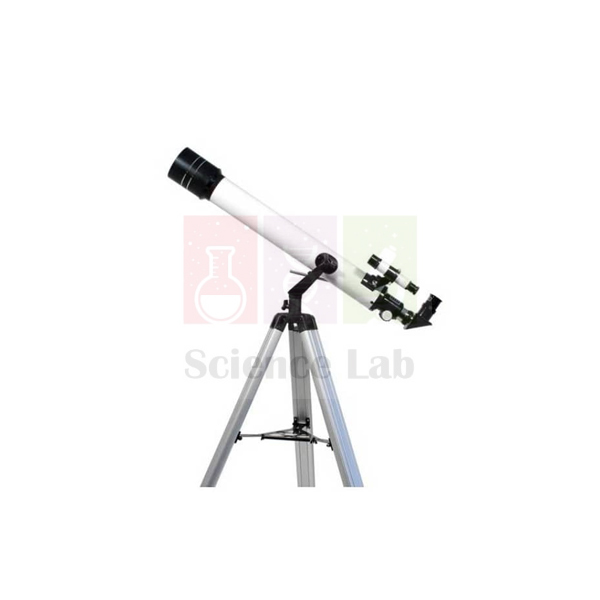
Telescope Refractor
Telescope Refractor (Product Code: SLE/M/47) is a 70 mm refracting telescope used to observe the Moon, bright planets and distant land objects in school astronomy clubs, geography lessons and outdoor science activities. It has a 400 mm focal length, two eyepieces giving 20x and 40x, an altazimuth mount and a full-size aluminium tripod that packs into the included backpack. This portable addition to optics lab equipment in India is supplied by Jain Scientific Equipments Pvt Ltd (ScienceLab), Ambala, India.
Specifications
| Parameter | Detail |
|---|---|
| Optical design | Refractor with coated glass optical elements |
| Aperture | 70 mm (2.76 in) |
| Focal length | 400 mm (16 in) |
| Eyepieces (2) | 20 mm (20x) and 10 mm (40x) |
| Diagonal | Erect-image diagonal, so views are correctly oriented |
| Mount | Smooth-functioning altazimuth mount for easy pointing |
| Tripod | Preassembled aluminium, full-size photographic tripod |
| Set-up | Quick, no tools needed |
| Carrying | Custom backpack included; telescope and tripod fit inside |
| Weight | 3.3 lb (approx. 1.5 kg) |
| Product code | SLE/M/47 |
| Supplied by | Jain Scientific Equipments Pvt Ltd (ScienceLab), Ambala, India |
What Is the Refractor Telescope Used For?
A small refractor gives students their first real look at the night sky: craters along the Moon’s terminator, the changing phases of the Moon and the brighter planets. Because the erect-image diagonal shows land views the right way up, the same telescope works in daylight for bird watching, reading distant signs or studying a landscape during a geography field visit.
Begin with the 20 mm eyepiece (20x) to find a target, centre it with the altazimuth mount, then change to the 10 mm eyepiece (40x) for closer detail. Let the telescope sit outdoors for a few minutes before observing, and never aim it at the Sun. Packed in its backpack, it travels easily to observation nights and complements school physics lab equipment in India used for lens and optics practicals.
Supplier
ScienceLab, the trading name of Jain Scientific Equipments Private Limited, supplies the Telescope Refractor from Ambala, Haryana. Schools, colleges, astronomy clubs, dealers and importers in India and international markets can order it with globes, compasses and other optics items on a single quotation. Learn more about the company on the ScienceLab profile.
Related Laboratory Equipment
Items that support astronomy and outdoor observation lessons:
- Astronomical Telescope — another telescope option to compare
- Celestial Star Globe — helps students locate constellations before observing
- Binoculars — wide-field viewing for nature study and sky scanning
- Magnetic Compass Small Size — for finding directions when setting up outdoors
- Microfiber Lens Cloth — for wiping eyepiece surfaces
Other optical instruments are listed in the Microscope category.
Frequently Asked Questions
What magnifications does the Telescope Refractor give?
The Telescope Refractor gives 20x with its 20 mm eyepiece and 40x with its 10 mm eyepiece; both eyepieces are part of the listing. Start at 20x to find a target, then switch to 40x for a closer view.
What aperture and focal length does the Telescope Refractor have?
The Telescope Refractor has a 70 mm (2.76 in) aperture and a 400 mm (16 in) focal length. Its coated glass optical elements are there to give clear, crisp images of the Moon, bright planets and distant land objects.
Can the Telescope Refractor be used for daytime land viewing?
Yes. The Telescope Refractor uses an erect-image diagonal, so views are correctly oriented rather than upside down. That makes it suitable for watching birds, landscapes and distant buildings in daylight as well as for night-sky observation.
How portable is the Telescope Refractor?
The Telescope Refractor weighs 3.3 lb (about 1.5 kg), and the telescope and its preassembled aluminium tripod both fit inside the included custom backpack. Set-up is quick and needs no tools, which suits field trips and evening observation sessions.
Can the Telescope Refractor be pointed at the Sun?
No. Never point the Telescope Refractor at the Sun or look at the Sun through it, because this can seriously injure the eyes. Solar viewing needs a purpose-made solar filter, so ask us on the contact page before planning it.
Who supplies the Telescope Refractor?
The Telescope Refractor is supplied by Jain Scientific Equipments Pvt Ltd (ScienceLab), Ambala, Haryana, India. The company quotes schools, colleges, astronomy clubs, dealers and importers in India and international markets for single units or class sets.
What should a Telescope Refractor quotation request include?
A Telescope Refractor quotation request should state the number of telescopes, the delivery location and any related items such as globes or compasses. Sharing how many student groups will observe at once helps us suggest a sensible quantity.
Request a Quote
Use the contact page to ask about the Telescope Refractor, or add it to the enquiry cart with the rest of your astronomy and optics list.
Last updated: 24 September 2026
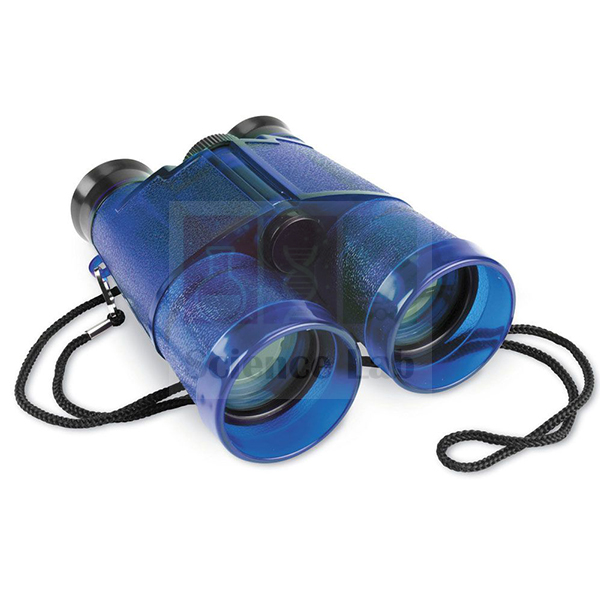
Binoculars
Binoculars (Product Code: SLE/M/48) are hand-held 6x binoculars used to watch birds, animals and distant landmarks during nature study, field trips and outdoor science lessons. They pair 35 mm objective lenses with a durable plastic body, and the colour may vary. These binoculars, a simple addition to an ecology science kit in India, are supplied by Jain Scientific Equipments Pvt Ltd (ScienceLab), Ambala, India.
Specifications
| Parameter | Detail |
|---|---|
| Magnification | 6x |
| Objective lens | 35 mm |
| Body material | Durable plastic |
| Colour | May vary |
| Product code | SLE/M/48 |
| Supplied by | Jain Scientific Equipments Pvt Ltd (ScienceLab), Ambala, India |
What Are Binoculars Used For?
Binoculars let learners observe wildlife without disturbing it. On a nature walk students can identify birds by markings, count waterbirds at a pond, follow the behaviour of animals at a distance or pick out tree canopies and rock features that are hard to reach. In geography lessons they help students spot landmarks while reading a map in the field.
Before observing, adjust the two barrels until the view forms a single circle, then focus on something far away. A moderate 6x magnification keeps the image steady in the hand and makes targets easy to find, which suits beginners in environmental science lessons. Wipe the lenses with a lens cloth after outdoor use, and remind students never to look at the Sun through binoculars.
Supplier
These binoculars are supplied by ScienceLab, the trading name of Jain Scientific Equipments Private Limited in Ambala, Haryana, to schools, eco-clubs, colleges, dealers and importers in India and international markets. For vendor registration, the supplying company is Jain Scientific Equipments Private Limited (CIN U29309HR2020PTC087597, GSTIN 06AAECJ8618A1ZT). Further company information is on the ScienceLab profile.
Related Laboratory Equipment
Items that pair with binoculars on field trips and nature walks:
- Series Binoculars — a waterproof 8x or 10x option for older students
- Telescope Refractor — more magnification for distant and night-sky viewing
- Pocket Magnifier — for close-up study of leaves, insects and finds
- Insect Net, Economy — for collecting specimens during the same outing
- Magnetic Compass Small Size — for direction-finding in the field
Find other optical instruments in the Microscope category.
Frequently Asked Questions
What magnification do the Binoculars have?
The Binoculars have 6x magnification with 35 mm objective lenses. This moderate magnification keeps the view steady when hand-held and makes it easier for students to find a bird, animal or landmark quickly.
What does 6x35 mean on the Binoculars?
On the Binoculars, 6x is the magnification and 35 is the diameter of each objective lens in millimetres. Larger objective lenses gather more light, while a moderate magnification gives a wider, steadier view that suits beginners.
What are the Binoculars made of?
The Binoculars have a durable plastic body that suits handling by groups of students during field work. The colour may vary, so if a large order needs one colour, mention it in your enquiry and we will confirm what can be supplied.
Are the Binoculars suitable for school field trips?
Yes. The Binoculars suit outdoor observation such as bird watching, nature walks and geography field visits. Their 6x magnification and durable plastic body make them straightforward for students, and schools often issue one pair to each small group.
Who supplies the Binoculars?
The Binoculars are supplied by Jain Scientific Equipments Pvt Ltd (ScienceLab), Ambala, Haryana, India. The company handles orders from schools, eco-clubs, colleges, dealers and importers in India and international markets, from a few pairs to class sets.
What should a Binoculars quotation request include?
A Binoculars quotation request should give the number of pairs, the delivery location and any colour preference. If you are equipping a field-study programme, list the magnifiers, nets or compasses you also need so we can quote them together.
Request a Quote
Ask about the Binoculars through the contact page, or add them to the enquiry cart with your field-trip equipment.
Last updated: 24 September 2026
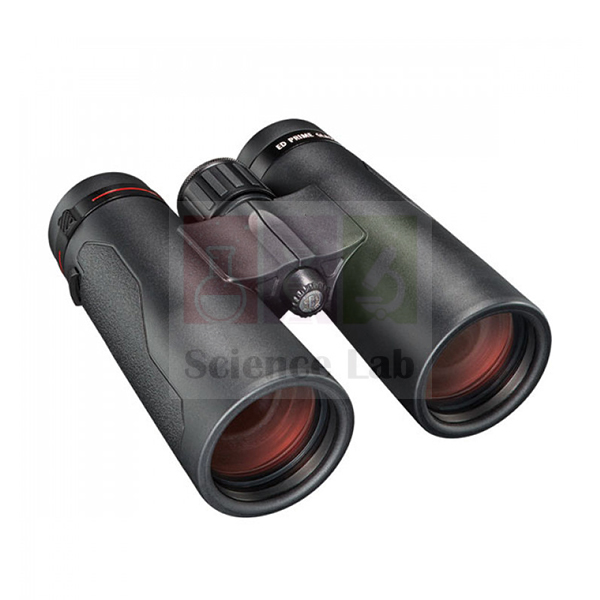
Series Binoculars
Series Binoculars (Product Code: SLE/M/49) are rubber-covered, waterproof binoculars used for bird watching, wildlife surveys and environmental science field work by schools, colleges and outdoor education teams. They come in a choice of 8x or 10x magnification, are fogproof and nitrogen-purged for use in all kinds of weather, and can be adapted to a tripod. They are supplied by Jain Scientific Equipments Pvt Ltd (ScienceLab), Ambala, India.
Key Details
| Parameter | Detail |
|---|---|
| Magnification | Choice of 8x or 10x |
| Body | Covered with rubber for rough handling and tough conditions |
| Weather protection | Waterproof, fogproof and nitrogen-purged |
| Focusing | Large focus knobs for easy, precise focusing |
| Eyecups | Twist-up, for quick eye-relief adjustment to obtain the full field of view |
| Tripod use | Tripod adaptable |
| Design | Lightweight, ergonomic |
| Straps | Comfortable straps pre-attached |
| Product code | SLE/M/49 |
| Supplied by | Jain Scientific Equipments Pvt Ltd (ScienceLab), Ambala, India |
What Are Waterproof Binoculars Used For?
Weather-sealed binoculars keep field work going when conditions are wet or humid: monsoon bird counts, wetland and riverbank surveys, coastal trips and dawn observations when dew settles on everything. Nitrogen purging stops the inside of the optics from misting when the binoculars move from a cool room into warm, damp air, and the rubber covering protects them when they are passed between students.
Choose 8x for a wider, steadier view of birds in flight and for younger users; choose 10x to pick out markings on distant subjects. For long watches of a nest, a waterhole or a study plot, fit the binoculars to a tripod so the image stays still. Set the twist-up eyecups for each user and use the large focus knob to sharpen the view.
What to Specify When Ordering
- Magnification: 8x, 10x or a mix of both for your group
- Number of pairs needed
- Whether you also need a tripod and adapter (not listed as included)
- Delivery location for the quotation
Supplier
Jain Scientific Equipments Private Limited operates under the ScienceLab name and supplies the Series Binoculars from Ambala, Haryana. Zoology and environmental science departments, forestry and wildlife training centres, schools, dealers and importers in India and international markets can add them to a wider field-study order. See the ScienceLab profile for company details.
Related Laboratory Equipment
Other items for outdoor observation and field identification:
- Binoculars — a basic 6x plastic-bodied model for younger classes
- Telescope Refractor — higher magnification from a tripod for distant subjects
- Leaf Identification Kit — for plant identification on the same field visit
- Microfiber Lens Cloth — for cleaning the lenses after wet-weather use
More optical instruments are in the Microscope category.
Frequently Asked Questions
Which magnifications are available for the Series Binoculars?
The Series Binoculars are offered in a choice of 8x or 10x magnification. The 8x version gives a wider, steadier view for moving subjects, while the 10x version shows more detail at distance and benefits from tripod mounting.
Are the Series Binoculars waterproof?
Yes. The Series Binoculars are waterproof, fogproof and nitrogen-purged for use in all kinds of weather, and their rubber covering protects them during rough handling. That makes them suitable for rain, humid wetlands and early-morning field surveys.
Can the Series Binoculars be mounted on a tripod?
Yes. The Series Binoculars are tripod adaptable, which helps during long observation sessions or when using the 10x version. A tripod and adapter are not listed as included, so ask us on the contact page if you need them.
How do the eyecups on the Series Binoculars work?
The Series Binoculars have twist-up eyecups that adjust eye relief quickly so each user can see the full field of view. Spectacle wearers usually keep the eyecups down, while other users twist them up to hold the eyes at the right distance.
Who supplies the Series Binoculars?
The Series Binoculars are supplied by Jain Scientific Equipments Pvt Ltd (ScienceLab), Ambala, Haryana, India. The company quotes colleges, field-study centres, schools, dealers and importers in India and international markets for single pairs or group sets.
What should a Series Binoculars quotation request include?
A Series Binoculars quotation request should state the magnification (8x or 10x), the number of pairs, whether a tripod is needed and the delivery location. With these details we can prepare an accurate quotation in one step.
Request a Quote
Enquire about the Series Binoculars on the contact page, or add them to the enquiry cart alongside your other field-study items.
Last updated: 24 September 2026
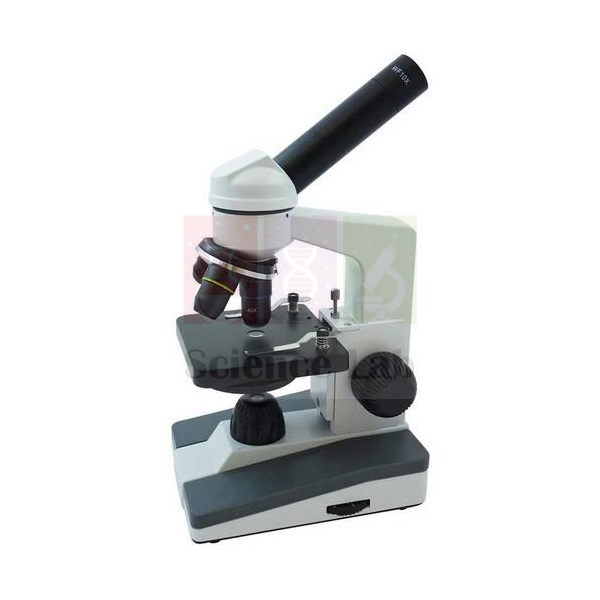
Cordless Microscope
Cordless Microscope (Product Code: SLE/M/50) is a compound microscope used to examine prepared and temporary slides at 40x, 100x and 400x in school and college biology labs. A 10x/14 mm widefield eyepiece with a pointer sits on a 360° rotatable head inclined at 45°, above parfocal 4x, 10x and 40xR objectives on an all-metal stand. This compound microscope for schools in India is supplied by Jain Scientific Equipments Pvt Ltd (ScienceLab), Ambala, India.
Specifications
| Parameter | Detail |
|---|---|
| Eyepiece | 10x/14 mm widefield, locked-in, with rotatable pointer |
| Head | 360° rotatable, inclined at 45° for viewing while seated |
| Objectives | 4x, 10x and 40xR; corrected, parcentric and parfocal |
| Total magnification | 40x, 100x and 400x |
| Focusing | Rack-and-pinion coarse and fine adjustment with slip clutch to protect the focusing mechanism |
| Travel stops | Upper and lower stops to prevent damage to slide or objective |
| Stage | Moveable stage with locked-on stage clips |
| Stand | Sturdy all-metal stand with stain-resistant, baked-on finish |
| Size | 11-1/2 in H x 4-1/2 in W x 6-1/2 in D (approx. 29.2 x 11.4 x 16.5 cm) |
| Weight | About 3-1/2 lb (approx. 1.6 kg) |
| Product code | SLE/M/50 |
| Supplied by | Jain Scientific Equipments Pvt Ltd (ScienceLab), Ambala, India |
What Is the Cordless Microscope Used For?
This microscope covers the core slide work of secondary biology: onion peel and cheek cells, leaf stomata, pond-water organisms and prepared microscope slides of plant and animal tissues. Scan at 40x, locate the area of interest at 100x, then move to 400x for cell detail. Because the objectives are parfocal, the image stays close to focus when the nosepiece is turned, so students spend less time refocusing.
Several features suit busy classrooms. The locked-in eyepiece and locked-on stage clips cannot easily go missing, the slip clutch protects the focusing gears when a knob is forced, and the upper and lower travel stops keep the objective from cracking a slide. A teacher can set the rotatable pointer on a structure so each student finds the same feature, and the cordless design keeps mains cables off the bench.
Supplier
ScienceLab is the business name of Jain Scientific Equipments Private Limited, which supplies the Cordless Microscope from Ambala, Haryana. Schools setting up class sets, colleges, dealers and importers in India and international markets can order it with slides, cover glasses and storage boxes on one quotation. Visit the ScienceLab profile to learn about the company.
Related Laboratory Equipment
Consumables and alternatives used with a student compound microscope:
- Student-Grade Microscope Slides — prepared slides for routine practicals
- Microscope Slides Glass — plain slides for students’ own mounts
- Cover Glasses — to cover wet mounts before viewing
- Blue Box, for storing Microscope Slides — keeps prepared slides organised
- Compound Microscope Cordless — another cordless model to compare
Compare other models in the Microscope category.
Frequently Asked Questions
What magnifications does the Cordless Microscope provide?
The Cordless Microscope provides 40x, 100x and 400x. Its 10x/14 mm widefield eyepiece combines with corrected, parcentric and parfocal 4x, 10x and 40xR objectives, covering everything from scanning a whole slide to viewing individual cells.
How does the Cordless Microscope protect slides and objectives?
The Cordless Microscope has upper and lower travel stops that prevent the objective from striking the slide, and a slip clutch on the rack-and-pinion focus that protects the mechanism if a knob is over-turned. Both features reduce breakages in student labs.
How is the Cordless Microscope lit and powered?
The Cordless Microscope is described as cordless, but its listing does not detail the light source or battery arrangement. Ask us on the contact page and we will confirm the illumination and charging details for the units we quote.
Does the Cordless Microscope have an eyepiece pointer?
Yes. The Cordless Microscope’s 10x/14 mm widefield eyepiece has a locked-in, rotatable pointer. A teacher can aim it at a cell or structure so that every student who looks through the eyepiece sees the same feature.
How large is the Cordless Microscope?
The Cordless Microscope measures 11-1/2 in H x 4-1/2 in W x 6-1/2 in D (about 29.2 x 11.4 x 16.5 cm) and weighs about 3-1/2 lb (about 1.6 kg). Its compact all-metal stand fits easily on a student bench.
Who supplies the Cordless Microscope?
The Cordless Microscope is supplied by Jain Scientific Equipments Pvt Ltd (ScienceLab), Ambala, Haryana, India. The company quotes single units and class sets for schools, colleges, dealers and importers in India and international markets.
What should a Cordless Microscope quotation request include?
A Cordless Microscope quotation request should give the number of microscopes, the delivery location and any slides, cover glasses or slide boxes you need. Mention if you want the illumination and charging details confirmed in writing with the quotation.
Request a Quote
Request a Cordless Microscope quotation through the contact page, or add it to the enquiry cart with the slides and consumables for your practicals.
Last updated: 24 September 2026

Compound Microscope
Compound Microscope (Product Code: SLE/M/51) is a rechargeable LED compound microscope used to study stained slides, cells and micro-organisms in school, college and training laboratories. It combines achromatic parfocal objectives, a built-in mechanical stage and a rack-and-pinion 1.25 N.A. Abbe condenser with iris diaphragm, and runs on its included NiMH batteries or the AC charger/adapter. It is supplied by Jain Scientific Equipments Pvt Ltd (ScienceLab), Ambala, for laboratories buying a compound microscope in India.
Specifications
| Parameter | Detail |
|---|---|
| Head | 360° rotating, inclined at 45° for easier viewing |
| Eyepiece | Locked-on 10x widefield, with calibrated pointer |
| Objectives | Achromatic, parcentered and parfocal |
| Stage | Built-in mechanical stage for easier slide scanning |
| Focusing | Separate coarse and fine rack-and-pinion focus, with positive stops at both ends of stage travel |
| Condenser | Rack-and-pinion adjustable 1.25 N.A. Abbe condenser with iris diaphragm |
| Illumination | Built into the base with on/off switch; bright, cool LED with light intensity control |
| LED bulb life | 10,000 hours |
| Power | Rechargeable NiMH batteries and AC charger/adapter included |
| Size | 11-1/2 in H x 6 in W x 9-1/2 in D (approx. 29.2 x 15.2 x 24.1 cm) |
| Weight | 10 lb (approx. 4.5 kg) |
| Product code | SLE/M/51 |
| Supplied by | Jain Scientific Equipments Pvt Ltd (ScienceLab), Ambala, India |
What Is the Compound Microscope Used For?
The adjustable Abbe condenser and iris diaphragm make this microscope suitable for both stained and unstained material, which is the heart of cell biology practicals: stained tissue sections, onion and cheek cells, and protists in pond water. Close the iris to add contrast to pale, transparent cells, and open it for well-stained slides. The mechanical stage moves the slide in controlled strokes, so students can scan a smear systematically instead of nudging the glass by hand.
With the NiMH batteries charged, the microscope can be used at benches or in rooms without sockets, then returned to its AC charger/adapter. The cool LED does not heat wet mounts or live specimens, and the positive stops at both ends of stage travel help protect delicate slides and optics. Teachers can use the calibrated pointer in the eyepiece to indicate exactly which structure to look at.
Supplier
As a biology lab instruments supplier, Jain Scientific Equipments Private Limited, trading as ScienceLab, provides the Compound Microscope from Ambala, Haryana. Schools, colleges, nursing and paramedical training institutes, dealers and importers in India and international markets can combine it with slides and accessories in one order. More about the company is on the ScienceLab profile.
Related Laboratory Equipment
Slides and accessories used with a compound microscope:
- Mitosis & Meiosis Set, Microscope Slides — prepared slides for cell-division practicals
- Microscope Slides Depression — cavity slides for living specimens in a drop of water
- Microscope Slide Cover Forceps — for handling cover glasses cleanly
- Lens Tissue — for cleaning the eyepiece and objectives after use
See more compound and stereo models in the Microscope category.
Frequently Asked Questions
What illumination does the Compound Microscope have?
The Compound Microscope has a bright, cool LED built into the base, with an on/off switch and light intensity control. The LED bulb life is listed as 10,000 hours, so lamp changes are rarely needed in routine teaching use.
How is the Compound Microscope powered?
The Compound Microscope runs on rechargeable NiMH batteries, and an AC charger/adapter is included. This lets it work at benches without a power point and be recharged between lessons from a standard outlet.
What condenser is fitted to the Compound Microscope?
The Compound Microscope has a rack-and-pinion adjustable 1.25 N.A. Abbe condenser with an iris diaphragm. Raising, lowering and stopping down the condenser gives more control over light and image contrast for different specimens.
Which objectives come with the Compound Microscope?
The Compound Microscope uses achromatic objectives that are parcentered and parfocal, so a centred, focused specimen stays in view when you change power. The listing does not state the individual objective magnifications; ask us on the contact page for the set we quote.
How big and heavy is the Compound Microscope?
The Compound Microscope measures 11-1/2 in H x 6 in W x 9-1/2 in D (about 29.2 x 15.2 x 24.1 cm) and weighs 10 lb (about 4.5 kg). The 360° rotating head is inclined at 45° for comfortable seated viewing.
Who supplies the Compound Microscope?
The Compound Microscope is supplied by Jain Scientific Equipments Pvt Ltd (ScienceLab), Ambala, Haryana, India. The company quotes schools, colleges, training institutes, dealers and importers in India and international markets, from single instruments to full class sets.
What should a Compound Microscope quotation request include?
A Compound Microscope quotation request should state the number of microscopes, the delivery location and the slides or accessories you want with them. If you need a specific objective set, include it so we can confirm availability in the quotation.
Request a Quote
Send your Compound Microscope enquiry through the contact page, or add it to the enquiry cart together with prepared slides and cleaning supplies.
Last updated: 24 September 2026
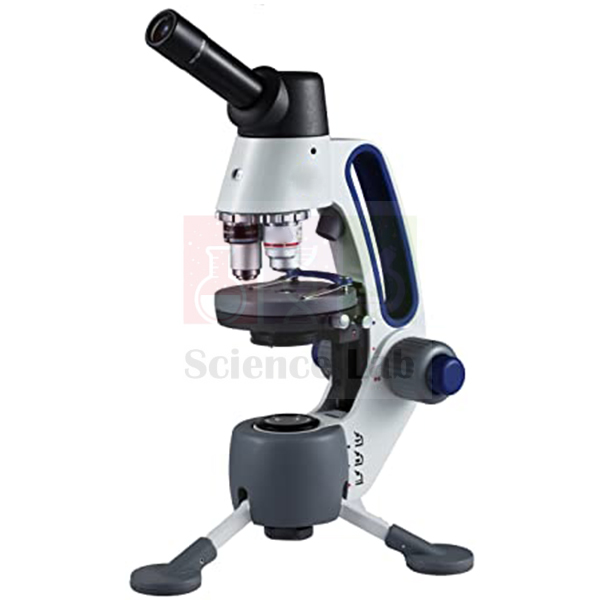
Binocular Micro/Macro/Field Microscope
Binocular Micro/Macro/Field Microscope (Product Code: SLE/M/52) is a dual-purpose binocular microscope used to view both whole specimens and prepared slides in classrooms, labs and outdoor field stations. A 2x macro objective works over a black/white contrast plate, while 4x, 10x and 40x micro objectives handle slides, giving a listed range of 10x to 400x. Cordless operation gives up to 50 hours of use on one 8-hour charge. It is supplied by Jain Scientific Equipments Pvt Ltd (ScienceLab), Ambala, India.
Specifications
| Parameter | Detail |
|---|---|
| Magnification range | 10x, 40x, 100x and 400x (as listed) |
| Eyepieces | 10x |
| Objectives | 2x macro; 4x, 10x and 40x micro |
| Head | Siedentopf-design binocular head |
| Focus | Coaxial coarse- and fine-focus control |
| Light source | Top and bottom LED lights; cool, energy-efficient white light |
| Illumination control | LED with variable intensity control |
| LED life | Up to 50,000 hours |
| Power supply | Cordless rechargeable or AC operation |
| Battery use | Up to 50 hours on a single 8-hour charge |
| Stage | Floating stage with clips for micro; floating black/white contrast plate for macro |
| Size | 15 in H x 6 in W x 8 in D (approx. 38.1 x 15.2 x 20.3 cm) |
| Product code | SLE/M/52 |
| Supplied by | Jain Scientific Equipments Pvt Ltd (ScienceLab), Ambala, India |
What Is the Micro/Macro Field Microscope Used For?
This instrument bridges the gap between a stereo magnifier and a slide microscope. In one lesson students can look at a whole beetle, seed head or rock chip on the contrast plate under the top light, then switch to a prepared slide of an insect leg or leaf section on the clipped stage with the bottom light. Use the black side of the plate for pale objects and the white side for dark ones.
The cordless battery makes it practical beside a pond, in a school garden or at a field station, where freshly collected samples can be examined before they dry out; back in the lab it runs on AC. The Siedentopf binocular head lets students set eye spacing without losing focus, and the coaxial knobs keep coarse and fine focus in one place, making it a flexible choice of school biology lab equipment in India.
Supplier
Jain Scientific Equipments Private Limited, known in the market as ScienceLab, supplies the Binocular Micro/Macro/Field Microscope from Ambala, Haryana. It is offered to schools, colleges, outdoor education centres, dealers and importers in India and international markets, and can be quoted with specimen sets and slides. Company details are on the ScienceLab profile.
Related Laboratory Equipment
Specimens and tools for macro and micro observation:
- Insect Mount Set — whole specimens for the macro contrast plate
- Insect Anatomy Slide Set of 9 — prepared slides for the micro objectives
- Insect Net, Economy — for collecting samples during field work
- Microscope Slides Depression — for pond-water drops and live organisms
- Binocular Stereo Microscope, 40x — a dedicated stereo option to compare
Explore further models in the Microscope category.
Frequently Asked Questions
What magnifications does the Binocular Micro/Macro/Field Microscope offer?
The Binocular Micro/Macro/Field Microscope is listed with a range of 10x, 40x, 100x and 400x. It has 10x eyepieces, a 2x macro objective and 4x, 10x and 40x micro objectives; please confirm the exact low-power figure with us when you enquire.
How long does the Binocular Micro/Macro/Field Microscope run on battery?
The Binocular Micro/Macro/Field Microscope gives up to 50 hours of use on a single 8-hour charge. It can also run on AC power, so the same unit works in the field and on a lab bench.
How do macro and micro modes differ on the Binocular Micro/Macro/Field Microscope?
In macro mode, the Binocular Micro/Macro/Field Microscope uses the 2x objective and a floating black/white contrast plate for whole specimens. In micro mode, the 4x, 10x and 40x objectives view slides held by clips on the floating stage.
What lighting does the Binocular Micro/Macro/Field Microscope have?
The Binocular Micro/Macro/Field Microscope has top and bottom LED lights giving cool, energy-efficient white light with variable intensity control. The LEDs are listed to last up to 50,000 hours, keeping maintenance to a minimum.
How large is the Binocular Micro/Macro/Field Microscope?
The Binocular Micro/Macro/Field Microscope measures 15 in H x 6 in W x 8 in D (about 38.1 x 15.2 x 20.3 cm). That compact footprint suits student benches as well as a field table.
Who supplies the Binocular Micro/Macro/Field Microscope?
The Binocular Micro/Macro/Field Microscope is supplied by Jain Scientific Equipments Pvt Ltd (ScienceLab), Ambala, Haryana, India. The company quotes schools, colleges, outdoor education centres, dealers and importers in India and international markets.
What should a quotation request for the Binocular Micro/Macro/Field Microscope include?
A quotation request for the Binocular Micro/Macro/Field Microscope should give the quantity, the delivery location and any specimen sets or slides needed. Mention whether units will be used mainly in the field so we can confirm the charging arrangement.
Request a Quote
Ask about the Binocular Micro/Macro/Field Microscope on the contact page, or add it to the enquiry cart with slides and specimen sets for your course.
Last updated: 24 September 2026
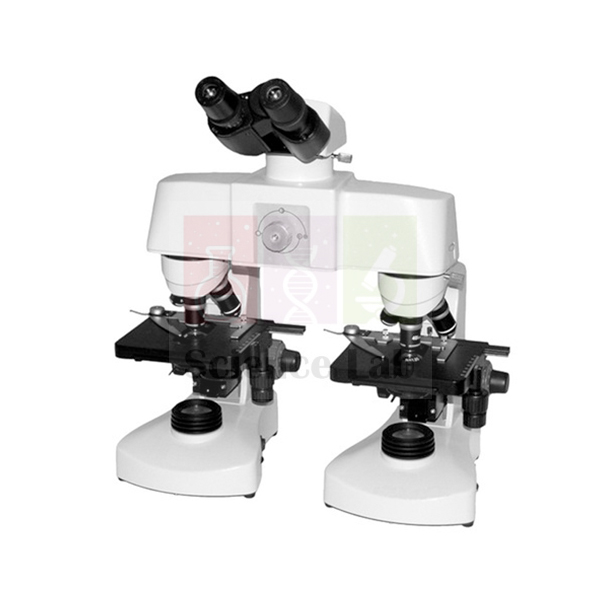
Forensic Comparison Microscope
Forensic Comparison Microscope (Product Code: SLE/M/53) is a twin-body microscope used to compare two specimens side by side, such as fibres, hairs or tool marks, in forensic science teaching labs and criminology courses. One Siedentopf-design trinocular head sits on a comparison bridge above two microscope bodies, with 2x macro and 4x, 10x and 40x micro objectives and top and bottom LED lighting. It is supplied by Jain Scientific Equipments Pvt Ltd (ScienceLab), Ambala, India, within its range of laboratory instruments in India.
Specifications
| Parameter | Detail |
|---|---|
| Head | One Siedentopf-design trinocular head mounted on a comparison bridge on top of 2 microscope bodies |
| Eyepieces | 2 x 10x |
| Objectives | 2x macro; 4x, 10x and 40x micro |
| Focus | Coaxial coarse and fine adjustment |
| Light source | Top and bottom LED lights; energy-efficient white light with virtually no heat |
| Illumination control | LED bulb with variable intensity control |
| LED life | Up to 50,000 hours between replacements |
| Power supply | Cordless rechargeable or AC operation |
| Stage | Floating stage with clips for micro; floating black-and-white plate for macro |
| Product code | SLE/M/53 |
| Supplied by | Jain Scientific Equipments Pvt Ltd (ScienceLab), Ambala, India |
What Is the Comparison Microscope Used For?
A comparison microscope brings two specimens into a single view so their features can be matched directly rather than from memory. In forensic science teaching, students set a questioned fibre beside a reference fibre, compare the colour and scale pattern of two hairs, or line up the striations left by a tool on two practice samples. The same approach helps in materials and textile classes where two samples must be judged against each other.
For a fair comparison, set both bodies to the same objective and match the top and bottom lighting with the intensity controls. Use the 2x macro objective and the black-and-white plate for larger items, and the 4x, 10x and 40x micro objectives with slides for fibres and hair. The LEDs give light with virtually no heat, so delicate samples are not warmed during long examinations.
Supplier
The Forensic Comparison Microscope is supplied by ScienceLab, the trading name of Jain Scientific Equipments Private Limited, Ambala, Haryana. Forensic science and criminology departments, police and investigation training academies, universities, dealers and importers in India and international markets can quote it with forensic practical kits and slides. The ScienceLab profile has more about the company.
Related Laboratory Equipment
Items used in the same forensic science practicals:
- Forensic Science Lab Investigation — a practical kit that generates evidence to examine
- Forensic Chemistry of Dusting for Fingerprints — companion activity on trace evidence
- Forensic Chemistry of Chromatography (Document Analysis) — ink comparison to pair with microscopy
- Microscope Slides Glass — for mounting fibre and hair samples
- 5mp Microscope Camera — for documenting comparisons (confirm fit with us)
More specialised microscopes are in the Microscope category.
Frequently Asked Questions
How does the Forensic Comparison Microscope work?
The Forensic Comparison Microscope has two microscope bodies joined by a comparison bridge that carries one Siedentopf-design trinocular head. Looking through its two 10x eyepieces, the user sees the specimens from both bodies together and can compare them side by side.
What objectives does the Forensic Comparison Microscope use?
The Forensic Comparison Microscope is listed with a 2x macro objective and 4x, 10x and 40x micro objectives. Macro work uses a floating black-and-white plate, while micro work uses a floating stage with clips for slides.
What lighting does the Forensic Comparison Microscope have?
The Forensic Comparison Microscope has top and bottom LED lights with variable intensity control, giving energy-efficient white light with virtually no heat. The LED is listed to last up to 50,000 hours between replacements, which keeps maintenance and downtime low.
Can the Forensic Comparison Microscope run without mains power?
Yes. The Forensic Comparison Microscope supports cordless rechargeable operation as well as AC operation. The battery run time is not stated in the listing, so ask us on the contact page if you plan extended use away from a socket.
Can a camera be fitted to the Forensic Comparison Microscope?
The Forensic Comparison Microscope has a trinocular head, which is normally used to attach a camera for recording comparisons. A camera and adapter are not listed as included, so tell us your imaging needs and we will advise on a suitable option.
Who supplies the Forensic Comparison Microscope?
The Forensic Comparison Microscope is supplied by Jain Scientific Equipments Pvt Ltd (ScienceLab), Ambala, Haryana, India. The company handles enquiries from universities, training academies, colleges, dealers and importers in India and international markets.
What should a Forensic Comparison Microscope quotation request include?
A Forensic Comparison Microscope quotation request should give the quantity, the delivery location and whether you need a camera for the trinocular port. Adding the forensic kits or slides you plan to use lets us quote a complete practical set-up.
Request a Quote
Enquire about the Forensic Comparison Microscope through the contact page, or add it to the enquiry cart with your forensic science practical kits.
Last updated: 24 September 2026
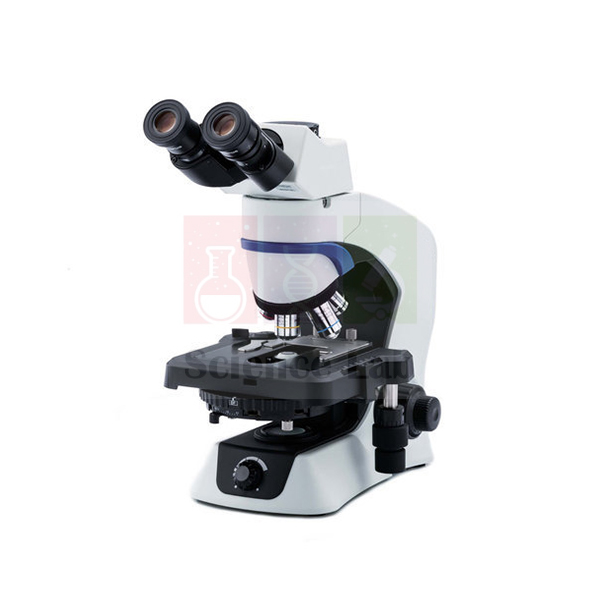
Research Microscope
Research Microscope (Product Code: SLE/M/54) is a binocular compound microscope used for detailed slide work, including oil-immersion study of bacteria and stained cells, in college, university and research laboratories. It pairs Koehler illumination from a 3 W LED with 4x, 10x, 40x and 100x oil-immersion objectives on a reversed quintuple nosepiece, above a large 180 x 170 mm stage. Supplied by Jain Scientific Equipments Pvt Ltd (ScienceLab), Ambala, India, it suits labs building up microbiology lab equipment in India and abroad.
Specifications
| Parameter | Detail |
|---|---|
| Head | Siedentopf-design inclined binocular head with 360° swivelling eyepiece tubes |
| Eyepieces | 2 x widefield N-WF10x/20 mm, high eyepoint, with dioptre adjustment |
| Interpupillary distance | Adjustable from 48 to 75 mm |
| Objectives | 4x, 10x, 40x and 100x (oil-immersion) |
| Nosepiece | Reversed quintuple nosepiece with click stops |
| Focus | Advanced coaxial coarse and fine focus |
| Illumination | Koehler, 3 W LED with intensity control |
| Stage | Large 180 x 170 mm stage with built-in mechanical stage and low-position coaxial controls |
| Stage travel range | 80 x 55 mm |
| Size | 15 in H x 7-1/2 in W x 10-1/2 in D (approx. 38.1 x 19.1 x 26.7 cm) |
| Product code | SLE/M/54 |
| Supplied by | Jain Scientific Equipments Pvt Ltd (ScienceLab), Ambala, India |
What Is the Research Microscope Used For?
The 100x oil-immersion objective is what separates this instrument from a student microscope: it resolves the shapes and arrangements of bacteria in stained smears, the structure of stained blood cells in teaching films and fine detail in histology sections. Koehler illumination spreads the 3 W LED light evenly across the field, which keeps high-power images crisp and suits photomicrography work.
For oil work, focus first at 40x, swing the nosepiece aside, place a drop of immersion oil on the slide and click the 100x objective into place; wipe the oil off with lens tissue afterwards. During long sessions, the swivelling tubes, 48–75 mm eye-spacing range and dioptre-adjustable high-eyepoint eyepieces keep viewing comfortable, including for spectacle wearers, while the low-position stage controls let the hand rest on the bench.
Supplier
ScienceLab, the trading name of Jain Scientific Equipments Private Limited in Ambala, Haryana, supplies the Research Microscope to universities, research institutes, pharmacy and life-science colleges, dealers and importers in India and international markets. It can be quoted alongside immersion oil, slides and cover glasses so a lab receives everything for its first session. Read about the company on the ScienceLab profile.
Related Laboratory Equipment
Consumables and alternatives for high-power microscopy:
- Immersion Oil, 25ml — needed for the 100x oil-immersion objective
- Lens Tissue — for removing oil from the objective after use
- Microscope Slides Glass — for preparing smears and mounts
- Glass Cover Slips — to cover specimens before high-power viewing
- Research Trinocular Microscope — a model with a camera port for imaging
Compare other research models in the Microscope category.
Frequently Asked Questions
What objectives does the Research Microscope have?
The Research Microscope has 4x, 10x, 40x and 100x oil-immersion objectives on a reversed quintuple nosepiece with click stops. The click stops seat each objective precisely, making magnification changes quick and repeatable during slide work.
What illumination does the Research Microscope use?
The Research Microscope uses Koehler illumination with a 3 W LED and intensity control. Koehler illumination lights the field of view evenly, which helps at high magnification and when capturing images for reports.
Does the Research Microscope need immersion oil?
Yes, for its 100x objective. The Research Microscope’s 100x objective is an oil-immersion lens, so a drop of immersion oil is placed between slide and lens. Oil is not listed as included; our Immersion Oil, 25ml can be added to the order.
How large is the stage on the Research Microscope?
The Research Microscope has a large 180 x 170 mm stage with a built-in mechanical stage giving a travel range of 80 x 55 mm. Low-position coaxial controls let the user move the slide smoothly while keeping the hand on the bench.
Can the Research Microscope be adjusted for different users?
Yes. The Research Microscope has an interpupillary range of 48 to 75 mm, 360° swivelling eyepiece tubes and N-WF10x/20 mm high-eyepoint eyepieces with dioptre adjustment, so each user can set a sharp, comfortable view.
Who supplies the Research Microscope?
The Research Microscope is supplied by Jain Scientific Equipments Pvt Ltd (ScienceLab), Ambala, Haryana, India. The company quotes universities, research institutes, colleges, dealers and importers in India and international markets, for single units or multiple workstations.
What should a Research Microscope quotation request include?
A Research Microscope quotation request should state the number of units, the delivery location and the consumables you need, such as immersion oil, slides and cover slips. Mention any imaging plans so we can suggest a suitable set-up.
Request a Quote
Request a Research Microscope quotation through the contact page, or add it to the enquiry cart with immersion oil and slides.
Last updated: 24 September 2026
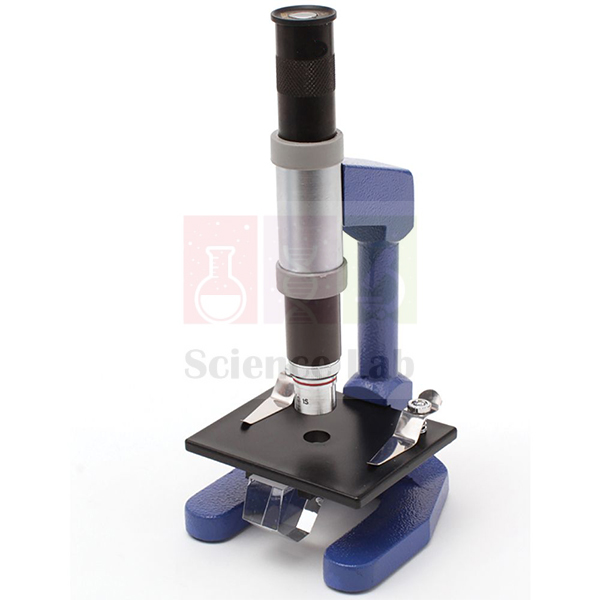
Scope
Scope (Product Code: SLE/M/55) is a simple 30x monocular microscope used to introduce young learners to slides and small specimens in primary and middle-school science classes. It combines a 5x eyepiece with a 6x objective and lights the specimen through a bottom prism, so no power supply is needed. This practical piece of junior science lab equipment is supplied by Jain Scientific Equipments Pvt Ltd (ScienceLab), Ambala, India.
Specifications
| Parameter | Detail |
|---|---|
| Magnification | 30x |
| Eyepiece | 5x |
| Objective lens | 6x |
| Head type | Fixed, non-rotating monocular head |
| Focus | Coarse focus only |
| Light source | Bottom prism |
| Power supply | None needed |
| Stage | Standard stage with clips |
| Size | 10 in H x 4-1/2 in W x 4 in D (approx. 25.4 x 11.4 x 10.2 cm) |
| Product code | SLE/M/55 |
| Supplied by | Jain Scientific Equipments Pvt Ltd (ScienceLab), Ambala, India |
What Is the Scope 30x Microscope Used For?
At 30x, children can see detail that a hand lens misses without the difficulty of a high-power instrument. Good first specimens include salt and sugar crystals, the cell outlines in a thin piece of onion skin, the scales on an insect wing, strands of hair and fabric fibres, and the dots that make up a printed picture. Each one shows how a microscope reveals structure hidden from the naked eye.
Place the Scope near a window or bright lamp so the bottom prism can send light up through the slide. Teach students to lower the tube while watching from the side, then focus upward while looking through the eyepiece. With no bulbs, batteries or cables, it works in classrooms without power points and alongside a hands-on science kit in primary school.
Supplier
Jain Scientific Equipments Private Limited, whose trading name is ScienceLab, supplies the Scope from Ambala, Haryana, to primary and middle schools, education programmes, dealers and importers in India and international markets. It can be ordered in class quantities together with slides, cover glasses and magnifiers. Background on the company is on the ScienceLab profile.
Related Laboratory Equipment
Items that complete a first microscopy lesson:
- Student-Grade Microscope Slides — ready-made slides to view straight away
- Microscope Slides Glass — plain slides for crystals, hair and fibres
- Cover Glasses — to hold thin specimens flat on the slide
- Pocket Magnifier — for lower-power observation before using the Scope
- Student Monocular Microscope — another student model to compare
Other school microscopes are in the Microscope category.
Frequently Asked Questions
What magnification does the Scope give?
The Scope gives 30x magnification, produced by a 5x eyepiece working with a 6x objective lens. That level shows crystals, fibres, insect parts and onion-skin cell outlines clearly while staying easy for young students to focus.
Does the Scope need electricity or batteries?
No. The Scope needs no power supply because a bottom prism directs available light up through the specimen. It works well near a window or under a bright lamp, and there are no bulbs or batteries to replace.
How is the Scope focused?
The Scope has coarse focus only. Students lower the tube while watching from the side, then turn the focus knob slowly upward while looking through the eyepiece until the specimen becomes sharp, which avoids pressing the objective onto the slide.
What type of head and stage does the Scope have?
The Scope has a fixed, non-rotating monocular head and a standard stage with clips to hold the slide. The fixed head keeps the eyepiece in one position, which makes it simple for younger children to share at a bench.
How big is the Scope?
The Scope measures 10 in H x 4-1/2 in W x 4 in D (about 25.4 x 11.4 x 10.2 cm). Its small footprint suits crowded classroom tables and makes class sets easy to store in a cupboard.
Who supplies the Scope?
The Scope is supplied by Jain Scientific Equipments Pvt Ltd (ScienceLab), Ambala, Haryana, India. The company supplies schools, education programmes, dealers and importers in India and international markets, from single units to full class sets.
What should a Scope quotation request include?
A Scope quotation request should give the number of microscopes, the delivery location and any slides, cover glasses or magnifiers you need. Telling us the class size helps us suggest a practical quantity for group work.
Request a Quote
Ask about the Scope on the contact page, or add it to the enquiry cart with slides for your first microscopy lessons.
Last updated: 24 September 2026
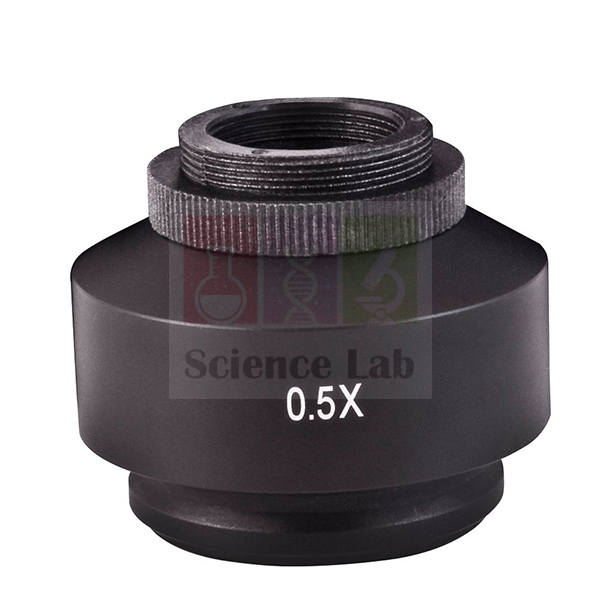
C-Mount Adapter
C-Mount Adapter (Product Code: SLE/M/56) is a 0.5x camera adapter used to connect a trinocular microscope head to C-mount digital or analogue cameras for photomicrography in teaching and research labs. It is designed to fit the S Trinocular Microscope, and its 0.5x magnification works well with cameras that have the popular 1/2 in chip size. It is supplied by Jain Scientific Equipments Pvt Ltd (ScienceLab), Ambala, India, a laboratory equipment supplier in India.
Key Details
| Parameter | Detail |
|---|---|
| Magnification | 0.5x |
| Mount type | C-mount |
| Designed to fit | S Trinocular Microscope (as listed) |
| Function | Connects the trinocular head to C-mount-style digital and analogue cameras |
| Suggested camera chip size | 1/2 in (the 0.5x magnification is matched to this size) |
| Product code | SLE/M/56 |
| Supplied by | Jain Scientific Equipments Pvt Ltd (ScienceLab), Ambala, India |
What Is a C-Mount Adapter Used For?
A trinocular microscope sends part of its image up a third tube for a camera, but a camera cannot simply be pushed onto that port. The C-mount adapter holds the camera at the correct position on the standard C-mount thread so the picture is in focus. With a camera attached, labs can record slides for reports, show a live image on a monitor during a demonstration and build image libraries for revision.
The 0.5x optics shrink the image so that more of the microscope field fits onto a small camera sensor. On a camera with a 1/2 in chip, the view on screen is therefore closer to what the user sees through the eyepieces; with other chip sizes the framing will differ. Always check that the adapter suits your microscope’s trinocular port before ordering.
What to Specify When Ordering
- Your microscope model and its trinocular port (the listing names the S Trinocular Microscope)
- Your camera’s mount type, confirming it is C-mount
- Your camera’s chip size (1/2 in suits the 0.5x adapter)
- Number of adapters needed
Supplier
ScienceLab is the trading name under which Jain Scientific Equipments Private Limited supplies the C-Mount Adapter from Ambala, Haryana. Colleges, research labs, schools, dealers and importers in India and international markets can order it with trinocular microscopes and cameras, and our team can help check compatibility first. Company information is on the ScienceLab profile.
Related Laboratory Equipment
Microscopes, cameras and fittings for a photomicrography set-up:
- Adjustable C-Focus Mount Adapter — another camera-mount fitting to compare
- 5mp Microscope Camera — a camera to consider (confirm C-mount fit with us)
- 2MP Digital USB-2 Colour Camera — a lower-resolution imaging option (confirm fit)
- Trinocular Microscope, LED — a microscope with a camera port (confirm adapter fit)
Find more accessories in the Microscope category.
Frequently Asked Questions
What does the C-Mount Adapter do?
The C-Mount Adapter connects the trinocular head of a microscope to a C-mount-style digital or analogue camera. It holds the camera at the right position on the port so that images of the specimen can be captured or displayed live.
Which microscope does the C-Mount Adapter fit?
The C-Mount Adapter is listed as designed to fit the S Trinocular Microscope. Trinocular ports vary between models, so if you have a different microscope, send its model through the contact page and we will confirm fit before you order.
Why does the C-Mount Adapter have 0.5x magnification?
The C-Mount Adapter’s 0.5x optics reduce the image so more of the microscope field fits on a small camera sensor. It is matched to cameras that have the popular 1/2 in chip size, giving a view close to the eyepiece image.
Which cameras can be used with the C-Mount Adapter?
The C-Mount Adapter is intended for C-mount-style digital and analogue cameras, ideally with a 1/2 in chip. Tell us your camera model and sensor size and we will check whether the adapter is the right match.
Who supplies the C-Mount Adapter?
The C-Mount Adapter is supplied by Jain Scientific Equipments Pvt Ltd (ScienceLab), Ambala, Haryana, India. The company handles orders from colleges, research labs, schools, dealers and importers in India and international markets, alone or with microscopes and cameras.
What should a C-Mount Adapter quotation request include?
A C-Mount Adapter quotation request should give your microscope model, your camera model and chip size, the quantity and the delivery location. These details let us confirm compatibility and quote the correct fitting in one reply.
Request a Quote
Send your C-Mount Adapter enquiry through the contact page, or add it to the enquiry cart with your microscope and camera.
Last updated: 24 September 2026
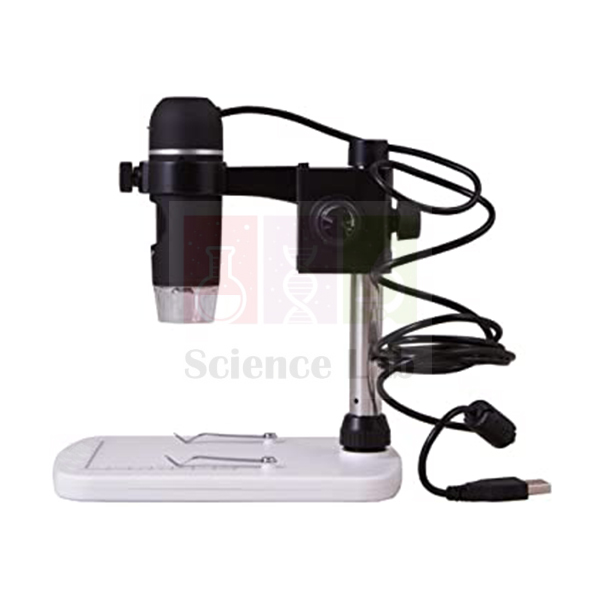
Handheld Digital Microscope
Handheld Digital Microscope (Product Code: SLE/M/57) is a hand-held digital microscope used to magnify, capture and measure objects at 20x to 200x in classrooms, laboratories and inspection work. It comes with an adjustable height stand, a calibration ruler, an adjustable 8-LED ring illuminator and Micro Capture Pro software on DVD with a measuring feature. It is supplied by Jain Scientific Equipments Pvt Ltd (ScienceLab), Ambala, India, as part of its educational laboratory equipment in India.
Specifications
| Parameter | Detail |
|---|---|
| Magnification | 20x to 200x |
| Focus | Manual, focus range from 10 mm to infinity |
| Illumination | Adjustable 8-LED ring illuminator |
| Software | Micro Capture Pro on DVD, with measuring feature |
| Included accessories | Adjustable height stand and calibration ruler |
| Size | 6-9/10 x 5-1/2 x 4-1/3 in (approx. 17.5 x 14.0 x 11.0 cm) |
| Weight | 2-1/5 lb (approx. 1.0 kg), microscope and stand |
| Product code | SLE/M/57 |
| Supplied by | Jain Scientific Equipments Pvt Ltd (ScienceLab), Ambala, India |
What Is a Handheld Digital Microscope Used For?
A handheld digital microscope goes to the object instead of the object going under a lens. Students can examine leaf surfaces, insects, fabric weaves, coins, rock faces, skin and hair, or the joints on a circuit board, starting at 20x for an overview and zooming to 200x for texture. Because the focus runs from 10 mm to infinity, the same unit can also frame larger or more distant objects.
For steady, hands-free imaging, mount it on the adjustable height stand; hold it by hand for bulky items. Adjust the 8-LED ring to cut glare on shiny surfaces. To measure a feature, capture an image of the calibration ruler at the working magnification, set the scale in Micro Capture Pro, then measure specimens at the same setting — a useful method for science fair project work and lab reports.
Supplier
Jain Scientific Equipments Private Limited, trading as ScienceLab, supplies the Handheld Digital Microscope from Ambala, Haryana. Schools, colleges, technical and vocational institutes, dealers and importers in India and international markets can include it in a larger microscopy or project-lab order. For company details, see the ScienceLab profile.
Related Laboratory Equipment
Other digital and specimen items for the same activities:
- LCD Digital Microscope — a slide-based digital model with its own screen
- Digital Zoom Microscope — another digital option to compare
- Insect Mount Set — specimens to image and measure
- Class Rock Pack — rock samples for surface texture studies
See more digital models in the Microscope category.
Frequently Asked Questions
What magnification does the Handheld Digital Microscope offer?
The Handheld Digital Microscope offers 20x to 200x magnification with manual focus. Low settings show a whole insect or coin, while the upper end reveals surface texture, fibres and fine printed detail.
What comes with the Handheld Digital Microscope?
The Handheld Digital Microscope comes with an adjustable height stand, a calibration ruler and the Micro Capture Pro software DVD with a measuring feature. The stated weight of 2-1/5 lb (about 1.0 kg) covers the microscope and stand together.
Can the Handheld Digital Microscope measure specimens?
Yes. The Handheld Digital Microscope’s Micro Capture Pro software includes a measuring feature. Capture the included calibration ruler at your chosen magnification to set the scale, then measure features in images taken at that same setting.
How does focusing work on the Handheld Digital Microscope?
The Handheld Digital Microscope uses manual focus with a range from 10 mm to infinity. Close objects are imaged at high magnification, and turning the focus further lets the microscope frame larger or more distant subjects.
How does the Handheld Digital Microscope connect to a computer?
The listing for the Handheld Digital Microscope does not state its connection type or supported operating systems. Its software is supplied on DVD, so ask us on the contact page to confirm computer requirements before ordering.
How large is the Handheld Digital Microscope?
The Handheld Digital Microscope measures 6-9/10 x 5-1/2 x 4-1/3 in (about 17.5 x 14.0 x 11.0 cm) and weighs 2-1/5 lb (about 1.0 kg) with its stand, so it moves easily between benches.
Who supplies the Handheld Digital Microscope?
The Handheld Digital Microscope is supplied by Jain Scientific Equipments Pvt Ltd (ScienceLab), Ambala, Haryana, India. The company supplies schools, colleges, technical institutes, dealers and importers in India and international markets, for single units or lab sets.
What should a Handheld Digital Microscope quotation request include?
A Handheld Digital Microscope quotation request should give the quantity, the delivery location and the computers you plan to use it with. Adding any specimen sets or other microscopes you need lets us prepare one combined quotation.
Request a Quote
Ask about the Handheld Digital Microscope through the contact page, or add it to the enquiry cart with specimens for your imaging activities.
Last updated: 24 September 2026
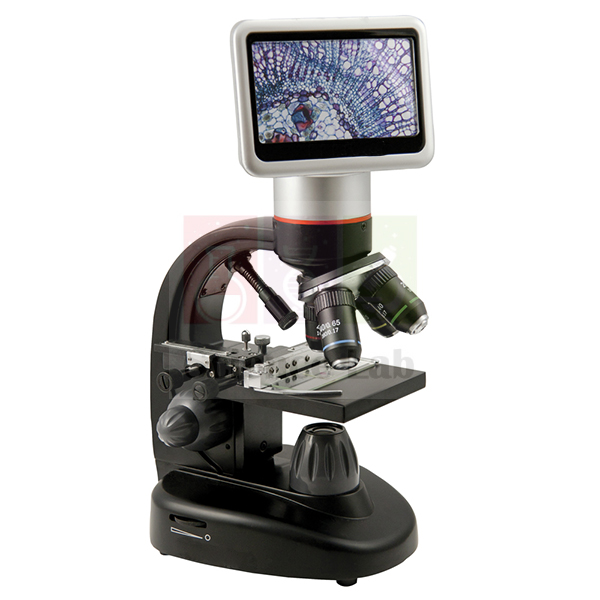
LCD Digital Microscope
LCD Digital Microscope (Product Code: SLE/M/58) is a compound microscope with an LCD screen used to view and record slides at 40x to 600x in classrooms, college labs and small-group demonstrations. It carries 4x, 10x, 20x, 40x and 60x objectives, coarse and fine focus, and an SD card slot supplied with a 4 GB card (cards up to 32 GB supported). This digital microscope for schools in India and abroad is supplied by Jain Scientific Equipments Pvt Ltd (ScienceLab), Ambala, India.
Specifications
| Parameter | Detail |
|---|---|
| Magnification | 40x, 100x, 200x, 400x and 600x |
| Objective lenses | 4x, 10x, 20x, 40x and 60x |
| Focus | Coarse- and fine-focus knobs |
| Display | LCD |
| Image storage | SD card slot; 4 GB SD card included; supports up to 32 GB |
| Power | 110 to 240 V AC; optional battery mode |
| Size | 13 in H x 5-1/2 in W x 7 in D (approx. 33.0 x 14.0 x 17.8 cm) |
| Product code | SLE/M/58 |
| Supplied by | Jain Scientific Equipments Pvt Ltd (ScienceLab), Ambala, India |
What Is the LCD Digital Microscope Used For?
A screen changes how a microscope lesson runs. Two or three students can look at the same cheek-cell or onion-root slide together, the teacher can point to a nucleus or cell wall directly on the display, and learners who struggle with eyepieces still see a clear image. Saved pictures on the SD card go straight into lab notebooks, worksheets and assessment files, which makes the unit useful cell biology equipment for school and college labs.
Start with the 4x objective (40x) to find and focus the specimen with the coarse knob, then move through 10x, 20x and 40x, using the fine knob at each step; the 60x objective gives 600x for small cells and micro-organisms. It runs from 110–240 V AC mains, and the optional battery mode allows use in rooms without a socket.
What to Specify When Ordering
- Number of microscopes and whether they are for student benches or teacher demonstration
- Whether you need the optional battery mode
- Storage plans: a 4 GB SD card is included, and cards up to 32 GB are supported
- Delivery location and local mains supply
Supplier
The LCD Digital Microscope is supplied by ScienceLab, the trading name of Jain Scientific Equipments Private Limited, Ambala, Haryana, to schools, colleges, teacher-training centres, dealers and importers in India and international markets. Institutional and tender buyers registering the vendor can use GSTIN 06AAECJ8618A1ZT and LEI 3358004HRD1JIVXKYX49 for the company. More background is on the ScienceLab profile.
Related Laboratory Equipment
Slides and accessories for screen-based microscopy lessons:
- Student-Grade Microscope Slides — ready specimens to display on the screen
- Prepared Microscope Slide Set – Health And Disease — a themed slide set for higher magnifications
- Microscope Cover Slips — for covering students’ own wet mounts
- Handheld Digital Microscope — for whole objects that do not fit on a slide
Browse further digital microscopes in the Microscope category.
Frequently Asked Questions
What magnifications does the LCD Digital Microscope provide?
The LCD Digital Microscope provides 40x, 100x, 200x, 400x and 600x, using 4x, 10x, 20x, 40x and 60x objective lenses. This covers finding a specimen at low power through to viewing small cells in detail.
Can the LCD Digital Microscope save images?
Yes. The LCD Digital Microscope has an SD card slot and comes with a 4 GB SD card, and it supports cards up to 32 GB. Saved images can be moved to a computer for reports, worksheets or class presentations.
What power does the LCD Digital Microscope need?
The LCD Digital Microscope runs on 110 to 240 V AC, so it suits a wide range of mains supplies. It also offers an optional battery mode; ask us on the contact page for battery details if you need it.
How is the LCD Digital Microscope focused?
The LCD Digital Microscope has separate coarse- and fine-focus knobs. Use the coarse knob at 40x to bring the specimen into view, then the fine knob at higher magnifications to sharpen the image on the screen.
What size is the screen on the LCD Digital Microscope?
The screen size of the LCD Digital Microscope is not stated in its listing. If display size matters for group viewing, ask us through the contact page and we will confirm it for the model we quote.
How large is the LCD Digital Microscope?
The LCD Digital Microscope measures 13 in H x 5-1/2 in W x 7 in D (about 33.0 x 14.0 x 17.8 cm). That footprint fits a standard student bench or a teacher’s demonstration table.
Who supplies the LCD Digital Microscope?
The LCD Digital Microscope is supplied by Jain Scientific Equipments Pvt Ltd (ScienceLab), Ambala, Haryana, India. The company quotes schools, colleges, training centres, dealers and importers in India and international markets, for single units or class sets.
What should an LCD Digital Microscope quotation request include?
An LCD Digital Microscope quotation request should state the quantity, the delivery location, whether battery mode is required and any prepared slides you need. With those details we can send one complete quotation.
Request a Quote
Enquire about the LCD Digital Microscope through the contact page, or add it to the enquiry cart with slides for your class.
Last updated: 24 September 2026
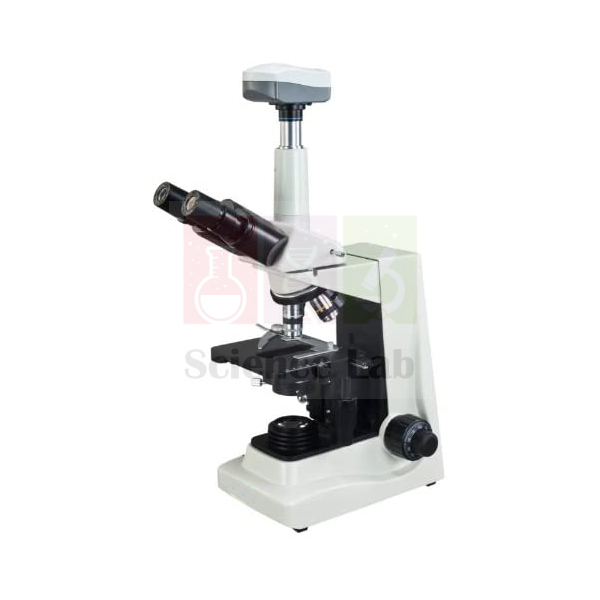
Advanced Digital Microscope
Advanced Digital Microscope (Product Code: SLE/M/59) is a trinocular compound microscope with 3-megapixel digital imaging, used to view, capture and share magnified images of specimens in college, school and research laboratories. Teachers choose it when a whole group needs to see what one user sees: semi-plan objectives from 4x to 100xR (oil immersion) are lit by a 3 W LED with variable intensity. It is supplied by Jain Scientific Equipments Pvt Ltd (ScienceLab), Ambala, India, as part of its compound microscope range for buyers in India and abroad.
Specifications
| Parameter | Detail |
|---|---|
| Microscope type | Digital compound microscope |
| Head type | Trinocular (the feature list also describes a binocular head — confirm the configuration with us) |
| Eyepieces | 2 x 10x widefield, 18 mm, with dioptric compensation |
| Objectives | Semi-plan 4x, 10x, 40xR and 100xR (oil immersion) |
| Focus | Advanced coaxial coarse and fine focus control |
| Illumination | 3 W LED with variable-intensity control |
| Stage | Built-in mechanical stage |
| Digital resolution | 3 megapixels |
| Computer requirements (as listed) | USB 3.0; 2 GB RAM; 1 GB free hard-disk space; 256 MB video card memory |
| Size | 16 in H x 7 1/4 in W x 9 in D |
| Product code | SLE/M/59 |
| Supplied by | Jain Scientific Equipments Pvt Ltd (ScienceLab), Ambala, India |
What Is the Advanced Digital Microscope Used For?
A digital compound microscope turns a single slide into a shared lesson. In college and senior-school biology it is used to display onion peel cells, stained blood smears, plant stem sections and pond-water organisms on a computer screen, so the teacher can point out structures while students compare the image with their own preparations. Captured images can go straight into practical records and project reports, which makes it useful school biology lab equipment in India for demonstration benches and research corners alike.
Start every specimen on the 4x objective, find it with the coarse control and sharpen it with the fine control before moving up to 10x and 40xR. The 100xR objective needs a drop of immersion oil between lens and cover glass; wipe the oil off with lens tissue after each session. Before installation, check that the connected computer meets the listed USB, memory and video requirements.
What to Specify When Ordering
- The head configuration you need (listed as trinocular; binocular viewing is also described)
- Number of microscopes per laboratory or per tender lot
- Accessories to quote together, such as immersion oil, slides and cover glasses
- Whether your computers meet the USB 3.0, 2 GB RAM and 256 MB video memory requirements
Supplier
Jain Scientific Equipments Private Limited trades as ScienceLab and supplies the Advanced Digital Microscope from Ambala, Haryana, alongside slides, cover glasses and microscope accessories, so one enquiry can equip a complete microscopy bench. Colleges, schools, research laboratories, dealers and importers in India and international markets order through the same office. For vendor registration, the supplying company is listed under CIN U29309HR2020PTC087597 and GSTIN 06AAECJ8618A1ZT. Read more on the ScienceLab company profile.
Related Microscope Equipment
Items that are used with a high-power digital microscope:
- Immersion Oil, 25ml — needed for the 100xR oil-immersion objective
- Microscope Slides Glass — plain slides for smears and temporary mounts
- Cover Glasses — borosilicate covers for wet and stained preparations
- Lens Tissue — for removing oil and dust from objectives and eyepieces
- Microscope Digital Camera, 5MP — an option for adding imaging to an existing optical microscope
See the full range in the Microscope category.
Frequently Asked Questions
What magnifications does the Advanced Digital Microscope offer?
The Advanced Digital Microscope pairs two 10x widefield eyepieces with semi-plan objectives of 4x, 10x, 40xR and 100xR. The 100xR is an oil-immersion objective, used with a drop of immersion oil for the highest-power work such as bacteria and blood cells.
What computer does the Advanced Digital Microscope need?
The listed computer requirements for the Advanced Digital Microscope are a USB 3.0 connection, 2 GB of RAM, 1 GB of free hard-disk space and 256 MB of video card memory. For anything not listed, such as operating-system support, ask us on the contact page.
Is the Advanced Digital Microscope binocular or trinocular?
The Advanced Digital Microscope is listed with a trinocular head type, while its feature list also describes a binocular head with two 10x eyepieces. Tell us the configuration you need through the contact page and it will be stated clearly in your quotation.
What light source does the Advanced Digital Microscope use?
The Advanced Digital Microscope uses a 3 W LED illuminator with variable-intensity control. Users can dim the light for low-power viewing of thin specimens and raise it for oil-immersion work, and LED lighting stays cool at the stage during long practical sessions.
Who supplies the Advanced Digital Microscope?
Jain Scientific Equipments Pvt Ltd (ScienceLab), Ambala, Haryana, India supplies the Advanced Digital Microscope to colleges, schools, research laboratories, dealers and importers in India and international markets. Quotations can include immersion oil, slides and cover glasses from the same range.
Is a calibration certificate available for the Advanced Digital Microscope?
No calibration certificate is listed for the Advanced Digital Microscope. If your institution needs inspection or calibration documents for a tender or audit, raise it on the contact page before ordering so we can discuss what can be provided.
What should a quotation request for the Advanced Digital Microscope include?
A quotation request for the Advanced Digital Microscope should state the quantity, the head configuration you need, the delivery location and any accessories such as immersion oil or slides. Send it through the contact page or add the item to the enquiry cart.
Request a Quote
To price the Advanced Digital Microscope for a laboratory or tender, send the quantity and delivery location through the contact page, or add it to the enquiry cart together with any slides and accessories you need.
Last updated: 24 September 2026
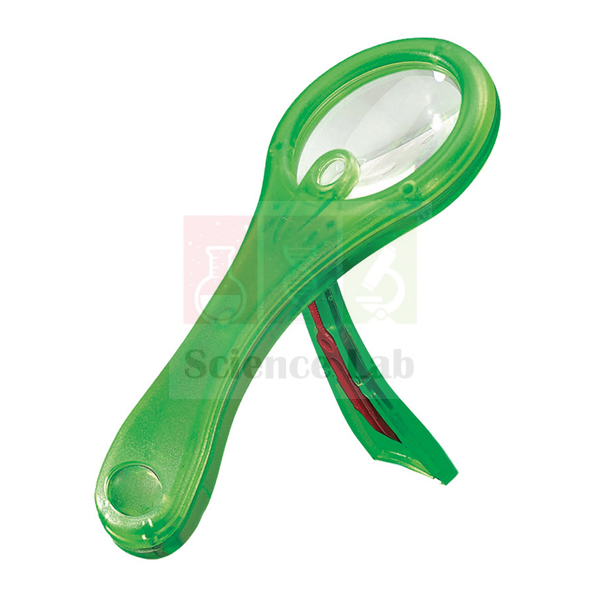
Magnifying Glass
Magnifying Glass (Product Code: SLE/M/60) is a dual-power hand magnifier used to examine insects, leaves, seeds, rocks and printed detail in school science and nature-study lessons. It combines a 4x wide-angle lens for scanning with a 9x narrow-focus lens for close inspection, and its handle holds a fold-out stand and a pair of specimen tweezers. It is supplied by Jain Scientific Equipments Pvt Ltd (ScienceLab), Ambala, among its biology lab equipment in India, as a hand lens magnifier for school classrooms and field kits.
Specifications
| Parameter | Detail |
|---|---|
| Lenses | 4x wide-angle view and 9x narrow-focus lens |
| Use modes | Handheld, or hands-free on the stand that unfolds from the handle |
| Built-in accessory | Specimen tweezers stored in the handle |
| Design | Ergonomic handle |
| Colours | Assorted |
| Size | 7 1/2 in L x 3 1/2 in W |
| Product code | SLE/M/60 |
| Supplied by | Jain Scientific Equipments Pvt Ltd (ScienceLab), Ambala, India |
What Is the Magnifying Glass Used For?
On a nature walk or at the classroom bench, students pick up a beetle, a seed or a flower part with the tweezers, scan it through the wide 4x lens to find the interesting region, then switch to the 9x lens to see leg hairs, compound eyes, leaf veins, crystal faces in rocks or the weave of a fabric. Unfolding the stand frees both hands for sketching, labelling or teasing a flower apart, which makes it one of the most practical biology teaching aids in India for junior and middle classes.
For the sharpest view, hold the lens close to the eye and bring the object towards it until the detail snaps into focus; the 9x lens has a shorter working distance than the 4x view. Never look at the sun through any magnifier, and do not leave it on a sunny window sill, where focused sunlight can scorch paper. Wipe the lenses with a soft, dry cloth.
What to Specify When Ordering
- Quantity per class, per group table or per field kit
- Whether assorted colours suit you, or if you need to discuss colour with us
- Companion items to quote together, such as insect containers or a stereo microscope
Supplier
ScienceLab is the trading name of Jain Scientific Equipments Private Limited, which supplies this dual-lens magnifier from Ambala, Haryana, to schools, activity centres, dealers and importers in India and international markets. Class sets can be combined with specimen containers and microscopes on a single quotation. Company background is on the ScienceLab profile page.
Related Microscope Equipment
Other magnifiers and viewing aids for nature study:
- Magnifying Glass 2 — a simpler single-lens option with a polished 2.5x lens
- Pocket Magnifier — a compact magnifier for pockets and field bags
- Magnifier, Foldable — another folding design for desk use
- Plastic Container with a Magnifying Glass Lid — for collecting and viewing live insects safely
- Stereo Microscope — the next step when students need higher magnification
Browse more optical items in the Microscope category.
Frequently Asked Questions
What magnification does the Magnifying Glass have?
The Magnifying Glass has two powers: a 4x lens with a wide-angle view for scanning a specimen, and a 9x narrow-focus lens for examining small details. Students usually find the area of interest at 4x before switching to 9x.
Can the Magnifying Glass be used hands-free?
Yes. The Magnifying Glass can be held in the hand or used hands-free by unfolding the stand built into its handle. Standing it on the desk leaves both hands free for sketching, labelling or handling a specimen with the tweezers.
What accessories come with the Magnifying Glass?
The Magnifying Glass carries a pair of specimen tweezers stored inside its handle, so the tweezers are not easily lost between lessons. No other accessories are listed; containers and other viewing aids can be added to the same quotation.
How big is the Magnifying Glass?
The Magnifying Glass measures 7 1/2 inches long and 3 1/2 inches wide. Its ergonomic handle is sized for comfortable handheld use by students, and the folding stand keeps it compact for storage in a classroom tray or field kit.
Can I choose the colour of the Magnifying Glass?
The Magnifying Glass is listed in assorted colours, which suits mixed class sets. If your school needs one colour for a kit or tender, ask on the contact page before ordering so we can confirm what is possible.
Who supplies the Magnifying Glass?
Jain Scientific Equipments Pvt Ltd (ScienceLab), Ambala, Haryana, India supplies the Magnifying Glass to schools, activity centres, dealers and importers in India and international markets, either as single pieces or as class sets with other nature-study items.
Request a Quote
For a class set of the Magnifying Glass, send the quantity and delivery address through the contact page, or add it to the enquiry cart along with any containers or microscopes you are planning to buy.
Last updated: 24 September 2026
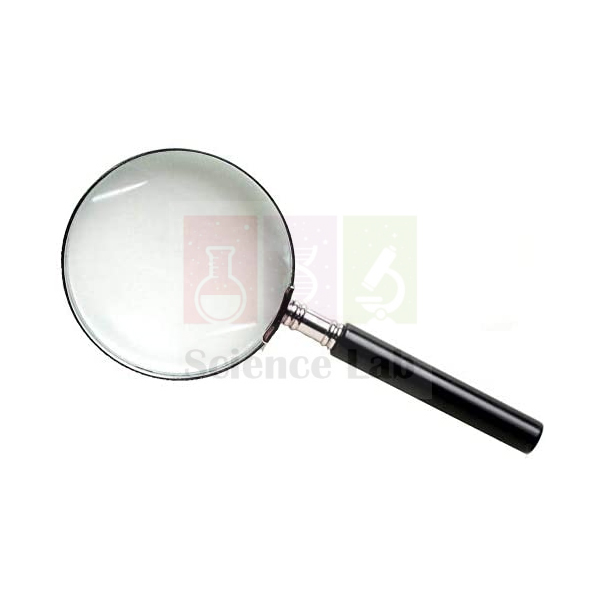
Magnifying Glass 2
Magnifying Glass 2 (Product Code: SLE/M/61) is a single-lens hand magnifier with an optically ground, highly polished 2.5x lens, used for low-power viewing of specimens, maps, instrument scales and fine print in school science rooms. Its gentle magnification shows a larger area of the object at once, which suits younger learners making their first observations. It is supplied by Jain Scientific Equipments Pvt Ltd (ScienceLab), Ambala, India, as a simple magnifier for lab and classroom use.
Key Details
| Parameter | Detail |
|---|---|
| Type | Hand magnifying glass, single lens |
| Magnification | 2.5x |
| Lens finish | Optically ground and highly polished |
| Product code | SLE/M/61 |
| Supplied by | Jain Scientific Equipments Pvt Ltd (ScienceLab), Ambala, India |
What Is the 2.5x Magnifying Glass Used For?
A low-power lens is the right tool when the whole object matters more than tiny detail: a complete leaf with its vein pattern, a spoonful of soil with seeds and grit, a flower head, a feather or a mineral sample. In physics and chemistry rooms it helps students read the fine graduations on thermometers, rulers and measuring cylinders without squinting. Teachers also use it to introduce the idea of magnification before students move on to a microscope, making it a handy magnifier loupe for any India lab.
Hold the lens steady and adjust the distance between lens and object until the image is sharp; at 2.5x there is a comfortable working gap for pointing, drawing or counting. Because the lens surfaces are ground and polished, clean them only with a soft lens cloth, keep the magnifier in a case or drawer, and never leave it in direct sunlight.
Supplier
Jain Scientific Equipments Private Limited, trading as ScienceLab from Ambala, Haryana, supplies this 2.5x magnifier with its range of hand lenses, microscopes and viewing accessories. Schools, coaching centres, dealers and importers in India and international markets can order it singly or in class quantities. See the ScienceLab profile for company details.
Related Microscope Equipment
Other magnifiers and care items to consider:
- Magnifying Glass — a dual 4x and 9x model with fold-out stand and tweezers
- Pocket Magnifier — a compact lens for field trips
- Magnifier — another hand lens option in the same range
- Microfiber Lens Cloth — for cleaning the polished lens without scratching
More optical items are listed in the Microscope category.
Frequently Asked Questions
What magnification does Magnifying Glass 2 give?
Magnifying Glass 2 gives 2.5x magnification through a single optically ground, highly polished lens. That low power shows a wide area of the object, making it suitable for whole leaves, soil samples, maps and reading fine scale markings.
How is Magnifying Glass 2 different from the dual-lens Magnifying Glass?
Magnifying Glass 2 is a simple single-lens 2.5x magnifier. The dual-lens Magnifying Glass in the same range has two powers, 4x and 9x, plus a fold-out stand and tweezers in the handle. Choose Magnifying Glass 2 for general low-power viewing by younger students.
What is the lens diameter of Magnifying Glass 2?
The lens diameter and handle material of Magnifying Glass 2 are not stated in the product details. If your kit list or tender specifies a lens size, send it through the contact page and we will confirm before quoting.
How should Magnifying Glass 2 be cleaned and stored?
Clean Magnifying Glass 2 with a soft lens cloth or lens tissue, never with paper towels or abrasive cleaners that can mark the polished surface. Store it in a drawer or case away from direct sunlight, which a lens can focus onto paper or wood.
Who supplies Magnifying Glass 2?
Jain Scientific Equipments Pvt Ltd (ScienceLab), Ambala, Haryana, India supplies Magnifying Glass 2 to schools, colleges, dealers and importers in India and international markets, either on its own or together with microscopes and other viewing aids.
Request a Quote
Send the quantity you need for Magnifying Glass 2 through the contact page, or place it in the enquiry cart with any lens cloths or microscopes, and we will reply with a quotation.
Last updated: 24 September 2026
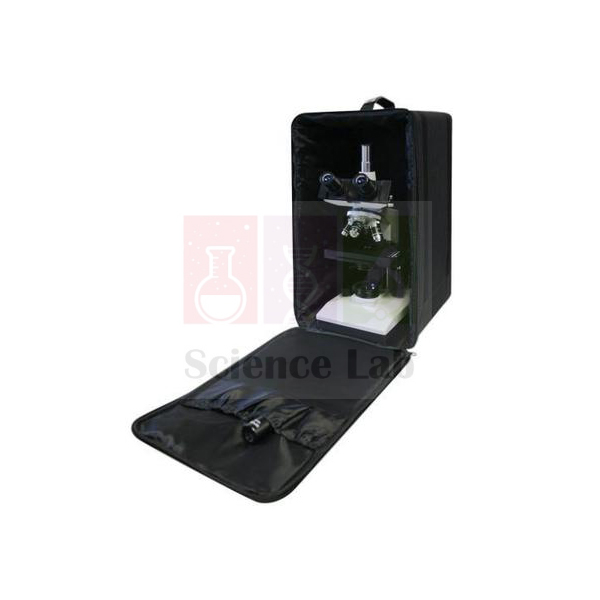
Microscope Case
Microscope Case (Product Code: SLE/M/62) is a hard carry case with a padded interior, used to store a microscope and move it safely between laboratories, classrooms, exam centres and outreach camps. Wide straps hold the instrument steady, inside pockets keep eyepieces, objective cases and manuals with it, and rubber feet allow the cases to be stacked. It is supplied by Jain Scientific Equipments Pvt Ltd (ScienceLab), Ambala, India, among its lab equipment accessories for microscopy.
Specifications
| Parameter | Detail |
|---|---|
| Case type | Hard carry case |
| Interior | Padded, with wide straps to hold the microscope securely |
| Storage pockets | Additional inside pockets for eyepieces, objective cases, manuals and other items |
| Base | Rubber feet |
| Stacking | Stackable |
| Inside dimensions | 16 in H x 7 in W x 10 in D |
| Product code | SLE/M/62 |
| Supplied by | Jain Scientific Equipments Pvt Ltd (ScienceLab), Ambala, India |
What Is the Microscope Case Used For?
Microscopes are most often damaged not during use but while being carried or stored: a knocked stage, a scratched objective or a lost eyepiece can take an instrument out of service for a whole term. A hard, padded case keeps dust off between practicals, protects the optics when microscopes travel to exam halls, science fairs or rural outreach camps, and keeps small accessories with the instrument they belong to. Stackable cases with rubber feet also make store-room shelving tidier and steadier.
Before packing, remove any slide, rack the stage down, turn the lowest-power objective into position and switch off and cool any lamp. Secure the microscope with the straps, put spare eyepieces and objective cases in the pockets, and store the case upright. Measure your microscope first, including knobs, mirror or lamp housing, to be sure it sits within the inside dimensions.
What to Specify When Ordering
- Height, width and depth of the microscope to be carried, so fit can be checked against 16 x 7 x 10 in
- Number of cases required, one per microscope
- Any slide cases or cleaning items to include on the same quotation
Supplier
This carry case is supplied by Jain Scientific Equipments Private Limited, the company behind the ScienceLab name in Ambala, Haryana. Laboratories that buy microscopes from the same range often add a case for each instrument, and dealers and importers in India and international markets can include cases in mixed consignments. Company information is on the ScienceLab profile page.
Related Microscope Equipment
Storage and care items that go with a microscope case:
- Carry Case for Microscopes — an alternative carrying case in the same range
- Microscope Slide Case — keeps prepared slides organised alongside the instrument
- Microscope Cleaning Kit — for cleaning optics before the microscope goes into storage
- Microfiber Lens Cloth — a small cloth that fits in the case pockets
View microscopes and accessories in the Microscope category.
Frequently Asked Questions
What size of microscope fits the Microscope Case?
The Microscope Case has inside dimensions of 16 inches high, 7 inches wide and 10 inches deep. Measure your microscope including knobs, mirror or lamp housing; if you are unsure, send the model details through the contact page and we will help check the fit.
How does the Microscope Case protect the instrument?
The Microscope Case combines a hard outer shell with a padded interior and wide straps that hold the microscope securely in place. This reduces movement and knocks during carrying, and the closed case keeps dust away from lenses during storage.
Can eyepieces and manuals be stored in the Microscope Case?
Yes. The Microscope Case has additional inside pockets for eyepieces, objective cases, manuals and other small items, so every accessory stays with the microscope it belongs to rather than getting lost in a drawer.
Can Microscope Cases be stacked?
Yes. The Microscope Case is stackable and has rubber feet, so several cases can be stored on top of one another on a store-room shelf or cupboard floor without sliding. Keep the heaviest instruments at the bottom of the stack.
Is a microscope included with the Microscope Case?
No microscope is included; the Microscope Case listing covers the carry case only. Microscopes from our range can be quoted separately, and we can check that the chosen instrument fits the case before you order.
Who supplies the Microscope Case?
Jain Scientific Equipments Pvt Ltd (ScienceLab), Ambala, Haryana, India supplies the Microscope Case to schools, colleges, laboratories, dealers and importers in India and international markets, on its own or together with microscopes and slide storage.
Request a Quote
Tell us how many Microscope Cases you need and the dimensions of your microscopes through the contact page, or add the case to the enquiry cart with any other microscope accessories.
Last updated: 24 September 2026
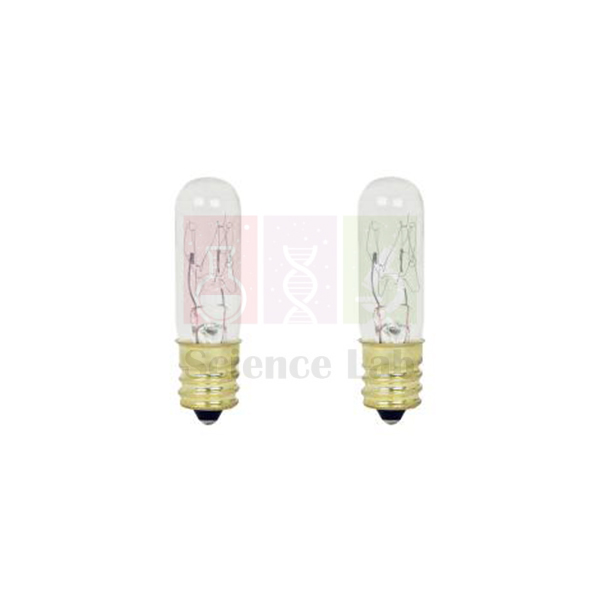
Lamp, 15 W, 120 V
Lamp, 15 W, 120 V (Product Code: SLE/M/63) is a clear glass-top replacement bulb with a bi-post double-contact base, used to restore illumination in microscopes and illuminators whose lamp holder takes this base and rating. Laboratory technicians keep it as a spare so that a failed bulb does not stop a practical session; it is rated 15 watts at 120 volts. It is supplied by Jain Scientific Equipments Pvt Ltd (ScienceLab), Ambala, a laboratory instruments supplier in India, as one of its lab equipment spare parts for microscopy.
Specifications
| Parameter | Detail |
|---|---|
| Illumination | Bulb (replacement lamp) |
| Glass | Clear glass top |
| Base | Bi-post, double contact |
| Wattage | 15 W |
| Voltage | 120 V |
| Product code | SLE/M/63 |
| Supplied by | Jain Scientific Equipments Pvt Ltd (ScienceLab), Ambala, India |
What Is the 15 W, 120 V Lamp Used For?
Every lamp-lit microscope eventually needs a new bulb, and a lab without a spare can lose a full practical while one is sourced. This 15 W bulb replaces a failed lamp in a microscope base, substage illuminator or lamp housing designed for a 120 V bulb with a bi-post double-contact base; the clear glass top gives an unfrosted light source for the condenser to collect. Fit it only where the instrument's lamp circuit is rated for this voltage and wattage, and compare it with the markings on the old bulb before ordering.
To change the lamp, switch off and unplug the microscope, let the old bulb cool completely, then withdraw it straight out of the holder. Line up both posts of the new lamp with the socket, press it fully home without twisting the glass, refit the cover and test at low brightness first. Keep a spare in the microscope case or store cupboard.
What to Specify When Ordering
- Confirmation that your instrument uses a 15 W, 120 V lamp
- Base type of the old lamp (this one is bi-post, double contact)
- Number of spares for your microscope fleet
- Microscope make and model, if you want us to check compatibility
Supplier
Jain Scientific Equipments Private Limited, known to customers as ScienceLab, supplies this replacement lamp from Ambala, Haryana, as part of its microscope spares range, so bulbs can be ordered together with slides, cover glasses and other consumables. Export consignments are handled under Importer-Exporter Code AAECJ8618A, and buyers who need vendor details can register the company under GSTIN 06AAECJ8618A1ZT. More about the company is on the ScienceLab profile page.
Related Microscope Equipment
Other lighting spares and aids for microscopes:
- Fluorescent Lamp 5W — a replacement tube for fluorescent-lit instruments
- LED Replacement Bulb Assembly — an LED lamp unit for microscopes built for LED lighting
- Walter LED Gooseneck Illuminator — an external light for specimens and stereo work
- Microscope Maintenance & Servicing Kit — tools and materials for routine microscope upkeep
Find more spares in the Microscope category.
Frequently Asked Questions
What is the rating of the Lamp, 15 W, 120 V?
The Lamp, 15 W, 120 V is rated 15 watts at 120 volts. It has a clear glass top and a bi-post double-contact base, and it is listed as a replacement bulb for microscope illumination.
Will the Lamp, 15 W, 120 V fit my microscope?
The Lamp, 15 W, 120 V fits instruments whose lamp holder takes a bi-post double-contact base and whose lamp circuit is designed for a 15 W, 120 V bulb. Compare the markings on your old lamp, or send the model and a photo of the bulb through the contact page.
Can the Lamp, 15 W, 120 V be connected directly to Indian mains?
No. The Lamp, 15 W, 120 V is a 120-volt bulb and should only be used in equipment whose lamp supply delivers that voltage. Connecting it directly to higher-voltage mains, such as the supply in India, would overload the filament, so check your instrument's rating first.
How do I replace the Lamp, 15 W, 120 V safely?
To replace the Lamp, 15 W, 120 V, switch off and unplug the instrument, allow the old bulb to cool, pull it straight out, align both posts of the new lamp with the socket and press it fully in. Refit the lamp cover and test at low brightness.
Who supplies the Lamp, 15 W, 120 V?
Jain Scientific Equipments Pvt Ltd (ScienceLab), Ambala, Haryana, India supplies the Lamp, 15 W, 120 V to schools, colleges, laboratories, service engineers, dealers and importers in India and international markets, alongside other microscope spares and consumables.
What should a quotation request for the Lamp, 15 W, 120 V include?
A quotation request for the Lamp, 15 W, 120 V should give the quantity of spares, your microscope make and model, the markings on the old bulb and the delivery location, so the rating and base can be matched before dispatch.
Request a Quote
Send the number of Lamp, 15 W, 120 V spares you need and your microscope details through the contact page, or add the lamp to the enquiry cart with other microscope consumables.
Last updated: 24 September 2026
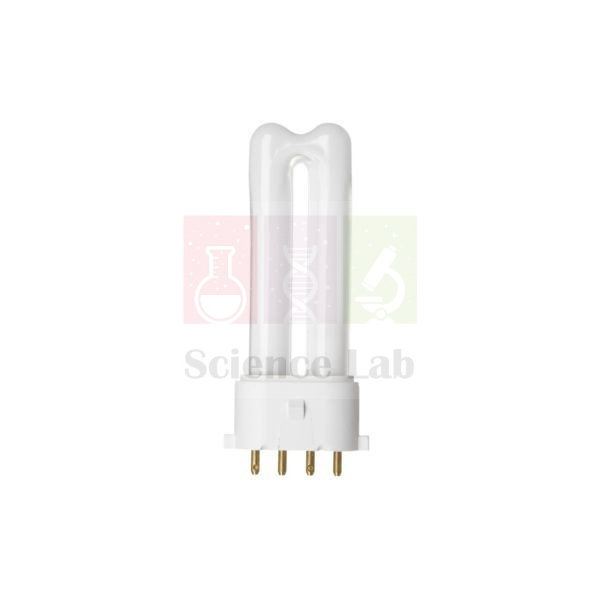
Fluorescent Lamp 5W
Fluorescent Lamp 5W (Product Code: SLE/M/64) is a compact replacement fluorescent tube with a square centre connection and wire posts on its sides, used as a spare light source for fluorescent-lit microscopes and small specimen illuminators in teaching laboratories. Measuring 4 1/4 in long and 1 1/4 in wide, it suits small lamp housings where a dim or flickering tube has to be changed quickly. It is supplied by Jain Scientific Equipments Pvt Ltd (ScienceLab), Ambala, India, with its other microscope lighting spares.
Specifications
| Parameter | Detail |
|---|---|
| Lamp type | Fluorescent |
| Base | Square connection centre with wire posts on the sides |
| Size | 4 1/4 in L x 1 1/4 in W |
| Power | 5 W, as named |
| Voltage | Please confirm with us — the recorded electrical figures for this item are inconsistent |
| Product code | SLE/M/64 |
| Supplied by | Jain Scientific Equipments Pvt Ltd (ScienceLab), Ambala, India |
What Is the Fluorescent Lamp 5W Used For?
Fluorescent lighting gives a cool, even glow that many student microscopes and small illuminators use to light slides without warming the specimen. Over time a tube dims, darkens at the ends or starts to flicker, and the image becomes hard to read. Replacing it with a matching compact tube restores clear, steady lighting for practicals on cells, tissues and microorganisms; keeping one or two in stock is sensible for any lab that runs several fluorescent-lit instruments.
Switch off and unplug the instrument before opening the lamp cover, and let the old tube cool. Note how the square base and side posts sit in the holder, remove the old lamp gently and fit the new one the same way round. Fluorescent tubes contain a small amount of mercury, so handle them carefully, do not break them and dispose of used tubes through an e-waste or lamp collection point.
What to Specify When Ordering
- Voltage and wattage marked on your existing lamp or lamp housing
- Base style and length, to match the 4 1/4 in square-base tube
- Microscope or illuminator make and model
- Number of spare tubes required
Supplier
Jain Scientific Equipments Private Limited operates under the ScienceLab name in Ambala, Haryana, and supplies this compact fluorescent tube as a microscope spare. Labs, service technicians, dealers and importers in India and international markets can add it to orders for slides, cover glasses and other consumables. Company details are on the ScienceLab profile page.
Related Microscope Equipment
Other lamps and lighting options for microscopes:
- Lamp, 15 W, 120 V — a bi-post bulb for lamp-lit instruments
- LED Replacement Bulb Assembly — a 3 W LED unit for microscopes built for LED lighting
- Walter LED Gooseneck Illuminator — separate lighting for specimens on the bench
- Microscope Cleaning Kit — for cleaning optics while the lamp housing is open
More spares are listed in the Microscope category.
Frequently Asked Questions
What size is the Fluorescent Lamp 5W?
The Fluorescent Lamp 5W measures 4 1/4 inches long and 1 1/4 inches wide. It has a square connection centre with wire posts on the sides, so compare both the length and the base with your old tube before ordering a replacement.
What voltage does the Fluorescent Lamp 5W use?
The Fluorescent Lamp 5W is named as a 5 W lamp, but the electrical figures recorded for it do not agree with each other. Send the markings from your old lamp through the contact page and we will confirm the correct voltage and wattage before quoting.
Will the Fluorescent Lamp 5W fit my microscope?
The Fluorescent Lamp 5W fits lamp holders that take a compact tube of this length with a square centre connection and side wire posts. If you are not sure, send the microscope model and a photo of the existing lamp so we can check compatibility.
How do I dispose of a used Fluorescent Lamp 5W?
A used Fluorescent Lamp 5W should not be broken or thrown in general waste, because fluorescent tubes contain a small amount of mercury. Wrap it carefully and take it to an e-waste or lamp collection point in line with local rules.
Who supplies the Fluorescent Lamp 5W?
Jain Scientific Equipments Pvt Ltd (ScienceLab), Ambala, Haryana, India supplies the Fluorescent Lamp 5W to schools, colleges, laboratories, service technicians, dealers and importers in India and international markets, together with other microscope lighting spares.
Request a Quote
For spare Fluorescent Lamp 5W tubes, send the quantity and the markings on your current lamp through the contact page, or add the item to the enquiry cart with any other microscope spares.
Last updated: 24 September 2026
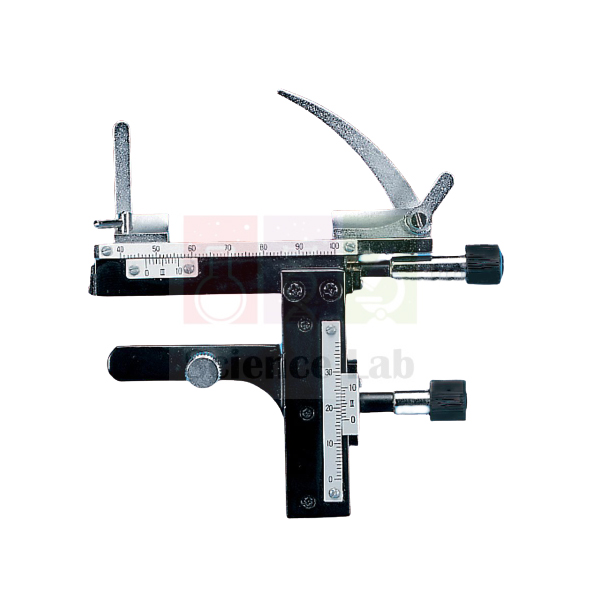
Student Graduated Mechanical Stage
Student Graduated Mechanical Stage (Product Code: SLE/M/65) is an attachable slide-moving stage with graduated scales, used to move a slide smoothly in two directions and return to a recorded position on student microscopes. It locates on two pins 33 mm apart and is listed to fit CFL Series and Cadre Series scope models only, extending to 160 mm by 135 mm. It is supplied by Jain Scientific Equipments Pvt Ltd (ScienceLab), Ambala, India, as an upgrade part within its biology lab equipment range for India and export.
Specifications
| Parameter | Detail |
|---|---|
| Type | Graduated mechanical stage, attachable |
| Compatibility | CFL Series and Cadre Series scope models only |
| Mounting | Two locating pins, 1-1/4 in (33 mm) apart |
| Extended length | 6-1/4 in (160 mm) |
| Extended width | 5-1/4 in (135 mm) |
| Product code | SLE/M/65 |
| Supplied by | Jain Scientific Equipments Pvt Ltd (ScienceLab), Ambala, India |
What Is the Graduated Mechanical Stage Used For?
At high power the field of view is tiny, and pushing a slide by hand usually overshoots the cell a student was trying to centre. A mechanical stage replaces that guesswork with controlled movement, so a blood smear, a root-tip squash or a pond-water mount can be scanned in neat rows without missing areas. The graduations let a student note where an interesting cell sits and give those readings to the teacher, who can return to exactly the same spot to check a drawing or a mitosis count.
Check the microscope series first, because this stage is listed for CFL and Cadre series scopes only. Seat it on the two locating pins, make sure it sits flat before securing it, and move the controls gently rather than forcing them at the end of travel. Keep the stage free of immersion oil and stain spills by wiping it after every session.
What to Specify When Ordering
- Microscope series and model (CFL Series or Cadre Series)
- Locating-pin spacing on your microscope stage, to match 33 mm
- Number of stages, one per microscope to be upgraded
Supplier
ScienceLab is the brand of Jain Scientific Equipments Private Limited, Ambala, Haryana, which supplies this mechanical stage alongside slides, cover glasses and other microscope accessories for schools, colleges, dealers and importers in India and international markets. Buyers completing vendor registration can use the company's GSTIN 06AAECJ8618A1ZT and Legal Entity Identifier 3358004HRD1JIVXKYX49. Background on the company is on the ScienceLab profile page.
Related Microscope Equipment
Items used with a mechanical stage for systematic slide work:
- Attachable Mechanical Stage — another add-on stage to consider for other microscope models
- Microscope Slides Glass — plain slides for smears and mounts
- Cover Glasses — 22 x 22 mm borosilicate covers for prepared mounts
- Haemocytometer — a counting chamber that benefits from controlled stage movement
See all accessories in the Microscope category.
Frequently Asked Questions
Which microscopes does the Student Graduated Mechanical Stage fit?
The Student Graduated Mechanical Stage is listed to fit CFL Series and Cadre Series scope models only. For other microscopes, look at the Attachable Mechanical Stage or send your model details through the contact page so we can advise.
How is the Student Graduated Mechanical Stage mounted?
The Student Graduated Mechanical Stage mounts on two locating pins set 1-1/4 inches (33 mm) apart. Check that your microscope stage has matching pin positions, seat the unit on the pins and make sure it lies flat before use.
How large is the Student Graduated Mechanical Stage?
When extended, the Student Graduated Mechanical Stage measures 6-1/4 inches (160 mm) in length and 5-1/4 inches (135 mm) in width. Allow for this footprint when checking clearance around the objectives and focusing knobs of your microscope.
Why does the Student Graduated Mechanical Stage have graduations?
The graduations on the Student Graduated Mechanical Stage let users read and record the slide position. A student can note the readings for a particular cell, and a teacher can later set the same readings to find that cell again for checking or demonstration.
Who supplies the Student Graduated Mechanical Stage?
Jain Scientific Equipments Pvt Ltd (ScienceLab), Ambala, Haryana, India supplies the Student Graduated Mechanical Stage to schools, colleges, laboratories, dealers and importers in India and international markets, together with slides and other microscope accessories.
Request a Quote
To order the Student Graduated Mechanical Stage, send your microscope series, quantity and delivery location through the contact page, or add it to the enquiry cart with any slides you need.
Last updated: 24 September 2026
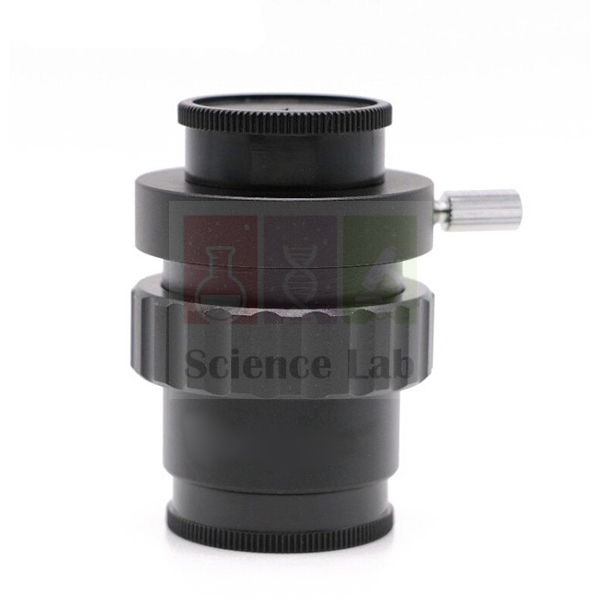
Adjustable C-Focus Mount Adapter
Adjustable C-Focus Mount Adapter (Product Code: SLE/M/66) is an adjustable C-mount camera adapter with a focusable 0.5x reducing lens, used to attach a C-mount microscope camera to the trinocular port of a zoom trinocular stereomicroscope. The 0.5x reduction lets the camera sensor record a wider part of the field, and the focus adjustment matches the camera image to the eyepiece view. It is supplied by Jain Scientific Equipments Pvt Ltd (ScienceLab), Ambala, India, among its lab equipment accessories for microscope imaging.
Specifications
| Parameter | Detail |
|---|---|
| Type | Adjustable C-mount adapter |
| Magnification | 0.5x (reducing lens) |
| Lens | Focusable |
| Designed for | Zoom trinocular stereomicroscope |
| Product code | SLE/M/66 |
| Supplied by | Jain Scientific Equipments Pvt Ltd (ScienceLab), Ambala, India |
What Is the C-Mount Adapter Used For?
Stereo work produces some of the most striking images in a biology lab: insect mouthparts, flower anatomy, a dissected earthworm, seed germination or crystals forming on a slide. With this adapter in the trinocular port, a C-mount camera can show those views live on a screen for the whole class, or record them for practical files and assessments. The reducing lens helps the camera capture a field closer to what users see through the eyepieces, which makes a zoom stereo microscope in an India classroom far more useful for demonstrations.
Screw the camera onto the adapter and fit the adapter into the trinocular port. Focus the specimen through the eyepieces first, then turn the adapter's focus adjustment until the camera image is equally sharp; after that the eyepiece and screen views should stay in step as you zoom. Cap the adapter when the camera is removed so dust cannot settle on the lens.
What to Specify When Ordering
- Make and model of your trinocular stereomicroscope
- The C-mount camera you plan to use, or whether you need one quoted
- Number of adapters required
Supplier
Jain Scientific Equipments Private Limited, which trades as ScienceLab from Ambala, Haryana, supplies this 0.5x camera adapter together with microscope cameras and stereo microscopes, so a complete imaging set-up can be quoted in one go. Colleges, research labs, dealers and importers in India and international markets order from the same team. Company details are on the ScienceLab profile page.
Related Microscope Equipment
Cameras, adapters and microscopes for an imaging bench:
- C-Mount Adapter — another camera adapter in the range
- Microscope Digital Camera, 5MP — a microscope camera for image capture
- 5mp Microscope Camera — an alternative camera option
- Stereomicroscopes — stereo instruments for dissection and specimen study
- Lens Tissue — for cleaning the adapter lens
Explore more in the Microscope category.
Frequently Asked Questions
What does the 0.5x lens in the Adjustable C-Focus Mount Adapter do?
The 0.5x reducing lens in the Adjustable C-Focus Mount Adapter shrinks the image projected onto the camera sensor, so the camera records a wider part of the field of view. This brings the on-screen image closer to what users see through the eyepieces.
Which microscope is the Adjustable C-Focus Mount Adapter designed for?
The Adjustable C-Focus Mount Adapter is designed for a zoom trinocular stereomicroscope. If you want to use it on another trinocular microscope, send the model and port details through the contact page so we can check the fit first.
Why is the Adjustable C-Focus Mount Adapter focusable?
The Adjustable C-Focus Mount Adapter has a focusable lens so the camera image can be made as sharp as the eyepiece image. Once set, users can focus through the eyepieces and the camera view stays in focus as well, which saves time during demonstrations.
Is a camera included with the Adjustable C-Focus Mount Adapter?
No camera is listed with the Adjustable C-Focus Mount Adapter; it is the adapter only. C-mount microscope cameras from our range can be quoted separately, and we can confirm that the camera and adapter suit your microscope.
Who supplies the Adjustable C-Focus Mount Adapter?
Jain Scientific Equipments Pvt Ltd (ScienceLab), Ambala, Haryana, India supplies the Adjustable C-Focus Mount Adapter to colleges, schools, research laboratories, dealers and importers in India and international markets, with microscope cameras and stereo microscopes available from the same range.
Request a Quote
Send your microscope model, camera details and quantity for the Adjustable C-Focus Mount Adapter through the contact page, or add it to the enquiry cart with a camera if you need a complete set-up.
Last updated: 24 September 2026

Micrometer Disc Reticle
Micrometer Disc Reticle (Product Code: SLE/M/67) is a 25 mm straight-line eyepiece reticle carrying a 5 mm scale divided into 100 parts, used inside a stereomicroscope eyepiece to measure specimens while they are being viewed. It fits inside most stereomicroscope eyepieces and comes with a retainer ring that holds the disc in position. It is supplied by Jain Scientific Equipments Pvt Ltd (ScienceLab), Ambala, India, as one of the measuring accessories it offers as a laboratory instruments supplier in India.
Specifications
| Parameter | Detail |
|---|---|
| Type | Straight-line micrometer reticle (eyepiece disc) |
| Diameter | 25 mm |
| Scale length | 5 mm |
| Divisions | 100 |
| Fit | Inside most stereomicroscope eyepieces |
| Included | Retainer ring to secure the reticle in the eyepiece |
| Product code | SLE/M/67 |
| Supplied by | Jain Scientific Equipments Pvt Ltd (ScienceLab), Ambala, India |
What Is the Micrometer Disc Reticle Used For?
A reticle turns a stereo microscope into a measuring instrument. Students can record the body length of insects and larvae, the size of seeds, fish scales or sand grains, and the spacing of leaf features, then compare samples in ecology or genetics practicals. Because the scale sits in the eyepiece, it stays superimposed on the specimen at every position, which is quicker than placing a ruler beside the object and far more precise at magnification.
The divisions must be calibrated before readings mean anything. Put a stage micrometer slide under the objective, line up the two scales and work out the real distance that one reticle division covers at that magnification; repeat for every zoom or objective setting you use. When installing the disc, handle it by its edges, seat it in the eyepiece, secure it with the retainer ring and adjust the eyepiece focus until the scale looks sharp.
What to Specify When Ordering
- Your stereomicroscope model, so the fit of the 25 mm disc can be confirmed
- Number of reticles, usually one per measuring eyepiece
- Whether a stage micrometer slide is needed for calibration
Supplier
This eyepiece reticle is supplied by Jain Scientific Equipments Private Limited, the Ambala, Haryana company behind the ScienceLab name, together with stage micrometer slides, eyepieces and stereo microscopes. Universities, schools, research labs, dealers and importers in India and international markets can order it on its own or as part of a measuring set-up. Read about the company on the ScienceLab profile page.
Related Microscope Equipment
Items used with an eyepiece reticle for microscope measurement:
- Micrometric Slide — a stage micrometer for calibrating the reticle scale
- Eyepiece Micrometric — a 10x eyepiece that already contains a measuring scale
- Stereo Microscope — a low-power instrument for measuring whole specimens
- Binocular Stereo Microscope — another stereo model for dissection and measurement
- Lens Tissue — for keeping the reticle and eyepiece lenses free of dust
Browse all accessories in the Microscope category.
Frequently Asked Questions
What scale does the Micrometer Disc Reticle have?
The Micrometer Disc Reticle carries a straight-line 5 mm scale divided into 100 divisions on a disc 25 mm in diameter. The real size each division represents depends on the magnification, so the scale is calibrated against a stage micrometer.
Will the Micrometer Disc Reticle fit my eyepiece?
The Micrometer Disc Reticle fits inside most stereomicroscope eyepieces that accept a 25 mm disc. To be certain, send your microscope model or the eyepiece details through the contact page and we will confirm before you order.
How is the Micrometer Disc Reticle held in the eyepiece?
The Micrometer Disc Reticle comes with a retainer ring that secures it inside the eyepiece. Once fitted, the scale stays fixed in the field of view, and the eyepiece focus is adjusted until the lines appear sharp.
How do I calibrate the Micrometer Disc Reticle?
Calibrate the Micrometer Disc Reticle by placing a stage micrometer slide under the microscope, aligning both scales and noting how many reticle divisions match a known distance. Calculate the value of one division and repeat the process for each magnification or zoom setting.
Who supplies the Micrometer Disc Reticle?
Jain Scientific Equipments Pvt Ltd (ScienceLab), Ambala, Haryana, India supplies the Micrometer Disc Reticle to schools, colleges, research laboratories, dealers and importers in India and international markets, together with stage micrometer slides and stereo microscopes.
Request a Quote
Send the number of Micrometer Disc Reticles you need and your microscope model through the contact page, or add the reticle to the enquiry cart with a stage micrometer for calibration.
Last updated: 24 September 2026
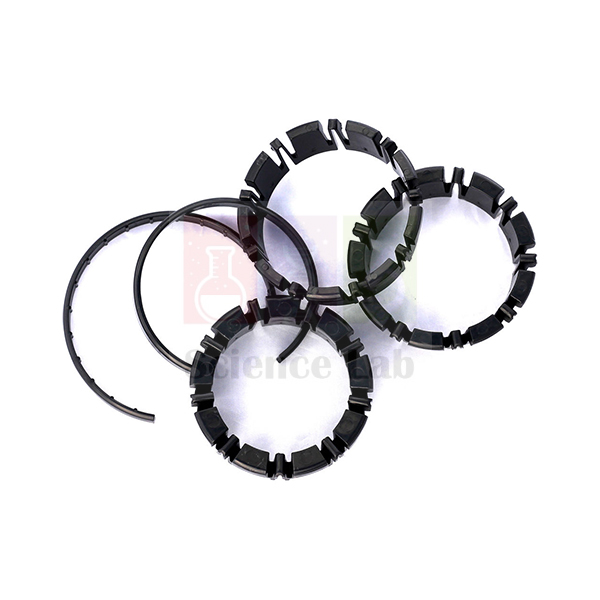
Standard Compression Ring Set
Standard Compression Ring Set (Product Code: SLE/M/68) is a set of 5 injection-moulded polymer rings used to make an eyepiece adapter grip eyepieces of different outer diameters, covering eyepieces from 39 to 60.75 mm. Choosing the matching ring gives a snug, centred hold, so an attached camera or viewing accessory stays aligned while images are taken. It is supplied by Jain Scientific Equipments Pvt Ltd (ScienceLab), Ambala, India, a laboratory equipment supplier for India and overseas buyers.
Specifications
| Parameter | Detail |
|---|---|
| Contents | 5 compression rings |
| Material | Injection-moulded polymer |
| Eyepiece diameter range | 39 to 60.75 mm |
| Compatibility | Described as working with any adapter (confirm your adapter with us) |
| Product code | SLE/M/68 |
| Supplied by | Jain Scientific Equipments Pvt Ltd (ScienceLab), Ambala, India |
What Is the Compression Ring Set Used For?
An eyepiece adapter only works well if it clamps the eyepiece firmly and squarely; a loose fit lets the camera tilt, which shows up as dark edges, off-centre images or blur. Compression rings fill the gap between the adapter's clamp and the eyepiece barrel, so one adapter can be moved between instruments whose eyepieces differ in outer diameter. Labs that photograph slides for records, displays or student projects use them to get a stable, repeatable set-up on each microscope.
Measure the outer diameter of the eyepiece where the adapter will clamp, ideally with a vernier caliper, then try the closest ring: it should slide on with light pressure and not rock. Tighten the adapter clamp only as much as needed to hold the ring. Keep the unused rings in a labelled bag with the adapter so the right size is always at hand.
What to Specify When Ordering
- Outer diameter of the eyepieces you want to fit, within 39 to 60.75 mm
- Type or model of eyepiece adapter you use
- Number of ring sets, one per adapter
Supplier
Jain Scientific Equipments Private Limited, trading as ScienceLab in Ambala, Haryana, supplies this compression ring set with its microscope imaging accessories, so adapters, rings and cameras can be combined in one order. Schools, colleges, research labs, dealers and importers in India and international markets buy from the same team. Visit the ScienceLab profile page for company details.
Related Microscope Equipment
Adapters and tools used with compression rings:
- Adjustable C-Focus Mount Adapter — a 0.5x camera adapter for trinocular stereomicroscopes
- C-Mount Adapter — another camera adapter in the microscope range
- Caliper Vernier (Metal) — for measuring eyepiece outer diameter before choosing a ring
- Microfiber Lens Cloth — for wiping eyepieces before an adapter is fitted
More imaging accessories are in the Microscope category.
Frequently Asked Questions
What eyepiece sizes does the Standard Compression Ring Set cover?
The Standard Compression Ring Set is made for eyepieces with outer diameters from 39 to 60.75 mm. Measure your eyepiece where the adapter clamps to it, and choose the ring from the set that gives a snug fit without forcing.
How many rings are in the Standard Compression Ring Set?
The Standard Compression Ring Set contains 5 rings made of injection-moulded polymer. The different ring sizes let one adapter be matched to several eyepieces across the stated 39 to 60.75 mm range.
Which adapters work with the Standard Compression Ring Set?
The Standard Compression Ring Set is described as working with any adapter. Adapter designs vary, so if you want certainty, send the adapter make or a photo through the contact page and we will confirm suitability before you order.
Is an adapter included with the Standard Compression Ring Set?
No adapter is included; the Standard Compression Ring Set consists of the 5 compression rings only. Camera adapters from our microscope range, such as the C-Mount Adapter, can be quoted on the same enquiry.
Who supplies the Standard Compression Ring Set?
Jain Scientific Equipments Pvt Ltd (ScienceLab), Ambala, Haryana, India supplies the Standard Compression Ring Set to schools, colleges, laboratories, dealers and importers in India and international markets, alongside microscope cameras and adapters.
Request a Quote
To price the Standard Compression Ring Set, send the quantity and your adapter details through the contact page, or add it to the enquiry cart together with any cameras or adapters.
Last updated: 24 September 2026
LED Replacement Bulb Assembly
LED Replacement Bulb Assembly (Product Code: SLE/M/69) is a 3 W LED lamp unit used to replace the light source in M10 Series microscopes when the original illumination fails or becomes unreliable. Because it is listed for all M10 Series models, a lab running several of these microscopes can stock one spare type for every instrument. It is supplied by Jain Scientific Equipments Pvt Ltd (ScienceLab), Ambala, India, a school laboratory equipment supplier in India that also handles microscope spares.
Key Details
| Parameter | Detail |
|---|---|
| Type | Replacement bulb assembly |
| Light source | LED |
| Power | 3 W |
| Compatibility | All M10 Series microscopes |
| Product code | SLE/M/69 |
| Supplied by | Jain Scientific Equipments Pvt Ltd (ScienceLab), Ambala, India |
What Is the LED Replacement Bulb Assembly Used For?
LED illumination lasts a long time, but a knock during transport, a wiring fault or a power surge can still leave a microscope dark or flickering in the middle of a practical. Swapping in a complete bulb assembly is quicker than repairing the old unit and brings the instrument back into service the same day. Keeping a spare for your M10 Series microscopes is simple preventive maintenance, especially before examinations or a busy practical term.
Before replacing the lamp, rule out simpler causes: check the power cord, switch, intensity control and any fuse. If the LED is at fault, unplug the microscope, follow the lamp-access steps in its manual, disconnect the old assembly, fit the new one in the same orientation and reconnect it. Test at low intensity first, then raise the brightness to confirm even lighting.
What to Specify When Ordering
- Confirmation that your microscopes are M10 Series models (check the model label)
- Number of spare assemblies for your microscope fleet
- Any other spares or consumables to add to the same order
Supplier
ScienceLab, the trading name of Jain Scientific Equipments Private Limited in Ambala, Haryana, supplies this LED assembly as part of its microscope spares service, so replacement parts can travel with orders for slides, cover glasses or new instruments. Schools, colleges, service engineers, dealers and importers in India and international markets use the same enquiry route. Company information is on the ScienceLab profile page.
Related Microscope Equipment
Other lighting spares and maintenance items:
- Lamp, 15 W, 120 V — a bi-post filament bulb for lamp-lit instruments
- Fluorescent Lamp 5W — a compact tube for fluorescent-lit microscopes
- Microscope Maintenance & Servicing Kit — for routine cleaning and upkeep while the lamp is changed
- Walter LED Gooseneck Illuminator — a separate LED light for bench and stereo work
Find more spares in the Microscope category.
Frequently Asked Questions
Which microscopes does the LED Replacement Bulb Assembly fit?
The LED Replacement Bulb Assembly is listed for all M10 Series microscopes. If your microscope belongs to a different series, send its model label details through the contact page so we can advise on the correct lamp before you order.
What is the power rating of the LED Replacement Bulb Assembly?
The LED Replacement Bulb Assembly is a 3 W LED unit. It is intended to restore the standard illumination of M10 Series microscopes, and brightness is then set with the microscope's own intensity control as usual.
How do I know if my microscope needs the LED Replacement Bulb Assembly?
Your microscope may need the LED Replacement Bulb Assembly if it gives no light or flickers even though the power cord, switch, intensity control and fuse are all working. Rule out those simpler faults first, then replace the lamp assembly.
Is the LED Replacement Bulb Assembly a bare LED or a complete unit?
The LED Replacement Bulb Assembly is listed as an assembly, meaning it is fitted as a unit rather than as a loose LED. For connector or mounting details for a particular microscope, ask us through the contact page before ordering.
Who supplies the LED Replacement Bulb Assembly?
Jain Scientific Equipments Pvt Ltd (ScienceLab), Ambala, Haryana, India supplies the LED Replacement Bulb Assembly to schools, colleges, laboratories, service engineers, dealers and importers in India and international markets, together with other microscope spares.
Request a Quote
Send the number of LED Replacement Bulb Assemblies and your microscope model through the contact page, or add the item to the enquiry cart with other spares you need.
Last updated: 24 September 2026

Cover Glasses
Cover Glasses (Product Code: SLE/M/75) are thin square glass covers placed over specimens on microscope slides, used to flatten wet mounts, protect stained smears and keep objectives clean in biology, microbiology and pathology-training laboratories. They are made of chemically resistant borosilicate glass, measure 22 x 22 mm and are 0.13 to 0.17 mm thick. They are supplied by Jain Scientific Equipments Pvt Ltd (ScienceLab), Ambala, a lab consumables supplier, to institutions buying biology lab equipment in India and abroad.
Specifications
| Parameter | Detail |
|---|---|
| Material | Chemically resistant borosilicate glass |
| Size | 22 mm x 22 mm |
| Thickness | 0.13 to 0.17 mm |
| Use | Covering specimens on microscope slides |
| Product code | SLE/M/75 |
| Supplied by | Jain Scientific Equipments Pvt Ltd (ScienceLab), Ambala, India |
What Are Cover Glasses Used For?
Almost every slide a student prepares needs a cover glass: onion peel in iodine, cheek cells in methylene blue, pollen grains, yeast, pond-water organisms and hay-infusion protozoa. The cover holds the liquid in a thin, even layer, stops the specimen drying out too quickly and keeps stain and water away from the objective lens. Its thinness lets high-power objectives focus through it, and borosilicate glass stands up to common stains and reagents, which is why cover glasses are a staple of any temporary slides biology kit.
To avoid air bubbles, touch one edge of the cover glass to the drop at an angle and lower it slowly with a mounted needle or fine forceps. Blot excess liquid from the edges with filter paper. Handle cover glasses by their edges, keep them in their box until use, and put broken pieces in a glass-waste container rather than a general bin.
What to Specify When Ordering
- Quantity needed for the term or year (ask us for the current pack size)
- Confirmation of size and thickness: 22 x 22 mm, 0.13 to 0.17 mm
- Slides, forceps or immersion oil to add to the same order
Supplier
Jain Scientific Equipments Private Limited supplies these cover glasses under its ScienceLab name from Ambala, Haryana, alongside glass slides, concavity slides and other microscopy consumables for schools, colleges, hospitals' teaching labs, dealers and importers in India and international markets. For import paperwork and vendor records, the company's Importer-Exporter Code is AAECJ8618A (DGFT) and its GSTIN is 06AAECJ8618A1ZT. Company details are on the ScienceLab profile page.
Related Microscope Equipment
Consumables and tools used with cover glasses:
- Microscope Slides Glass — plain slides to carry the specimen
- Concavity Slides — cavity slides for hanging-drop and live-organism mounts
- Microscope Slide Cover Forceps — for lowering and lifting cover glasses cleanly
- Immersion Oil, 25ml — applied on top of the cover glass for oil-immersion work
- Glass Cover Slips — another cover slip option in the slides range
See more microscopy items in the Microscope category.
Frequently Asked Questions
What size are the Cover Glasses?
The Cover Glasses measure 22 mm x 22 mm and are 0.13 to 0.17 mm thick. This square size covers the usual area of a smear or wet mount on a standard slide while leaving room at the ends for labelling.
What are the Cover Glasses made of?
The Cover Glasses are made of chemically resistant borosilicate glass. Borosilicate stands up well to the stains, iodine and other reagents used in routine slide preparation, so the covers stay clear during staining and mounting.
Can the Cover Glasses be used for high-power and oil-immersion work?
Yes. At 0.13 to 0.17 mm, the Cover Glasses are in the thin range normally used for routine high-power and oil-immersion microscopy. For oil immersion, place the oil drop on top of the cover glass, never directly on an uncovered specimen.
How many Cover Glasses are in a pack?
The pack quantity for the Cover Glasses is not stated in the product details. Tell us how many you need for your practicals through the contact page and we will quote in the current pack size.
How do I avoid air bubbles under the Cover Glasses?
To avoid bubbles under the Cover Glasses, touch one edge to the liquid at an angle and lower the glass slowly with a needle or forceps, letting the liquid spread ahead of it. Blot any excess from the edges with filter paper.
Who supplies the Cover Glasses?
Jain Scientific Equipments Pvt Ltd (ScienceLab), Ambala, Haryana, India supplies the Cover Glasses to schools, colleges, teaching laboratories, dealers and importers in India and international markets, together with microscope slides and other microscopy consumables.
Request a Quote
For a quotation on Cover Glasses, send the quantity and delivery location through the contact page, or add them to the enquiry cart together with slides and forceps.
Last updated: 24 September 2026
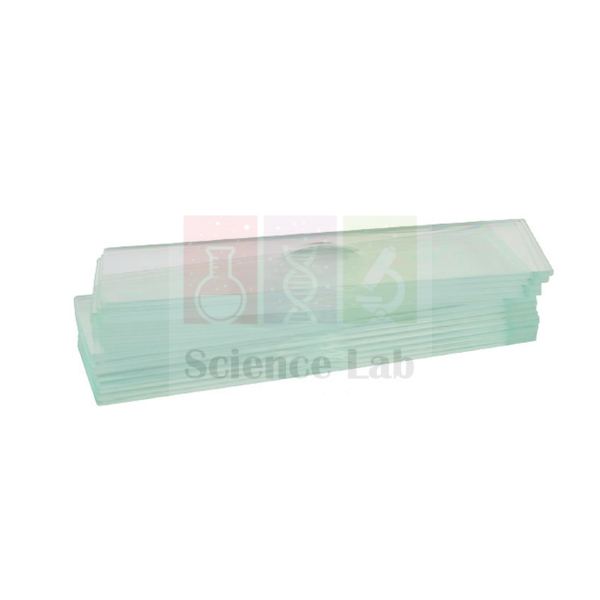
Concavity Slides
Concavity Slides (Product Code: SLE/M/78) are glass microscope slides with polished spherical cavities, used to hold drops of liquid cultures, live protozoa, small aquatic organisms and hanging-drop preparations for observation. Each concavity is about 13 mm across and 0.5 mm deep, formed in clear, noncorrosive glass, and the slides are available with a single or a double concavity. They are supplied by Jain Scientific Equipments Pvt Ltd (ScienceLab), Ambala, a laboratory instruments supplier in India, for teaching and research laboratories.
Specifications
| Parameter | Detail |
|---|---|
| Material | Clear, noncorrosive glass |
| Concavity | Spherical, polished |
| Concavity diameter | About 13 mm |
| Concavity depth | About 0.5 mm |
| Versions | Single concavity or double concavity |
| Product code | SLE/M/78 |
| Supplied by | Jain Scientific Equipments Pvt Ltd (ScienceLab), Ambala, India |
What Are Concavity Slides Used For?
A flat slide squashes or dries out living material; a cavity gives it room. Concavity slides are the standard choice for the hanging-drop method used to watch bacterial motility, and for observing Paramecium, rotifers, small crustaceans and other pond-water life swimming freely. Double-cavity slides let students compare two samples, such as a culture before and after adding a reagent, on the same slide. They are basic microbiology lab equipment in India for school, college and diagnostic-training practicals.
For a hanging drop, ring the edge of a cover glass with a little petroleum jelly, place a small drop of culture in its centre, lower the slide cavity-down onto it and turn the slide over so the drop hangs inside the cavity. After use, soak and wash the slides, rinse with distilled water and dry them before storing in a slide box; disinfect first when working with live cultures.
What to Specify When Ordering
- Single concavity or double concavity, or the mix of both
- Quantity required per class or laboratory
- Cover glasses and slide boxes to include on the same quotation
Supplier
These cavity slides are supplied by Jain Scientific Equipments Private Limited, the Ambala, Haryana company known as ScienceLab, together with plain slides, cover glasses and slide storage. Schools, colleges, microbiology departments, dealers and importers in India and international markets order microscopy consumables through the same team. Institutional buyers who register suppliers can record the company's GSTIN, 06AAECJ8618A1ZT, and its LEI, 3358004HRD1JIVXKYX49. More about the company is on the ScienceLab profile page.
Related Microscope Equipment
Items used with concavity slides:
- Cover Glasses — 22 x 22 mm covers for sealing the cavity or making a hanging drop
- Microscope Slides Depression — another depression-slide option
- Microscope Slides Glass — plain slides for smears and flat mounts
- Dropper — for placing small drops of culture into the cavity
- Slide Box — for storing clean slides between practicals
Browse more in the Microscope category.
Frequently Asked Questions
What size is the cavity on the Concavity Slides?
Each cavity on the Concavity Slides is a polished spherical depression about 13 mm in diameter and 0.5 mm deep. That volume holds a small drop of culture or pond water deep enough for organisms to move without being crushed by the cover glass.
Are the Concavity Slides available with one or two cavities?
Yes, the Concavity Slides are available with either a single or a double concavity. Single-cavity slides suit individual hanging-drop preparations, while double-cavity slides let two samples be compared side by side. State the version and quantity when you enquire.
What are Concavity Slides used for?
Concavity Slides are used for hanging-drop preparations to observe bacterial motility, and for viewing live protozoa, rotifers and other small aquatic organisms. The cavity keeps the liquid in a deeper pool than a flat slide, so specimens stay alive and mobile for longer.
What glass are the Concavity Slides made from?
The Concavity Slides are made from clear, noncorrosive glass with polished cavities, giving a transparent, smooth surface for light to pass through. The specific glass type is not stated; ask on the contact page if your specification requires it.
Can Concavity Slides be reused?
Concavity Slides are glass and can be reused after proper cleaning: soak, wash with detergent, rinse with distilled water and dry. Slides used with live microbial cultures should be disinfected according to your laboratory's safety procedure before washing.
Who supplies the Concavity Slides?
Jain Scientific Equipments Pvt Ltd (ScienceLab), Ambala, Haryana, India supplies the Concavity Slides to schools, colleges, microbiology laboratories, dealers and importers in India and international markets, together with cover glasses and plain slides.
Request a Quote
Send the version (single or double), quantity and delivery location for the Concavity Slides through the contact page, or add them to the enquiry cart with cover glasses.
Last updated: 24 September 2026

Disposable Lab Pack
Disposable Lab Pack (Product Code: SLE/M/79) is a pack of single-use laboratory items listed in the ScienceLab microscope range, used where practical sessions call for materials that are discarded after one use rather than washed and reused. Its exact contents and pack size are confirmed with each quotation, so buyers can check them against their practical list before ordering. It is supplied by Jain Scientific Equipments Pvt Ltd (ScienceLab), Ambala, India, a lab consumables supplier to institutions in India and abroad.
Key Details
| Parameter | Detail |
|---|---|
| Type | Pack of disposable (single-use) laboratory items |
| Range | Microscope accessories and consumables |
| Contents | Confirmed with your quotation |
| Pack size | Confirmed with your quotation |
| Product code | SLE/M/79 |
| Supplied by | Jain Scientific Equipments Pvt Ltd (ScienceLab), Ambala, India |
What Is the Disposable Lab Pack Used For?
Disposable materials save time in busy laboratories: nothing has to be collected, washed, dried and checked between groups, and each student or batch starts with clean items. That matters most in large classes, practical examinations, outreach camps and any session where samples from one group should not carry over to the next. A ready pack also simplifies stock control, because the same unit can be reordered each term.
Because single-use items are designed to be discarded, do not wash and reuse them. After the session, separate waste as your laboratory rules require: glass and sharp items into a puncture-resistant container, and anything that has touched live cultures or biological samples into the appropriate biological waste stream.
Supplier
Jain Scientific Equipments Private Limited, which trades as ScienceLab from Ambala, Haryana, supplies this disposable pack together with slides, cover glasses and other consumables for microscopy practicals. Schools, colleges, teaching laboratories, dealers and importers in India and international markets can combine it with reusable equipment on one quotation. Learn more on the ScienceLab profile page.
Related Microscope Equipment
Other consumables often ordered for microscope practicals:
- Cover Glasses — borosilicate covers for wet mounts and smears
- Microscope Slides Glass — plain slides for student preparations
- Concavity Slides — cavity slides for live organisms and hanging drops
- Lens Tissue — for cleaning objectives after each session
See more items in the Microscope category.
Frequently Asked Questions
What is included in the Disposable Lab Pack?
The contents of the Disposable Lab Pack are confirmed with each quotation rather than listed on this page. Ask through the contact page and we will send the current contents list, so you can compare it with your practical worksheet before ordering.
What is the pack size of the Disposable Lab Pack?
The pack size of the Disposable Lab Pack is confirmed at the time of quotation. Tell us how many students or groups will use it and how many sessions you plan, and we will suggest the number of packs to order.
Can items from the Disposable Lab Pack be reused?
No. Items in the Disposable Lab Pack are intended for single use and should be discarded after the session. Reusing them defeats the purpose of a clean start for each group and can carry material from one sample to the next.
How should used items from the Disposable Lab Pack be disposed of?
Used items from the Disposable Lab Pack should be sorted by your laboratory waste rules: glass or sharp items into a puncture-resistant container, and anything in contact with live cultures or biological samples into the biological waste stream.
Who supplies the Disposable Lab Pack?
Jain Scientific Equipments Pvt Ltd (ScienceLab), Ambala, Haryana, India supplies the Disposable Lab Pack to schools, colleges, teaching laboratories, dealers and importers in India and international markets, alongside slides, cover glasses and other microscopy consumables.
Request a Quote
To receive the contents list and a price for the Disposable Lab Pack, send your quantity and practical details through the contact page, or add it to the enquiry cart with other consumables.
Last updated: 24 September 2026
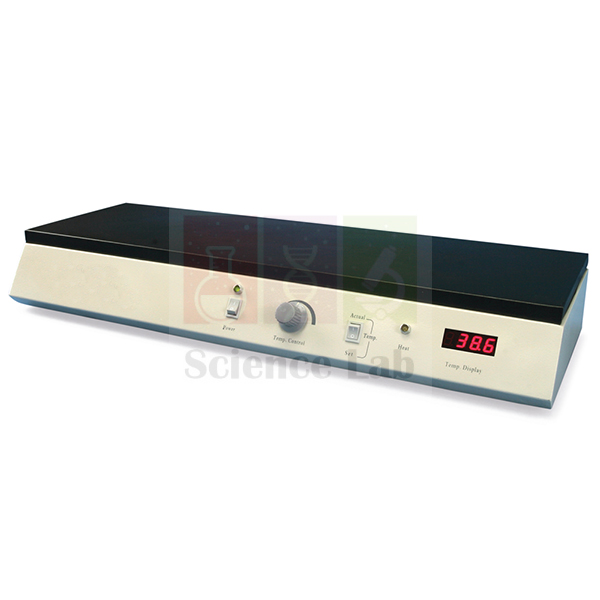
Microscope Slide Warming Table
Microscope Slide Warming Table (Product Code: SLE/M/80) is a thermostatically controlled warming plate for glass slides, used to dry smears, settle and adhere tissue sections and warm slides before mounting in histology, pathology-training and biology laboratories. Its 25 x 8 in black anodised aluminium surface holds fifty-eight 1 x 3 in slides at temperatures from ambient to 70°C, read on an LED display. It is supplied by Jain Scientific Equipments Pvt Ltd (ScienceLab), Ambala, India, as a biology lab equipment supplier in India.
Specifications
| Parameter | Detail |
|---|---|
| Working surface | 25 x 8 in, black anodised aluminium, gives contrast for slides |
| Capacity | Fifty-eight 1 x 3 in slides |
| Temperature control | Thermostatic |
| Temperature range | Ambient to 70°C |
| Display | LED temperature display |
| Indicator | Pilot light |
| Power | 120 V AC, with power cord |
| Product code | SLE/M/80 |
| Supplied by | Jain Scientific Equipments Pvt Ltd (ScienceLab), Ambala, India |
What Is the Slide Warming Table Used For?
In section cutting, paraffin ribbons from the microtome are floated out, picked up on slides and then need gentle, even heat to flatten, dry and stick firmly before staining. A warming table does that for a whole batch at once instead of one slide at a time over a flame. The same surface speeds the drying of blood and bacterial smears, warms slides before mounting and helps mounting media set. The black anodised finish makes clear glass and thin, pale sections easy to see and position.
Switch on and check the pilot light, set the thermostat to the temperature your protocol calls for within the ambient to 70°C range, and wait for the LED display to settle before loading slides. Lay slides flat in rows so none overhang the edge. The surface stays hot after use, so let it cool before wiping off wax or stain, and keep flammable clearing solvents away from the unit. Because it is listed for 120 V AC, confirm the supply version for your site when enquiring.
What to Specify When Ordering
- Mains supply at your site, since the listed model runs on 120 V AC
- Number of warming tables, allowing fifty-eight 1 x 3 in slides per table
- Slides, drying racks or a microtome to include on the same quotation
Supplier
Jain Scientific Equipments Private Limited supplies the slide warming table under its ScienceLab name from Ambala, Haryana, as part of its range for histology and microscopy work, from microtomes to slides and storage boxes. Medical colleges, universities, pathology-training labs, dealers and importers in India and international markets can quote it alongside the rest of a section-cutting bench. Read more on the ScienceLab profile page.
Related Microscope Equipment
Equipment used before and after slide warming:
- Microtome — cuts the thin sections that are dried on the warming table
- Microscope Slides Glass — slides for mounting sections and smears
- Slide Drying Rack — for air-drying slides after staining
- Rack Staining Slides Horizontal — holds slides level during staining
- Storage Box, 100 Slides — for storing finished preparations
Find more in the Microscope category.
Frequently Asked Questions
How many slides does the Microscope Slide Warming Table hold?
The Microscope Slide Warming Table holds fifty-eight standard 1 x 3 in slides on its 25 x 8 in black anodised aluminium surface. That is enough to dry a full class set of smears or a complete batch of sections in one run.
What temperature range does the Microscope Slide Warming Table cover?
The Microscope Slide Warming Table is thermostatically controlled from ambient temperature up to 70°C, with an LED display showing the temperature. Set it to the value your staining or section-drying protocol specifies and let the display settle before loading slides.
What power supply does the Microscope Slide Warming Table need?
The Microscope Slide Warming Table is listed for 120 V AC and comes with a power cord and pilot light. Mains supplies differ between countries, so state your local supply on the contact page and we will confirm the right version before quoting.
Why does the Microscope Slide Warming Table have a black surface?
The black anodised aluminium surface of the Microscope Slide Warming Table gives contrast, so clear glass slides and thin, pale tissue sections are easy to see and arrange. Aluminium also spreads heat across the plate, helping slides warm evenly.
Is the Microscope Slide Warming Table safe to leave near solvents?
No. The Microscope Slide Warming Table has a heated surface, so keep flammable clearing agents and solvents away from it and use it on a stable, heat-resistant bench. Check the pilot light to see when it is powered, and let it cool before cleaning.
Who supplies the Microscope Slide Warming Table?
Jain Scientific Equipments Pvt Ltd (ScienceLab), Ambala, Haryana, India supplies the Microscope Slide Warming Table to medical colleges, universities, pathology-training laboratories, dealers and importers in India and international markets, together with microtomes, slides and staining accessories.
Request a Quote
Send the quantity, your mains supply and delivery location for the Microscope Slide Warming Table through the contact page, or add it to the enquiry cart with other histology items.
Last updated: 24 September 2026
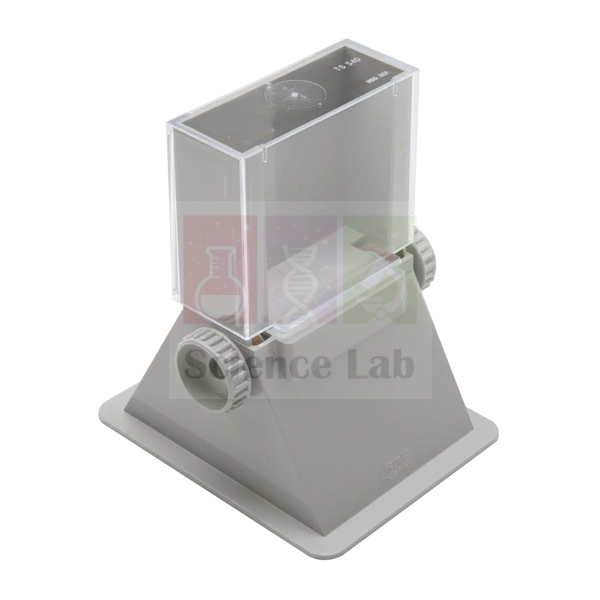
Slide Dispenser, Automatic
Slide Dispenser, Automatic (Product Code: SLE/M/81) is a knob-operated container used to store blank microscope slides and release them one at a time in school, college and laboratory microscopy work. It holds 50 standard 3 × 1 inch slides in a transparent, dust-free housing, so staff can see how many remain and students pick up only one clean slide. It is supplied by Jain Scientific Equipments Pvt Ltd (ScienceLab), Ambala, as practical school biology lab equipment in India and abroad.
Specifications
| Parameter | Detail |
|---|---|
| Type | Automatic slide dispenser, knob-operated |
| Capacity | 50 standard slides |
| Slide size accepted | Standard 3 × 1 inch microscope slides |
| Container | Transparent, dust-free |
| Dispensing | Slides ejected one at a time by turning either side knob |
| Dimensions | 4 1/2 × 5 × 5 1/2 inches |
| Handling | Easy to use |
| Product code | SLE/M/81 |
| Supplied by | Jain Scientific Equipments Pvt Ltd (ScienceLab), Ambala, India |
What Is the Slide Dispenser Used For?
In a practical class where every group prepares onion peels, cheek-cell smears or other temporary mounts, loose boxes of slides quickly collect dust and fingerprints that later show up as debris in the field of view. This dispenser keeps the stack enclosed and hands out a single slide with a turn of a knob, so students never touch the slides they are not going to use.
Because there is a knob on each side, the unit can sit in the middle of a shared bench and be worked from the left or the right. Load only clean, dry slides of the standard 3 × 1 inch size, refill it before the lesson rather than during it, and stop turning if a slide sticks so that the stack can settle flat again. It is a small but useful part of a biology lab setup for schools in India that want tidy, repeatable slide preparation.
Supplier
The Slide Dispenser, Automatic is sourced and supplied by Jain Scientific Equipments Private Limited, the company behind the ScienceLab trading name in Ambala, Haryana. We supply it alongside our microscopes, blank slides and storage cases, so a school or distributor can cover a complete slide-preparation bench with one enquiry. Read more about the company on our ScienceLab company profile.
Related Microscope Products
These items are used in the same slide-preparation workflow:
- Microscope Slides Glass — blank clear glass slides for everyday mounts.
- Cover Glasses — to cover wet mounts once the slide is dispensed.
- Microscope Slide Case — storage for finished slides after the class.
- Microscope Slide Warming Table — for drying smears and mounted slides.
- Microscope Slide Dispenser — an alternative dispenser listing in our range.
Browse the full Microscope range for microscopes and accessories.
Frequently Asked Questions
How many slides does the Slide Dispenser, Automatic hold?
The Slide Dispenser, Automatic holds 50 standard 3 × 1 inch microscope slides. They sit in a transparent container, so the teacher or technician can see at a glance when the stack is running low and refill it before the next practical session.
How does the automatic slide dispenser release a slide?
Turning either side knob on the Slide Dispenser, Automatic ejects one slide at a time. Because both sides carry a knob, it can be operated from the left or the right, which suits shared benches and left-handed students alike.
What are the dimensions of the Slide Dispenser, Automatic?
The Slide Dispenser, Automatic measures 4 1/2 × 5 × 5 1/2 inches. This compact size fits beside a microscope on a student bench or on a shelf in the preparation room without taking much space.
Does the dispenser help keep slides clean?
Yes. The Slide Dispenser, Automatic stores slides in a transparent, dust-free container, which helps keep the glass free of dust and fingerprints between classes. Load only clean, dry slides so that nothing damp or dirty is trapped inside with the stack.
Who supplies the Slide Dispenser, Automatic?
Jain Scientific Equipments Pvt Ltd (ScienceLab), Ambala, India, supplies the Slide Dispenser, Automatic to schools, colleges, laboratories and dealers. It can be quoted together with our microscopes, glass slides and slide storage cases on a single enquiry.
What should a quotation request for the slide dispenser include?
For a Slide Dispenser, Automatic quotation, state product code SLE/M/81, the quantity, the delivery location and any slides or accessories you want on the same order. Send these details through the ScienceLab contact page and we will reply with availability.
Can the Slide Dispenser, Automatic be supplied in bulk or for export?
Yes. The Slide Dispenser, Automatic can be quoted in bulk quantities for institutions, distributors and importers in India and international markets. Share the quantity and destination through our contact page so that packing and shipping can be quoted accurately.
Request a Quote
To order the Slide Dispenser, Automatic (SLE/M/81), send your quantity and delivery details through our contact page, or add it to the enquiry cart and submit one request for all the microscopy items you need.
Last updated: 24 September 2026
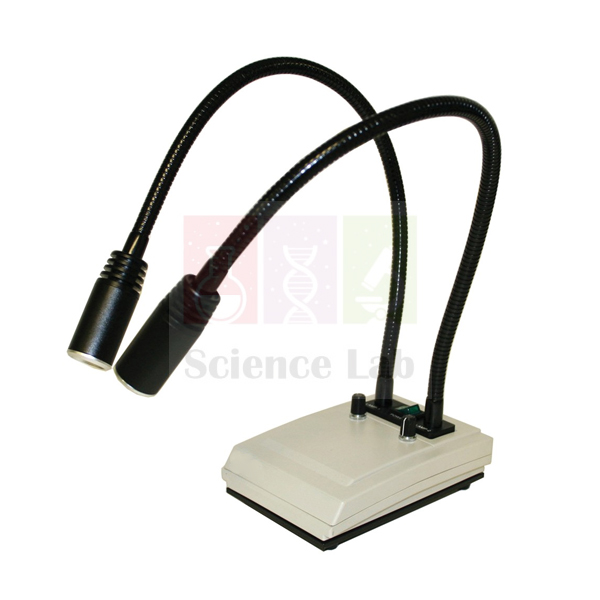
Walter LED Gooseneck Illuminator
Walter LED Gooseneck Illuminator (Product Code: SLE/M/82) is a bench light with flexible gooseneck light guides used to direct cool white LED light onto specimens viewed under stereo and dissecting microscopes in teaching and research labs. Each 19-inch guide carries a bright white LED in a protective housing, and output is adjustable from 0 to 100%. It is supplied by Jain Scientific Equipments Pvt Ltd (ScienceLab), Ambala, India, among our biology lab instruments for schools and colleges.
Specifications
| Parameter | Detail |
|---|---|
| Light source | Bright white LED mounted in a protective housing on each light guide |
| Light guide | 19 inch flexible gooseneck (each guide) |
| Colour temperature | 5,500 K |
| Light quality | Cool, white, uniform light |
| Intensity control | 0 to 100% |
| Estimated LED life | 50,000 hours |
| Operation | Consumes less power; runs cooler and quieter |
| Size | 25 in H × 4 in W × 5-1/2 in D |
| Weight | About 2 lb |
| Footprint | Small |
| Brand in product name | Walter |
| Product code | SLE/M/82 |
| Supplied by | Jain Scientific Equipments Pvt Ltd (ScienceLab), Ambala, India |
What Is the LED Gooseneck Illuminator Used For?
Stereo and dissecting microscopes mostly look at solid, opaque objects — insects, flowers, seeds, rock chips, coins or circuit boards — which have to be lit from above or from the side rather than from beneath. A gooseneck illuminator lets the user bend the light guides to exactly the angle needed: low and from one side to bring out surface texture and relief, or higher and from two directions to fill in shadows during a dissection.
The 5,500 K white light is close to daylight, which helps students record true colours of leaves, pollen-laden anthers or mineral grains in their notebooks. Because the LEDs run cool, live insects and fresh plant tissue do not dry out as quickly as under a hot lamp. For shiny or pale specimens, turn the intensity down to cut glare; for dark or dense material, raise it towards 100%. This makes it a handy companion for any stereo microscope bench in a school or college lab.
What to Specify When Ordering
- Number of illuminators needed (one per stereo or dissecting microscope station is typical).
- Your mains supply voltage and plug type, so we can confirm the power arrangement.
- The microscopes it will be used with, if you want them quoted on the same order.
Supplier
ScienceLab is the trading name of Jain Scientific Equipments Private Limited in Ambala, Haryana. The Walter LED Gooseneck Illuminator carries the Walter brand name; it is an item we source and supply, not one we make. Laboratories setting up stereo microscope benches can combine it with microscopes, auxiliary lenses and cleaning supplies from our range on one quotation. Company details are on our profile page.
Related Microscope Products
Items that work alongside a gooseneck light on a specimen-viewing bench:
- Stereomicroscopes — compact stereo microscopes for whole-specimen viewing.
- Stereo Binocular Microscope — another stereo model that benefits from side lighting.
- Dissecting Microscope — for dissections where angled light reduces shadows.
- Walter Auxiliary Lens — raises magnification, which calls for brighter lighting.
- Microfiber Lens Cloth — for keeping optics and LED housings free of dust.
See all microscopes and accessories in our Microscope category.
Frequently Asked Questions
What colour temperature does the Walter LED Gooseneck Illuminator give?
The Walter LED Gooseneck Illuminator gives cool white light at a colour temperature of 5,500 K, close to daylight. This helps students judge the natural colours of leaves, insects and minerals when viewing them under a stereo microscope.
How long do the LEDs in the Walter LED Gooseneck Illuminator last?
The LEDs in the Walter LED Gooseneck Illuminator have an estimated life of 50,000 hours. Combined with lower power consumption, this suits busy teaching labs where the light stays on through several practical sessions each day.
Can the brightness of the gooseneck illuminator be adjusted?
Yes. The Walter LED Gooseneck Illuminator has a light intensity control from 0 to 100%. Lower settings reduce glare on shiny or pale specimens, while full brightness helps with dark or dense samples at higher magnification.
How long are the gooseneck light guides?
Each flexible light guide on the Walter LED Gooseneck Illuminator is 19 inches long, so the light can be bent and aimed from above or from the side. Please ask us to confirm the number of light guides on the unit you are quoted.
Will the Walter LED Gooseneck Illuminator heat up specimens?
The Walter LED Gooseneck Illuminator is designed to run cooler and to give cool, white, uniform light. That helps when observing live insects or fresh plant material, which can dry out quickly under a hot conventional lamp.
What are the size and weight of the illuminator?
The Walter LED Gooseneck Illuminator measures 25 in high, 4 in wide and 5-1/2 in deep, and weighs about 2 lb. Its small footprint leaves space on the bench for the microscope, specimen dishes and notebooks.
Does ScienceLab manufacture the Walter LED Gooseneck Illuminator?
No. The Walter LED Gooseneck Illuminator is a Walter-branded product that Jain Scientific Equipments Pvt Ltd (ScienceLab) sources and supplies from Ambala, India. We can quote it together with microscopes and accessories for schools, colleges and distributors.
Request a Quote
For the Walter LED Gooseneck Illuminator (SLE/M/82), send quantity, mains supply details and delivery location through our contact page, or add it to the enquiry cart with any microscopes you need.
Last updated: 24 September 2026
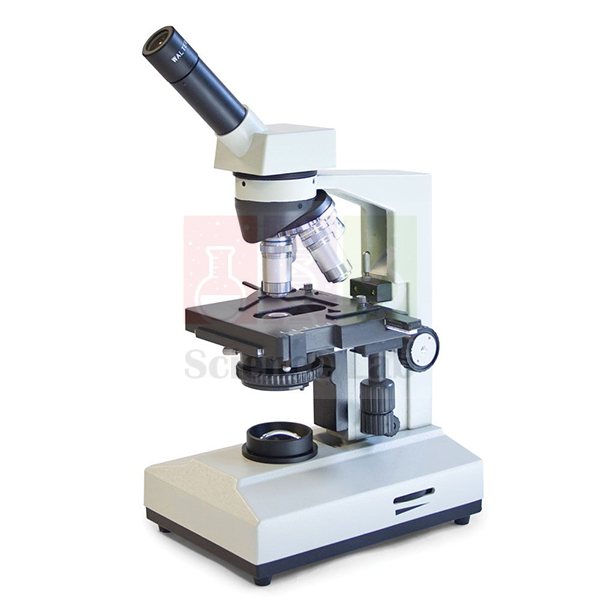
Compound Microscope Cordless
Compound Microscope Cordless (Product Code: SLE/M/83) is a battery-powered compound light microscope used to examine stained slides, cells and micro-organisms in school and college biology labs, including rooms without a power point at every bench. Rechargeable NiMH batteries and an AC charger/adapter are included, and its 360° rotating head, inclined at 45°, turns easily towards each student. It is supplied by Jain Scientific Equipments Pvt Ltd (ScienceLab), Ambala, for labs choosing a cordless compound microscope in India.
Specifications
| Parameter | Detail |
|---|---|
| Microscope type | Compound, cordless (rechargeable battery operation) |
| Head | 360° rotating, inclined at 45° for easier viewing |
| Stage | Built-in mechanical stage for easier slide scanning |
| Focusing | Separate coarse and fine focus, rack-and-pinion, with positive stops at both ends of stage travel |
| Condenser | Rack-and-pinion adjustable 1.25 N.A. Abbe condenser with iris diaphragm |
| Illumination | Built-in LED in the base with on/off switch and light intensity control |
| LED life | 10,000 hours |
| Power | Rechargeable NiMH batteries; AC charger/adapter included |
| Size | 11-1/2 in H × 6 in W × 9-1/2 in D |
| Weight | 10 lb |
| Product code | SLE/M/83 |
| Supplied by | Jain Scientific Equipments Pvt Ltd (ScienceLab), Ambala, India |
What Is the Cordless Compound Microscope Used For?
Students use it for the core practicals of a school or college biology course: onion peel and cheek-cell mounts, stained tissue slides, pond-water organisms and yeast. Running on batteries means the microscope can be set up on any bench, in an outdoor or field classroom, or in older buildings where sockets are few and trailing cables are a trip hazard.
The Abbe condenser and iris diaphragm are the keys to a good image: close the iris a little to add contrast to pale, unstained cells, and open it for strongly stained sections. Scan a slide systematically with the mechanical stage rather than pushing it by hand, and rely on the positive focus stops, which limit stage travel so a hurried student is less likely to crack a slide. Recharge the batteries after each day’s classes so the microscope is ready for the next session. It is a practical choice when planning a compound microscope set for school labs in India.
What to Specify When Ordering
- The objective and eyepiece configuration you require (not listed here — ask us for the current line-up).
- Number of microscopes per lab or class set.
- Your mains voltage and plug type for the AC charger/adapter.
- Any slides, cover glasses or cleaning supplies to add to the same order.
Supplier
Jain Scientific Equipments Private Limited, trading as ScienceLab from Ambala, Haryana, supplies the Compound Microscope Cordless to schools, colleges, training institutes and distributors. We source this microscope and can quote it with slides, cover glasses and cleaning accessories so a microscopy lab is equipped in one go. For vendor registration, the supplying company’s details are GSTIN 06AAECJ8618A1ZT and LEI 3358004HRD1JIVXKYX49. More about us is on the ScienceLab profile page.
Related Microscope Products
Consumables and alternatives often ordered with a cordless compound microscope:
- Microscope Slides Glass — blank slides for student-made mounts.
- Cover Glasses — to cover wet mounts and stained preparations.
- Microscope Cleaning Kit — for routine care of lenses and the stage.
- Cordless Microscope — another battery-operated model to compare.
- Compound Microscope — an alternative compound model in our range.
Compare more models in our Microscope category.
Frequently Asked Questions
Does the Compound Microscope Cordless need mains power during use?
No. The Compound Microscope Cordless runs its LED illumination from rechargeable NiMH batteries. The AC charger/adapter supplied is used to recharge them, so the microscope can work on benches, in field classes or in rooms without a nearby socket.
How long does the LED in the cordless compound microscope last?
The LED in the Compound Microscope Cordless has a 10,000-hour life. Its bright, cool light has an intensity control, so students can dim it for unstained cells and raise it for densely stained sections.
What condenser does the Compound Microscope Cordless have?
The Compound Microscope Cordless has a rack-and-pinion adjustable Abbe condenser of 1.25 N.A. with an iris diaphragm. Raising, lowering and closing it lets the user control brightness and contrast, which is especially useful for transparent specimens such as cheek cells.
What magnifications does the Compound Microscope Cordless offer?
The objective and eyepiece line-up of the Compound Microscope Cordless is not listed on this page. Please ask us through the contact page for the current configuration and total magnification before ordering, so the quotation matches your syllabus.
How does the focusing system protect slides and optics?
The Compound Microscope Cordless has separate coarse and fine rack-and-pinion focusing with positive stops at both ends of the stage travel. These stops limit movement, so students are less likely to crack a slide or damage an objective while focusing.
What are the size and weight of the Compound Microscope Cordless?
The Compound Microscope Cordless measures 11-1/2 in high, 6 in wide and 9-1/2 in deep, and weighs 10 lb. It stands firmly on a student bench yet can still be carried between the lab and a field classroom.
Who supplies the Compound Microscope Cordless for bulk or export orders?
Jain Scientific Equipments Pvt Ltd (ScienceLab), Ambala, India, supplies the Compound Microscope Cordless to schools, colleges, dealers and importers. Class-set quantities and shipping to India and international markets can be discussed with us through the contact page.
Request a Quote
Tell us the number of Compound Microscope Cordless units (SLE/M/83), your required optics and the delivery address through our contact page, or place it in the enquiry cart with slides and accessories.
Last updated: 24 September 2026
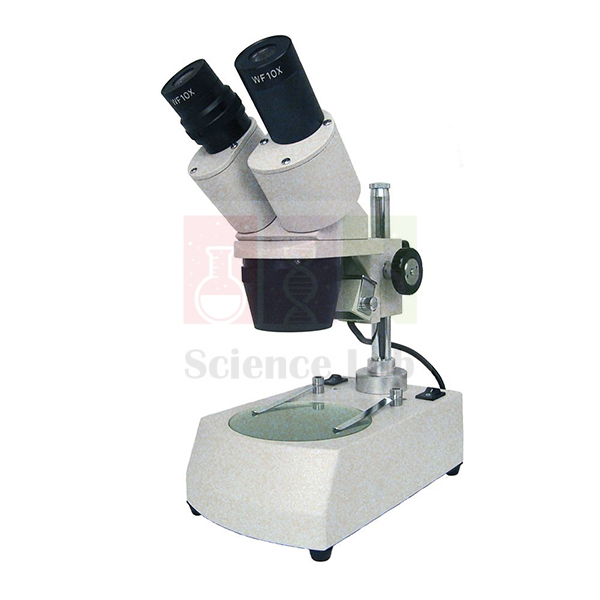
Stereomicroscopes
Stereomicroscopes (Product Code: SLE/M/84) are compact low-power microscopes used to view whole specimens such as insects, flowers, seeds and rocks as three-dimensional, unreversed images in secondary-school biology and science labs. They are offered with magnification levels of 10x and 30x or 20x and 40x, and their corded LED illumination stays cool after hours of use. They are supplied by Jain Scientific Equipments Pvt Ltd (ScienceLab), Ambala, India, as biology lab equipment for schools.
Specifications
| Parameter | Detail |
|---|---|
| Microscope type | Stereo microscope, compact size |
| Magnification options | 10x and 30x, or 20x and 40x |
| Image | Three-dimensional and unreversed, with good resolution, brightness and clarity |
| Illumination | Corded LED; stays cool after hours of use |
| Build | Rugged and dependable |
| Intended level | Secondary-level instruction |
| Product code | SLE/M/84 |
| Supplied by | Jain Scientific Equipments Pvt Ltd (ScienceLab), Ambala, India |
What Are Stereomicroscopes Used For?
A stereomicroscope shows solid objects in depth instead of thin slices, so it is the natural choice for looking at insect legs and mouthparts, flower structure, germinating seeds, soil crumbs, fossils, crystals and small dissections. Because the image is unreversed, a specimen moved to the left also moves left in the view — students can steer forceps and needles naturally, which is much harder under a compound microscope.
Use the lower setting (10x or 20x) to find and frame the whole specimen, then switch to 30x or 40x to study detail such as wing venation or seed coat texture. The cool LED lets live insects and moist plant material stay on the stage through a full lesson without wilting or drying. The compact body saves bench space and suits class sets where every pair of students needs its own stereo microscope.
What to Specify When Ordering
- Which magnification pair you need: 10x and 30x, or 20x and 40x.
- Number of units per class set.
- Your mains voltage and plug type for the corded LED illumination.
- Any dissection tools or specimen dishes to quote on the same order.
Supplier
These Stereomicroscopes are supplied by Jain Scientific Equipments Private Limited, which trades as ScienceLab from Ambala, Haryana. We source them for secondary schools, colleges and educational distributors, and a single quotation can bring together stereo microscopes, lighting and bench accessories. Learn more about the company on our profile.
Related Microscope Products
Useful additions to a stereo microscope bench:
- Walter LED Gooseneck Illuminator — extra angled light for textured, opaque specimens.
- Stereo Binocular Microscope — an alternative stereo model to compare.
- Binocular Stereo Microscope, 40x — another stereo option in our range.
- Pocket Magnifier — for collecting and pre-sorting specimens in the field.
- Microscope Cleaning Kit — for keeping eyepieces and objectives clean.
Explore the complete Microscope range.
Frequently Asked Questions
What magnifications are available on the Stereomicroscopes (SLE/M/84)?
The Stereomicroscopes (SLE/M/84) come with magnification levels of either 10x and 30x or 20x and 40x. Choose the lower pair for whole insects, flowers and rock samples, and the higher pair when students need to see finer surface detail.
Do these stereomicroscopes show a reversed image?
No. The Stereomicroscopes (SLE/M/84) give a three-dimensional, unreversed image, so a specimen moved to the right also moves right in the view. This makes dissection, seed sorting and handling small insects with forceps much easier for students.
Does the LED light on the Stereomicroscopes get hot?
The corded LED illumination on the Stereomicroscopes (SLE/M/84) stays cool even after hours of use. Live insects, fresh leaves and moist specimens therefore do not dry out during long practical periods, and the microscope stays comfortable to handle.
Which level of study are the Stereomicroscopes designed for?
The Stereomicroscopes (SLE/M/84) are compact and designed for secondary-level instruction. Colleges can also use them for general specimen viewing; ask us if you need higher magnification or a different stereo model for advanced work.
Do the Stereomicroscopes need a power socket?
Yes. The Stereomicroscopes (SLE/M/84) use corded LED illumination, so each unit needs a nearby socket. State your mains voltage and plug type when requesting a quotation, and we will confirm the power arrangement for the units supplied.
Who supplies the Stereomicroscopes (SLE/M/84)?
Jain Scientific Equipments Pvt Ltd (ScienceLab), Ambala, India, supplies these Stereomicroscopes to schools, colleges, laboratories and distributors in India and international markets. Class sets can be quoted together with lighting, dishes and other microscopy accessories.
Request a Quote
To receive a quotation for the Stereomicroscopes (SLE/M/84), state your chosen magnification pair and quantity through our contact page, or add them to the enquiry cart.
Last updated: 24 September 2026
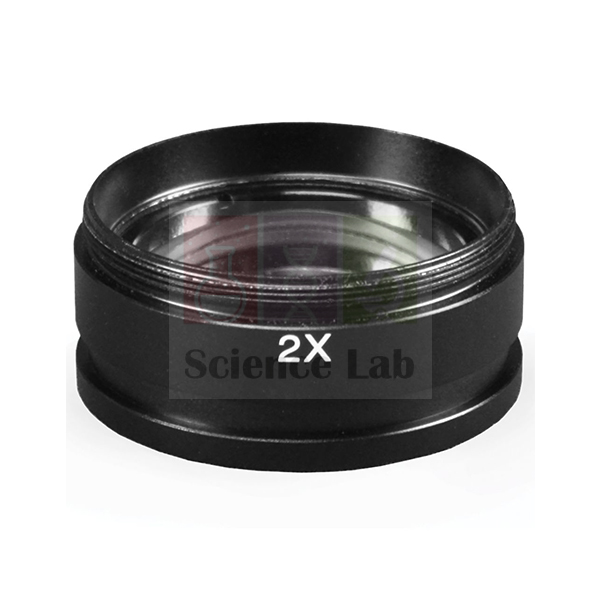
Walter Auxiliary Lens
Walter Auxiliary Lens (Product Code: SLE/M/85) is a 2x add-on lens used to increase the magnification of a stereo zoom microscope for extreme close-up views of specimens in biology, materials and inspection labs. With the lens in place, the listed magnification range moves from 7.5x–45x to 14x–90x, at a working distance of 30 mm. It is supplied by Jain Scientific Equipments Pvt Ltd (ScienceLab), Ambala, India, for college and research microscope users.
Specifications
| Parameter | Detail |
|---|---|
| Lens type | Auxiliary lens |
| Magnification factor | 2x |
| Magnification range | 7.5x–45x to 14x–90x |
| Field of view | 14.2 to 2.2 mm |
| Working distance | 30 mm |
| Brand in product name | Walter |
| Product code | SLE/M/85 |
| Supplied by | Jain Scientific Equipments Pvt Ltd (ScienceLab), Ambala, India |
What Is the Walter Auxiliary Lens Used For?
An auxiliary lens is the quickest way to push a stereo microscope beyond its built-in zoom. Doubling the magnification brings out features that are only hinted at in the standard range: the segments of an insect antenna, hairs and glands on a leaf surface, individual fibres in a textile sample, grains in a mineral or the finish of a small soldered joint.
Higher power comes with trade-offs worth planning for. The field of view narrows (listed from 14.2 mm down to 2.2 mm), so centre the feature before zooming in, and the 30 mm working distance leaves less room for forceps or probes, so do any handling at lower power first. More magnification also spreads the light over a larger image, which is why many users pair the lens with a gooseneck illuminator. Keep the glass clean with a microfiber cloth or lens tissue — at 90x every smudge shows. It is a sensible upgrade for biology lab instruments in college and research settings.
What to Specify When Ordering
- The make and model of the stereo microscope the lens will be fitted to, so we can confirm compatibility.
- Number of lenses required.
- Whether you also need lighting or cleaning accessories on the same quotation.
Supplier
Jain Scientific Equipments Private Limited, known by its trading name ScienceLab and based in Ambala, Haryana, supplies the Walter Auxiliary Lens. It is a Walter-branded accessory that we source for our customers rather than an item we produce. Laboratories and dealers can order it with stereo microscopes and illuminators from our range. See our company profile for background.
Related Microscope Products
Items used with an auxiliary lens for high-magnification stereo work:
- Walter LED Gooseneck Illuminator — brighter, angled light for higher magnification.
- Stereomicroscopes — compact stereo microscopes for specimen viewing.
- Microfiber Lens Cloth — for wiping dust and smudges from lens surfaces.
- Lens Tissue — disposable tissue for careful optical cleaning.
Find more accessories in the Microscope category.
Frequently Asked Questions
What magnification does the Walter Auxiliary Lens add?
The Walter Auxiliary Lens is a 2x lens. With it fitted, the listed magnification range changes from 7.5x–45x to 14x–90x, giving extreme close-up views of small structures that are hard to resolve at the microscope’s normal settings.
What field of view does the Walter Auxiliary Lens give?
The field of view with the Walter Auxiliary Lens is listed as 14.2 to 2.2 mm across the zoom range. The field shrinks as magnification rises, so centre the feature of interest before zooming in.
What is the working distance with the auxiliary lens fitted?
The Walter Auxiliary Lens gives a working distance of 30 mm between the lens and the specimen. That is enough for viewing, but it leaves limited room for dissecting tools, so plan manipulations at lower magnification.
Will the Walter Auxiliary Lens fit my microscope?
Fit depends on your stereo microscope’s make and mounting. Before ordering the Walter Auxiliary Lens, send us the model of the microscope it will be used on through the contact page so that we can confirm compatibility.
Is ScienceLab the maker of the Walter Auxiliary Lens?
No. The Walter Auxiliary Lens carries the Walter brand name. Jain Scientific Equipments Pvt Ltd (ScienceLab), Ambala, India, supplies it to schools, colleges, research labs and dealers along with related microscope accessories.
How should the Walter Auxiliary Lens be cleaned and stored?
Clean the Walter Auxiliary Lens with a soft microfiber cloth or lens tissue after removing loose dust, so grit does not scratch the glass. When it is not fitted, store it covered in a dry, dust-free place away from chemical fumes.
Request a Quote
Send the Walter Auxiliary Lens code SLE/M/85, your microscope model and quantity through our contact page, or use the enquiry cart to combine it with other microscope accessories.
Last updated: 24 September 2026
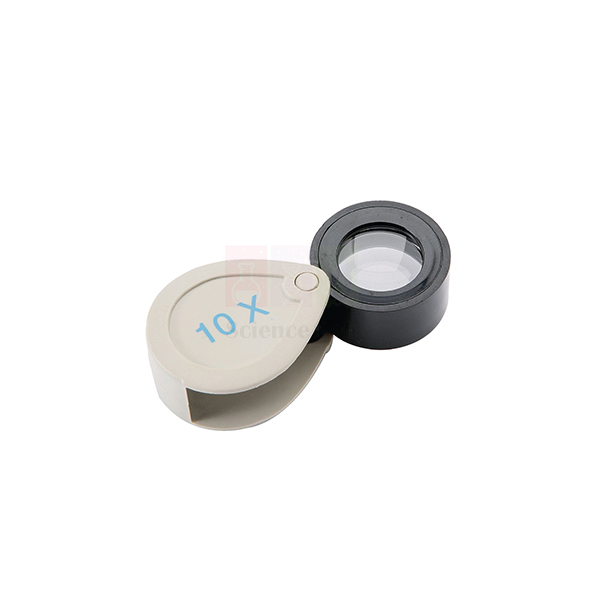
Pocket Magnifier
Pocket Magnifier (Product Code: SLE/M/86) is a folding 10X magnifier loupe used to examine leaves, insects, rocks, fabrics and fine print during field trips, nature walks and lab practicals. Its two plano-convex lenses sit in a mount that folds into the case, so the glass stays protected in a pocket or kit bag, and the whole unit is lightweight. It is supplied by Jain Scientific Equipments Pvt Ltd (ScienceLab), Ambala, as part of its biology lab equipment in India.
Specifications
| Parameter | Detail |
|---|---|
| Magnification | 10X |
| Optics | Two plano-convex lenses |
| Design | Lens mount folds into the case |
| Weight | Lightweight |
| Dimensions | 15 × 25 mm |
| Product code | SLE/M/86 |
| Supplied by | Jain Scientific Equipments Pvt Ltd (ScienceLab), Ambala, India |
What Is the Pocket Magnifier Used For?
A 10X pocket lens is the first optical tool most students carry into the field. In botany it shows leaf hairs, vein networks and the parts of small flowers; in zoology it reveals insect wing veins, spider eyes and the scales on a moth wing; in geography and geology it helps judge grain size and spot crystals in a rock sample. Teachers also use it for checking fabric weave, seed surfaces and printed detail in general science lessons.
Pairing two plano-convex lenses gives a stronger magnification in a small package than a single simple lens. For a sharp view, hold the Pocket Magnifier close to the eye and bring the specimen towards it until it snaps into focus, working in good daylight or under a lamp. Fold the lens back into its case after use to keep it free of scratches and grit. It is a simple way to give every child a hand lens magnifier in school science lessons across India.
Supplier
Jain Scientific Equipments Private Limited, the company that trades as ScienceLab in Ambala, Haryana, supplies the Pocket Magnifier to schools, colleges, nature clubs and dealers. We source it together with other magnifiers and microscopes, so a class set of field lenses can be added to a larger laboratory order. Visit our profile page to learn more about the company.
Related Microscope Products
Other magnifiers and viewers for the same observation lessons:
- Magnifier, Foldable — another folding magnifier style to compare.
- Magnifying Glass — a larger hand-held lens for group viewing.
- Micro Slide Viewer — 50x viewing of prepared specimens without power.
- Stereomicroscopes — for closer study of specimens collected in the field.
- Microfiber Lens Cloth — to wipe fingerprints from the lenses.
More optical items are listed in our Microscope category.
Frequently Asked Questions
What magnification does the Pocket Magnifier give?
The Pocket Magnifier gives 10X magnification from two plano-convex lenses used together. That is enough to see fine hairs on leaves, insect wing veins and mineral grains that are hard to make out with the naked eye.
How are the lenses of the Pocket Magnifier protected?
The lens mount of the Pocket Magnifier folds into its case. When closed, the lenses are shielded, so the magnifier can travel in a pocket, pencil box or field bag without the glass being scratched or picking up grit.
What size is the Pocket Magnifier?
The Pocket Magnifier’s listed dimensions are 15 × 25 mm, and it is lightweight enough to carry in a shirt pocket. If your tender needs the closed case size or the weight, please ask us through the contact page.
How should students use a 10X pocket magnifier?
Hold the Pocket Magnifier close to the eye and move the specimen, not the lens, until it comes into sharp focus. Good light from a window or lamp makes a big difference at 10X, especially with dark specimens.
Who supplies the Pocket Magnifier?
Jain Scientific Equipments Pvt Ltd (ScienceLab), Ambala, India, supplies the Pocket Magnifier in class quantities to schools, colleges, nature clubs and distributors in India and international markets, often alongside microscopes and slide accessories.
What details are needed to quote the Pocket Magnifier?
For a Pocket Magnifier quotation, mention product code SLE/M/86, the number of pieces, the delivery address and any other biology items on your list. Submit these through the contact page or the enquiry cart.
Request a Quote
Ask for a price on the Pocket Magnifier (SLE/M/86) in the quantity you need through our contact page, or add it to the enquiry cart with other field and lab items.
Last updated: 24 September 2026
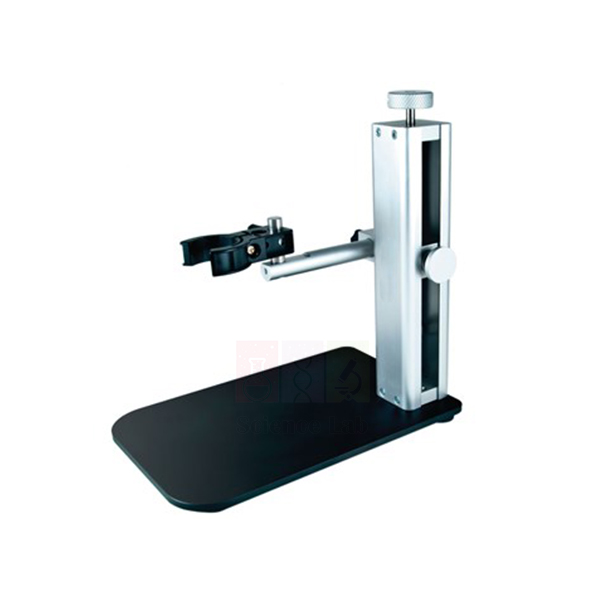
Microscope Stand
Microscope Stand (Product Code: SLE/M/87) is a precision focusing stand used to hold a compact microscope steady above a specimen for sharp viewing and imaging in classrooms, inspection benches and research labs. Built from stainless steel and lightweight aluminium, it combines a fine-focus knob, quick-release vertical movement, an adjustable safety stop and a 15 cm swivelling arm. It is supplied by Jain Scientific Equipments Pvt Ltd (ScienceLab), Ambala, India, among our laboratory instruments.
Specifications
| Parameter | Detail |
|---|---|
| Size | W 15 × L 22 × H 23 cm |
| Construction | Resilient stainless steel and lightweight aluminium |
| Focusing | Precise fine-focus adjustment knob, useful at high magnification |
| Vertical movement | Quick-release button for fast, convenient positioning |
| Safety stop | Adjustable; prevents the microscope from touching the specimen |
| Horizontal arm | Adjustable, 15 cm range, 360-degree rotation |
| Additional arm | Included; increases effective range for larger objects |
| Compatibility | Listed as compatible with all D models; confirm your microscope model with us |
| Product code | SLE/M/87 |
| Supplied by | Jain Scientific Equipments Pvt Ltd (ScienceLab), Ambala, India |
What Is the Microscope Stand Used For?
Compact and hand-held microscopes are convenient, but at higher magnification the slightest hand tremor blurs the picture and makes photographs impossible. Clamping the microscope into this stand keeps it rock-steady, so students can study coins, circuit boards, textiles, insects or rock surfaces and capture clear images for reports or projection.
A good routine is to lower the microscope with the quick-release button until it is roughly in position, set the safety stop just above the specimen height, and then finish with the fine-focus knob. The stop protects both the lens and delicate samples from contact. Swing the 15 cm arm through its 360-degree rotation to reach different parts of a board or specimen tray, and fit the additional arm when the object is too large to sit under the standard reach. It makes a practical addition to optics lab equipment in India’s school and college labs.
What to Specify When Ordering
- The make and model of the microscope you plan to mount, so fit can be confirmed.
- The size of the largest objects you intend to view.
- Number of stands required.
Supplier
The Microscope Stand is sourced and supplied by Jain Scientific Equipments Private Limited, whose trading name is ScienceLab, from Ambala, Haryana. We offer it to schools, colleges, research labs and dealers, and it can be quoted with digital microscopes and lighting so a complete viewing station arrives on one order. For vendor registration and export paperwork, the supplying company holds IEC AAECJ8618A and GSTIN 06AAECJ8618A1ZT. Read more on our company profile.
Related Microscope Products
Microscopes and lighting often set up with a focusing stand (confirm fit with us when ordering):
- Handheld Digital Microscope — a compact microscope that benefits from a steady mount.
- Advanced Digital Microscope — for higher-detail digital imaging.
- LCD Digital Microscope — screen-based viewing for small groups.
- Metal Gooseneck Stand — an alternative flexible stand in our range.
- Walter LED Gooseneck Illuminator — extra lighting for reflective objects.
Browse all items in the Microscope category.
Frequently Asked Questions
What is the Microscope Stand made of?
The Microscope Stand is constructed of resilient stainless steel and lightweight aluminium. This combination keeps the stand firm enough for high-magnification work while still being easy to lift and move between benches or classrooms.
How does focusing work on the Microscope Stand?
The Microscope Stand combines a quick-release button for fast vertical movement with a precise fine-focus knob. Use the quick release to bring the microscope roughly into position, then the fine-focus knob to sharpen the image at high magnification.
What does the safety stop on the Microscope Stand do?
The adjustable safety stop on the Microscope Stand prevents the microscope from touching the specimen. Set it just above the sample height, and the lens and delicate objects such as insects or circuit boards are protected from accidental contact.
How far does the arm of the Microscope Stand reach?
The horizontal arm of the Microscope Stand adjusts over a 15 cm range and rotates through 360 degrees. An additional arm is included to increase the effective range when observing larger objects that do not fit under the standard arm.
Which microscopes fit the Microscope Stand?
The Microscope Stand is listed as compatible with all D models. Because mounting sizes differ between makes, please send the make and model of your microscope through our contact page, and we will confirm the fit before quoting.
What are the dimensions of the Microscope Stand?
The Microscope Stand measures 15 cm wide, 22 cm long and 23 cm high. This compact footprint suits a crowded lab bench, a teacher’s demonstration table or an inspection station without taking over the workspace.
Who supplies the Microscope Stand?
Jain Scientific Equipments Pvt Ltd (ScienceLab), Ambala, India, supplies the Microscope Stand to schools, colleges, research labs and distributors in India and international markets. It can be quoted with digital microscopes and lighting from our range on the same enquiry.
Request a Quote
Share the Microscope Stand code SLE/M/87, your microscope model and the quantity through our contact page, or add it to the enquiry cart to request one combined quotation.
Last updated: 24 September 2026
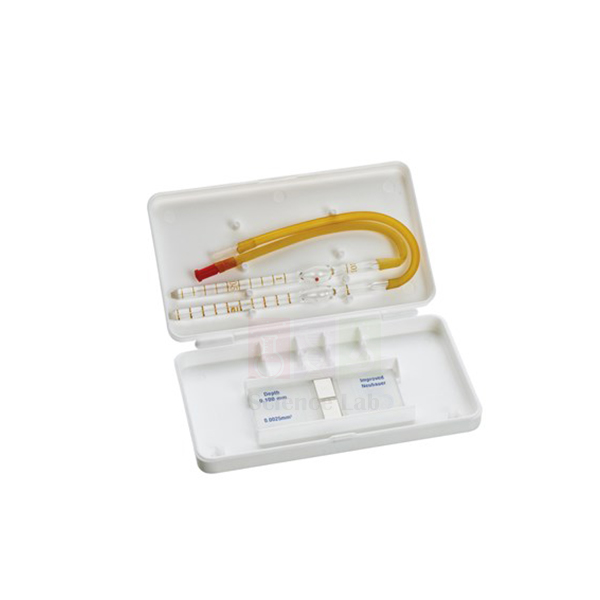
Haemocytometer
Haemocytometer (Product Code: SLE/M/88) is a glass counting chamber used to count cells in a diluted sample under a microscope in biology, microbiology and medical-laboratory teaching. This set has an improved Neubauer double-ruling counting chamber and comes with a pair of cover glasses and RBC and WBC diluting pipettes, so a class can dilute, load and count from one kit. It is supplied by Jain Scientific Equipments Pvt Ltd (ScienceLab), Ambala, India, for haemocytometer use in India’s labs and abroad.
Key Details
| Parameter | Detail |
|---|---|
| Chamber ruling | Improved Neubauer |
| Chamber type | Double ruling counting chamber |
| Cover glasses | A pair, included |
| Diluting pipettes | RBC and WBC diluting pipettes, included |
| Product code | SLE/M/88 |
| Supplied by | Jain Scientific Equipments Pvt Ltd (ScienceLab), Ambala, India |
What Is the Haemocytometer Used For?
In teaching laboratories the haemocytometer is the classic tool for learning manual cell counting. Students practise red and white blood cell counts, count yeast cells in fermentation experiments, or estimate the density of a cell or spore suspension in microbiology and cell-biology practicals. The two ruled areas of a double-ruling chamber allow two loadings to be counted and compared, a simple check on technique.
The general method is to dilute the sample with the matching pipette (the RBC pipette for red-cell work, the WBC pipette for white-cell work), place the cover glass over the ruled area, let the diluted sample run under it by capillary action, and count the cells in the defined squares under the microscope before calculating the concentration with the dilution used. Rinse the chamber and cover glasses with distilled water straight after use, dry them gently with lens tissue, and follow your laboratory’s biosafety procedure whenever the sample is blood. It is a core item for cell counting with a hemocytometer in India’s college labs.
What to Specify When Ordering
- Number of complete sets (chamber, cover glasses and both diluting pipettes).
- Whether spare cover glasses should be quoted for class use.
- Any microscopes or cell counters to add to the same enquiry.
Supplier
The Haemocytometer is supplied by Jain Scientific Equipments Private Limited, which operates under the ScienceLab name in Ambala, Haryana. We source this counting chamber set for colleges, schools, training institutes and laboratory dealers, and can include it with microscopes and cover glasses in a single quotation. Company background is available on our profile page.
Related Microscope Products
Items used in the same cell-counting practical:
- Cover Glasses — spares for class use and breakages.
- Student Medical Microscope — a microscope for counting under the ruled grid.
- Binocular Biological Microscope — comfortable two-eye viewing for longer counts.
- Manual Differential Cell Counter — for tallying cells as they are counted.
- Lens Tissue — for drying the chamber without scratching it.
See more in our Microscope category and the Clinical Laboratory range.
Frequently Asked Questions
What is included with the Haemocytometer (SLE/M/88)?
The Haemocytometer (SLE/M/88) includes an improved Neubauer double-ruling counting chamber, a pair of cover glasses, and RBC and WBC diluting pipettes. Together these let a student dilute a sample, load the chamber and count cells under a microscope.
What does double ruling mean on a haemocytometer?
A double-ruling Haemocytometer has two ruled counting areas on the same chamber. Students can load two samples, or the same sample twice, and compare the counts, which is a useful check on dilution and loading technique.
Which counting ruling does this Haemocytometer use?
This Haemocytometer uses the improved Neubauer ruling. Laboratory manuals and counting procedures written for the improved Neubauer pattern can therefore be followed directly, which keeps class instructions simple and consistent.
How should the Haemocytometer be cleaned after use?
Rinse the Haemocytometer chamber and cover glasses with distilled water immediately after use, then dry them gently with lens tissue. Avoid abrasive cloths and strong solvents that could damage the ruled surface, and handle the chamber only by its edges.
Is a calibration certificate available for the Haemocytometer?
Calibration or traceability documents for the Haemocytometer are not listed on this page. If your laboratory needs one, please discuss it with us through the contact page before ordering, and we will tell you what can be provided with the batch quoted.
Who supplies the Haemocytometer (SLE/M/88)?
Jain Scientific Equipments Pvt Ltd (ScienceLab), Ambala, India, supplies the Haemocytometer to colleges, schools, training institutes and laboratory dealers in India and international markets, and can quote it together with microscopes and cover glasses.
Request a Quote
Request the Haemocytometer (SLE/M/88) by sending the number of sets and your delivery details through our contact page, or add it to the enquiry cart with other lab items.
Last updated: 24 September 2026
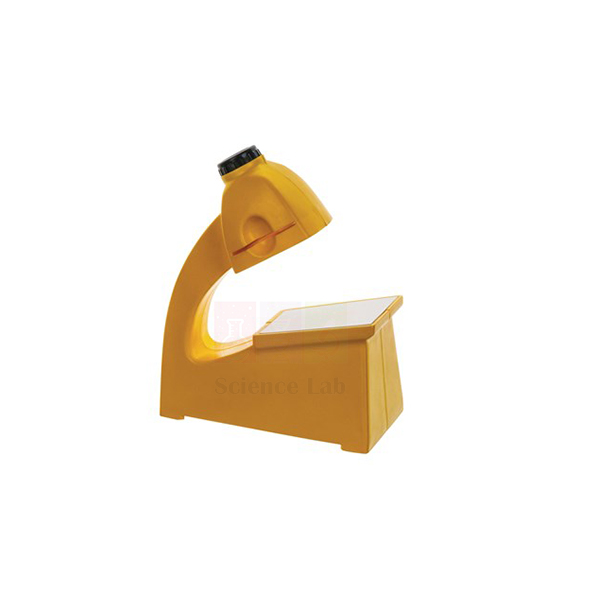
Micro Slide Viewer
Micro Slide Viewer (Product Code: SLE/M/89) is a compact 50x optical viewer used to show students magnified specimens without setting up a full microscope, in primary, middle-school and outreach science lessons. It needs no power at all and is very lightweight, so it can be passed around a classroom or taken outdoors, while still giving students a quality image. It is supplied by Jain Scientific Equipments Pvt Ltd (ScienceLab), Ambala, a laboratory instruments supplier in India, as a simple entry point to microscopy for schools.
Key Details
| Parameter | Detail |
|---|---|
| Magnification | 50x |
| Power requirement | None |
| Weight | Very light |
| Image | Quality image for student viewing |
| Value | Cost-effective option for class sets |
| Product code | SLE/M/89 |
| Supplied by | Jain Scientific Equipments Pvt Ltd (ScienceLab), Ambala, India |
What Is the Micro Slide Viewer Used For?
Younger learners often struggle with the focusing knobs, lamps and slides of a compound microscope. A slide viewer removes those hurdles: the child simply looks through it and sees the specimen enlarged 50 times, which is enough to show plant cells, tissue patterns and small organisms. Teachers use it for observation stations, science clubs, museum and outreach visits, and revision lessons where a whole class needs to see the same specimen quickly.
Because there is no power supply, the viewer relies on daylight or room light, so point it towards a bright window or lamp for the clearest picture. There are no bulbs, cables or batteries to fail, which makes it dependable in classrooms without sockets and on field trips. It works well as the first step of a microscopy starter kit for school before students move on to a compound microscope.
Supplier
ScienceLab, the trading name of Jain Scientific Equipments Private Limited in Ambala, Haryana, supplies the Micro Slide Viewer to schools, science centres and educational distributors. We source it as part of our microscopy range, so viewers, magnifiers, microscopes and prepared slides can be ordered together. More about us is on the ScienceLab profile.
Related Microscope Products
Next steps and companions for early microscopy lessons:
- Pocket Magnifier — a 10X hand lens for field observation.
- Student Monocular Microscope — the next step up for older students.
- Basic Botany Slide (Set of 25) — prepared slides for use with a student microscope.
- Bacteria slide Set of 12 — prepared specimens for later microscopy lessons.
Explore our Microscope category and Prepared Slides range.
Frequently Asked Questions
What magnification does the Micro Slide Viewer give?
The Micro Slide Viewer gives 50x magnification. That is enough to show plant cells, tissue patterns and small organisms in a prepared specimen without the setup time and handling skills a compound microscope needs.
Does the Micro Slide Viewer need batteries or mains power?
No. The Micro Slide Viewer has no power requirement, so there are no bulbs, batteries or cables to manage. Hold it towards a bright window or lamp so that enough light passes through the specimen.
Which slides can be used in the Micro Slide Viewer?
The slide format that fits the Micro Slide Viewer is not listed on this page. Before ordering specimens, ask us through the contact page which slides suit the viewer so that your set arrives ready to use.
Who is the Micro Slide Viewer best suited to?
The Micro Slide Viewer suits younger students, outreach programmes and classes meeting microscopy for the first time. It is very light and gives students a quality image, and several units let a whole class view specimens at once.
Who supplies the Micro Slide Viewer?
Jain Scientific Equipments Pvt Ltd (ScienceLab), Ambala, India, supplies the Micro Slide Viewer to schools, science centres and educational distributors, and can quote class quantities for India and international markets.
What information is needed to quote the Micro Slide Viewer?
A Micro Slide Viewer quotation needs product code SLE/M/89, the number of viewers, the delivery location and whether you also want slides or magnifiers on the same order. Send these through the contact page or the enquiry cart.
Request a Quote
Order the Micro Slide Viewer (SLE/M/89) for your classes by sending quantity and delivery details through our contact page, or add it to the enquiry cart.
Last updated: 24 September 2026
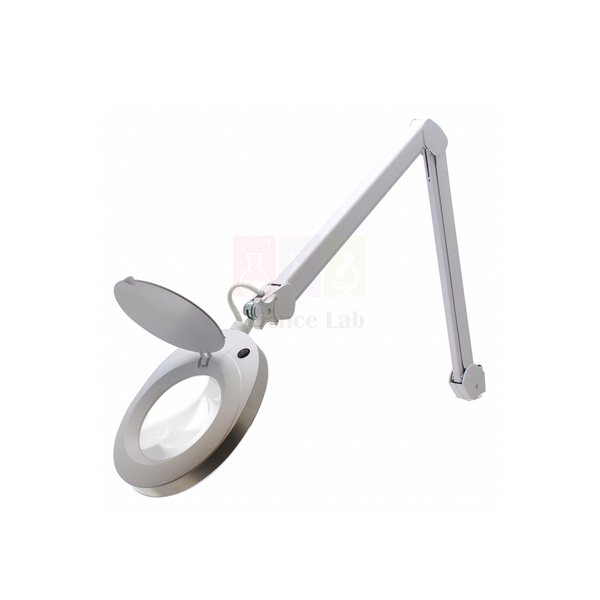
Magnifier
Magnifier (Product Code: SLE/M/90) is a clamp-mounted lighted magnifier used for hands-free close work such as specimen sorting, dissection, fine assembly and reading small scales on a lab bench or desk. It pairs a large 5-inch glass lens of 1.8x magnification with 48 ultra-bright LED lights on an adjustable metal arm with a rotating head, powered through an included AC/DC adapter. It is supplied by Jain Scientific Equipments Pvt Ltd (ScienceLab), Ambala, India.
Specifications
| Parameter | Detail |
|---|---|
| Type | Lighted magnifier for desktop or tabletop mounting |
| Lens | 5 inch glass lens |
| Magnification | 1.8x |
| Illumination | 48 ultra-bright LED lights |
| Arm and head | Adjustable metal arm with rotating head |
| Mounting | C-clamp, included |
| Power | Plugs into a standard outlet using the included AC/DC adapter |
| Overall size | 31 × 9 × 22 inches |
| Weight | 5-1/5 lb as listed (please confirm the packed weight on quotation) |
| Product code | SLE/M/90 |
| Supplied by | Jain Scientific Equipments Pvt Ltd (ScienceLab), Ambala, India |
What Is the Lighted Magnifier Used For?
A clamp-on lighted magnifier fills the gap between a hand lens and a microscope. Because it stays in place, both hands are free to hold forceps, needles, a soldering iron or a pen. Biology teachers use it for flower and insect dissections, sorting seeds and soil samples, and labelling specimen tubes; physics and electronics labs use it for inspecting small components; technicians use it to read fine instrument scales.
The low 1.8x power keeps a wide area in view, and the 48 LEDs light the work evenly without a separate lamp. Fix the C-clamp to a sturdy bench edge, swing the metal arm over the task and tilt the head until the image is sharp. When it is not in use, turn the lens away from windows, since any glass lens can focus sunlight onto nearby surfaces, and wipe it with a soft microfiber cloth. It is a useful piece of laboratory equipment for schools in India that need clear, hands-free close-up viewing.
What to Specify When Ordering
- Your mains voltage and plug type for the AC/DC adapter.
- The bench or desk edge where the C-clamp will be fixed, so fit can be checked.
- Number of magnifiers per lab or workstation.
Supplier
Jain Scientific Equipments Private Limited, trading as ScienceLab, supplies this lighted Magnifier from Ambala, Haryana. It is an item we source for schools, colleges, laboratories and dealers, and it can be quoted alongside microscopes, hand lenses and other bench equipment. Find out more on our company profile.
Related Microscope Products
Other magnification options for close-up work:
- Magnifying Glass — a hand-held lens for quick inspection.
- Pocket Magnifier — 10X folding lens for fieldwork.
- Dissecting Microscope — when higher magnification is needed for dissection.
- Stereomicroscopes — three-dimensional viewing at 10x to 40x.
- Microfiber Lens Cloth — for cleaning the large glass lens.
See the full Microscope range.
Frequently Asked Questions
What magnification and lens size does the Magnifier (SLE/M/90) have?
The Magnifier (SLE/M/90) has a large 5-inch glass lens giving 1.8x magnification. The low power keeps a wide area in view, so users can work with forceps, needles or small tools under the lens with both hands free.
How is the Magnifier (SLE/M/90) lit and powered?
The Magnifier (SLE/M/90) has 48 ultra-bright LED lights to illuminate the work area. It plugs into any standard outlet using the included AC/DC adapter, so it needs a power socket within reach of the bench.
How is the lighted Magnifier mounted?
The Magnifier (SLE/M/90) attaches to a desktop or tabletop with the included C-clamp. Its adjustable metal arm and rotating head then let you position the lens exactly where it is needed over the task.
What are the size and weight of the Magnifier (SLE/M/90)?
The Magnifier (SLE/M/90) has an overall size of 31 × 9 × 22 inches and a listed weight of 5-1/5 lb. Please confirm the packed weight with us when you request a quotation, particularly for export shipments.
How should the lighted Magnifier be looked after?
When the Magnifier (SLE/M/90) is not in use, turn the head away from windows, because a glass lens can focus sunlight onto nearby surfaces. Wipe the lens with a soft microfiber cloth to remove dust and fingerprints.
Who supplies the Magnifier (SLE/M/90)?
Jain Scientific Equipments Pvt Ltd (ScienceLab), Ambala, India, supplies this lighted Magnifier to schools, colleges, laboratories and dealers in India and international markets. It is an item we source, and it can be quoted with microscopes and other bench equipment.
Request a Quote
For the Magnifier (SLE/M/90), send quantity, mains supply details and delivery address through our contact page, or add it to the enquiry cart with related items.
Last updated: 24 September 2026

Microfiber Lens Cloth
Microfiber Lens Cloth (Product Code: SLE/M/91) is a 12 × 16 inch microfiber cleaning cloth used to wipe dust, oil smudges and dirt from lenses and other optical surfaces in laboratories, classrooms and field kits. It works dry or with cleaning sprays and fluids, can be used many times over, and is large enough for binoculars, cameras and bigger gear as well as microscope eyepieces. It is supplied by Jain Scientific Equipments Pvt Ltd (ScienceLab), Ambala, India.
Specifications
| Parameter | Detail |
|---|---|
| Material | Microfiber |
| Size | 12 × 16 inches |
| Removes | Dust, oil smudges and dirt |
| Use | With or without cleaning sprays and fluids |
| Reuse | Can be used multiple times |
| Suitable for | Binoculars, cameras and larger gear |
| Product code | SLE/M/91 |
| Supplied by | Jain Scientific Equipments Pvt Ltd (ScienceLab), Ambala, India |
What Is the Microfiber Lens Cloth Used For?
Eyepieces collect skin oil and eyelash marks every lesson, objectives pick up dust, and field binoculars and cameras come back from outings covered in fine grit. A microfiber cloth lifts these deposits instead of smearing them, which is why it is standard kit for lab assistants who look after microscopes, for geography and ecology teachers managing binoculars, and for anyone photographing specimens.
Blow or brush away loose particles first, then wipe gently with light circular strokes from the centre of the lens outwards. For stubborn fingerprints, put a little lens-cleaning fluid on the cloth rather than directly on the glass so it does not seep into the mount. Keep the cloth in a clean pouch between uses and wash it when it looks dirty; a gritty cloth can scratch coated optics. It is a small but worthwhile addition to a microscopy starter kit for school labs.
Supplier
Jain Scientific Equipments Private Limited supplies the Microfiber Lens Cloth under its trading name ScienceLab, from Ambala, Haryana. We source this cleaning consumable for schools, colleges, laboratories and distributors, often packing it into the same order as microscopes and optical accessories. Institutions adding us as a vendor can use GSTIN 06AAECJ8618A1ZT and LEI 3358004HRD1JIVXKYX49 for the company. Background information is on our profile page.
Related Microscope Products
Other cleaning and care items for optical equipment:
- Lens Tissue — single-use tissue for delicate lens surfaces.
- Microscope Cleaning Kit — a fuller set for routine microscope care.
- Microscope Maintenance & Servicing Kit — for technicians servicing class sets.
- Binoculars — field optics that the cloth is suitable for.
More accessories are listed in our Microscope category.
Frequently Asked Questions
What size is the Microfiber Lens Cloth?
The Microfiber Lens Cloth measures 12 × 16 inches. That is large enough to fold into a clean pad for small eyepieces and still cover binoculars, cameras and larger gear without reusing the same dirty patch.
Does the Microfiber Lens Cloth need cleaning fluid?
No. The Microfiber Lens Cloth can be used dry for dust or with cleaning sprays and fluids for stubborn oil smudges. Apply fluid to the cloth rather than directly onto the lens so that it does not run into the mount.
Can the Microfiber Lens Cloth be reused?
Yes. The Microfiber Lens Cloth can be used multiple times. Store it in a clean pouch or box between uses and replace or wash it once it becomes gritty, since trapped particles could scratch coated optical surfaces.
What can the Microfiber Lens Cloth clean?
The Microfiber Lens Cloth removes dust, oil smudges and dirt, and is suitable for binoculars, cameras and larger gear. In a laboratory it is also handy for wiping microscope eyepieces and other lens surfaces between classes.
Should grit be removed before using the lens cloth?
Yes. Before wiping with the Microfiber Lens Cloth, blow or brush loose grit off the lens, then wipe gently with light circular strokes. This avoids dragging hard particles across the glass and keeps optics in good condition for longer.
Can the Microfiber Lens Cloth be ordered in bulk?
Yes. Jain Scientific Equipments Pvt Ltd (ScienceLab), Ambala, India, supplies the Microfiber Lens Cloth in bulk to schools, colleges, laboratories and distributors, and can quote it with microscopes or cleaning kits for India and international markets.
Request a Quote
To order the Microfiber Lens Cloth (SLE/M/91), send the number of cloths and your delivery location through our contact page, or add it to the enquiry cart.
Last updated: 24 September 2026
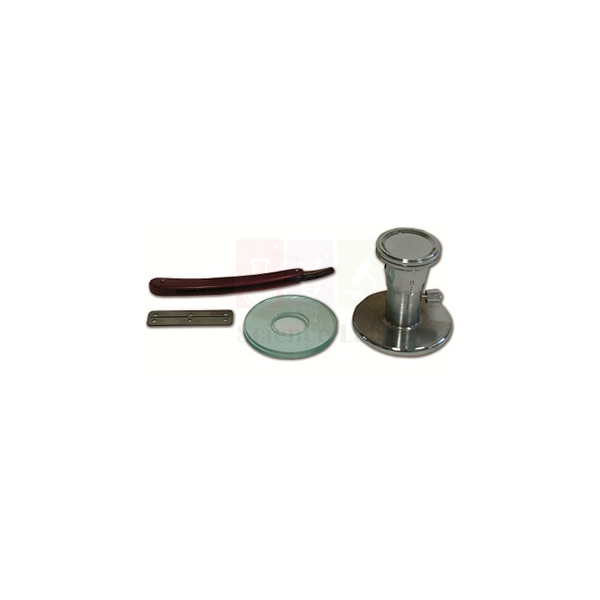
Microtome, Simple
Microtome, Simple (Product Code: SLE/M/92) is a basic sectioning device used to cut thin, uniform sections of specimens for examination under a microscope in school and college biology labs. It lets students prepare their own sections of stems, roots and leaves instead of relying only on prepared slides. It is made by Jain Scientific Equipments Pvt Ltd (ScienceLab), an OEM manufacturer of school biology lab equipment in India, at its own factory in Ambala, as part of its botany lab equipment range.
Key Details
| Parameter | Detail |
|---|---|
| Type | Simple microtome |
| Purpose | Cutting thin, uniform sections of specimens |
| Used with | A microscope, for examining the cut sections |
| Product code | SLE/M/92 |
| Manufacturer | Jain Scientific Equipments Pvt Ltd (ScienceLab) — OEM |
| Country of origin | India (made in Ambala, Haryana) |
What Is the Simple Microtome Used For?
Section cutting is a core practical in plant anatomy: transverse sections of monocot and dicot stems and roots, and sections through leaves, show vascular bundles, cortex and other tissues that cannot be seen in a whole specimen. Cutting freehand with a blade gives uneven slices of varying thickness. A simple microtome holds the specimen steady and helps students take thinner, more even sections, so more of them are usable once stained and mounted.
In general the specimen is held firmly, raised a little at a time, and a sharp blade is drawn across it in one smooth stroke for each slice. Soft material is often supported in pith or a similar holder, and cut sections are floated in water in a watch glass before the best ones are stained and mounted on a glass slide under a cover glass. Keep the blade wet and sharp, cut away from the fingers, and clean and dry the microtome after each class.
OEM Manufacturer
Jain Scientific Equipments Private Limited, which trades as ScienceLab, is the OEM (original equipment manufacturer) of the Microtome, Simple. The company manufactures it at its own licensed factory at Saha, Ambala, Haryana, India, rather than buying it in from a trader, and supplies it factory-direct to schools, colleges, institutions, dealers and importers. Quotations, repeat orders and questions about replacement parts come straight to the manufacturer — just ask us.
ScienceLab is the trading name of Jain Scientific Equipments Private Limited (CIN U29309HR2020PTC087597), and production takes place at its licensed factory at 449, HSIIDC Industrial Area, Saha, Ambala (Factory Licence AMB-ONLINE-CHD-J-414). Read more on our company profile.
Related Microscope Products
Items used in the same section-cutting and mounting practical:
- Microtome — another microtome model in our range to compare.
- Watch Glass — for floating and staining cut sections.
- Microscope Slides Glass — for mounting the best sections.
- Cover Glasses — to cover mounted sections.
- Student Monocular Microscope — for examining the finished slides.
Browse our Microscope category for more.
Frequently Asked Questions
What is the Microtome, Simple used for?
The Microtome, Simple is used to cut thin, uniform sections of specimens so they can be stained, mounted on a glass slide and examined under a microscope, most often in plant anatomy practicals on stems, roots and leaves.
Who manufactures the Microtome, Simple?
Jain Scientific Equipments Pvt Ltd (ScienceLab) is the OEM manufacturer of the Microtome, Simple, producing it at its own licensed factory at Saha, Ambala, Haryana, India. Quotations, repeat orders and spare-part questions are handled directly by the manufacturer.
Is a blade supplied with the Microtome, Simple?
Blade and accessory details for the Microtome, Simple are not listed on this page. Please ask us through the contact page what comes with the unit, so that you can order blades, slides and cover glasses together if needed.
How thin are the sections cut with the Microtome, Simple?
The section thickness range of the Microtome, Simple is not stated on this page. Thin, even sections depend on a sharp blade, a firmly held specimen and a smooth cutting stroke; ask us for the current specification before ordering.
Is a microscope needed with the Microtome, Simple?
Yes. The Microtome, Simple is designed for use with a microscope: it prepares the sections, and a compound microscope is then needed to examine the stained tissue. Schools can have both items quoted together on one ScienceLab enquiry.
Can the Microtome, Simple be supplied in bulk or for export?
Yes. The Microtome, Simple is supplied factory-direct in class and bulk quantities to schools, colleges, institutions, dealers and importers in India and international markets. Share quantity and destination through the contact page for a manufacturer’s quotation.
Request a Quote
Quotations for the Microtome, Simple (SLE/M/92) come direct from the manufacturer. Send your quantity and delivery details through our contact page, or add it to the enquiry cart with slides and microscopes.
Last updated: 24 September 2026
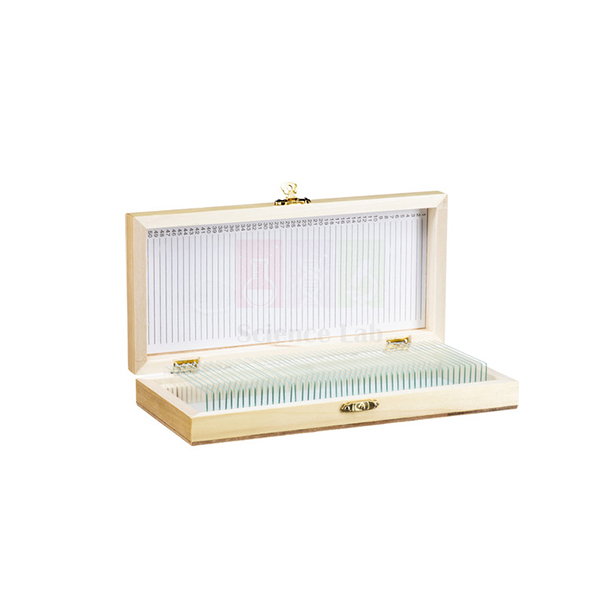
Microscope Slide Case
Microscope Slide Case (Product Code: SLE/M/93) is a plastic storage case used to hold and protect up to 50 microscope slides in school, college and laboratory slide collections. It is listed for slides 0.04 inch (1.0 mm) thick, and keeps prepared and student-made slides organised, protected and easy to carry between the store room and the microscope bench. It is supplied by Jain Scientific Equipments Pvt Ltd (ScienceLab), Ambala, India.
Specifications
| Parameter | Detail |
|---|---|
| Capacity | 50 slides |
| Material | Plastic |
| Slide thickness | 0.04 inch / 1.0 mm |
| Product code | SLE/M/93 |
| Supplied by | Jain Scientific Equipments Pvt Ltd (ScienceLab), Ambala, India |
What Is the Microscope Slide Case Used For?
Slides left loose in drawers get scratched, chipped and mixed up, and a single dropped tray can undo years of collecting. A dedicated case keeps a class set together: one case per topic — plant tissues, animal tissues, microorganisms — makes it quick to hand out the right slides for each practical and to check that all of them come back. It is equally useful for a student’s own practical record of temporary and permanent mounts.
Store only fully dry slides with the mounting medium set, labels facing the same way, and keep the case in a cool, dry cupboard away from direct sunlight, which can fade stains. Before filling it, check your slide thickness against the listed 1.0 mm; thicker slides should be confirmed with us first. A well-organised case is the simplest way to protect a microscope slides set for school labs in India.
What to Specify When Ordering
- The thickness of the slides you will store (the case is listed for 0.04 inch / 1.0 mm).
- Number of cases, for example one per topic or per class set.
- Any blank or prepared slides to quote on the same order.
Supplier
Jain Scientific Equipments Private Limited, which trades as ScienceLab in Ambala, Haryana, supplies the Microscope Slide Case. We source it for schools, colleges, laboratories and dealers who are building or reorganising slide collections, and it can be quoted with slides, cabinets and microscopes. Company information is on our profile page.
Related Microscope Products
Other ways to store and organise microscope slides:
- Wooden Slide Case — a wooden alternative for slide storage.
- Slide Box — another slide box option in our range.
- Slide Tray Cabinet, Polypropylene — for larger departmental collections.
- Slide Dispenser, Automatic — keeps unused blank slides clean before mounting.
See the Microscope category and our Prepared Slides range.
Frequently Asked Questions
How many slides does the Microscope Slide Case hold?
The Microscope Slide Case holds 50 slides. That is a convenient size for one class set of prepared slides or a single student’s practical collection, and small enough to carry from the store room to the microscope bench.
What slide thickness does the Microscope Slide Case take?
The Microscope Slide Case is listed for slides 0.04 inch (1.0 mm) thick. If your slides are thicker, send us their dimensions through the contact page so we can confirm they will fit before you order.
What is the Microscope Slide Case made of?
The Microscope Slide Case is made of plastic, which keeps it light to carry and easy to wipe clean. Keep it away from direct heat and sunlight, which can warp plastic and fade stained specimens over time.
How should slides be stored in the case?
Place only fully dry slides in the Microscope Slide Case, with the mounting medium set and labels facing the same way. Keep the closed case in a cool, dry cupboard to help protect specimens from dust and damp.
Who supplies the Microscope Slide Case?
Jain Scientific Equipments Pvt Ltd (ScienceLab), Ambala, India, supplies the Microscope Slide Case to schools, colleges, laboratories and dealers in India and international markets, and can quote it together with blank or prepared slides.
What details are needed for a Microscope Slide Case quotation?
For a Microscope Slide Case quotation, give product code SLE/M/93, the number of cases, the thickness of your slides and the delivery location. Send the details through the contact page or add the item to the enquiry cart.
Request a Quote
Ask for the Microscope Slide Case (SLE/M/93) through our contact page, or place it in the enquiry cart together with slides and other storage items.
Last updated: 24 September 2026
Microscope Slides Glass
Microscope Slides Glass (Product Code: SLE/M/94) are plain glass slides used to mount wet preparations, smears and sections for viewing under a microscope in school, college and laboratory work. Each pack contains 72 clear glass slides with ground edges, measuring 25 mm × 75 mm × 1.2 mm, ready for everyday temporary slides in biology practicals. They are supplied by Jain Scientific Equipments Pvt Ltd (ScienceLab), Ambala, India.
Specifications
| Parameter | Detail |
|---|---|
| Pack size | 72 slides |
| Material | Clear glass |
| Edges | Ground |
| Size | 25 mm × 75 mm |
| Thickness | 1.2 mm |
| Product code | SLE/M/94 |
| Supplied by | Jain Scientific Equipments Pvt Ltd (ScienceLab), Ambala, India |
What Are Glass Microscope Slides Used For?
Plain slides are the base of almost every microscopy practical: onion-peel and cheek-cell mounts, leaf peels for stomata, pond-water drops, stained bacterial smears and hand-cut plant sections. Clear glass lets light from the microscope’s condenser pass through evenly, and the ground edges are smoother to hold than raw-cut glass and less prone to chipping when slides are handled in large classes.
Hold slides by the edges, wipe each one with a lint-free cloth before use, and place the specimen in the centre so it lines up with the objective. For wet mounts, lower a cover glass at an angle to avoid trapping air bubbles. Slides used for temporary mounts can be washed, rinsed and dried for reuse if they are undamaged; put chipped or broken glass straight into a dedicated glass-waste container. A pack of 72 covers a full class for several practical sessions.
What to Specify When Ordering
- Number of packs of 72 slides.
- Whether cover glasses should be quoted with the slides.
- Any slide storage cases or dispensers needed on the same order.
Supplier
These Microscope Slides Glass are a laboratory consumable supplied by Jain Scientific Equipments Private Limited, the Ambala, Haryana company that trades as ScienceLab. We source them for schools, colleges, laboratories and dealers, and they are regularly packed with microscopes, cover glasses and staining supplies for complete practical orders. See our profile page for company details.
Related Microscope Products
Items used with plain glass slides in the same practical:
- Cover Glasses — to cover wet mounts and stained preparations.
- Microscope Slides Depression — cavity slides for live, swimming specimens.
- Microscope Slide Cover Forceps — for handling cover glasses cleanly.
- Slide Dispenser, Automatic — keeps blank slides clean on the bench.
- Concavity Slides — another cavity-slide option in our range.
Browse the Microscope category and our Prepared Slides range.
Frequently Asked Questions
How many slides are in a pack of Microscope Slides Glass?
Each pack of Microscope Slides Glass (SLE/M/94) contains 72 slides. That is enough for a full class to prepare temporary mounts across several practical sessions, with spares for breakages and repeat attempts.
What size are the Microscope Slides Glass?
The Microscope Slides Glass measure 25 mm × 75 mm and are 1.2 mm thick. They are made of clear glass, so light from the microscope passes through evenly for bright, uniform viewing of the specimen.
Why do the slides have ground edges?
The Microscope Slides Glass have ground edges, which are smoother to hold than raw-cut glass and less likely to chip. This makes them more comfortable and safer for students handling many slides during a practical.
Can the Microscope Slides Glass be reused?
Microscope Slides Glass used for temporary mounts can be washed and reused as long as they are not scratched or chipped. Soak off stain and mountant, wash, rinse and dry them fully before storing them again.
Are cover glasses included with the Microscope Slides Glass?
Cover glasses are not listed as part of the Microscope Slides Glass pack of 72. Order Cover Glasses separately, and mention both items on your enquiry so they can be quoted and shipped together.
Who supplies Microscope Slides Glass in bulk?
Jain Scientific Equipments Pvt Ltd (ScienceLab), Ambala, India, supplies Microscope Slides Glass in bulk packs to schools, colleges, laboratories and distributors in India and international markets. Send the number of packs through our contact page.
Request a Quote
Request Microscope Slides Glass (SLE/M/94) by stating the number of packs through our contact page, or add them to the enquiry cart with cover glasses and other consumables.
Last updated: 24 September 2026
Microscope Slides Depression
Microscope Slides Depression (Product Code: SLE/M/95) are glass cavity slides used to hold a drop of liquid so that living organisms such as protozoa, water fleas and small larvae can be watched moving under a microscope without being crushed. Each pack contains 12 glass slides of 25 × 75 mm, 1.3 mm thick, each with a 15 mm wide depression. They are supplied by Jain Scientific Equipments Pvt Ltd (ScienceLab), Ambala, a laboratory instruments supplier in India, for microbiology and biology lab work.
Specifications
| Parameter | Detail |
|---|---|
| Pack size | 12 slides |
| Material | Glass |
| Size | 25 × 75 mm |
| Thickness | 1.3 mm |
| Depression | 15 mm wide |
| Product image | For illustration; the image may vary from the slides supplied |
| Product code | SLE/M/95 |
| Supplied by | Jain Scientific Equipments Pvt Ltd (ScienceLab), Ambala, India |
What Are Depression Slides Used For?
A flat slide squeezes a drop of pond water into a thin film, which traps or flattens anything larger than a few cells. The shallow well in a depression slide holds a deeper drop, so Paramecium, rotifers, Daphnia, mosquito larvae or brine shrimp can swim freely while students watch feeding, movement and heartbeat. The same slides are used for observing yeast in a sugar solution, germinating pollen, or small crystals growing from a solution.
In microbiology, depression slides are the classic choice for the hanging-drop method: a drop of culture is placed on a cover glass, a thin ring of petroleum jelly is applied around the cavity, and the slide is inverted onto the cover glass so the drop hangs in the well for checking motility. Clean the cavity carefully after use, since residue collects in the curve. They make a practical addition to microbiology lab equipment for schools and colleges in India.
What to Specify When Ordering
- Number of packs of 12 slides.
- Whether cover glasses and plain slides should be quoted on the same order.
- Depth of depression, if your method needs it — ask us, as it is not listed here.
Supplier
Jain Scientific Equipments Private Limited, trading under the ScienceLab name in Ambala, Haryana, supplies Microscope Slides Depression as a laboratory consumable. We source them for schools, colleges, microbiology labs and dealers, and they can be combined with plain slides, cover glasses and microscopes on one quotation. The ScienceLab profile has more about the company.
Related Microscope Products
Items used alongside cavity slides for live-specimen work:
- Cover Glasses — to cover the well or make a hanging drop.
- Microscope Slides Glass — flat slides for stained and fixed preparations.
- Concavity Slides — another cavity slide listing to compare.
- Student Microscope with Movable Condenser — condenser control helps with transparent live organisms.
More items are in the Microscope category.
Frequently Asked Questions
How many slides are in a pack of Microscope Slides Depression?
Each pack of Microscope Slides Depression (SLE/M/95) contains 12 glass slides. A pack is usually enough for a small class to work in pairs on live pond-water or culture observations during one practical.
What size is the depression on these slides?
Each of the Microscope Slides Depression has a 15 mm wide depression in a 25 × 75 mm slide that is 1.3 mm thick. The depth of the cavity is not listed, so please ask us if your method depends on it.
How are depression slides different from flat slides?
Microscope Slides Depression have a shallow well that holds a deeper drop of liquid than a flat slide. Living organisms can therefore move freely without being squashed, which is ideal for watching swimming protozoa, water fleas and larvae.
Can the depression slides be used for the hanging-drop method?
Yes. Microscope Slides Depression are the usual choice for hanging-drop preparations: the drop sits on a cover glass sealed over the cavity and hangs in the well, allowing students to check the motility of bacteria or other small organisms.
Why does the listing say the image may vary?
The photo shown for Microscope Slides Depression is for illustration, and the image may vary from the slides supplied. The listed details — 12 glass slides, 25 × 75 mm, 1.3 mm thick, 15 mm wide depression — describe what is quoted.
Who supplies Microscope Slides Depression?
Jain Scientific Equipments Pvt Ltd (ScienceLab), Ambala, India, supplies Microscope Slides Depression to schools, colleges, microbiology labs and distributors in India and international markets, and can quote them with cover glasses and plain slides.
Request a Quote
For Microscope Slides Depression (SLE/M/95), send the number of packs and delivery details through our contact page, or add them to the enquiry cart.
Last updated: 24 September 2026
Magnifier, Foldable
Magnifier, Foldable (Product Code: SLE/M/96) is an upright plastic stand magnifier used to enlarge small objects 2x for hands-free observation in school science and nature-study lessons. Its large 4-inch (about 10 cm) plastic lens locks into place when opened, and an inch/centimetre grid gives learners a scale for judging size. This hand lens magnifier for schools in India is supplied by Jain Scientific Equipments Pvt Ltd (ScienceLab), Ambala, India.
Specifications
| Parameter | Detail |
|---|---|
| Type | Upright, foldable stand magnifier that locks into place |
| Lens | Plastic, 4 in (approx. 10 cm) diameter |
| Magnification | 2x |
| Reference scale | Inch/centimetre grid |
| Product code | SLE/M/96 |
| Supplied by | Jain Scientific Equipments Pvt Ltd (ScienceLab), Ambala, India |
What Is the Foldable Magnifier Used For?
Young learners use a 2x stand magnifier to look closely at leaves, seeds, insects, fabric weave, printed dots, soil and sand grains without having to hold a lens steady. Because the lens stays upright once it is locked open, a pupil can turn a specimen with one hand and sketch it with the other, and a small group can take turns at the same object on the desk.
The inch/centimetre grid turns looking into measuring: line up a seed or a small insect against the grid and estimate its length in both units. Plastic lenses scratch more easily than glass, so wipe the lens with a soft cloth rather than paper towel and fold the magnifier flat for storage in a tray or drawer. When pupils need to see cells or fine structures, a microscope is the natural next step.
Supplier
Jain Scientific Equipments Private Limited trades as ScienceLab and supplies this foldable plastic magnifier from Ambala, Haryana, to primary and middle schools, nature clubs, science centres, dealers and importers in India and international markets. Classroom quantities can be quoted together with other observation tools, so a teacher can equip a whole class in one enquiry. Read more about the company on our company profile page.
Related Laboratory Equipment
Items that pair well with the foldable magnifier in observation and nature-study lessons:
- Pocket Magnifier — a hand-held lens pupils can carry outdoors
- Minibeast Magnifier — for watching small creatures up close
- Leaf Identification Kit — leaves to examine and classify under the lens
- Insect Lab Kit — for insect-study activities that follow on from magnifier work
- Rock Study Kit — extends close observation to rocks and their grains
See the full Microscope category for magnifiers and student microscopes.
Frequently Asked Questions
What magnification does the Magnifier, Foldable give?
The Magnifier, Foldable (SLE/M/96) magnifies 2x through a large plastic lens of 4 inches, or about 10 cm, in diameter. A low power with a wide lens gives a broad, easy-to-find view, which suits young learners looking at whole leaves, insects or printed text.
How does the foldable magnifier stand up?
The Magnifier, Foldable is an upright plastic magnifier that locks into place when opened, so it stands on the desk without being held. Folding it back down makes it easier to store between lessons or pack for a field trip.
What is the grid on the Magnifier, Foldable for?
The Magnifier, Foldable carries an inch/centimetre grid for reference. Pupils can line up a small object against the grid to estimate its size, which links a simple observation activity to measurement and to comparing metric and imperial units.
Is the lens of the foldable magnifier glass or plastic?
The lens of the Magnifier, Foldable is plastic, which is lighter than glass and less likely to shatter if a child drops it. Clean it with a soft, dry cloth and store it folded to help protect the lens surface from scratches.
Who supplies the Magnifier, Foldable?
Jain Scientific Equipments Pvt Ltd, trading as ScienceLab in Ambala, Haryana, India, supplies the Magnifier, Foldable (SLE/M/96) to schools, science centres, dealers and importers in India and international markets. Quotations are prepared on request through the contact page.
What should a quote request for the Magnifier, Foldable include?
A quote request for the Magnifier, Foldable should give product code SLE/M/96, the number of magnifiers needed (for example one per pupil or one per group), the delivery address and any other observation items you want quoted alongside it.
Request a Quote
To order the Magnifier, Foldable for a classroom or nature club, send the quantity and delivery location through our contact page, or add it to the enquiry cart with other observation items and submit a single enquiry.
Last updated: 24 September 2026
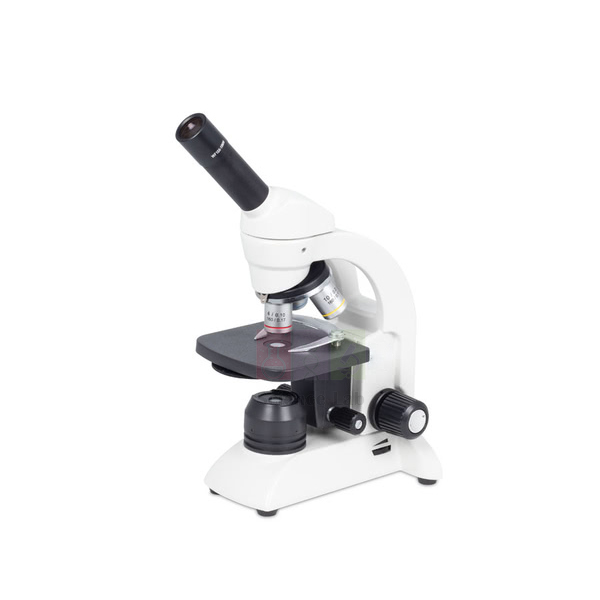
Monocular Microscope, 400x, LED
Monocular Microscope, 400x, LED (Product Code: SLE/M/97) is a cordless compound microscope used to study cells, tissues and micro-organisms up to 400x in junior and middle-school science classes. It is built with brass gears and mechanical parts for long classroom service, and pairs a gliding stage with LED lighting that runs from the mains or rechargeable batteries. This monocular microscope for schools in India and overseas is supplied by Jain Scientific Equipments Pvt Ltd (ScienceLab), Ambala, as part of its range of biology lab equipment in India.
Specifications
| Parameter | Detail |
|---|---|
| Viewing head | Monocular, 45° inclined, 360° rotation |
| Eyepiece | WF10X/18 mm with pointer |
| Nosepiece | Triple |
| Objectives | Achromatic, DIN: 4X, 10X and 40X (marked S) |
| Condenser | Built-in condenser lens, N.A. 0.65 |
| Filter | Built-in frosted glass |
| Stage | Gliding stage, 110 x 105 mm, with sample clips |
| Diaphragm | Disc diaphragm |
| Focusing | Separate coarse and fine adjustment; focus precision 2 µm; focusing stroke 8 mm |
| Illumination | LED with intensity control |
| Power | 110–220 V mains or rechargeable batteries |
| Mechanism | Brass gears and mechanical parts |
| Optics | Glass optics |
| Accessories included | Dust cover, charger, batteries, calibration slide |
| Product code | SLE/M/97 |
| Supplied by | Jain Scientific Equipments Pvt Ltd (ScienceLab), Ambala, India |
What Is the 400x LED Monocular Microscope Used For?
Teachers use it for the core practicals of junior biology: onion epidermis, cheek cells, stomata, pollen and pond-water organisms. Begin with the 4X objective, centre the specimen on the gliding stage, then turn the triple nosepiece to 10X and 40X and finish with the fine control. The frosted glass filter spreads the LED light evenly, and the intensity control lets pupils dim it for pale, unstained mounts.
A gliding stage lets pupils move the slide smoothly by hand, which is quicker for younger students than working a mechanical stage. Because the lighting also runs on rechargeable batteries, the microscope can be taken to a window bench, an outdoor lesson or a room without sockets, then recharged with the supplied charger after class. The included calibration slide helps students relate what they see to real size.
What to Specify When Ordering
- The number of microscopes needed per class or practical group
- Your mains voltage (the microscope is listed for 110–220 V and also runs on rechargeable batteries)
- Any extra slides, cover glasses or cleaning materials to be quoted in the same order
Supplier
Jain Scientific Equipments Private Limited, known to customers as ScienceLab, supplies this 400x LED monocular microscope from Ambala, Haryana. It is sourced for schools, coaching centres, colleges, dealers and importers in India and international markets that want a sturdy, battery-capable model for junior classes. Slides, cover glasses and cleaning materials can be added to the same quotation. Company background is on the ScienceLab profile page.
Related Laboratory Equipment
Consumables and alternatives commonly ordered with a 400x classroom microscope:
- Microscope Slides Glass — plain slides for pupils' own wet mounts
- Cover Glasses — to cover specimens before viewing with the 40X objective
- Basic Botany Slide Set — prepared plant sections for guided lessons
- Lens Tissue — for wiping the eyepiece and objectives without scratching
- Monocular Mirror Microscope, 400x — mirror-lit option for rooms without electricity
Compare other student models in the Microscope category.
Frequently Asked Questions
What accessories come with the Monocular Microscope, 400x, LED?
The Monocular Microscope, 400x, LED comes with a dust cover, a charger, batteries and a calibration slide. It can therefore be used on mains or on its rechargeable batteries straight away, and covered between lessons to keep dust off the optics.
Can the 400x LED monocular microscope work without mains power?
Yes. The Monocular Microscope, 400x, LED runs from 110–220 V mains or from rechargeable batteries, so it can be used in rooms without sockets or during power cuts. Recharge the batteries with the supplied charger after lessons so the microscope is ready next time.
What objectives are fitted to the Monocular Microscope, 400x, LED?
The Monocular Microscope, 400x, LED has achromatic DIN objectives of 4X, 10X and 40X on a triple nosepiece. Used with the WF10X/18 mm eyepiece, which has a pointer, they cover everything from low-power scanning to 400x detail of cells.
How fine is the focusing on this monocular microscope?
The Monocular Microscope, 400x, LED has separate coarse and fine adjustment, with a focus precision of 2 µm and an 8 mm focusing stroke. The fine control makes it easier for students to sharpen detail with the 40X objective without touching the slide.
Why does the microscope use brass gears?
Brass gears and mechanical parts are used in the Monocular Microscope, 400x, LED so that it lasts for many years in a school environment, where microscopes are handled daily by many students. Keeping the focusing controls clean and covered helps them turn smoothly.
Is a calibration certificate available for the Monocular Microscope, 400x, LED?
A calibration slide is included with the Monocular Microscope, 400x, LED, but a calibration certificate is not listed. If your institution needs any documentation with the order, please discuss it with us through the contact page before we prepare the quotation.
Who supplies the Monocular Microscope, 400x, LED?
Jain Scientific Equipments Pvt Ltd (ScienceLab), Ambala, Haryana, India, supplies the Monocular Microscope, 400x, LED (SLE/M/97) to schools, colleges, dealers and importers in India and international markets, with slides and other microscopy consumables available in the same order.
Request a Quote
For a quotation on the Monocular Microscope, 400x, LED, send the quantity and delivery location through our contact page, or place it in the enquiry cart together with slides and other lab items. We reply with a consolidated quotation.
Last updated: 24 September 2026
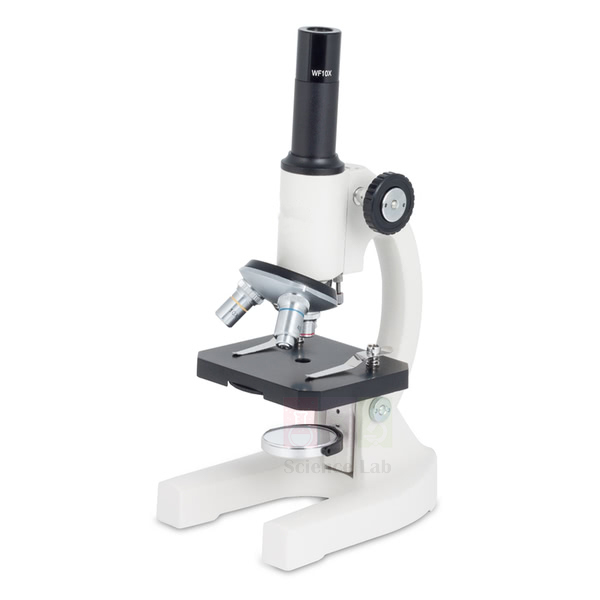
Monocular Mirror Microscope, 400x
Monocular Mirror Microscope, 400x (Product Code: SLE/M/98) is a mirror-lit compound microscope used to introduce elementary pupils and hobby users to microscopy, up to 400x, in classrooms and outdoors. It needs no electricity: a removable plano-concave mirror directs daylight or lamp light through the specimen, and a large gripping area makes it easy for small hands to carry. This compound microscope for primary schools in India and abroad is supplied by Jain Scientific Equipments Pvt Ltd (ScienceLab), Ambala, India.
Specifications
| Parameter | Detail |
|---|---|
| Head | Vertical monocular head, can be tilted to 45° |
| Eyepiece | Widefield WF10X/14 mm with built-in pointer |
| Nosepiece | Revolving triple nosepiece with positive click stops |
| Objectives | 4X/0.10, 10X/0.25, 40X/0.65; parcentric and parfocal |
| Focusing | Spring coarse focusing adjustment |
| Stage | 88 x 82 mm with stage clips |
| Diaphragm | Rotating disc diaphragm |
| Illumination | Removable plano-concave mirror (no power needed) |
| Handling | Large gripping area for carrying in class and outdoors |
| Intended users | Elementary school and hobby users |
| Product code | SLE/M/98 |
| Supplied by | Jain Scientific Equipments Pvt Ltd (ScienceLab), Ambala, India |
What Is the Mirror Microscope Used For?
This is a first microscope for children who have never used one. Tilt the head to a comfortable angle, turn the mirror towards a window or desk lamp until the field is evenly bright, and focus with the 4X objective before clicking round to 10X and 40X. Because the objectives are parfocal and parcentric, the specimen stays close to focus and near the centre when the nosepiece is turned, so young users lose their place less often.
The plano-concave mirror gives a choice of surfaces: the flat side for strong light such as a bright window, the concave side to gather more light from a weak or nearby source. With no cable or batteries, the microscope suits rural schools, field trips and rooms without power, while the rotating disc diaphragm helps control contrast on thin plant and pond specimens.
Supplier
ScienceLab, the trading name of Jain Scientific Equipments Private Limited in Ambala, Haryana, supplies this mirror microscope for primary schools, science clubs, NGOs, dealers and importers across India and international markets. Its simple, power-free design makes it a practical choice where electricity is unreliable, and it can be quoted with slides and cover glasses in one order. See the company profile for more about ScienceLab.
Related Laboratory Equipment
Items that help young learners get the most from a mirror microscope:
- Microscope Slides Depression — cavity slides that hold a drop of pond water
- Microscope Slide Cover Forceps — for lowering cover slips without trapping air
- Plant Cell Study Kit — a plant-cell activity to pair with first microscope lessons
- Microscope Case — for storing and carrying a microscope between lessons
- Monocular Microscope, 400x, LED — LED-lit alternative with rechargeable batteries
See all student and research models in the Microscope category.
Frequently Asked Questions
Does the Monocular Mirror Microscope, 400x need electricity?
No. The Monocular Mirror Microscope, 400x is lit by a removable plano-concave mirror that reflects daylight or lamp light up through the specimen. It needs no cable or batteries, which suits rooms without sockets, outdoor lessons and schools with unreliable power.
What objectives does the mirror microscope have?
The Monocular Mirror Microscope, 400x has 4X/0.10, 10X/0.25 and 40X/0.65 objectives on a revolving triple nosepiece with positive click stops, used with a WF10X/14 mm eyepiece. The highest combination reaches 400x, enough to see plant cells and many pond organisms.
Why are parfocal and parcentric objectives useful for children?
Parfocal and parcentric objectives on the Monocular Mirror Microscope, 400x keep the specimen close to focus and near the centre of the field when the nosepiece is turned. Young users therefore spend less time searching for the specimen after changing magnification.
How big is the stage on the Monocular Mirror Microscope, 400x?
The Monocular Mirror Microscope, 400x has an 88 mm x 82 mm stage with stage clips to hold the slide. Pupils move the slide by hand, and a rotating disc diaphragm below the stage adjusts how much light reaches the specimen.
Is the mirror microscope suitable for outdoor use?
Yes. The Monocular Mirror Microscope, 400x was designed with a large gripping area so it is easy to carry around the classroom and outdoors. Because it uses a mirror instead of a lamp, it works wherever there is enough daylight.
Who supplies the Monocular Mirror Microscope, 400x?
Jain Scientific Equipments Pvt Ltd, trading as ScienceLab from Ambala, Haryana, India, supplies the Monocular Mirror Microscope, 400x (SLE/M/98) to primary schools, science clubs, dealers and importers in India and international markets. Send your quantity through the contact page for a quotation.
Request a Quote
To receive a quotation for the Monocular Mirror Microscope, 400x, write to us through the contact page with your quantity and delivery address, or add it to the enquiry cart. Slides, cover glasses and cases can be included in the same enquiry.
Last updated: 24 September 2026
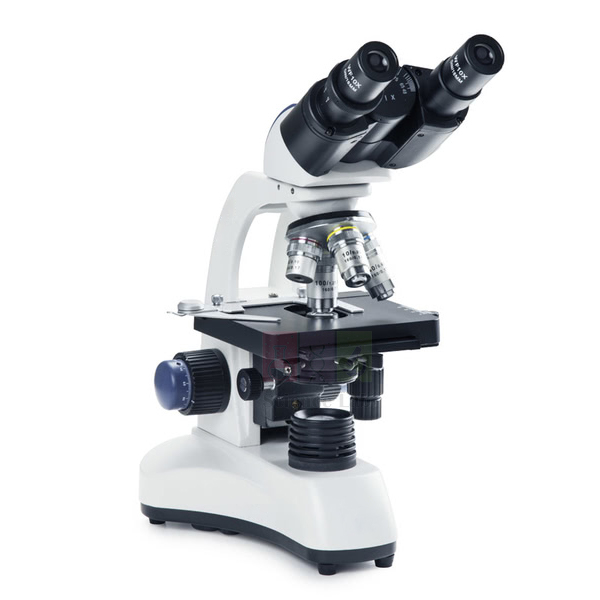
Binocular Microscope, 1000x
Binocular Microscope, 1000x (Product Code: SLE/M/99) is a cordless compound microscope used to examine stained slides, smears and bacteria at up to 1000x in school, college and training laboratories. It pairs achromatic 4/10/S40/S100x oil objectives with 1 W illumination that runs on rechargeable batteries, so it keeps working away from a mains socket. This binocular compound microscope for classrooms in India and abroad is supplied by Jain Scientific Equipments Pvt Ltd (ScienceLab), Ambala, India.
Specifications
| Parameter | Detail |
|---|---|
| Head | Binocular, rotatable 360° |
| Eyepieces | Wide field WF10x/18 mm, without pointer |
| Tubes | 30° inclined |
| Interpupillary distance | Adjustable, 48–75 mm |
| Diopter adjustment | ±5 diopter on left tube |
| Objectives | Achromatic 4x, 10x, S40x and S100x oil; S40x and S100x spring loaded |
| Nosepiece | Revolving, for four objectives, on ball bearings |
| Focusing | Coaxial coarse and fine; 200 graduations; 12.5 µm per graduation; 2.5 mm per rotation; total travel approx. 15 mm; adjustable rack stop |
| Stage | Plain mechanical stage, 123 x 119 mm; X-Y travel range 70 x 27 mm; two non-removable object clamps |
| Condenser | Abbe, N.A. 1.25, with iris diaphragm and filter holder; helicoidal height adjustment |
| Illumination | 1 W, cordless |
| Power | Rechargeable batteries; external 100–240 V AC mains/charger adapter |
| Optics | Anti-fungus treated and anti-reflection coated |
| Stand | Ergonomic |
| Product code | SLE/M/99 |
| Supplied by | Jain Scientific Equipments Pvt Ltd (ScienceLab), Ambala, India |
What Is the 1000x Cordless Binocular Microscope Used For?
At the highest magnification students can resolve bacteria, blood cells and fine detail in stained preparations, while the 4x and 10x objectives are used to scan onion epidermis, cheek cells, pond water or prepared tissue slides. Because the illumination runs from rechargeable batteries, the microscope can be used in rooms without bench sockets, during a power cut or at an outreach session, then recharged through the external adapter.
Set the interpupillary distance first, then correct the left eyepiece with the diopter ring so both eyes see one sharp image. The adjustable rack stop limits how far the stage rises, which helps keep the spring-loaded S40x and S100x objectives off the coverslip. Place a drop of immersion oil on the slide before swinging in the S100x, wipe the lens clean afterwards, and close the iris diaphragm a little to add contrast to pale specimens.
Supplier
Jain Scientific Equipments Private Limited, which trades as ScienceLab, supplies the cordless Binocular Microscope, 1000x from Ambala, Haryana, to schools, colleges, nursing and paramedical training institutes, dealers and importers in India and international markets. Battery-powered binocular models suit institutions where bench power is limited or where microscopes move between rooms. Background on the company is on our company profile page.
Related Laboratory Equipment
Consumables and alternatives that support oil-immersion work with this microscope:
- Immersion Oil, 25ml — required with the S100x oil objective
- Microscope Slides Glass — blank slides for smears and wet mounts
- Cover Glasses — to cover mounts before high-power viewing
- Lens Tissue — for removing oil from the objective after use
- Binocular Microscope, 1000x, LED Illumination — alternative with plan objectives and phase contrast
Compare other models in the Microscope category.
Frequently Asked Questions
Is the Binocular Microscope, 1000x cordless?
Yes. The Binocular Microscope, 1000x (SLE/M/99) has 1 W cordless illumination powered by rechargeable batteries, with an external 100–240 V AC mains/charger adapter. That makes it practical where bench sockets are few or where the microscope is carried between rooms.
Which objectives are fitted to the Binocular Microscope, 1000x?
The Binocular Microscope, 1000x carries four achromatic objectives, 4x, 10x, S40x and S100x oil, on a revolving nosepiece with ball bearings. Used with the WF10x/18 mm eyepieces, the S100x oil objective gives the 1000x maximum, and the S40x and S100x are spring loaded.
How fine is the focusing on this binocular microscope?
Focusing on the Binocular Microscope, 1000x is coaxial coarse and fine, with 200 graduations of 12.5 µm each, 2.5 mm per rotation and roughly 15 mm of total travel. An adjustable rack stop limits stage travel to help protect slides and objectives.
What stage does the Binocular Microscope, 1000x have?
The Binocular Microscope, 1000x has a plain mechanical stage of 123 x 119 mm with an X-Y travel range of 70 x 27 mm and two non-removable object clamps. Clamps that cannot be removed cannot be mislaid, which suits shared classroom microscopes.
How is the Binocular Microscope, 1000x adjusted for each user?
Each user of the Binocular Microscope, 1000x sets the interpupillary distance between 48 and 75 mm and uses the ±5 diopter adjustment on the left tube. The head rotates through 360°, so it can be turned towards a student or demonstrator across the bench.
Who supplies the Binocular Microscope, 1000x?
Jain Scientific Equipments Pvt Ltd, trading as ScienceLab in Ambala, Haryana, India, supplies the Binocular Microscope, 1000x (SLE/M/99) to schools, colleges, training institutes, dealers and importers in India and international markets. Quotations are prepared on request through the contact page.
What should a quotation request for this microscope include?
A quotation request for the Binocular Microscope, 1000x should state product code SLE/M/99, the number of microscopes, the delivery destination and whether immersion oil, blank slides or cover glasses should be quoted with it, so the whole bench set can be quoted in one reply.
Request a Quote
Send your quantity and delivery details for the Binocular Microscope, 1000x through our contact page, or place it in the enquiry cart together with oil, slides and cleaning supplies for one combined quotation.
Last updated: 24 September 2026
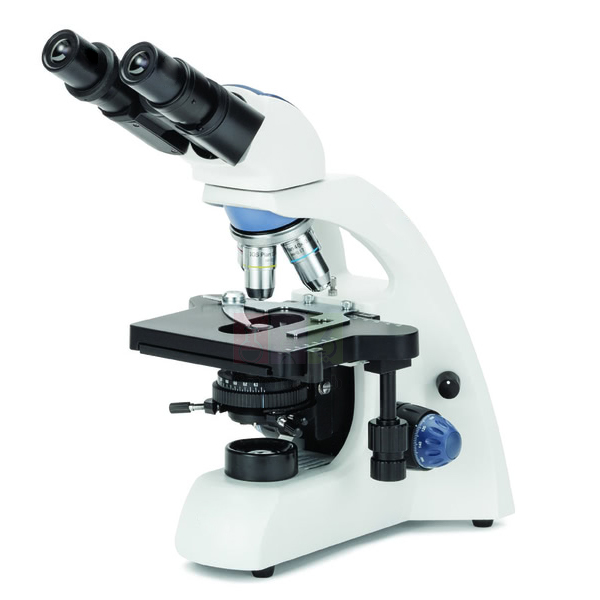
Binocular Microscope, 1000x, LED Illumination
Binocular Microscope, 1000x, LED Illumination (Product Code: SLE/M/100) is an advanced teaching microscope used for brightfield and phase contrast observation of live cells, bacteria and tissues up to 1000x in college and research-training laboratories. It carries plan objectives, a large 150 x 140 mm rackless stage and a Zernike phase contrast kit with a four-annulus rotating disc. This phase contrast microscope for labs in India and abroad is supplied by Jain Scientific Equipments Pvt Ltd (ScienceLab), Ambala, a laboratory instruments supplier in India.
Specifications
| Parameter | Detail |
|---|---|
| Objectives | Plan IOS 4x, 10x, S40x and S100x oil; S40x and S100x spring loaded |
| Nosepiece | Reversed quadruple, on ball bearings |
| Eyepieces | WF10x/20 mm |
| Tubes | Binocular, 30° inclined, Ø 30 mm |
| Head | 360° rotatable, secured with a screw |
| Interpupillary distance | 48–75 mm |
| Diopter adjustment | ±5 on left tube |
| Stage | 150 x 140 mm with integrated rackless X-Y mechanical stage, 75 x 30 mm travel |
| Focusing | Coaxial coarse and fine; 200 graduations; 1.5 µm per graduation; 0.3 mm per rotation; total travel approx. 28 mm; friction control on coarse adjustment |
| Rack stop | Adjustable rack stop supplied |
| Condenser | Abbe, N.A. 1.25, with iris diaphragm and filter holder; height adjustable |
| Phase contrast | Zernike kit with IOS objectives, rotating phase contrast disc with four annuli, centering telescope and green filter |
| Illumination | Adjustable 3 W LED illumination system |
| Optics | Anti-fungus treated and anti-reflection coated |
| Handling | Ergonomic carrying grip |
| Product code | SLE/M/100 |
| Supplied by | Jain Scientific Equipments Pvt Ltd (ScienceLab), Ambala, India |
What Is the 1000x Binocular LED Microscope Used For?
Phase contrast turns transparent, unstained specimens such as living protozoa, cheek cells, yeast or cultured cells into visible light-and-dark images without staining them. To set it up, bring the annulus that matches the objective in use under the condenser, check the ring alignment through the centering telescope, and add the green filter for a crisper image. For stained slides, work in ordinary brightfield and control contrast with the iris diaphragm.
Fine focus at 1.5 µm per graduation matters at 1000x, where the depth of field is very shallow, and the friction control lets each user set how firmly the coarse knob turns. The wide stage with 75 x 30 mm of travel makes it easy to scan a whole smear. Put a drop of immersion oil on the slide before rotating in the spring-loaded S100x plan objective, and wipe the lens clean afterwards.
Supplier
Jain Scientific Equipments Private Limited, trading as ScienceLab, supplies this phase contrast binocular microscope from Ambala, Haryana, for universities, life-science colleges, research-training labs, dealers and importers in India and international markets. Because it combines plan optics, brightfield and phase contrast in one instrument, it is often quoted for departments that need a single versatile teaching microscope. See our company profile for background on ScienceLab.
Related Laboratory Equipment
Consumables and accessories that support high-power and phase contrast work:
- Immersion Oil, 25ml — needed with the S100x plan objective
- Mitosis & Meiosis Set, Microscope Slides — prepared slides for high-power brightfield study
- Microscope Slide Warming Table — dries freshly made smears before examination
- Microscope Slide Case — organised storage for the department's slide collection
- Binocular Microscope, 1000x — cordless alternative with achromatic objectives
Browse the full Microscope category for other research and student models.
Frequently Asked Questions
Does the Binocular Microscope, 1000x, LED Illumination include phase contrast?
Yes. The Binocular Microscope, 1000x, LED Illumination is listed with a Zernike phase contrast kit: IOS objectives, a rotating phase contrast disc with four annuli, a centering telescope and a green filter. It lets users study unstained living specimens as well as stained slides.
What objectives does this binocular microscope use?
The Binocular Microscope, 1000x, LED Illumination uses plan IOS objectives of 4x, 10x, S40x and S100x oil on a reversed quadruple nosepiece with ball bearings. Plan objectives keep the image flat to the edge of the field, which helps when drawing or photographing specimens.
How precise is the focusing on the Binocular Microscope, 1000x, LED Illumination?
Focusing on the Binocular Microscope, 1000x, LED Illumination is coaxial, with 200 graduations, 1.5 µm per graduation and 0.3 mm per rotation over roughly 28 mm of travel. The coarse control has friction adjustment, and an adjustable rack stop is supplied to help protect slides.
How large is the stage on this microscope?
The Binocular Microscope, 1000x, LED Illumination has a 150 x 140 mm stage with an integrated rackless X-Y mechanical stage giving 75 x 30 mm of travel. A rackless design has no protruding rack, so it is less likely to catch on sleeves or get knocked.
What illumination does the Binocular Microscope, 1000x, LED Illumination have?
The Binocular Microscope, 1000x, LED Illumination has an adjustable 3 W illumination system. Users set the brightness for each objective, and the Abbe condenser (N.A. 1.25) with iris diaphragm and filter holder is height adjustable for fine control of the light.
What should a quotation request for this microscope include?
When requesting a quote for the Binocular Microscope, 1000x, LED Illumination, mention product code SLE/M/100, the quantity, your mains voltage, the delivery destination and whether you also need immersion oil, slides or lens-cleaning supplies. This lets us quote everything in one reply.
Who supplies the Binocular Microscope, 1000x, LED Illumination?
Jain Scientific Equipments Pvt Ltd, trading as ScienceLab in Ambala, Haryana, India, supplies the Binocular Microscope, 1000x, LED Illumination (SLE/M/100) to colleges, universities, research-training labs, dealers and importers in India and international markets. Quotations are prepared on request through the contact page.
Request a Quote
Ask for a quotation on the Binocular Microscope, 1000x, LED Illumination through our contact page, giving the number of instruments and delivery details, or add it to the enquiry cart alongside oil, slides and other laboratory items.
Last updated: 24 September 2026
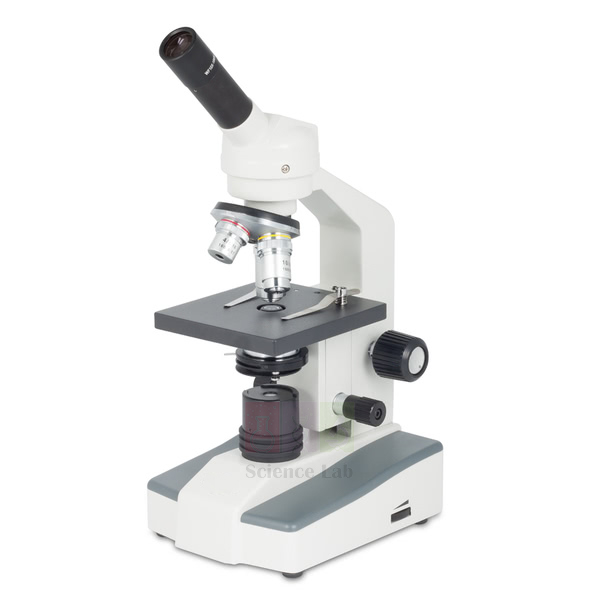
Monocular Microscope, 400x
Monocular Microscope, 400x (Product Code: SLE/M/101) is a mains-powered student microscope used to examine prepared and fresh slides up to 400x in secondary-school and college biology practicals. Its focusable Abbe condenser (N.A. 1.25) and LED lighting with intensity control give students more control over illumination than a fixed-condenser model. This school microscope for India and export markets is supplied by Jain Scientific Equipments Pvt Ltd (ScienceLab), Ambala, India.
Specifications
| Parameter | Detail |
|---|---|
| Head | Monocular, 45° inclined, 360° rotation |
| Eyepiece | WF10X/18 mm with pointer |
| Nosepiece | Triple |
| Objectives | Achromatic, DIN: 4X, 10X/0.25, 40X/0.65/S |
| Condenser | Focusable Abbe condenser, N.A. 1.25 |
| Filter | Built-in frosted glass |
| Stage | 110 x 110 mm plane stage with sample clips |
| Diaphragm | Disc diaphragm |
| Focusing | Separate coarse and fine adjustment; focus precision 2 µm; focusing stroke 7 mm |
| Illumination | LED with intensity control |
| Power | 100–220 V mains |
| Included | Dust cover |
| Product code | SLE/M/101 |
| Supplied by | Jain Scientific Equipments Pvt Ltd (ScienceLab), Ambala, India |
What Is the 400x Monocular Microscope Used For?
Secondary-school syllabuses call for slides of plant and animal cells, root-tip mitosis, stomata and simple micro-organisms, and this microscope covers all of them at up to 400x. Place the slide under the sample clips on the 110 x 110 mm plane stage, focus with the 4X objective using the coarse control, then move to 10X and 40X and finish with the fine control, which works to a precision of 2 µm.
Raise or lower the focusable Abbe condenser and turn the disc diaphragm to balance brightness and contrast: stained sections usually need more light, while thin unstained mounts show better with the condenser lowered and a smaller aperture. The 40X/0.65/S objective is spring-loaded, so it gives way if it touches a slide by mistake. Cover the microscope with the supplied dust cover after class.
What to Specify When Ordering
- The number of microscopes for the class or lab
- Your mains voltage (listed as 100–220 V; this model has no battery option)
- Slides, cover slips and prepared slide sets to be quoted with the microscopes
Supplier
ScienceLab is the trading name of Jain Scientific Equipments Private Limited, which supplies this 400x monocular microscope from Ambala, Haryana, to secondary schools, junior colleges, training institutes, dealers and importers in India and international markets. Schools equipping a biology room for the first time often combine it with prepared slide sets and slide storage in the same order. Company information is on the ScienceLab profile.
Related Laboratory Equipment
Slides, storage and an alternative model to consider with this microscope:
- Prepared Microscope Slide Set – Key Stage 4 Biology — prepared slides for secondary biology topics
- Microscope Glass Slides — for students' own temporary mounts
- Glass Cover Slips, No. 1 — thin covers for wet mounts viewed at 40X
- Slide Box — keeps prepared and student slides organised
- Monocular Microscope, 400x, LED Illumination — cordless alternative on rechargeable batteries
More student microscopes are listed in the Microscope category.
Frequently Asked Questions
Does the Monocular Microscope, 400x run on batteries?
No. The Monocular Microscope, 400x is listed for 100–220 V mains power only, with LED illumination and intensity control. For rooms without reliable sockets, a cordless model with rechargeable batteries from the same range may suit better, so ask us to compare the options.
What condenser does the Monocular Microscope, 400x have?
The Monocular Microscope, 400x has a focusable Abbe condenser with N.A. 1.25 and a disc diaphragm under the stage. Moving the condenser up or down lets students adjust brightness and contrast for stained and unstained specimens alike.
How precise is the focusing on the Monocular Microscope, 400x?
The Monocular Microscope, 400x uses separate coarse and fine focusing controls, with a focus precision of 2 µm and a focusing stroke of 7 mm. Students use the fine control for final sharpening when working with the 40X objective.
What is included with the Monocular Microscope, 400x?
The Monocular Microscope, 400x is supplied with a dust cover. Slides, cover slips and prepared slide sets are not part of the listing, but they can be quoted in the same order so the microscope is ready to use on arrival.
Does the eyepiece of the Monocular Microscope, 400x have a pointer?
Yes. The Monocular Microscope, 400x has a WF10X/18 mm eyepiece with a pointer. A teacher can place the pointer on a nucleus or cell wall and ask each student to identify it, which makes group teaching quicker.
Who supplies the Monocular Microscope, 400x?
Jain Scientific Equipments Pvt Ltd (ScienceLab), based in Ambala, Haryana, India, supplies the Monocular Microscope, 400x (SLE/M/101) to schools, colleges, dealers and importers in India and international markets. Share your quantity and delivery location through the contact page for a quotation.
Request a Quote
Request a quotation for the Monocular Microscope, 400x on our contact page with the number of units and your delivery location, or collect it with slides and other items in the enquiry cart and send one combined enquiry.
Last updated: 24 September 2026
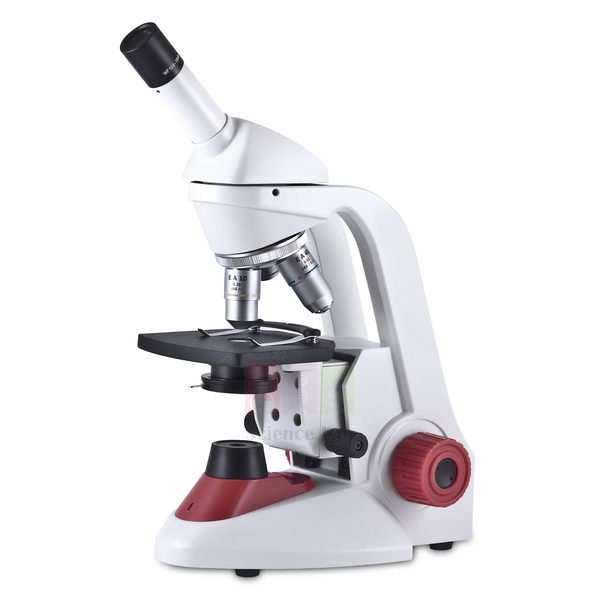
Monocular Microscope, LED
Monocular Microscope, LED (Product Code: SLE/M/102) is a finite-optics (160 mm) compound microscope used for student slide work with 4X, 10X and 40X achromatic objectives in school and college laboratories. Its RMS-standard objective thread, reversed quadruple nosepiece and adjustable upper limit stop suit shared classroom use, and it runs on mains or rechargeable batteries. This monocular microscope for teaching labs in India and abroad is supplied by Jain Scientific Equipments Pvt Ltd (ScienceLab), Ambala, India.
Specifications
| Parameter | Detail |
|---|---|
| Optical system | Finite optical system, 160 mm |
| Observation tube | Monocular, 45° inclined, 360° rotating |
| Eyepiece | WF 10X/18 mm with pointer, lockable |
| Nosepiece | Reversed quadruple revolving nosepiece with click stops |
| Objectives | EA achromatic, DIN: 4X/0.10, 10X/0.25, 40X/0.65/S |
| Objective thread | W 4/5" x 1/36" (RMS standard) |
| Stage | Gliding stage with "one-touch" sample clips, 110 x 110 mm |
| Upper limit stop | Preset but adjustable |
| Condenser | Built-in Abbe condenser, 0.65 N.A., with iris diaphragm |
| Focus mechanism | Separate coarse and fine focusing with tension adjustment; fine focus 2 µm minimum increment; Z-axis movement 13 mm |
| Illumination | LED 20 mA, 3.5 V, 70 mW with intensity control; external transformer |
| Power supply | Charger 100–240 V or rechargeable batteries |
| Size (L x W x H) | 234 x 152 x 334 (unit not stated in the listing; confirm with us) |
| Weight | 4.7 kg |
| Accessories included | Dust cover, charger and batteries |
| Product code | SLE/M/102 |
| Supplied by | Jain Scientific Equipments Pvt Ltd (ScienceLab), Ambala, India |
What Is the LED Monocular Microscope Used For?
It handles the standard range of school and first-year college slides: plant and animal cells, tissue sections, yeast and protozoa at low and medium power. Set the upper limit stop once so that the stage cannot be raised into the 40X objective, which protects slides when many students share one instrument. The lockable eyepiece stays in place, keeping dust out of the tube and the pointer where the teacher needs it.
The 13 mm Z-axis movement and tension-adjustable coarse focus let each user set a comfortable feel, while the fine control moves in steps as small as 2 µm. Objectives use the RMS thread, a common standard for finite 160 mm microscopes, and the quadruple nosepiece carries the three listed objectives with one position spare. At 4.7 kg the microscope sits firmly on the bench yet can still be carried to the store room.
What to Specify When Ordering
- Quantity per class or lab
- Whether mains (charger 100–240 V) or battery operation will be the main use
- Any additional objective for the spare nosepiece position (ask us about availability)
- Slides, cover glasses and prepared sets needed with the order
Supplier
Jain Scientific Equipments Private Limited, which trades as ScienceLab, supplies this LED monocular microscope from Ambala, Haryana. Its finite 160 mm optics and RMS objective thread make it a practical choice for schools, colleges, laboratories, dealers and importers in India and international markets who prefer parts that follow a common standard. More about the company is on the ScienceLab profile page.
Related Laboratory Equipment
Slides, cleaning supplies and a camera-equipped alternative for this microscope:
- Micrometric Slide — a scale slide for calibrating size measurements
- Prepared Microscope Slide Set – Circulatory System — prepared sections for study with the 40X objective
- Cover Glasses — for covering fresh wet mounts
- Lens Tissue — lint-free cleaning of the eyepiece and objectives
- Digital Monocular Microscope, 400x — similar LED microscope with a built-in Wi-Fi camera
Other models are listed in the Microscope category.
Frequently Asked Questions
What power supply does the Monocular Microscope, LED use?
The Monocular Microscope, LED runs from a 100–240 V charger or from rechargeable batteries, with an external transformer. The charger and batteries are included, together with a dust cover, so the microscope can be used on mains or cordless from the first lesson.
What objectives come with the Monocular Microscope, LED?
The Monocular Microscope, LED comes with EA achromatic DIN objectives of 4X/0.10, 10X/0.25 and 40X/0.65/S, mounted on a reversed quadruple revolving nosepiece with click stops. The objectives use the RMS standard thread, W 4/5" x 1/36".
What is the upper limit stop for?
The upper limit stop on the Monocular Microscope, LED is preset but adjustable. It stops the stage rising beyond a set height, so a student focusing with the 40X objective is less likely to press the lens into the slide.
How heavy is the Monocular Microscope, LED?
The Monocular Microscope, LED weighs 4.7 kg, and its listed size is 234 x 152 x 334 (length x width x height). That weight keeps it steady on the bench while still allowing students to carry it between the store room and the lab.
What light source does the Monocular Microscope, LED use?
The Monocular Microscope, LED uses an LED rated 20 mA, 3.5 V, 70 mW with intensity control, feeding a built-in 0.65 N.A. Abbe condenser with an iris diaphragm. A low-power LED runs cool, which is kinder to living specimens than a hot bulb.
Who supplies the Monocular Microscope, LED?
Jain Scientific Equipments Pvt Ltd, trading as ScienceLab in Ambala, Haryana, India, supplies the Monocular Microscope, LED (SLE/M/102) to schools, colleges, laboratories, dealers and importers in India and international markets. Contact us with your quantity and delivery location for a quotation.
Request a Quote
To get a quotation for the Monocular Microscope, LED, use our contact page to send the quantity and delivery address, or add it to the enquiry cart with any slides and accessories you need.
Last updated: 24 September 2026
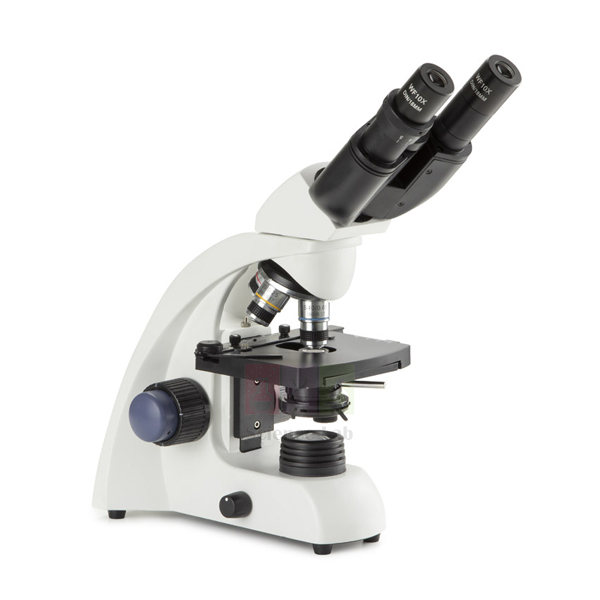
Binocular Microscope 400x, LED Illumination
Binocular Microscope 400x, LED Illumination (Product Code: SLE/M/103) is a cordless LED compound microscope used for viewing prepared slides, wet mounts and stained smears in school biology labs, college practicals and field teaching. Its 45° inclined binocular head carries a pointer eyepiece so a teacher can mark a feature for students, and a replaceable 1 W LED runs from internal rechargeable batteries. This compound microscope for schools in India is supplied by Jain Scientific Equipments Pvt Ltd (ScienceLab), Ambala, as part of its school biology lab equipment in India.
Specifications
| Parameter | Detail |
|---|---|
| Head | Binocular, secured, rotatable 360° |
| Eyepiece | Wide field WF10x/18 mm, secured, with pointer |
| Tubes | 45° inclined |
| Interpupillary distance | Adjustable, 48–75 mm |
| Diopter adjustment | ±5 diopter on left tube |
| Objectives | Four reversed DIN 35 mm achromatic objectives: 4x/0.10, 10x/0.25, S40x/0.65 and S100x oil immersion; S40x and S100x spring loaded |
| Nosepiece | Revolving, on ball bearings |
| Condenser | Abbe, N.A. 1.25, with iris diaphragm and filter holder |
| Stage | 115 x 100 mm with integrated 55 x 20 mm X-Y mechanical stage |
| Focusing | Coaxial coarse and fine; 200 graduations; 15 µm per graduation; 3 mm per rotation; total travel approx. 15 mm; adjustable rack stop; height adjustable |
| Illumination | LED, replaceable 1 W illumination system |
| Power | Internal rechargeable batteries for cordless operation; external 100–240 V AC mains/charger adapter |
| Optics | Anti-fungus treated and anti-reflection coated |
| Handling | Ergonomic carrying grip |
| Product code | SLE/M/103 |
| Supplied by | Jain Scientific Equipments Pvt Ltd (ScienceLab), Ambala, India |
What Is the 400x Binocular LED Microscope Used For?
Teaching labs use this microscope for the core practicals of a school or first-year college biology course: plant and animal cells, stomata, root and stem sections, protozoa in pond water and stained smears. The 4x/0.10 and 10x/0.25 objectives locate and frame the specimen, and the S40x/0.65 brings out cell detail such as nuclei and chloroplasts. The pointer lets a teacher show a class exactly which structure to look at.
Cordless operation from internal batteries means the microscope can be set up on any table or taken outside for field work, and the external adapter recharges it between lessons. Keep the rack stop set so the stage cannot push a slide into the spring-loaded S40x or S100x, and use immersion oil only with the S100x. Store it covered and dry: the optics are anti-fungus treated, but damp and dust still degrade lenses over time.
What to Specify When Ordering
- The number of microscopes needed for your benches or student groups
- Confirmation of the objective set: the listing is named 400x but includes an S100x oil immersion objective
- Whether immersion oil, blank slides and cover slips should be quoted with the microscopes
Supplier
ScienceLab is the trading name of Jain Scientific Equipments Private Limited in Ambala, Haryana. The company supplies this LED binocular microscope to schools, colleges, teacher-training centres, science outreach programmes, dealers and importers in India and international markets, and can quote it together with slides and other biology consumables. More about the company is on our company profile page.
Related Laboratory Equipment
Slides, cleaning supplies and an alternative model for the same practicals:
- Beginners Microscope Slide Set — prepared slides for first microscope practicals
- Microscope Glass Slides — blank slides for students' own wet mounts
- Glass Cover Slips — to cover wet mounts before viewing
- Microfiber Lens Cloth — for wiping eyepieces and objectives
- Monocular Microscope, 400x, LED Illumination — single-eyepiece alternative for junior classes
Browse more student and teaching models in the Microscope category.
Frequently Asked Questions
Which objectives does the Binocular Microscope 400x, LED Illumination have?
The Binocular Microscope 400x, LED Illumination has four reversed DIN 35 mm achromatic objectives, 4x/0.10, 10x/0.25, S40x/0.65 and S100x oil immersion, on a revolving nosepiece with ball bearings. The S40x and S100x are spring loaded to help protect the lens and the slide.
Why does this 400x microscope list an S100x oil objective?
The Binocular Microscope 400x, LED Illumination is named as a 400x model, but its listed objective set also includes an S100x oil immersion objective. Please confirm the exact objective configuration and maximum magnification with us through the contact page before ordering.
How long does the battery of the Binocular Microscope 400x, LED Illumination last?
Battery running time for the Binocular Microscope 400x, LED Illumination is not listed. It runs cordless from internal rechargeable batteries powering a replaceable 1 W illumination system and recharges through the external 100–240 V AC adapter; ask us through the contact page for current details.
What stage and focusing does this binocular microscope have?
The Binocular Microscope 400x, LED Illumination has a 115 x 100 mm stage with an integrated 55 x 20 mm X-Y mechanical stage. Focusing is coaxial coarse and fine, with 200 graduations of 15 µm, 3 mm per rotation, about 15 mm of travel and an adjustable rack stop.
How is the binocular head of this microscope set up?
The Binocular Microscope 400x, LED Illumination has a secured head that rotates through 360°, 45° inclined tubes and a WF10x/18 mm eyepiece with pointer. Interpupillary distance adjusts from 48 to 75 mm, and the left tube has ±5 diopter adjustment.
Who supplies the Binocular Microscope 400x, LED Illumination?
Jain Scientific Equipments Pvt Ltd, trading as ScienceLab in Ambala, Haryana, India, supplies the Binocular Microscope 400x, LED Illumination (SLE/M/103) to schools, colleges, training centres, dealers and importers in India and international markets. Quotations are prepared on request.
Request a Quote
For a quotation on the Binocular Microscope 400x, LED Illumination, send the quantity, delivery location and any slides or accessories needed through our contact page, or add the microscope to the enquiry cart and submit it with the rest of your list.
Last updated: 24 September 2026
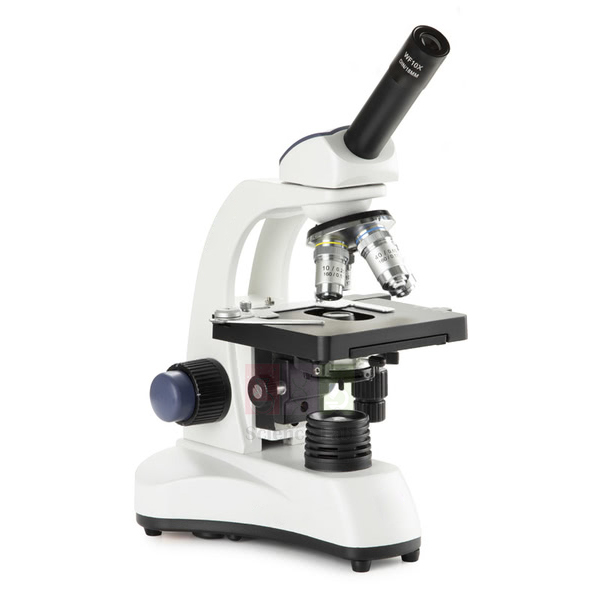
Monocular Microscope, 1000x, LED Illumination
Monocular Microscope, 1000x, LED Illumination (Product Code: SLE/M/104) is a single-eyepiece compound microscope used to reach oil-immersion magnification for bacteria, blood smears and fine cell detail in school, college and training laboratories. It offers four achromatic objectives up to S100x oil, a 123 x 119 mm mechanical stage with 70 x 27 mm X-Y travel and cordless 1 W LED lighting. This compound microscope for labs in India and abroad is supplied by Jain Scientific Equipments Pvt Ltd (ScienceLab), Ambala, India.
Specifications
| Parameter | Detail |
|---|---|
| Eyepiece | Wide field WF 10x/18 mm with pointer |
| Tube and head | Monocular, 45° inclined; head rotatable 360° |
| Nosepiece | Revolving, four objectives, on ball bearings |
| Objectives | Achromatic 4x, 10x, S40x and S100x oil; S40x and S100x spring loaded |
| Focusing | Coaxial coarse and fine; 200 graduations; 12.5 µm per graduation; 2.5 mm per rotation; total travel approx. 15 mm; adjustable rack stop |
| Condenser | Abbe, N.A. 1.25, with iris diaphragm and filter holder; helicoidal adjustment; height adjustable |
| Stage | Plain mechanical stage 123 x 119 mm; X-Y travel 70 x 27 mm; two non-removable object clamps |
| Illumination | 1 W LED, cordless, with integrated power supply |
| Power | Rechargeable batteries; external 100–240 V AC mains/charger adapter |
| Optics | Anti-fungus treated and anti-reflection coated |
| Stand | Ergonomic stand |
| Product code | SLE/M/104 |
| Supplied by | Jain Scientific Equipments Pvt Ltd (ScienceLab), Ambala, India |
What Is the 1000x Monocular Microscope Used For?
This model brings oil-immersion work (Gram-stained bacteria, blood smears, chromosome detail) to benches where a single eyepiece is preferred, for example in school labs where the teacher uses the eyepiece pointer to show each student the same structure. Find the area at 4x, centre it with the X-Y controls, move through 10x and S40x, then add a drop of immersion oil and rotate in the S100x objective, focusing only with the fine control.
Fine focus moves 12.5 µm per graduation and 2.5 mm per full turn, and the adjustable rack stop limits upward travel to protect slides and the spring-loaded high-power objectives. At 100x, raise the helicoidal Abbe condenser (N.A. 1.25) close to the slide and open the iris diaphragm for the brightest, sharpest image. Because the LED and power supply are built in and battery-driven, the microscope can be used on any bench and recharged afterwards.
Supplier
Jain Scientific Equipments Private Limited supplies this 1000x monocular microscope under the ScienceLab name from Ambala, Haryana. Schools, colleges, training centres, NGOs, dealers and importers in India and international markets choose it where oil-immersion work is needed but a binocular head is not essential. See the ScienceLab company profile for more.
Related Laboratory Equipment
Supplies and an upgrade option for oil-immersion microscopy:
- Immersion Oil, 25ml — a small bottle for everyday oil-immersion work
- Prepared Microscope Slide Set – Health And Disease — prepared slides for senior biology topics
- Microscope Glass Slides — for students' own smears and mounts
- Lens Tissue — removes oil from the S100x objective after use
- Binocular Microscope, 1000x — binocular version with the same stage and focusing mechanism
Find more models in the Microscope category.
Frequently Asked Questions
Can the Monocular Microscope, 1000x, LED Illumination be used without mains power?
Yes. The Monocular Microscope, 1000x, LED Illumination has 1 W LED cordless illumination with an integrated power supply and rechargeable batteries, charged through an external 100–240 V AC mains/charger adapter. Once charged, it can be used on any bench without a cable.
Which objectives are fitted to the monocular 1000x microscope?
The Monocular Microscope, 1000x, LED Illumination has four achromatic objectives, 4x, 10x, S40x and S100x oil, on a revolving nosepiece with ball bearings. The S40x and S100x objectives are spring loaded so they retract if pressed against a slide.
What stage does the Monocular Microscope, 1000x, LED Illumination have?
The Monocular Microscope, 1000x, LED Illumination has a plain mechanical 123 x 119 mm stage with 70 x 27 mm X-Y travel and two non-removable object clamps. The clamps cannot be misplaced, and the X-Y controls allow systematic scanning of smears at high power.
Does the eyepiece have a pointer?
Yes. The Monocular Microscope, 1000x, LED Illumination uses a wide field WF 10x/18 mm eyepiece with a pointer, on a head inclined at 45° that rotates 360°. Teachers can use the pointer to mark a structure before students take their turn.
Is immersion oil supplied with the microscope?
Immersion oil is not listed among the items supplied with the Monocular Microscope, 1000x, LED Illumination. Order it separately, because the S100x objective needs a drop of oil between the cover slip and the front lens to give a clear image.
Who supplies the Monocular Microscope, 1000x, LED Illumination?
Jain Scientific Equipments Pvt Ltd (ScienceLab), Ambala, Haryana, India, supplies the Monocular Microscope, 1000x, LED Illumination (SLE/M/104) to schools, colleges, laboratories, dealers and importers in India and international markets. Send your requirement through the contact page to receive a quotation.
Request a Quote
Tell us how many units of the Monocular Microscope, 1000x, LED Illumination you need and where they should be delivered, using our contact page, or add it to the enquiry cart together with immersion oil and slides.
Last updated: 24 September 2026
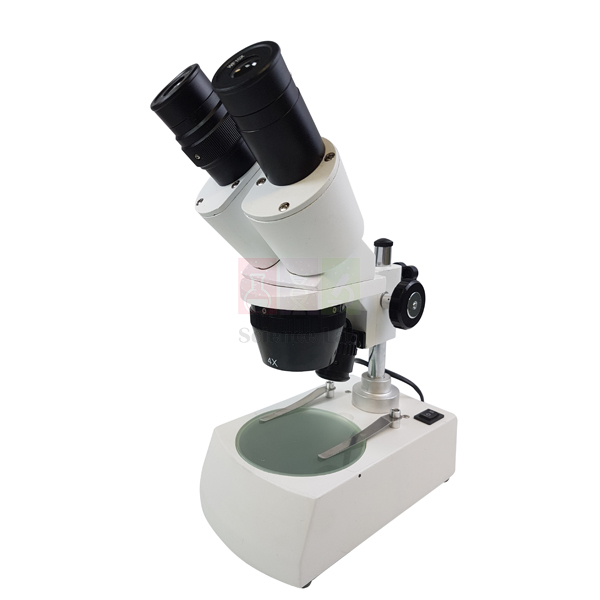
Microscope, Stereo Binocular
Microscope, Stereo Binocular (Product Code: SLE/M/105) is a low-power stereo microscope used to view whole specimens such as insects, flowers, seeds, rocks and dissections in three dimensions at 20x and 40x in school and college labs. It has 2X and 4X objectives with WF10X eyepieces, a 57 mm working distance and 1 W LED lighting from above and below. This stereo microscope for biology rooms in India and abroad is supplied by Jain Scientific Equipments Pvt Ltd (ScienceLab), Ambala, India.
Specifications
| Parameter | Detail |
|---|---|
| Magnification | 20x–40x |
| Eyepieces | WF10X |
| Objectives | 2X and 4X |
| Working distance | 57 mm |
| Coarse adjustment range | 40 mm |
| Illumination | Top and bottom light, 1 W LED lamp |
| Working stage | 90 mm frosted glass |
| Product code | SLE/M/105 |
| Supplied by | Jain Scientific Equipments Pvt Ltd (ScienceLab), Ambala, India |
What Is the Stereo Binocular Microscope Used For?
A stereo microscope shows solid objects upright and in depth, so students can study the compound eye of a fly, the parts of a flower, seed coats, crystals or mineral grains without making a slide. The 57 mm working distance leaves room for forceps or a mounted needle under the objective, which makes it useful for simple dissections of flowers and small invertebrates.
Use the top light for opaque objects like rocks, shells and insects, and the bottom light through the 90 mm frosted glass stage for thin, translucent material such as leaves, wings or pond organisms in a dish. Start with the 2X objective (20x) to find the specimen, then switch to 4X (40x) for detail. As part of school biology lab equipment in India and overseas, it pairs naturally with dissection trays and specimen collections.
Supplier
ScienceLab, the trading name of Jain Scientific Equipments Private Limited in Ambala, Haryana, supplies this stereo binocular microscope to schools, colleges, nature centres, dealers and importers in India and international markets. It is often ordered alongside compound microscopes so that a biology room can handle both whole specimens and prepared slides. Read more on the company profile.
Related Laboratory Equipment
Specimens and trays that suit low-power stereo observation:
- Dissection Pan — a tray for dissections viewed under the microscope
- Insect Mount Set — mounted insects to examine in three dimensions
- Rock Study Kit — rocks and minerals to view with the top light
- Petri Dish Glass With Lid — holds pond water or seeds on the frosted stage
- Stereo Microscope — battery-powered 20x alternative with incident LED
See more stereo and compound models in the Microscope category.
Frequently Asked Questions
What magnification does the Microscope, Stereo Binocular offer?
The Microscope, Stereo Binocular offers 20x and 40x magnification, from WF10X eyepieces combined with 2X and 4X objectives. This low-power range shows whole specimens in depth, which suits insects, flowers, seeds and rocks rather than prepared slides.
How much working space is there under the objective?
The Microscope, Stereo Binocular has a working distance of 57 mm, and its coarse adjustment range is 40 mm. That space lets students handle specimens with forceps or a mounted needle while they look through the eyepieces.
Does the stereo binocular microscope have top and bottom lighting?
Yes. The Microscope, Stereo Binocular has both top and bottom light from 1 W LED lamps. Top light shows the surface of solid objects, while bottom light passes through the 90 mm frosted glass stage for translucent specimens.
How is a stereo microscope different from a compound microscope?
A stereo microscope such as the Microscope, Stereo Binocular gives a three-dimensional, low-power view of whole objects, while a compound microscope magnifies thin slides much more highly. Many labs use both: stereo for specimens and dissections, compound for cells.
What information is needed for a quotation?
To quote the Microscope, Stereo Binocular, we need the product code SLE/M/105, the quantity, the delivery location and any related items such as dissection pans or specimen sets. Send these details through the contact page or add the item to the enquiry cart.
Who supplies the Microscope, Stereo Binocular?
Jain Scientific Equipments Pvt Ltd, trading as ScienceLab in Ambala, Haryana, India, supplies the Microscope, Stereo Binocular (SLE/M/105) to schools, colleges, dealers and importers in India and international markets. It can be quoted together with dissection trays, specimens and compound microscopes.
Request a Quote
Send your enquiry for the Microscope, Stereo Binocular through our contact page, stating quantity and delivery details, or place it in the enquiry cart with trays and specimen sets for a single quotation.
Last updated: 24 September 2026
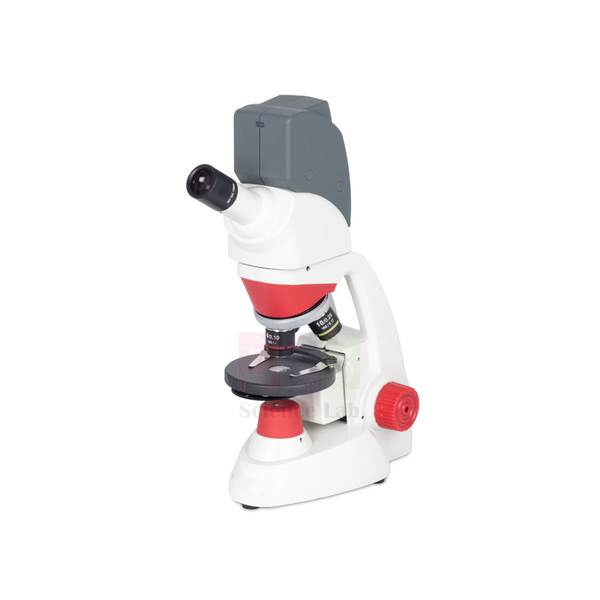
Digital Monocular Microscope, 400x
Digital Monocular Microscope, 400x (Product Code: SLE/M/107) is a monocular compound microscope with a built-in Wi-Fi camera, used to view slides at up to 400x and share the live image in school and college biology classes. Its 1/3-inch CMOS sensor captures 2.0 MP (1600 x 1200 pixels), with Wi-Fi transmission up to 1.3 MP, and it runs on rechargeable batteries or an external charger. This digital monocular microscope for classrooms in India is supplied by Jain Scientific Equipments Pvt Ltd (ScienceLab), Ambala, India.
Specifications
| Parameter | Detail |
|---|---|
| Head | Monocular, 30° inclined, 360° rotating, with built-in digital X-type Wi-Fi camera |
| Camera sensor | CMOS 1/3", 2.0 MP, 1600 x 1200 pixels |
| Wi-Fi transmission | Up to 1.3 MP |
| Optical system | Finite, 160 mm |
| Eyepiece | WF10X/18 mm |
| Nosepiece | Reversed triple revolving |
| Objectives | Achromatic, DIN: 4X/0.10, 10X/0.25, 40X/0.65/S |
| Objective thread | W 4/5" x 1/36" (RMS standard) |
| Condenser | Built-in, N.A. 0.65, with disc diaphragm |
| Stage | Gliding stage with "one-touch" sample holder, Ø 105 mm |
| Focusing | Separate coarse and fine; 2 µm minimum increment; upper limit stop preset but adjustable |
| Illumination | LED, 20 mA, 3.5 V, 70 mW, with intensity control |
| Power | External charger (100–240 V) or rechargeable batteries |
| Supplied with | Calibration slide, dust cover, immersion oil (5 ml), charger and batteries |
| Dimensions | 175 x 153 x 334 mm |
| Weight | 2.75 kg |
| Product code | SLE/M/107 |
| Supplied by | Jain Scientific Equipments Pvt Ltd (ScienceLab), Ambala, India |
What Is the Wi-Fi Digital Monocular Microscope Used For?
A microscope with a Wi-Fi camera lets a teacher put the live view in front of the whole class, so students see the same onion cell, stoma or protozoan being described instead of queuing at the eyepiece. The 4X/0.10 objective finds the area of interest, the 10X/0.25 frames tissues, and the 40X/0.65/S shows individual cells at 400x. Captured images can then support worksheets, project reports and assessment.
The gliding stage and one-touch holder let the specimen be moved smoothly by hand, while separate coarse and fine knobs with a 2 µm minimum increment give precise focus at high power. The preset upper limit stop helps keep the slide away from the objective and can be readjusted when needed. Check scale with the calibration slide before measuring, dim the LED for bright specimens, and fit the dust cover after each class.
Supplier
Jain Scientific Equipments Private Limited supplies this digital monocular microscope under its trading name ScienceLab, working from Ambala, Haryana, with schools, colleges, smart-classroom projects, dealers and importers in India and international markets. It can be quoted on its own for a demonstration desk or alongside standard student microscopes for a complete lab. Company background is on our company profile page.
Related Laboratory Equipment
Slides, storage and comparable imaging options:
- Basic Botany Slide Set — prepared plant slides to display to the class
- Microscope Slide Case — keeps the class slide collection organised
- Lens Tissue — for cleaning the eyepiece and objectives
- Monocular Digital Microscope, 400x — another 400x digital model to compare
- Microscope Digital Camera, 3MP — a separate camera option for microscopes without one built in
See all models in the Microscope category.
Frequently Asked Questions
What camera does the Digital Monocular Microscope, 400x have?
The Digital Monocular Microscope, 400x (SLE/M/107) has a built-in digital X-type Wi-Fi camera with a 1/3-inch CMOS sensor of 2.0 MP, or 1600 x 1200 pixels. Images are transmitted over Wi-Fi at up to 1.3 MP, so the live view can be shared on a connected device.
Which objectives does the Digital Monocular Microscope, 400x use?
The Digital Monocular Microscope, 400x uses achromatic DIN objectives of 4X/0.10, 10X/0.25 and 40X/0.65/S on a reversed triple nosepiece, with a WF10X/18 mm eyepiece giving up to 400x. The objectives have the W 4/5" x 1/36" RMS thread on a finite 160 mm system.
What comes with the Digital Monocular Microscope, 400x?
The Digital Monocular Microscope, 400x is listed with a calibration slide, a dust cover, immersion oil (5 ml), a charger and batteries. Ask us through the contact page if you would like extra slides or cleaning supplies quoted with the microscope.
Can this digital microscope run without mains power?
Yes. The Digital Monocular Microscope, 400x runs on rechargeable batteries or from its external 100–240 V charger. Its LED (20 mA, 3.5 V, 70 mW) has intensity control, so the brightness can be set for each objective and specimen.
How big and heavy is the Digital Monocular Microscope, 400x?
The Digital Monocular Microscope, 400x measures 175 x 153 x 334 mm and weighs 2.75 kg. That footprint suits a teacher's demonstration desk or a shared bench where the microscope is passed between student groups.
Who supplies the Digital Monocular Microscope, 400x?
Jain Scientific Equipments Pvt Ltd, trading as ScienceLab in Ambala, Haryana, India, supplies the Digital Monocular Microscope, 400x (SLE/M/107) to schools, colleges, dealers and importers in India and international markets. Quotations are prepared on request through the contact page.
Request a Quote
Request a quotation for the Digital Monocular Microscope, 400x by sending the quantity and delivery location through our contact page, or add it to the enquiry cart with slides and other microscope items for one combined reply.
Last updated: 24 September 2026
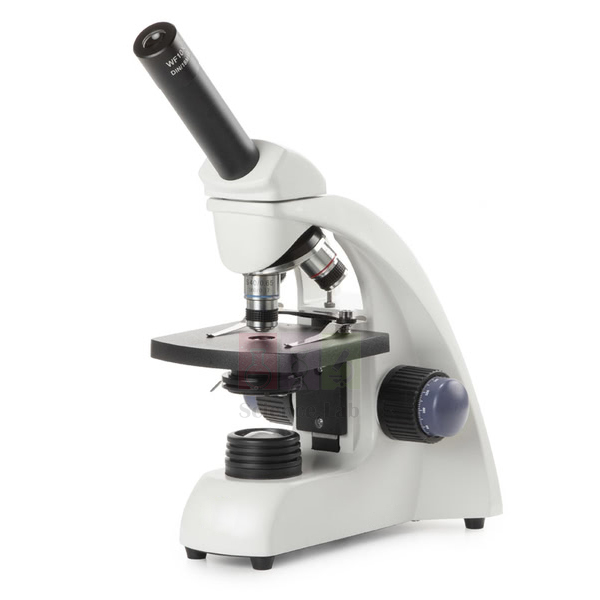
Monocular Microscope, 400x, LED Illumination
Monocular Microscope, 400x, LED Illumination (Product Code: SLE/M/108) is a cordless student microscope used for routine cell and tissue observation up to 400x in school biology classes and field teaching. It has three reversed achromatic DIN objectives, a 105 x 105 mm stage with two fixed clamps and a 1 W LED powered by internal rechargeable batteries. This cordless microscope for school labs in India and abroad is supplied by Jain Scientific Equipments Pvt Ltd (ScienceLab), Ambala, India.
Specifications
| Parameter | Detail |
|---|---|
| Eyepiece | Wide field WF 10x/18 mm, secured, with pointer |
| Tube and head | Monocular, 45° inclined tube; head rotatable 360° |
| Nosepiece | Revolving, three reversed positions, on ball bearings |
| Objectives | Achromatic DIN 35 mm: 4x/0.10, 10x/0.25, S40x/0.65 (S40x spring loaded) |
| Condenser | Single condenser, N.A. 0.65, with built-in iris diaphragm |
| Stage | 105 x 105 mm with two non-removable clamps |
| Focusing | Coaxial coarse and fine; 200 graduations; 15 µm per graduation; 3 mm per rotation; total travel approx. 15 mm; adjustable rack stop |
| Illumination | 1 W LED |
| Power | Internal rechargeable batteries; external 100–240 V AC mains/charger adapter; cordless operation |
| Optics | Anti-fungus treated and anti-reflection coated |
| Stand | Ergonomic stand |
| Product code | SLE/M/108 |
| Supplied by | Jain Scientific Equipments Pvt Ltd (ScienceLab), Ambala, India |
What Is the Cordless 400x Monocular Microscope Used For?
Because it needs no cable once charged, this microscope suits classrooms where sockets are few, outreach programmes and outdoor ecology lessons where pupils look at freshly collected pond water or leaf peels. The coarse and fine controls sit on the same axis, so students can move from rough to precise focusing without shifting their hand, and the adjustable rack stop limits how far the stage rises.
The two non-removable clamps hold the slide on the 105 x 105 mm stage and cannot go missing, a practical detail in busy school labs. Adjust the built-in iris diaphragm under the N.A. 0.65 condenser to balance brightness and contrast, and recharge the internal batteries through the 100–240 V AC adapter after lessons.
Supplier
Jain Scientific Equipments Private Limited, trading as ScienceLab, supplies this cordless 400x microscope from Ambala, Haryana. As a school lab equipment supplier in India, the company quotes it to schools, colleges, NGOs running science outreach, dealers and importers in India and international markets, often with slides and storage items in the same order. See the company profile.
Related Laboratory Equipment
Slides, accessories and a higher-specification alternative:
- Basic Botany Slide (Set of 25) — prepared plant slides for 400x lessons
- Glass Cover Slips, No. 1 — for students' own wet mounts
- Microscope Slide Cover Forceps — for placing cover slips cleanly
- Microscope Slide Case — safe storage for class slide collections
- Microscope, Monocular, 400x, LED Illumination — similar cordless model with a mechanical stage and an S100x oil objective
Compare all models in the Microscope category.
Frequently Asked Questions
How long does the Monocular Microscope, 400x, LED Illumination run on batteries?
Battery running time for the Monocular Microscope, 400x, LED Illumination is not stated in its listing. It uses internal rechargeable batteries charged through an external 100–240 V AC mains/charger adapter; please ask us through the contact page if run time matters for your planning.
What objectives does the Monocular Microscope, 400x, LED Illumination have?
The Monocular Microscope, 400x, LED Illumination has three reversed 35 mm achromatic DIN objectives, 4x/0.10, 10x/0.25 and S40x/0.65, on a revolving nosepiece with ball bearings. The S40x objective is spring loaded to protect it and the slide from accidental contact.
What kind of condenser does this microscope use?
The Monocular Microscope, 400x, LED Illumination has a single N.A. 0.65 condenser with a built-in iris diaphragm. Closing the iris increases contrast for pale, unstained specimens, while opening it gives more light for stained slides at 400x.
Is the eyepiece secured on the Monocular Microscope, 400x, LED Illumination?
Yes. The Monocular Microscope, 400x, LED Illumination has a wide field WF 10x/18 mm eyepiece secured in the 45° inclined tube, with a pointer. Securing the eyepiece helps prevent students from removing or dropping it.
Are the optics treated against fungus?
Yes. All optics of the Monocular Microscope, 400x, LED Illumination are anti-fungus treated and anti-reflection coated. Store the microscope in a dry place with a cover when it is not in use to keep the lenses clear in humid weather.
Who supplies the Monocular Microscope, 400x, LED Illumination?
Jain Scientific Equipments Pvt Ltd (ScienceLab), Ambala, Haryana, India, supplies the Monocular Microscope, 400x, LED Illumination (SLE/M/108) to schools, colleges, outreach programmes, dealers and importers in India and international markets. Send quantities through the contact page for a quotation.
Request a Quote
Quotations for the Monocular Microscope, 400x, LED Illumination are prepared on request: use our contact page to send the quantity and delivery address, or add it to the enquiry cart with slides and cover slips.
Last updated: 24 September 2026
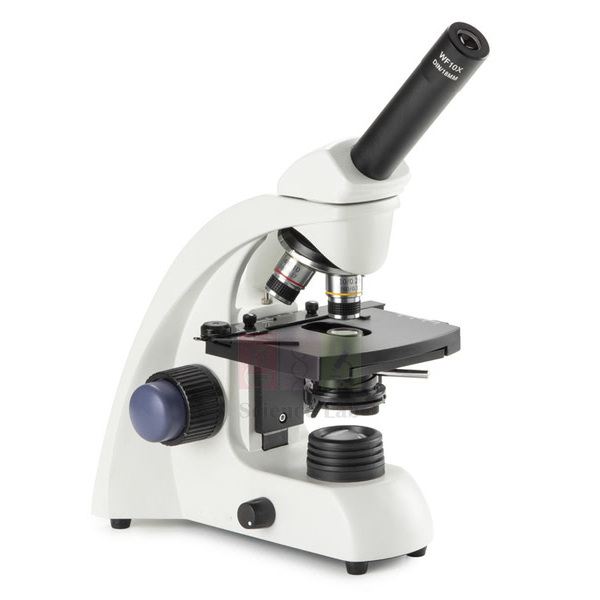
Microscope, Monocular, 400x, LED Illumination
Microscope, Monocular, 400x, LED Illumination (Product Code: SLE/M/109) is a cordless monocular compound microscope with a mechanical stage, used for slide work in senior school and college biology practicals. Its listed specification includes four reversed achromatic objectives up to S100x oil immersion, an Abbe N.A. 1.25 condenser with iris, and an adjustable 1 W LED on internal rechargeable batteries. This monocular microscope for teaching labs in India and abroad is supplied by Jain Scientific Equipments Pvt Ltd (ScienceLab), Ambala, with its other biology lab equipment in India.
Specifications
| Parameter | Detail |
|---|---|
| Eyepiece | Wide field WF 10x/18 mm, secured, with pointer |
| Tube and head | Monocular, 30° inclined tube; head secured and rotatable 360° |
| Nosepiece | Revolving, four reversed positions, on ball bearings |
| Objectives | Achromatic DIN 35 mm: 4x/0.10, 10x/0.25, S40x/0.65, S100x oil immersion; S40x and S100x spring loaded |
| Condenser | Abbe, N.A. 1.25, with iris diaphragm and filter holder; height adjustable |
| Stage | 115 x 100 mm with integrated 55 x 20 mm X-Y mechanical stage |
| Focusing | Coaxial coarse and fine; 200 graduations; 15 µm per graduation; 3 mm per rotation; total travel approx. 15 mm; adjustable rack stop |
| Illumination | Adjustable 1 W LED |
| Power | Internal rechargeable batteries; external 100–240 V AC mains/charger adapter; cordless operation |
| Optics | Anti-fungus treated and anti-reflection coated |
| Handling | Ergonomic carrying grip |
| Product code | SLE/M/109 |
| Supplied by | Jain Scientific Equipments Pvt Ltd (ScienceLab), Ambala, India |
What Is the Monocular Mechanical-Stage Microscope Used For?
The integrated 55 x 20 mm X-Y mechanical stage sets this model apart from simpler clip-stage microscopes: students move the slide with two controls in small, repeatable steps, which makes it practical to count cells, follow a field of view or return to a structure the teacher has marked with the eyepiece pointer. The Abbe condenser with iris and filter holder gives control over light for both stained and unstained preparations.
The listing also includes a spring-loaded S100x oil-immersion objective, so labs that want to go beyond 400x can study bacteria and blood smears once immersion oil is added. For senior biology lab equipment in India and abroad, the cordless LED and ergonomic carrying grip make it easy to move the microscope between benches and recharge it from the 100–240 V AC adapter.
What to Specify When Ordering
- The objective set you need: the listing includes an S100x oil objective although the name says 400x
- The number of microscopes per lab
- Immersion oil and lens tissue if the S100x objective is supplied
- Slides and cover slips for student preparations
Supplier
This monocular mechanical-stage microscope is supplied by Jain Scientific Equipments Private Limited, trading as ScienceLab, from Ambala, Haryana, to schools, colleges, training institutes, dealers and importers in India and international markets. The company's microscope range runs from simple clip-stage models to oil-immersion instruments, so a lab can mix models in one quotation. Visit the ScienceLab profile for company details.
Related Laboratory Equipment
Consumables and alternatives for a mechanical-stage monocular microscope:
- Immersion Oil, 25ml — for the S100x objective listed with this model
- Insect Anatomy Slide Set of 9 — prepared slides to scan with the X-Y stage
- Microscope Glass Slides — blank slides for students' own mounts and smears
- Microscope Case — protective storage between lessons
- Monocular Microscope, 400x, LED Illumination — cordless model with a plain stage and three objectives
Browse further models in the Microscope category.
Frequently Asked Questions
Does the Microscope, Monocular, 400x, LED Illumination have a 100x objective?
The listing for the Microscope, Monocular, 400x, LED Illumination shows four reversed achromatic objectives: 4x/0.10, 10x/0.25, S40x/0.65 and S100x oil immersion, although the product name says 400x. Please confirm which objective set you need when you ask for a quotation.
What is the mechanical stage travel?
The Microscope, Monocular, 400x, LED Illumination has a 115 x 100 mm stage with an integrated 55 x 20 mm X-Y mechanical stage. Coaxial focusing has 200 graduations of 15 µm each, 3 mm per rotation and approximately 15 mm of total travel.
How is the Microscope, Monocular, 400x, LED Illumination powered?
The Microscope, Monocular, 400x, LED Illumination uses an adjustable 1 W LED powered by internal rechargeable batteries, charged through an external 100–240 V AC mains/charger adapter. It operates cordless, so it can be placed anywhere on the bench.
What is the eyepiece and tube angle?
The Microscope, Monocular, 400x, LED Illumination has a wide field WF 10x/18 mm eyepiece secured with a pointer in a 30° inclined tube. The head is secured and rotates 360°, so the microscope can face a student on either side of a bench.
How does it differ from the Monocular Microscope, 400x, LED Illumination?
The Microscope, Monocular, 400x, LED Illumination adds an X-Y mechanical stage, an Abbe N.A. 1.25 condenser and a fourth S100x oil objective. The similarly named Monocular Microscope, 400x, LED Illumination has a plain stage with clamps, three objectives and an N.A. 0.65 condenser.
Who supplies the Microscope, Monocular, 400x, LED Illumination?
Jain Scientific Equipments Pvt Ltd (ScienceLab), Ambala, Haryana, India, supplies the Microscope, Monocular, 400x, LED Illumination (SLE/M/109) to schools, colleges, training institutes, dealers and importers in India and international markets, and can quote oil, slides and cover slips in the same order.
Request a Quote
Send the quantity, required objective set and delivery location for the Microscope, Monocular, 400x, LED Illumination through our contact page, or add it to the enquiry cart with any consumables you need.
Last updated: 24 September 2026
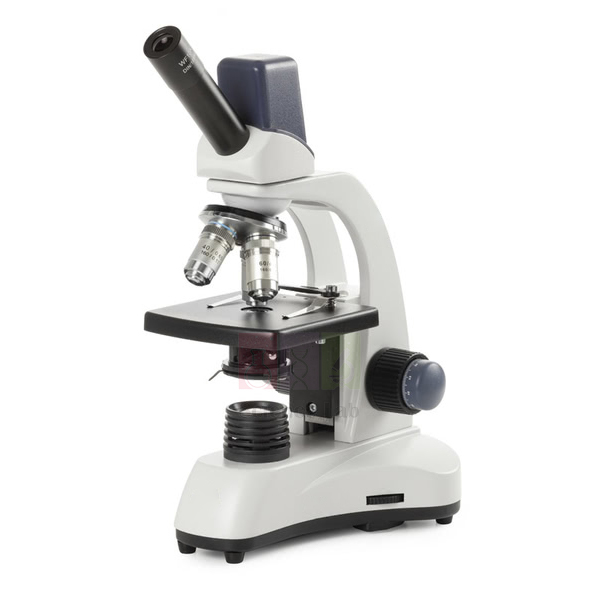
Monocular Digital Microscope, 400x
Monocular Digital Microscope, 400x (Product Code: SLE/M/110) is a compound microscope with a built-in 5 MP camera, used to view, capture and project specimen images through a USB-connected computer in school, college and teacher-training labs. The CMOS sensor records 2560 x 1920 pixels, image software is supplied, and the 1 W LED runs from an internal 100–240 V power supply. This monocular microscope for digital classrooms in India and abroad is supplied by Jain Scientific Equipments Pvt Ltd (ScienceLab), Ambala, India.
Specifications
| Parameter | Detail |
|---|---|
| Head | Monocular, 45° inclined, 360° rotatable |
| Eyepiece | Secured DIN WF 10x/18 mm with pointer |
| Camera | Built-in 5 MP CMOS, USB-2 interface, 2560 x 1920 pixels |
| Software | Image software supplied |
| Nosepiece | Forwarded quadruple revolving nosepiece on ball bearings |
| Objectives | Achromatic 4x, 10x, S40x |
| Condenser | Height-adjustable Abbe, N.A. 1.25, with iris diaphragm and filter holder |
| Focusing | Coaxial coarse and fine, 200 graduations; precision 12.5 µm; 2.5 mm per rotation; total travel approx. 15 mm; friction adjustment |
| Stage | Plain 123 x 119 mm stage with 2 object clamps |
| Illumination | 1 W LED with internal power supply, 100–240 V |
| Optics | Anti-fungus treated and anti-reflection coated |
| Supplied with | Power cord and dust cover, in a styrofoam case |
| Product code | SLE/M/110 |
| Supplied by | Jain Scientific Equipments Pvt Ltd (ScienceLab), Ambala, India |
What Is the USB Digital Monocular Microscope Used For?
Connect the USB-2 cable to a classroom computer and the live image from the 5 MP camera can be shown on a projector or interactive board, so a whole class watches the teacher find and focus a specimen. Students can then save still images of cells, tissues or micro-organisms for practical files, labelled diagrams and assessments.
The height-adjustable Abbe condenser (N.A. 1.25) with iris diaphragm lets users tune contrast on screen as well as through the eyepiece, and friction adjustment on the coarse focus helps the image stay put while pictures are taken. The forwarded quadruple nosepiece holds the three listed objectives with one free position. Because power comes from the mains through an internal supply, set the microscope up near a socket and the computer.
What to Specify When Ordering
- The operating system of the computer you will connect over USB-2, so we can confirm software compatibility
- How many camera microscopes you need, for example one for the teacher's desk or one per group
- Your mains voltage (internal power supply listed for 100–240 V)
Supplier
Jain Scientific Equipments Private Limited supplies this USB camera microscope under its ScienceLab name from Ambala, Haryana, for schools, colleges, teacher-training institutes, dealers and importers in India and international markets. It is delivered with a power cord and dust cover in a styrofoam case, and can be quoted together with prepared slides. More on the ScienceLab company profile.
Related Laboratory Equipment
Slides and accessories that make good use of an on-screen microscope image:
- Prepared Microscope Slide Set – Digestion — prepared slides to photograph for class discussion
- Cover Glasses — for fresh mounts shown on screen
- Micrometric Slide — a reference scale to include in captured images
- Lens Tissue — keeps the optics clean for sharp pictures
- Digital Monocular Microscope, 400x — Wi-Fi camera alternative that also runs on batteries
See other digital and optical models in the Microscope category.
Frequently Asked Questions
What camera does the Monocular Digital Microscope, 400x have?
The Monocular Digital Microscope, 400x has a built-in 5 MP CMOS camera with a USB-2 interface and 2560 x 1920 pixel resolution. It connects to a computer by USB, and image software is supplied with the microscope for viewing and capturing pictures.
Which computers work with the Monocular Digital Microscope, 400x?
Compatibility of the software supplied with the Monocular Digital Microscope, 400x depends on your computer's operating system, which the listing does not specify. Tell us the system you use through the contact page, and we will confirm before you order.
Does the Monocular Digital Microscope, 400x run on batteries?
No. The Monocular Digital Microscope, 400x uses a 1 W LED with an internal power supply rated 100–240 V and is supplied with a power cord. Place it near a mains socket and the computer it connects to.
What objectives does the USB digital microscope have?
The Monocular Digital Microscope, 400x has achromatic 4x, 10x and S40x objectives on a forwarded quadruple revolving nosepiece with ball bearings, used with a secured DIN WF 10x/18 mm eyepiece that has a pointer. Together they reach 400x.
What comes in the box with the Monocular Digital Microscope, 400x?
The Monocular Digital Microscope, 400x is supplied with image software, a power cord and a dust cover, packed in a styrofoam case. Slides and cover glasses are not listed as included, so add them to your quotation if needed.
Who supplies the Monocular Digital Microscope, 400x?
Jain Scientific Equipments Pvt Ltd (ScienceLab), Ambala, Haryana, India, supplies the Monocular Digital Microscope, 400x (SLE/M/110) to schools, colleges, teacher-training institutes, dealers and importers in India and international markets. Request a quotation through the contact page or the enquiry cart.
Request a Quote
For a quotation on the Monocular Digital Microscope, 400x, send the quantity, your computer's operating system and the delivery location through our contact page, or add it to the enquiry cart with slides and accessories.
Last updated: 24 September 2026
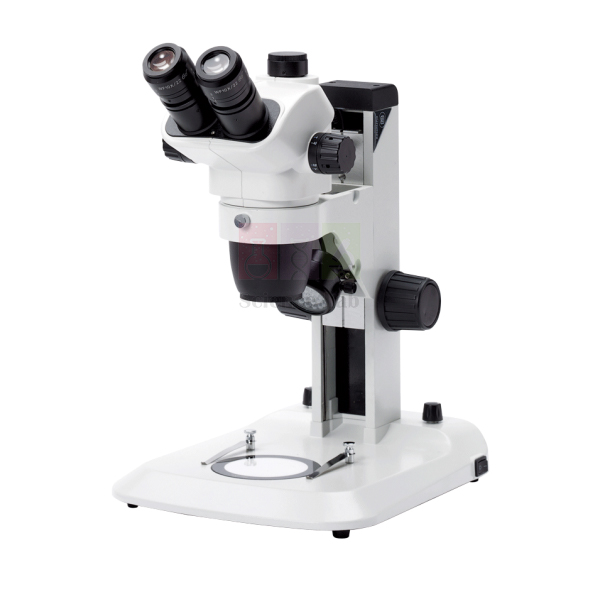
Stereo Microscope
Stereo Microscope (Product Code: SLE/M/111) is a low-power binocular microscope used to view solid objects such as insects, seeds, flowers and rock grains in three dimensions at 20x in school and field science. A fixed 2x stereo objective with a pair of WF10x/16 mm eyepieces gives the 3D view, and incident LED lighting runs on two AA batteries. This stereo microscope for schools in India is supplied by Jain Scientific Equipments Pvt Ltd (ScienceLab), Ambala, India.
Specifications
| Parameter | Detail |
|---|---|
| Eyepieces | Pair of WF10x/16 mm |
| Objective | Stereo objective, 2x (fixed) |
| Magnification | 20x |
| Illumination | Incident LED |
| Power | Batteries, 2 x AA (not included) |
| Stand | Ergonomic carrying handle |
| Package | Foam case with eye cups and dust cover |
| Product code | SLE/M/111 |
| Supplied by | Jain Scientific Equipments Pvt Ltd (ScienceLab), Ambala, India |
What Is the 20x Stereo Microscope Used For?
A stereo microscope is used for things that are too thick or opaque for a slide: whole insects, flower parts, seeds, leaf surfaces, fossils, mineral grains and coins. Light from the incident LED falls on the upper surface of the object, so it is viewed just as it sits in a dish or on the desk, and each eye sees it from a slightly different angle, which gives depth. A fixed 20x suits simple dissections and nature-study specimens collected on a field trip.
Because it runs on two AA batteries and has a carrying handle, the microscope can be taken to a school garden, a pond or an excursion without needing a socket. Batteries are not included, so stock them separately and remove them if the microscope will be stored for a long period. Fit the eye cups for comfortable viewing, and return the instrument to its foam case with the dust cover after use.
What to Specify When Ordering
- The number of stereo microscopes for your class or field kit
- Whether AA batteries (two per microscope, not included) should be quoted as well
- Any specimen dishes or dissecting tools you want supplied in the same order
Supplier
ScienceLab, the trading name of Jain Scientific Equipments Private Limited, supplies this battery-powered stereo microscope from Ambala, Haryana. Schools, eco-clubs, field-study centres, dealers and importers in India and international markets order it for hands-on observation of whole specimens, often together with dissecting tools and specimen dishes. See our company profile for more about the business.
Related Laboratory Equipment
Dishes, tools and an alternative model for low-power specimen work:
- Dissecting Dishes — hold specimens steady under the stereo view
- Petri Dish Glass With Lid — for small live or wet specimens
- Dissecting Set, Student — tools for simple dissections viewed at 20x
- Insect Mount Set — for insect-mounting and study activities
- Binocular Stereo Microscope, 40x — a higher-magnification stereo alternative
More stereo and student models are listed in the Microscope category.
Frequently Asked Questions
What magnification does the Stereo Microscope give?
The Stereo Microscope (SLE/M/111) gives 20x magnification from a fixed 2x stereo objective combined with a pair of WF10x/16 mm eyepieces. Because the magnification does not change, it stays simple for younger students examining whole insects, seeds, flowers or rocks.
What power does the Stereo Microscope need?
The Stereo Microscope runs its incident LED illumination on two AA batteries, which are not included. Needing no mains socket, it can be used outdoors or in any classroom; take the batteries out if the microscope will be stored for a long time.
What is supplied with the Stereo Microscope?
The Stereo Microscope comes in a foam case with eye cups and a dust cover, while the two AA batteries are not included. The case protects the optics in transport and storage, which matters for an instrument that goes out on field trips.
How is a stereo microscope different from a compound microscope?
A Stereo Microscope such as SLE/M/111 lights the object from above and uses two viewing paths, so solid specimens appear in three dimensions at low power. A compound microscope shines light through thin slides at much higher magnification to show cells and tissues.
Who supplies the Stereo Microscope SLE/M/111?
Jain Scientific Equipments Pvt Ltd, trading as ScienceLab in Ambala, Haryana, India, supplies the Stereo Microscope (SLE/M/111) to schools, field-study centres, dealers and importers in India and international markets. Quotations are prepared on request through the contact page.
What should a quotation request for the Stereo Microscope include?
A quotation request for the Stereo Microscope should include product code SLE/M/111, the number of microscopes, the delivery location and whether AA batteries, dissecting tools or specimen dishes should be quoted at the same time for the class.
Request a Quote
To receive a quotation for the Stereo Microscope, share the quantity and delivery address through our contact page, or add it to the enquiry cart along with dishes, dissecting tools and batteries.
Last updated: 24 September 2026
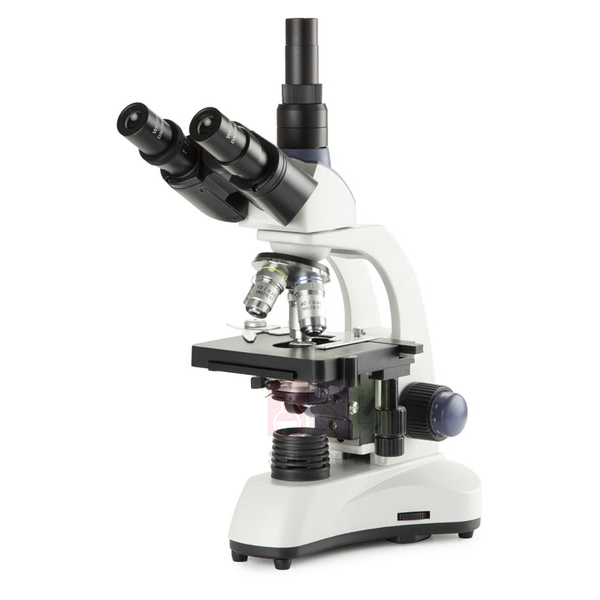
Trinocular Microscope, 1000x, LED Illumination
Trinocular Microscope, 1000x, LED Illumination (Product Code: SLE/M/112) is a compound light microscope used to examine stained cells, tissues and micro-organisms at up to 1000x in college and school biology laboratories. Its 1 W cordless LED runs on rechargeable batteries, and the third viewing tube lets a camera share the field students see through the eyepieces. This compound microscope is supplied by Jain Scientific Equipments Pvt Ltd (ScienceLab), Ambala, as part of its biology lab equipment in India.
Specifications
| Parameter | Detail |
|---|---|
| Head | Trinocular, 30° inclined tubes, rotatable through 360° |
| Eyepiece | Wide-field WF 10x/18 mm, without pointer |
| Objectives | Achromatic 4x, 10x, S40x and S100x oil; S40x and S100x oil immersion objectives spring loaded |
| Nosepiece | Revolving, four positions, on ball bearings |
| Maximum magnification | 1000x |
| Interpupillary distance | Adjustable, 48 to 75 mm |
| Diopter adjustment | ± 5 diopter on the left tube |
| Focusing | Coaxial coarse and fine; 200 graduations, 12.5 µm per graduation, 2.5 mm per rotation; total travel approx. 15 mm; adjustable rack stop |
| Condenser | Abbe, N.A. 1.25, height adjustable (helicoidal) with iris diaphragm and filter holder |
| Stage | Plain mechanical stage 123 x 119 mm; X-Y travel range 70 x 27 mm; two non-removable object clamps |
| Illumination | 1 W cordless LED |
| Power | Rechargeable batteries; external 100–240 V AC mains/charger adapter |
| Optics | All optics anti-fungus treated and anti-reflection coated |
| Stand | Ergonomic stand |
| Product code | SLE/M/112 |
| Supplied by | Jain Scientific Equipments Pvt Ltd (ScienceLab), Ambala, India |
What Is the Trinocular LED Microscope Used For?
A 1000x trinocular microscope handles the core slides of biology, zoology, botany and microbiology practicals: blood smears, bacteria, stained cheek cells, onion epidermis and prepared histology sections. The trinocular tube makes it a good demonstration instrument, because a teacher can mount a microscope camera and show the live field on a screen while students compare it with their own view. The cordless LED lets the microscope work on benches without a nearby socket.
Start at 4x to find the specimen, then move through 10x and S40x; set the rack stop so the objective cannot be driven into the slide. For S100x, place a drop of immersion oil on the cover glass, swing the oil objective in and focus with the fine control, which moves 12.5 µm per graduation. Wipe the oil off the objective with lens tissue at the end of every session.
What to Specify When Ordering
- Number of microscopes needed per lab or class
- Whether you also want a camera and adapter for the trinocular tube
- The plug type needed for the 100–240 V mains/charger adapter in your country
- Consumables to add, such as immersion oil, lens tissue and prepared slides
Supplier
Jain Scientific Equipments Private Limited, which trades as ScienceLab, supplies this trinocular LED microscope from Ambala, Haryana, as part of a wider microscope range for teaching and research labs. Colleges, schools, training institutes, dealers and importers in India and international markets can order it together with cameras, slides and cleaning supplies in a single enquiry. Learn more on the ScienceLab company profile.
Related Microscope Equipment
Accessories and alternatives buyers often add to this microscope:
- Immersion Oil, 25ml — needed with the S100x oil immersion objective
- Lens Tissue — for wiping oil and dust from objectives and eyepieces
- C-Mount Adapter — for attaching a camera to the trinocular tube (confirm fit with us)
- 2MP Digital USB-2 Colour Camera — C-mount camera for recording what the class sees (confirm fit with us)
- Trinocular Microscope, 1000x, LED — alternative with semi-plan objectives and a 3 W focusable LED
See more models in the Microscope category.
Frequently Asked Questions
Which objectives come with the Trinocular Microscope, 1000x, LED Illumination?
The Trinocular Microscope, 1000x, LED Illumination has four achromatic objectives, 4x, 10x, S40x and S100x oil, on a ball-bearing revolving nosepiece. The S40x and S100x are spring loaded, and with the WF 10x/18 mm eyepiece the highest magnification is 1000x.
Does this trinocular microscope need a mains socket during use?
No. The Trinocular Microscope, 1000x, LED Illumination uses a 1 W cordless LED powered by rechargeable batteries, which are charged through the external 100–240 V AC mains/charger adapter. Battery running time is not listed, so ask us if you need it for planning.
Can a camera be used with the Trinocular Microscope, 1000x, LED Illumination?
Yes, the trinocular head has a third tube intended for a camera, but the camera and any adapter are separate items. Tell us which camera you plan to use, or ask us to suggest one, and we will check the fit before quoting.
Can users with different eyesight share this microscope?
Yes. On the Trinocular Microscope, 1000x, LED Illumination the interpupillary distance adjusts from 48 to 75 mm and the left tube has ± 5 diopter adjustment, so each student can set the eyepieces for their own eyes before focusing.
Who supplies the Trinocular Microscope, 1000x, LED Illumination?
The Trinocular Microscope, 1000x, LED Illumination is supplied by Jain Scientific Equipments Pvt Ltd (ScienceLab) of Ambala, Haryana, India, to schools, colleges, dealers and importers in India and international markets. Company details are on the ScienceLab profile page.
How should the microscope be cared for?
Keep the Trinocular Microscope, 1000x, LED Illumination covered and in a dry room even though its optics are anti-fungus treated. Clean oil from the S100x objective after each session with lens tissue, and recharge the batteries using the mains/charger adapter.
What should a quotation request include?
For the Trinocular Microscope, 1000x, LED Illumination, send the quantity, your delivery city or country, and any accessories you want with it, such as a camera, immersion oil or lens tissue, through our contact page or the enquiry cart.
Request a Quote
Send your requirement for the Trinocular Microscope, 1000x, LED Illumination through the contact page, or add it to the enquiry cart with any accessories. Please mention the quantity and delivery location.
Last updated: 24 September 2026
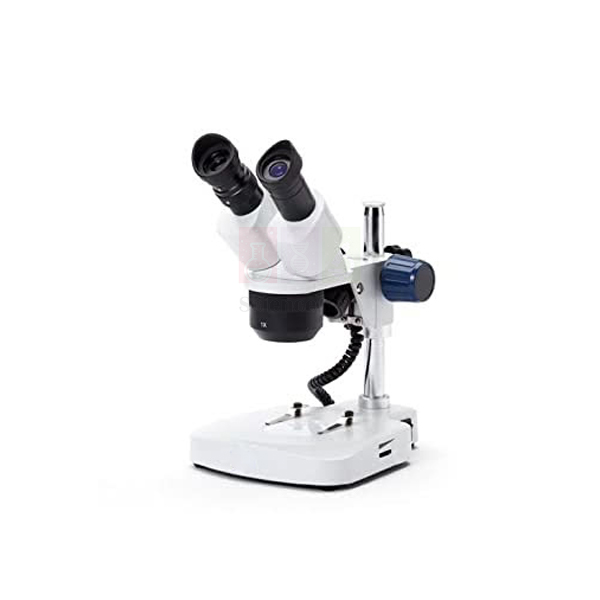
Binocular Stereo Microscope, 40x
Binocular Stereo Microscope, 40x (Product Code: SLE/M/113) is a low-power stereo microscope used to view whole, solid specimens such as insects, leaves, seeds and minerals in three dimensions in school and college labs. It switches between 20x and 40x with a revolving 2x/4x objective, leaves a 60 mm working distance and has cordless incident and transmitted 1 W LED lighting. It is supplied by Jain Scientific Equipments Pvt Ltd (ScienceLab), Ambala, India.
Specifications
| Parameter | Detail |
|---|---|
| Type | Binocular stereo microscope on pillar stand |
| Head | Binocular, 45° inclined tubes |
| Eyepieces | Pair of secured WF10x/20 mm wide-field eyepieces with eyecups |
| Objective | Dual 2x/4x revolving objective |
| Magnification | 20x and 40x |
| Field of view | 10 mm and 5 mm |
| Working distance | 60 mm |
| Maximum object height | 97 mm |
| Interpupillary distance | Adjustable, 55 to 75 mm |
| Diopter adjustment | On one tube |
| Focusing | Rack and pinion on pillar stand |
| Stage accessories | Black/white stage plate, transparent plate, 2 object clamps |
| Illumination | Incident and transmitted 1 W LED, cordless; each intensity adjustable separately |
| Power | Rechargeable batteries with external mains adapter |
| Also supplied | Dust cover; Styrofoam case |
| Product code | SLE/M/113 |
| Supplied by | Jain Scientific Equipments Pvt Ltd (ScienceLab), Ambala, India |
What Is the Stereo Microscope Used For?
A stereo microscope gives an upright, three-dimensional view at modest magnification, so it suits specimens too thick for a glass slide: insect mouthparts, flower parts, seeds, bread mould, soil animals, crystals and fossils. Within school biology lab equipment it is the instrument for dissection work, because the 60 mm working distance leaves room for forceps and needles under the objective. Objects up to 97 mm tall fit on the stage.
Use the incident (overhead) light for opaque objects such as leaves or beetles, and the transmitted (base) light through the transparent plate for thin material like insect wings or pond organisms in a dish. The black/white plate adds contrast: white behind dark specimens, black behind pale ones. Begin at 20x, where the wider field makes searching easier, then turn the objective to 4x for 40x detail.
What to Specify When Ordering
- Number of stereo microscopes needed for the class or lab
- Whether you want a camera for recording, and which one
- Dissection tools, dishes or specimens to add to the same order
- The plug type needed for the external mains adapter
Supplier
ScienceLab is the trading name of Jain Scientific Equipments Private Limited, Ambala, Haryana, which supplies this binocular stereo microscope to schools, colleges, training institutes, dealers and importers in India and international markets. Buyers setting up a biology or zoology lab can combine it with compound microscopes, dissection sets and slides in one quotation. More about the company is on the ScienceLab company profile.
Related Microscope Equipment
Items that support stereo microscope practicals:
- Dissecting Set, Student — tools for work within the 60 mm working distance
- Petri Dish — holds wet or living specimens on the transparent plate
- 5mp Microscope Camera — Wi-Fi camera supplied with adapters for stereo microscopes (confirm fit with us)
- Carry Case for Microscopes — nylon bag for taking a microscope on field work (confirm fit with us)
- Stereo Binocular Microscope — another stereo model to compare
Browse all models in the Microscope category.
Frequently Asked Questions
What magnifications does the Binocular Stereo Microscope, 40x give?
The Binocular Stereo Microscope, 40x gives 20x and 40x, selected by turning its dual 2x/4x revolving objective and viewed through WF10x/20 mm eyepieces. The listed fields of view are 10 mm and 5 mm, and the working distance is 60 mm.
Can the Binocular Stereo Microscope, 40x be used without a power socket?
Yes. The Binocular Stereo Microscope, 40x has incident and transmitted 1 W LED lighting that runs cordless on rechargeable batteries, charged through an external mains adapter. The two lights dim separately. Battery running time is not listed, so ask us if you need it.
How large an object fits under this stereo microscope?
Objects up to 97 mm high fit under the Binocular Stereo Microscope, 40x, and the 60 mm working distance leaves space for dissecting needles or forceps. Two object clamps hold flat specimens in place on the stage plate.
What is included with the Binocular Stereo Microscope, 40x?
The Binocular Stereo Microscope, 40x comes with a pair of secured WF10x/20 mm eyepieces with eyecups, a black/white stage plate, a transparent plate, two object clamps, rechargeable batteries with the external mains adapter, a dust cover and a Styrofoam case.
Can a camera be attached to this stereo microscope?
A camera is not included with the Binocular Stereo Microscope, 40x. Some microscope cameras on this site come with adapters for stereo microscopes, so tell us which camera you are considering and we will confirm whether it suits this model before you order.
Who supplies the Binocular Stereo Microscope, 40x?
The Binocular Stereo Microscope, 40x is supplied by Jain Scientific Equipments Pvt Ltd (ScienceLab), Ambala, Haryana, India. The company serves schools, colleges, dealers and importers in India and international markets, and can quote it with other biology lab items.
What information is needed for a quotation?
To quote for the Binocular Stereo Microscope, 40x, send the number of units, the delivery city or country, and any accessories such as dissecting sets, dishes or a camera, using the contact page or the enquiry cart.
Request a Quote
Ask for a quotation for the Binocular Stereo Microscope, 40x through the contact page, or place it in the enquiry cart together with the accessories you need.
Last updated: 24 September 2026
Digital Zoom Microscope
Digital Zoom Microscope (Product Code: SLE/M/114) is a screen-based microscope used to view, capture and share magnified images of specimens without eyepieces in classrooms and laboratories. It combines a single optical zoom objective covering 1 to 5 times magnification, an integrated 2 MP CMOS camera and a built-on 9 inch LCD screen on a rack and pinion stand. It is supplied by Jain Scientific Equipments Pvt Ltd (ScienceLab), Ambala, India.
Specifications
| Parameter | Detail |
|---|---|
| Type | Digital zoom microscope with built-on screen |
| Optics | Single optical zoom objective, 1 to 5 times magnification |
| Camera | Integrated 2 MP CMOS camera |
| Screen | Built-on 9 inch LCD |
| Image capture | Capture button saves .jpg images to an SD storage card (USB port for the SD card) |
| Software | Integrated, mouse-driven |
| Stand | Rack and pinion |
| Incident illumination | Integrated 21 LED ring light |
| Transmitted illumination | Integrated 7 LED |
| Light control | Incident and transmitted intensities adjustable separately |
| Working distance | 91 mm |
| Power | External mains adapter |
| Product code | SLE/M/114 |
| Supplied by | Jain Scientific Equipments Pvt Ltd (ScienceLab), Ambala, India |
What Is the Digital Zoom Microscope Used For?
Because the image appears on a 9 inch screen instead of in eyepieces, a small group can look at one specimen together, which suits junior classes, group practicals, science exhibitions and simple inspection tasks. Typical subjects include coins, leaves, insects, seeds, fabric weaves, circuit boards and rock samples. As smart lab equipment for schools, it also lets students save .jpg images for practical files and project reports.
Light opaque objects with the 21 LED ring light and thin or translucent samples with the 7 LED transmitted light, adjusting each until the detail shows clearly. Start at the low end of the zoom to find the area of interest, then zoom in and refocus with the rack and pinion; the 91 mm working distance leaves room for bulky objects. Press the capture button to store the picture on the SD card.
What to Specify When Ordering
- Number of units required
- Whether an SD storage card should be included, or you will use your own
- The plug type needed for the external mains adapter
- Specimens, dishes or other accessories to quote at the same time
Supplier
ScienceLab, the trade name of Jain Scientific Equipments Private Limited in Ambala, Haryana, supplies this digital zoom microscope alongside handheld, LCD and advanced digital microscopes, so a school can compare screen-based options in one enquiry. Institutions, dealers and importers in India and international markets are served. The ScienceLab company profile has more about the company.
Related Microscope Equipment
Alternatives and accessories to consider:
- LCD Digital Microscope — another screen-based digital microscope to compare
- Handheld Digital Microscope — portable option for outdoor observation
- Petri Dish — for presenting wet or living samples over the transmitted light
- Microscope Cleaning Kit — brush, air blower and lens fluid for keeping the zoom objective clean
More digital and optical models are in the Microscope category.
Frequently Asked Questions
Does the Digital Zoom Microscope need a computer?
No. The Digital Zoom Microscope has a built-on 9 inch LCD screen, an integrated 2 MP CMOS camera and integrated mouse-driven software, so images are viewed and captured on the instrument itself and saved as .jpg files to an SD storage card.
What magnification does the Digital Zoom Microscope offer?
The Digital Zoom Microscope has a single optical zoom objective covering 1 to 5 times magnification. The enlargement seen on the 9 inch screen is higher than the optical figure; ask us if a tender needs a stated on-screen magnification.
How are images saved on the Digital Zoom Microscope?
On the Digital Zoom Microscope you press the capture button to save a .jpg image to an SD storage card through the camera's card port. Please confirm with us whether a card is part of the supply or should be bought separately.
What lighting does the Digital Zoom Microscope have?
The Digital Zoom Microscope has an integrated incident ring light with 21 LEDs for opaque objects and a transmitted light with 7 LEDs for translucent samples. Both intensities adjust separately, and power comes from an external mains adapter.
How much space is there under the lens?
The Digital Zoom Microscope has a 91 mm working distance between the zoom objective and the specimen, which leaves room for larger objects such as rocks, electronic parts or a small dish, and for handling samples while watching the screen.
Who supplies the Digital Zoom Microscope?
The Digital Zoom Microscope is supplied by Jain Scientific Equipments Pvt Ltd (ScienceLab), Ambala, Haryana, India, to schools, colleges, dealers and importers in India and international markets, together with other digital and optical microscopes.
What should a quotation request include?
For the Digital Zoom Microscope, send the quantity, your delivery city or country, whether an SD card is needed, and any accessories, using our contact page or the enquiry cart, so the quotation covers everything in one go.
Request a Quote
Ask for a quotation for the Digital Zoom Microscope through the contact page, or add it to the enquiry cart with other items for your lab.
Last updated: 24 September 2026
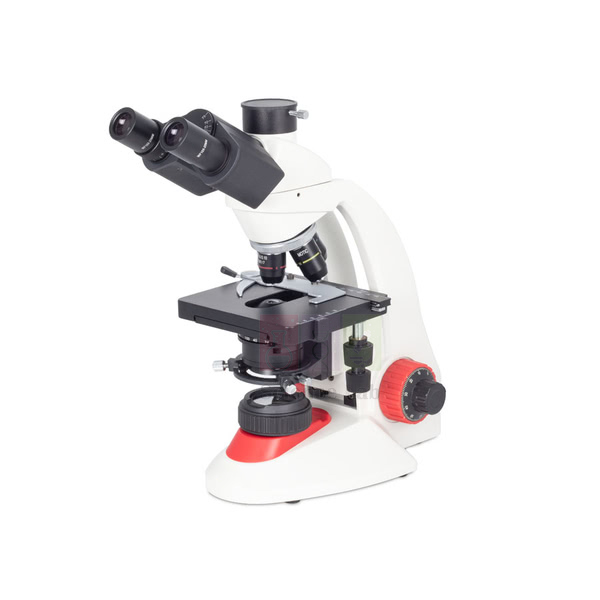
Trinocular Microscope, 1000x, LED
Trinocular Microscope, 1000x, LED (Product Code: SLE/M/115) is a compound laboratory microscope used for high-magnification study and photo-documentation of stained slides in college, university and research teaching labs. It carries achromatic semi-plan objectives from 4X/0.10 to 100X/1.25 oil immersion, a low-position coaxial stage and a 3 W focusable LED with intensity control. It is supplied by Jain Scientific Equipments Pvt Ltd (ScienceLab), Ambala, a laboratory instruments supplier in India.
Specifications
| Parameter | Detail |
|---|---|
| Viewing head | 30° inclined, binocular eyepiece tubes, rotates 360° for comfortable seated viewing |
| Eyepieces | Wide-field 10X/20 mm |
| Nosepiece | Revolving quadruple nosepiece with positive click-stops |
| Objectives | Achromatic semi-plan 4X/0.10, 10X/0.25, 40X/0.65 and 100X/1.25 oil immersion |
| Maximum magnification | 1000x |
| Focusing | Coaxial coarse and fine (2 µm) with tension adjustment |
| Stage | Low-position coaxial mechanical stage, 140 x 135 mm, with sample holder; X/Y travel 77 x 25 mm |
| Condenser | Spiral-mounted Abbe, N.A. 1.25, with iris diaphragm |
| Illumination | 3 W focusable LED with intensity control |
| Product code | SLE/M/115 |
| Supplied by | Jain Scientific Equipments Pvt Ltd (ScienceLab), Ambala, India |
What Is the 1000x Trinocular Microscope Used For?
Semi-plan objectives keep more of the field sharp from centre to edge than basic achromats, which helps when photographing a slide or when students count cells across the field. That makes this compound microscope a practical choice for histology, haematology, microbiology and plant anatomy practicals, and for staff preparing slide images for teaching material. The trinocular design lets a camera record the image while someone keeps observing.
The low-position coaxial stage keeps the hand close to the bench while moving the slide across its 77 x 25 mm travel, and the click-stop nosepiece seats each objective positively. Close the condenser iris a little for contrast on unstained samples, and open it at 100X with immersion oil to make use of the 1.25 N.A. Set the focus tension so the focus holds its position.
What to Specify When Ordering
- Number of microscopes required
- The camera you plan to use on the trinocular port, so we can confirm the adapter
- Your mains voltage and plug type, to confirm the power supply
- Immersion oil, slides and cleaning supplies to include
Supplier
Jain Scientific Equipments Private Limited trades as ScienceLab and supplies this semi-plan trinocular microscope from Ambala, Haryana, to universities, colleges, research labs, dealers and importers in India and international markets. For vendor registration, the supplying company's details are GSTIN 06AAECJ8618A1ZT and LEI 3358004HRD1JIVXKYX49. See the ScienceLab company profile for more about this laboratory instruments supplier in India.
Related Microscope Equipment
Accessories and an alternative for this trinocular microscope:
- Immersion Oil, 25ml — for the 100X/1.25 oil immersion objective
- 5mp Microscope Camera — C-mount Wi-Fi camera for streaming the trinocular image (confirm fit with us)
- C-Mount Adapter — camera coupling for the trinocular port (confirm fit with us)
- Microscope Cleaning Kit — brush, air blower, lens fluid and tissue for routine care
- Trinocular Microscope, 1000x, LED Illumination — alternative with cordless, battery-powered LED lighting
Compare other models in the Microscope category.
Frequently Asked Questions
What objectives are fitted to the Trinocular Microscope, 1000x, LED?
The Trinocular Microscope, 1000x, LED has four achromatic semi-plan objectives, 4X/0.10, 10X/0.25, 40X/0.65 and 100X/1.25 oil immersion, on a revolving quadruple nosepiece with positive click-stops. With the 10X/20 mm eyepieces the highest magnification is 1000x.
How fine is the focusing on this microscope?
The Trinocular Microscope, 1000x, LED has coaxial coarse and fine focusing with a 2 µm fine adjustment and a tension control. Fine control of this kind matters at 100X oil immersion, where the depth of field is very shallow.
What illumination does the Trinocular Microscope, 1000x, LED use?
The Trinocular Microscope, 1000x, LED uses a 3 W focusable LED with intensity control, feeding a spiral-mounted Abbe condenser of N.A. 1.25 with iris diaphragm. Power-supply details are not listed, so tell us your mains voltage when you ask for a quote.
How does it differ from the Trinocular Microscope, 1000x, LED Illumination?
The Trinocular Microscope, 1000x, LED has semi-plan objectives, 10X/20 mm eyepieces, a 140 x 135 mm low-position coaxial stage and a 3 W focusable LED. The LED Illumination model instead uses achromatic objectives and cordless, battery-powered LED lighting.
Who supplies the Trinocular Microscope, 1000x, LED?
The Trinocular Microscope, 1000x, LED is supplied by Jain Scientific Equipments Pvt Ltd (ScienceLab), Ambala, Haryana, India. Its GSTIN and LEI are given on this page for buyers who need vendor registration details before ordering.
What does a quotation request need?
For the Trinocular Microscope, 1000x, LED, send the quantity, delivery city or country, your mains voltage, and any camera or consumables you want included, through the contact page or the enquiry cart.
Request a Quote
To receive a quotation for the Trinocular Microscope, 1000x, LED, write to us through the contact page or add the microscope to the enquiry cart.
Last updated: 24 September 2026
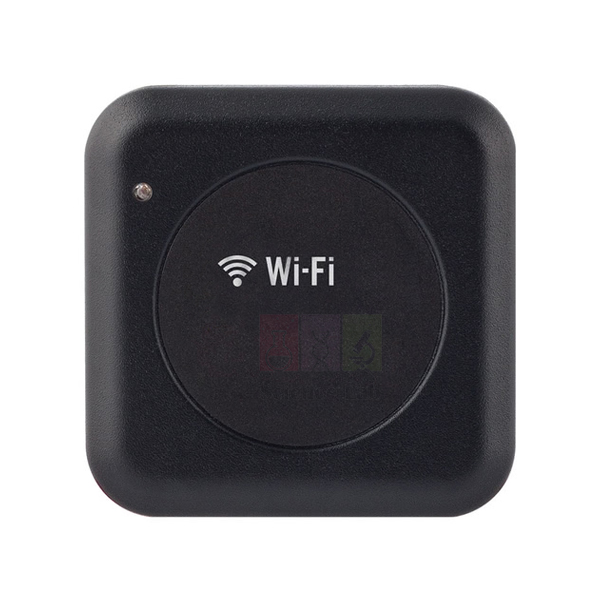
Wi-Fi Camera
Wi-Fi Camera (Product Code: SLE/M/116) is a C-mount microscope camera used to stream live microscope images wirelessly to computers, tablets and phones in classrooms and laboratories. It captures 4.0 MP stills at 2592 x 1520 pixels, shows Full HD 1920 x 1080 live video at up to 30 fps, and can share the image with up to 6 devices at the same time. It is supplied by Jain Scientific Equipments Pvt Ltd (ScienceLab), Ambala, India.
Specifications
| Parameter | Detail |
|---|---|
| Type | Compact Wi-Fi microscope camera |
| Sensor | CMOS, 1/3 inch format, progressive scan |
| Resolution | 4.0 megapixel |
| Capture resolution | 2592 x 1520 pixels (4.0 MP) |
| Live display | 1920 x 1080 Full HD over Wi-Fi; 1920 x 1080 Full HD over Ethernet |
| Frame rate (max) | 30 fps |
| Pixel size | 2.0 x 2.0 micron |
| Interfaces | Wi-Fi and Ethernet |
| Simultaneous viewing | Up to 6 devices at the same time |
| Lens mount | C-mount |
| Magnification | N/A (camera only; set by the microscope and adapter) |
| Functions | Measurement and calibration capability |
| Operating systems | macOS 10.4 and up; Windows 7, 8 and 10; app for iOS; app for Android |
| Minimum computer | Intel Core Dualcore, 2 GHz or higher; 2 GB RAM; 512 MB video memory |
| Product code | SLE/M/116 |
| Supplied by | Jain Scientific Equipments Pvt Ltd (ScienceLab), Ambala, India |
What Is the Wi-Fi Microscope Camera Used For?
A Wi-Fi camera removes the cable between microscope and screen. With the camera on a microscope's camera port, students can follow the live image on their own tablets or phones, up to 6 devices at once, while the teacher points out structures. Where a fixed classroom PC is preferred, the Ethernet connection keeps the same Full HD live view.
The measurement and calibration function lets students measure cell sizes or particle lengths on screen after calibrating against a reference slide at each objective. Captured 4.0 MP images suit worksheets, practical records and digital slide collections in microbiology lab equipment setups and biology classrooms.
What to Specify When Ordering
- Your microscope make and model, and whether it has a C-mount camera port, so the right adapter can be confirmed
- The devices that will view the stream: Windows, macOS, iOS or Android
- Number of cameras needed
- Whether you also need a reference slide for calibrating measurements
Supplier
Jain Scientific Equipments Private Limited, trading as ScienceLab from Ambala, Haryana, supplies this Wi-Fi camera for the microscopes in its range and for microscopes a lab already owns. Schools, colleges, research labs, dealers and importers in India and international markets can order cameras, adapters and microscopes together. Visit the ScienceLab company profile for company details.
Related Microscope Equipment
Adapters, microscopes and alternative cameras:
- C-Mount Adapter — couples a C-mount camera to a microscope port (confirm fit with us)
- Micrometric Slide — reference slide for measurement practice
- Trinocular Microscope, 1000x, LED Illumination — microscope with a third tube for a camera (confirm fit with us)
- 5mp Microscope Camera — alternative that streams H.264 images over Wi-Fi
- 2MP Digital USB-2 Colour Camera — wired USB 2.0 alternative
Find more cameras and microscopes in the Microscope category.
Frequently Asked Questions
How many devices can view the Wi-Fi Camera at once?
The Wi-Fi Camera can share its live image with up to 6 devices at the same time, such as tablets, phones or computers. Live display is 1920 x 1080 Full HD over Wi-Fi, which suits small-group teaching around one microscope.
Which operating systems does the Wi-Fi Camera support?
The Wi-Fi Camera works with macOS 10.4 and up and with Windows 7, 8 and 10, and has apps for iOS and Android. A computer needs at least an Intel Core Dualcore at 2 GHz, 2 GB RAM and 512 MB video memory.
What image resolution does the Wi-Fi Camera give?
The Wi-Fi Camera captures still images at 2592 x 1520 pixels (4.0 MP) from a 1/3 inch CMOS sensor with 2.0 micron pixels, and shows live video at up to 30 fps in 1920 x 1080 Full HD.
Will the Wi-Fi Camera fit my microscope?
The Wi-Fi Camera has a standard C-mount, so it fits a microscope with a C-mount camera port directly or other microscopes through a suitable adapter. Tell us your microscope make and model and we will confirm the adapter needed before quoting.
Can the Wi-Fi Camera be connected by cable?
Yes. Besides Wi-Fi, the Wi-Fi Camera has an Ethernet interface, and its live display over Ethernet is also 1920 x 1080 Full HD. A wired link is useful where a school network restricts wireless devices.
Who supplies the Wi-Fi Camera?
The Wi-Fi Camera is supplied by Jain Scientific Equipments Pvt Ltd (ScienceLab), Ambala, Haryana, India, to schools, colleges, research labs, dealers and importers in India and international markets, alone or together with microscopes.
What should a quotation request include?
For the Wi-Fi Camera, send the number of cameras, your microscope models, the devices that will view the stream and the delivery location, through the contact page or the enquiry cart, so the quotation includes any adapters needed.
Request a Quote
Request a quotation for the Wi-Fi Camera through the contact page, or add it to the enquiry cart with the microscopes and adapters you need.
Last updated: 24 September 2026
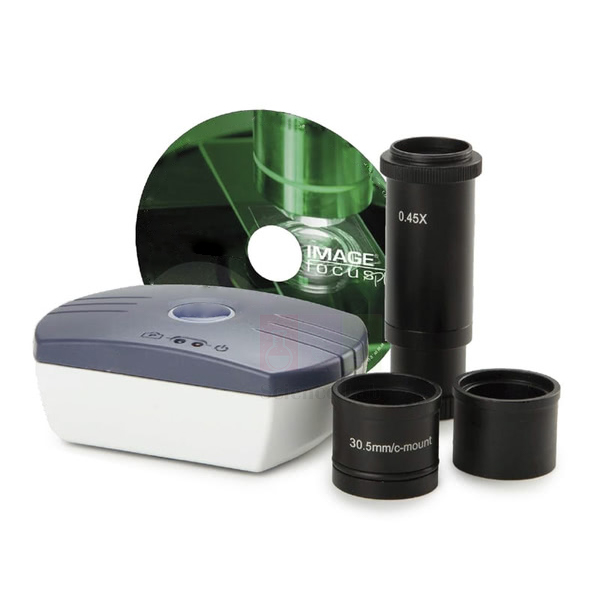
2MP Digital USB-2 Colour Camera
2MP Digital USB-2 Colour Camera (Product Code: SLE/M/117) is a C-mount microscope camera used to display, record and measure microscope images on a computer through a USB 2.0 connection in teaching and research labs. It has a 1/2.9 inch CMOS sensor, gives up to 30 frames per second at 1920 x 1080 pixels, and comes with a 0.45x C-mount objective, stereo-microscope adapters and a calibration slide. It is supplied by Jain Scientific Equipments Pvt Ltd (ScienceLab), Ambala, India.
Specifications
| Parameter | Detail |
|---|---|
| Sensor | CMOS, 1/2.9 inch, 2.0 MP |
| Scan mode | Progressive, rolling shutter |
| Pixel size | 2.8 µm x 2.8 µm |
| Sensitivity | > 0.51 V/lux-sec at 550 nm |
| Exposure | Automatic or manual, 1 ms to 2000 ms |
| White balance | Automatic / manual |
| Filter | RGB |
| Mount | C-mount |
| Maximum frame rate | Up to 30 frames per second at 1920 x 1080 pixels |
| Bit depth | 8-bit greyscale conversion; 24-bit colour rendering |
| Dynamic range | 72 dB |
| Data interface | USB 2.0 at 480 Mb/s |
| Operating conditions | 0 to 60 °C; 10–85% humidity |
| Storage temperature | -20 to 70 °C |
| Software compatibility | Windows 7, Windows 8, Windows 10 (32 and 64 bit configurations) and Mac OS |
| Recommended computer | Intel Core 2, 2.8 GHz or higher; 4 GB; USB-2 port; 17 inch display |
| Supplied with | 0.45x objective with C-mount; USB 2.0 cable; 30 mm and 30.5 mm adapters for stereo microscopes; 76 x 24 mm calibration slide (1 mm/100); CD-ROM with ImageFocus Plus software; carton box |
| Product code | SLE/M/117 |
| Supplied by | Jain Scientific Equipments Pvt Ltd (ScienceLab), Ambala, India |
What Is the 2MP USB Microscope Camera Used For?
A USB microscope camera puts the microscope image on a computer monitor or projector, so a whole class sees what one student sees, and staff can save images of slides for records and assessments in cell biology and histology classes. With the supplied 30 mm and 30.5 mm adapters it can also sit on a stereo microscope to record dissections, insects and plant parts. The 30 fps live stream keeps moving organisms such as protozoa smooth on screen.
Before measuring, image the supplied calibration slide (1 mm divided into 100) at each magnification to set a reference scale. Use automatic exposure for routine bright-field teaching, and switch to manual exposure, anywhere from 1 ms to 2000 ms, for dim samples. Keep the camera within its 0 to 60 °C operating range and away from damp storage.
What to Specify When Ordering
- Microscope make and model, and whether the camera goes on a C-mount port or a stereo microscope tube
- Computer operating system: Windows 7, 8, 10 or Mac OS
- Number of cameras required
- Whether a separate C-mount adapter is needed for your microscope
Supplier
ScienceLab (Jain Scientific Equipments Private Limited), based in Ambala, Haryana, supplies this 2 MP USB 2.0 camera together with the microscopes and slides that labs pair it with. It is offered to schools, colleges, research institutes, dealers and importers in India and international markets. For company information, see the ScienceLab company profile.
Related Microscope Equipment
Microscopes and alternative cameras to consider:
- 5mp Microscope Camera — 5 MP sensor with wireless streaming to phones and tablets
- Wi-Fi Camera — Full HD wireless camera for sharing with several devices
- Binocular Stereo Microscope, 40x — stereo microscope for recording dissections (confirm adapter fit with us)
- Trinocular Microscope, 1000x, LED — microscope with a camera port for slide imaging (confirm fit with us)
- Micrometric Slide — an additional reference slide for measurement practice
More imaging options are in the Microscope category.
Frequently Asked Questions
What comes with the 2MP Digital USB-2 Colour Camera?
The 2MP Digital USB-2 Colour Camera is supplied with a 0.45x objective with C-mount, a USB 2.0 cable, 30 mm and 30.5 mm adapters for stereo microscopes, a 76 x 24 mm calibration slide (1 mm/100), a CD-ROM with ImageFocus Plus software and a carton box.
Does the 2MP Digital USB-2 Colour Camera work with Mac computers?
Yes. The 2MP Digital USB-2 Colour Camera software runs on Mac OS and on Windows 7, 8 and 10 in 32 and 64 bit configurations. The recommended computer has an Intel Core 2 at 2.8 GHz or higher, 4 GB, a USB-2 port and a 17 inch display.
What frame rate does this USB camera achieve?
The 2MP Digital USB-2 Colour Camera streams up to 30 frames per second at 1920 x 1080 pixels over USB 2.0 at 480 Mb/s, which gives smooth live viewing of moving specimens such as protozoa or pond life.
Can the 2MP Digital USB-2 Colour Camera be used to measure specimens?
The 2MP Digital USB-2 Colour Camera includes a 76 x 24 mm calibration slide marked 1 mm/100, which gives a reference scale at each magnification. Ask us about the measuring functions of the supplied software before ordering if measurement is essential.
Will this camera fit a stereo microscope?
The 2MP Digital USB-2 Colour Camera includes 30 mm and 30.5 mm adapters for stereo microscopes plus a 0.45x objective with C-mount. Share your microscope model and eyepiece tube diameter and we will confirm the fit before you order.
Who supplies the 2MP Digital USB-2 Colour Camera?
The 2MP Digital USB-2 Colour Camera is supplied by Jain Scientific Equipments Pvt Ltd (ScienceLab), Ambala, Haryana, India. Schools, colleges, dealers and importers in India and international markets can order it on its own or with microscopes.
Request a Quote
For a quotation on the 2MP Digital USB-2 Colour Camera, contact us through the contact page or add the camera to the enquiry cart, stating quantity, microscope model and delivery location.
Last updated: 24 September 2026
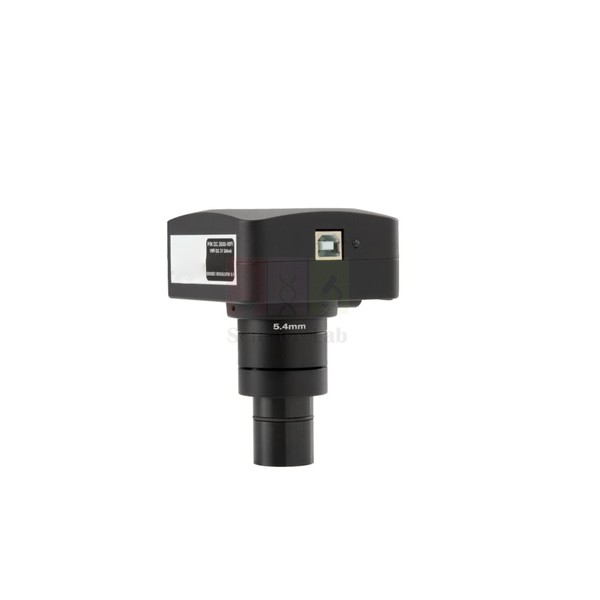
5mp Microscope Camera
5mp Microscope Camera (Product Code: SLE/M/118) is a C-mount Wi-Fi microscope camera used to stream live microscope images to several smartphones, tablets or computers at once for demonstrations and remote viewing. It has a 5 MP CMOS sensor with 12-bit greyscale conversion and 24-bit colour rendering, sends H.264-encoded images over a key-secured Wi-Fi link and runs on USB power. It is supplied by Jain Scientific Equipments Pvt Ltd (ScienceLab), Ambala, a laboratory instruments supplier in India.
Specifications
| Parameter | Detail |
|---|---|
| Sensor | CMOS, 1/2.5 inch |
| Pixels (as listed) | 1280 x 720 pixels, 5.0 Mpix (confirm capture resolution with us) |
| Scan mode | Electronic rolling shutter |
| Pixel size | 2.2 µm x 2.2 µm |
| Filter | RGB colour filter and IR-cut-off filter (380–650 nm) |
| Mount | C-mount |
| Maximum frame rate | Up to 12 frames per second |
| Exposure | Automatic or manual, 1 ms to 800 ms |
| White balance | Automatic / manual |
| Bit depth / ADC | 12-bit greyscale conversion, 24-bit colour rendering; ADC 12 bits |
| Dynamic range | 61 dB |
| Sensitivity | 0.53 V/lux-sec at 550 nm |
| Signal-to-noise | Max 43 dB |
| Data interface | Wi-Fi, H.264-encoded images, secured with key |
| Operating conditions | 0 to 50 °C; 30–80% humidity |
| Storage temperature | -20 to 60 °C |
| Power supply | Supplied USB charger, or the USB port of a PC |
| Housing | Zinc-aluminium alloy, 68 x 68 x 45 mm |
| Compatibility | Windows 7, 8, 10 (32 and 64 bit); iOS iPad or iPhone; Android tablets and phones |
| Requirements | PC with Intel Core2 2.8 GHz or higher, or equivalent, and minimum 2 GB RAM; Wi-Fi enabled device with DHCP |
| Supplied with | 0.5x objective with C-mount; 30 mm and 30.5 mm to 23.2 mm adapters for stereo microscopes; 76 x 24 mm calibration slide (1 mm/100); USB charger and USB cable; CD-ROM with ImageFocus Alpha software; Android .apk app; carton box |
| Product code | SLE/M/118 |
| Supplied by | Jain Scientific Equipments Pvt Ltd (ScienceLab), Ambala, India |
What Is the 5MP Wi-Fi Microscope Camera Used For?
This camera is built for demonstrations and for places where remote viewing is needed. A teacher can stream the microscope image to students' phones or tablets, or a lab can show a sample to colleagues in another room, without running cables. Because the Wi-Fi link is secured with a key, only devices given the key can join the stream.
With a maximum of 12 frames per second, it is better suited to stained slides, tissue sections, insects and plant material rather than fast-swimming organisms, which makes it a good fit for digital microscopy in school biology lab equipment setups. The supplied 0.5x C-mount objective and stereo-microscope adapters cover common mounting needs, and the calibration slide gives a reference scale before measuring.
What to Specify When Ordering
- Microscope make and model, and whether it has a C-mount port or a stereo microscope eyepiece tube
- The viewing devices: Windows PC, iPad or iPhone, or Android tablet or phone
- Number of cameras required
- Whether a separate adjustable C-mount adapter is also wanted
Supplier
Jain Scientific Equipments Private Limited, known by its trade name ScienceLab, supplies this 5 MP Wi-Fi camera from Ambala, Haryana, to schools, colleges, research labs, dealers and importers in India and international markets. It can be quoted on its own or with microscopes and slides. The ScienceLab company profile gives more background.
Related Microscope Equipment
Other cameras, a stereo microscope and a mounting accessory:
- Wi-Fi Camera — alternative with 4.0 MP capture and an Ethernet option
- 2MP Digital USB-2 Colour Camera — wired USB 2.0 alternative for faster live video
- Binocular Stereo Microscope, 40x — stereo microscope for dissection work (confirm adapter fit with us)
- Adjustable C-Focus Mount Adapter — adjustable C-mount coupling for camera focusing (confirm fit with us)
See the full range in the Microscope category.
Frequently Asked Questions
How does the 5mp Microscope Camera connect to phones and tablets?
The 5mp Microscope Camera streams H.264-encoded images over a Wi-Fi link secured with a key to several Wi-Fi enabled smartphones, tablets or computers at once. It supports iPad and iPhone, Android tablets and phones, and Windows 7, 8 and 10 computers.
How is the 5mp Microscope Camera powered?
The 5mp Microscope Camera is powered by the USB charger included in the box or through the USB port of a computer, using the supplied USB cable, so it can run from a classroom PC during a lesson.
What is included with the 5mp Microscope Camera?
The 5mp Microscope Camera comes with a 0.5x objective with C-mount, 30 mm and 30.5 mm to 23.2 mm stereo-microscope adapters, a 76 x 24 mm calibration slide, a USB charger and cable, a CD-ROM with ImageFocus Alpha software, an Android .apk app and a carton box.
Is the 5mp Microscope Camera suitable for moving specimens?
The 5mp Microscope Camera streams at up to 12 frames per second, which suits slides, sections, insects and plant material. For fast-moving organisms, a camera with a higher frame rate, such as the 2MP Digital USB-2 Colour Camera at up to 30 fps, may suit better.
What resolution does the 5mp Microscope Camera record?
The 5mp Microscope Camera uses a 1/2.5 inch CMOS sensor listed as 5.0 Mpix with 2.2 µm pixels, while its listed pixel format is 1280 x 720. Please confirm the capture and streaming resolution with us if a tender specifies it.
Who supplies the 5mp Microscope Camera?
The 5mp Microscope Camera is supplied by Jain Scientific Equipments Pvt Ltd (ScienceLab), Ambala, Haryana, India. Schools, colleges, dealers and importers in India and international markets can request it through the contact page or the enquiry cart.
Request a Quote
Ask for a quotation on the 5mp Microscope Camera through the contact page, or add it to the enquiry cart with details of your microscopes and viewing devices.
Last updated: 24 September 2026
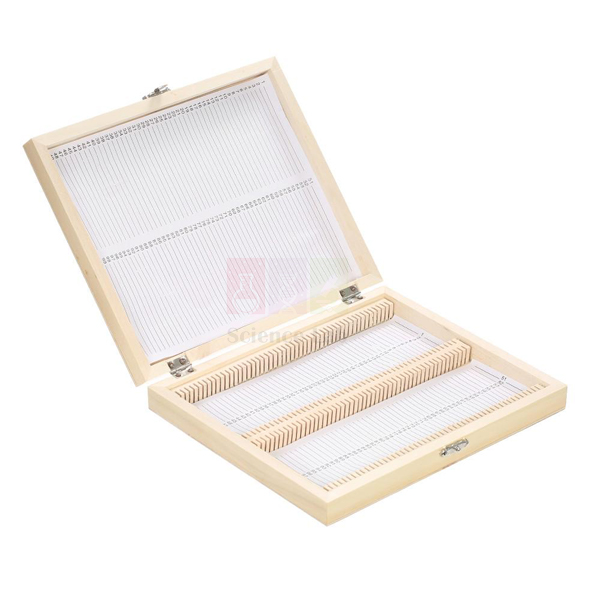
Wooden Slide Case
Wooden Slide Case (Product Code: SLE/M/119) is a storage case used to hold and protect 100 glass microscope slides of 75 x 26 mm in school, college and research laboratories. Its fully lined wooden body gives good shock resistance, and it is fitted with brass clips and an aluminium index cardholder for labelling the collection. The case is made by Jain Scientific Equipments Pvt Ltd (ScienceLab), an OEM manufacturer, at its own factory in Ambala, India.
Specifications
| Parameter | Detail |
|---|---|
| Material | Wooden, fully lined |
| Capacity | 100 slides |
| Slide size | 75 x 26 mm glass microscope slides |
| Fittings | Brass clips; aluminium index cardholder |
| Protection | Good shock resistance |
| Product code | SLE/M/119 |
| Manufacturer | Jain Scientific Equipments Pvt Ltd (ScienceLab) — OEM |
| Country of origin | India (made in Ambala, Haryana) |
What Is the Wooden Slide Case Used For?
Prepared slide sets are costly to replace and crack easily when stacked loose in a drawer. A wooden slide case gives each of the 100 slides its own place, so a school or college can store permanent slides by topic, such as plant anatomy, animal tissues or microbiology, and issue them for practicals without handling the whole collection. The lined interior helps when cases are carried between the store room and the lab.
Write a slide index on the card in the aluminium cardholder so students can find and return slides quickly. Store the case flat, so slides lie horizontally and mounted specimens stay in place, and keep it in a dry cupboard. Standard 75 x 26 mm slides fit; check the size of any specialist slides before storing them.
What to Specify When Ordering
- Number of cases needed for your slide collection
- Confirmation that your slides are the 75 x 26 mm size
- Whether prepared slide sets or cover glasses should be quoted with the cases
OEM Manufacturer
Jain Scientific Equipments Private Limited, trading as ScienceLab, is the OEM (original equipment manufacturer) of this wooden slide case and makes it at its own licensed factory at Saha, Ambala, Haryana, India, rather than sourcing it from a trader. ScienceLab is the trading name of Jain Scientific Equipments Private Limited (CIN U29309HR2020PTC087597), and production takes place at 449, HSIIDC Industrial Area, Saha, Ambala under Factory Licence AMB-ONLINE-CHD-J-414.
Schools, colleges, dealers and importers in India and international markets buy factory-direct, and repeat orders or replacement cases are handled by the manufacturer itself, so just ask us. Read the ScienceLab company profile for more about the company.
Related Microscope Accessories
Slides, storage alternatives and handling tools that go with this case:
- Slide Box, Wooden — another wooden storage option to compare
- Microscope Slide Case — alternative case for slide storage
- Microscope Slide Cover Forceps — for handling slides and cover glasses without fingerprints
- Glass Cover Slips — cover glasses for mounting new slides
- Prepared Microscope Slide Set – Transport In Plants — a prepared set to store in the case
More storage and handling items are in the Microscope category.
Frequently Asked Questions
How many slides does the Wooden Slide Case hold?
The Wooden Slide Case holds 100 glass microscope slides of the standard 75 x 26 mm size. That capacity suits a class set of prepared slides or a teacher's reference collection kept in one labelled case.
What is the Wooden Slide Case made of?
The Wooden Slide Case has a wooden body that is fully lined inside and fitted with brass clips and an aluminium index cardholder. The construction gives good shock resistance for slides moved between the store room and the laboratory.
Will my slides fit in the Wooden Slide Case?
The Wooden Slide Case is sized for 75 x 26 mm glass microscope slides. If your slides differ, for example thicker or larger specialist slides, send us their dimensions and we will advise whether they fit before you order.
Who manufactures the Wooden Slide Case?
The Wooden Slide Case is manufactured by Jain Scientific Equipments Pvt Ltd (ScienceLab), the OEM, at its own licensed factory at Saha, Ambala, Haryana, India. Buyers deal directly with the manufacturer for quotations, repeat orders and replacement cases.
How should slides be stored in the case?
Keep the Wooden Slide Case flat and closed in a dry cupboard, with one slide per position and the index card kept up to date. Storing the case flat keeps prepared slides horizontal, which helps protect mounted specimens over time.
Can the Wooden Slide Case be ordered in bulk?
Yes. The Wooden Slide Case can be supplied in quantity to schools, colleges, dealers and importers in India and international markets. Send the number of cases and your delivery location through the contact page or the enquiry cart.
Request a Quote
Quotations for the Wooden Slide Case come directly from the manufacturer. Send your requirement through the contact page or add the case to the enquiry cart.
Last updated: 24 September 2026
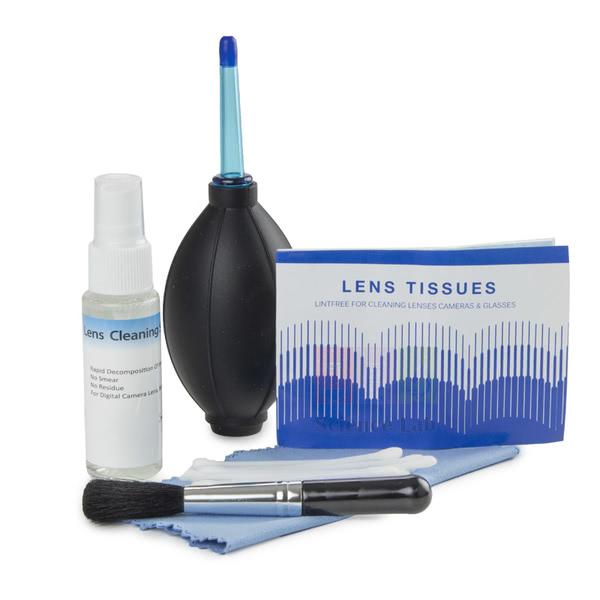
Microscope Cleaning Kit
Microscope Cleaning Kit (Product Code: SLE/M/120) is a set of cleaning tools and consumables used to remove dust, fingerprints and oil from microscope lenses and optics in school, college and research laboratories. The kit contains a brush, an air blower, lens fluid, lint-free lens tissue or paper and cotton swabs, covering both dry and wet cleaning. It is supplied by Jain Scientific Equipments Pvt Ltd (ScienceLab), Ambala, India.
Key Details
| Parameter | Detail |
|---|---|
| Contents | Brush; air blower; lens fluid; lint-free lens tissue/paper; cotton swabs |
| Cleaning methods | Dry (blower and brush) and wet (lens fluid with tissue or swab) |
| Lens fluid shelf life | Depends on the fluid, its grade and storage conditions; ask us for the expiry date of the batch you are quoted |
| Product code | SLE/M/120 |
| Supplied by | Jain Scientific Equipments Pvt Ltd (ScienceLab), Ambala, India |
What Is a Microscope Cleaning Kit Used For?
Dust on an eyepiece, a thumbprint on an objective or dried immersion oil on the oil lens can make a good microscope look faulty. Regular cleaning keeps images sharp and protects the optics of compound and stereo microscopes in school and college labs, where many hands use the same instruments every week.
Work from dry to wet: first blow loose grit away with the air blower, then sweep with the brush so particles cannot scratch the lens when it is wiped. Next, moisten a lens tissue or cotton swab with a little lens fluid and wipe in a spiral from the centre outward, finishing with a dry tissue. Never pour fluid straight onto a lens, and do not dismantle objectives.
What to Specify When Ordering
- Number of kits, for example one per lab or per group of microscopes
- Extra lens tissue packs as refills
- Immersion oil, if your microscopes have oil immersion objectives
Supplier
ScienceLab, the trading name of Jain Scientific Equipments Private Limited, Ambala, Haryana, supplies this microscope cleaning kit together with microscopes, lens tissue and immersion oil, so a lab can set up a care routine when it buys new instruments. It serves schools, colleges, dealers and importers in India and international markets. See the ScienceLab company profile for more.
Related Microscope Accessories
Refills and care items to order with the kit:
- Lens Tissue — refill sheets for wiping lenses
- Microfiber Lens Cloth — reusable cloth for eyepieces and microscope bodies
- Immersion Oil, 25ml — the oil this kit helps remove after high-power work
- Carry Case for Microscopes — keeps a microscope dust-free between classes
Browse more accessories in the Microscope category.
Frequently Asked Questions
What is in the Microscope Cleaning Kit?
The Microscope Cleaning Kit contains a brush, an air blower, lens fluid, lint-free lens tissue or paper and cotton swabs. Quantities of each item are not listed, so ask us if you need a count for a tender or a stores record.
Can the Microscope Cleaning Kit remove immersion oil?
Yes. The lens fluid, lint-free lens tissue and cotton swabs in the Microscope Cleaning Kit are the usual tools for wiping immersion oil from an oil objective after use. Wipe gently with a moistened tissue, then finish with a dry one.
How often should microscopes be cleaned with the kit?
With the Microscope Cleaning Kit, a quick dust-off using the air blower and brush can follow every class, while a wet clean with lens fluid is needed only when fingerprints, smears or oil appear. Covering microscopes between classes reduces cleaning time.
Does the lens fluid in the kit have a shelf life?
The shelf life of the lens fluid in the Microscope Cleaning Kit depends on the fluid, its grade and storage conditions. Ask us for the expiry date of the batch you are quoted, and keep the bottle tightly closed, away from heat and sunlight.
Who supplies the Microscope Cleaning Kit?
The Microscope Cleaning Kit is supplied by Jain Scientific Equipments Pvt Ltd (ScienceLab), Ambala, Haryana, India, to schools, colleges, dealers and importers in India and international markets, often together with new microscopes.
What should a quotation request include?
For the Microscope Cleaning Kit, send the number of kits, any refill lens tissue or immersion oil you want added, and the delivery location, using the contact page or the enquiry cart.
Request a Quote
Ask for a quotation for the Microscope Cleaning Kit through the contact page, or add it to the enquiry cart along with your microscopes and consumables.
Last updated: 24 September 2026

Lens Tissue
Lens Tissue (Product Code: SLE/M/121) is a soft, disposable cleaning paper used to wipe camera, spectrometer and microscope lenses in laboratories and classrooms. Each sheet measures 100 x 150 mm and the tissue comes in a pack of 100, a practical quantity for a microscope lab's routine cleaning. It is supplied by Jain Scientific Equipments Pvt Ltd (ScienceLab), Ambala, a laboratory instruments supplier in India, as a consumable for optics and biology labs.
Specifications
| Parameter | Detail |
|---|---|
| Sheet size | 100 x 150 mm |
| Pack size | Pack of 100 |
| Used for | Cleaning camera, spectrometer and microscope lenses |
| Product code | SLE/M/121 |
| Supplied by | Jain Scientific Equipments Pvt Ltd (ScienceLab), Ambala, India |
What Is Lens Tissue Used For?
Lens tissue is the everyday wipe for optical glass: microscope eyepieces and objectives in biology labs, camera lenses on imaging setups, and the lenses of a spectrometer in physics practicals. Ordinary paper tissue and clothing can leave fibres or drag grit across coated surfaces, which is why labs keep proper lens tissue beside every microscope bench.
Use each sheet once. Blow off loose dust first, fold a sheet so your fingers stay away from the wiping area, add a drop of lens cleaning fluid if needed, and wipe gently in a spiral from the centre outward. To lift immersion oil from an objective, draw a fresh strip of tissue across the front lens, then finish with a dry sheet.
Supplier
Jain Scientific Equipments Private Limited, which trades as ScienceLab from Ambala, Haryana, supplies lens tissue as a consumable alongside its microscopes, cameras and optics equipment. Schools, colleges, research labs, dealers and importers in India and international markets can add packs to larger lab orders. More is on the ScienceLab company profile.
Related Microscope Accessories
Other items used with lens tissue:
- Microscope Cleaning Kit — brush, air blower, lens fluid and swabs for a full clean
- Immersion Oil, 25ml — wiped off oil objectives with lens tissue after use
- Microfiber Lens Cloth — reusable cloth for eyepieces and instrument bodies
- Spectrometer — physics instrument whose lenses need the same care
Find more accessories in the Microscope category.
Frequently Asked Questions
What size is Lens Tissue and how many sheets are in a pack?
Lens Tissue comes in packs of 100 sheets, each 100 x 150 mm. A sheet can be used flat, folded into a small pad for eyepieces, or torn into strips for wiping objectives.
What can Lens Tissue be used on?
Lens Tissue is used for cleaning camera, spectrometer and microscope lenses. It suits delicate glass surfaces such as eyepieces, objectives and camera optics, and can be used dry or with a small amount of lens cleaning fluid.
Can Lens Tissue be reused?
Lens Tissue is meant to be used once and then discarded, because a used sheet can hold grit that would scratch the next lens. A pack of 100 sheets covers many cleanings in a typical school or college microscope lab.
Does Lens Tissue remove immersion oil?
Yes, Lens Tissue is the usual way to wipe immersion oil from an oil immersion objective after use. Wipe gently, use a fresh sheet with a little lens fluid if a film remains, and finish with a dry sheet.
Who supplies Lens Tissue?
Lens Tissue is supplied by Jain Scientific Equipments Pvt Ltd (ScienceLab), Ambala, Haryana, India, to schools, colleges, research labs, dealers and importers in India and international markets, usually as part of wider microscope or optics orders.
How do I order Lens Tissue in quantity?
To order Lens Tissue, send the number of packs of 100 you need and your delivery location through the contact page or add it to the enquiry cart. It can be quoted together with microscopes and other consumables.
Request a Quote
Request a quotation for Lens Tissue through the contact page, or place the packs you need in the enquiry cart.
Last updated: 24 September 2026
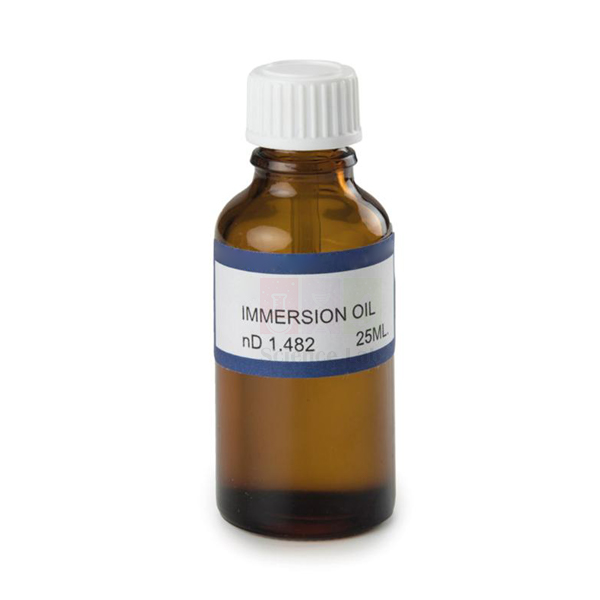
Immersion Oil, 25ml
Immersion Oil, 25ml (Product Code: SLE/M/122) is a transparent, high-refractive-index oil used with oil immersion objectives to increase microscope resolution in biology, microbiology and pathology teaching labs. A drop placed between the lens and the specimen increases the numerical aperture of the objective, giving sharper detail at the highest magnification. It is supplied in a 25 ml volume by Jain Scientific Equipments Pvt Ltd (ScienceLab), Ambala, India.
Specifications
| Parameter | Detail |
|---|---|
| Volume | 25 ml |
| Appearance | Transparent oil |
| Optical property | High refractive index |
| Function | Increases the numerical aperture of an objective, increasing microscope resolution |
| Application | Immersing the lens and specimen when using oil immersion objectives |
| Shelf life | Shelf life depends on the chemical, its grade and storage conditions; ask us for the expiry date of the batch you are quoted |
| Product code | SLE/M/122 |
| Supplied by | Jain Scientific Equipments Pvt Ltd (ScienceLab), Ambala, India |
What Is Immersion Oil Used For?
At the highest magnification, light leaving the slide bends sharply as it passes from glass into air, and much of it misses the objective. Filling that air gap with a transparent oil of high refractive index keeps the light path continuous, so the objective gathers more light and resolves finer detail. That is why Gram-stained bacteria, blood cells and chromosome spreads are examined under oil in microbiology lab practicals.
Focus the specimen first with the next lower dry objective, swing it aside, and place one small drop of oil on the cover glass over the area of interest. Rotate the oil immersion objective into the drop, focus with the fine control only, and avoid swinging a dry objective back through the oil. After the session, wipe the oil from the objective and the slide with lens tissue.
Supplier
ScienceLab is the trading name of Jain Scientific Equipments Private Limited, Ambala, Haryana, which supplies this immersion oil both with its high-power microscopes and as a stand-alone consumable. Schools, colleges, research labs, dealers and importers in India and international markets can add it to microscope and slide orders. Details are on the ScienceLab company profile.
Related Microscope Accessories
Microscopes and consumables used with immersion oil:
- Trinocular Microscope, 1000x, LED — has a 100X/1.25 oil immersion objective
- Trinocular Microscope, 1000x, LED Illumination — has a spring-loaded S100x oil objective
- Lens Tissue — for wiping oil off objectives and slides after use
- Glass Cover Slips — the cover glass on which the oil drop is placed
- Microscope Cleaning Kit — lens fluid and swabs for removing oil film
More microscope consumables are in the Microscope category.
Frequently Asked Questions
What is Immersion Oil, 25ml used for?
Immersion Oil, 25ml is used with oil immersion objectives to increase microscope resolution. It fills the gap between lens and specimen with a transparent, high-refractive-index oil, which increases the numerical aperture of the objective and sharpens fine detail.
Can Immersion Oil, 25ml be used with any objective?
No. Immersion Oil, 25ml should only be used with objectives made for oil immersion, usually engraved "Oil". If oil reaches a dry objective, clean it off straight away with lens tissue and a little lens fluid before it dries on the front lens.
How much immersion oil is needed per slide?
Only one small drop of Immersion Oil, 25ml is needed for the area being examined, placed on the cover glass before the oil objective is swung in. Too much oil can run onto the stage and condenser, so wipe any excess away.
What is the shelf life of Immersion Oil, 25ml?
Shelf life of Immersion Oil, 25ml depends on the chemical, its grade and storage conditions; ask us for the expiry date of the batch you are quoted. Keep the container tightly closed and away from heat and direct sunlight.
How are objectives cleaned after using immersion oil?
After using Immersion Oil, 25ml, wipe the oil objective gently with lens tissue, then with a tissue moistened with a little lens cleaning fluid if a film remains. Clean slides the same way before returning prepared slides to storage.
Who supplies Immersion Oil, 25ml?
Immersion Oil, 25ml is supplied by Jain Scientific Equipments Pvt Ltd (ScienceLab), Ambala, Haryana, India, to schools, colleges, research labs, dealers and importers in India and international markets, alone or with microscopes and slides.
Request a Quote
To order Immersion Oil, 25ml, send the quantity and delivery location through the contact page, or add it to the enquiry cart with your other microscope items.
Last updated: 24 September 2026
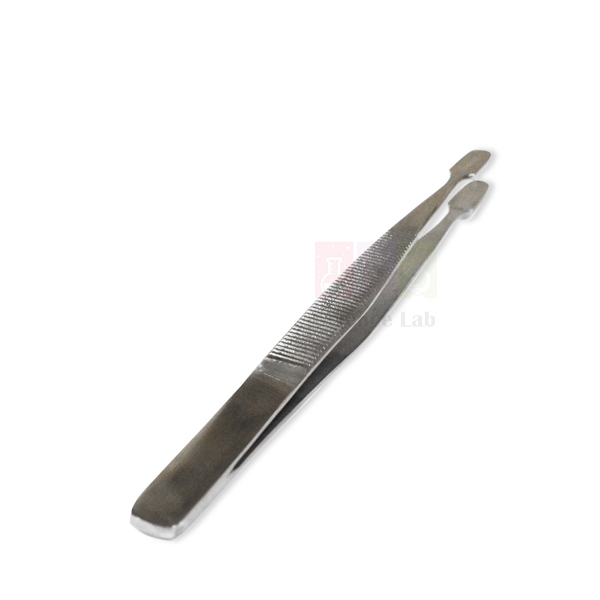
Microscope Slide Cover Forceps
Microscope Slide Cover Forceps (Product Code: SLE/M/123) is a pair of stainless steel forceps used to pick up, place and lower cover glasses and to handle microscope slides when preparing mounts in biology and microbiology labs. They are 120 mm long, with plain, wide tips suited to gripping thin glass by its edge. The forceps are made by Jain Scientific Equipments Pvt Ltd (ScienceLab), an OEM manufacturer, at its own factory in Ambala, India.
Specifications
| Parameter | Detail |
|---|---|
| Type | Microscope glass slide cover forceps |
| Length | 120 mm |
| Material | Stainless steel |
| Tips | Plain, wide |
| Product code | SLE/M/123 |
| Manufacturer | Jain Scientific Equipments Pvt Ltd (ScienceLab) — OEM |
| Country of origin | India (made in Ambala, Haryana) |
What Are Cover Glass Forceps Used For?
When students make temporary slides of onion peel, cheek cells or pond water, the cover glass must be lowered at an angle so the liquid spreads without trapping air bubbles. Holding the thin glass with forceps instead of fingers keeps it free of fingerprints and gives far better control over that slow lowering. Wide, plain tips spread the grip along the edge of the glass, which reduces the chance of cracking it.
Rest one edge of the cover glass on the slide beside the drop, support the opposite edge with the forceps, and let it down slowly. The same forceps lift slides from a tray, take cover glasses out of their box and transfer small sections onto a slide. After staining work, rinse them in water and dry them before storage.
What to Specify When Ordering
- Number of pairs, for example one per student or per bench
- Whether cover glasses and microscope slides should be quoted too
- Any dissecting needles or other mounting tools needed for the same practicals
OEM Manufacturer
ScienceLab is the trading name of Jain Scientific Equipments Private Limited, the OEM (original equipment manufacturer) of these slide cover forceps, which are produced at the company's own licensed factory at Saha, Ambala, Haryana, India. The company is a registered MSME manufacturer (Udyam UDYAM-HR-01-0003714), and export shipments are handled under Importer-Exporter Code AAECJ8618A (DGFT).
Schools, colleges, laboratories, dealers and importers in India and international markets receive quotations straight from the manufacturer, and repeat orders for class sets are handled by the same team. See the ScienceLab company profile for more.
Related Microscope Accessories
Slides, cover glasses and tools used alongside these forceps:
- Glass Cover Slips — the cover glasses these forceps are designed to handle
- Microscope Glass Slides — slides for temporary and permanent mounts
- Dissecting Needle — helps support the cover glass edge and spread material
- Wooden Slide Case — storage for finished slides
- Forceps (Tweezers) — general-purpose forceps for dissection work
Explore more accessories in the Microscope category.
Frequently Asked Questions
What size and material are the Microscope Slide Cover Forceps?
Microscope Slide Cover Forceps are made of stainless steel, are 120 mm long and have plain, wide tips. The length keeps fingers clear of the slide, while the wide tips hold a cover glass by its edge.
Why use forceps instead of fingers for cover glasses?
Microscope Slide Cover Forceps keep fingerprints and skin oils off cover glasses and slides, and give steadier control when lowering a cover glass onto a mount. That helps prevent air bubbles under the cover glass and lowers the risk of breaking the thin glass.
Do the Microscope Slide Cover Forceps have serrated tips?
No. Microscope Slide Cover Forceps have plain, wide tips rather than toothed or serrated ones, which suits smooth glass cover slips and slides. For gripping tissue during dissection, forceps with serrated tips are the more usual choice.
Who manufactures the Microscope Slide Cover Forceps?
Microscope Slide Cover Forceps are manufactured by Jain Scientific Equipments Pvt Ltd (ScienceLab), the OEM, at its own licensed factory at Saha, Ambala, Haryana, India. Quotations and repeat orders come directly from the manufacturer.
How should the forceps be cleaned?
Rinse Microscope Slide Cover Forceps in water after use with stains or mounting fluids, wipe them with alcohol if needed, and dry them fully before storage. Drying keeps the stainless steel tips clean and ready for the next practical.
Can the Microscope Slide Cover Forceps be ordered in class sets?
Yes. Microscope Slide Cover Forceps can be ordered in class quantities by schools, colleges, dealers and importers in India and international markets. Send the number of pairs and the delivery location through the contact page or the enquiry cart.
Request a Quote
Quotations for the Microscope Slide Cover Forceps come direct from the manufacturer. Send your requirement through the contact page or add the forceps to the enquiry cart.
Last updated: 24 September 2026
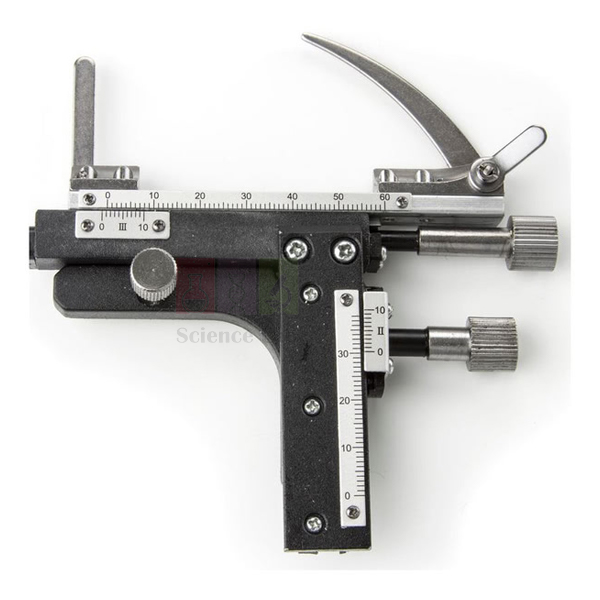
Attachable Mechanical Stage
Attachable Mechanical Stage (Product Code: SLE/M/124) is a microscope accessory used to hold a slide and move it in controlled steps on the stage of a Digital Monocular Microscope in school and college labs. It attaches to the microscope to give students precise slide positioning, and its listed dimensions are 51 x 26 mm. It is supplied by Jain Scientific Equipments Pvt Ltd (ScienceLab), Ambala, a laboratory instruments supplier in India, as an add-on for digital monocular microscopes.
Key Details
| Parameter | Detail |
|---|---|
| Type | Attachable mechanical stage |
| Use with | Digital Monocular Microscope |
| Dimensions | 51 x 26 mm (as listed) |
| Product code | SLE/M/124 |
| Supplied by | Jain Scientific Equipments Pvt Ltd (ScienceLab), Ambala, India |
What Is an Attachable Mechanical Stage Used For?
Pushing a slide by hand at high magnification is jerky, and the specimen easily drifts out of view. An attachable mechanical stage holds the slide and moves it with controls, so students can scan a blood smear or trace a root section field by field without losing their place. On a digital monocular microscope, where the class may be watching the image on screen, that steady movement makes demonstrations much easier to follow.
Attach the stage to the microscope, secure the slide in its holder, and use the controls rather than your fingers to move the specimen. Keep the moving parts free of dust and immersion oil, and remove the stage before packing the microscope away if it does not fit the case with the stage in place.
What to Specify When Ordering
- The exact Digital Monocular Microscope model and code it will be fitted to
- Number of stages required
- Whether the microscope itself should be quoted together with the stage
Supplier
Jain Scientific Equipments Private Limited, trading as ScienceLab from Ambala, Haryana, supplies this attachable mechanical stage as an accessory for digital monocular microscopes. Schools, colleges, dealers and importers in India and international markets can order it with the microscope or later as an upgrade. See the ScienceLab company profile for company details.
Related Microscope Equipment
Microscopes, an alternative stage and slides to consider:
- Digital Monocular Microscope, LED — digital monocular model (confirm stage fit with us)
- Digital Monocular Microscope, 400x — another digital monocular model (confirm stage fit with us)
- Student Graduated Mechanical Stage — alternative mechanical stage to compare
- Microscope Glass Slides — slides for use in the stage holder
More stages and accessories are in the Microscope category.
Frequently Asked Questions
Which microscope does the Attachable Mechanical Stage fit?
The Attachable Mechanical Stage is listed for use with a Digital Monocular Microscope. Several digital monocular models exist, so tell us the exact microscope name and code you have, and we will confirm the fit before you order.
What are the dimensions of the Attachable Mechanical Stage?
The Attachable Mechanical Stage has listed dimensions of 51 x 26 mm. Its travel range and slide-holder size are not stated, so ask us for those details if you need them for a specification or tender.
What does a mechanical stage do?
An Attachable Mechanical Stage holds the slide and moves it with controls instead of by hand. That makes it easier to keep a specimen in view at higher magnification and to scan a slide systematically, field by field.
Can the Attachable Mechanical Stage be ordered with a microscope?
Yes. The Attachable Mechanical Stage can be quoted together with a Digital Monocular Microscope, or on its own as an upgrade for a microscope you already own. Mention the microscope model in your enquiry so the right stage is supplied.
Who supplies the Attachable Mechanical Stage?
The Attachable Mechanical Stage is supplied by Jain Scientific Equipments Pvt Ltd (ScienceLab), Ambala, Haryana, India, to schools, colleges, dealers and importers in India and international markets, as an accessory for digital monocular microscopes.
Request a Quote
Send your requirement for the Attachable Mechanical Stage, with the microscope model it is for, through the contact page, or add it to the enquiry cart.
Last updated: 24 September 2026
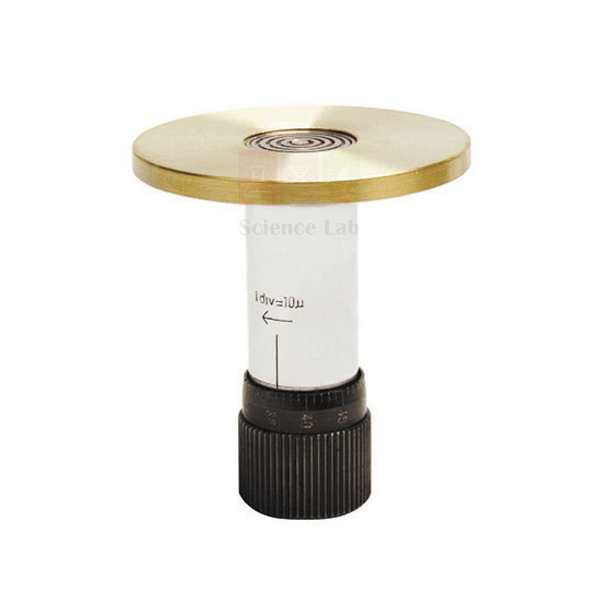
Microtome
Microtome (Product Code: SLE/M/125) is a hand cylinder microtome used to cut thin, even sections of plant stems, roots and other embedded material for microscope slides in botany and biology practicals. It has a 50 mm diameter cutting table with a wide flat top that guides the sectioning razor and protects the hand, and a 1 mm pitch feed screw. It is made by Jain Scientific Equipments Pvt Ltd (ScienceLab), an OEM manufacturer, at its own factory in Ambala, India.
Specifications
| Parameter | Detail |
|---|---|
| Type | Hand cylinder microtome |
| Cutting table | 50 mm diameter; wide flat top that guides the sectioning razor and protects the hand |
| Central well | 16 mm diameter |
| Feed screw | 1 mm pitch, with a wide milled flange so embedded material can be advanced very gradually |
| Product code | SLE/M/125 |
| Manufacturer | Jain Scientific Equipments Pvt Ltd (ScienceLab) — OEM |
| Country of origin | India (made in Ambala, Haryana) |
What Is a Hand Microtome Used For?
Free-hand sections cut with a razor are often too thick and uneven for students to see cell layers clearly. A hand microtome holds the material in its central well and raises it a little at a time with the feed screw, so each stroke of the razor across the flat table takes a thinner, more uniform slice. As a piece of botany lab equipment, it is the classic tool for transverse sections of dicot and monocot stems, roots and leaves in plant anatomy practicals.
Support soft specimens in an embedding material such as paraffin wax, or in a firm plant tissue like carrot, and fit the block in the 16 mm central well. Turn the milled flange a fraction of a turn, draw a wet razor across the table in one smooth stroke, and float each section in a watch glass of water. Stain the thinnest, most complete sections and mount them on a slide under a cover glass.
What to Specify When Ordering
- Number of microtomes, for example one per student pair
- Confirmation that the 16 mm central well suits your specimens
- Whether watch glasses, slides and cover glasses should be quoted with them
OEM Manufacturer
This hand microtome is manufactured by Jain Scientific Equipments Private Limited, trading as ScienceLab, as an OEM (original equipment manufacturer) at its own licensed factory at Saha, Ambala, Haryana, India. Because the maker supplies it directly, schools, colleges, dealers and importers in India and international markets get quotations and repeat orders straight from the source, and can ask us about replacement parts. The ScienceLab company profile has more about the company.
Related Microscope Equipment
Items used in the same section-cutting practical:
- Microtome, Simple — another microtome to compare
- Watch Glass — holds cut sections in water before staining
- Microscope Glass Slides — for mounting finished sections
- Glass Cover Slips — cover glasses for the mounts
- Microscope Slide Cover Forceps — for lowering cover glasses onto sections
See more in the Microscope category.
Frequently Asked Questions
What size is the Microtome?
The Microtome has a cutting table 50 mm in diameter and a central well 16 mm in diameter to hold the specimen. Its feed screw has a 1 mm pitch with a wide milled flange for fine, gradual advance of the material.
How thin can sections be cut with the Microtome?
Section thickness with the Microtome depends on how far the milled flange is turned before each cut; the 1 mm pitch screw lets material be advanced very gradually. A graduated thickness scale is not listed, so ask us if your syllabus needs a stated figure.
What else is needed to cut sections with the Microtome?
Besides the Microtome, you need a sharp sectioning razor, a supporting or embedding material for soft specimens, water in a watch glass, stain, slides and cover glasses. Tell us which of these you want included in the quotation.
Who manufactures the Microtome?
The Microtome is manufactured by Jain Scientific Equipments Pvt Ltd (ScienceLab), the OEM, at its own licensed factory at Saha, Ambala, Haryana, India. Schools, colleges, dealers and importers buy it directly from the manufacturer.
How should the Microtome be maintained?
After use, clean the Microtome of plant sap, wax and water, dry it fully and put a light film of oil on the feed screw thread. Keep the flat cutting table free of nicks so it continues to guide the razor evenly.
Can the Microtome be ordered for a whole class?
Yes. The Microtome can be supplied in class quantities to schools and colleges, and to dealers and importers in India and international markets. Send the number required and the delivery location through the contact page or the enquiry cart.
Request a Quote
Quotations for the Microtome come direct from the manufacturer. Write to us through the contact page or add it to the enquiry cart with any section-cutting accessories.
Last updated: 24 September 2026
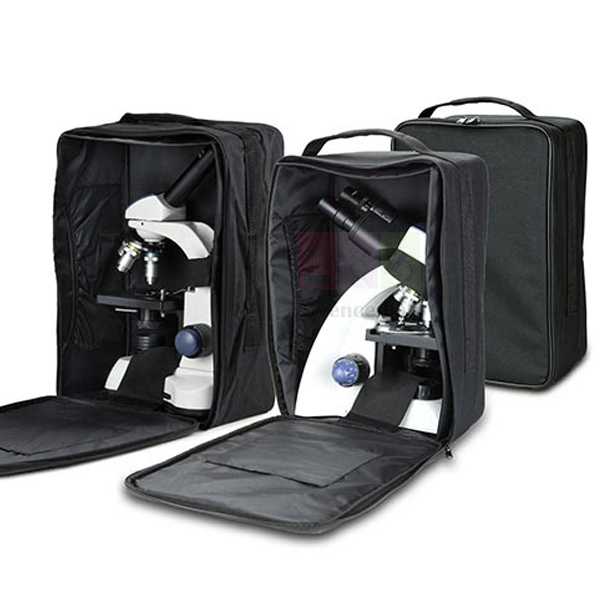
Carry Case for Microscopes
Carry Case for Microscopes (Product Code: SLE/M/126) is a nylon microscope bag used to keep a microscope completely dust free in storage and to carry it safely during field work. The microscope is placed inside easily and held in place with a few straps, and the bag measures 25 x 39 x 19 cm. It is supplied by Jain Scientific Equipments Pvt Ltd (ScienceLab), Ambala, a laboratory instruments supplier in India, for schools and field users.
Specifications
| Parameter | Detail |
|---|---|
| Type | Nylon microscope bag |
| Material | Nylon |
| Dimensions | 25 x 39 x 19 cm |
| Securing | A few straps hold the microscope safely inside the bag |
| Purpose | Dust-free storage; carrying a microscope on field work |
| Product code | SLE/M/126 |
| Supplied by | Jain Scientific Equipments Pvt Ltd (ScienceLab), Ambala, India |
What Is a Microscope Carry Case Used For?
Microscopes left uncovered in a school lab collect dust on the eyepieces, nosepiece and stage, and cleaning them before every class takes time. Keeping each microscope in its own nylon bag keeps it completely dust free between lessons, which saves time on cleaning and maintenance. For teachers running pond studies or ecology field trips, the same bag makes it easy to carry a microscope around all day.
Stand the microscope upright in the bag, fasten the straps around it and close the bag before lifting. Support the base of the bag when carrying, and compare the 25 x 39 x 19 cm size with your microscope's height, width and depth before ordering.
What to Specify When Ordering
- The microscope model the bag must hold, with its height, width and depth
- Number of bags, for example one per microscope
- Whether cleaning kits or lens tissue should be added to the order
Supplier
Jain Scientific Equipments Private Limited, trading as ScienceLab, supplies this nylon carry case from Ambala, Haryana, as an accessory for school and field microscopes. Schools, colleges, dealers and importers in India and international markets can order it with new microscopes or for instruments already in use. See the ScienceLab company profile for more.
Related Microscope Accessories
Storage alternatives, care items and portable microscopes:
- Microscope Case — alternative case for microscope storage
- Microscope Cleaning Kit — for cleaning a microscope after field use
- Lens Tissue — for wiping eyepieces and objectives on site
- Binocular Stereo Microscope, 40x — cordless stereo microscope for field work (confirm fit with us)
- Handheld Digital Microscope — portable option for outdoor observation
Browse more accessories in the Microscope category.
Frequently Asked Questions
What are the dimensions of the Carry Case for Microscopes?
The Carry Case for Microscopes measures 25 x 39 x 19 cm. Compare these dimensions with your microscope's height, width and depth, or send us the microscope model, and we will confirm whether it fits before you order.
What is the Carry Case for Microscopes made of?
The Carry Case for Microscopes is a nylon bag. The microscope is placed inside easily, and a few straps hold it safely in place, keeping it covered in storage and secure while it is carried.
Why store microscopes in a carry case?
Keeping each microscope in a Carry Case for Microscopes keeps it completely dust free between classes, which saves time on cleaning and maintenance of eyepieces, objectives and stage. It helps most in dusty rooms or where microscopes are stored for long periods.
Is the Carry Case for Microscopes suitable for field work?
Yes. The Carry Case for Microscopes is intended for users doing field work who need to carry a microscope around all day. Straps secure the microscope inside the bag, so it can be taken to a pond, garden or other field site.
Who supplies the Carry Case for Microscopes?
The Carry Case for Microscopes is supplied by Jain Scientific Equipments Pvt Ltd (ScienceLab), Ambala, Haryana, India, to schools, colleges, dealers and importers in India and international markets, alone or with microscopes.
What should a quotation request include?
For the Carry Case for Microscopes, send the number of bags, the microscope model or its dimensions, and the delivery location through the contact page or the enquiry cart, so we can confirm fit in the quotation.
Request a Quote
Ask for a quotation for the Carry Case for Microscopes through the contact page, or add it to the enquiry cart along with your microscopes.
Last updated: 24 September 2026
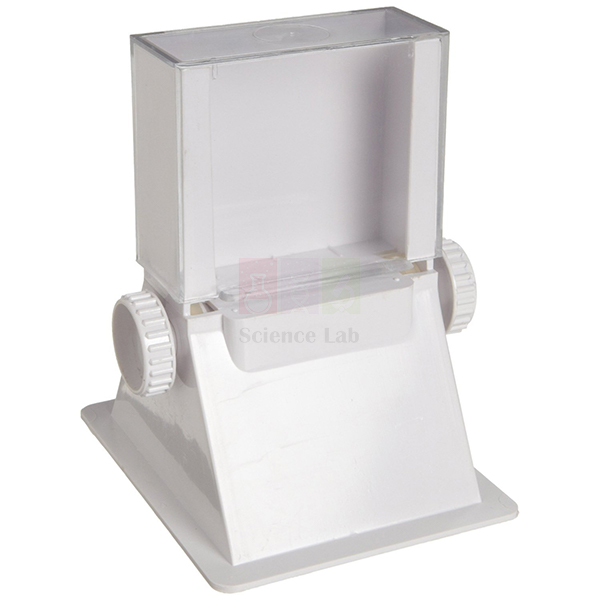
Microscope Slide Dispenser
Microscope Slide Dispenser (Product Code: SLE/M/127) is an ABS plastic magazine used to dispense clean 76 x 26 mm glass slides one at a time, without fingerprints, in school, college and pathology-training microscopy labs. It holds up to 90 slides under a dust cover and releases a slide when the knurled knob on either side of the moulded base is turned. This piece of biology lab equipment in India is supplied by Jain Scientific Equipments Pvt Ltd (ScienceLab), Ambala, India.
Specifications
| Parameter | Detail |
|---|---|
| Material | ABS plastic, moulded base |
| Slide size | 76 x 26 mm (the common 3 x 1 inch format) |
| Capacity | Up to 90 slides in the magazine |
| Dispensing | Rotate the knurled knob on either side of the base to dispense a slide |
| Slide release | Rubber rollers at the sides ease the slide out so it can be handled by the edges |
| Dust protection | Cover over the slides |
| Product code | SLE/M/127 |
| Supplied by | Jain Scientific Equipments Pvt Ltd (ScienceLab), Ambala, India |
What Is the Microscope Slide Dispenser Used For?
Clean slides matter in microscopy: a thumbprint on the glass shows up as a smudge at high power, and skin grease can stop a smear or stain from spreading evenly. The dispenser keeps a stock of blank slides covered and releases them one at a time, so each student lifts a slide by its edges instead of reaching into an open box. It is most useful in practical classes where students make many wet mounts, blood smears or stained preparations in one session.
Load the magazine with 76 x 26 mm slides, close the cover and turn either knurled knob; the rubber rollers push the slide out far enough to be picked up by its edges. With a knob on both sides, the dispenser can be used from either side of a shared bench. Wipe the ABS body with a damp cloth and keep the cover closed between classes so dust does not settle on the remaining slides.
What to Specify When Ordering
- The number of dispensers, for example one per bench or preparation area
- Whether blank 76 x 26 mm slides should be quoted to fill the magazines
- Any cover slips or slide storage boxes needed for the same classes
Supplier
Jain Scientific Equipments Private Limited, trading as ScienceLab, supplies the Microscope Slide Dispenser from Ambala, Haryana, to schools, colleges, pathology-training labs, dealers and importers in India and international markets. It is often ordered together with blank slides and cover slips so that a microscopy bench is ready to use on arrival. More background is on our company profile page.
Related Laboratory Equipment
Slides, cover slips and storage used in the same slide-preparation workflow:
- Microscope Slides Glass — blank slides for everyday mounts
- Glass Cover Slips — to cover wet mounts and smears
- Slide Drying Rack — holds smears upright while they dry
- Slide Box — stores finished preparations
- Slide Dispenser, Automatic — another slide dispenser to compare
Find more slide accessories in the Microscope category.
Frequently Asked Questions
How many slides does the Microscope Slide Dispenser hold?
The Microscope Slide Dispenser (SLE/M/127) holds up to 90 slides of 76 x 26 mm in its magazine, protected by a dust cover. The magazine can be topped up from a box of blank slides as it empties during a practical class.
How does the Microscope Slide Dispenser release a slide?
Turning the knurled knob on either side of the moulded base of the Microscope Slide Dispenser releases a slide. Rubber rollers at the sides ease it out so it can be picked up by its edges, which keeps fingerprints off the viewing area.
What size of slide fits the Microscope Slide Dispenser?
The Microscope Slide Dispenser is designed for 76 x 26 mm microscope slides, the common 3 x 1 inch format. Check the size of any slides you already stock before loading them, and ask us through the contact page if you use a different format.
What is the Microscope Slide Dispenser made of?
The Microscope Slide Dispenser is made of ABS plastic, with a moulded base and a cover that keeps dust off the slides. Clean it with a soft, damp cloth and avoid strong solvents, which can mark many plastics.
Who supplies the Microscope Slide Dispenser?
Jain Scientific Equipments Pvt Ltd, trading as ScienceLab in Ambala, Haryana, India, supplies the Microscope Slide Dispenser (SLE/M/127) to schools, colleges, training labs, dealers and importers in India and international markets. Quotations are prepared on request through the contact page.
What should a quotation request for the slide dispenser include?
A quotation request for the Microscope Slide Dispenser should state product code SLE/M/127, the number of dispensers, your delivery location and whether blank 76 x 26 mm slides or cover slips should be added to the same quotation.
Request a Quote
Ask for a quotation on the Microscope Slide Dispenser through our contact page with your quantity and delivery details, or add it to the enquiry cart with slides and cover slips for a single combined enquiry.
Last updated: 24 September 2026
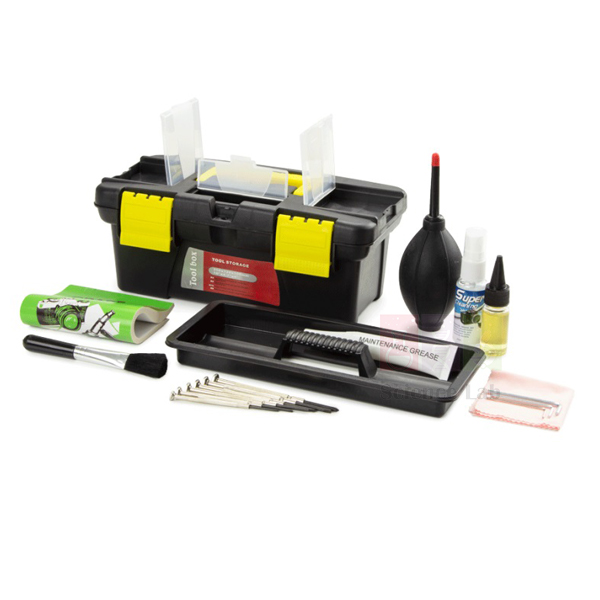
Microscope Maintenance & Servicing Kit
Microscope Maintenance & Servicing Kit (Product Code: SLE/M/128) is a 16-piece toolbox kit used to clean, adjust and lubricate microscopes in school, college and hospital-training laboratories. It pairs optical cleaning supplies, including an air blower, brush, 20 ml lens cleaning fluid and 100 lens tissue sheets, with a six-piece screwdriver set, three Allen keys, grease and oil. This care kit for microscopes in school labs across India is supplied by Jain Scientific Equipments Pvt Ltd (ScienceLab), Ambala, India.
Specifications
| Parameter | Detail |
|---|---|
| Packing | Toolbox, 16 pieces |
| Cleaning brush | 1 |
| Air blower | 1 |
| Lens cleaning fluid | 20 ml |
| Cleaning cloth | 140 x 140 mm |
| Maintenance grease | 1 tube |
| Lens tissue | 100 sheets |
| Screwdriver set | 6 pieces |
| Allen keys | 3 pieces: 1.5, 2 and 2.5 mm |
| Oil | 10 ml bottle |
| Shelf life (fluid, grease, oil) | Shelf life depends on the chemical, its grade and storage conditions; ask us for the expiry date of the batch you are quoted |
| Product code | SLE/M/128 |
| Supplied by | Jain Scientific Equipments Pvt Ltd (ScienceLab), Ambala, India |
What Is the Microscope Maintenance Kit Used For?
Microscopes shared by many students quickly collect dust, fingerprints, dried immersion oil and loose screws, and small problems left alone turn into blurred images and stiff focus knobs. This kit lets a lab technician or teacher carry out routine care at the bench: blow grit off lenses before wiping, lift oil and smears with fluid and tissue, and tighten or adjust stage clips and fittings with the screwdrivers and Allen keys.
Always use the air blower and brush first so abrasive particles are gone before any lens is touched, then put a little cleaning fluid on a tissue rather than directly onto the glass. Wipe each lens in a spiral from the centre outwards with a fresh tissue. Apply grease or oil sparingly and only where the microscope's own instructions call for it, because excess lubricant attracts dust and can creep onto the optics.
What to Specify When Ordering
- The number of kits, for example one per laboratory or per technician
- Whether extra lens tissue should be quoted for frequent cleaning
- The type of oil you need, as the kit lists a 10 ml bottle of oil without naming its type
Supplier
ScienceLab is the trading name of Jain Scientific Equipments Private Limited, which supplies this maintenance and servicing kit from Ambala, Haryana, to schools, colleges, hospital and paramedical training labs, dealers and importers in India and international markets. Institutions often order it alongside a batch of new microscopes so that basic upkeep can start straight away. Read more on our company profile page.
Related Laboratory Equipment
Cleaning supplies and spares that support the same microscope care routine:
- Microscope Cleaning Kit — a cleaning-focused kit to compare
- Lens Tissue — additional tissue for frequent lens cleaning
- Microfiber Lens Cloth — a reusable cloth for eyepieces and bodies
- Immersion Oil, 25ml — for microscopes with oil-immersion objectives
- LED Replacement Bulb Assembly — a spare illumination part; check fit with us
More accessories are listed in the Microscope category.
Frequently Asked Questions
What is included in the Microscope Maintenance & Servicing Kit?
The Microscope Maintenance & Servicing Kit (SLE/M/128) has 16 pieces in a toolbox: a cleaning brush, air blower, 20 ml lens cleaning fluid, 140 x 140 mm cleaning cloth, a tube of maintenance grease, 100 lens tissue sheets, a six-piece screwdriver set, three Allen keys and a 10 ml bottle of oil.
What sizes are the Allen keys in the kit?
The three Allen keys in the Microscope Maintenance & Servicing Kit are 1.5 mm, 2 mm and 2.5 mm. Small hex keys like these fit many of the grub and set screws found on microscopes, but check the instrument's manual before adjusting anything.
What type of oil is in the Microscope Maintenance & Servicing Kit?
The Microscope Maintenance & Servicing Kit lists a 10 ml bottle of oil but does not state whether it is immersion oil or a lubricating oil. Please confirm the oil type with us through the contact page before relying on it for a particular task.
Does the maintenance kit have an expiry date?
The Microscope Maintenance & Servicing Kit contains lens cleaning fluid, grease and oil. Shelf life depends on the chemical, its grade and storage conditions; ask us for the expiry date of the batch you are quoted, and keep the kit closed, cool and dry.
How should lenses be cleaned with this kit?
With the Microscope Maintenance & Servicing Kit, first remove loose dust with the air blower and brush, then moisten a lens tissue with a little cleaning fluid and wipe gently in a spiral from the centre. Never rub a dry, dusty lens, as grit can scratch its coating.
Who supplies the Microscope Maintenance & Servicing Kit?
Jain Scientific Equipments Pvt Ltd, trading as ScienceLab in Ambala, Haryana, India, supplies the Microscope Maintenance & Servicing Kit (SLE/M/128) to schools, colleges, training labs, dealers and importers in India and international markets, with quotations prepared on request.
Request a Quote
For a quotation on the Microscope Maintenance & Servicing Kit, send the number of kits and your delivery location through our contact page, or add it to the enquiry cart with any microscopes or cleaning supplies you are ordering.
Last updated: 24 September 2026
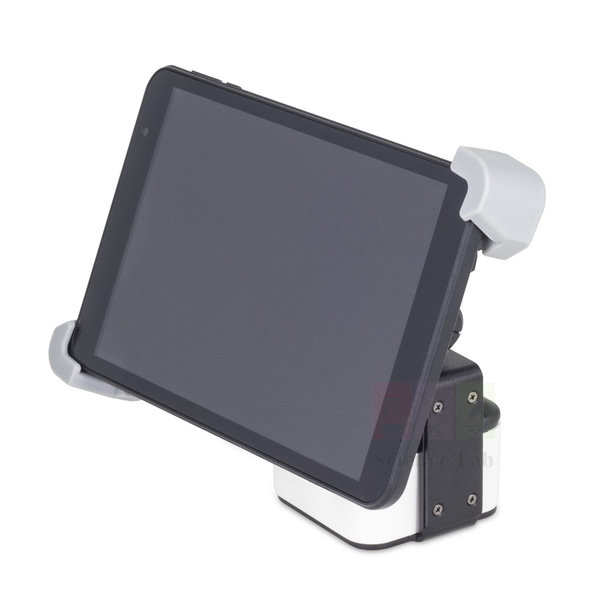
Tablet Camera
Tablet Camera (Product Code: SLE/M/129) is a C-mount digital microscope camera paired with a detachable Android touch-screen tablet, used to view, capture, edit and share microscope images right at the microscope in teaching and laboratory settings. It records 5.0 MP stills and 720p HD video from a 1/2.5-inch CMOS sensor, and the tablet can be detached or replaced separately from the camera. Part of our laboratory instruments range in India, it is supplied by Jain Scientific Equipments Pvt Ltd (ScienceLab), Ambala, India.
Specifications
| Parameter | Detail |
|---|---|
| Camera | Attachable digital camera, C-mount |
| Sensor | CMOS, 1/2.5" optical format |
| Live resolution | 1280 x 720 px (16:9); 1280 x 960 px and 800 x 600 px (4:3) |
| Image capture | 5.0 MP |
| Video capture | 720p (HD) |
| Tablet | 8" or 10" Android tablet with capacitive touch screen; detachable, replaceable and completely separate from the camera |
| Operating system | Android 5.0 or 4.4 |
| Processor | Quad-core, 1.83 GHz (Intel Bay Trail) or 1.6 GHz |
| Storage | 16 GB internal; SD/MMC/TF card slot supporting up to 32 GB |
| Connectivity | Wi-Fi 802.11b/g/n; Bluetooth 4.0; micro HDMI output |
| Audio | Built-in microphone, speaker and earphone jack |
| Power | Built-in Li-ion battery |
| Supplied with | 4 GB microSD card; 4-dot calibration slide |
| Product code | SLE/M/129 |
| Supplied by | Jain Scientific Equipments Pvt Ltd (ScienceLab), Ambala, India |
What Is the Tablet Camera Used For?
The Tablet Camera turns a microscope into a digital imaging station: the camera attaches through a C-mount connection, typically on a trinocular port, and the tablet shows the live image so a teacher and a small group can study the same specimen together. Students can capture 5.0 MP photographs of their slides, record 720p video of moving organisms such as protozoa, and edit images on the touch screen before sharing them.
Images can be saved to the 16 GB internal storage or a memory card of up to 32 GB, sent over Wi-Fi or Bluetooth, or shown on a projector or large screen through the micro HDMI output. Use the 4-dot calibration slide when calibrating the image, and charge the tablet between classes because it runs from a built-in Li-ion battery. As the tablet is separate from the camera, either can be replaced without changing the other.
What to Specify When Ordering
- Tablet size: 8-inch or 10-inch
- Whether your microscope has a C-mount connection or needs an adapter
- The number of camera-and-tablet sets required
Supplier
Jain Scientific Equipments Private Limited, known by its trading name ScienceLab, supplies the Tablet Camera from Ambala, Haryana, to schools, colleges, university departments, dealers and importers in India and international markets. It is usually quoted together with a trinocular microscope or as an imaging upgrade for microscopes already in the lab. Visit our company profile for more about ScienceLab.
Related Laboratory Equipment
Microscopes, alternative cameras and slides for a digital imaging bench:
- Trinocular Microscope, 1000x, LED Illumination — a trinocular model with a third port for imaging
- Wi-Fi Camera — a wireless camera option to compare
- Microscope Digital Camera, 5MP — a computer-based camera alternative
- Prepared Microscope Slide Set – Key Stage 4 Biology — ready-made slides to image and share
- Micrometric Slide — a scale slide for size reference
Browse other cameras and microscopes in the Microscope category.
Frequently Asked Questions
What resolution does the Tablet Camera capture?
The Tablet Camera (SLE/M/129) captures still images at 5.0 MP and video at 720p HD from a 1/2.5-inch CMOS sensor. Its live view runs at 1280 x 720 px in 16:9, or at 1280 x 960 px and 800 x 600 px in 4:3.
Will the Tablet Camera fit my microscope?
The Tablet Camera is an attachable digital C-mount camera, so it needs a microscope with a C-mount connection, usually on a trinocular port, or a suitable adapter. Send us your microscope's make and model through the contact page so we can check fit before you order.
Which tablet comes with the Tablet Camera?
The Tablet Camera is listed with an 8-inch or 10-inch Android tablet running Android 5.0 or 4.4, with a quad-core processor of 1.83 GHz or 1.6 GHz and a capacitive touch screen. The tablet is detachable, replaceable and completely separate from the camera.
How are images from the Tablet Camera stored and shared?
Images from the Tablet Camera are saved to 16 GB internal storage or an SD/MMC/TF card of up to 32 GB, and a 4 GB microSD card is included. They can be shared over Wi-Fi 802.11b/g/n or Bluetooth 4.0, or displayed through the micro HDMI output.
What else is included with the Tablet Camera?
Besides the camera and tablet, the Tablet Camera is listed with a 4 GB microSD card and a 4-dot calibration slide. The tablet has a built-in Li-ion battery, microphone, speaker and earphone jack; ask us to confirm the full packing list with your quotation.
Who supplies the Tablet Camera SLE/M/129?
Jain Scientific Equipments Pvt Ltd, trading as ScienceLab in Ambala, Haryana, India, supplies the Tablet Camera (SLE/M/129) to schools, colleges, universities, dealers and importers in India and international markets. Quotations are prepared on request through the contact page.
Request a Quote
To get a quotation for the Tablet Camera, tell us the tablet size, quantity and your microscope model through our contact page, or add it to the enquiry cart with any microscopes you need.
Last updated: 24 September 2026
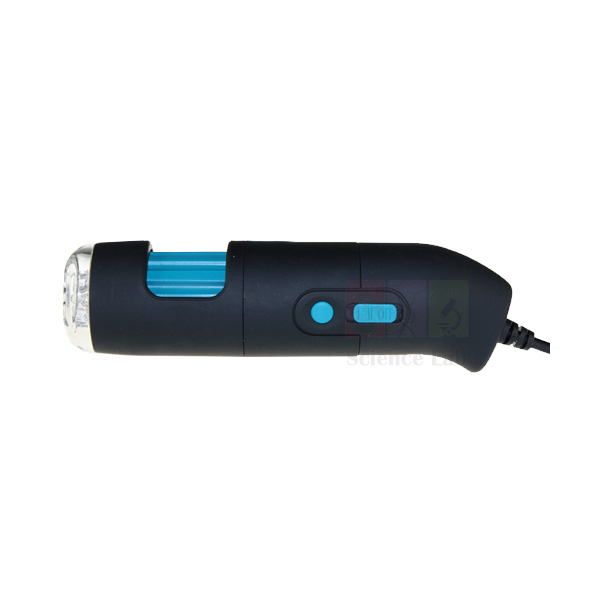
Wired USB with Polarizer
Wired USB with Polarizer (Product Code: SLE/M/130) is a compact USB 2.0 digital microscope with a built-in polarizer, used to magnify, capture and measure surface detail on a Windows or Mac computer in schools, colleges and workshops. It gives 10–50x and 200x magnification from a 2.0-megapixel CMOS sensor, lit by 8 white power LEDs. For schools and labs sourcing laboratory instruments in India, it is supplied by Jain Scientific Equipments Pvt Ltd (ScienceLab), Ambala, India.
Specifications
| Parameter | Detail |
|---|---|
| Connection | USB 2.0 (wired) to a Windows or Mac computer |
| Sensor | CMOS, 2.0 megapixel |
| Resolution | 1600 x 1200, 1280 x 960, 800 x 600, 640 x 480 |
| Max. frame rate | 30 fps |
| Magnification | 10–50x and 200x |
| Zoom | Yes, distance controlled |
| Focus range | Manual focus, 10 to 500 mm |
| Working distance | Standard |
| Lens | Optical glass with multi-layer anti-reflection coating |
| Illumination | 8 white power LEDs |
| Polarizer | Yes |
| Software | Analysis software with measurement and annotation functions |
| Dimensions | 34 mm diameter x 140 mm length |
| Weight | 115 g |
| Product code | SLE/M/130 |
| Supplied by | Jain Scientific Equipments Pvt Ltd (ScienceLab), Ambala, India |
What Is the USB Microscope with Polarizer Used For?
Plugged into a laptop or desktop, this microscope shows a live, enlarged image on screen, so a whole group can examine insects, leaves, fabric, coins, printed circuits or rock surfaces together and capture pictures for reports. The 10–50x range suits whole objects, while 200x reveals finer texture such as paper fibres or pollen. The analysis software adds measurement and annotation, which makes it useful for simple size and wear checks as well as teaching.
The polarizer cuts glare from shiny or wet surfaces such as metal, glass, plastic packaging and polished stone, which otherwise wash out detail under LED lighting. Magnification changes with the distance to the object, and focus is set by hand anywhere from 10 to 500 mm, so larger objects can also be imaged from further away. Hold the microscope steady or fix it in a stand for sharp captures at 200x.
What to Specify When Ordering
- The computer operating system it will be used with (Windows or Mac)
- The number of units for your class or lab
- Whether a stand should be quoted to hold the microscope
Supplier
ScienceLab, the trading name of Jain Scientific Equipments Private Limited, supplies the Wired USB with Polarizer from Ambala, Haryana, to schools, colleges, technical institutes, dealers and importers in India and international markets. As a plug-in device with its own lighting, it is a practical way to add digital imaging to a computer lab or science room without a full bench microscope. Our company profile has more about the business.
Related Laboratory Equipment
Stands, alternative digital microscopes and specimens for screen-based observation:
- Metal Gooseneck Stand — a stand option; check fit with us
- Handheld Digital Microscope — another digital microscope to compare
- Advanced Digital Microscope — a further digital option for labs
- Microscope Digital Camera, 3MP — adds imaging to an existing microscope
- Class Rock Pack — rock samples with surfaces worth enlarging on screen
See more digital models in the Microscope category.
Frequently Asked Questions
What magnification does the Wired USB with Polarizer give?
The Wired USB with Polarizer (SLE/M/130) gives 10–50x and 200x magnification with distance-controlled zoom, so the image size changes as the microscope is moved nearer to or further from the object. Manual focus covers 10 to 500 mm.
What does the polarizer on this USB microscope do?
The polarizer on the Wired USB with Polarizer reduces glare and reflections from shiny surfaces such as metal, glass, plastic and wet specimens. Cutting reflected light brings out surface texture and colour that the 8 white LEDs would otherwise wash out.
Which computers work with the Wired USB with Polarizer?
The Wired USB with Polarizer connects through USB 2.0 to a Windows or Mac computer and is listed with analysis software offering measurement and annotation functions for live or captured images. Ask us through the contact page to confirm compatibility with your operating system version.
What image resolution does the Wired USB with Polarizer capture?
The Wired USB with Polarizer uses a 2.0-megapixel CMOS sensor with resolutions of 1600 x 1200, 1280 x 960, 800 x 600 and 640 x 480, at up to 30 frames per second. Lower settings suit smooth live display, and the highest suits still captures.
How big is the Wired USB with Polarizer?
The Wired USB with Polarizer measures 34 mm in diameter and 140 mm in length and weighs 115 grams, so it is easy to hold or fix in a stand. Its optical glass lens has a multi-layer anti-reflection coating.
Who supplies the Wired USB with Polarizer?
Jain Scientific Equipments Pvt Ltd, trading as ScienceLab in Ambala, Haryana, India, supplies the Wired USB with Polarizer (SLE/M/130) to schools, colleges, technical institutes, dealers and importers in India and international markets. Quotations are prepared on request through the contact page.
Request a Quote
Request a quotation for the Wired USB with Polarizer through our contact page, giving the quantity, operating system and delivery location, or add it to the enquiry cart with a stand or other items.
Last updated: 24 September 2026
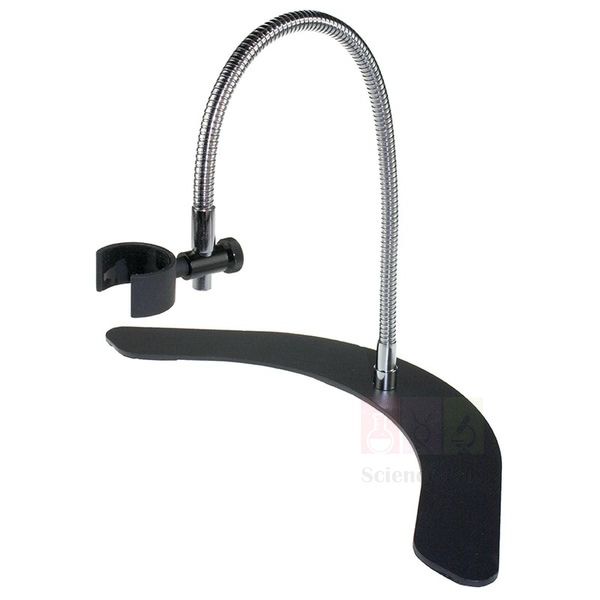
Metal Gooseneck Stand
Metal Gooseneck Stand (Product Code: SLE/M/131) is a metal stand with a flexible gooseneck arm, typically used to hold a compact digital microscope or camera steady over a specimen in classroom and laboratory imaging work. Because the arm can be bent and left in position, it frees the user's hands and keeps the image still for focusing and capture. This microscope accessory is supplied by Jain Scientific Equipments Pvt Ltd (ScienceLab), Ambala, India, a school lab equipment supplier serving India and international markets.
Key Details
| Parameter | Detail |
|---|---|
| Type | Stand with a flexible gooseneck arm |
| Material | Metal |
| Product code | SLE/M/131 |
| Supplied by | Jain Scientific Equipments Pvt Ltd (ScienceLab), Ambala, India |
What Is the Metal Gooseneck Stand Used For?
Hand-held digital microscopes and small cameras are hard to keep still at high magnification: a slight tremor blurs the live image and makes captures and measurements unreliable. A gooseneck stand holds the device at a chosen height and angle above the specimen, so students can focus once and then concentrate on observing, sketching or recording. It also helps in demonstrations, where the teacher needs both hands to move the specimen while the image is shown on a screen.
Bend the gooseneck gradually into position rather than forcing it in one movement, and support the device while adjusting so it does not swing into the specimen. Stand it on a firm, level surface and keep cables slack so they do not pull the device out of position. As the listing does not state the mounting size or compatible devices, confirm fit with us before ordering it for a particular microscope or camera.
What to Specify When Ordering
- The make and model of the digital microscope or camera the stand will hold
- The number of stands required
- Whether a USB digital microscope should be quoted with the stand
Supplier
Jain Scientific Equipments Private Limited, trading as ScienceLab, supplies the Metal Gooseneck Stand from Ambala, Haryana, to schools, colleges, dealers and importers in India and international markets, usually alongside the digital microscopes and cameras in our range. For vendor registration, the supplying company's details are GSTIN 06AAECJ8618A1ZT and LEI 3358004HRD1JIVXKYX49. More about the company is on our company profile page.
Related Laboratory Equipment
Digital imaging devices that are used with a steady mount:
- Wired USB with Polarizer — a USB digital microscope; ask us about fit
- Handheld Digital Microscope — a hand-held model; confirm fit with us
- Flexible Camera — another imaging option to compare
- Wi-Fi Camera — a wireless camera for sharing images on screen
Explore the full Microscope category for more imaging accessories.
Frequently Asked Questions
What is the Metal Gooseneck Stand?
The Metal Gooseneck Stand (SLE/M/131) is a metal stand with a flexible gooseneck arm from the ScienceLab microscope range. It is typically used to hold a compact digital microscope or camera steady above a specimen so that the user's hands stay free.
Which devices fit the Metal Gooseneck Stand?
The listing for the Metal Gooseneck Stand does not state its mounting size, clamp type or compatible devices. Send us the make and model of your digital microscope or camera through the contact page and we will confirm fit before quoting.
What are the dimensions of the Metal Gooseneck Stand?
Dimensions, arm length and weight for the Metal Gooseneck Stand are not given in the current listing. Please ask for these details through the contact page if you need to plan bench space or check its reach over larger specimens.
Why use a stand with a digital microscope?
A Metal Gooseneck Stand keeps a digital microscope still, which matters because even small hand movements blur the image at high magnification. With the device held in place, focusing, capturing and measuring on screen become quicker and more repeatable for students.
Who supplies the Metal Gooseneck Stand?
Jain Scientific Equipments Pvt Ltd, trading as ScienceLab in Ambala, Haryana, India, supplies the Metal Gooseneck Stand (SLE/M/131) to schools, colleges, dealers and importers in India and international markets. Quotations are prepared on request through the contact page.
What should a quotation request for the gooseneck stand include?
A quotation request for the Metal Gooseneck Stand should give product code SLE/M/131, the number of stands, the device each stand will hold and your delivery location, so that fit can be checked and everything quoted together.
Request a Quote
Send your enquiry for the Metal Gooseneck Stand, with the device it will hold and the quantity, through our contact page, or add it to the enquiry cart together with a digital microscope or camera.
Last updated: 24 September 2026
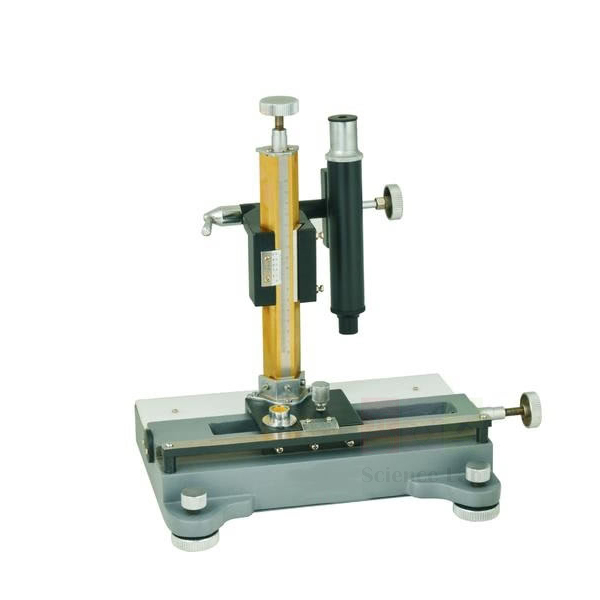
Vernier Travelling Microscope
Vernier Travelling Microscope (Product Code: SLE/M/132) is a measuring microscope mounted on vernier-scaled horizontal and vertical slides, used to measure very small lengths in college and school physics practicals. Its heavy cast iron base with three levelling screws carries slides with 180 mm horizontal and 140 mm vertical travel, read to 0.02 or 0.01 mm. This physics lab instrument is made by Jain Scientific Equipments Pvt Ltd (ScienceLab), an OEM manufacturer, at its own factory in Ambala, India.
Specifications
| Parameter | Detail |
|---|---|
| Base | Heavy cast iron with a machined upper surface, fitted with three levelling screws |
| Scales | Horizontal and vertical scales of brass steel |
| Vernier reading | 0.02 mm or 0.01 mm |
| Slide travel | 180 mm horizontal; 140 mm vertical |
| Carriages | Metal carriage sliding on the base; vertical slide of similar action on the horizontal carriage; each clamped at any position by a clamping screw |
| Microscope | Rack and pinion, achromatic lenses; mounted on the vertical carriage and can be clamped in a vertical or horizontal position |
| Stage | For placing objects for measurement, fitted with an acrylic (perspex) plate |
| Case | Polished wooden case |
| Product code | SLE/M/132 |
| Manufacturer | Jain Scientific Equipments Pvt Ltd (ScienceLab) — OEM |
| Country of origin | India (made in Ambala, Haryana) |
What Is the Travelling Microscope Used For?
A travelling microscope measures lengths too small or delicate for a ruler or caliper: the bore of a capillary tube in surface-tension experiments, the diameters of Newton's rings, the real and apparent depth of a glass slab for refractive index, and the width of fine wires or slits. The microscope is focused on one edge of the feature and the scale is read, then it is traversed to the opposite edge and read again; the difference between the two readings is the length.
Level the base with the three levelling screws before starting, and lock each slide with its clamping screw once it is roughly in place so the reading cannot drift. Approach every final setting from the same direction to avoid backlash, and read the vernier with your eye square to the scale. Because the microscope can be clamped vertically or horizontally, one instrument covers both depth readings and horizontal width readings.
What to Specify When Ordering
- Vernier least count: 0.02 mm or 0.01 mm
- The number of instruments, for example one per practical station
- Experiment accessories you need, such as capillary tubes or a capillary rise apparatus
OEM Manufacturer
ScienceLab is the trading name of Jain Scientific Equipments Private Limited, the OEM (original equipment manufacturer) of this travelling microscope. The company manufactures it at its licensed factory at Saha, Ambala, Haryana, so colleges, schools, dealers and importers in India and international markets buy it factory-direct rather than through a trader. Quotations, repeat orders and questions about replacement parts are handled by the manufacturer itself. Our company profile gives more background.
Related Laboratory Equipment
Apparatus and measuring tools used in the same physics practicals:
- Capillary Tube Apparatus — capillary rise experiments where the bore is measured with the microscope
- Set of Capillary Tubes — tubes of different bores to measure and compare
- Caliper Vernier (Metal) — for larger lengths and external dimensions
- Micrometer Screw Gauge, Lock Type — for wire and sheet thickness
- Microscope Travelling (Vernier) — another travelling microscope listing to compare
See the full Microscope category for other measuring and teaching microscopes.
Frequently Asked Questions
What is the least count of the Vernier Travelling Microscope?
The Vernier Travelling Microscope (SLE/M/132) is offered with a vernier reading of 0.02 mm or 0.01 mm on its horizontal and vertical scales. State which least count you need when ordering, as it sets the precision of every measurement taken with the instrument.
How far do the slides of the travelling microscope move?
The slides of the Vernier Travelling Microscope travel 180 mm horizontally and 140 mm vertically. Each carriage can be clamped at any position with a clamping screw, and the vertical slide is mounted on the horizontal carriage.
Which experiments use the Vernier Travelling Microscope?
The Vernier Travelling Microscope is used to measure capillary tube bore for surface tension, Newton's ring diameters, real and apparent depth for refractive index, and the width of fine wires or slits. Any small length that can be focused on and traversed can be measured.
Can the microscope be used horizontally?
Yes. On the Vernier Travelling Microscope, the rack-and-pinion microscope on the vertical carriage can be clamped in a vertical or a horizontal position. Horizontal viewing suits objects held upright, such as a capillary tube clamped in a stand.
How is the Vernier Travelling Microscope levelled and stored?
The Vernier Travelling Microscope has a heavy cast iron base with three levelling screws, used to set it level before readings. It comes in a polished wooden case that protects the slides, scales and achromatic optics between practical sessions.
Who manufactures the Vernier Travelling Microscope?
Jain Scientific Equipments Pvt Ltd (ScienceLab) is the OEM manufacturer of the Vernier Travelling Microscope, producing it at its licensed factory at Saha, Ambala, Haryana, India. Schools, colleges, dealers and importers in India and international markets buy it direct from the manufacturer.
Request a Quote
Quotations for the Vernier Travelling Microscope come direct from the manufacturer: send the least count, quantity and delivery location through our contact page, or add it to the enquiry cart with any capillary or optics apparatus you need.
Last updated: 24 September 2026
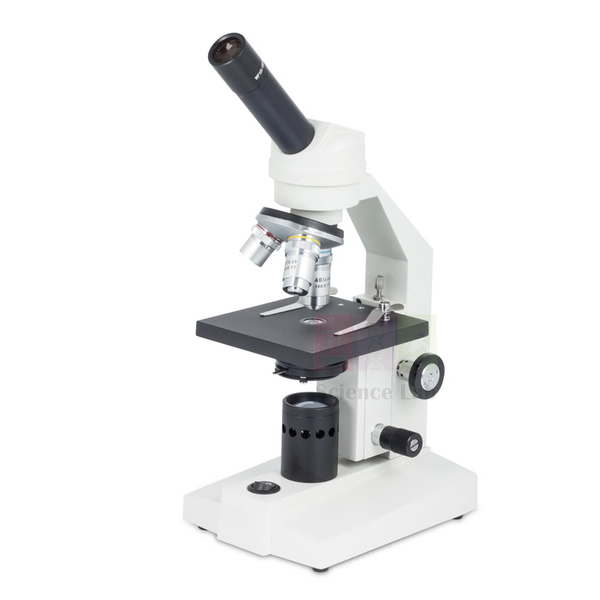
Monocular Microscope, Tungsten
Monocular Microscope, Tungsten (Product Code: SLE/M/133) is a basic student compound microscope with tungsten illumination, used for viewing prepared slides and wet mounts in school and junior college biology labs. It pairs a WF10X/18 mm eyepiece with pointer and DIN achromatic 4x, 10x and 40x objectives on a triple nosepiece with a 0.65 NA condenser and iris diaphragm. This monocular microscope for schools in India is supplied by Jain Scientific Equipments Pvt Ltd (ScienceLab), Ambala, a laboratory instruments supplier in India.
Specifications
| Parameter | Detail |
|---|---|
| Head | Monocular |
| Eyepiece | WF10X/18 mm with pointer |
| Nosepiece | Triple |
| Objectives | DIN achromatic: 4x/0.10, 10x/0.25, 40x/0.65S |
| Condenser | 0.65 NA |
| Diaphragm | Iris |
| Illumination | Tungsten |
| Focusing | Coarse and fine |
| Stage | Plain |
| Product code | SLE/M/133 |
| Supplied by | Jain Scientific Equipments Pvt Ltd (ScienceLab), Ambala, India |
What Is the Tungsten Monocular Microscope Used For?
This is a straightforward teaching microscope for standard school practicals: onion peel and cheek cells, leaf stomata, root tips, pollen, protozoa in pond water and prepared tissue slides. Students locate the specimen with the 4x/0.10 objective, move to the 10x/0.25 to see how the tissue is arranged, and finish with the 40x/0.65S for cell detail. The pointer in the eyepiece lets a teacher mark the exact structure each student should find.
Tungsten lamps run warm, so switch the light off between observations and let the microscope cool before covering or packing it away. Use the iris diaphragm with the 0.65 NA condenser to balance brightness and contrast: close it for pale, unstained cells and open it for darker stained sections. On the plain stage the slide is moved gently by hand, which quickly teaches students how the image moves under magnification.
What to Specify When Ordering
- The number of microscopes for your student batches
- Your mains supply voltage, so the lamp and power arrangement can be confirmed
- Whether spare tungsten lamps should be included in the quotation
Supplier
Jain Scientific Equipments Private Limited supplies the Monocular Microscope, Tungsten under its trading name ScienceLab from Ambala, Haryana, to schools, junior colleges, coaching centres, dealers and importers in India and international markets. A simple tungsten-lit monocular is often chosen for large student batches, where an easy-to-use instrument matters more than advanced features. Learn more on our company profile page.
Related Laboratory Equipment
Slides, cover slips and alternative student microscopes:
- Basic Botany Slide (Set of 25) — prepared plant slides for routine practicals
- Microscope Slides Depression — cavity slides for pond-water samples
- Microscope Cover Slips — to cover students' own wet mounts
- Monocular Microscope, LED — an LED-lit monocular alternative
- Monocular Mirror Microscope, 400x — a mirror-lit option for rooms without power
Compare more student models in the Microscope category.
Frequently Asked Questions
Which objectives does the Monocular Microscope, Tungsten have?
The Monocular Microscope, Tungsten (SLE/M/133) has DIN achromatic objectives of 4x/0.10, 10x/0.25 and 40x/0.65S on a triple nosepiece. With the WF10X/18 mm eyepiece they cover low-power scanning through to cell-level detail for school practicals.
What illumination does the Monocular Microscope, Tungsten use?
The Monocular Microscope, Tungsten uses tungsten illumination with a 0.65 NA condenser and an iris diaphragm. The listing does not give the lamp rating or supply voltage, so please confirm these and any spare lamp needs with us through the contact page.
Does this tungsten microscope have fine focusing?
Yes. The Monocular Microscope, Tungsten has coarse and fine focusing. Use the coarse control with the 4x objective to find the specimen, then only the fine control at 40x, where the depth of focus is very shallow and the slide sits close to the lens.
What kind of stage does the Monocular Microscope, Tungsten have?
The Monocular Microscope, Tungsten has a plain stage, so the slide is positioned by hand rather than by a mechanical stage. This keeps the instrument simple for younger students, who soon learn to move the slide opposite to the way the image moves.
What is the pointer in the eyepiece for?
The WF10X/18 mm eyepiece of the Monocular Microscope, Tungsten includes a pointer visible in the field of view. A teacher can place a structure at the tip of the pointer so every student who looks next sees exactly the feature being discussed.
Who supplies the Monocular Microscope, Tungsten?
Jain Scientific Equipments Pvt Ltd, trading as ScienceLab in Ambala, Haryana, India, supplies the Monocular Microscope, Tungsten (SLE/M/133) to schools, colleges, dealers and importers in India and international markets. Quotations are prepared on request through the contact page.
Request a Quote
For a quotation on the Monocular Microscope, Tungsten, send the quantity, mains voltage and delivery location through our contact page, or add it to the enquiry cart with slides and cover slips.
Last updated: 24 September 2026